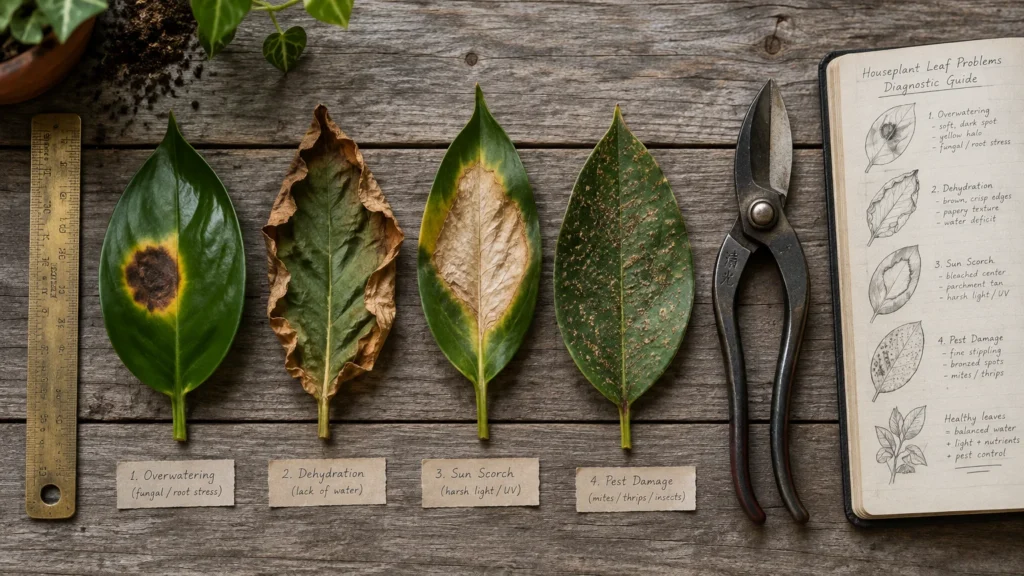
Shorter daylight hours slow your indoor plant growth, so dialing back your watering routine keeps roots healthy all season long. You will prevent root rot and save time simply by letting your soil dry out.
During cold months, lower temperatures and dim sunshine reduce transpiration. Your favorite indoor green companions slip into semi-dormancy, meaning their thirst drops dramatically compared to vigorous spring surges.
Mastering houseplants winter watering protects your lush foliage from hidden moisture damage. Learn which green favorites thrive with minimal hydration until warm spring weather returns.
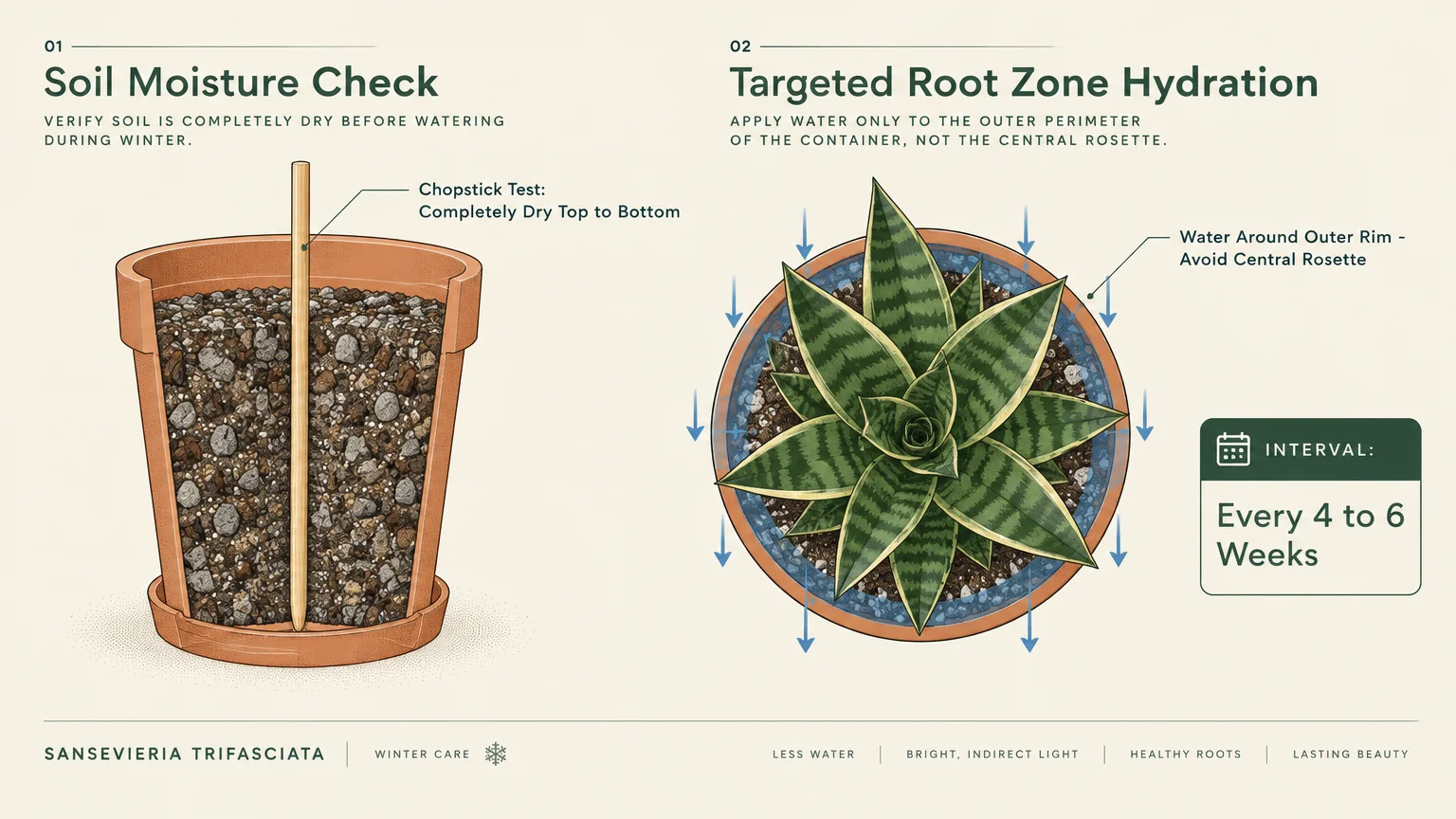
Tip #1: Snake Plant (Sansevieria trifasciata)
Snake plants store moisture inside thick, architectural foliage. Their succulent anatomy makes them exceptionally tolerant of parched indoor winter environments.
Dim seasonal lighting slows this plant’s metabolic activity down to a crawl. Consequently, damp soil lingers for weeks and suffocates the root system.
Reduce your hydration schedule to once every four to six weeks. Always confirm that the potting mix is completely dry from top to bottom before watering.
Pour water gently around the edge of the pot to saturate the root zone evenly. Avoid splashing liquid into the central rosette, which invites fungal crown rot.
A wooden chopstick makes an excellent soil moisture tester. When it comes out completely clean and dry, your snake plant can take a light drink.
If you feel any doubt about soil moisture, wait another week before irrigating. These hardy specimens shrug off drought far better than excess moisture.
Keep your snake plant in indirect sunlight to support steady winter respiration. Good lighting helps the potting medium dry out at a safe, steady pace.
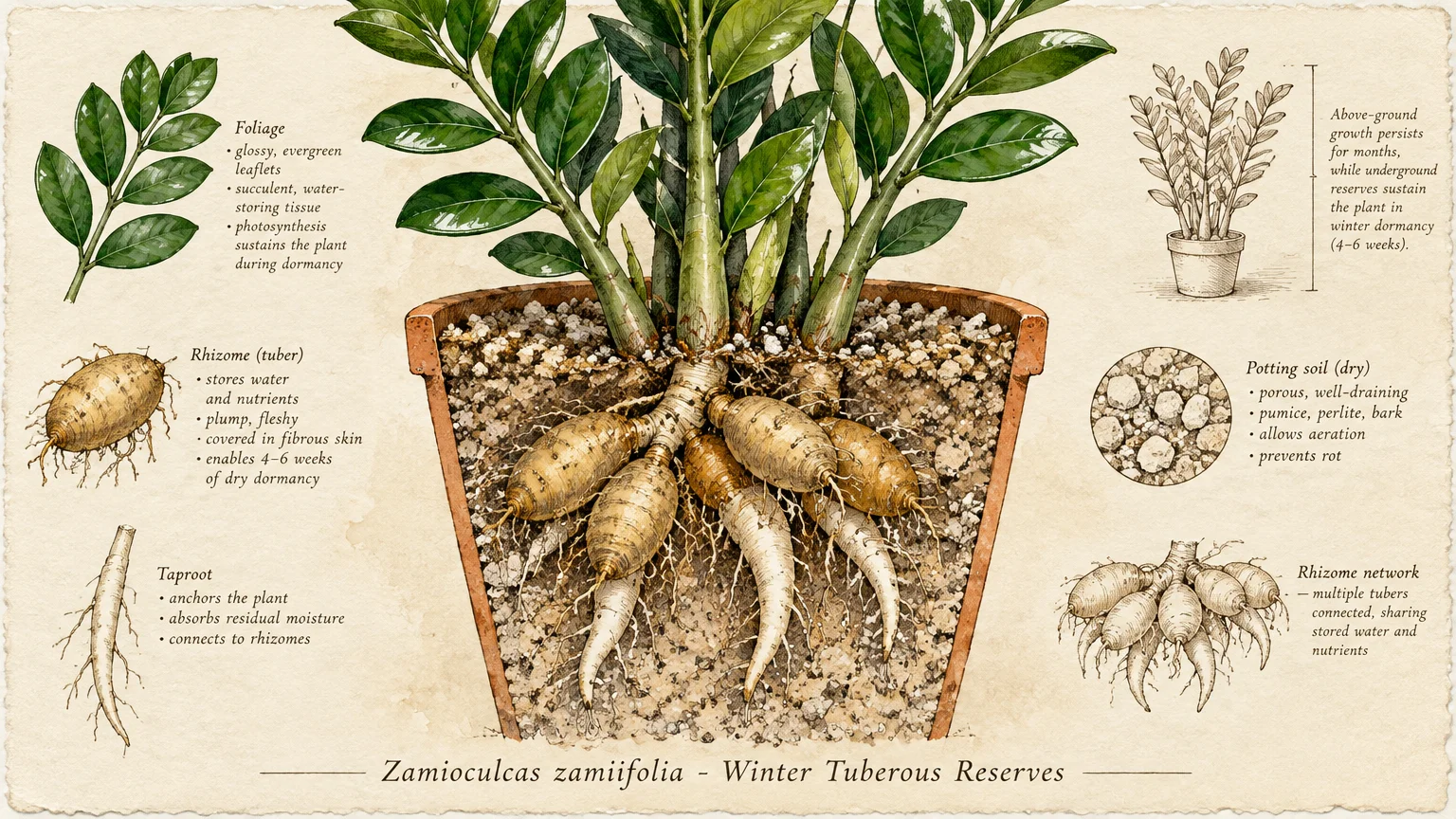
Tip #2: ZZ Plant (Zamioculcas zamiifolia)
The ZZ plant relies on swollen underground rhizomes to stockpile essential moisture reserves. These tuberous structures look like small potatoes and nourish glossy, dark green leaflets.
Photosynthesis drops significantly during short winter days. As a result, the plant absorbs minimal moisture from the soil container.
Aim to water your ZZ plant only once every four weeks during cold weather. In drafty or dimly lit rooms, you can easily extend that interval to six weeks.
Always ensure excess liquid flows freely through the drainage holes. Never let the pot sit in standing water collected inside the drip saucer.
Yellowing lower stems serve as an immediate warning sign that the potting mix is holding moisture too long. Allow the soil to dry out completely to protect the delicate rhizomes.
Wipe the shiny leaflets with a damp cloth every month to remove settled dust. Clean foliage absorbs ambient light more effectively, supporting steady indoor plant care during winter.
Mastering winter houseplant care for your ZZ plant simply requires patient neglect. Your restraint rewards you with resilient foliage that stays vibrant through spring.
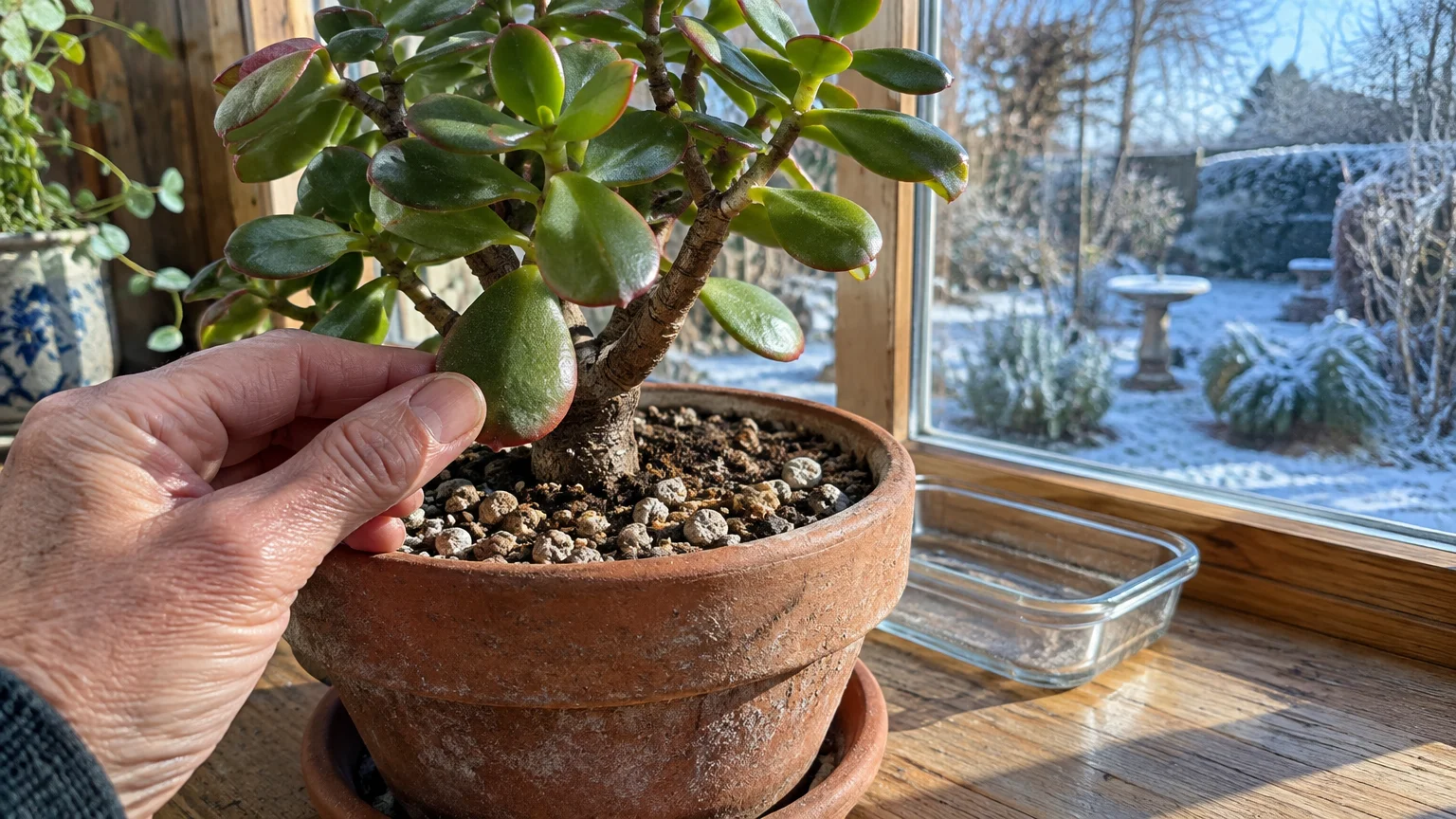
Tip #3: Jade Plant (Crassula ovata)
Jade plants are true succulent shrubs with plump, oval leaves and sturdy wooden stems. They hoard water within their tissues to survive arid conditions in their native habitat.
Cool winter temperatures cue the jade plant to enter a resting state. Offering normal summer moisture levels during this lull quickly leads to mushy stems.
Water your jade plant sparingly, usually every three to four weeks. Wait until the potting soil is bone dry throughout the container before applying water.
Observe the fleshy leaves for subtle visual cues before you hydrate the root zone. Slightly soft leaves that lose their firm luster signal that the plant needs moisture.
Drench the potting mix thoroughly, then empty the collection tray after ten minutes. Sharp-draining succulent soil prevents stagnant water around fragile root hairs.
Place your jade plant near an unobstructed south-facing window for optimal winter brightness. Strong daylight prevents the stems from stretching out and growing leggy.
Reduced winter watering keeps the plant compact, sturdy, and ready to push out fresh green growth in spring.
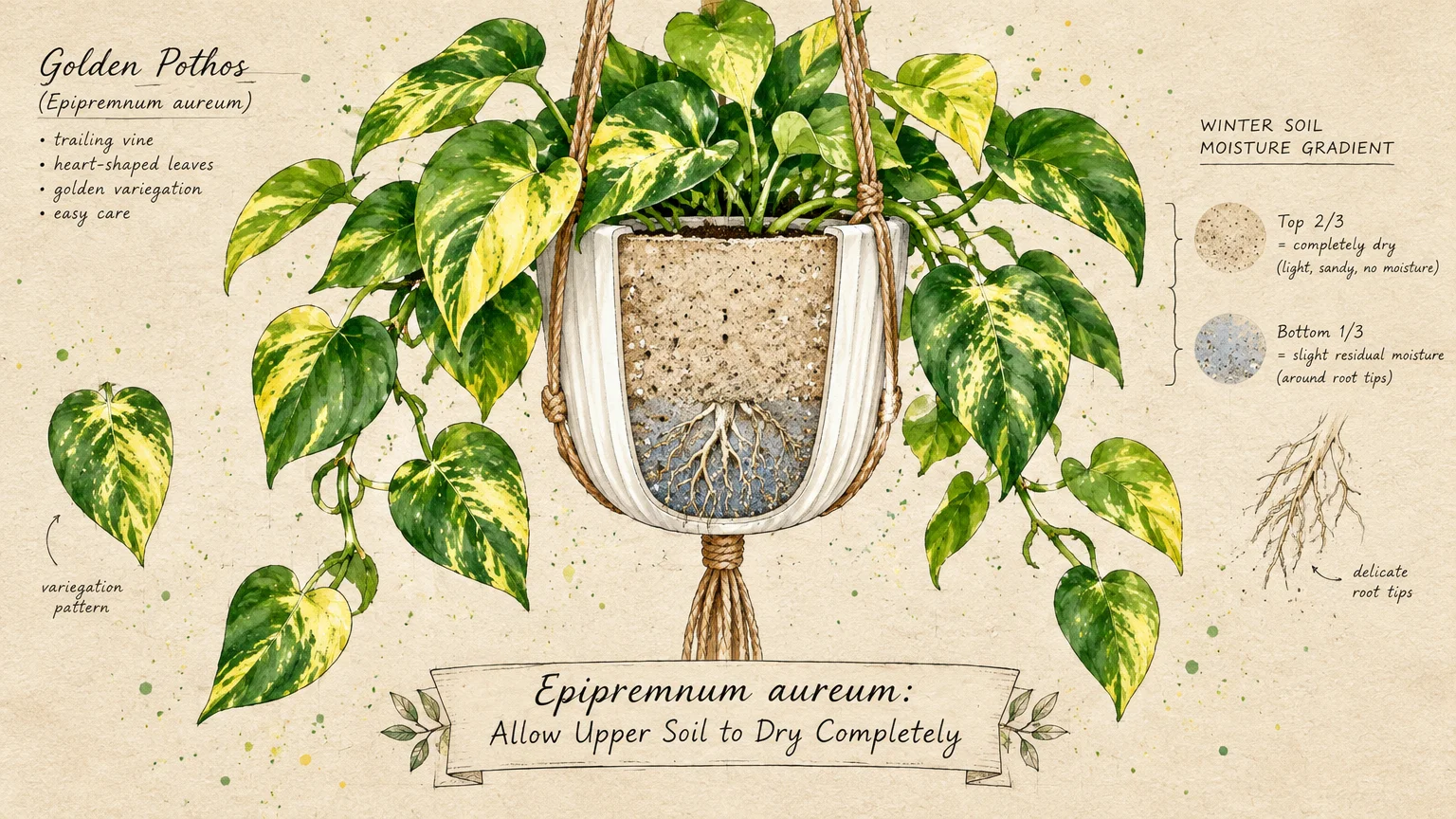
Tip #4: Pothos (Epipremnum aureum)
Pothos vines grow aggressively all through spring and summer, trailing vibrant variegated leaves across shelves. In winter, cooler temperatures and weak sunlight slow this vigorous growth.
Because the vine rests, moisture takes much longer to evaporate from the potting container. Continuing a summer watering routine will turn glossy green foliage limp and yellow.
Check the potting soil with your finger before grabbing your watering can. Only hydrate your pothos when the top two or three inches feel completely dry.
Look for slight drooping in the trailing stems as an indicator of thirst. Pothos leaves perk up within hours after receiving a thorough drink of room-temperature water.
Always allow surplus water to exit through the bottom drainage holes. Trapped water near the root ball invites opportunistic soil-borne pathogens.
Trim any yellowing vines near the base to direct energy toward healthy growth. Keeping the root zone slightly dry protects your vines through chilly drafts.
Careful houseplants winter watering preserves the lush trailing vines so they can resume vigorous growth once spring arrives.
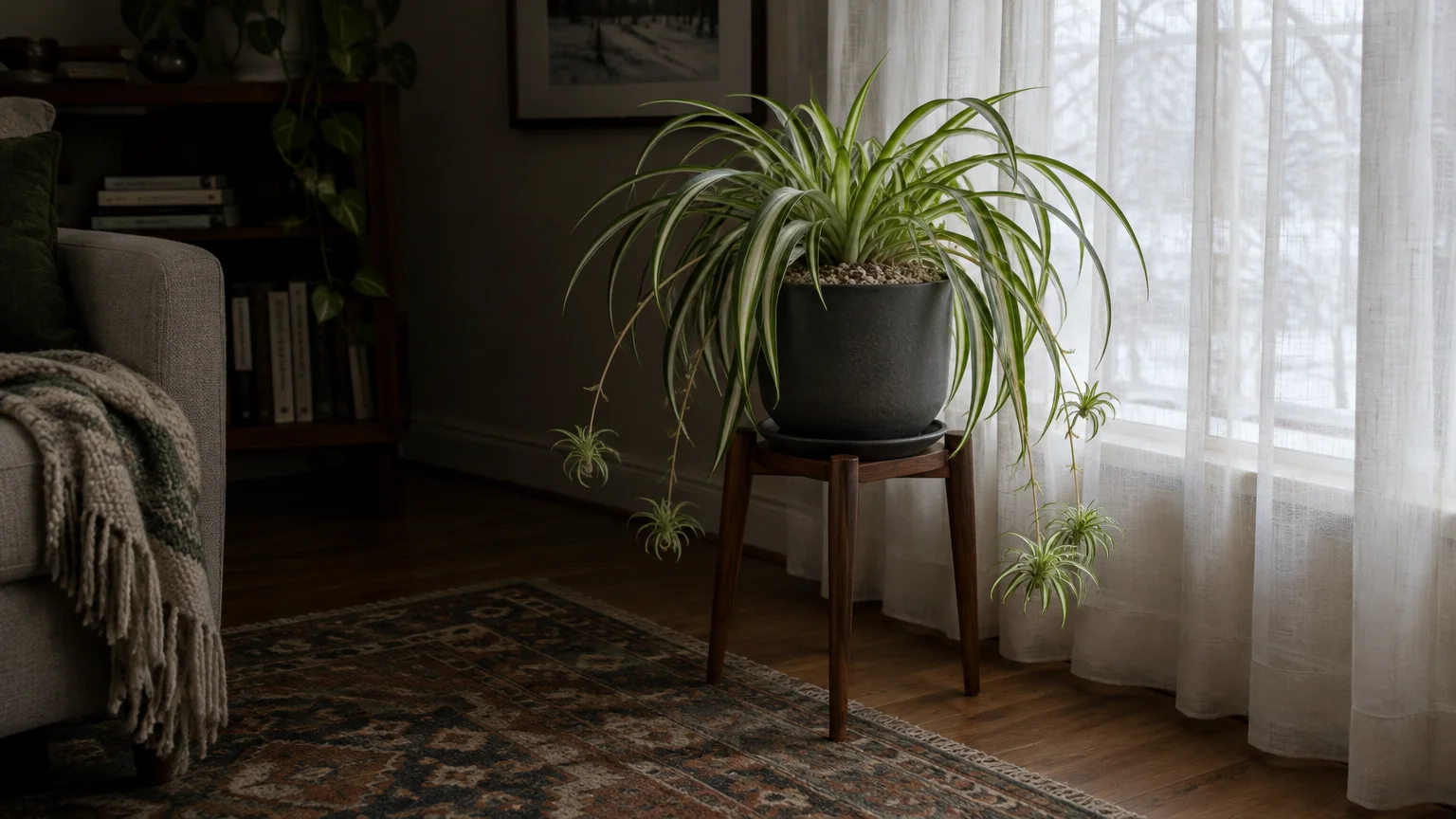
Tip #5: Spider Plant (Chlorophytum comosum)
Spider plants produce thick, fleshy tubers beneath the soil surface that store hydration efficiently. This underground root system buffers the plant against periodic droughts.
In winter, shorter days curb the production of new runners and plantlets. With less active growth, the plant draws significantly less water from the soil.
Extend intervals between waterings to roughly every ten to fourteen days. Let the top half of the potting soil dry out before you irrigate again.
Pale, faded leaves often indicate that the plant requires moisture. In contrast, heavy brown tips can stem from soggy roots or mineral build-up from tap water.
Use filtered water or collected rainwater whenever possible to prevent tip burn. Always dump any excess drainage liquid that collects in the exterior saucer.
Hang your spider plant in a bright room with indirect sunlight. Ample ambient light prevents the soil from staying wet for unhealthy stretches of time.
Keeping spider plants on the drier side prevents fungal gnats from breeding in wet surface soil during dreary winter weeks.
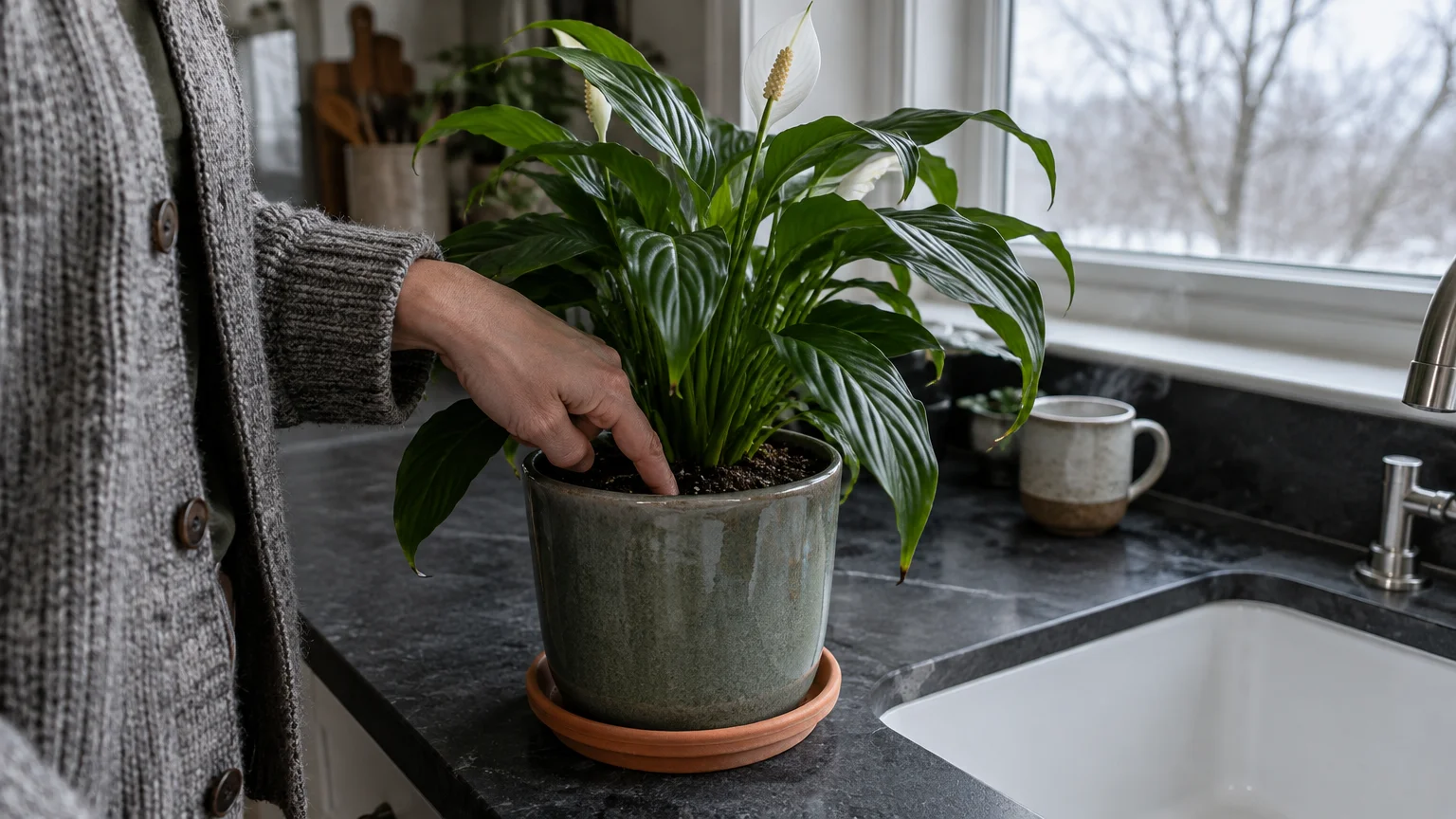
Tip #6: Peace Lily (Spathiphyllum)
Peace lilies are celebrated for their expressive foliage and elegant white blooms. While they enjoy consistent moisture in summer, winter requires a noticeably lighter touch.
Dim winter light substantially lowers the rate of transpiration through their broad, glossy leaves. Waterlogged soil during cold spells leads directly to black leaf tips and decaying root systems.
Wait until the top two inches of soil dry completely before offering moisture. You can also watch for the earliest signs of subtle leaf drooping before irrigating.
Avoid saturating the pot on a strict, unbending weekly calendar schedule. Instead, lift the pot to judge its weight; dry soil feels surprisingly light.
Water with room-temperature water rather than cold tap water. Frigid water shocks sensitive tropical roots and damages delicate vascular tissues.
Keep your peace lily away from cold drafts and heating registers. Stable indoor conditions prevent unnecessary stress while you practice restrained winter watering.
Practicing restrained houseplants winter watering keeps peace lily root systems firm, white, and ready to bloom in spring.
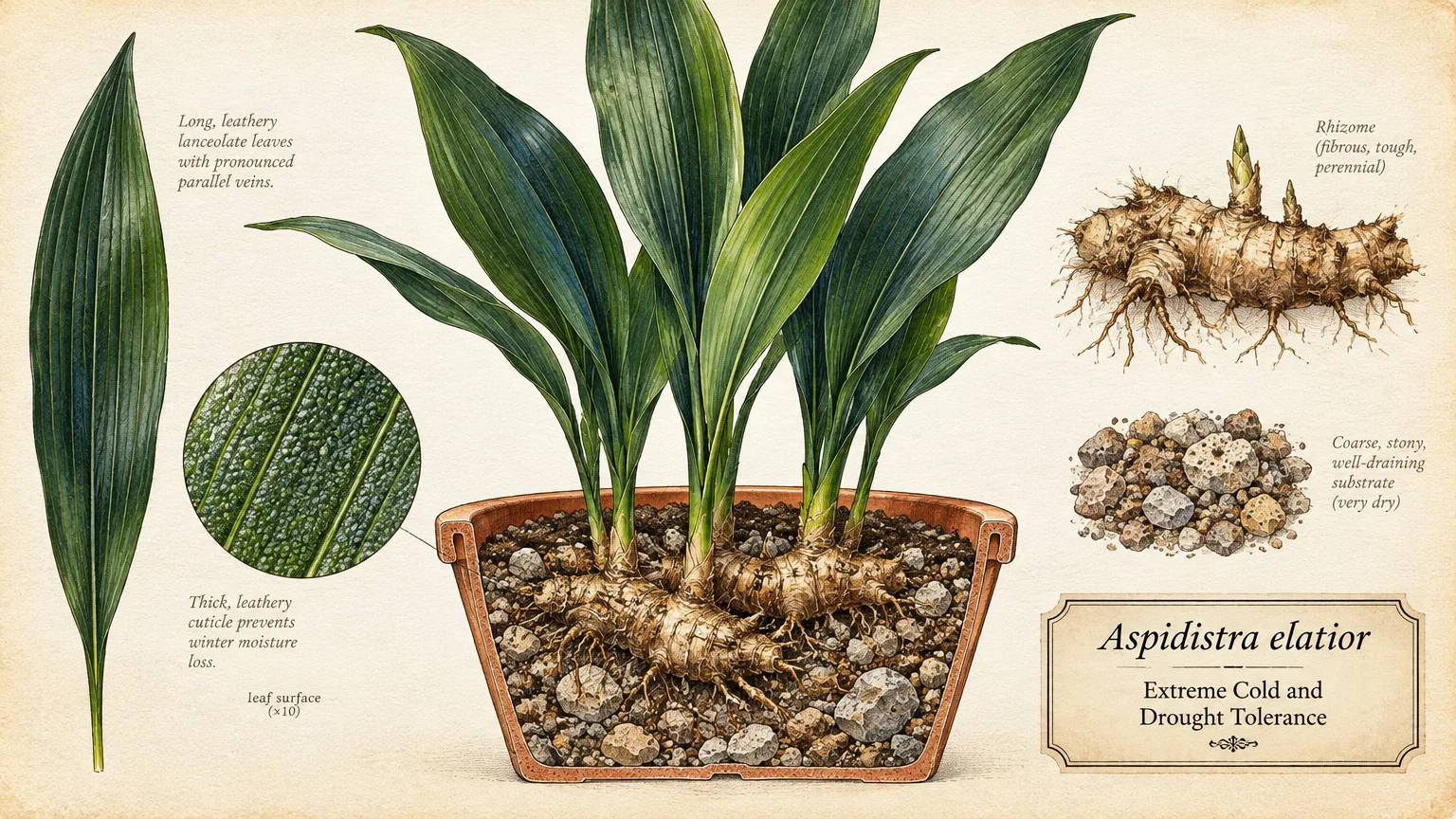
Tip #7: Cast Iron Plant (Aspidistra elatior)
True to its rugged name, the cast iron plant handles dark rooms and neglect with ease. Its broad, leathery leaves resist dry indoor heating better than most tropical species.
During winter months, this slow-growing plant stops expanding almost entirely. Excess soil moisture when the plant rests leads directly to root rot and fungal complications.
Restrict your watering schedule to once every two to three weeks. Allow the top three inches of potting soil to dry out thoroughly between applications.
Always water deeply until moisture trickles from the base, then discard standing drainage. Even deep-rooted cast iron plants succumb to rot if left submerged in standing water.
Dust the broad leaves with a damp cloth every few weeks to keep them clean. Removing indoor dust helps the foliage capture every scrap of scarce winter sunshine.
Never fertilize this plant during the cold winter dormancy period. Withholding nutrients prevents mineral salts from burning the slow-growing root tips.
These resilient foliage specimens rank high among low water houseplants that thrive without fuss through cold seasons.
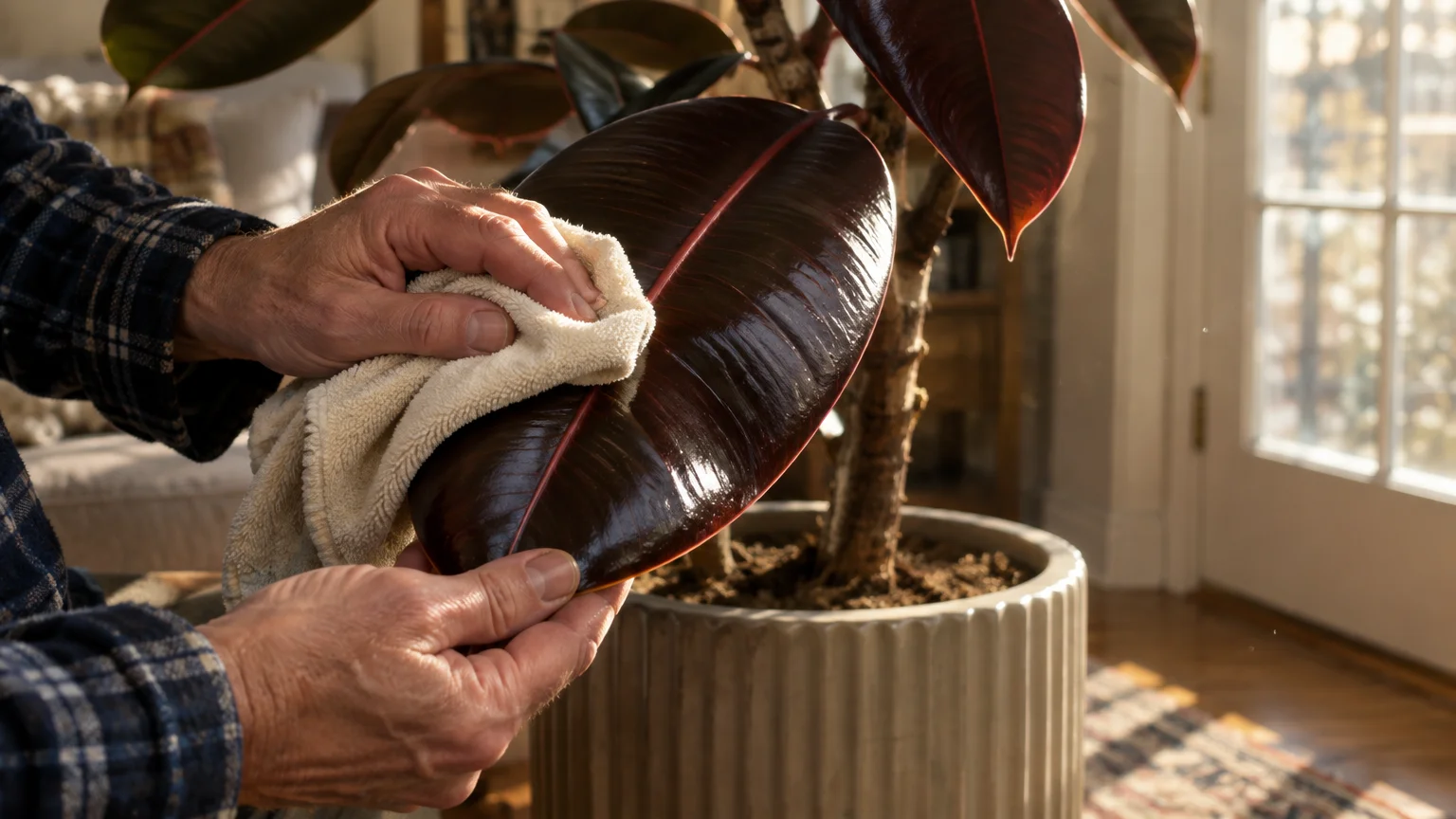
Tip #8: Rubber Tree (Ficus elastica)
Rubber trees boast bold, leathery foliage with a waxy cuticle that locks in moisture. This protective leaf surface naturally slows transpiration in heated living rooms.
With low winter light levels, your rubber tree halts vegetative growth until spring. Adding too much water during this dormant stage causes lower leaves to drop rapidly.
Water your rubber tree only when the top half of the potting soil feels dry. For larger floor pots, that often translates to watering once every three weeks.
Insert your finger deep into the soil mix to test internal moisture levels accurately. Surface soil may appear dry while the core remains saturated from a previous drink.
Give the plant a thorough soak when thirsty, ensuring water drains freely from the pot. Empty the saucer immediately so the root ball never sits in stagnant runoff.
Place your rubber tree in bright, indirect light to help it manage available soil moisture efficiently throughout winter.
Rotate the pot a quarter turn every two weeks so all leaves receive equal exposure to weak seasonal sunlight.
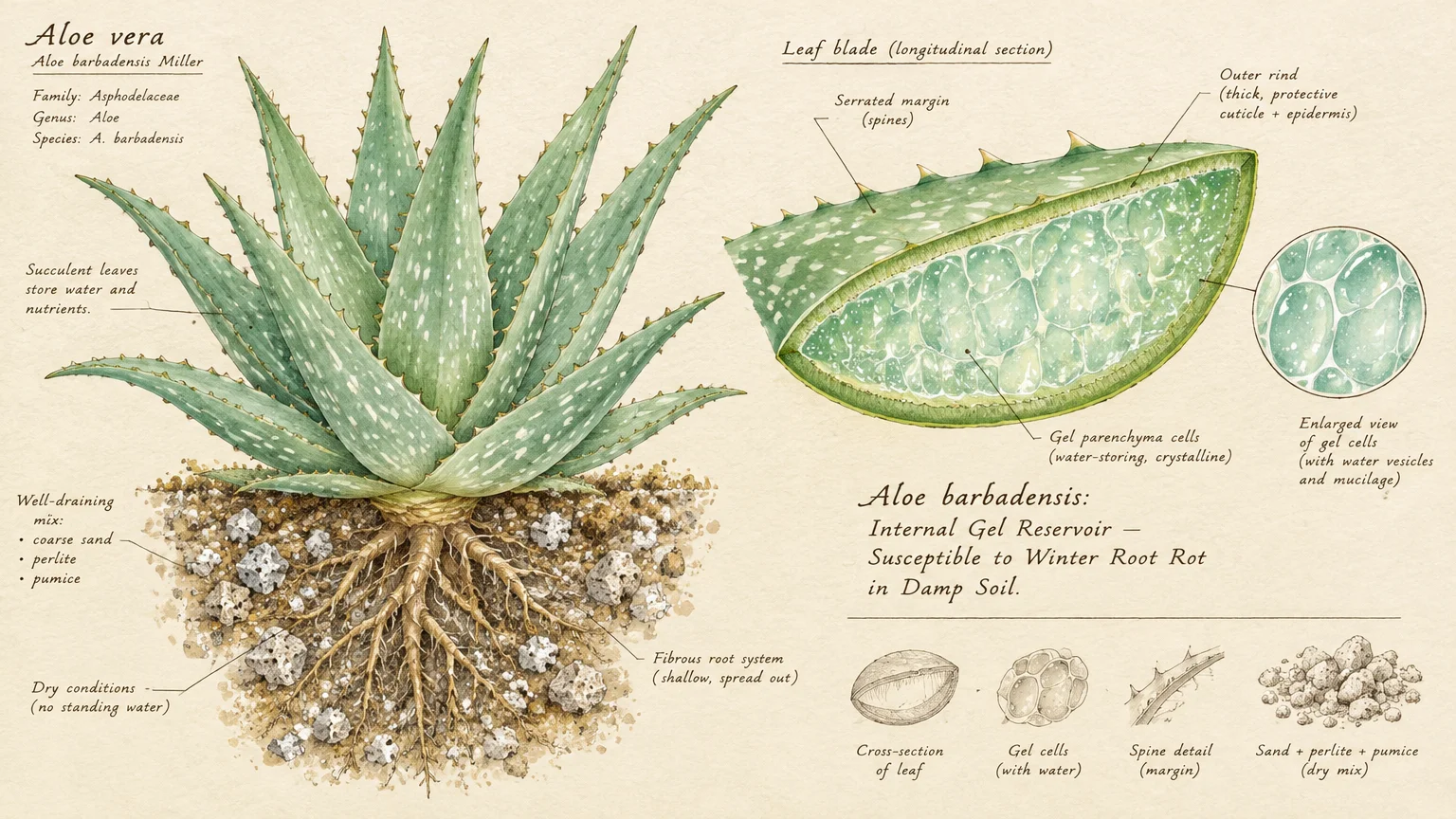
Tip #9: Aloe Vera (Aloe barbadensis)
Aloe vera is a beloved healing succulent with gel-filled, serrated leaves designed to survive dry spells. Its specialized tissues store abundant moisture, demanding minimal hydration during winter.
In cool conditions, aloe vera slows water uptake dramatically to protect its root system. Damp winter soil causes the fleshy base of the plant to turn brown and collapse.
Water your aloe vera plant only once every four to five weeks during the winter season. Ensure the potting medium dries out completely down to the bottom drainage holes.
When you water, soak the potting soil thoroughly until liquid exits into the drainage saucer. Discard this pooled runoff after fifteen minutes to protect vulnerable root crowns.
Position your aloe on a sunny, south-facing windowsill to provide plenty of direct winter rays. Strong natural sunlight helps the plant process soil moisture safely.
Avoid watering near the center of the rosette where moisture might pool. Direct water strictly around the soil edges to safeguard the stem.
Remembering that aloe prefers underwatering to overwatering ensures your plant remains firm, plump, and healthy.
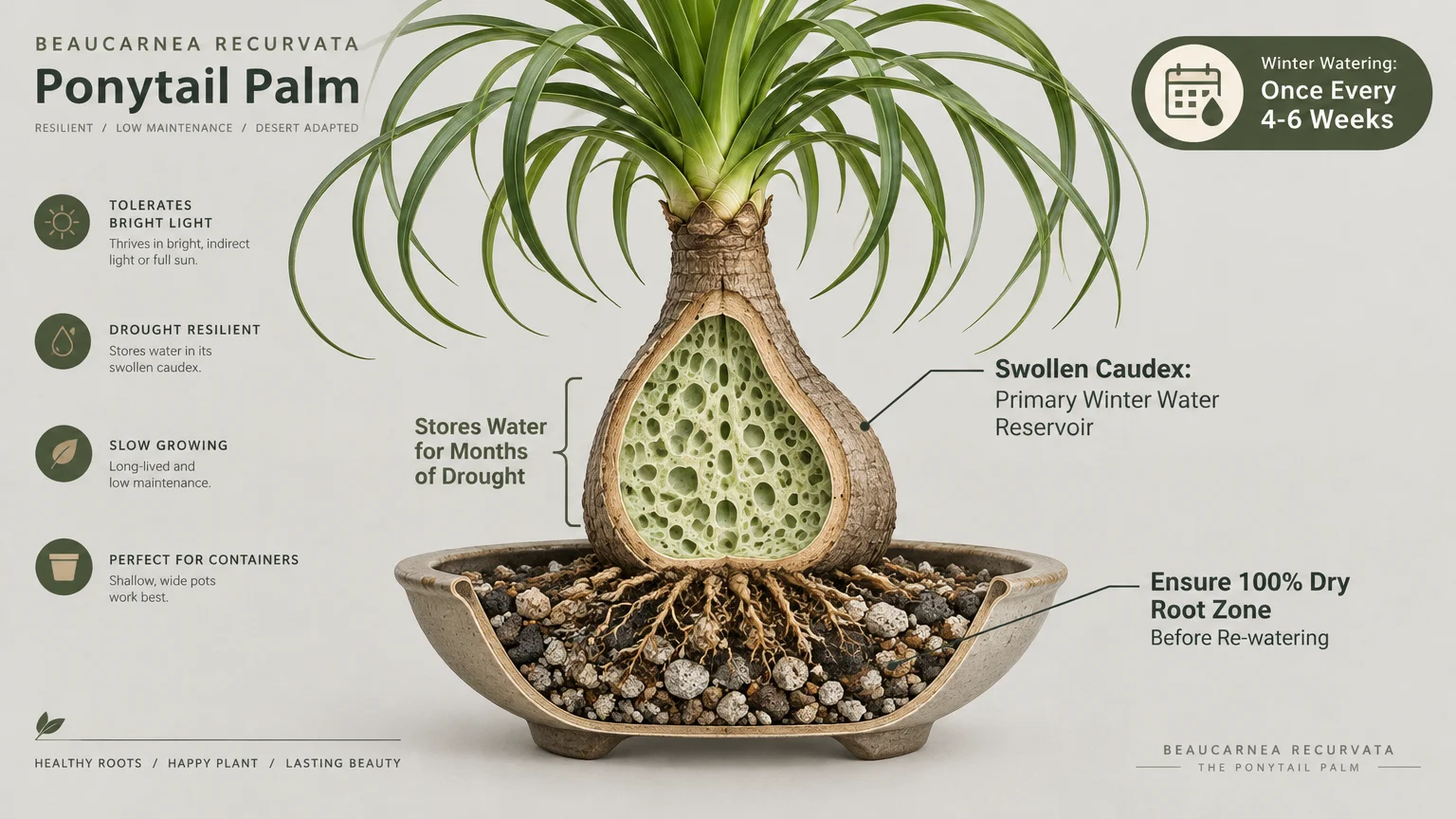
Tip #10: Ponytail Palm (Beaucarnea recurvata)
Despite its common name, the ponytail palm is actually a succulent relative of the agave family. It features a swollen, bulbous trunk called a caudex that stores vast amounts of water.
This bulbous trunk acts as an internal reservoir designed specifically for enduring prolonged droughts. Because winter halts active foliage production, the plant uses very little moisture.
You only need to water a ponytail palm once every four to six weeks in winter. The potting mix must dry out entirely between your watering sessions.
Always check the base of the trunk for firmness when inspecting the plant. A firm caudex means the plant holds plenty of stored hydration within its tissues.
If the bulbous base ever softens, stop watering immediately and let the soil aerate. Overwatering causes the sensitive root zone inside the pot to decay rapidly.
Position your ponytail palm in the brightest spot available to maintain strong foliage during darker months.
Embrace its slow seasonal rhythm; this unique specimen excels at dry indoor winter survival.
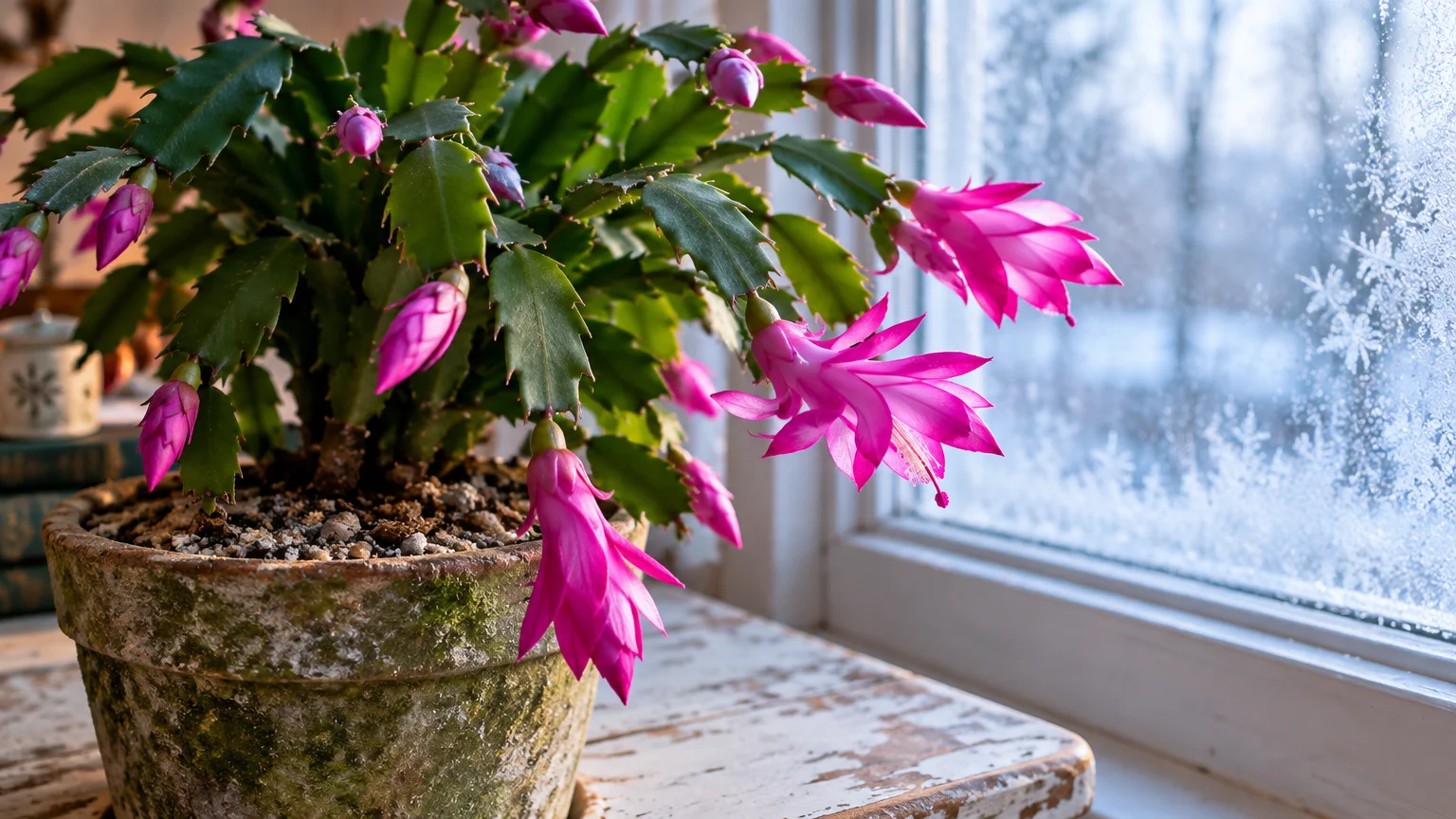
Tip #11: Christmas Cactus (Schlumbergera bridgesii)
Christmas cacti are tropical epiphytes native to Brazilian rainforests, growing on tree branches rather than desert soil. They require specialized attention when the weather turns chilly.
While they produce spectacular seasonal blossoms in early winter, their moisture needs drop sharply once flowering ends. After the blossoms drop, the plant slips into a required resting period.
Cut back your watering schedule significantly once the colorful floral blooms fade away. Water only when the top two inches of potting mix become completely dry.
Wrinkled, puckered leaf segments indicate dehydration, prompting you to deliver a modest drink. Saturated soil, however, causes flower buds to drop prematurely and roots to rot.
Provide bright, filtered sunlight away from cold window glass and direct heating vents. Warm radiator drafts dry out leaves while keeping the root ball cold and damp.
Keep the soil barely moist to the touch during the bloom cycle, then decrease watering further as post-bloom dormancy begins.
Gentle restraint during this post-bloom winter rest encourages healthy new vegetative pads when spring growth resumes.
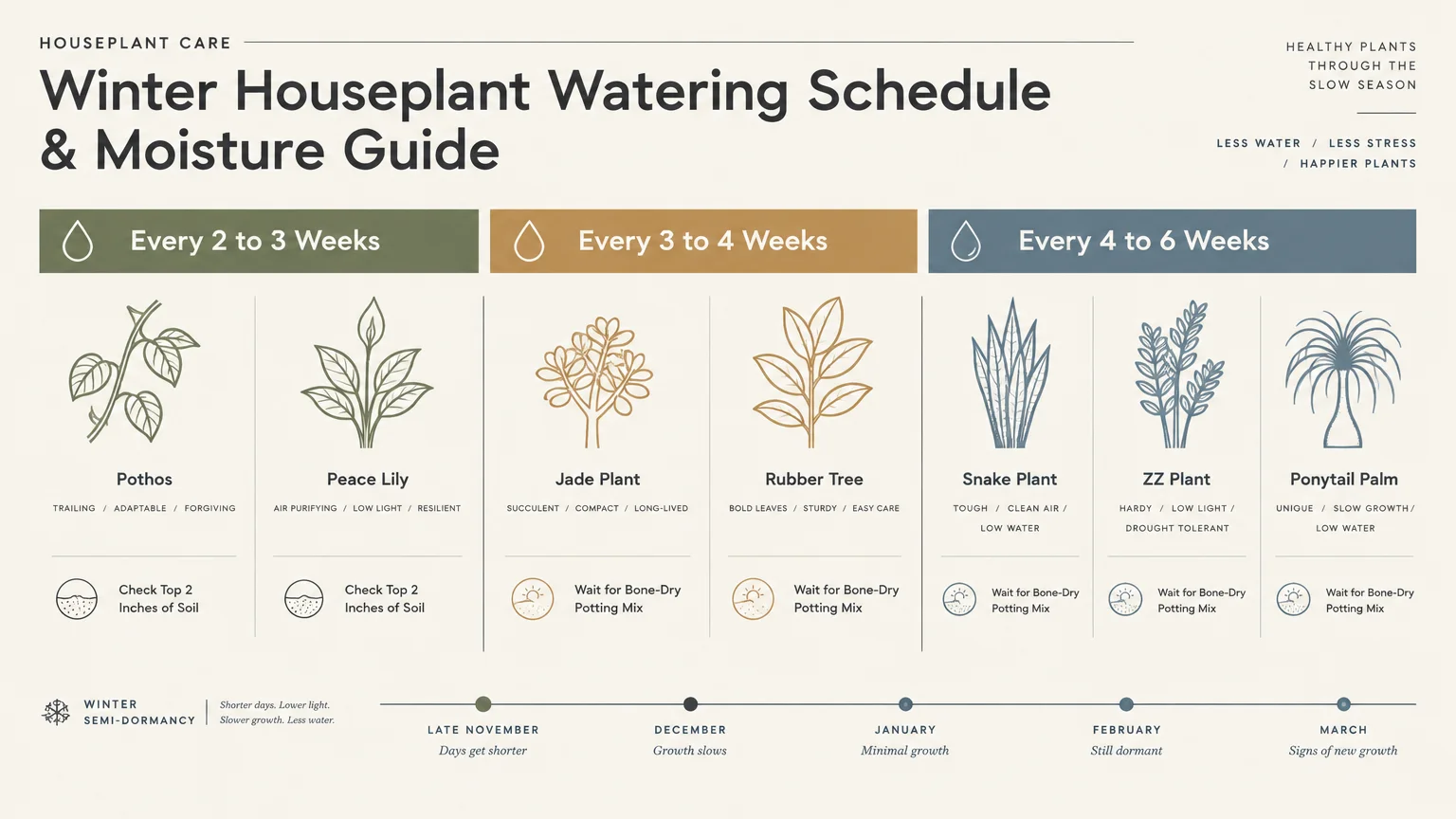
Putting It All Together: Enjoy Your Beautiful Garden
Understanding winter houseplant care unlocks thriving, lush indoor greenery without tedious daily maintenance. Giving your plants a restful winter break preserves their health and builds root strength.
Indoor plant care during cold months centers on observing leaves rather than following strict schedules. Always test soil moisture manually before reaching for your watering can.
Decreasing water houseplants in winter protects tender root hairs from cold, waterlogged conditions. Your green companions will reward your patience with vibrant, vigorous growth once sunny spring days arrive.
Pair reduced watering with clean foliage and adequate sunlight to keep plants thriving all season long. Wiping dust from leaves ensures they capture every ray of soft winter light.
Take pride in your resilient indoor garden as you watch your housemates rest peacefully. Gardening success comes from working alongside nature’s seasonal rhythms with care and confidence.
Frequently Asked Questions
How do I know if my houseplant needs water in winter?
Insert your finger two inches into the soil or use a wooden moisture skewer. If the wood emerges dry and clean, your plant is ready for a drink.
You can also lift the container to evaluate its overall weight. Dry soil feels exceptionally light compared to a pot holding saturated soil.
Why do indoor plants dry out slower in winter?
Shorter daylight hours and weaker sun significantly reduce photosynthesis and transpiration rates. Plants drink far less water while operating in this low-energy resting state.
Cooler indoor ambient temperatures also slow natural surface evaporation from the soil. Consequently, potting soil stays damp for much longer periods than in warm summer months.
Should I fertilize houseplants during the winter months?
Most houseplants do not need fertilizer during winter because they are not actively producing new foliage. Adding fertilizer to dormant roots causes chemical salt build-up and leaf burn.
Hold off on feeding your plants until you see active new growth in early spring. Resume a balanced, diluted fertilizer schedule when natural daylight begins to expand.
What should I do if I accidentally overwatered a plant in winter?
Immediately empty any excess water standing inside the drip tray or outer decorative cachepot. Move the plant to a brighter, warmer location with gentle air circulation.
If the soil stays waterlogged for several days, gently unpot the plant and inspect its roots. Trim away any black, mushy roots and repot into fresh, dry potting soil.
For region-specific advice, consult your local University Extension program (find yours via the USDA directory). For plant databases and inspiration, visit the Missouri Botanical Garden or the Royal Horticultural Society.
Disclaimer: This article provides general gardening advice. Always consider your specific climate, soil conditions, and local pests. Follow safety guidelines when using gardening tools and products.