Aggressive ant colonies can quickly disrupt garden beds, excavate soil around delicate roots, and protect damaging aphids on your prized plants. You can reclaim your garden today with proven, earth-friendly strategies that restore natural balance.
Ants love dry, undisturbed soil and the sweet honeydew produced by common garden pests. Once they claim your raised beds or borders, their sprawling tunnels dry out root systems and weaken plant growth.
Targeting their scent trails and food sources keeps ants out of garden areas permanently without harming your harvest or beneficial pollinators. Simple adjustments will protect your soil structure and keep your plants thriving all season long.
Tip #1: Eliminate Honeydew-Producing Garden Pests
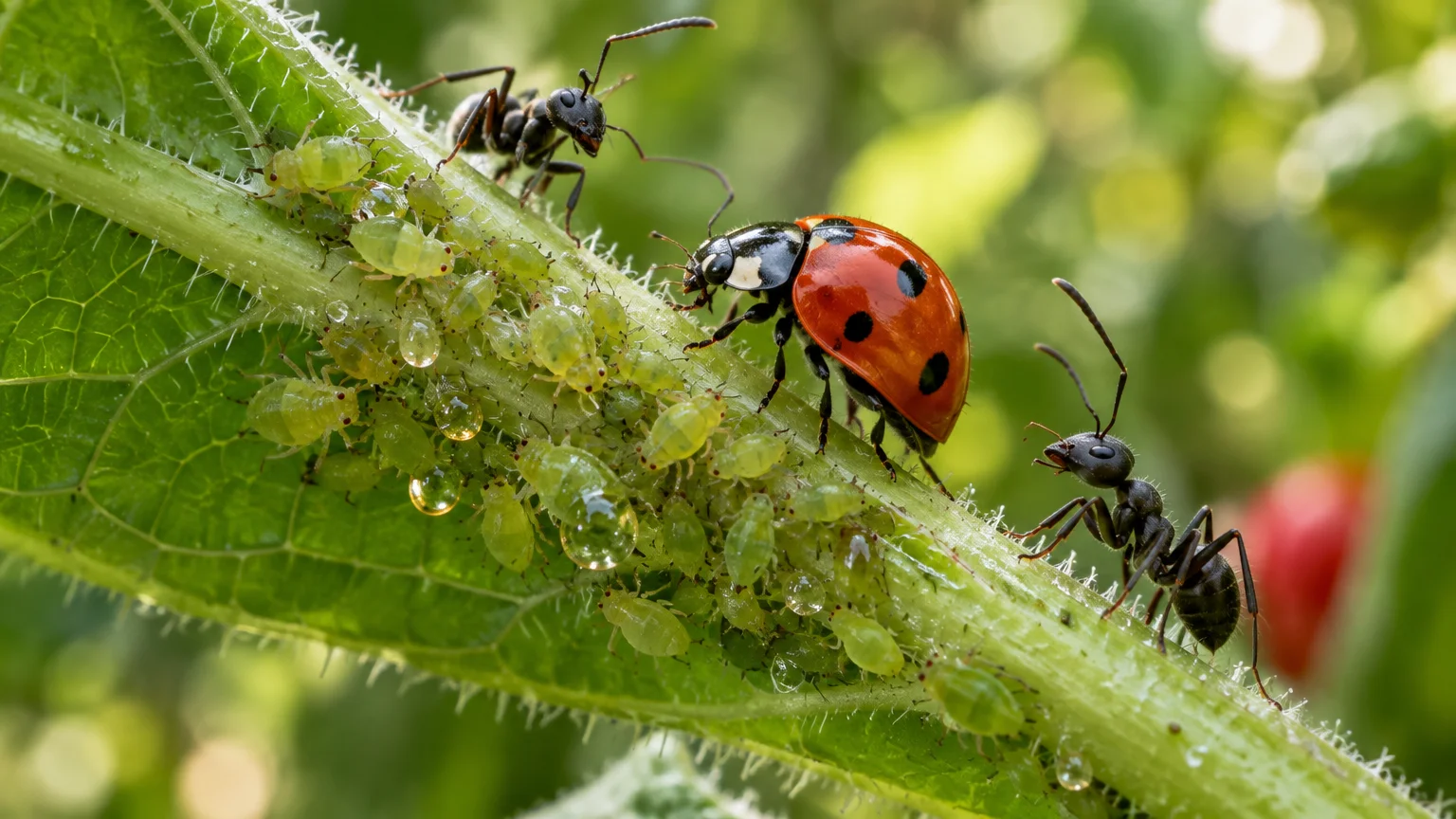
Ants often invade garden beds because they want to harvest sweet honeydew. Aphids, soft scale, and mealybugs excrete this sugary substance as they feed on your plants.
Worker ants act like miniature farmers; they fiercely protect these garden pests from predators like ladybugs and lacewings. Removing these sap-sucking insects eliminates the primary food supply for ants in garden beds.
Inspect the undersides of your plant leaves and new shoots weekly. Look for curling foliage, sticky residue, or visible clusters of tiny green, black, or white bugs.
Blast infested stems with a sharp jet of water from your garden hose. This mechanical rinse dislodges aphids instantly without harming delicate plant tissues.
Follow up by applying organic insecticidal soap or diluted neem oil directly onto problem areas. Thoroughly coat both sides of the leaves during the early morning or evening hours.
This treatment dissolves the waxy protective coating on soft-bodied insects. Once the honeydew dries up, foraging ants will abandon your planting beds in search of sweeter pastures.
Encourage natural predators like ladybugs, hoverflies, and parasitic wasps by growing flowering dill and alyssum nearby. These beneficial insects devour aphids rapidly, cutting off the ant food supply naturally.
Tip #2: Apply Food-Grade Diatomaceous Earth
Food-grade diatomaceous earth delivers powerful natural ant control without toxic synthetic chemicals. This fine powder consists of microscopic fossilized aquatic organisms called diatoms.
The tiny silica particles feature razor-sharp edges that cut through an insect’s protective exoskeleton upon contact. As a result, the powder absorbs vital moisture and rapidly dehydrates trespassing ants.
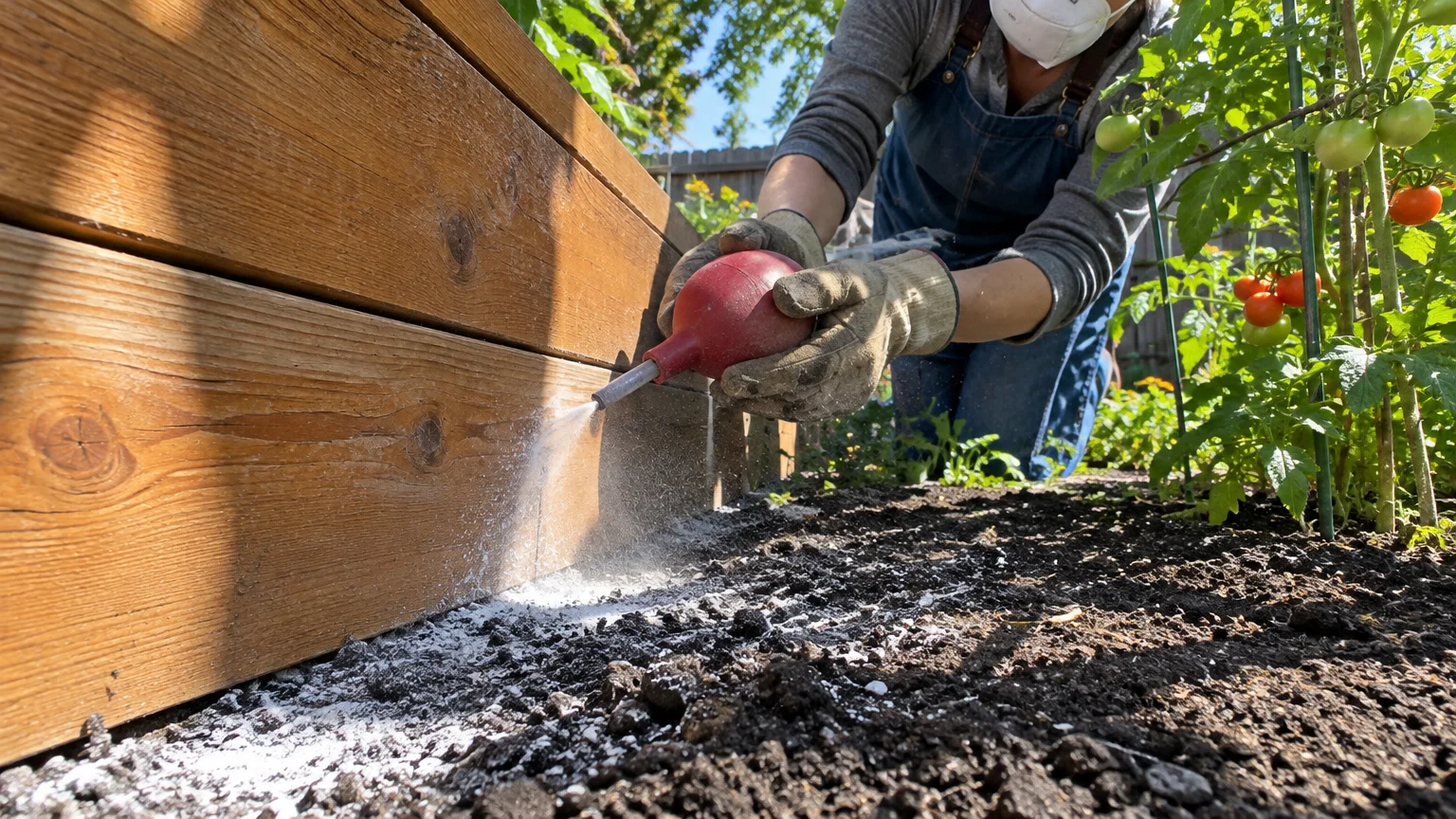
Always purchase food-grade diatomaceous earth rather than pool-grade versions, which contain dangerous crystalline silica. Wear a simple dust mask during application to avoid inhaling airborne particles.
Dust the dry powder around the perimeter of your raised beds and directly across active foraging trails. Focus on the base of vulnerable plant stems where ants love to travel.
Keep in mind that diatomaceous earth only works when completely dry. Rain, heavy morning dew, and overhead irrigation render the microscopic edges ineffective.
Reapply a fresh, light dusting once your garden soil dries out after a storm. Consistent application creates an impassable defensive perimeter that repels ant colonies reliably.
Apply diatomaceous earth using a dedicated powder duster tool for even, precise distribution. A light, dusty haze works far better than heavy clumpy piles, which ants will simply walk around.
Tip #3: Scatter Ground Cinnamon and Aromatic Spices
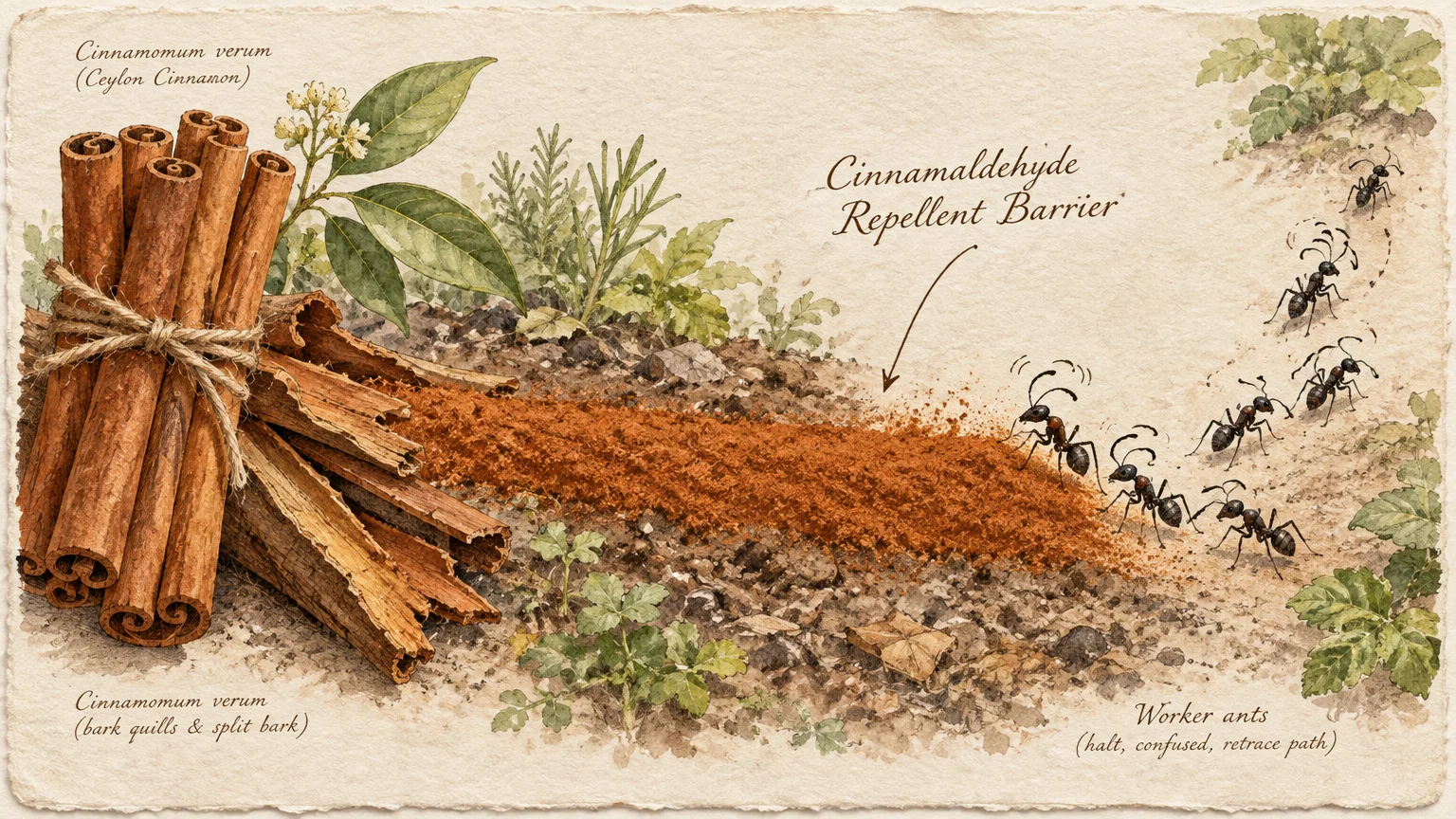
Common culinary cinnamon serves as an exceptional organic repellent for frustrating ant infestations. Ants rely heavily on airborne scent trails to navigate, communicate, and locate food.
Ground cinnamon contains potent aromatic compounds, particularly cinnamaldehyde, which overwhelm an ant’s sensitive sensory receptors. The strong odor completely disorients scout ants and ruins their mapped foraging paths.
Dust a generous line of powdered cinnamon along the borders of your garden beds. Create an unbroken barrier around seedling stems, container rims, and wooden frame edges.
When ants encounter this pungent spice barrier, they refuse to cross it. They will turn back toward their nest rather than step through the aromatic powder.
You can also combine ground cinnamon with cayenne pepper or black pepper for added deterrence. Capsaicin provides an extra layer of sensory irritation that discourages tunneling pests.
Replenish your spice barriers every few days or immediately following irrigation cycles. This kitchen remedy smells wonderful to gardeners while driving unwanted insects away safely.
You can also sprinkle whole cloves or bay leaves along vulnerable seedlings for added scent disruption. These dried spices emit pungent eugenol vapors that further irritate an ant’s sensitive antennae.
Tip #4: Plant Ant-Deterrent Companion Herbs
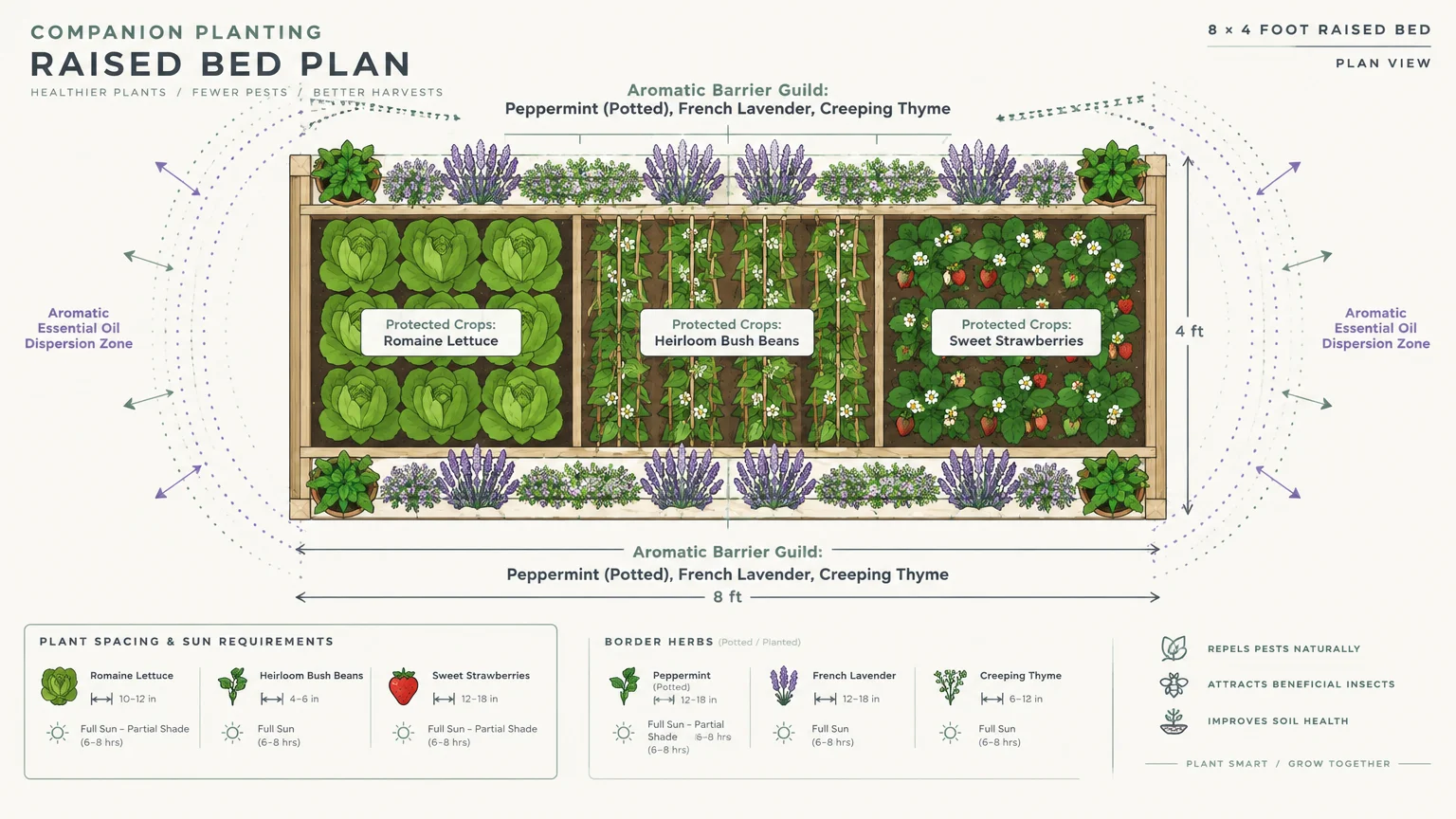
Companion planting offers an attractive, living defense against invading ant colonies. Certain aromatic herbs produce volatile organic oils that naturally repel garden pests.
Mint, rosemary, lavender, thyme, and catnip release pungent scents that ants actively avoid. By interplanting these herbs throughout your garden beds, you create an uninviting environment.
Spearmint and peppermint provide the strongest deterrent effect in edible borders. However, you should grow mint in sunken pots to prevent its invasive underground runners from spreading.
Position bushy rosemary and English lavender shrubs along the sunniest edges of your raised beds. These hardy perennials deter unwanted insects while attracting vital bumblebees and butterflies to your blooms.
You can also tuck creeping thyme between stepping stones and garden walkways. Bruising the leaves with your footwear as you walk releases fresh bursts of protective herbal oils.
This botanical approach improves plant biodiversity and enriches garden soil. Furthermore, you will enjoy a continuous harvest of fresh culinary herbs right outside your kitchen door.
Consider planting French marigolds throughout your vegetable beds alongside your culinary herbs. Marigolds emit strong aromas and subterranean root exudates that deter diverse garden pests while brightening your landscape.
Tip #5: Spray Diluted Essential Oil Solutions
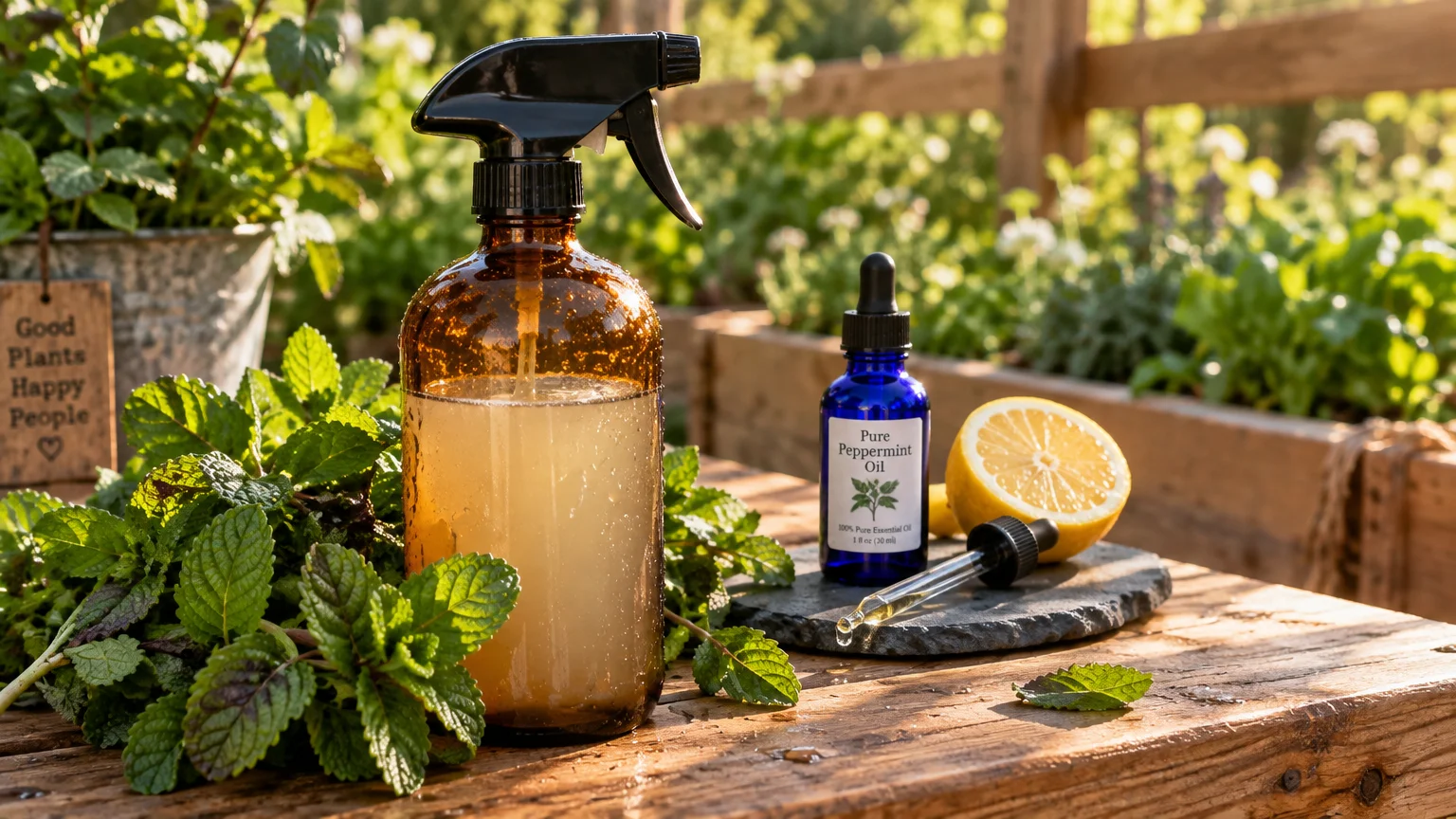
Pure botanical essential oils provide a concentrated method for ant prevention across large beds. Peppermint, clove, tea tree, and eucalyptus oils contain powerful insect-repelling terpene compounds.
When you spray these aromatic oils, you instantly erase the invisible pheromone trails left by scout ants. Without these chemical highways, worker ants cannot find their way back to food sources.
Mix fifteen drops of pure peppermint oil with one quart of warm water in a spray bottle. Add half a teaspoon of mild liquid castile soap to emulsify the oils thoroughly.
Shake the mixture vigorously before each use to keep the essential oils evenly suspended. Spray the solution generously along bed edges, trellis posts, and active ant highways.
Avoid spraying concentrated oil mixtures directly onto tender young leaves in hot afternoon sun. High heat paired with oils can cause foliar sunburn on delicate leafy greens.
Apply the fragrant spray once a week during peak summer activity. The clean aroma will revitalize your garden space while keeping crawling insects on the defensive.
Reapply your essential oil spray every two to three days during hot, dry spells. Consistent scent disruption forces stubborn ant colonies to pack up and migrate away from your beds.
Tip #6: Deploy Borax and Sugar Bait Stations
Surface repellents push worker ants away, but eliminating a massive colony requires targeting the underground queen. Homemade sweet bait stations deliver slow-acting mineral toxicity directly to the nest.
Borax, also known as sodium tetraborate, acts as a gentle yet lethal stomach toxin for insects. When mixed with sugar, foraging workers greedily ingest the bait and transport it below ground.
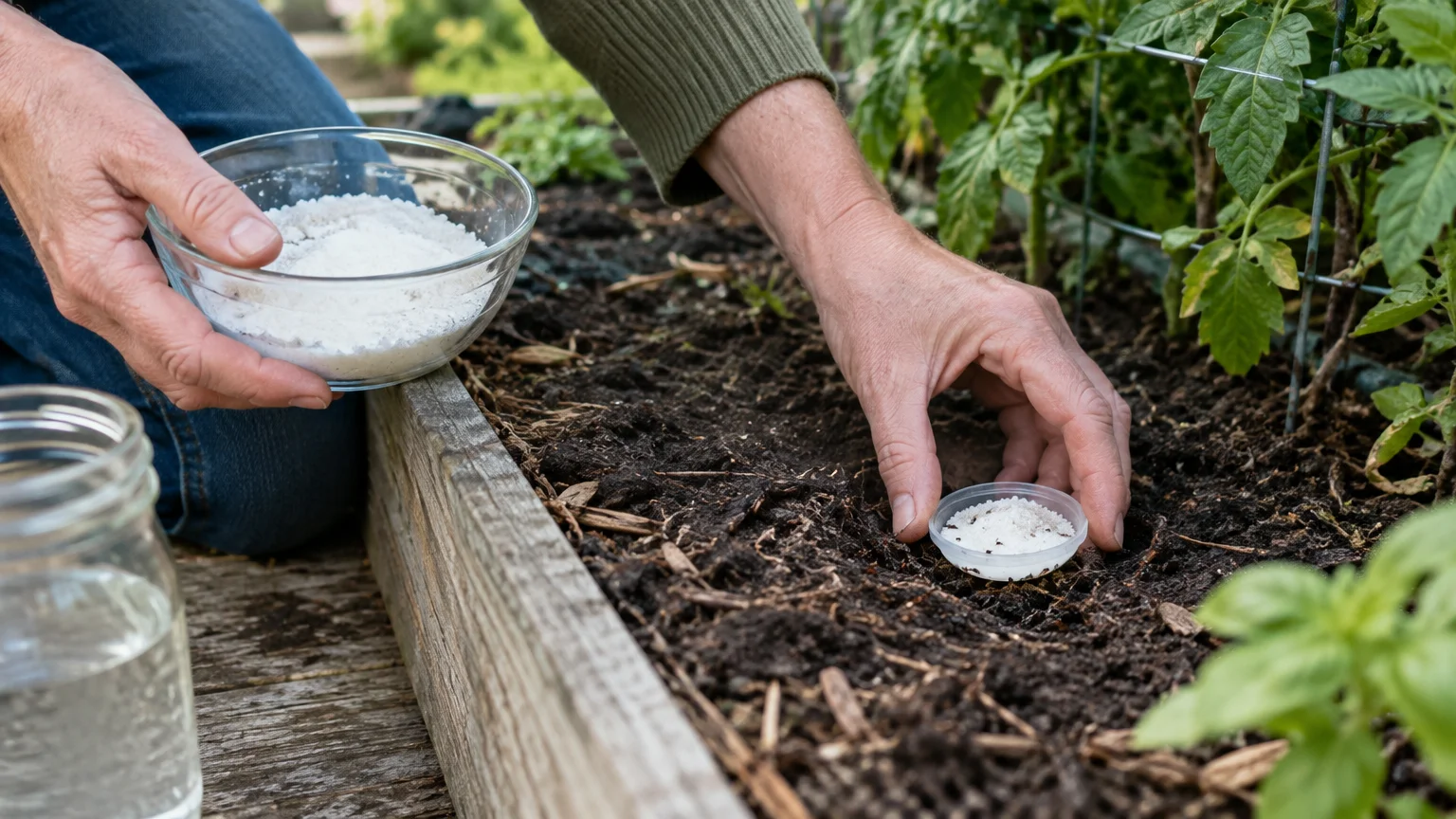
Combine one-half cup of warm water, one-half cup of white sugar, and one tablespoon of borax powder. Stir the liquid thoroughly until every crystal dissolves completely.
Soak cotton balls in this sweet syrup and place them inside clean, lidded plastic containers. Poke several tiny entry holes into the sides so only worker ants can enter.
Secure the lids tightly to protect curious pets, songbirds, and pollinating bees from touching the bait. Position the stations near ant mounds or along established garden trails.
The workers will share the toxic syrup with the entire colony, including the queen and developing larvae. Within several days, the entire nest collapses from within.
Monitor bait levels twice each week and replace hardened syrup with fresh solution as needed. Consistent feeding ensures the active ingredient reaches every chamber within the subterranean colony.
Tip #7: Drench Underground Nests with Boiling Water
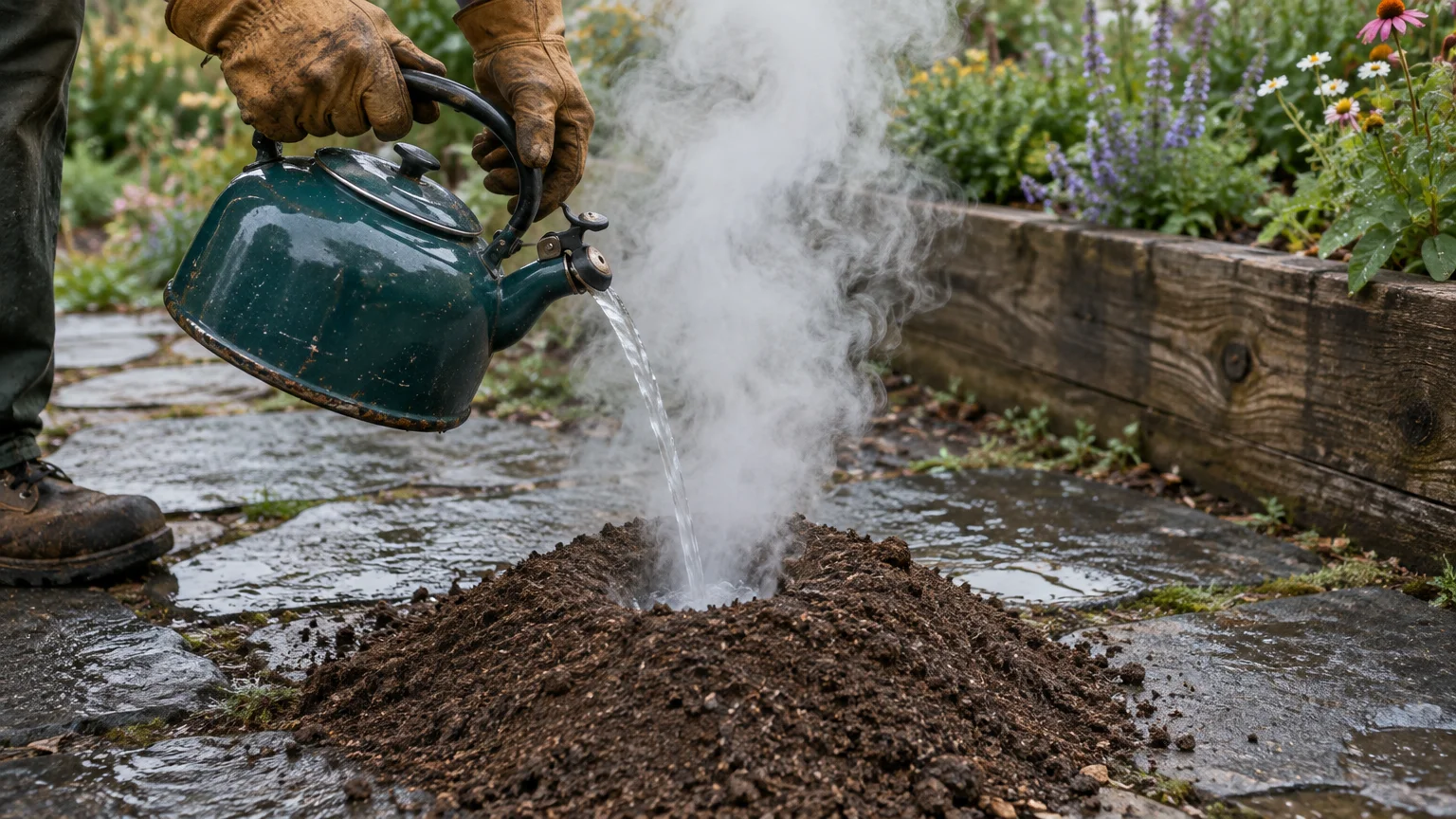
Sometimes you must take direct physical action against an established mound near your garden beds. Pouring boiling water directly into an active nest provides immediate, non-toxic eradication.
The extreme heat instantly collapses deep underground tunnels and neutralizes ants on contact. This method eliminates the need for persistent synthetic insecticides in your rich garden soil.
Bring a large kettle or stockpot of plain tap water to a rolling boil on your stove. Carefully carry the steaming pot out to your garden bed using heavy-duty heat-resistant gloves.
Slowly pour the scalding water straight down the central entrance hole of the ant mound. Deliver several gallons so the boiling liquid penetrates deep into lower nesting chambers.
Exercise extreme caution when using this method around desirable vegetable and flower roots. Boiling water will scald and damage tender plant roots just as quickly as ants.
Reserve boiling drenches for mounds situated along garden borders, pathways, and bare patches between beds. A single thorough treatment often destroys the queen and ends nest activity.
Mix two tablespoons of liquid castile soap into your boiling water for enhanced penetration. The soap breaks surface tension, allowing the boiling drench to saturate deep tunnel networks rapidly.
Tip #8: Create Citrus Peel Vinegar Sprays
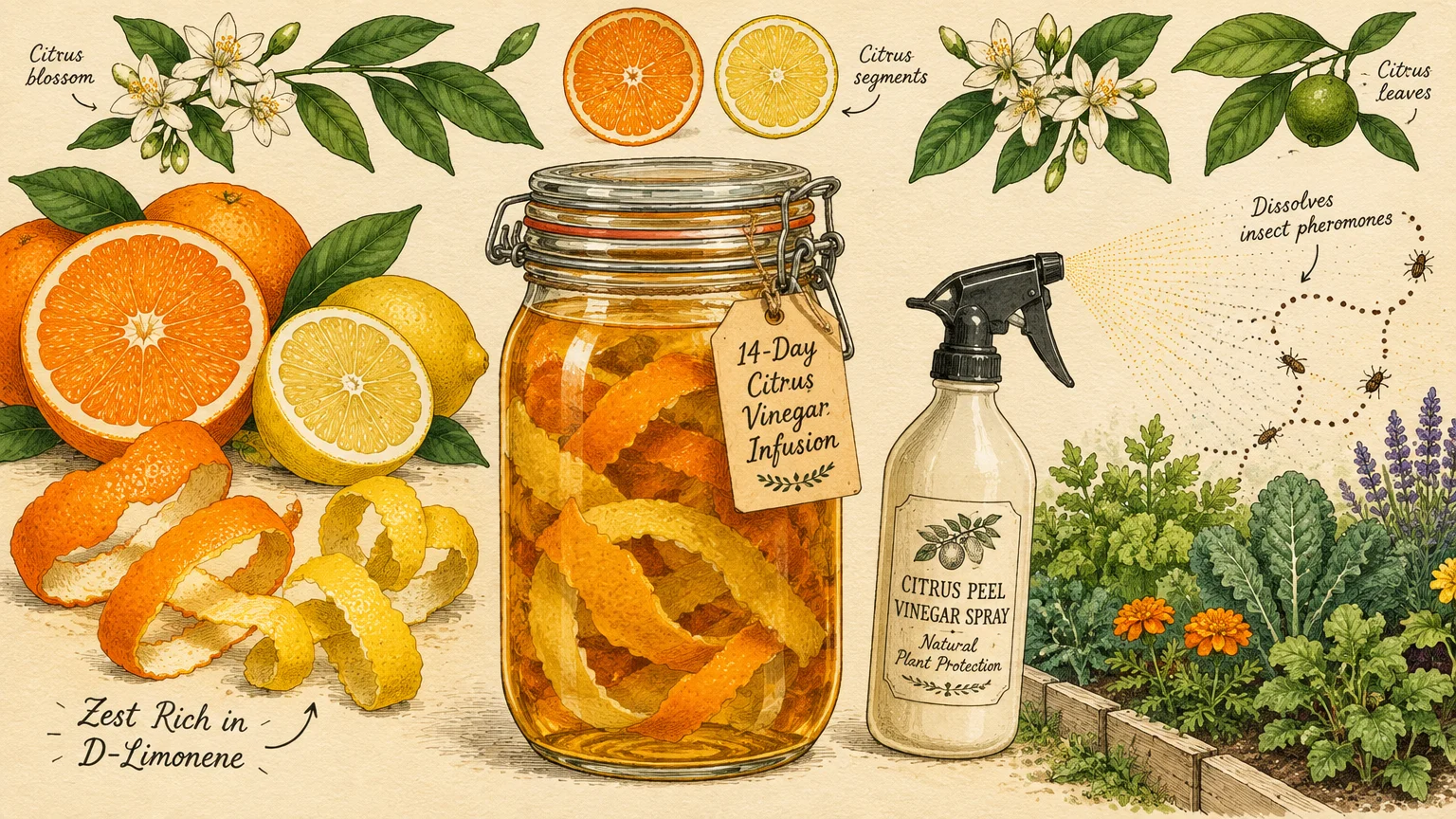
Citrus peels contain high levels of d-limonene, an acidic natural compound that breaks down insect exoskeletons. Combined with distilled white vinegar, citrus creates a potent cleaning and repellent tonic.
Vinegar contains acetic acid, which neutralizes the alkaline scent markers ants leave behind. Stripping these chemical signals causes profound confusion among foraging worker ants.
Collect leftover peels from oranges, lemons, limes, or grapefruits throughout the week. Pack the fresh peels tightly into a glass canning jar and cover them with plain white vinegar.
Seal the jar and allow the peels to steep in a dark cupboard for two weeks. Strain out the solids and pour the fragrant, amber-tinted liquid into a garden sprayer.
Spray the acidic solution along wooden raised bed frames, stone borders, and garden paths. Avoid spraying the acidic mixture directly onto garden soil, which can alter soil pH levels.
This homemade spray leaves your garden borders smelling bright and clean. Ants will immediately detour away from surfaces treated with this sharp citrus barrier.
Reapply the citrus vinegar spray immediately after watering your garden beds. Maintaining a sharp scent barrier along physical borders prevents scout ants from establishing new foraging paths.
Tip #9: Maintain Proper Moisture and Mulch Management
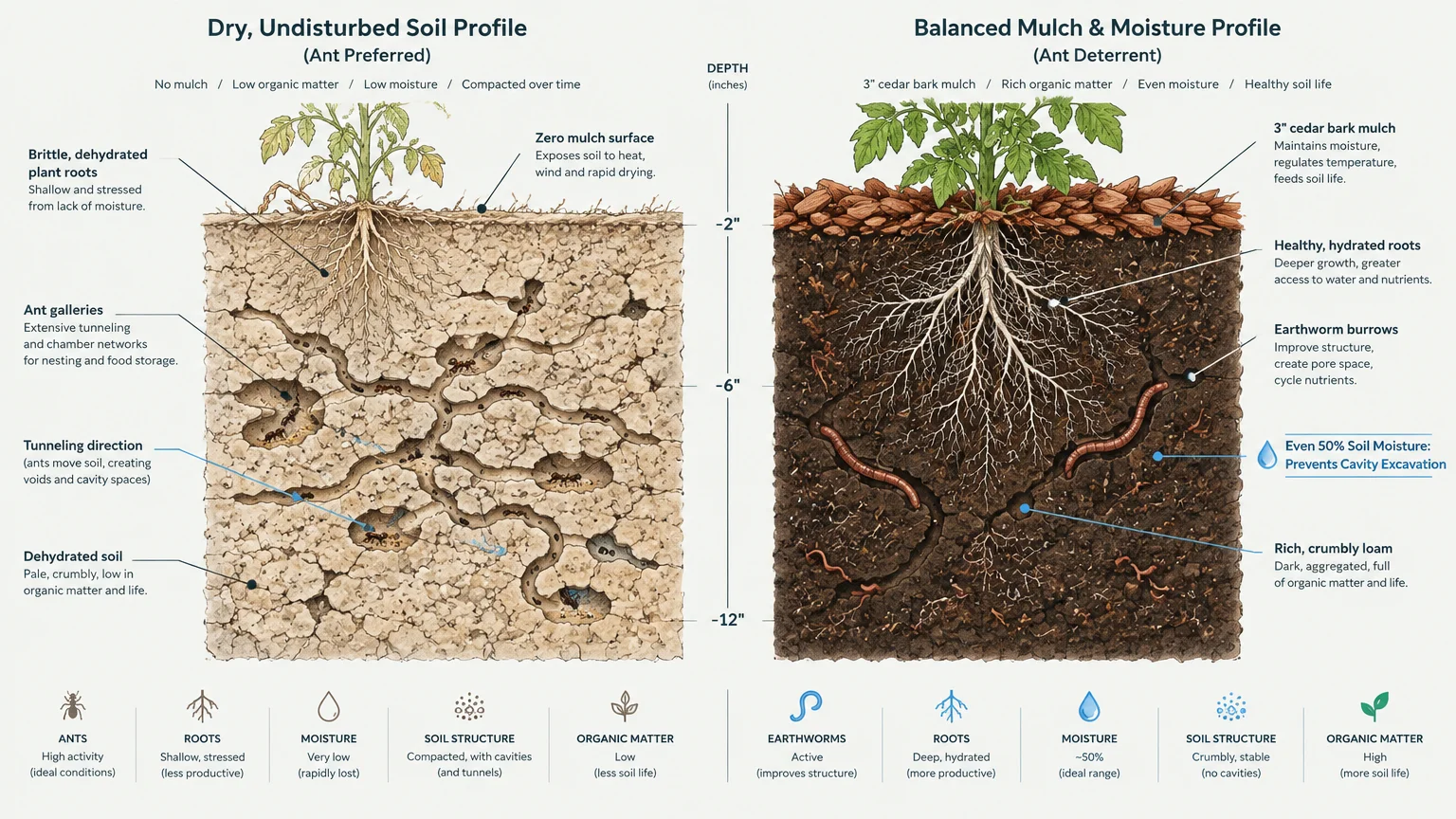
Ants love nesting in parched, loose, undisturbed soil where their underground nurseries remain completely dry. Maintaining consistent moisture throughout your planting beds discourages colony construction naturally.
Regular, deep watering makes soil heavy and damp, which causes delicate ant tunnels to collapse. Ants will promptly relocate their nests to drier ground outside your planting zones.
Pay close attention to your mulching practices across all garden borders. Thick layers of dry, woody mulch often provide ideal shelter and protection for founding queens.
Rake and turn your mulch periodically to expose hidden nests to sunlight and hungry birds. Frequent disturbance signals to invading scouts that the habitat is unstable and hazardous.
Switch from thick wood chips to finely shredded leaves, compost, or straw around vulnerable crops. These materials retain optimal soil moisture while breaking down quickly into nutritious organic matter.
Cultivating healthy soil life and maintaining balanced irrigation keeps ants out of garden beds effortlessly. Good garden hygiene prevents infestations before they ever have a chance to start.
Install drip irrigation lines beneath your mulch to distribute water evenly across the entire root zone. Consistent moisture leaves no dry pockets where opportunistic ant colonies can nest.
Putting It All Together: Enjoy Your Beautiful Garden
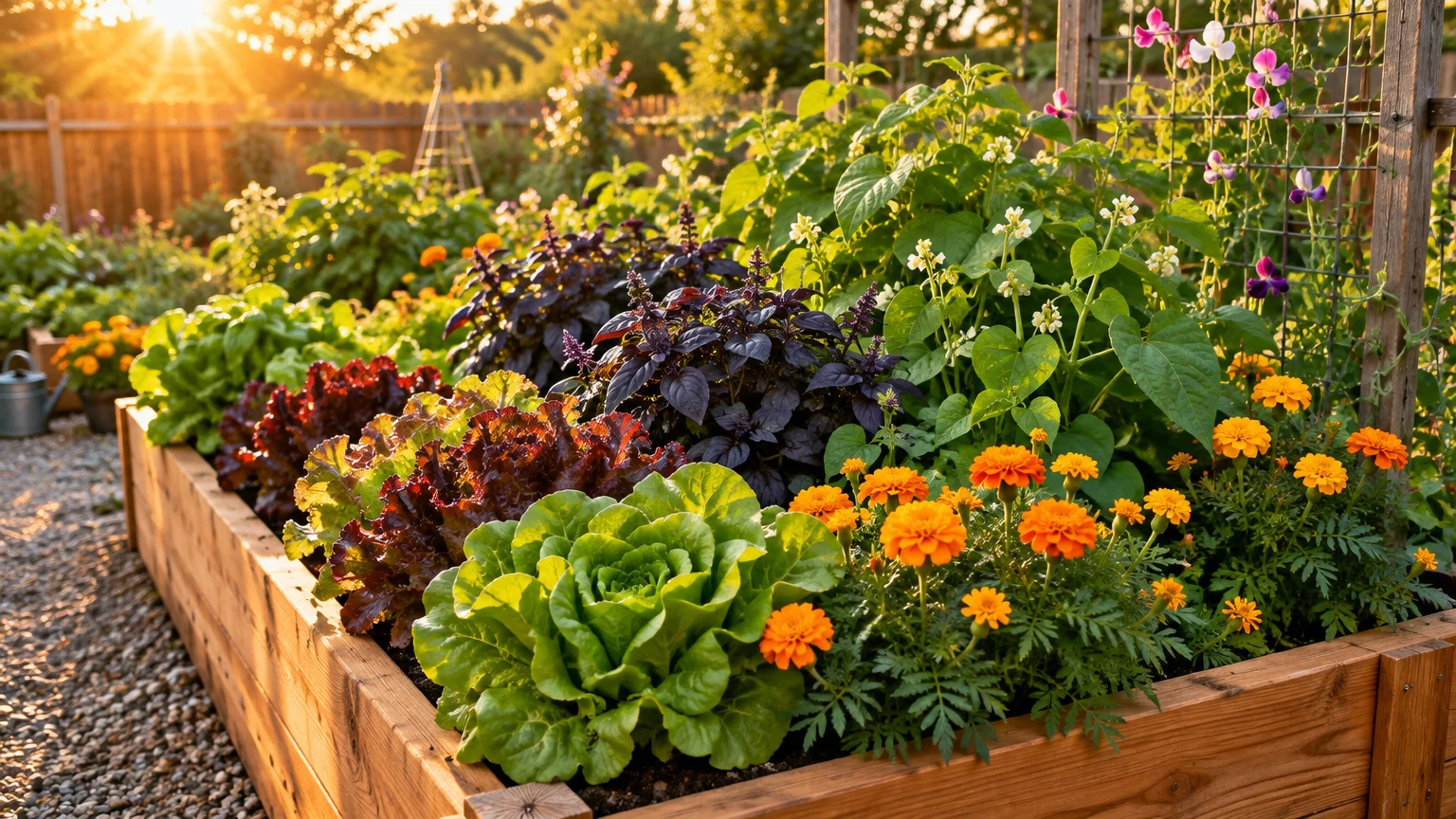
Managing ants in garden beds does not require harsh chemical treatments or endless frustration. By combining habitat management with targeted organic remedies, you can maintain a balanced, thriving backyard ecosystem.
Start by observing where ants travel and pinpointing what attracts them to your plants. Tackle sap-sucking pests first, then set up gentle scent barriers using spices or aromatic companion plantings.
If stubborn colonies establish deep nests, deploy targeted baits or boiling water drenches to solve the problem at its root. Consistent monitoring prevents small ant mounds from turning into overwhelming garden infestations.
Gardening should always bring you joy, peace, and vibrant harvests throughout the changing seasons. Embrace these natural methods today to protect your soil health, support pollinators, and cultivate your dream garden.
Take pride in creating a resilient garden space that works in harmony with nature. With a little patience and consistency, your flourishing plants will reward your dedicated care all summer.
Frequently Asked Questions
Do ants cause direct damage to garden plants?
Most ants do not directly eat plant stems, foliage, or healthy root systems. However, their extensive tunneling can displace soil around roots, causing the root ball to dry out and wither.
Ants also aggressively protect destructive pests like aphids and scale insects from beneficial predators. By farming these pests for sweet honeydew, ants indirectly cause serious foliage damage across your beds.
Will natural ant control methods harm earthworms in my soil?
Targeted natural remedies like cinnamon, essential oil sprays, and bait stations pose zero danger to beneficial earthworms. Earthworms live underground and remain unaffected by topically applied aromatic deterrents.
However, avoid pouring boiling water or massive amounts of diatomaceous earth directly into worm-rich compost beds. Confine these specific physical treatments to isolated ant mounds away from delicate soil life.
How long does it take to eliminate an ant colony naturally?
Scent barriers and essential oil sprays repel surface ants immediately, often within an hour of application. However, worker ants may test boundaries repeatedly until they establish alternative foraging paths elsewhere.
Eliminating an entire subterranean colony using borax bait stations typically requires five to ten days. Patience is essential, as worker ants must transport the bait deep into the queen’s chambers.
Can I use baking soda instead of borax for ant control?
Baking soda offers a safe alternative to borax when blended equally with powdered confectioner sugar. The powdered sugar attracts worker ants, who consume the mixture and carry it back to their nest.
Once ingested, baking soda reacts with an insect’s acidic digestive fluids to produce fatal carbon dioxide gas. This safe household mixture provides reliable control without posing any hazard to backyard pets.
For region-specific advice, consult your local University Extension program (find yours via the USDA directory). For plant databases and inspiration, visit the Missouri Botanical Garden or the Royal Horticultural Society.
Disclaimer: This article provides general gardening advice. Always consider your specific climate, soil conditions, and local pests; follow safety guidelines when using gardening tools and products.