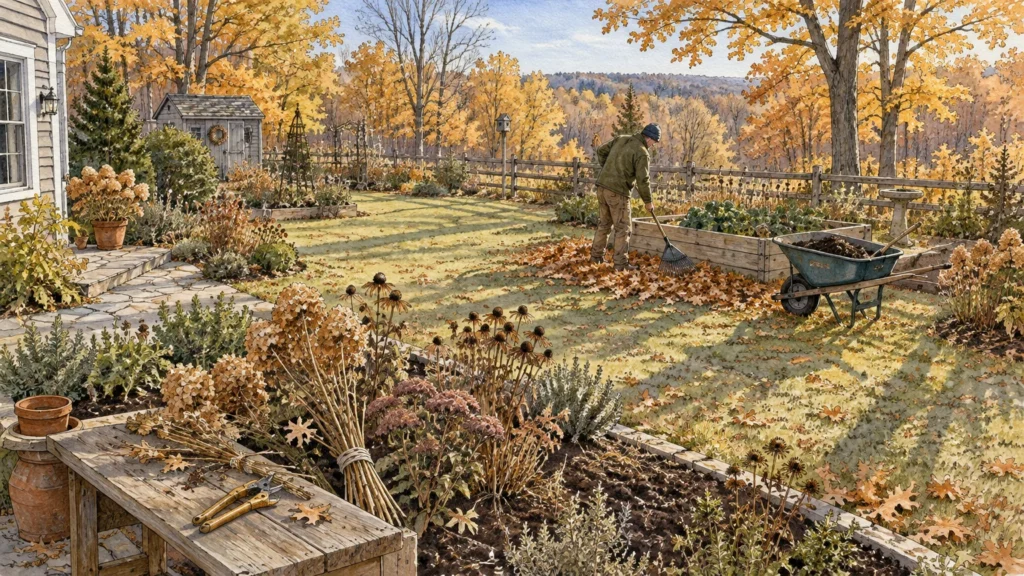
Pairing the right plants against a brick house immediately elevates your home’s curb appeal and softens rigid masonry lines. Strategic plant choices introduce vibrant color, tactile texture, and architectural balance to warm terra cotta, dark brown, or painted brick facades.
Highlighting front yard plants against brick transforms flat outdoor walls into layered, living backdrops. You can effortlessly enhance your home’s exterior by selecting varieties that thrive in reflected masonry heat and complement your mortar tones.
Whether you need climbing vines or structured foundation shrubs, the following selections deliver reliable beauty and robust performance. Let us explore the best plants for brick walls to create a striking, cohesive landscape.
Tip #1: Boxwood (Buxus)
Boxwood shrubs provide a dense, structured evergreen framework that anchors any foundational planting bed. Their small, glossy oval leaves retain their deep green hue throughout every season.
This rich emerald color creates an immediate, crisp contrast against warm red, orange, and tan masonry. The uniform foliage cleans up messy mortar lines, giving your home exterior a grounded, stately appearance.
Incorporating boxwoods into your landscaping brick home strategy establishes formal elegance that frames entryways beautifully. You can sculpt them into crisp globes, low hedges, or allow them to grow naturally.
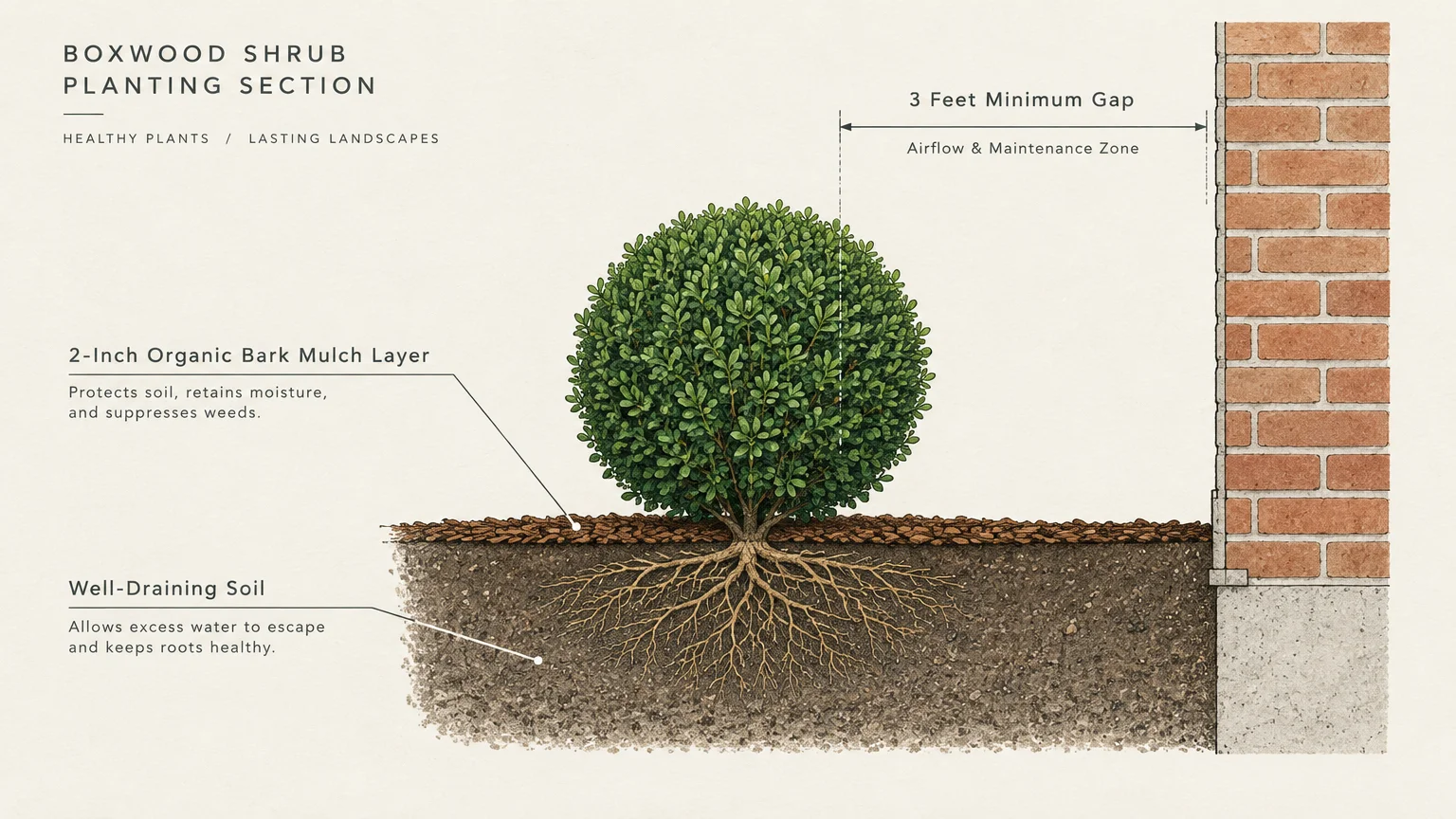
When installing boxwoods, position them at least three feet away from your brick foundation. This gap prevents stagnant air buildup and allows easy access for routine exterior home maintenance.
Ensure the planting site features well-draining soil, as boxwoods cannot tolerate saturated ground near downspouts. Applying a two-inch layer of organic bark mulch helps regulate soil moisture and protects shallow roots.
Prune your shrubs lightly in late spring after initial flushes of tender growth emerge. Regular thinning cuts improve interior airflow, reducing the threat of fungal foliage diseases against humid walls.
For a vibrant aesthetic contrast, underplant your boxwoods with perennial white or purple flowers. The solid green backdrop makes seasonal blooms stand out sharply against the brick backdrop.
Tip #2: Climbing Hydrangea (Hydrangea anomala subsp. petiolaris)
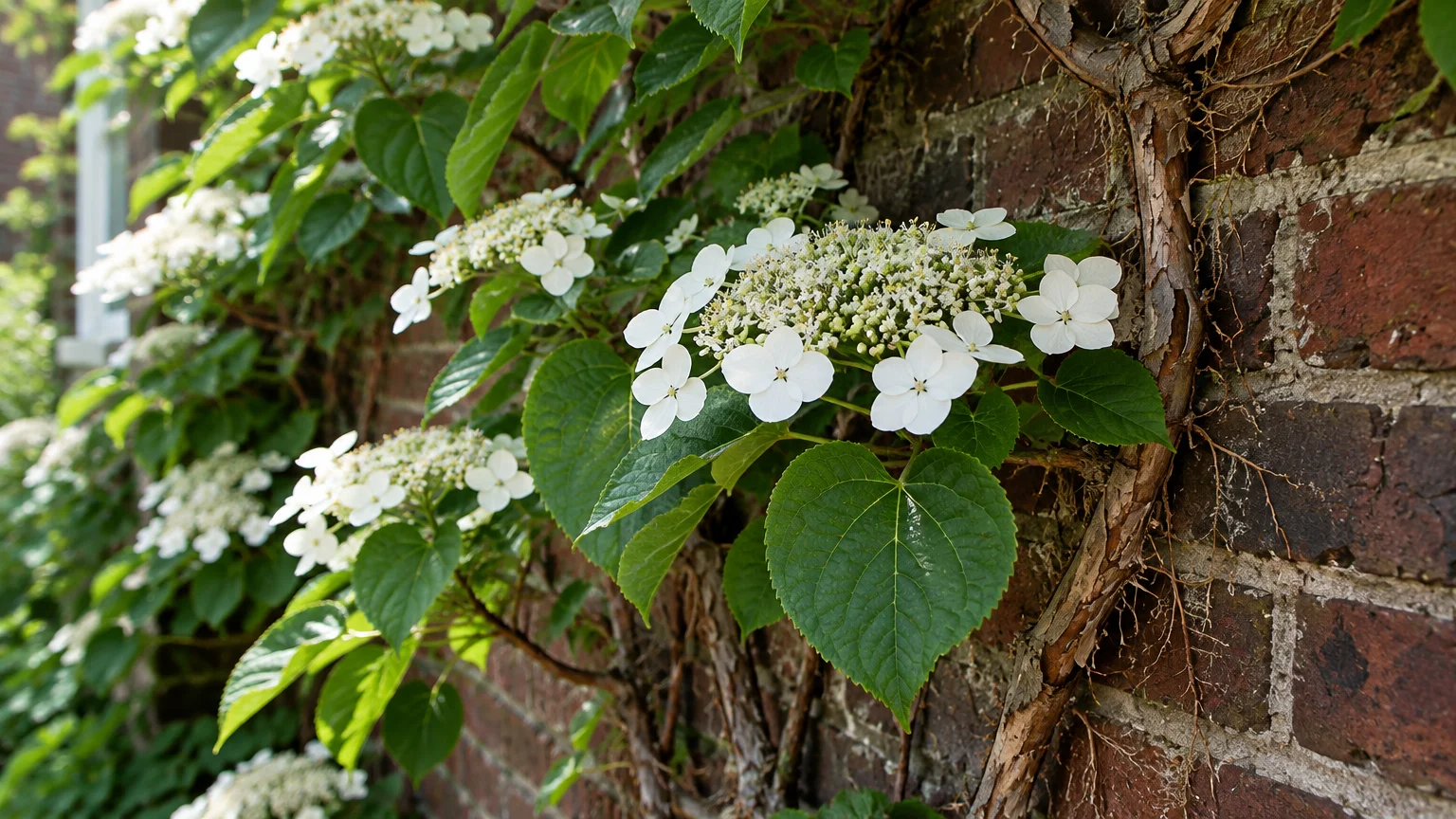
Climbing hydrangea is a vigorous deciduous vine famous for its broad heart-shaped leaves and showy lacecap blooms. In early summer, flat clusters of fragrant white flowers burst open against lush green foliage.
These luminous white blossoms create a breathtaking visual pop against dark, weathered, or classic red brick walls. The bright flowers naturally illuminate shady brick alcoves that often appear dim and uninviting.
As one of the premier climbing plants brick surfaces can support, it uses aerial rootlets to climb. It transforms barren vertical masonry into a luxurious wall of foliage and delicate floral lace.
Only allow this vine to attach to sound, intact brick and mortar joints. Weak or crumbling mortar can suffer damage if heavy woody vines pull away during high winds.
Plant climbing hydrangea on east-facing or north-facing walls where it receives gentle morning sun and afternoon shade. Provide moist, humus-rich soil and water deeply during its initial two growing seasons.
Growth remains slow for the first few years while the plant develops its extensive root network. Once established, it grows rapidly and requires annual post-bloom pruning to keep stems away from rooflines.
Even in winter, the plant contributes beauty through its peeling, cinnamon-colored bark and twisted woody framework. These sculptural winter stems add rustic texture across dormant brick walls.
Tip #3: Russian Sage (Salvia yangii)
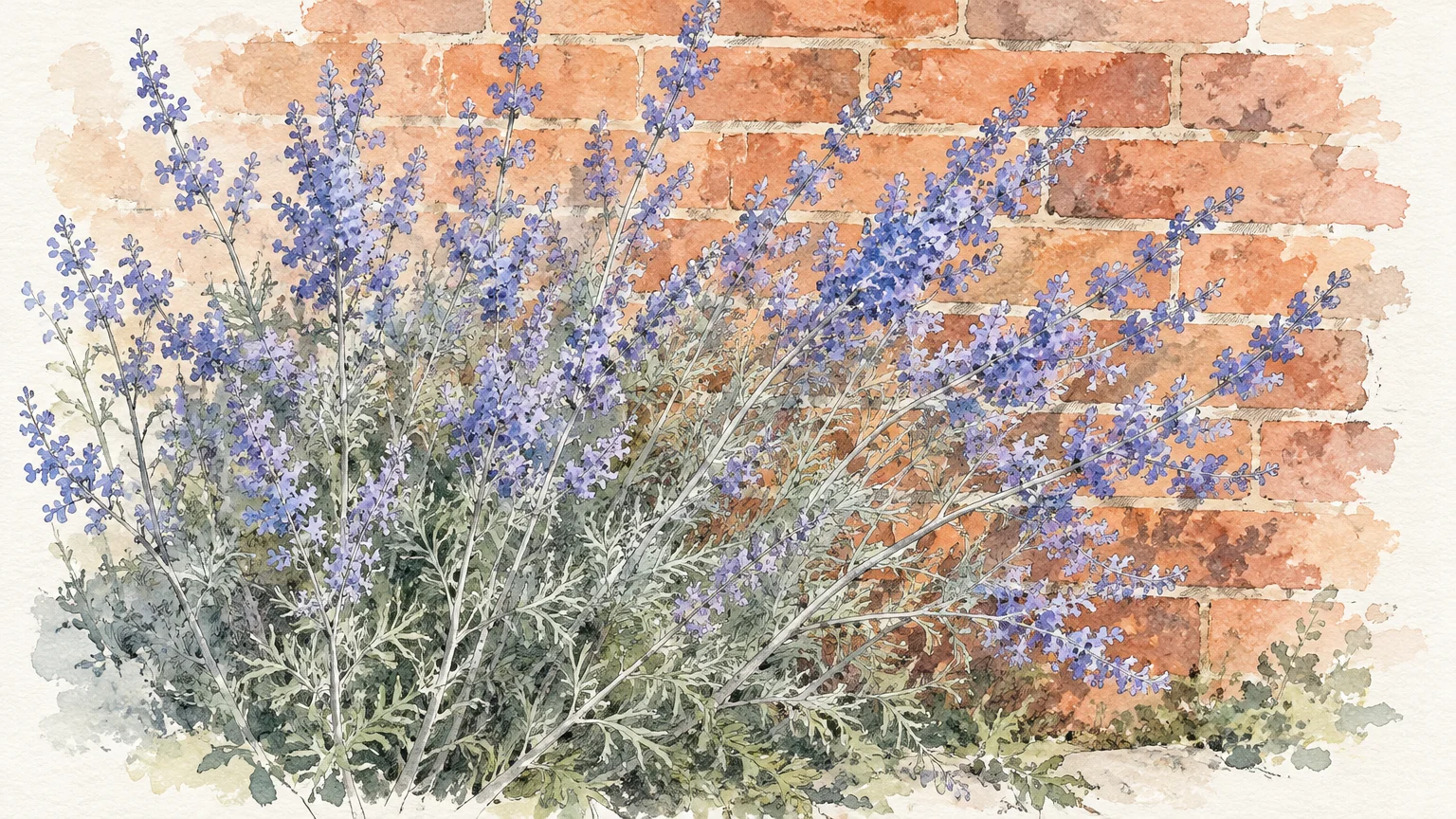
Russian sage features finely textured, aromatic silver-gray stems topped by airy spires of lavender-blue blossoms. This hardy perennial blooms relentlessly from midsummer straight through late autumn.
On the artist’s color wheel, cool lavender and soft blue sit directly opposite warm orange and red. This complementary dynamic creates a vibrating, visually magnetic contrast when placed against red brick facades.
Brick walls absorb immense solar heat during sunny days and radiate that heat well into the evening. Russian sage thrives in these hot microclimates, flourishing where tender ornamental plants often scorch.
Select an open site along south-facing or west-facing walls that receives at least six hours of direct sunlight. The plant demands lean, fast-draining soil and suffers if planted in damp, rich loam.
Space plants three feet apart to accommodate their mature, billowing habit without crowding foundation walkways. Avoid overwatering once roots establish, as this drought-tolerant perennial hates wet feet near building footers.
Cut the woody stems back to about six inches above the ground each spring before new shoots emerge. This hard pruning stimulates robust, upright growth and prevents plants from flopping against the brick.
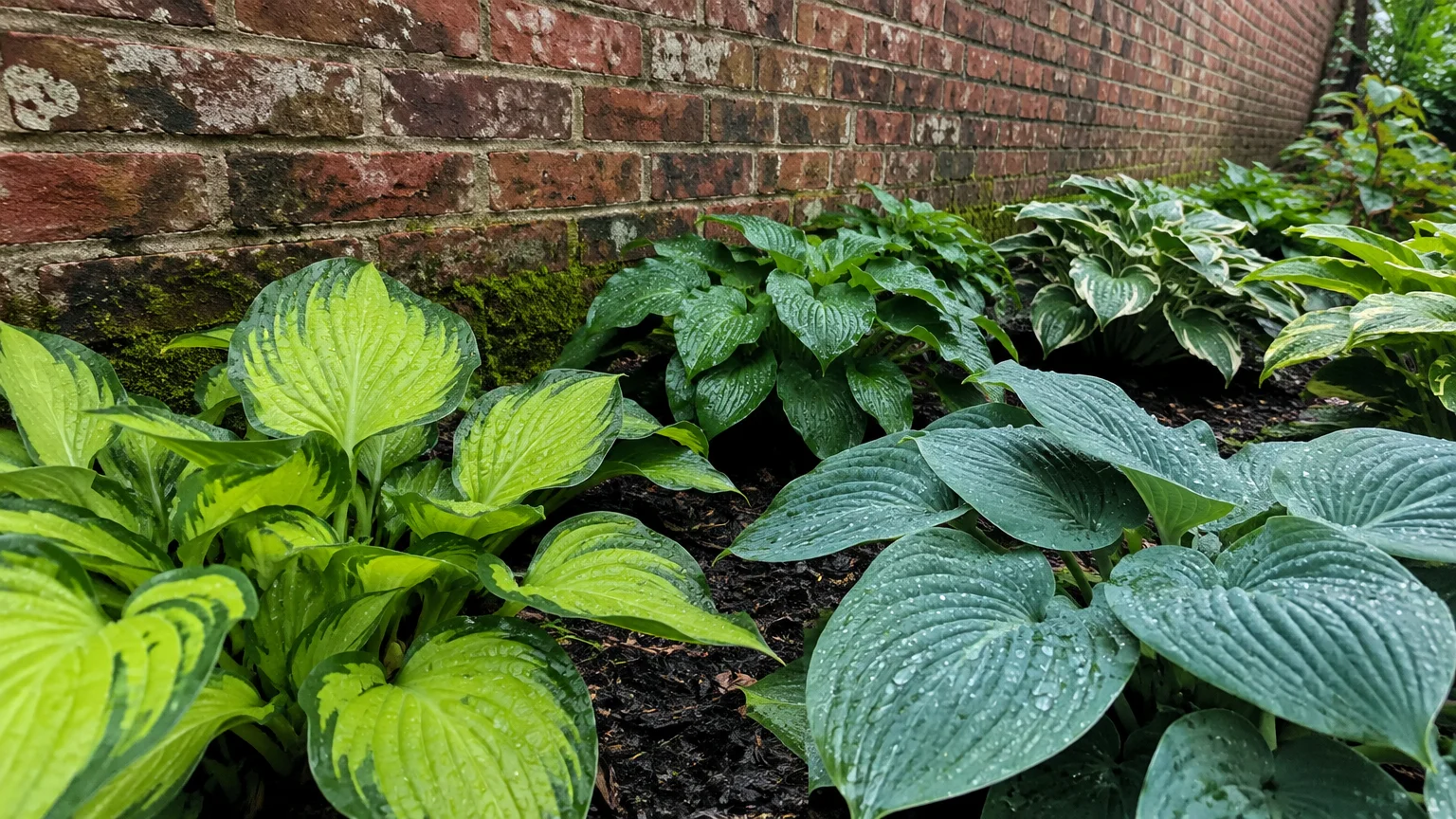
Tip #4: Hostas (Hosta spp.)
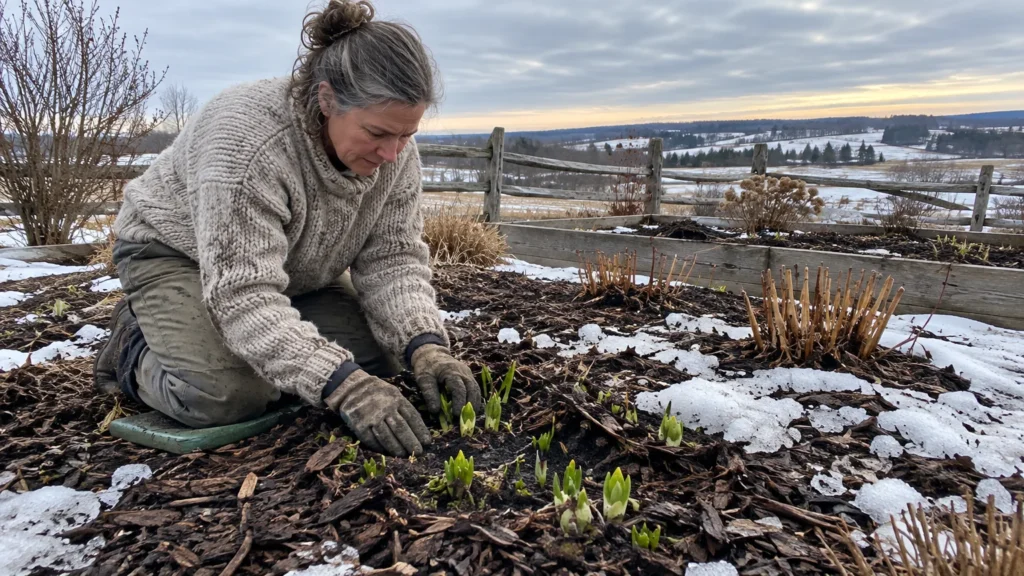
Hostas are quintessential shade-loving perennials celebrated for their broad, ribbed foliage and remarkable variety of leaf colors. They range from compact groundcovers to massive specimens with leaves exceeding twelve inches across.
The wide, rounded leaves of hostas provide a welcome counterweight to the rigid, repetitive grid of brickwork. Their flowing, organic forms instantly soften the hard geometry of exterior walls and masonry steps.
Variegated cultivars with crisp white margins or bright chartreuse leaves brighten shaded plants against brick house foundations. Cultivars like ‘Sum and Substance’ or ‘Patriot’ create brilliant, high-contrast focal points.
Plant hostas in moist, organically amended soil along north-facing or east-facing walls. These locations shield the delicate broad leaves from scorching afternoon sun reflecting off the masonry surface.
Apply a generous layer of composted leaf mulch around the base of each plant every spring. Maintain consistent soil moisture, especially during dry summer stretches when brick draws water out of nearby ground.
Protect emerging spring foliage from slugs and snails using pet-safe iron phosphate bait around the plants. In late summer, hostas send up tall spikes of lilac or white bell flowers that hover over the foliage.

Tip #5: Japanese Maple (Acer palmatum)
Japanese maples offer graceful branching, delicate palmate foliage, and an artistic silhouette unmatched by other small trees. Their elegant forms create a living, sculptural accent against expansive brick surfaces.
During sunny afternoons, the tree’s intricate, lacy leaves cast shifting shadow patterns across flat brick expanses. This dynamic play of light and shadow adds captivating depth and motion to plain exterior walls.
Choosing the right foliage color enhances your exterior aesthetic. Crimson-leaved cultivars look stunning against buff or whitewashed brick, while bright green varieties provide vivid contrast next to dark red masonry.
Plant Japanese maples at least six to eight feet away from your home’s foundation. This generous spacing provides ample room for the spreading canopy and protects foundation masonry from future root interference.
Provide a sheltered spot with partial shade and fertile, acidic soil that drains excess water freely. Intense afternoon sunlight reflecting off brick can scorch delicate leaf tips, so morning sun is ideal.
Prune selectively during winter dormancy to highlight the natural branching structure rather than shearing branches. Thoughtful branch thinning keeps the visual lines clean and frames the underlying brickwork behind the tree.
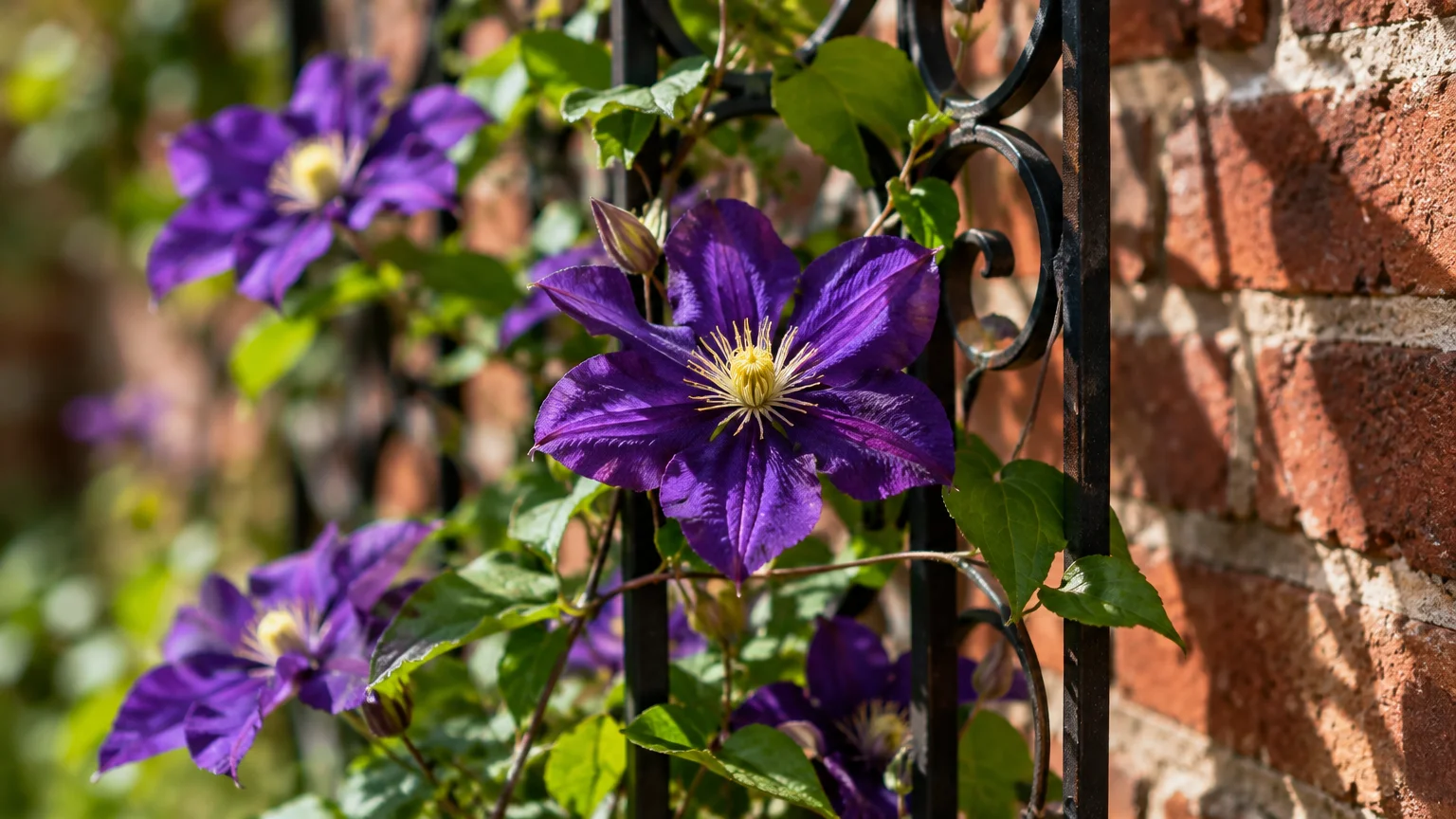
Tip #6: Clematis (Clematis spp.)
Clematis is widely revered as the queen of climbers, offering exquisite star-shaped blossoms in brilliant jewel tones. Varieties range from deep royal purple and sapphire blue to soft blush pink and snowy white.
Deep violet and purple clematis blooms produce an extraordinary pop against traditional red, cream, or brown brick. The sprawling blooms deliver intense color saturation across vertical spaces without consuming precious garden square footage.
Unlike aggressive clinging vines, clematis climbs using twisting leaf petioles that cannot grip smooth masonry directly. You must provide a sturdy trellis or tension wire system mounted against your brick wall.
Stand the trellis at least two inches away from the brick face using masonry anchors. This critical air space prevents radiant brick heat from scorching fragile stems during midsummer heatwaves.
Remember the classic rule for cultivating clematis: keep their roots cool and their climbing heads in the sun. Layer flat stones or low-growing companion perennials around the root crown to shade the soil.
Clematis varieties fall into three specific pruning groups based on when and where they produce blooms. Identify your variety’s group so you prune at the proper time without removing developing flower buds.
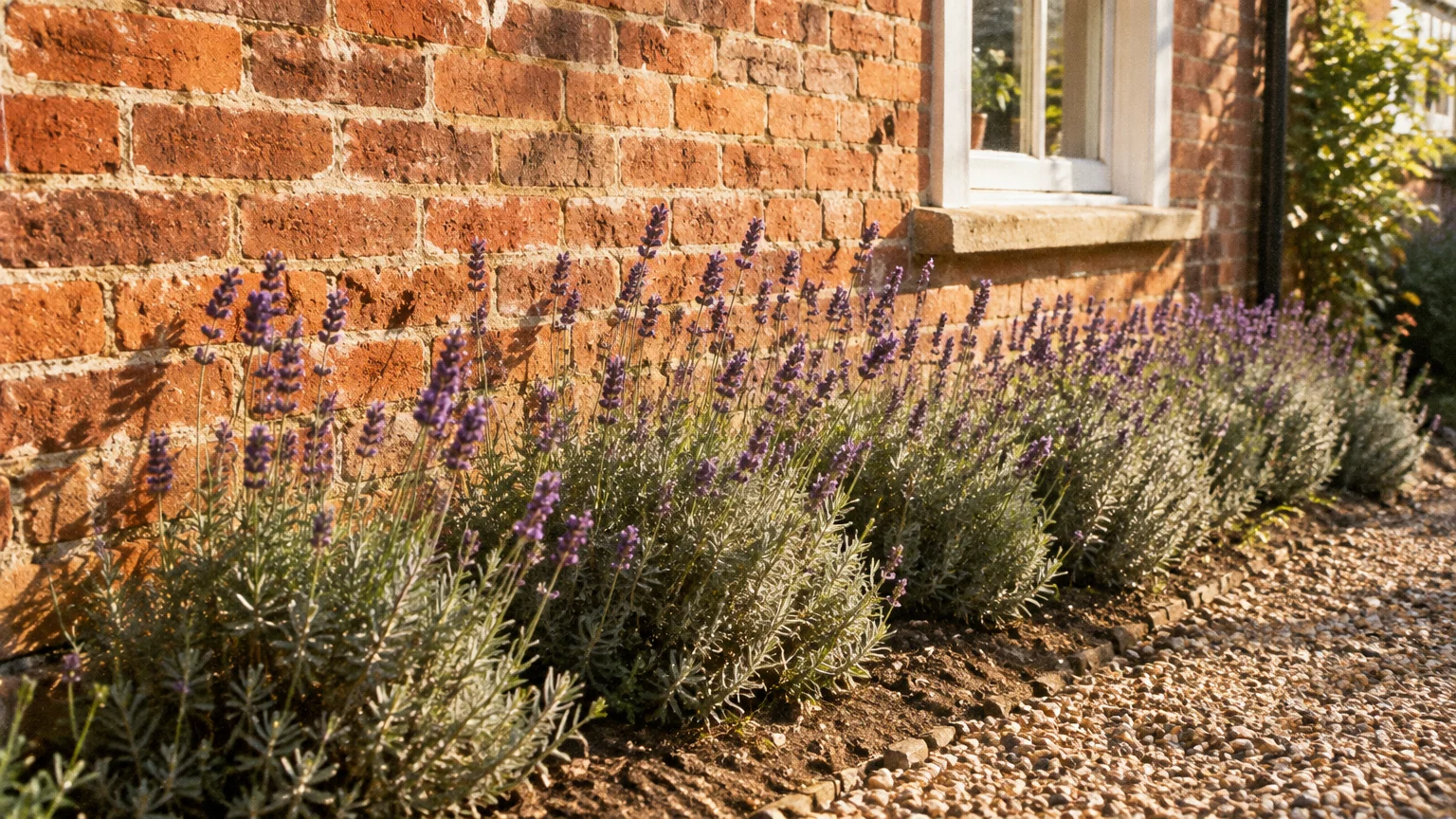
Tip #7: English Lavender (Lavandula angustifolia)
English lavender is a prized evergreen sub-shrub with needle-like silver-gray foliage and spikes of intensely aromatic violet-blue flowers. It produces an unmistakable Mediterranean aesthetic that softens formal home foundations.
The cool gray foliage creates a soothing buffer that tones down the harsh, aggressive red tones of weathered brick. In summer, the vibrant purple flower spikes add an elegant wash of contrasting color.
South-facing brick walls create a baking microclimate where reflected heat stresses many common foundation shrubs. Lavender relishes this intense heat, actively utilizing the radiant warmth to produce its potent, fragrant essential oils.
Install lavender plants eighteen to twenty-four inches out from the masonry base in full, unfiltered sunshine. Provide gritty, alkaline soil with exceptional drainage, as damp soil quickly causes fatal root rot.
Incorporate pea gravel into heavy soil rather than using bark mulch around the crowns of the plants. Gravel reflects light into the foliage while keeping the sensitive root crowns dry and rot-free.
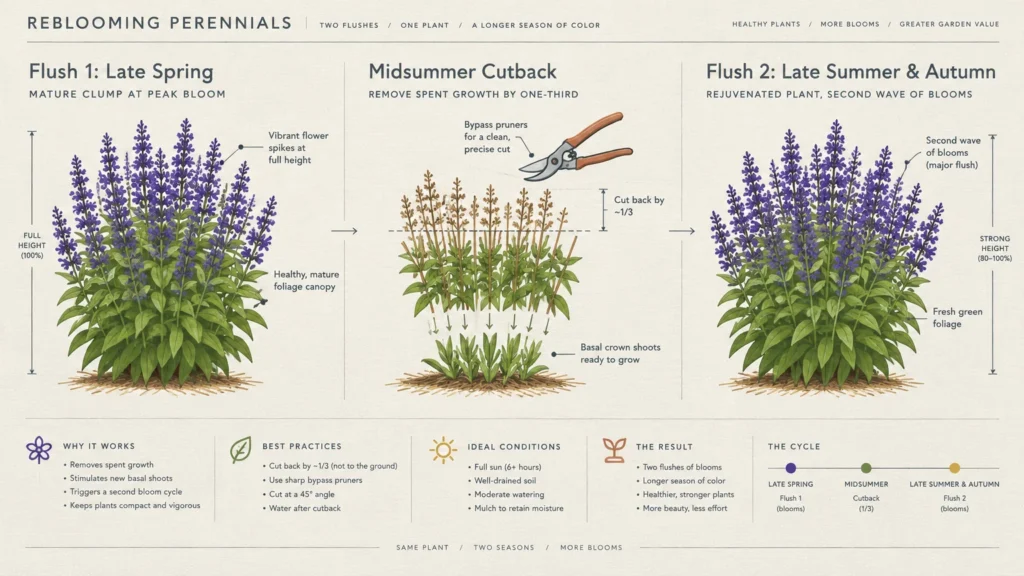
Shear the plant back by one-third after its main summer flush of flowers fades away. This post-bloom trimming maintains a compact, bushy mound and prevents woody, sparse centers from developing near your walls.
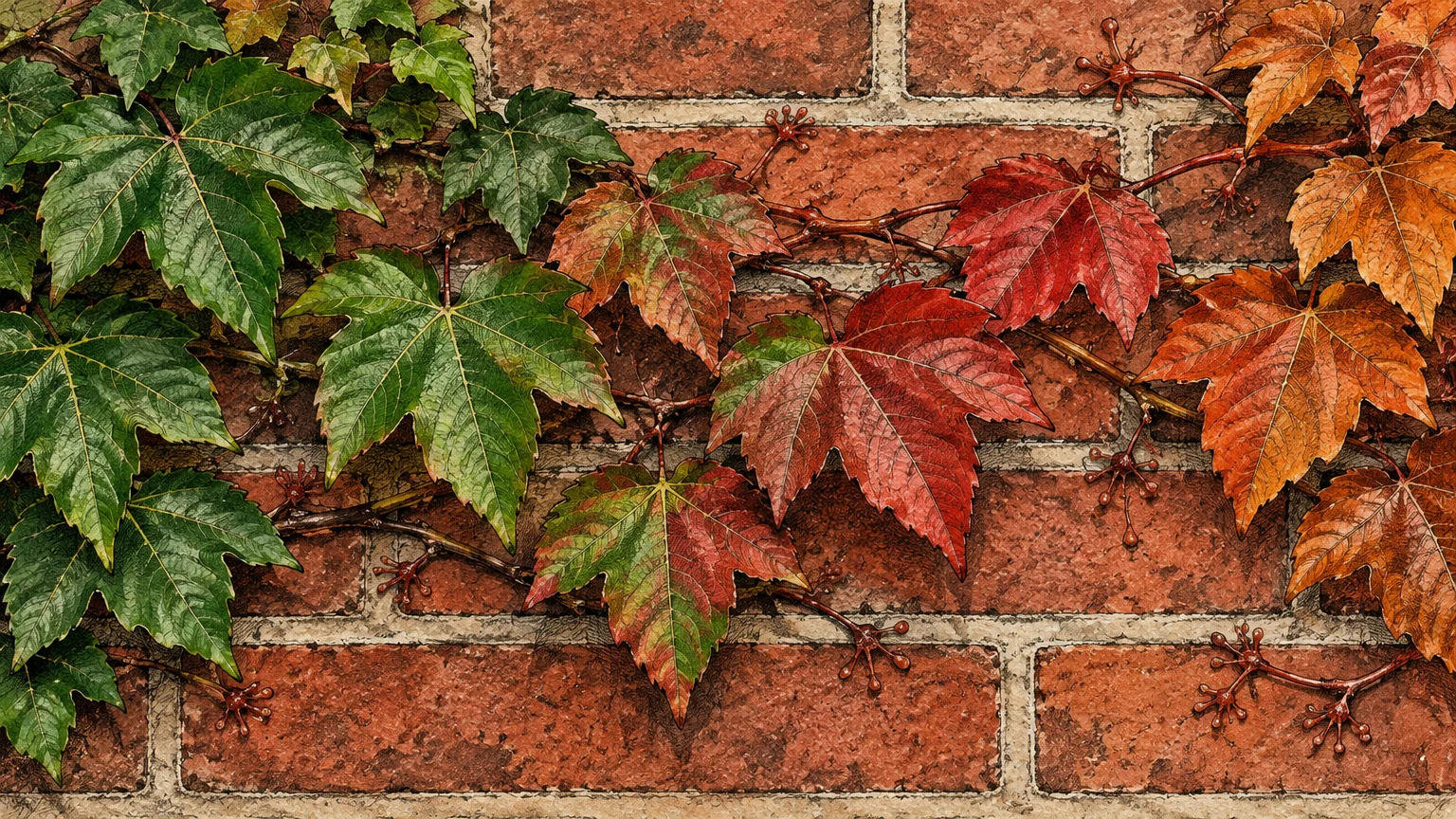
Tip #8: Boston Ivy (Parthenocissus tricuspidata)
Boston ivy is a legendary deciduous vine that imparts a stately, historic character to bare architectural masonry. In summer, its overlapping three-lobed leaves form a seamless, glossy emerald cloak over vertical surfaces.
When autumn arrives, the foliage transforms into an astonishing display of scarlet, crimson, and deep wine purple. This brilliant seasonal shift creates a magnificent harmony alongside the earthy hues of red and brown brick.
The vine secures itself to masonry using specialized adhesive discs located on the tips of branched tendrils. Because these pads adhere to surface faces rather than boring into mortar, sound masonry remains completely undamaged.
Never plant Boston ivy against historic, soft-fired brick or walls with loose, deteriorating mortar. The adhesive pads can pull away soft lime mortar if you ever attempt to detach mature vines.
Plant in moderately fertile, well-draining soil where it can access partial to full sun exposure. Autumn foliage colors appear most intensely when the vine receives several hours of direct daily sunlight.
Prune stems aggressively twice a year to maintain control over its vigorous growth. Keep growth away from wooden trim, soffits, window shutters, and drainage gutters to avoid moisture traps behind exterior fixtures.
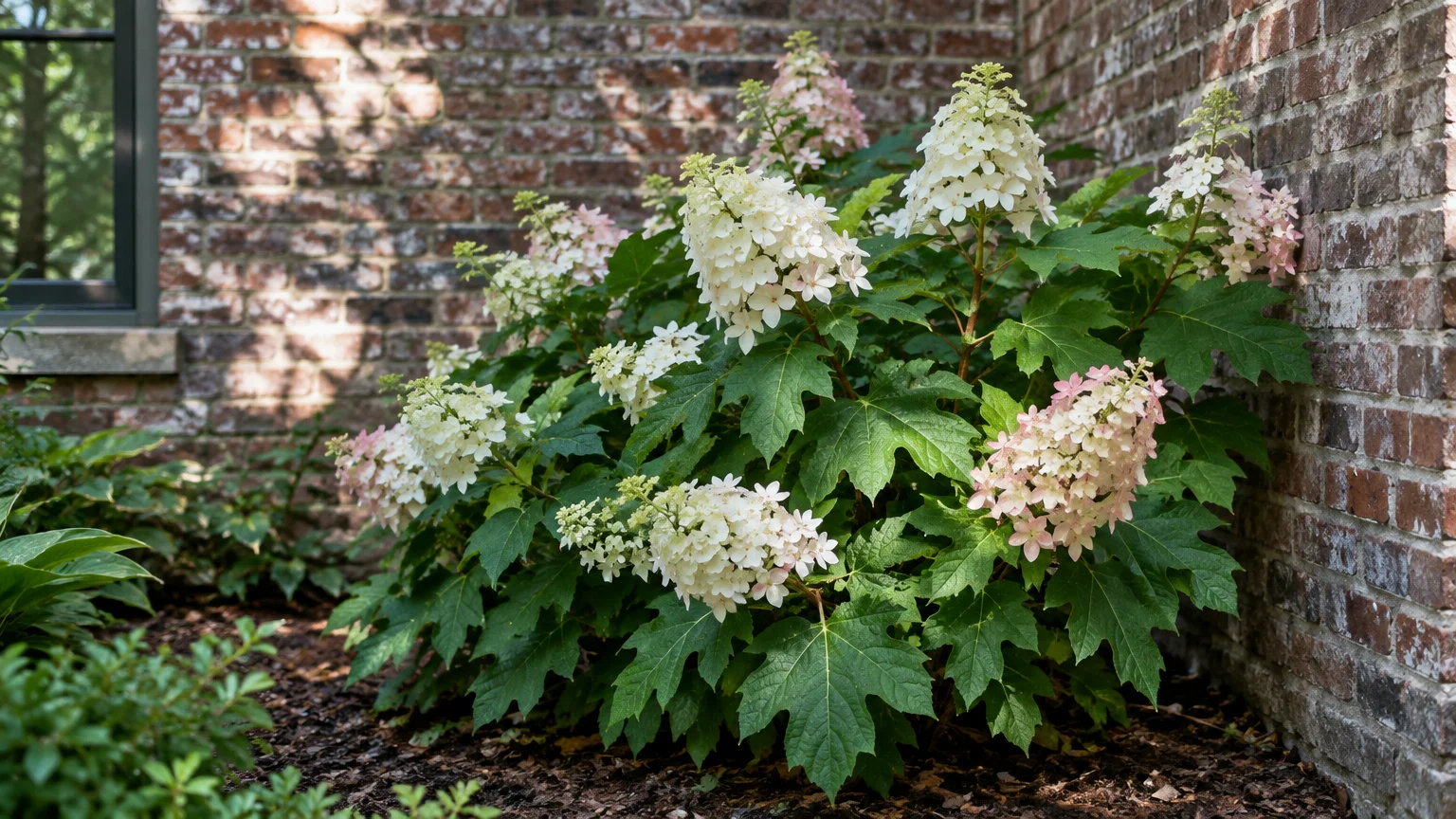
Tip #9: Oakleaf Hydrangea (Hydrangea quercifolia)
Oakleaf hydrangea is a robust deciduous shrub native to North America, known for bold, leathery, lobed leaves. In late spring, it produces massive conical clusters of creamy white flowers that age to soft pink.
The bold, architectural foliage breaks up the repetitive texture of brick, introducing coarse texture and lush organic volume. The creamy flower panicles stand out prominently against dark red and earth-toned brick walls.
Autumn brings a dramatic finale as the leaves turn brilliant shades of bronze, mahogany, and deep purple. These autumnal colors blend harmoniously with red brick homes, prolonging your landscape’s curb appeal.
Plant oakleaf hydrangeas in organic, moisture-retentive soil that drains surplus water effectively away from the building. Morning sun with afternoon shade provides the ideal balance to keep flower clusters fresh and prevent scorched leaves.
Allow at least five feet of clearance between the shrub and your brick foundation wall. Oakleaf hydrangeas develop wide, spreading canopies, and proper clearance ensures healthy airflow and uncrowded mature branches.
In winter, the exfoliating, papery orange-brown bark adds rugged visual interest against cold, dormant masonry walls. Minimal pruning is required; simply remove dead wood or faded flower heads in late winter.
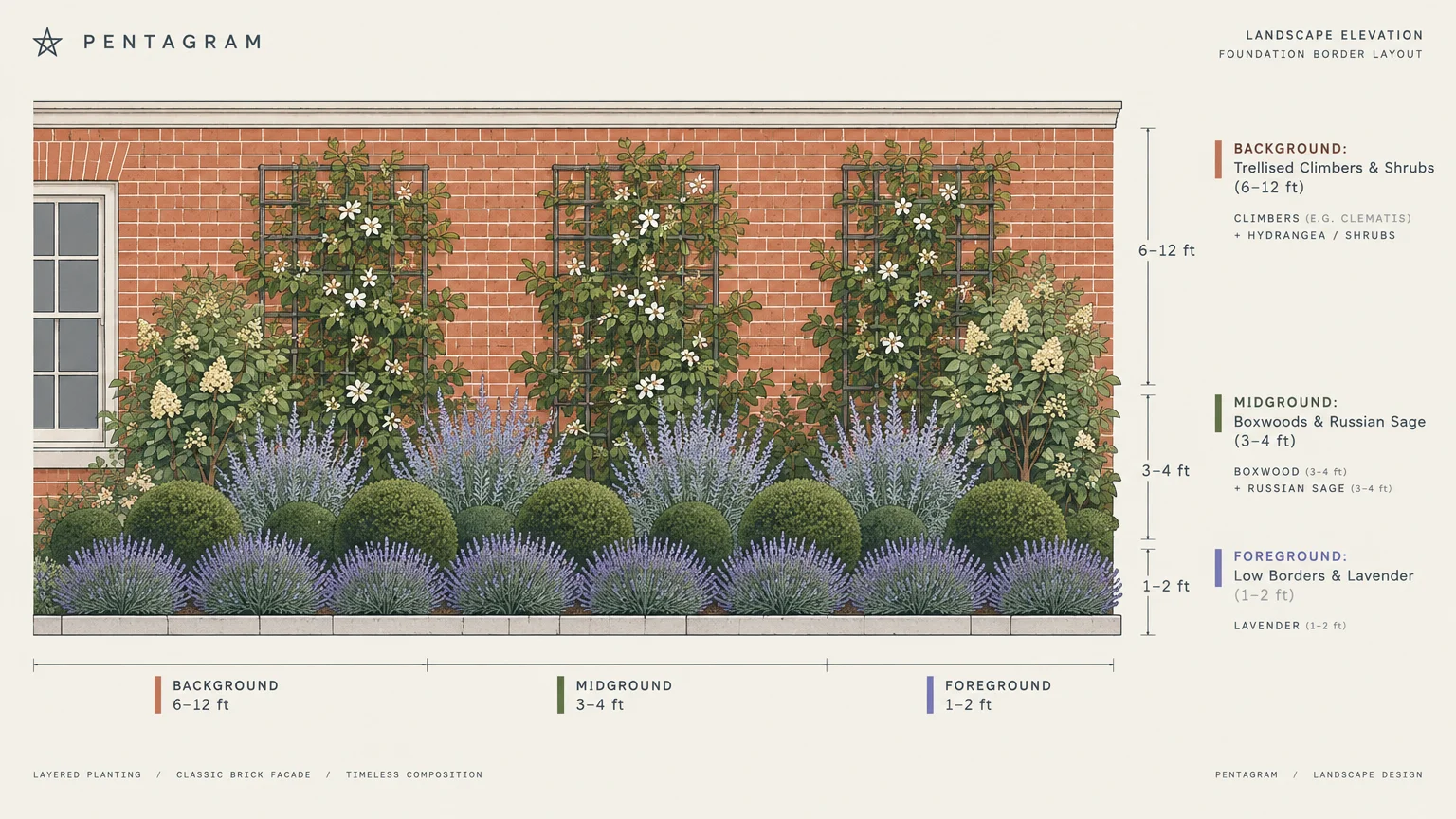
Putting It All Together: Enjoy Your Beautiful Garden
Landscaping around a brick home offers an incredible opportunity to play with contrasting colors, varied textures, and living vertical layers. By balancing rigid masonry lines with soft, dynamic foliage, you turn your house into an integrated landscape masterpiece.
Always assess your specific brick undertones—whether orange, red, brown, or painted white—before finalizing your plant choices. Cool silvers, rich emerald greens, and bright jewel tones consistently yield the most striking, eye-catching results.
Keep practical considerations in mind by respecting mature plant widths and providing adequate space from foundation footers. Giving plants room to breathe preserves your home’s masonry while encouraging healthy root and branch growth.
With thoughtful planning and the right plant palette, your exterior walls will come alive with vibrant, four-season appeal. Step outside, plan your beds, and enjoy the transformative beauty of a flourishing brick-side garden.
For region-specific advice, consult your local University Extension program (find yours via the USDA directory). For plant databases and inspiration, visit the Missouri Botanical Garden or the Royal Horticultural Society.
Disclaimer: This article provides general gardening advice. Always consider your specific climate, soil conditions, and local pests. Follow safety guidelines when using gardening tools and products.
Frequently Asked Questions
Can climbing plants damage the mortar on my brick house?
Vines with aggressive adventitious rootlets can penetrate crumbly, soft mortar joints and widen existing cracks. However, plants with adhesive holdfast pads like Boston ivy adhere safely to the surface of structurally sound masonry.
To protect older mortar or historic brickwork, install an independent trellis system spaced several inches away from the wall. This setup keeps climbing foliage off your brick while providing support for twining plants like clematis.
How far away from a brick wall should I plant foundation shrubs?
Position foundation shrubs so that their mature canopy remains at least one to two feet away from the brick face. As a general rule, plant medium shrubs three to four feet away from the wall base.
This spacing ensures adequate air circulation, prevents fungal dampness against masonry, and leaves sufficient space for exterior house painting and routine maintenance.
Which foliage colors look best against traditional red brick?
Cool silver-gray, deep forest green, chartreuse, and icy blue-green foliage offer the most striking contrast against warm red brick. These cooler tones balance the intense warmth of red clay masonry.
Avoid planting shrubs with dull brown or muddy bronze summer foliage, as they tend to blend indistinctly into the masonry background.
Do south-facing brick walls get too hot for foundation plants?
Yes, south-facing brick walls absorb intense solar radiation and re-radiate heat throughout the evening, drying out nearby soil rapidly. This intense microclimate can scorch shade-loving or moisture-dependent plants.
Choose heat-loving, drought-tolerant species like lavender, Russian sage, or ornamental grasses for these warm southern exposures.