
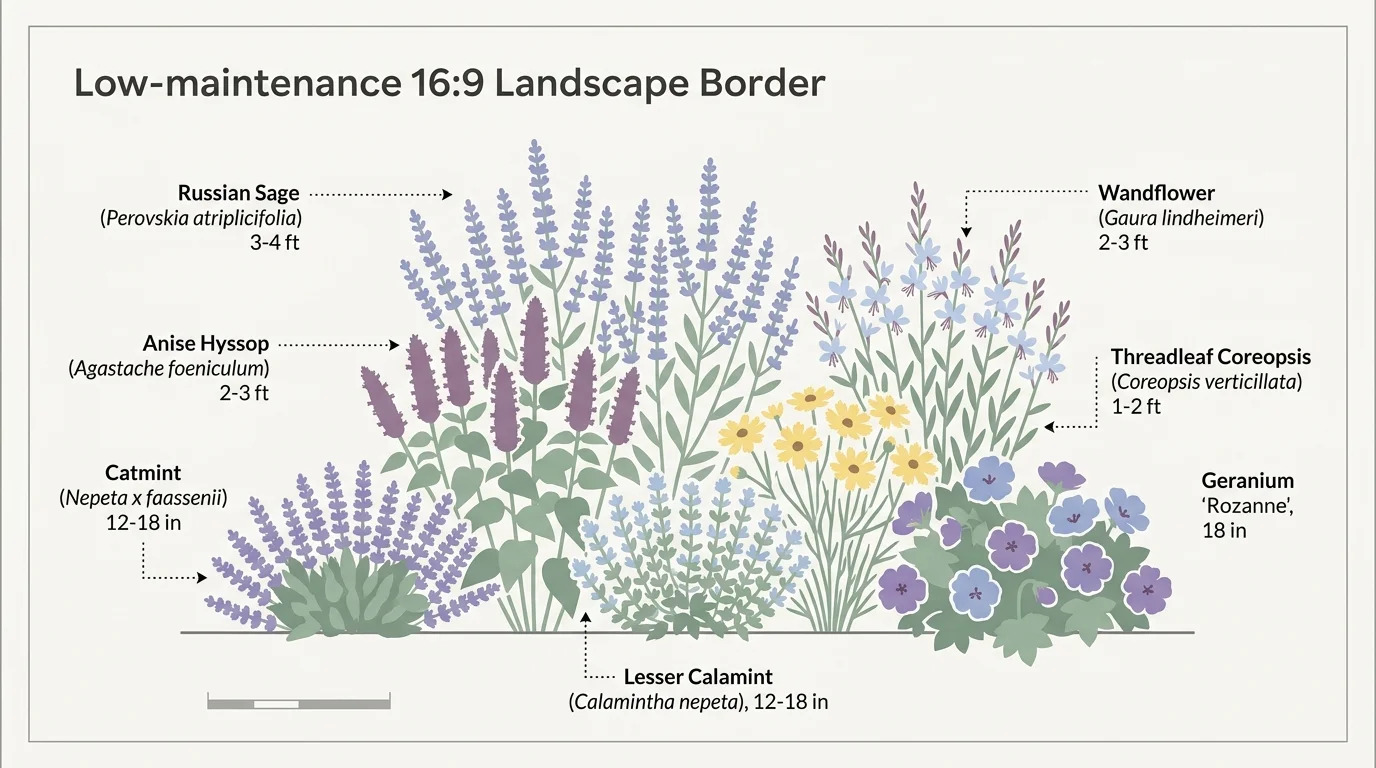
Putting It All Together: Enjoy Your Beautiful Garden
Designing a low-maintenance landscape completely changes how you interact with your yard. By incorporating these seven self-cleaning perennials, you shift your weekend focus from tedious pruning and deadheading to simply relaxing and enjoying the vibrant ecosystem you have created. These reliable plants prove that you do not have to sacrifice abundant color and visual interest to achieve an easy-care garden.
For the best visual impact, try layering these plants based on their mature heights and textures. Place the creeping Cranesbill Geranium at the front of your borders, let the mid-sized Calamint and Coreopsis fill the center, and use the tall, architectural spikes of Russian Sage and Anise Hyssop as a stunning backdrop. Remember that while these plants are highly independent, they will still require consistent watering during their first season to establish strong, deep root systems. Once they are settled in, they will reward you with years of effortless, spectacular beauty.
For region-specific advice, consult your local University Extension program (find yours via the USDA directory). For plant databases and inspiration, visit the Missouri Botanical Garden or the Royal Horticultural Society.
Disclaimer: This article provides general gardening advice. Always consider your specific climate, soil conditions, and local pests. Follow safety guidelines when using gardening tools and products.
Frequently Asked Questions
Do self-cleaning perennials ever need pruning?
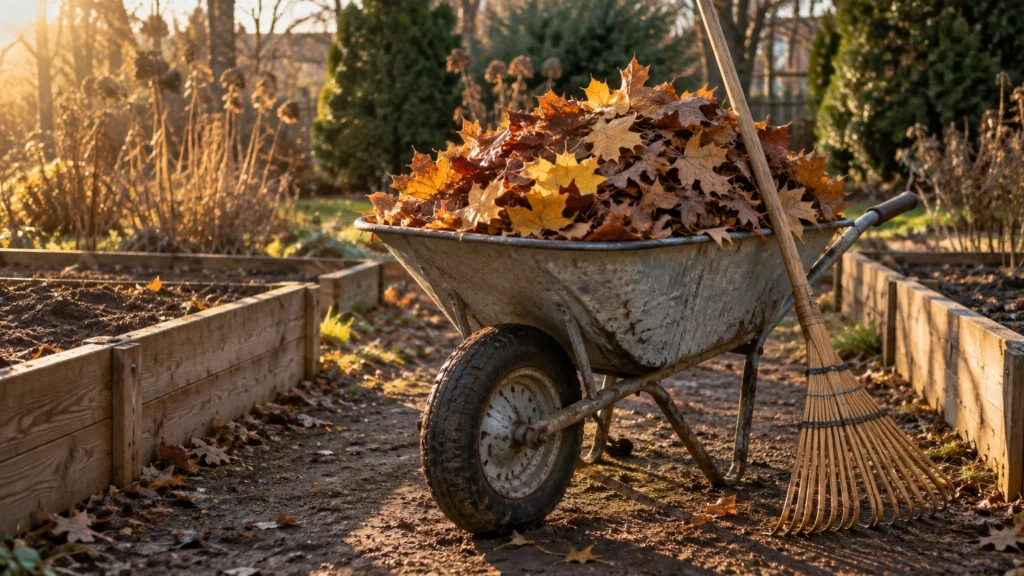
Yes; while they do not require deadheading during the active growing season to keep blooming, most herbaceous perennials benefit from an annual cutback. In late winter or early spring, before the new growth begins, you should prune the old, dead stems down to a few inches above the soil line. This clears away the previous year’s debris and allows the sun to reach the crown, encouraging vigorous new spring growth.
Will these perennials bloom heavily in their first year?
Many perennials spend their first season focusing their energy on establishing a robust, deep root system in their new environment. As a result, the flower production might be somewhat light during that first summer. Do not be discouraged; by their second and third years, once the roots are fully established, these plants will burst forth and provide the vigorous, season-long floral display they are known for.
Can I grow these low-maintenance perennials in containers?
Absolutely; plants like Cranesbill Geranium, Lesser Calamint, and Threadleaf Coreopsis adapt beautifully to container life. When growing perennials in pots, you must remember that they will require more frequent watering than those planted directly in the ground, as potting soil dries out quickly in the sun. Additionally, container plants are more exposed to winter chills, so you may need to move the pots into an unheated garage or shed to protect the roots during freezing weather.
How do I feed perennials that bloom continuously?
These resilient perennials thrive on tough love and generally require very little fertilization. Applying a thin layer of rich organic compost around the base of the plants in the early spring usually provides more than enough nutrients for the entire season. You should actually avoid using heavy synthetic fertilizers; excess nitrogen encourages the plants to produce floppy, weak foliage at the direct expense of those beautiful flowers you want to see.
11 Responses
Can this fower live in Florida
Yes, Hardy in USDA Zones 5 through 9.
I live in the Tampa area, will the plant survive in Florida?
Regarding the 5 perennials, are any of them deer resistant? I live in New Jersey where the deer are all over the place.
Can you show perreniel flowers that grow in zone 10?
There aren’t any lol…just kidding
We’re can I find these plants at
Devitts?
Can you leave them in containers over the winter in zone 6?
Take me off your list
Will they survive in Utah? Where can they be purchased?