You can transform a patchy lawn into a thick carpet of vibrant green grass by eliminating a few everyday maintenance errors. Spotting these lawn care mistakes early protects delicate roots and stops brown patches before they spread.
A resilient turf naturally crowds out aggressive weeds and withstands seasonal weather swings. Achieving that healthy lawn requires small shifts in your weekly routine rather than costly overhauls.
Simple adjustments to your mowing, watering, and feeding habits will quickly restore density across every bare zone. Here are the seven common lawn mistakes you must avoid to keep your turf lush all season.
Tip #1: Scalping the Turf Below the Recommended Height
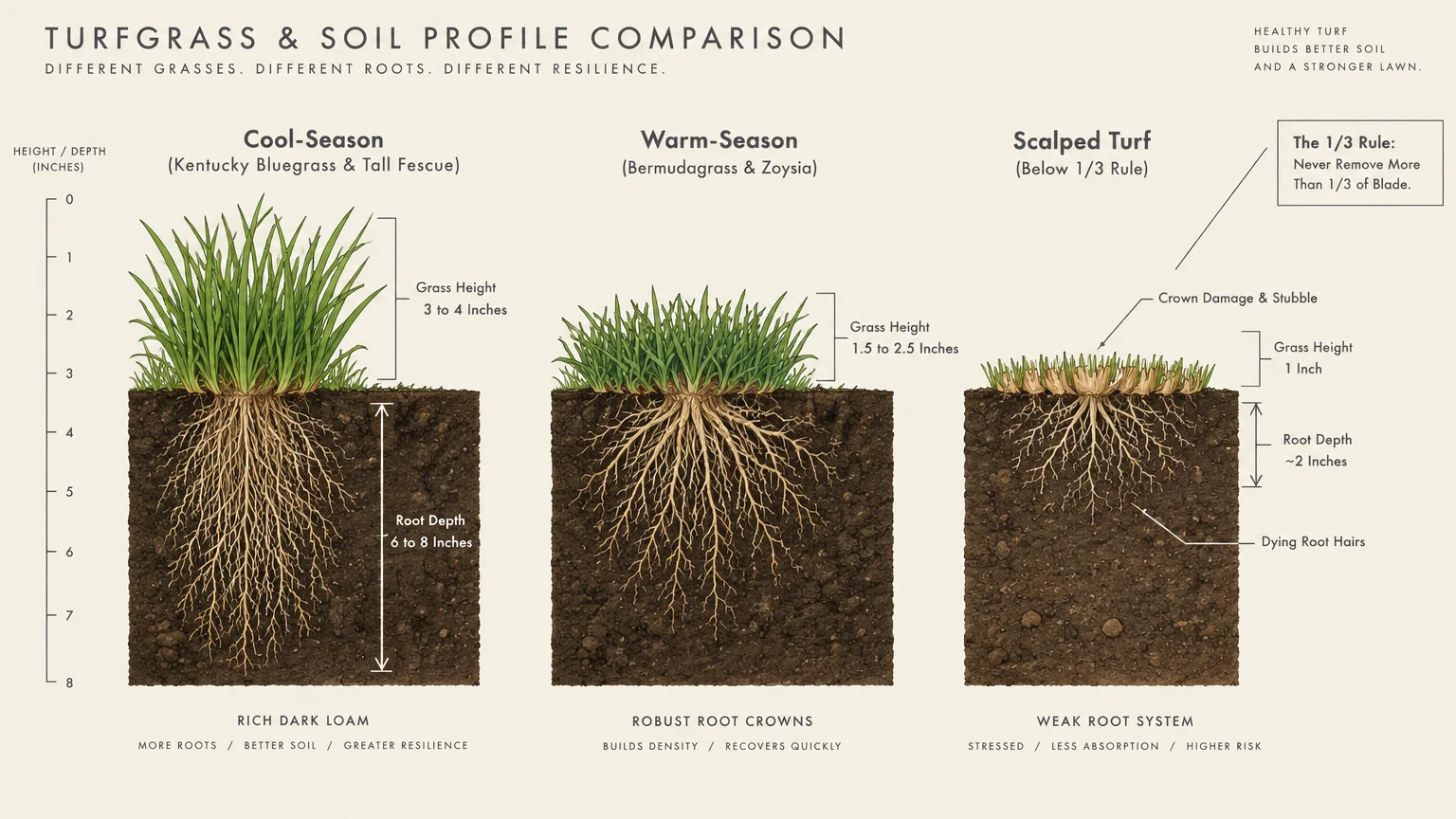
Cutting your grass too short weakens each plant and starves the underlying root system. When you scalp your yard, you strip away the upper leaf blades that generate food through photosynthesis.
Without adequate leaf surface, your turf depletes its carbohydrate reserves just trying to survive. This stress leaves behind thin, yellowish patches that invite opportunistic weed seeds to sprout.
Always follow the agronomic one-third rule during every mowing session. Never remove more than one-third of the total grass blade height in a single cutting.
Maintain cool-season grasses—such as Kentucky bluegrass and tall fescue—at a height between 3 and 4 inches. Taller grass blades cast cooling shade over the soil, which conserves valuable moisture during hot summer afternoons.
Warm-season varieties like bermudagrass or zoysia thrive when maintained between 1.5 and 2.5 inches. Setting your mower deck higher encourages roots to push 6 to 8 inches deep into the soil profile.
Raise your mower deck immediately if you notice brown stubble after mowing. That exposed stubble indicates you cut directly into the plant crown; this damage takes weeks to heal.
Uneven terrain often causes lawn mower wheels to dip, dropping the cutting deck right down into soil mounds. Level low spots and take wide turns to keep your mower deck completely even.
Raise your mower deck an additional half-inch as summer temperatures soar. Extra blade length provides crucial insulation against root scorch during record heat.
Consistent cutting at the proper height builds dense top growth that naturally blocks crabgrass. Give your turf the blade surface it needs, and those bare patches will rapidly disappear.
Tip #2: Mowing with Dull Blades That Tear Grass
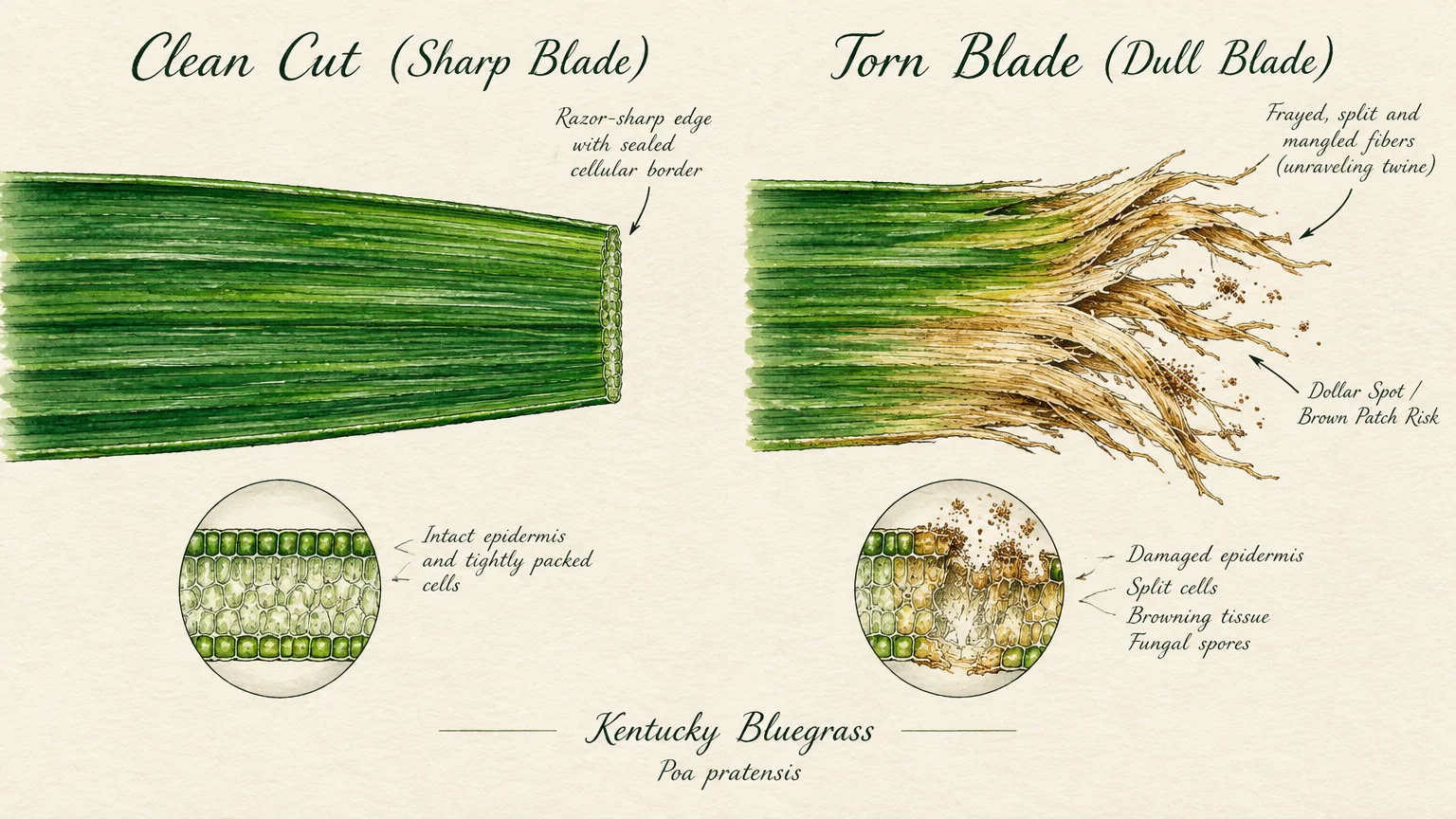
Dull mower blades rip and shred grass foliage rather than slicing it cleanly. These jagged, torn leaf tips turn white or straw-colored within 24 to 48 hours after mowing.
A ragged tear creates a large open wound across the tip of every blade. This massive surface wound forces the plant to redirect vital metabolic energy away from root development toward tissue repair.
Frayed leaf tips also act as open doorways for destructive fungal pathogens. Fungi such as dollar spot and brown patch readily invade torn foliage, creating widespread dead zones across your yard.
Inspect your lawn closely after you finish mowing this week. If the tips look frayed like unraveling twine, your mower blade requires immediate attention.
Sharpen your mower blades after every 20 to 25 hours of active use. For an average suburban yard, this schedule equates to sharpening twice per growing season.
Check blade balance on a wall nail after sharpening to prevent violent engine vibration. An unbalanced blade wobbles rapidly and delivers an uneven cut across your lawn.
Clear your lawn of sticks, acorns, and small rocks before every mow. Striking hard debris nicks blade edges and ruins sharp cutting surfaces instantly.
Keep a balanced spare blade in your garage so you can swap them out without delay. A razor-sharp edge ensures crisp cuts that seal quickly and retain plant moisture.
Clean cuts preserve deep green color across your entire yard and reduce lawn disease risks by more than thirty percent.
Tip #3: Watering Shallowly Instead of Deeply
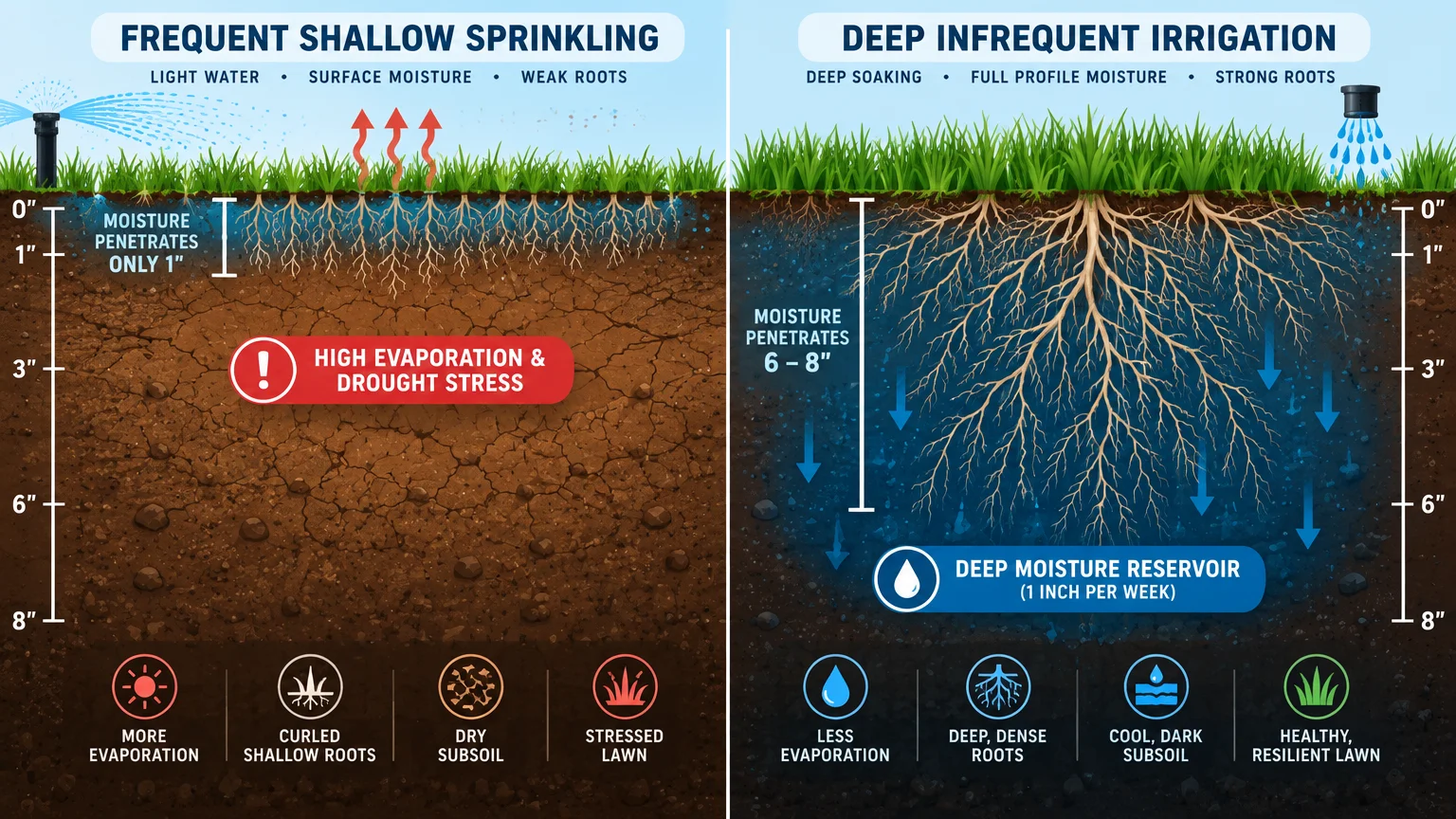
Sprinkling your grass with light, daily waterings creates a fragile, surface-bound root system. Roots only grow where moisture exists; shallow watering keeps them trapped in the top inch of soil.
When summer heat arrives, that top inch of dirt bakes dry within hours. The restricted roots quickly shrivel, leaving large irregular dead spots across your lawn.
Provide your turf with 1 to 1.5 inches of water per week through deep, infrequent soakings. Apply this moisture in one or two heavy sessions rather than quick daily mistings.
Deep watering encourages grass roots to drive downward seeking subterranean moisture reserves. Deep root systems easily withstand dry spells and maintain vibrant color during midsummer heatwaves.
Test your application depth by placing empty tuna cans or rain gauges around your sprinkler zones. Time how long your system takes to collect a half-inch of water in each container.
Always irrigate in the early morning between 5:00 a.m. and 9:00 a.m. Morning watering minimizes evaporative water loss and allows grass blades to dry before evening fungal spores become active.
Push a long wooden skewer or screwdriver 6 inches into the soil after watering. If the probe slides in effortlessly and comes out cool, moisture has penetrated deep enough.
Adjust your automatic sprinkler timer as seasons shift from spring to summer. Running irrigation systems on rigid calendar schedules wastes water and drowns roots during cool, rainy weeks.
Switching to deep irrigation cycles will transform brittle turf into a resilient, drought-tolerant lawn within a few short weeks.
Tip #4: Applying Fertilizer Unevenly or in Excess
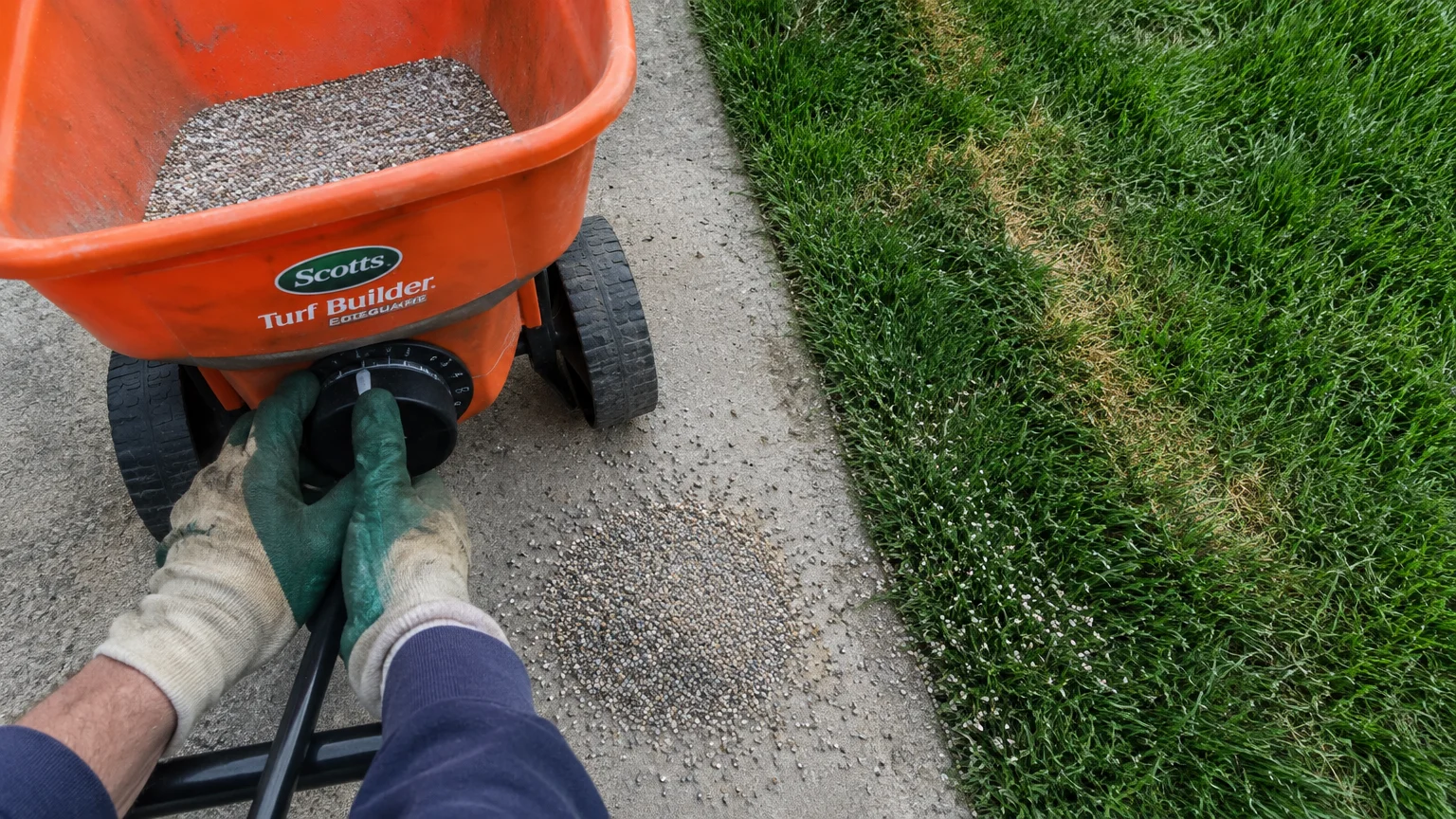
Excess mineral salts in synthetic fertilizers pull critical moisture directly out of grass roots. This rapid desiccation causes fertilizer burn, scorching your lawn into bright yellow or dead brown streaks.
Uneven spreader passes create a distracting checkerboard pattern of dark green surges and pale, starving bare spots. Using a handheld scoop or tossing fertilizer by hand almost always causes localized chemical burns.
Calibrate a broadcast spreader and apply fertilizer at half the recommended setting across two perpendicular passes. Walk north-to-south on your first run, then east-to-west on your second run for uniform coverage.
Limit quick-release synthetic nitrogen applications to no more than 1 pound of nitrogen per 1,000 square feet per feeding. Overfeeding causes sudden bursts of tender top growth that collapse under foot traffic.
Choose slow-release organic or polymer-coated fertilizers whenever possible. These formulations release essential macronutrients steadily over eight to twelve weeks without scorching delicate root crowns.
Test your soil every two to three years before applying any synthetic fertilizer blends. Applying nutrients without understanding baseline soil chemistry leads to nutrient lockouts and toxic salt accumulations.
Never mow your lawn immediately after spreading granular plant food. Mower suction gathers up loose granules and redistributes them into concentrated piles that kill turf.
Always water your lawn thoroughly immediately after spreading granular fertilizer. This moisture washes mineral granules off tender blades and dissolves nutrients safely down into the soil.
If you accidentally spill fertilizer on your grass, sweep or vacuum it up immediately before soaking the area with gallons of clean water.
Tip #5: Ignoring Heavy Soil Compaction and Thatch
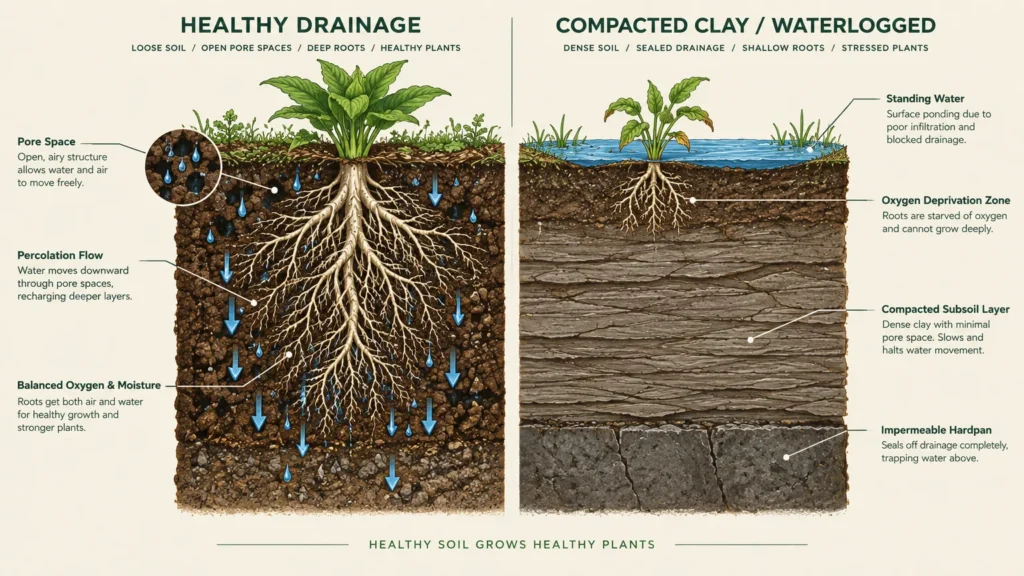
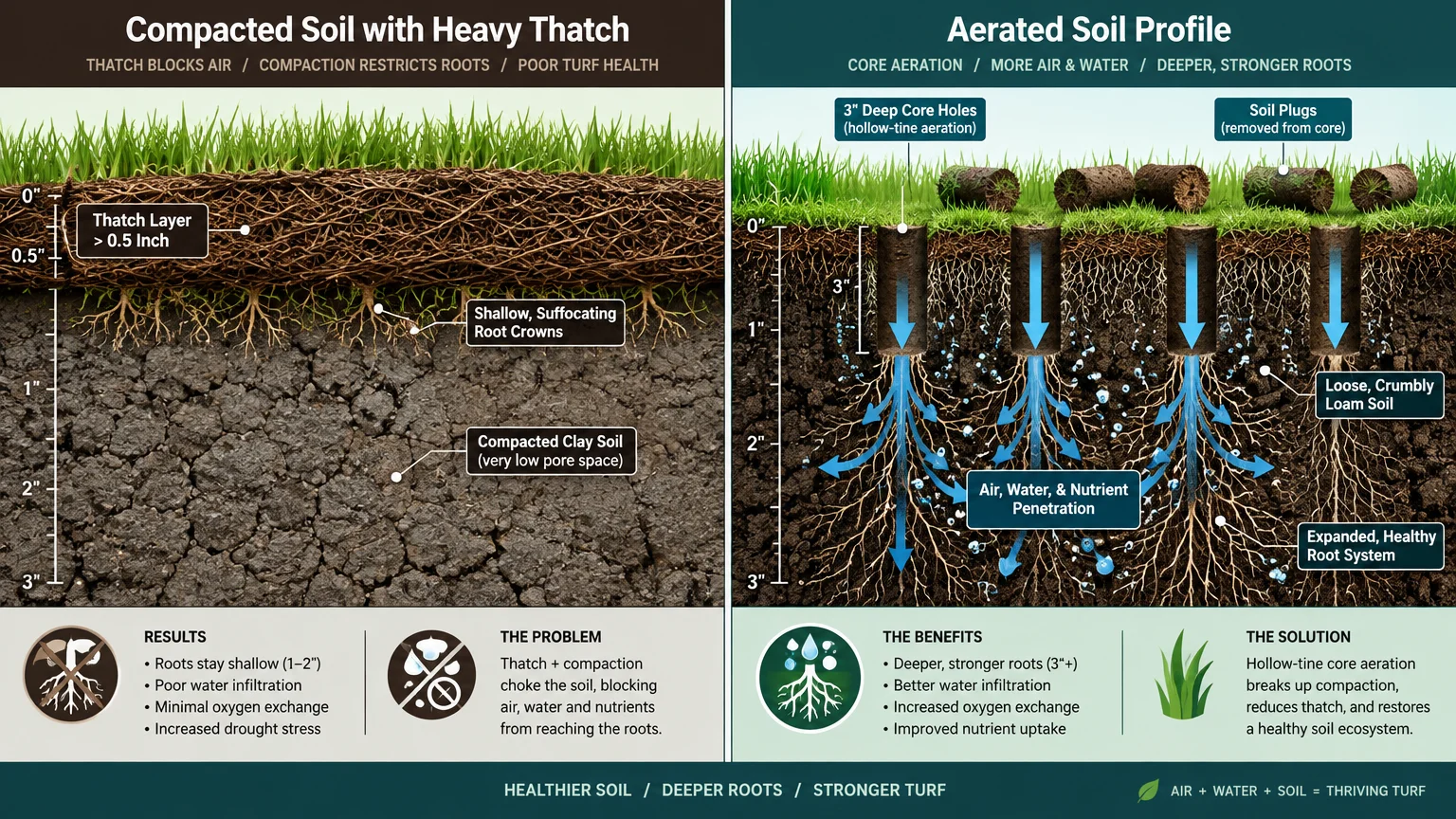
Dense, compacted soil squeezes out air pockets and blocks moisture from reaching thirsty grass roots. Heavy foot traffic, play equipment, and clay soils pack dirt particles so tightly that roots suffocate.
Without oxygen and water penetration, turf slowly thins out and leaves hardpan patches where nothing grows. Rainwater simply runs off the hard surface instead of soaking downward to feed the root zone.
Thick thatch layers exacerbate this suffocation problem. When dead stems and decomposing roots exceed a half-inch in thickness, they form a spongy barrier that repels water.
Push a regular screwdriver into your lawn to test your soil compaction level. If the tool resists your hand and cannot penetrate 3 inches smoothly, your turf needs mechanical core aeration.
Core aerators extract soil plugs 2 to 3 inches deep across your yard. These open holes relieve subterranean pressure and allow oxygen, water, and nutrients to circulate freely.
Heavy clay soils require frequent aeration because microscopic clay platelets pack tightly together. Incorporating organic matter into the core holes breaks up sticky clay bonds permanently.
Use a mechanical dethatcher or verticutter when thatch build-up exceeds three-quarters of an inch. Dethatch only during active growth periods so turf recovers quickly from mechanical disturbance.
Aerate cool-season lawns during the early autumn and warm-season lawns during late spring. Follow aeration with a light topdressing of sifted organic compost to improve soil structure permanently.
Removing stubborn thatch and opening compacted earth creates the porous, fertile foundation that every healthy lawn requires.
Tip #6: Neglecting Pet Urine Spots and High-Traffic Stress
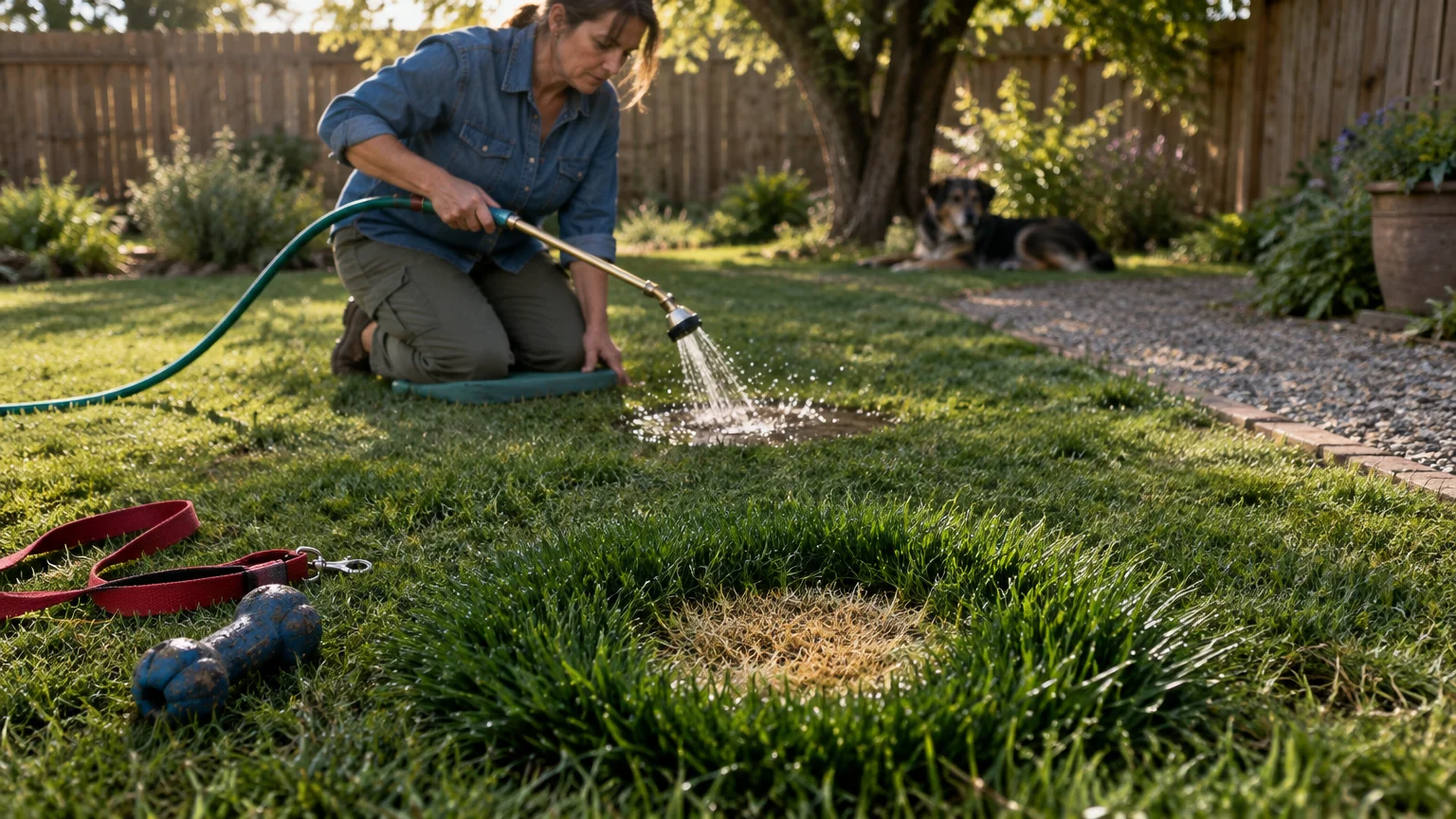
Dog urine contains extremely high concentrations of urea nitrogen and acidic mineral salts. When your pet urinates on a single spot, this concentrated liquid creates a severe chemical burn.
The center of the affected area dies and turns tan, while the outer ring turns lush green from diluted nitrogen. Over time, recurring bathroom spots create unsightly polka dots across your yard.
Flush the spot with two gallons of water immediately after your dog urinates. Diluting the concentrated nitrogen turns a lethal burn into a mild, harmless dose of liquid fertilizer.
Train your pets to use a designated mulched run or pea gravel zone away from prime turf. Removing pet traffic from sensitive lawn areas stops ongoing chemical damage instantly.
Provide your dog with plenty of fresh, clean drinking water to naturally dilute urine concentration. Higher daily fluid intake reduces urinary urea levels and protects outdoor grass.
Heavy physical traffic from pets and kids along fences or walkways also wears down plant crowns. This continuous abrasive friction crushes grass blades and exposes bare dirt paths.
Install attractive stepping stones along frequent walking routes to protect surrounding turf. Redirecting concentrated foot traffic preserves blade density and prevents permanent bare ruts.
Remove dead thatch from burned spots and flush the soil with water before adding seed. Fresh grass will not take root in soil saturated with concentrated nitrogen salts.
Diluting pet waste and managing daily traffic patterns will keep your lawn uniform, green, and completely patch-free.
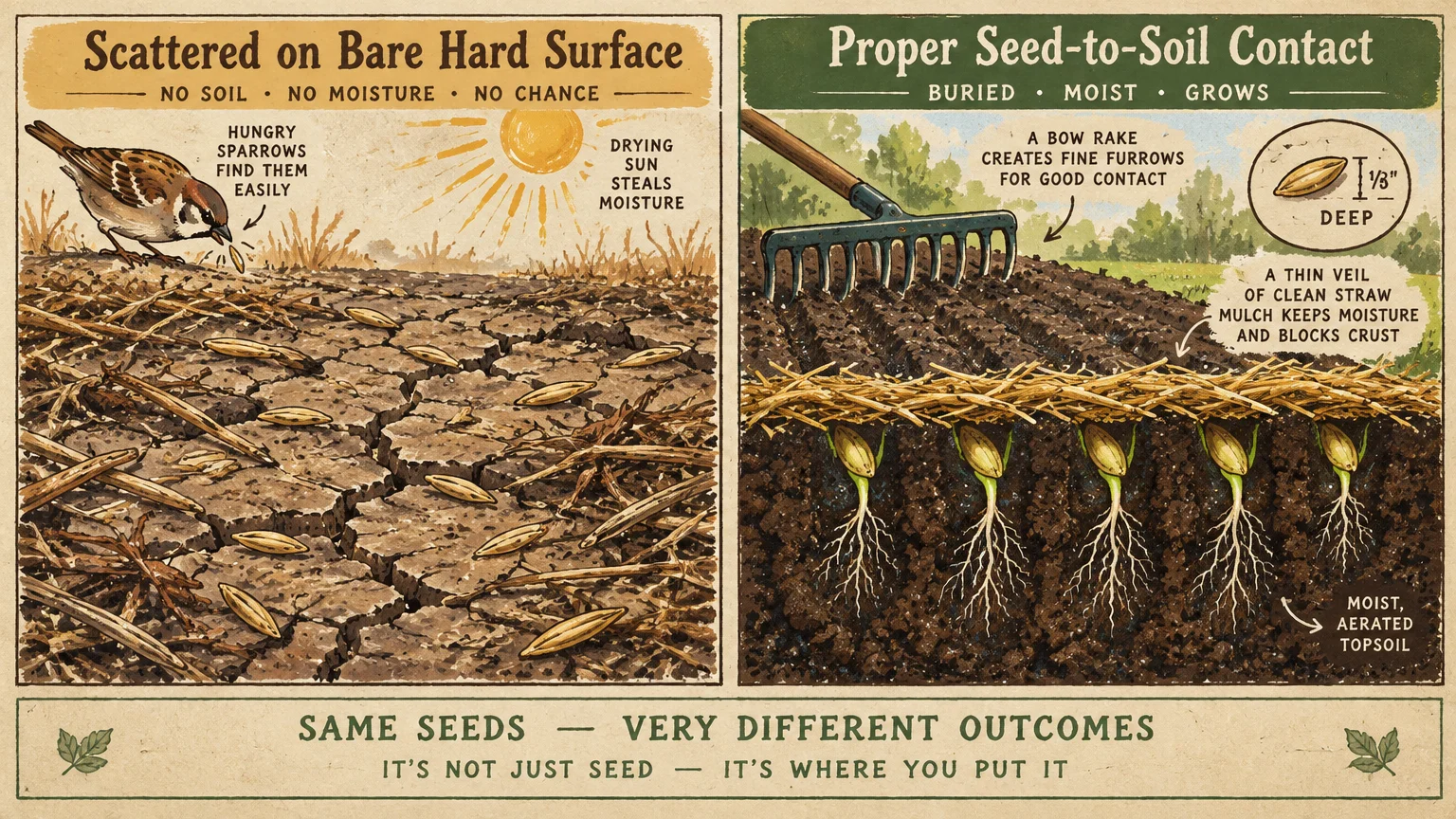
Tip #7: Scattering Grass Seed Without Soil Preparation
Tossing grass seed directly over hard, unraked ground wastes both time and money. Germinating seeds must establish direct seed-to-soil contact to absorb moisture and anchor their young roots.
Seeds left resting on top of dead thatch or compacted dirt dry out quickly under the sun. Hungry birds and foraging ants will also feast on unprotected seeds within hours of application.
Clear away dead debris, thatch, and weeds from the bare spot using a stiff metal garden rake. Vigorously scratch the top 1 to 2 inches of soil until it forms a loose, crumbly seedbed.
Mix a thin layer of compost into the loosened soil to provide immediate organic nourishment. Spread high-quality grass seed that matches your existing turf species at the rate listed on the seed tag.
Apply a phosphorus-rich starter fertilizer alongside new seed to accelerate juvenile root development. Young grass seedlings depend on readily available phosphorus to establish anchorage before chilly weather arrives.
Gently press the seed into the prepared dirt using your foot, a roller, or the back of a flat shovel. Firm contact ensures the tiny seedling roots can draw water immediately upon sprouting.
Cover the seeded patch with a quarter-inch layer of clean straw or peat moss to retain critical surface moisture. Mist the repaired spot two to three times daily until the seedlings reach 2 inches in height.
Wait until new grass seedlings reach 3.5 inches tall before taking your first mowing pass. Mow with a sharp blade when the soil is dry to avoid dislodging tender roots.
Taking time to prepare the soil guarantees high germination rates and permanently repairs bare spots in lawn areas.

Putting It All Together: Enjoy Your Beautiful Garden
Eliminating these common lawn care mistakes transforms patchy turf into an enviable green sanctuary. Consistent mowing, intelligent watering, and targeted soil care work together to build enduring turf density.
Inspect your lawn weekly to catch localized stress factors before large bare patches develop. Early intervention saves time, reduces maintenance expenses, and keeps your grass thriving through every seasonal transition.
Treat your lawn as a living, interconnected ecosystem rather than a chore on your weekend checklist. Healthy soil microbes and deep root networks naturally resist heat stress, fungal diseases, and invasive weeds.
Regular garden observation remains your most effective tool for preventing lawn issues. Walking your property weekly allows you to catch minor thinning before severe bare spots form.
Patience pays dividends when nursing stressed turf back to vibrant health. With deliberate, science-backed maintenance, your lawn will reward you with a deep, resilient green tapestry.
Apply these practical lawn tips consistently over the coming months. You will soon enjoy walking barefoot across a soft, uniform carpet of lush green turf.
A vibrant lawn frames your garden beds beautifully and elevates the entire outdoor living experience for your family.
For region-specific advice, consult your local University Extension program (find yours via the USDA directory). For plant databases and inspiration, visit the Missouri Botanical Garden or the Royal Horticultural Society.
Disclaimer: This article provides general gardening advice; always consider your specific climate, soil conditions, and local pests. Follow safety guidelines when using gardening tools and products.
Frequently Asked Questions
How long does it take to fix bare spots in lawn turf?
Most grass seed varieties germinate within seven to twenty-one days after planting. Perennial ryegrass sprouts in about five days, while Kentucky bluegrass can take up to three weeks.
With proper soil preparation, consistent moisture, and mild weather, bare spots will blend seamlessly into your existing lawn within six to eight weeks.
What is the best time of year to repair a patchy lawn?
Early autumn is the ideal season to repair patchy cool-season lawns because warm soil accelerates seed germination while cooler air prevents heat stress.
Late spring is the best window for warm-season lawns like bermudagrass and zoysia. Rising temperatures and increasing daylight promote vigorous root expansion during this active growing period.
Can patchy grass fix itself without adding new seed?
Spreading grass types like Kentucky bluegrass, bermudagrass, and St. Augustine can fill in small patches through horizontal runners called rhizomes and stolons.
Bunch-forming grasses like tall fescue and perennial ryegrass do not spread horizontally and require reseeding to repair bare patches.
How do I know if my lawn patches are caused by grubs or drought?
Grubs chew through roots beneath the soil surface, allowing dead turf to roll up easily like a carpet when pulled. Look for white, C-shaped larvae in the top 2 inches of dirt.
Drought-stressed turf remains firmly rooted in the ground and will bounce back green after several days of deep watering.