You can transform your small balcony into a lush, productive garden with the right potted selections. Choosing resilient balcony container plants allows you to harvest fresh food and enjoy vibrant blooms just steps from your door.
Wind, reflected heat, and shallow root zones make elevated spaces unique growing environments. Successful small space gardening relies on pairing tough, compact plant varieties with appropriately sized pots and consistent moisture.
These twelve proven selections deliver maximum flavor and visual appeal without outgrowing your limited square footage. Master their simple care routines today to create an enviable outdoor sanctuary.
Tip #1: Bush Cherry Tomatoes
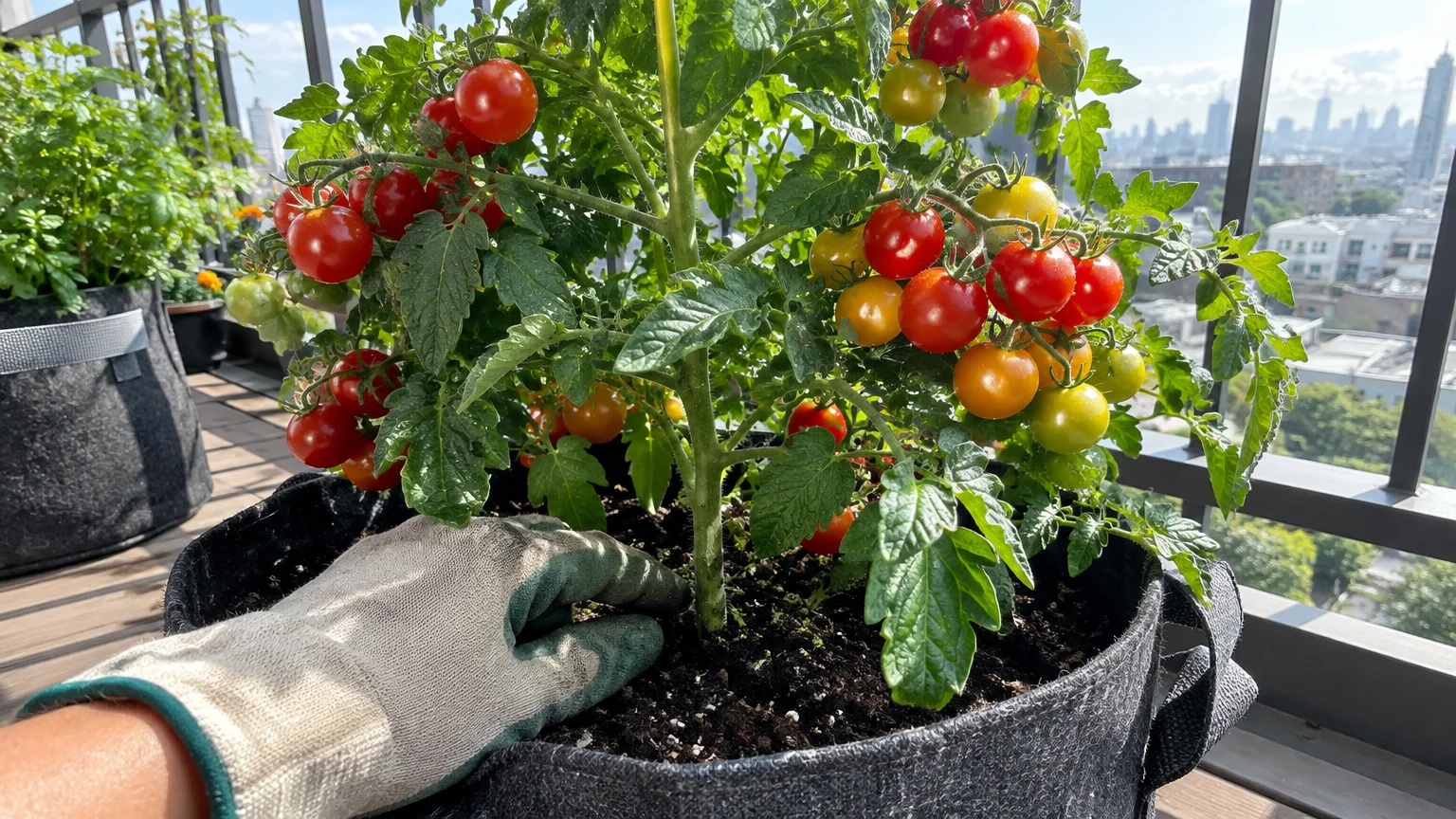
Determinate bush cherry tomatoes produce abundant sweet fruit on compact vines that stay under three feet tall. Varieties like ‘Tiny Tim’ and ‘Patio Choice’ thrive in pots without taking over your walking area.
These heavy yielders reward container gardening enthusiasts with continuous clusters of bright, bite-sized snacks all summer long. Their sturdy main stems resist balcony gusts far better than sprawling vining cultivars.
Plant each bush tomato in a container holding at least five gallons of potting mix with bottom drainage holes. Ample root room prevents rapid drying and fuels continuous flower production.
Position your planter where it receives at least six hours of direct sunlight daily. Water thoroughly whenever the top inch of potting soil feels dry to the touch.
Feed your plants every two weeks with a balanced organic liquid fertilizer formulated for vegetables. Consistent moisture prevents blossom-end rot and cracked fruit during hot summer spells.
Tip #2: Sweet Basil
Sweet basil is an indispensable culinary herb that flourishes in warm, sun-drenched balcony settings. Its lush green foliage releases a rich, peppery aroma whenever you brush against the leaves.
This vigorous grower ranks among the most rewarding plants for pots because frequent harvesting stimulates even denser branch development. You can snip fresh leaves weekly for homemade pesto, fresh salads, and pasta dishes.
Select a pot that measures eight to ten inches wide with functional drainage holes. Use a porous, peat-free potting mix enriched with organic compost to support rapid vegetative growth.
Balcony breezes dry out delicate herb leaves quickly, so maintain evenly moist soil without letting water pool around roots. Basil thrives in six to eight hours of direct morning sun.
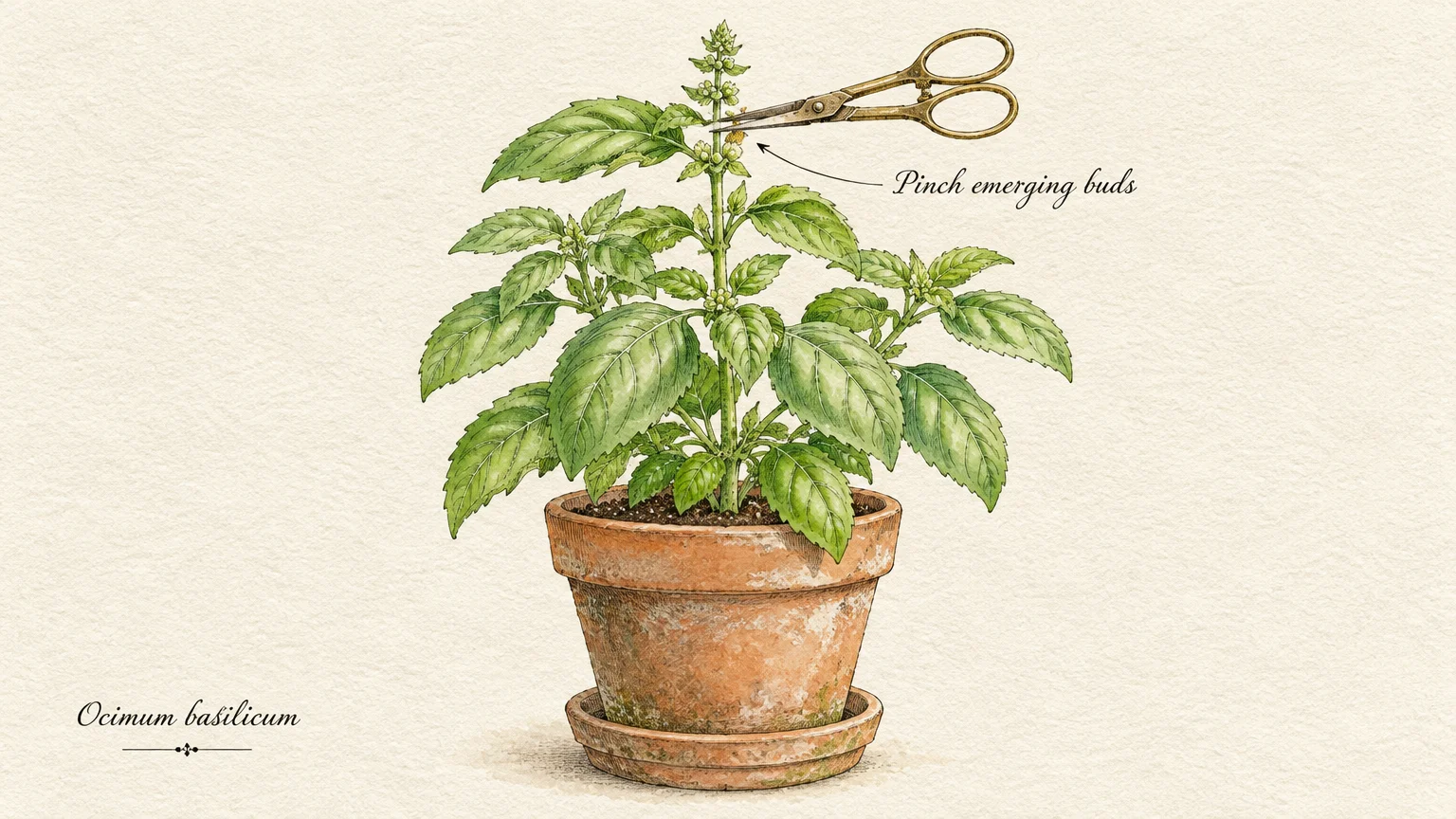
Pinch off flower buds as soon as they emerge to keep foliage sweet and tender. Regular pinching forces the plant to channel energy into branching stems rather than seed development.
Tip #3: Everbearing Strawberries
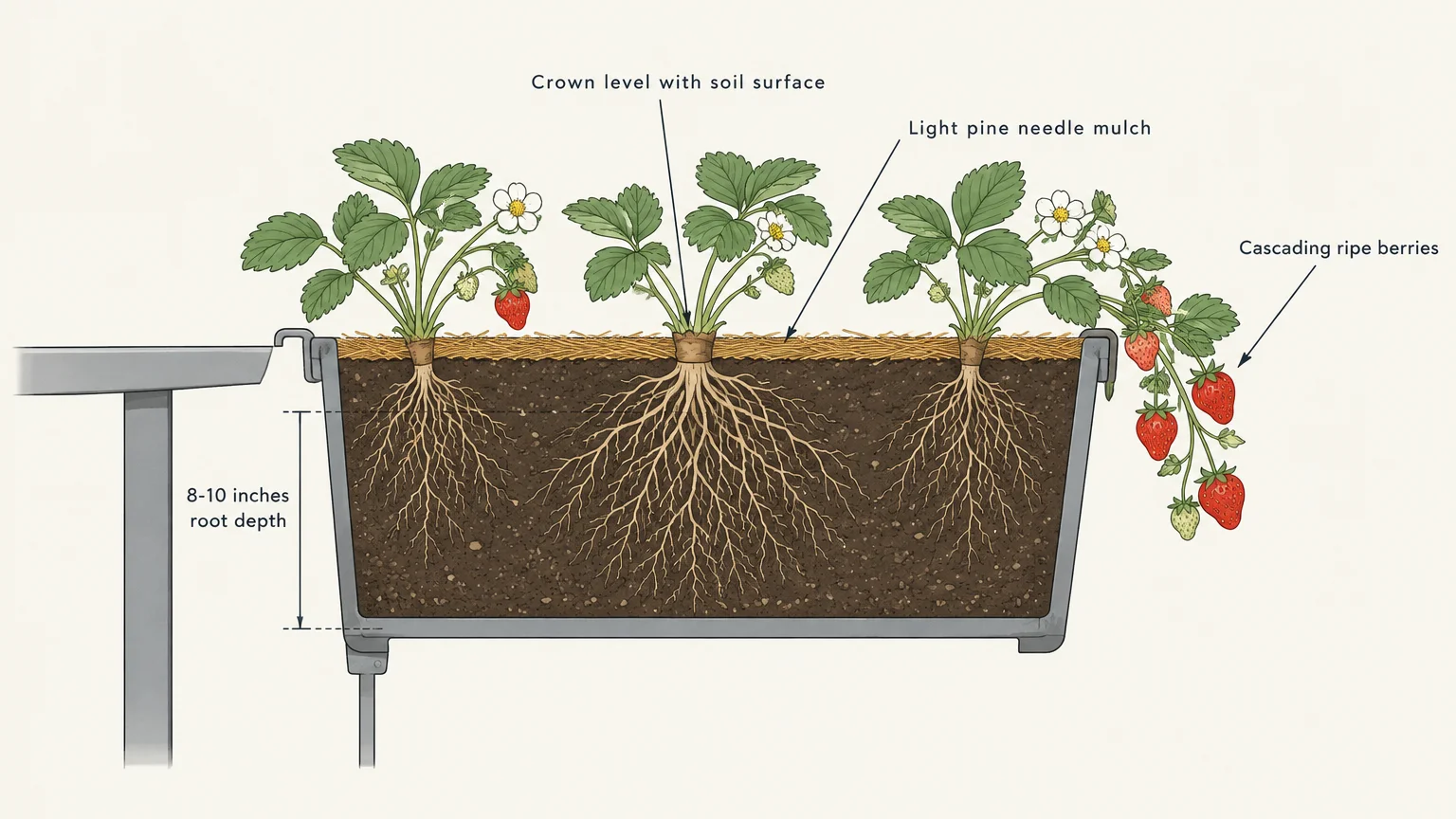
Everbearing strawberries produce sweet, ruby-red berries from late spring until the first autumn frost. Their compact growth habit makes them stellar performers in hanging baskets, railing planters, and vertical towers.
These charming perennials brighten small space gardening setups with delicate white flowers followed by cascading fruit. Growing berries elevated off the ground also protects your harvest from slugs and soil-dwelling pests.
Provide a planter with eight to ten inches of depth and ensure the potting soil drains rapidly. Position the plant crown level with the soil surface so moisture does not rot the stem base.
Strawberries crave at least six hours of full sun each day to produce high sugar levels in their berries. Water them early in the day around the base to keep foliage dry.
Spread a light pine needle or straw mulch across the soil surface to conserve moisture and keep hanging fruit clean. Apply a potash-rich liquid feed every two weeks once flowering begins.
Tip #4: Trailing Petunias
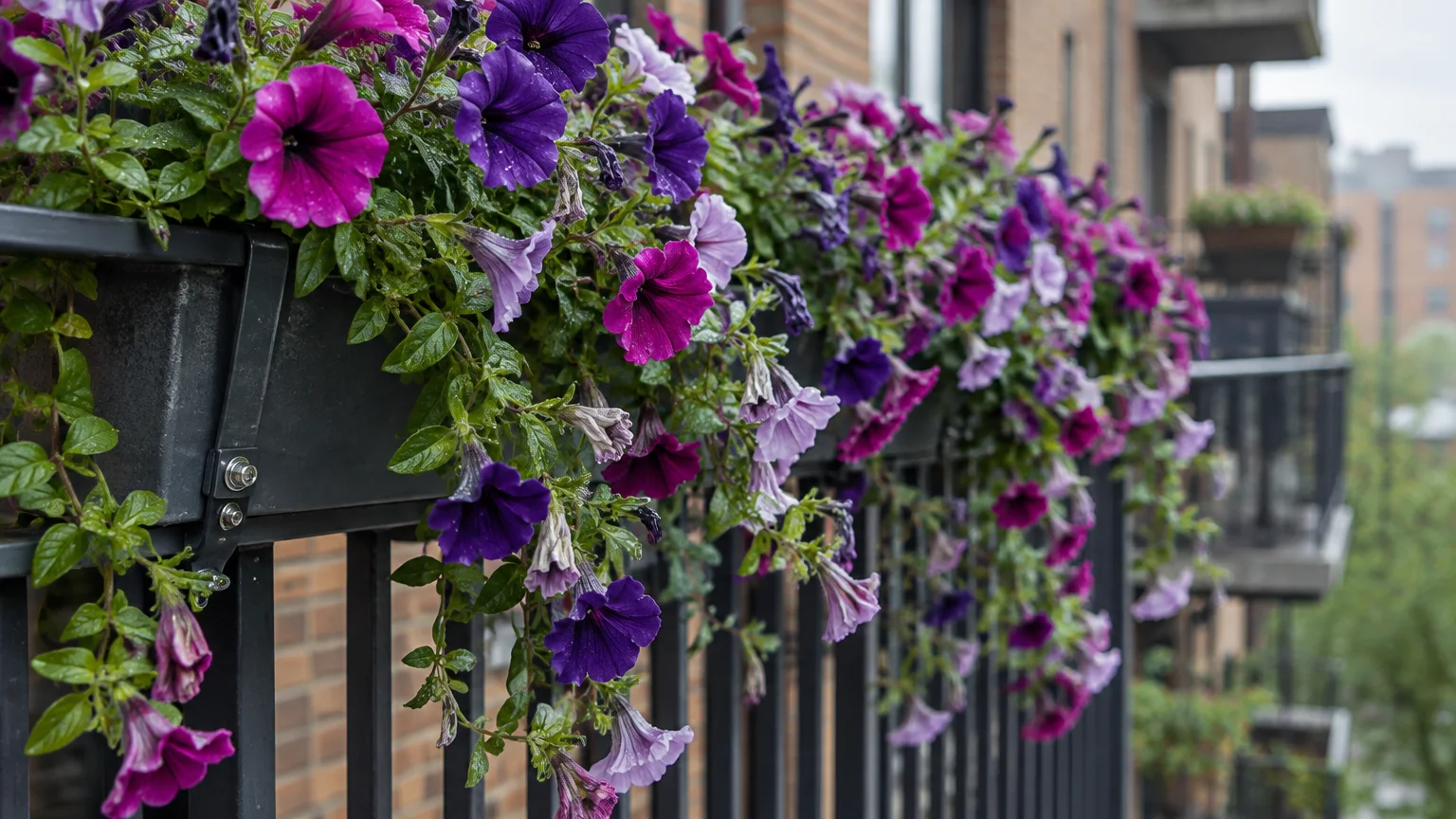
Trailing petunias transform balcony railings and hanging baskets into waterfalls of vivid color. Varieties such as ‘Wave’ petunias spread outward and downward, creating vibrant flower curtains that bloom continuously through autumn.
These resilient annuals stand out among top balcony garden ideas because they tolerate intense afternoon sun and moderate urban wind. They also attract hummingbirds and beneficial pollinators directly to your apartment terrace.
Plant them in containers with ten to twelve inches of diameter filled with a lightweight, well-draining potting blend. Avoid heavy garden soils that compact and suffocate fine root systems in containers.
Water containers daily during midsummer heat waves; dry container soil causes leaf yellowing and halts bud formation. Check soil dampness each morning before balcony tiles heat up.
Feed trailing petunias weekly with a water-soluble bloom fertilizer to replenish spent nutrients. Trim back leggy stems by one-third in midsummer to stimulate a fresh flush of dense blooms.
Tip #5: Spearmint and Peppermint
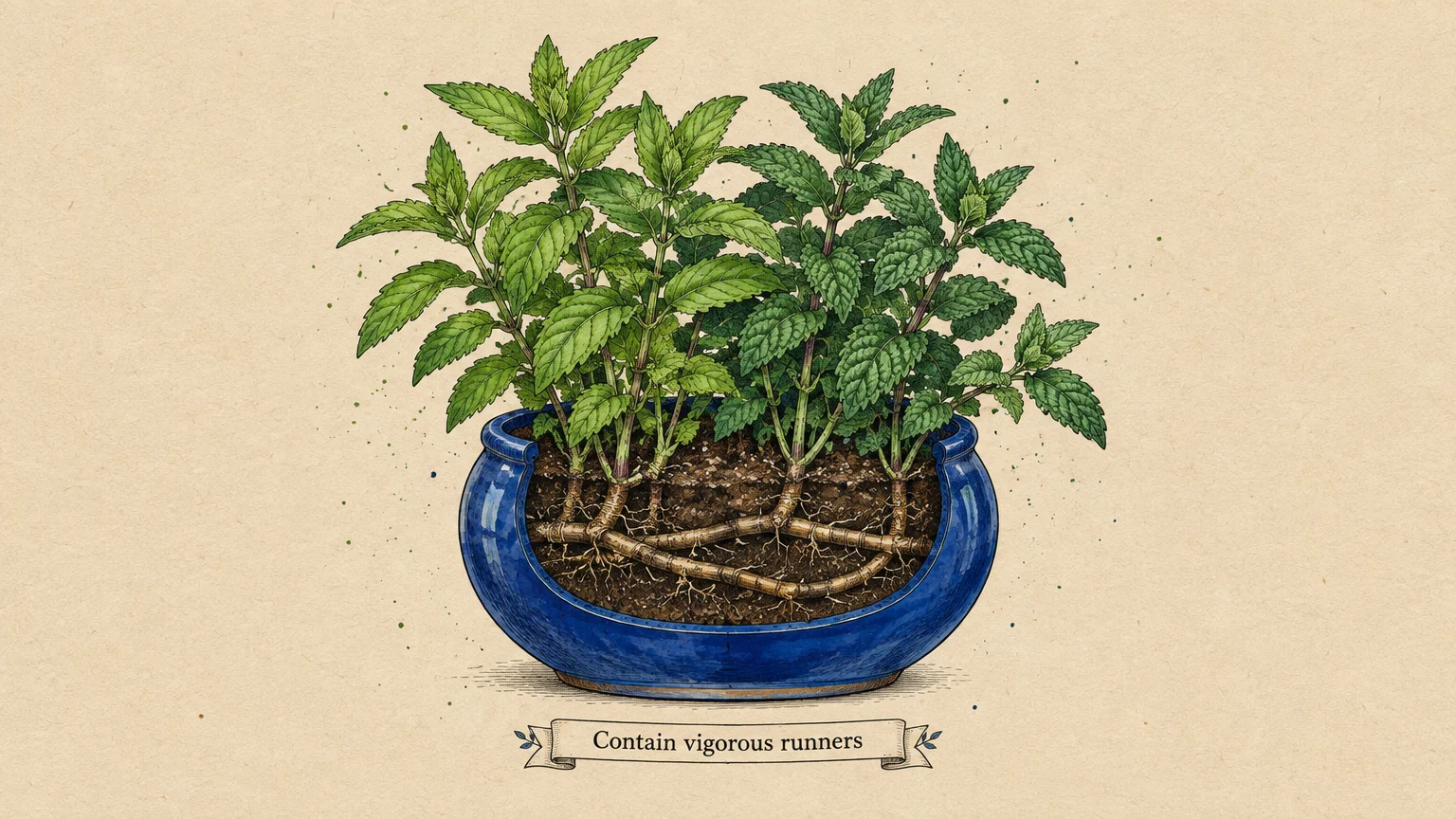
Mint is an energetic, aromatic herb that solves an age-old problem when grown in a dedicated container. Confining mint to pots keeps its aggressive root system from overwhelming companion plants.
Its lush, serrated leaves provide an endless supply of crisp flavor for cool teas, summer cocktails, and gourmet desserts. Furthermore, the strong essential oils in mint foliage naturally deter pesky insects on balconies.
Choose a wide, shallow pot measuring at least ten inches across to accommodate surface runners. Ordinary potting soil combined with standard container drainage provides ideal growing conditions.
Unlike sun-worshipping Mediterranean herbs, mint thrives in partial shade and tolerates harsh morning or afternoon exposure. Keep the potting soil consistently moist; mint rapidly wilts when containers dry completely.
Harvest stems regularly by cutting back just above a leaf node to promote bushier growth. Divide the root ball every other spring to rejuvenate your plant and prevent pot-bound roots.
Tip #6: Compact English Lavender
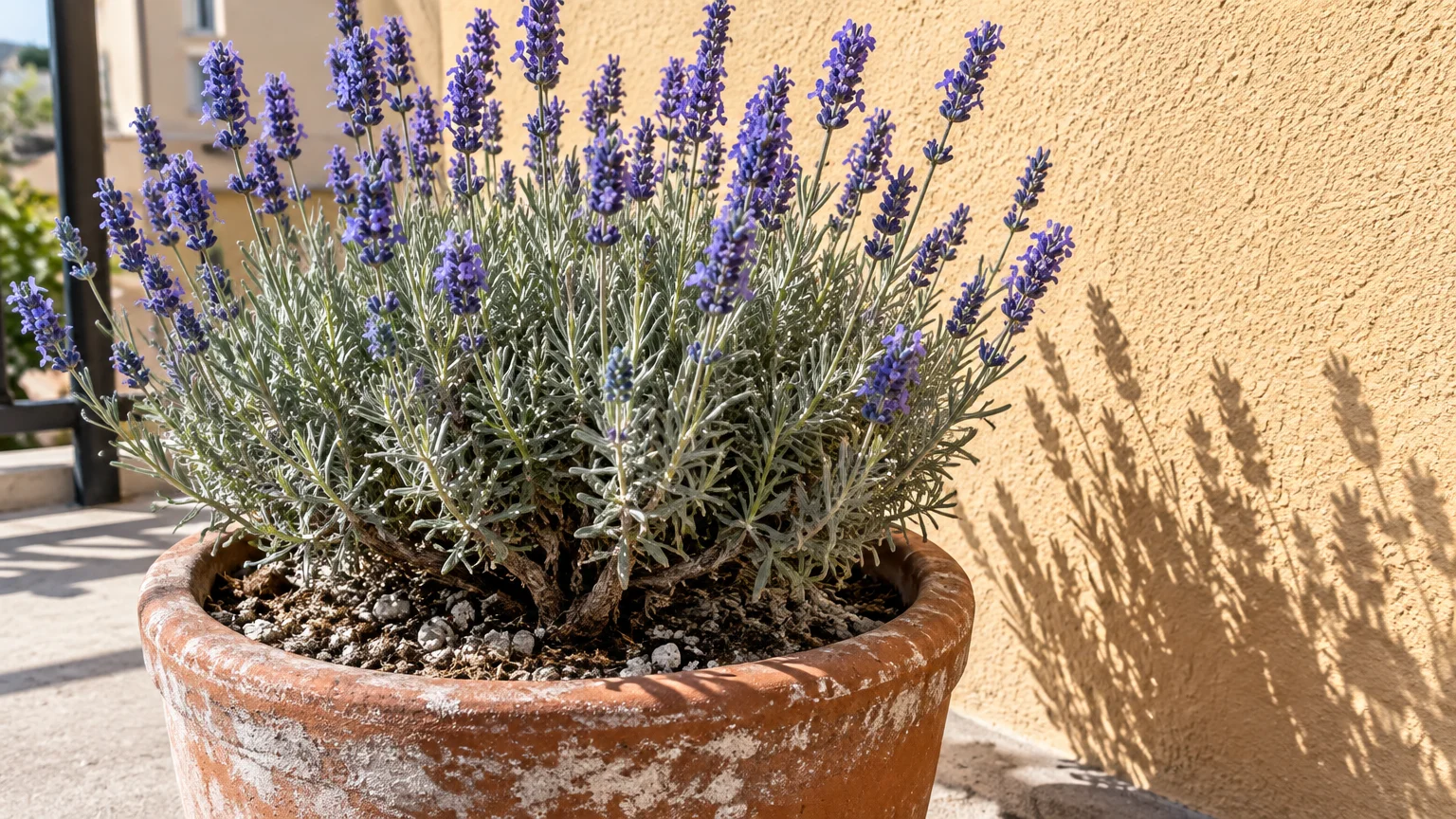
Compact English lavender brings soothing fragrance, silvery foliage, and lovely purple flower spikes to sunny balcony nooks. Cultivars like ‘Munstead’ and ‘Hidcote’ remain manageable in pots, rarely exceeding eighteen inches in height.
This Mediterranean perennial thrives in the hot, dry microclimates typical of high-rise balconies. Its fragrant blossoms also offer urban bees a reliable nectar source while infusing your seating area with calming perfume.
Use an unglazed terracotta pot with drainage holes to allow rapid moisture evaporation through container walls. Mix coarse perlite or sand into your potting soil to ensure sharp drainage.
Locate lavender in your sunniest balcony spot where it can soak up six to eight hours of direct rays. Water only when the top two inches of soil dry completely.
Lavender despises wet feet, so avoid overwatering and never let containers sit in runoff saucers. Lightly shear spent flower stalks in late summer to maintain a compact, rounded mound.
Tip #7: Bush Green Beans
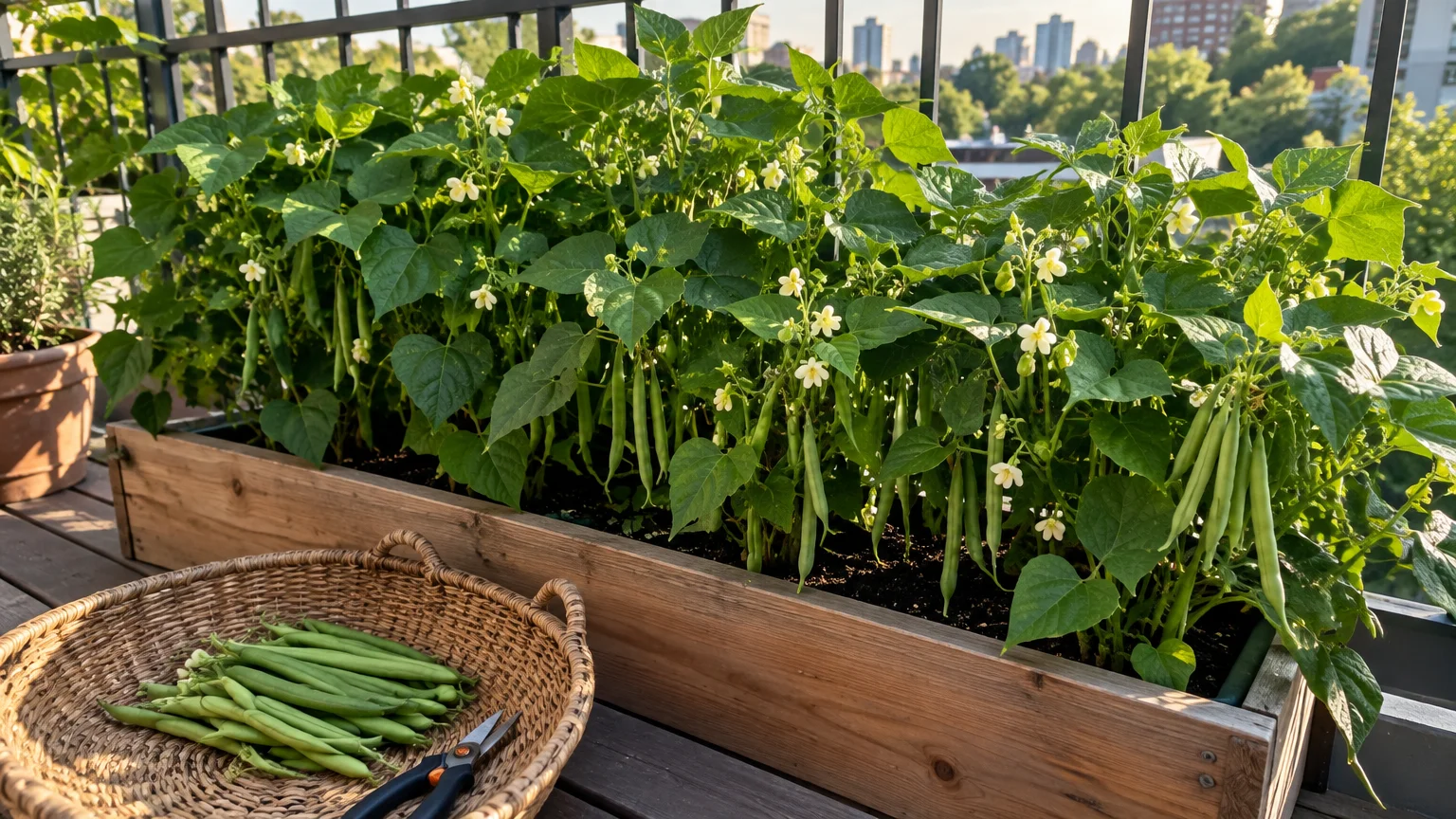
Bush green beans provide heavy vegetable yields without requiring elaborate trellises or tall garden stakes. Varieties like ‘Provider’ and ‘Blue Lake Bush’ grow into tidy, two-foot-tall shrubs loaded with tender, crisp pods.
These legumes are exceptional balcony container plants because they fix nitrogen into the soil and mature within fifty days. Children and beginner gardeners love watching their fast germination and rapid daily growth.
Sow seeds directly into containers at least eight inches deep and twelve inches wide. Space individual plants four inches apart to ensure good air circulation around the developing canopy.
Position bean planters where they receive five to six hours of daily sun. Water consistently, especially during flowering and pod development, to prevent blossom drop and stringy beans.
Pick bean pods frequently while they are slender and smooth; regular harvesting encourages the plant to produce continuous blossoms. Succession plant seeds every three weeks for a non-stop balcony harvest.
Tip #8: Dwarf Japanese Maple
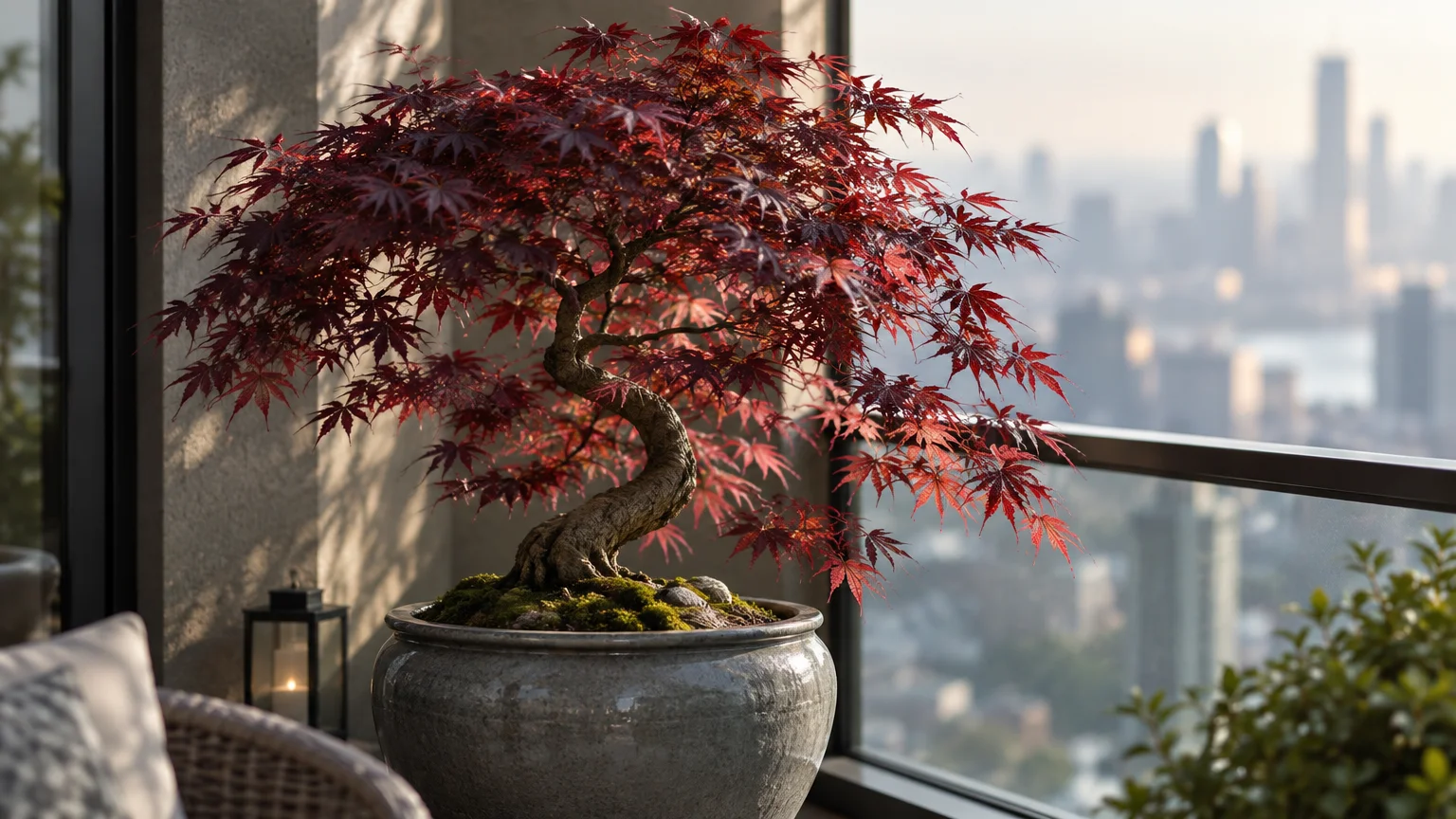
A dwarf Japanese maple introduces architectural elegance, graceful branch structure, and striking foliage color to your container garden. Compact cultivars such as ‘Shaina’ and ‘Rhode Island Red’ grow slowly and adapt beautifully to large pots.
This deciduous small tree acts as a sophisticated anchor plant that anchors your balcony aesthetic through changing seasons. Its sculptural form shifts from vibrant spring hues to rich green summer tones and fiery autumn foliage.
Select a sturdy container at least eighteen inches wide with generous drainage holes to stabilize root mass against wind. Use a slightly acidic, peat-based potting soil mixed with pine bark for ideal root aeration.
Position your maple in partial shade or dappled morning sun to shield delicate leaves from scorching afternoon heat. Shelter the tree from harsh, desiccating balcony winds that can shred thin foliage.
Keep soil evenly moist but never waterlogged; mulching the surface with shredded bark protects surface roots from temperature fluctuations. Wrap the container in burlap during freezing winter months to insulate root zones.
Tip #9: Loose-Leaf Salad Greens
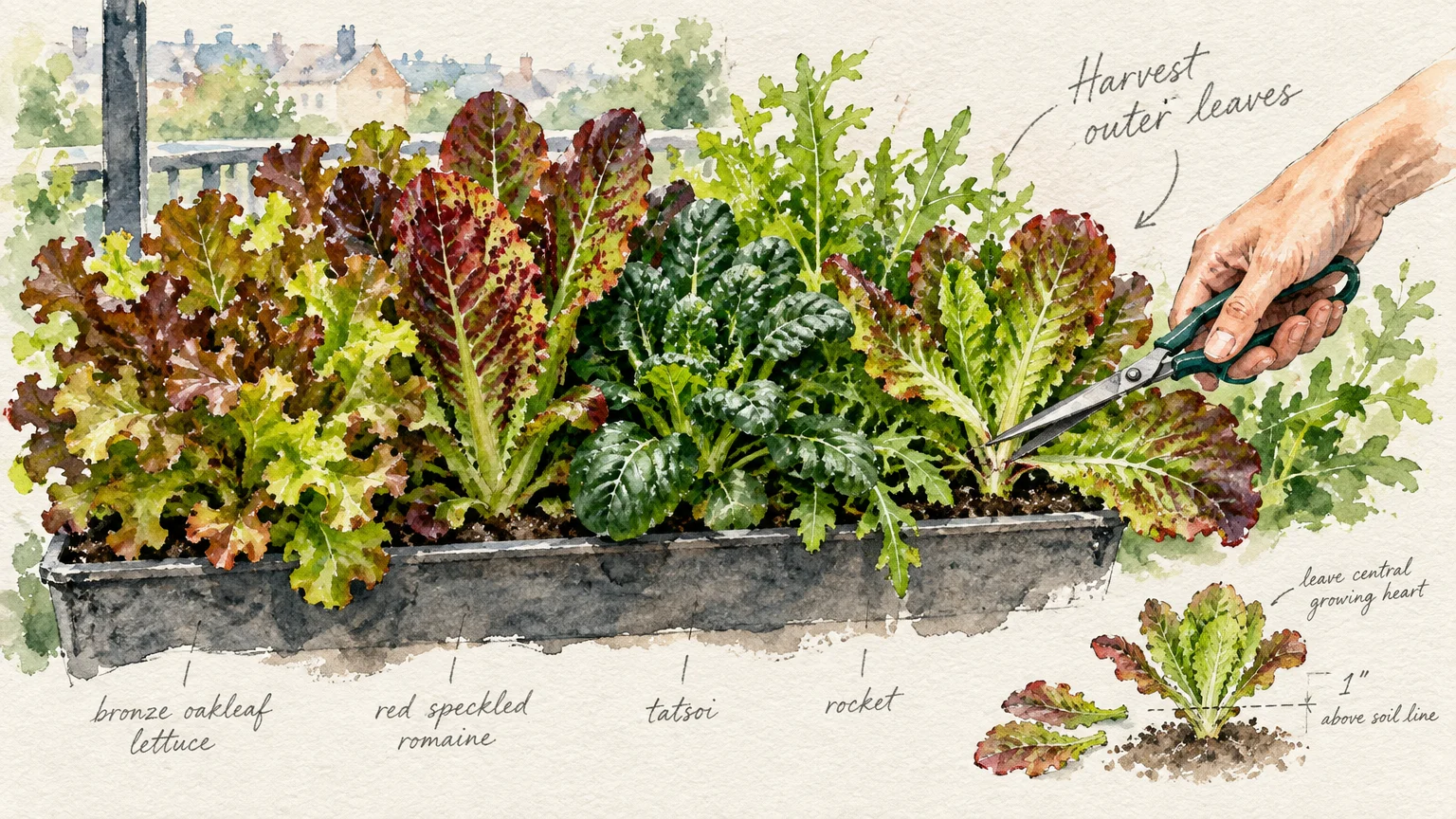
Loose-leaf lettuce, spinach, and arugula allow you to harvest fresh, crisp salads just minutes before dinner. These fast-growing greens thrive in shallow containers, making them perfect for railings, window boxes, and narrow tiered plant stands.
They represent the pinnacle of efficient small space gardening because you can harvest outer leaves continuously using the cut-and-come-again method. Fresh greens will regenerate new foliage within days, providing steady nutrition from a single box.
Choose rectangular planters that are six to eight inches deep and fill them with nutrient-dense, moisture-retentive potting soil. Scatter seeds thinly across the surface and dust them with a light layer of compost.
Greens prefer cool conditions and grow well in partial shade or three to four hours of gentle morning sun. Shield them from intense midday heat to prevent bitter flavors and premature bolting.
Water with a gentle misting nozzle to keep the upper soil moist without dislodging delicate shallow roots. Sow fresh seeds every two weeks throughout spring and autumn for an unending salad supply.
Tip #10: Calibrachoa Million Bells
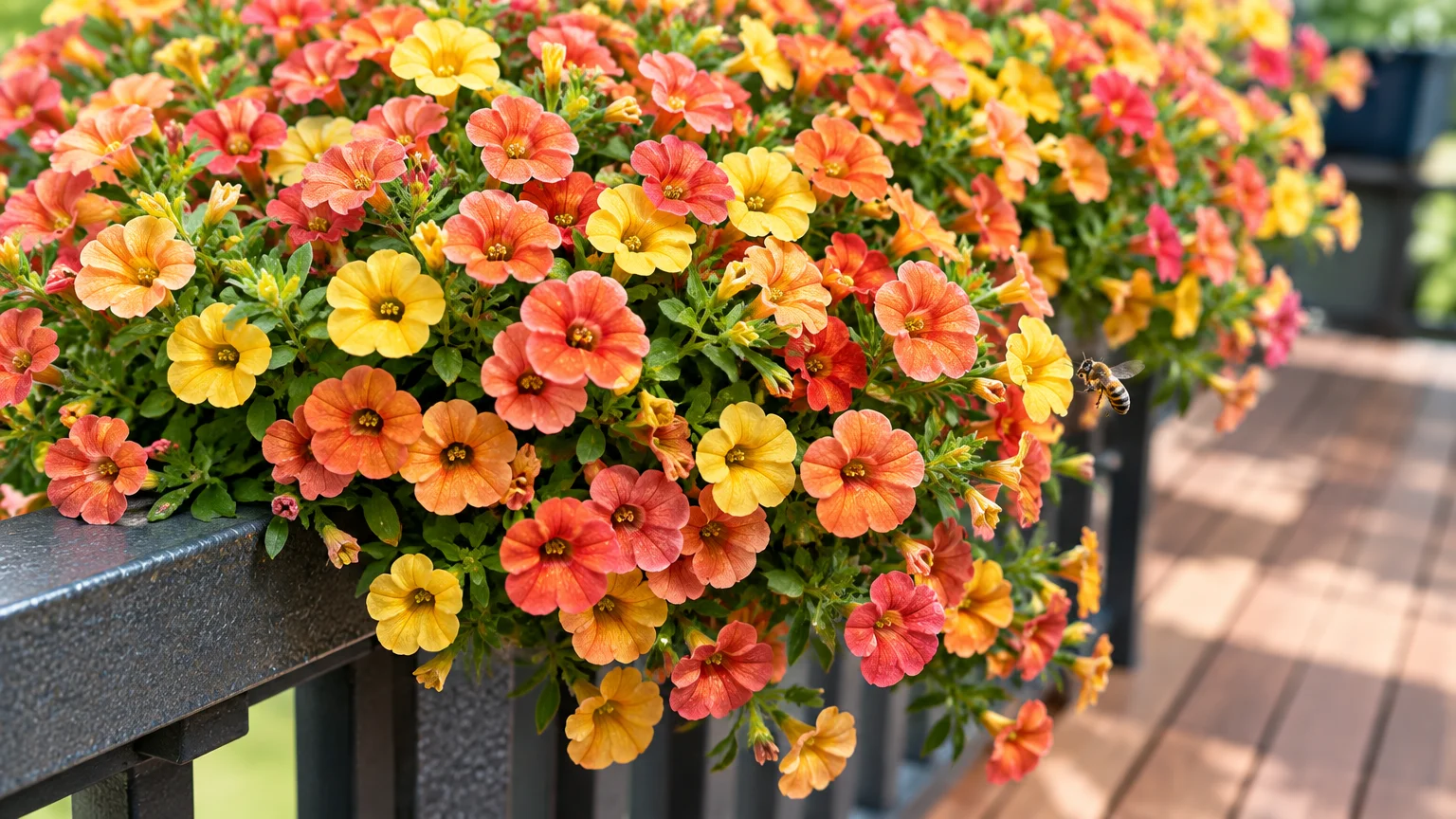
Calibrachoa, commonly called Million Bells, produces hundreds of miniature petunia-like blooms on dense, trailing stems. Its compact, self-cleaning habit eliminates the tedious chore of deadheading spent blooms from elevated balcony planters.
These brilliant bloomers provide months of non-stop color in hanging baskets, railing troughs, and mixed container arrangements. Their heavy flower canopy creates an eye-catching focal point visible from both inside and outside your apartment.
Plant Calibrachoa in pots with sharp bottom drainage using a lightweight potting mix amended with perlite. Tight root space does not intimidate this vigorous plant, making it ideal for compact multi-plant displays.
Position containers where they receive at least six hours of bright sunlight each day for maximum flower density. Water thoroughly when the top inch of soil feels dry, but avoid overwatering to protect against root rot.
Feed your plants every ten to fourteen days with an iron-supplemented liquid bloom fertilizer to keep foliage deep green. If stems become untidy by late summer, snip them back to revitalize branching growth.
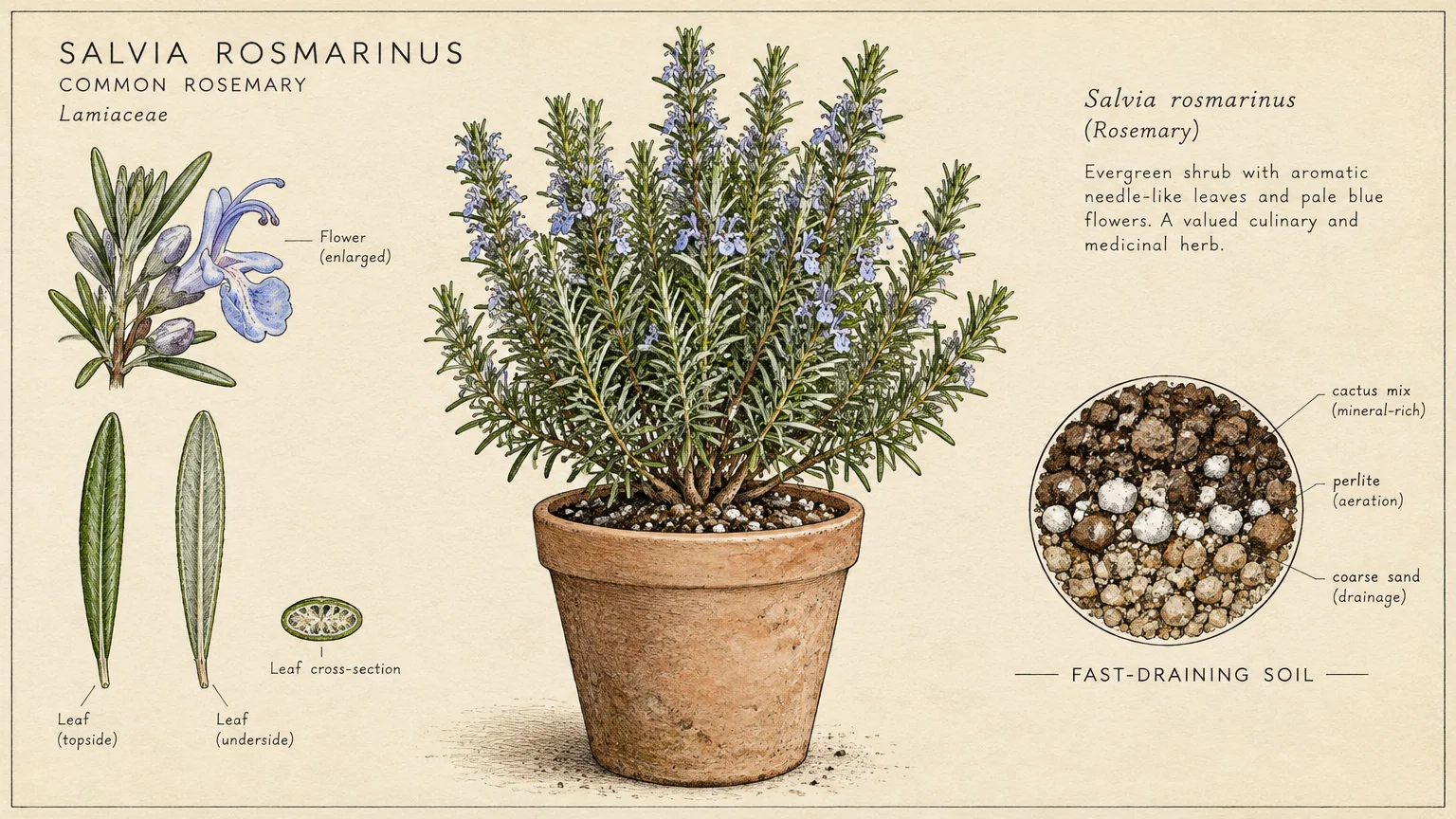
Tip #11: Upright Culinary Rosemary
Upright culinary rosemary is a woody, drought-tolerant perennial that brings evergreen beauty and savory pine fragrance to your patio. Its needle-like foliage withstands windy, sun-exposed balcony conditions that cause softer herbs to wilt.
This durable culinary staple belongs on any list of dependable plants for pots because it requires minimal maintenance. You can harvest flavorful sprigs year-round to season roasted vegetables, artisan breads, and savory marinades.
Select a terracotta container with a generous drainage hole; breathable clay prevents the damp conditions that promote root disease. Use a sandy, sharply draining soil mix that mirrors its native Mediterranean coastal habitat.
Place your rosemary pot in the sunniest section of your balcony to ensure six to eight hours of direct light. Allow the potting soil to dry out between thorough waterings.
Avoid heavy chemical fertilizers, as rich soil causes weak, leggy growth and dilutes aromatic essential oil concentration. Prune tips regularly to encourage dense branching and harvest stems for cooking.
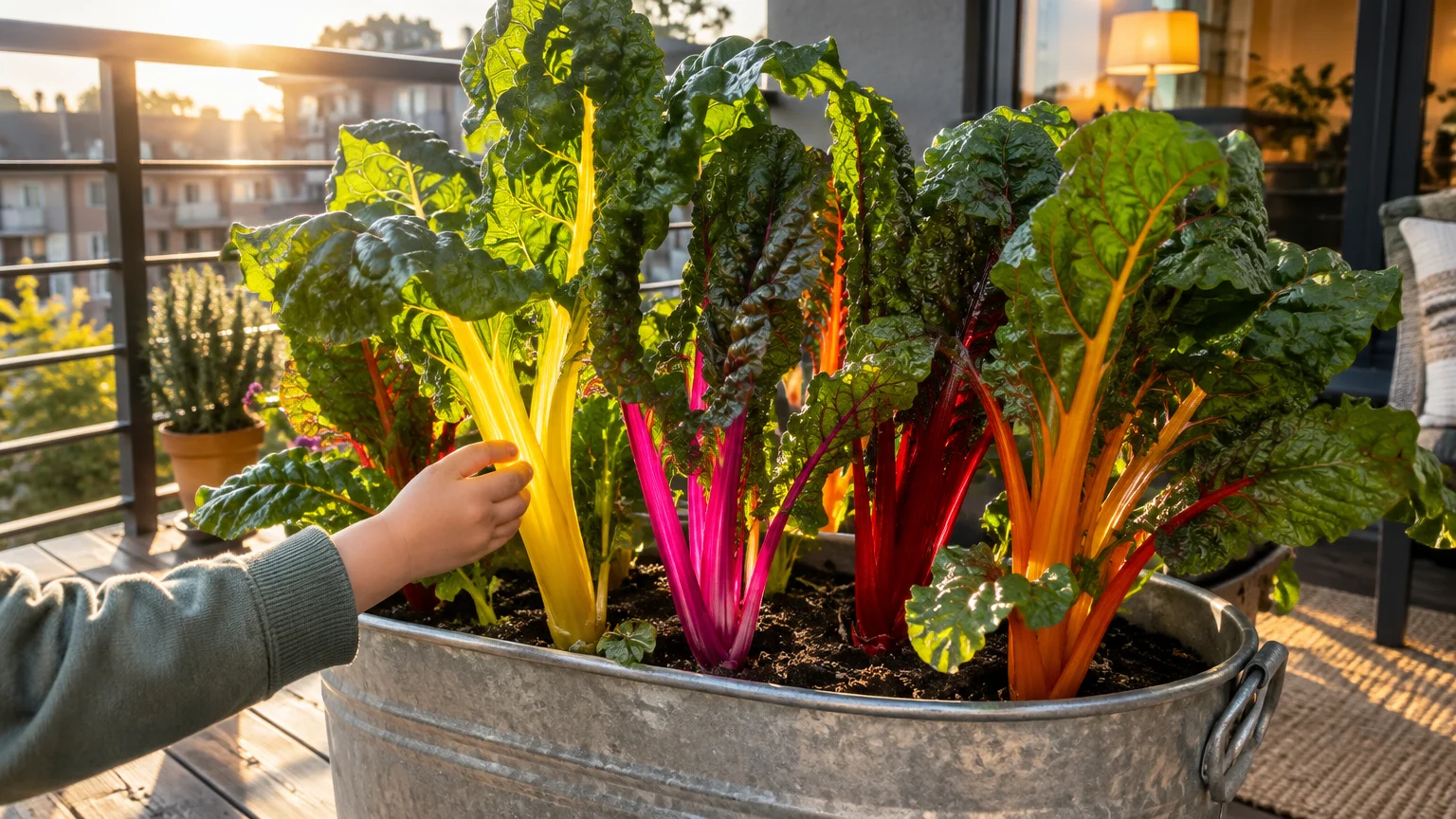
Tip #12: Rainbow Swiss Chard
Rainbow Swiss chard combines stunning ornamental appeal with culinary versatility, boasting vibrant ruby, gold, and magenta stems beneath glossy dark foliage. It functions as both an edible green and a vibrant visual anchor in container arrangements.
This resilient leafy green handles temperature extremes with ease, continuing to flourish through summer heat waves and light winter frosts. It provides an extended harvest window that outlasts delicate lettuces and spinach.
Plant chard in containers ten to twelve inches deep to give its substantial taproot plenty of room to expand. Fill the container with rich, loam-based potting soil fortified with slow-release organic fertilizer.
Give Swiss chard full sun to partial shade; four to six hours of sunlight produce thick, colorful stems. Keep the root zone uniformly moist to prevent leaves from developing an overly bitter taste.
Harvest individual outer stalks by cutting them an inch above soil level, allowing the central crown to produce new foliage. Savor tender young leaves raw in salads and sauté mature stems like asparagus.
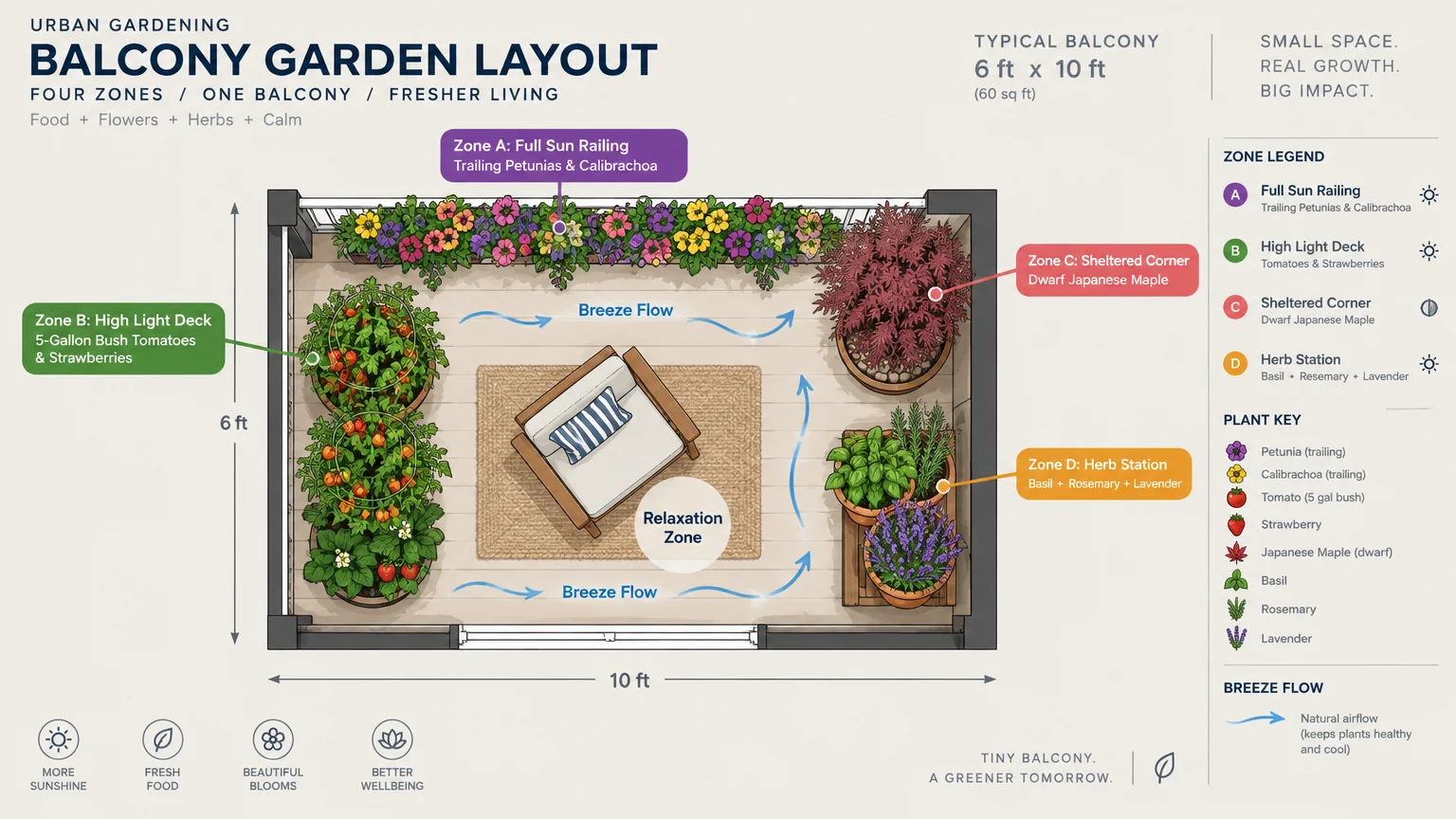
Putting It All Together: Enjoy Your Beautiful Garden
Designing a thriving balcony garden begins with matching the right container plants to your space’s sunlight and wind patterns. When you select compact varieties bred for small spaces, container gardening becomes effortless and rewarding.
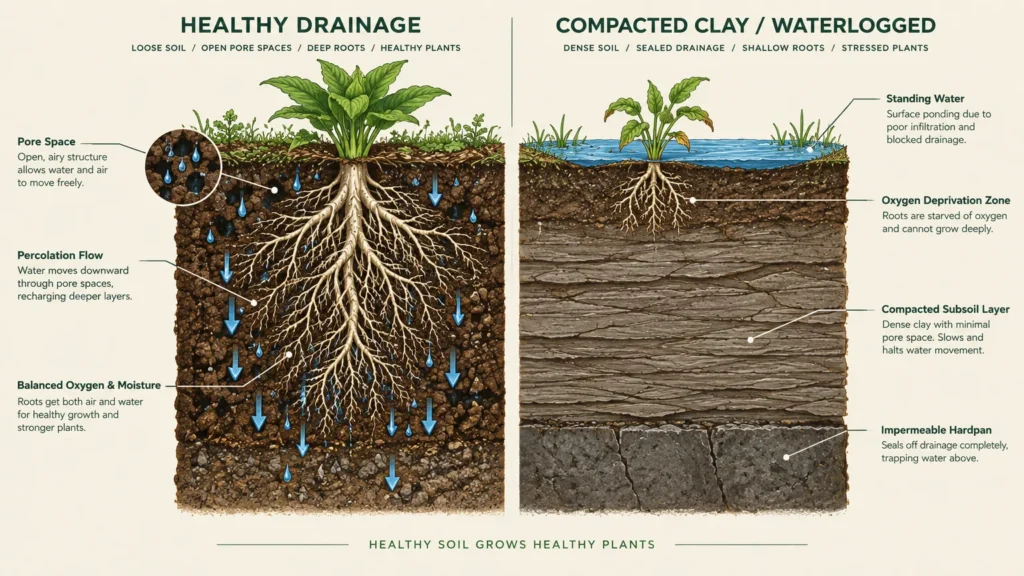
Invest in quality lightweight containers with proper drainage holes to protect plant roots from waterlogged soil and rot. Premium potting soil and regular watering form the essential foundation for robust plant health.
Arranging pots by height creates dynamic visual interest and maximizes sunlight distribution across your balcony floor. Pair trailing flowers near the edge with upright herbs and dwarf vegetables against walls to optimize airflow.
Step onto your balcony each morning to check moisture levels, trim yellowing leaves, and harvest fresh produce. Your elevated oasis will soon reward you with tranquil beauty, aromatic fragrances, and delicious homegrown flavors.
For region-specific advice, consult your local University Extension program (find yours via the USDA directory). For plant databases and inspiration, visit the Missouri Botanical Garden or the Royal Horticultural Society.
Disclaimer: This article provides general gardening advice; always consider your specific climate, soil conditions, and local pests. Follow safety guidelines when using gardening tools and products.
Frequently Asked Questions
How often should you water balcony container plants?
Balcony pots dry out faster than in-ground garden beds due to wind exposure and confined soil volume. During warm summer months, check your containers daily and water whenever the top inch of soil feels dry.
Always water thoroughly until excess moisture flows out the drainage holes to ensure the entire root ball hydrates. Water during early morning hours to minimize evaporation and prevent foliar diseases.
What is the best potting soil for container gardening on a balcony?
Never use heavy garden topsoil in containers because it compacts easily and prevents proper drainage. Choose a high-quality, peat-free potting mix containing perlite, vermiculite, and composted organic matter.
This blend provides an ideal balance of moisture retention, nutrient capacity, and root aeration for small space gardening. Lightweight mixes also prevent excessive structural weight on your balcony floor.
How do you protect balcony plants from strong winds?
High-elevation winds can dry out foliage, snap tender stems, and topple top-heavy containers. Position taller pots against sturdy balcony walls or railing corners to shelter them from prevailing drafts.
Group smaller containers together to create a sheltered microclimate with increased humidity. Installing fabric windbreak mesh along open railings also softens fierce gusts effectively.
Do balcony container plants need fertilizer?
Frequent watering leaches essential plant nutrients out through container drainage holes over time. To sustain healthy growth, feed your plants with an organic liquid fertilizer every two to three weeks during the growing season.
Alternatively, incorporate slow-release fertilizer granules into the potting mix during spring planting for continuous nutrition. Always follow package dosage instructions to prevent root burn.