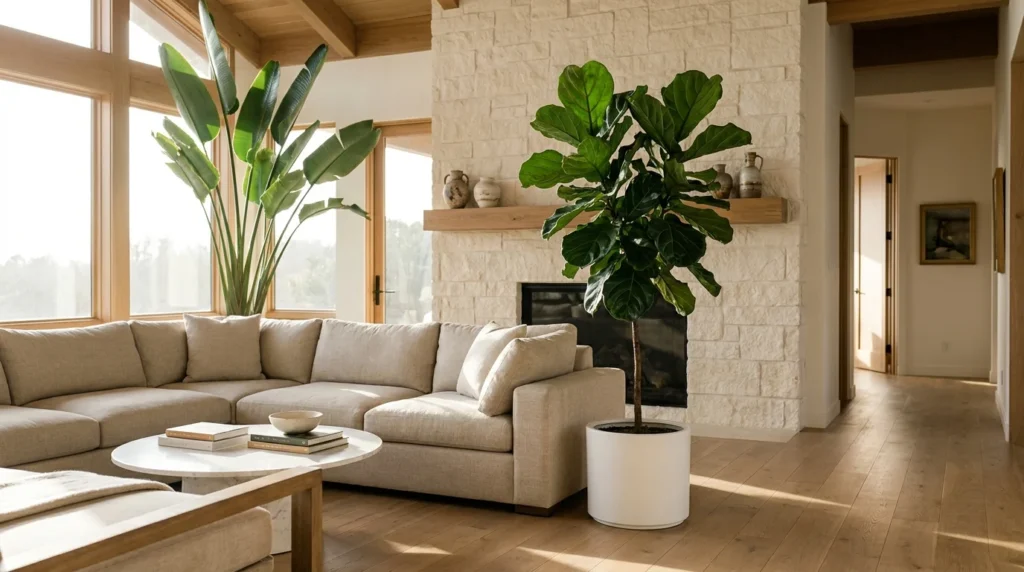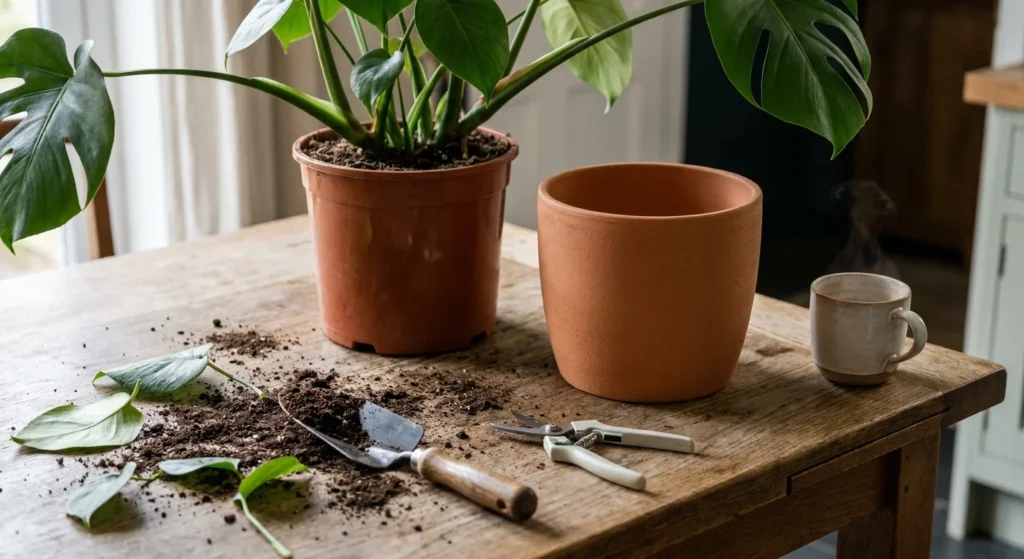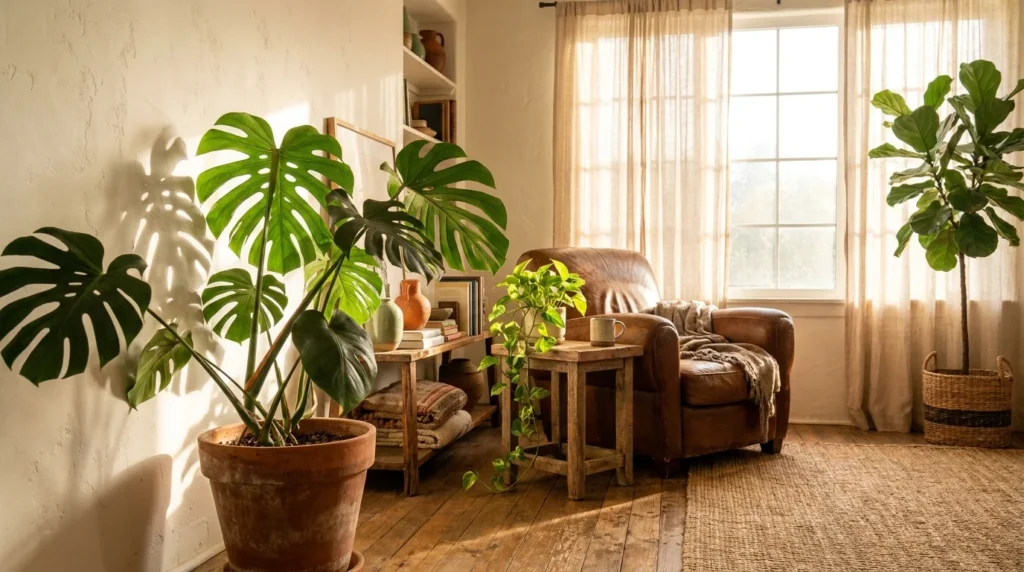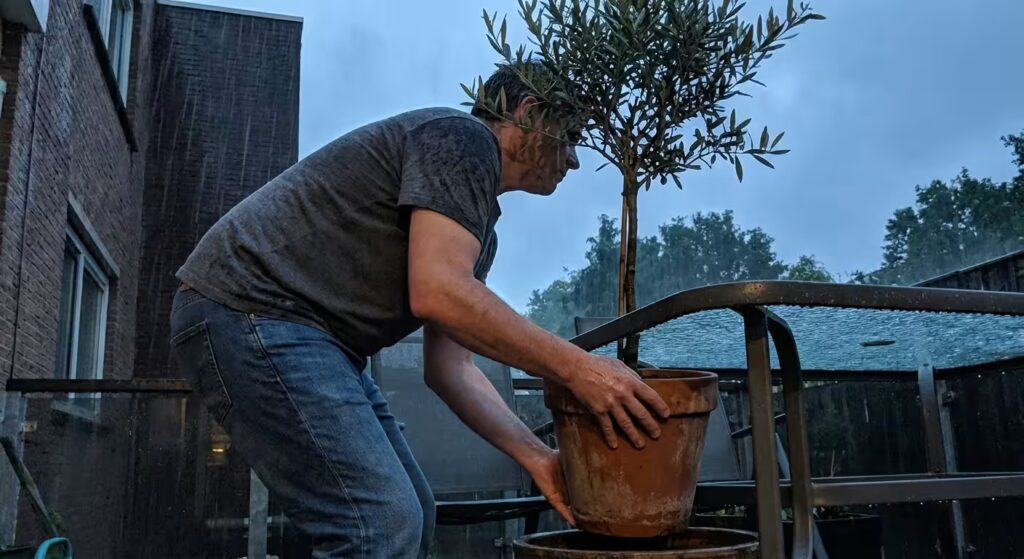
Transforming your living area into a vibrant, breathable sanctuary is surprisingly simple when you choose the right indoor plants. You can instantly elevate your home decorating by integrating colorful plants that add texture, purify the air, and bring dynamic life to stagnant rooms. Whether you have floor-to-ceiling windows or a dimly lit apartment, specific botanical selections will thrive and enhance your interior design. Houseplant decor goes beyond mere aesthetics; studies show that surrounding yourself with nature lowers stress and boosts daily focus. By understanding the unique light and watering needs of these varieties, you guarantee lasting vitality. Discover the most dependable and striking options to cultivate your own thriving indoor jungle right now.
Tip #1: Brighten Dark Corners with the Resilient ZZ Plant
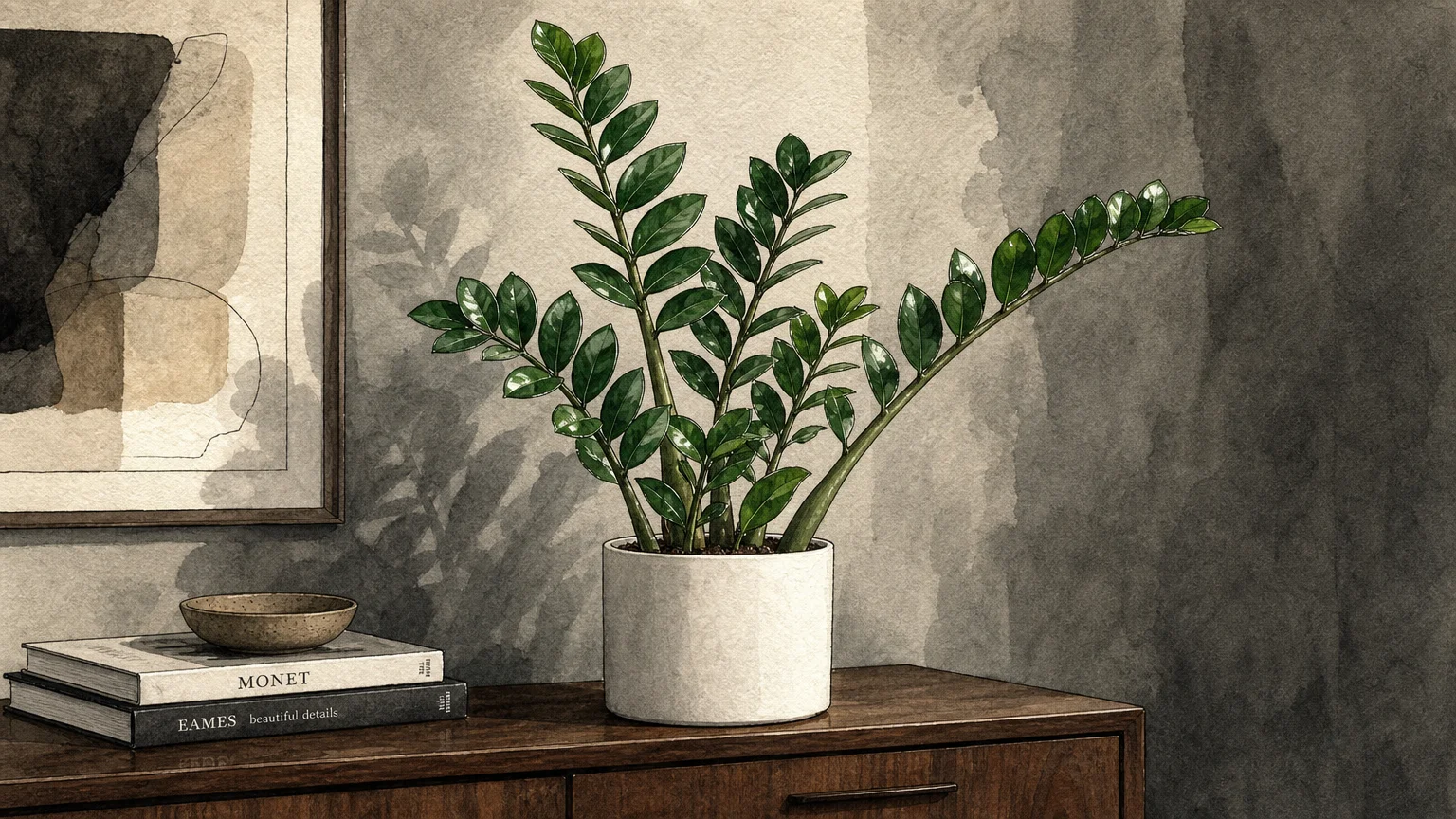
The ZZ plant (Zamioculcas zamiifolia) stands as the ultimate low-maintenance champion for interior design enthusiasts. Characterized by its upright growth and naturally glossy, dark green leaflets, this structural beauty reflects ambient light to brighten shadowed corners. You should add a ZZ plant to your collection because it survives almost any environment while bringing a sleek, modern aesthetic to your space. Its thick rhizomes store water efficiently, allowing it to withstand prolonged periods of drought without dropping leaves or losing its luster. To keep your ZZ plant thriving, place it in low to bright indirect light; direct sun will scorch its foliage. Water the soil thoroughly only when it completely dries out, which typically occurs every two to three weeks depending on your home’s humidity. Since it tolerates dry air, you do not need to mist the leaves. Pair this architectural marvel with a minimalist ceramic pot to let its arching stems serve as a natural focal point in a home office or a cozy bedroom.
Tip #2: Introduce Vibrant Foliage with the Croton
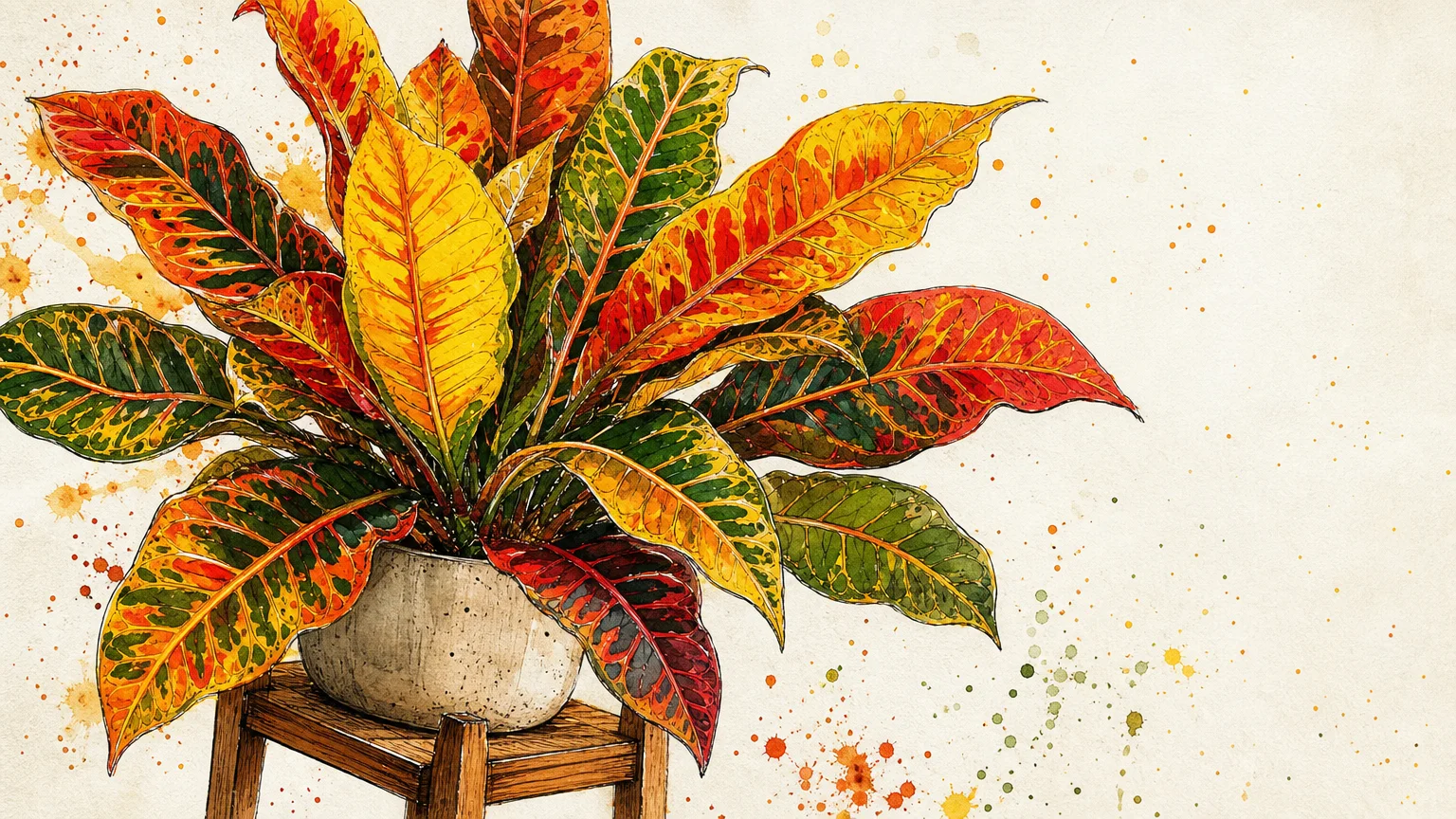
The Croton (Codiaeum variegatum) delivers an explosive palette of red, orange, yellow, and green, making it a spectacular statement piece for any room. This tropical evergreen acts as living artwork, transforming plain white walls or neutral furniture into a dynamic visual experience. You want this plant in your home because few other indoor plants offer such dramatic, year-round color without requiring delicate flowers to bloom. To successfully grow a Croton, you must provide it with ample bright, indirect sunlight. When deprived of adequate light, the plant will revert to basic green leaves and lose the fiery hues that make it so desirable. Keep the soil evenly moist during the spring and summer growing seasons, but reduce watering slightly during the winter months. Crotons also crave high humidity; placing them on a pebble tray filled with water or running a nearby humidifier prevents their leaves from crisping at the edges. Position a lush Croton on a prominent plant stand near an east-facing or south-facing window to maximize its breathtaking coloration.
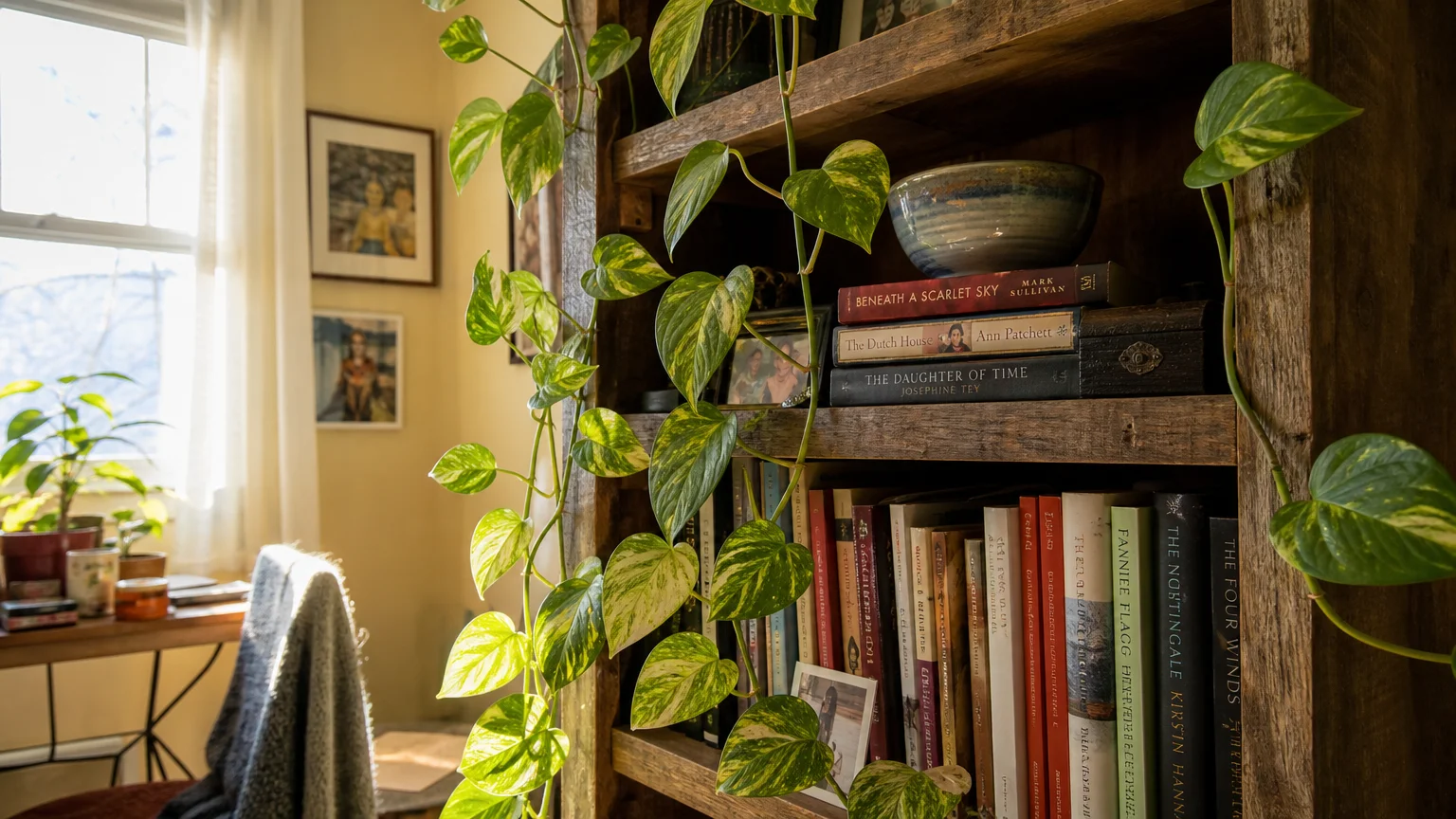
Tip #3: Add Trailing Elegance Using the Golden Pothos
The Golden Pothos (Epipremnum aureum) reigns supreme as a versatile trailing vine that softens harsh architectural lines and elevates your home decorating. Featuring heart-shaped leaves splashed with vibrant yellow and pale gold variegation, it cascades beautifully from hanging baskets or trailing gracefully over the edges of tall bookcases. You will love the Pothos because it is renowned for its aggressive growth rate and its proven ability to filter airborne toxins from your indoor environment. For optimal care, position your Golden Pothos in bright, indirect light, which encourages the most pronounced golden variegation. However, it will adapt readily to lower light conditions, though the leaves may turn solid green. Allow the top two inches of soil to dry out completely before watering; overwatering easily leads to root rot. If you notice the leaves drooping, the plant is simply signaling that it needs a drink, and it will perk right back up after a thorough soaking. Use this vigorous grower to frame windows or drape down from elevated shelves for a lush, jungle-inspired aesthetic.
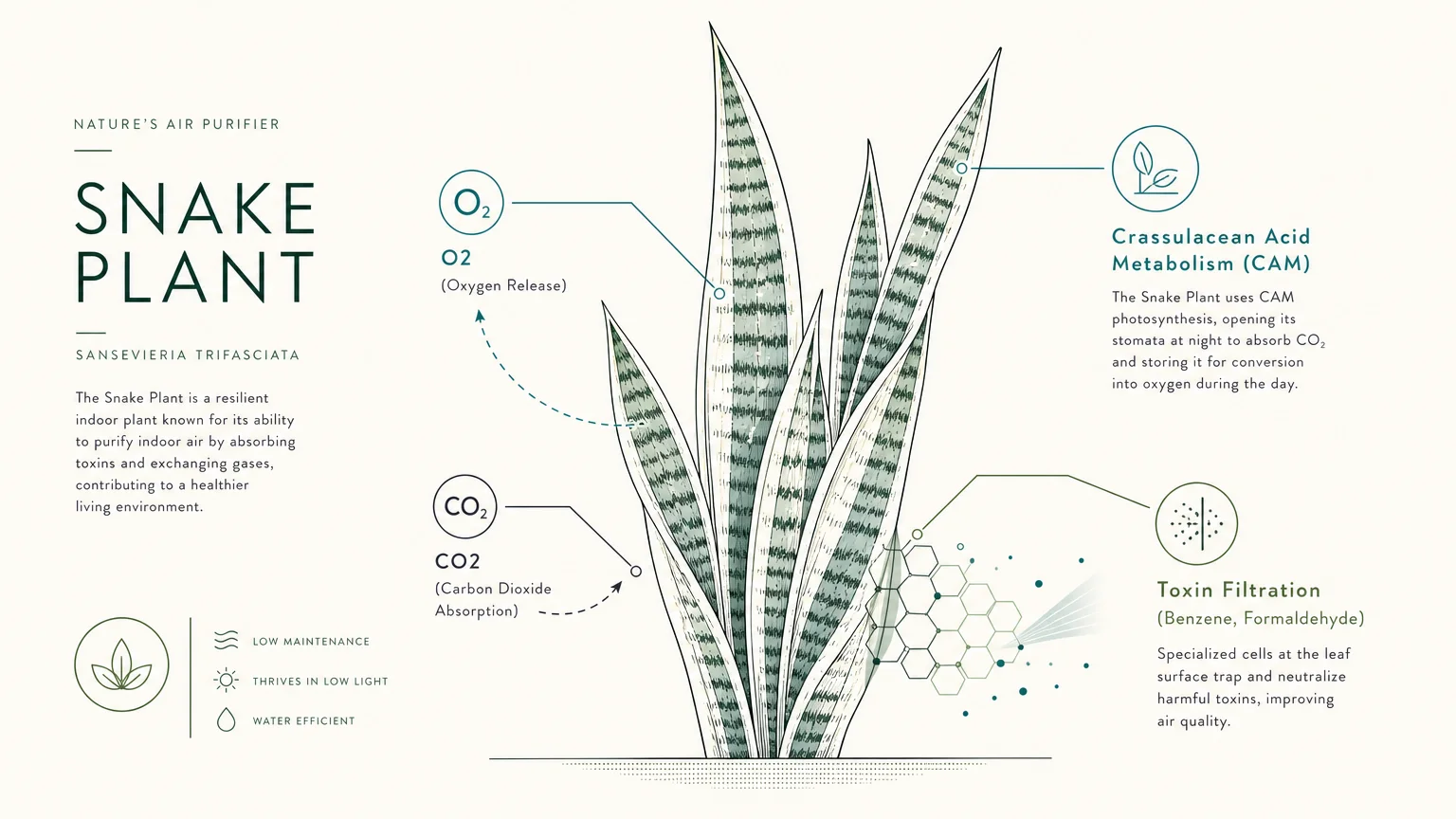
Tip #4: Purify the Air with the Classic Snake Plant
The Snake Plant (Sansevieria trifasciata) introduces striking verticality to your houseplant decor, making it an architectural powerhouse for tight spaces. Its stiff, sword-like leaves stand upright and often feature striking patterns of silver, dark green, and vibrant yellow margins. You should integrate Snake Plants into your interior design because they are practically indestructible and famously convert carbon dioxide into oxygen continuously throughout the night. This unique nighttime respiration makes them the perfect botanical companion for your bedroom, promoting better sleep quality through improved air circulation. Caring for a Snake Plant requires minimal effort. They thrive in almost any lighting condition, from the brightest sunny window to a windowless bathroom corner. Because they are succulents, they store moisture in their fleshy leaves; therefore, you only need to water them once every three to four weeks. Always ensure the potting mix drains quickly and completely to avoid soggy roots. Pot them in a heavy, stable container, as their tall, dense growth can make lightweight plastic pots top-heavy over time.
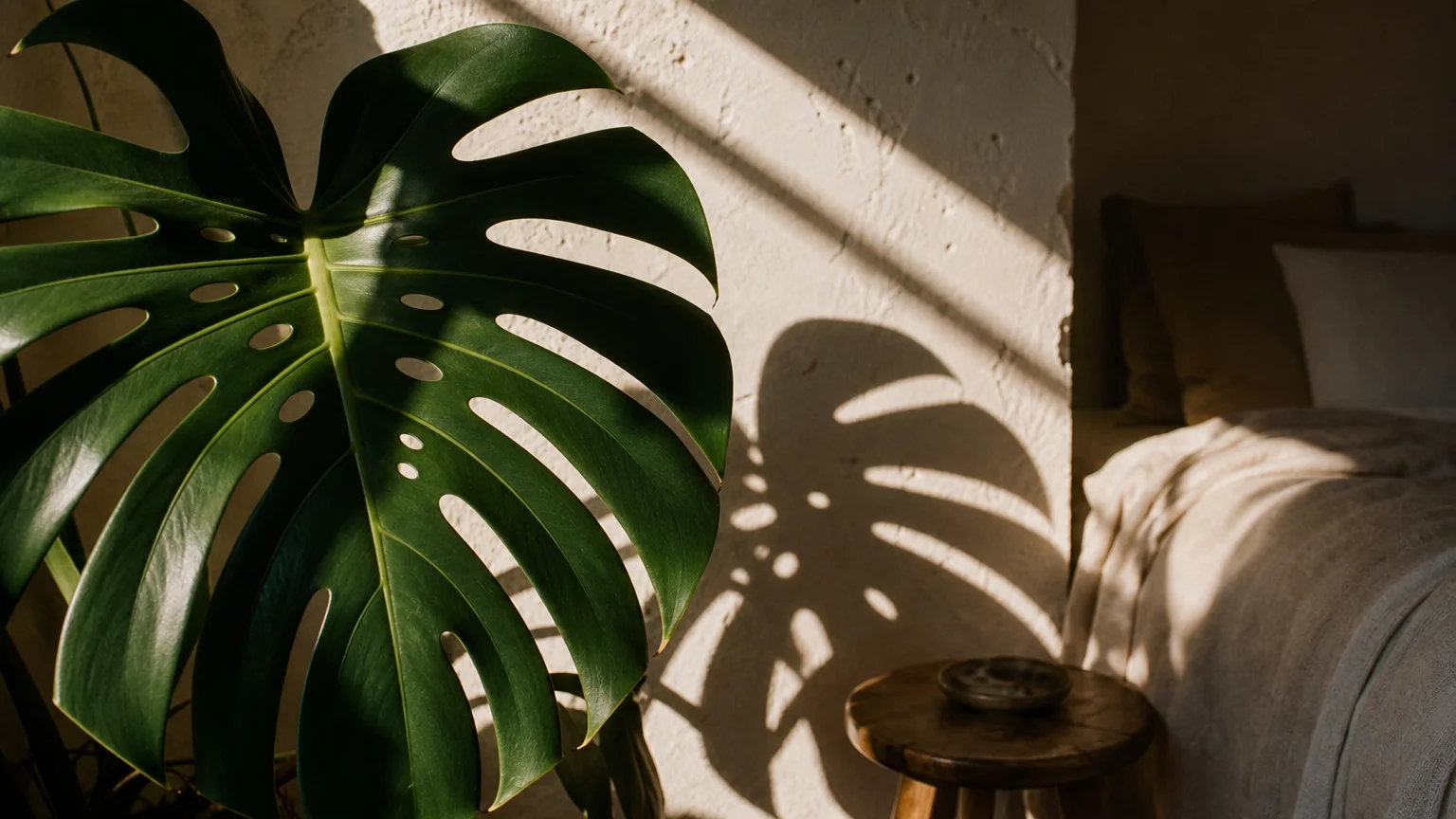
Tip #5: Create a Tropical Vibe with the Monstera Deliciosa
The Monstera Deliciosa, often called the Swiss Cheese Plant, serves as the ultimate showstopper for any interior space aiming for a lush, tropical atmosphere. Famous for its massive, glossy green leaves adorned with natural holes and deep splits—botanically known as fenestrations—this plant instantly dominates a room and commands attention. You need a Monstera in your home if you want a bold, fast-growing specimen that brings the wild beauty of the rainforest right into your living room. To help your Monstera produce those iconic, heavily split leaves, you must provide it with plenty of bright, indirect sunlight. Too little light results in small, solid leaves without the characteristic holes. Water your Monstera when the top few inches of the soil feel dry to the touch, and ensure the pot has excellent drainage. Because it is a natural climber, providing a sturdy moss pole or trellis encourages larger leaves and keeps the heavy vines from sprawling unmanageably across your floor. Wipe the broad leaves regularly with a damp cloth to remove dust and maximize their glossy sheen.
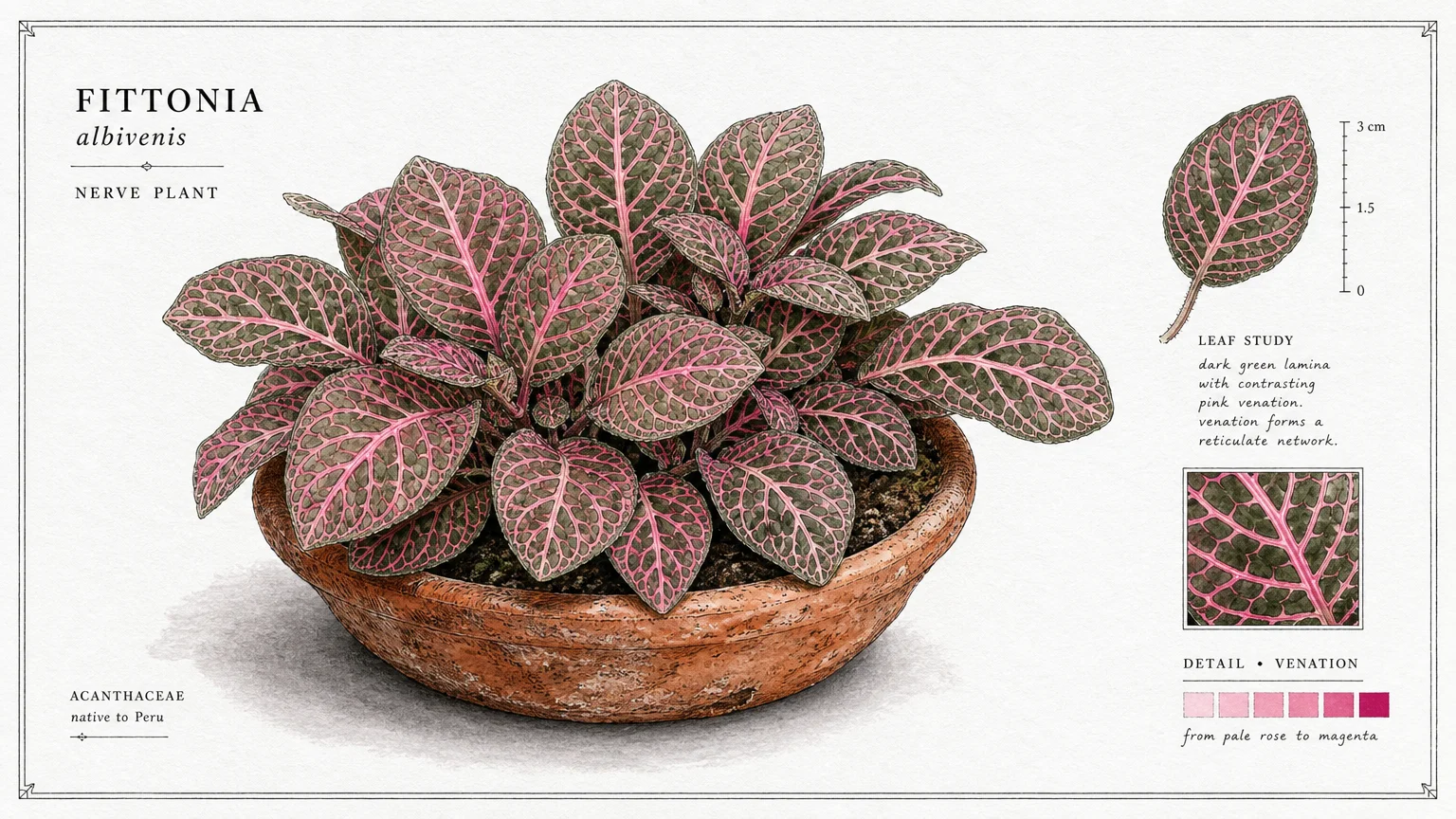
Tip #6: Showcase Striking Veins with the Nerve Plant
The Nerve Plant (Fittonia albivenis) is a compact, creeping beauty that adds intricate, mosaic-like patterns to tabletops, terrariums, and small shelves. Its deeply saturated green leaves feature highly contrasting veins in brilliant shades of hot pink, silvery white, or bright red. You should choose the Fittonia when you want to inject detailed, jewel-toned houseplant decor into close-up spaces where a massive plant simply will not fit. This plant requires a bit more attention than average greenery, but the visual reward is entirely worth the effort. Nerve Plants demand constant, high humidity to prevent their delicate leaves from shriveling, making them ideal candidates for steamy bathrooms or enclosed glass terrariums. They prefer bright, indirect light; direct sun will quickly crisp their foliage. Keep the soil consistently moist but never waterlogged. The Fittonia is famous for being incredibly dramatic—if the soil gets too dry, the entire plant will collapse into a wilted heap. Fortunately, a thorough watering usually resurrects it within just a few hours.
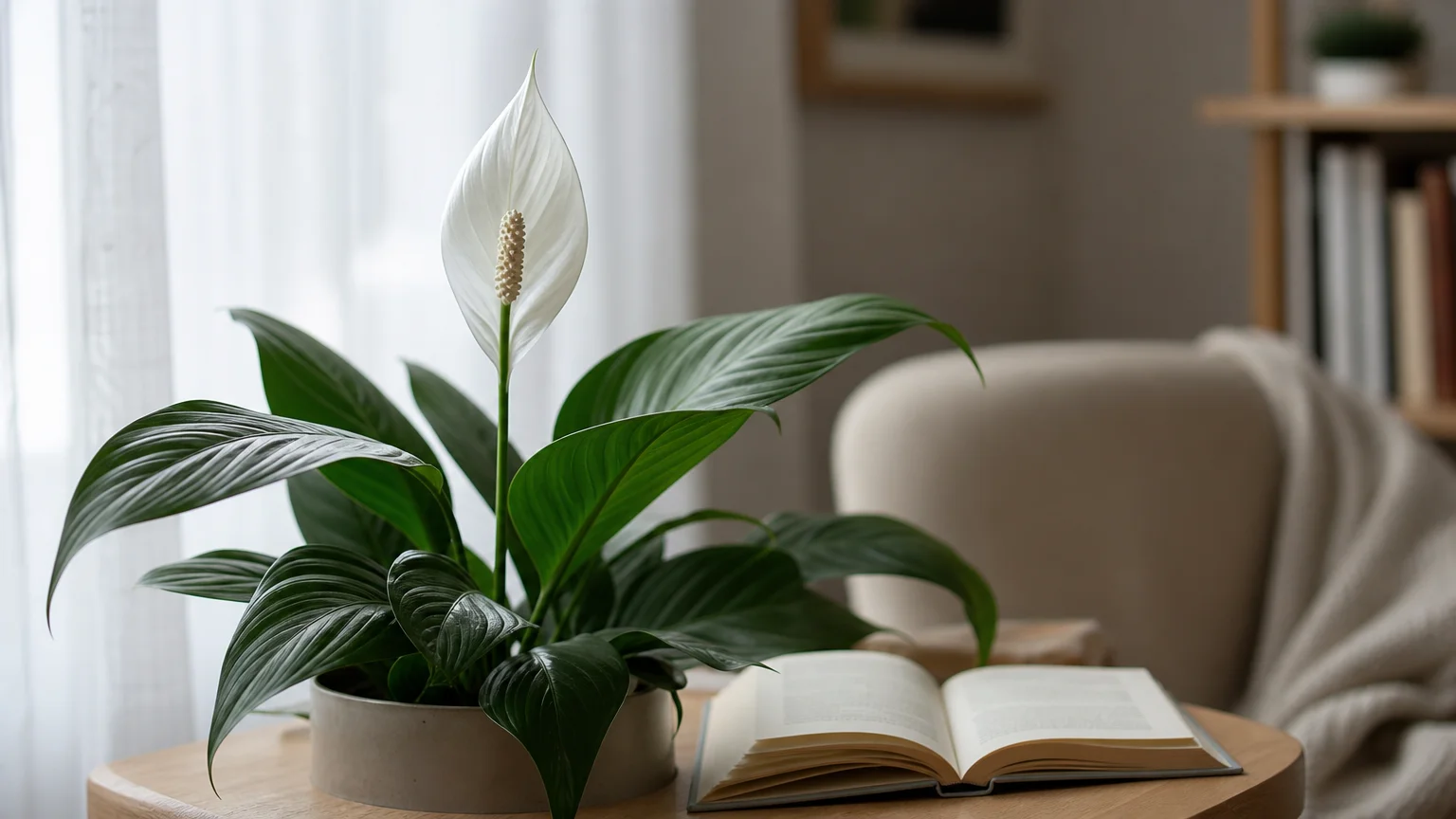
Tip #7: Cultivate Calm with the Peace Lily
The Peace Lily (Spathiphyllum) brings a serene, elegant aesthetic to your home with its dark, glossy foliage and pure white, hood-like blooms. These white spathes rise gracefully above the deep green leaves, offering a tranquil visual contrast that softens modern interiors. You want a Peace Lily because it is one of the few indoor plants that reliably blooms in lower light conditions, all while aggressively filtering volatile organic compounds from the air. To ensure your Peace Lily thrives, place it in medium to low indirect light. While it tolerates deep shade, providing a bit more ambient light encourages more frequent blooming. Keep the potting soil lightly moist, but be careful not to let the plant sit in standing water. Like the Fittonia, the Peace Lily communicates clearly; its leaves will droop noticeably when it is thirsty, bouncing back quickly once you provide a generous drink. Use distilled or filtered water if your tap water is heavily chlorinated, as sensitive Peace Lily roots can develop brown leaf tips from chemical buildup.
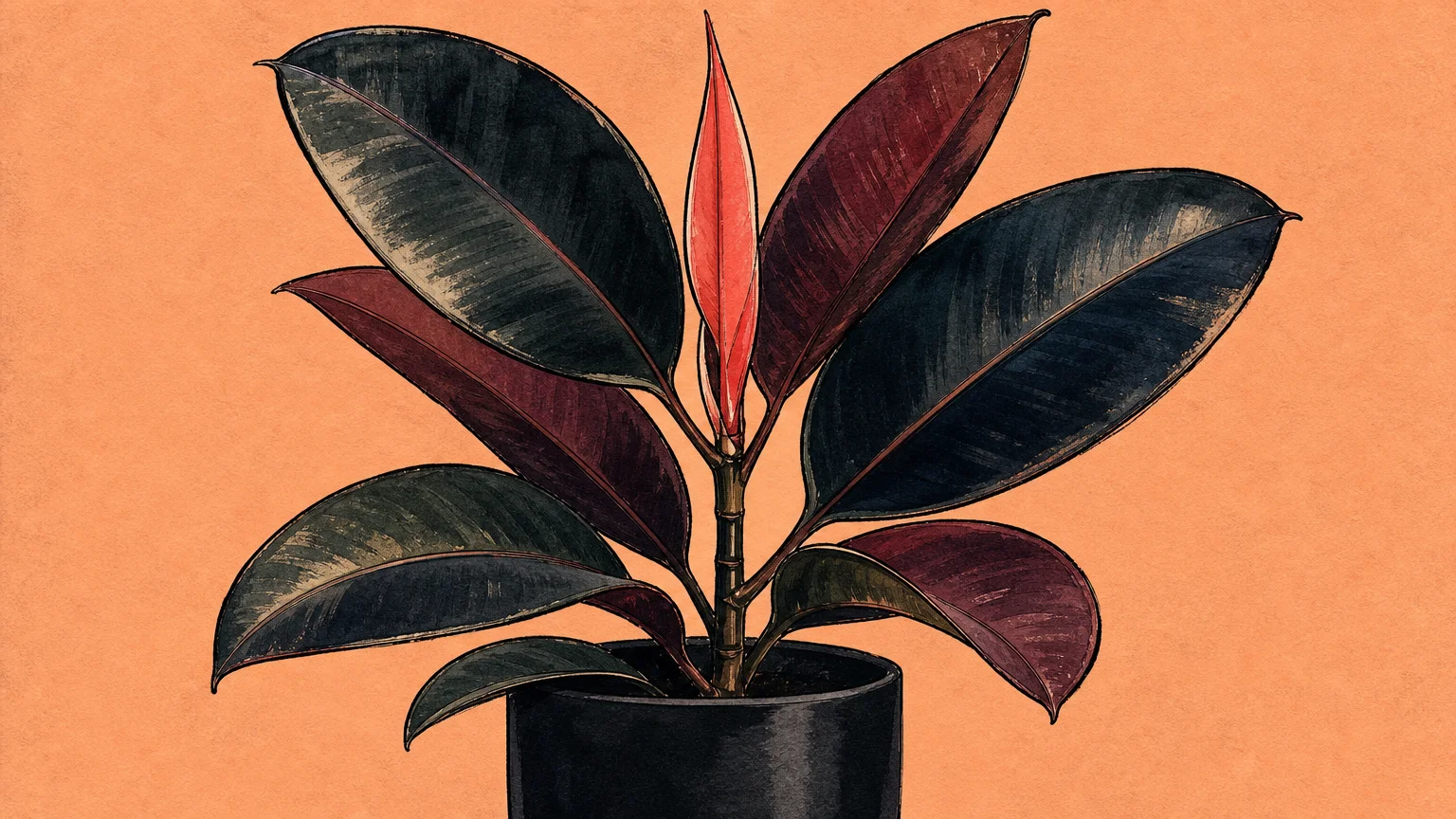
Tip #8: Inject Bold Hues with the Rubber Plant
The Rubber Plant, specifically the ‘Burgundy’ variety, adds a deep, moody richness to your interior design palette. Its large, leathery leaves emerge a bright red before maturing into a deep, glossy burgundy-black that looks nearly architectural. You should incorporate a Rubber Plant into your houseplant decor to break up the endless sea of green and provide a striking, sophisticated contrast against light-colored walls or neutral furniture. To maintain that intense, dark coloration, place your Rubber Plant in bright, indirect light; if it sits in too much shade, the leaves will fade to a standard, less impressive green. Water the plant when the top half of the soil feels dry. During the active growing season in spring and summer, you can feed it with a balanced liquid fertilizer to encourage rapid, robust vertical growth. Because the leaves are so broad and slightly sticky, they tend to collect household dust. Gently wipe them down with a damp microfiber cloth every few weeks to keep the plant photosynthesizing efficiently and looking immaculate.
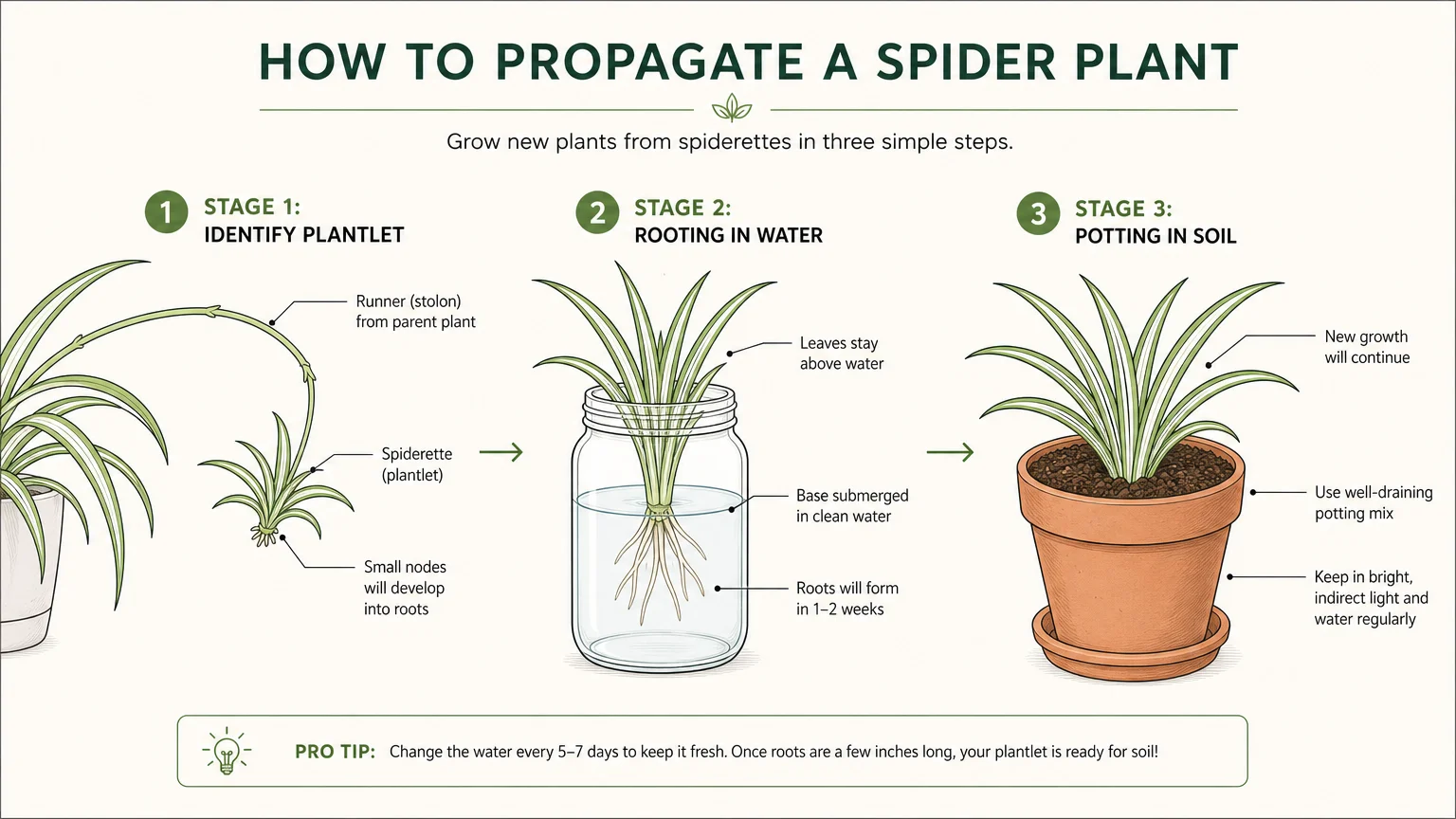
Tip #9: Embrace Unique Textures with the Spider Plant
The Spider Plant (Chlorophytum comosum) delivers an explosion of lively, grass-like texture that instantly makes a room feel more dynamic and lived-in. Featuring arching leaves striped with light green and white, this plant is famous for producing long, cascading stems that dangle tiny baby plants. You will appreciate the Spider Plant because it is incredibly adaptable, entirely pet-safe, and offers a playful, cascading form that looks magnificent spilling over the edge of a hanging macrame planter. To care for your Spider Plant, provide it with bright to moderate indirect light. It can survive in dimmer spots, but the crisp white striping may become less pronounced. Allow the top inch of the soil to dry before watering. Spider Plants have thick, tuberous roots that store water, meaning they can forgive you if you occasionally forget to water them. If you notice the tips of the leaves turning brown, it is often a reaction to fluoride in your tap water; switching to rainwater or distilled water will quickly resolve this aesthetic issue.
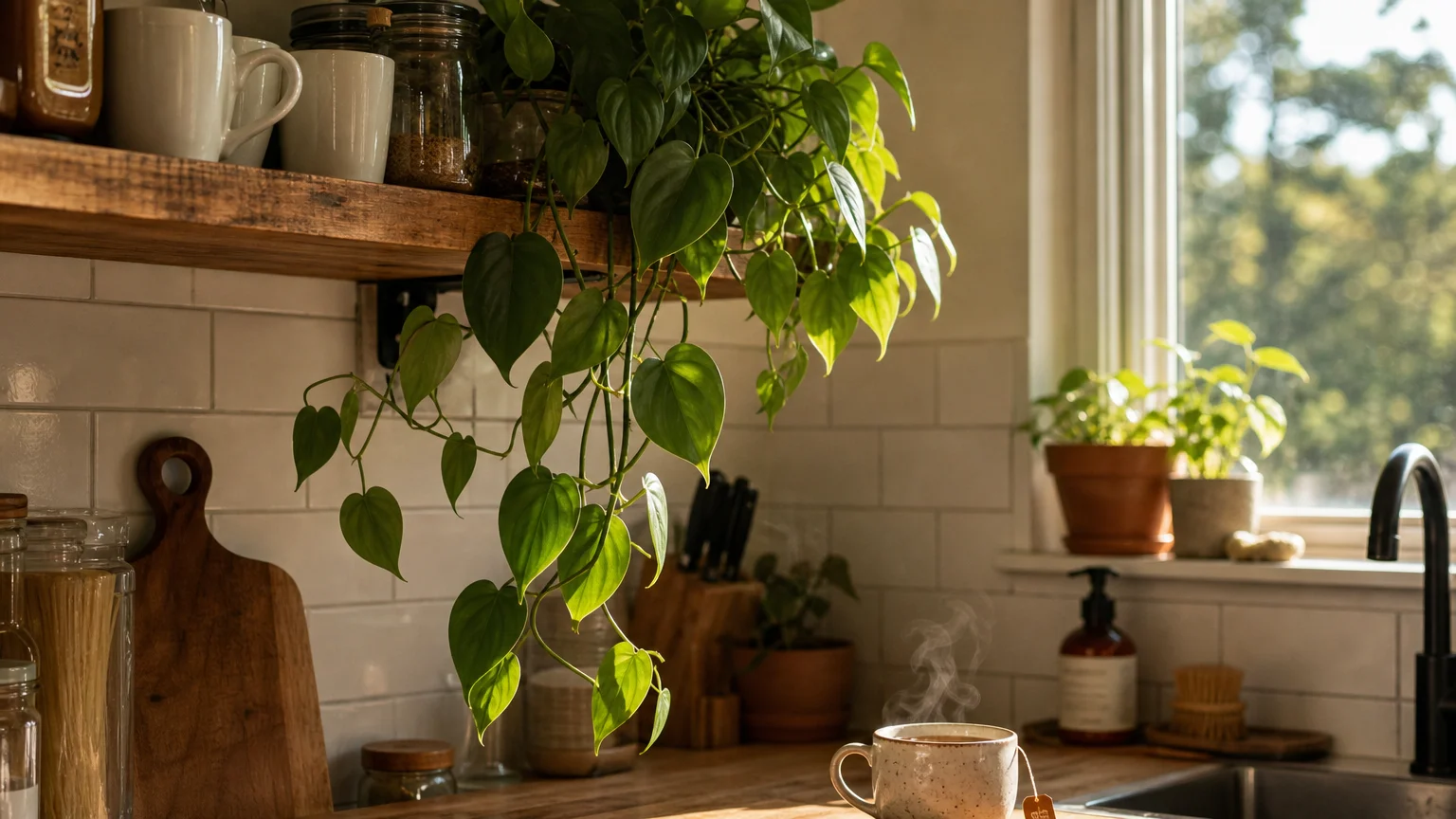
Tip #10: Soften Shelves with the Heartleaf Philodendron
The Heartleaf Philodendron (Philodendron hederaceum) is a beloved classic in the world of indoor plants, offering a gentle, romantic cascade of perfectly heart-shaped leaves. Its deep green, slightly velvety foliage grows rapidly along slender vines, making it an exceptional choice for draping down from high bookcases or trailing across a mantlepiece. You should include this philodendron in your home because it is remarkably forgiving of neglect and adapts gracefully to an incredibly wide range of indoor environments. To achieve the fastest growth, position the plant in bright, indirect sunlight, though it will reliably survive and grow in surprisingly low-light conditions. Water your Heartleaf Philodendron when the top third of the potting mix dries out. If the leaves begin to turn yellow, you are likely overwatering; if they turn brown and crispy, you need to increase your watering frequency. You can easily propagate this plant by snipping off a vine just below a root node and placing it in a glass of water, allowing you to multiply your lush decor for free.
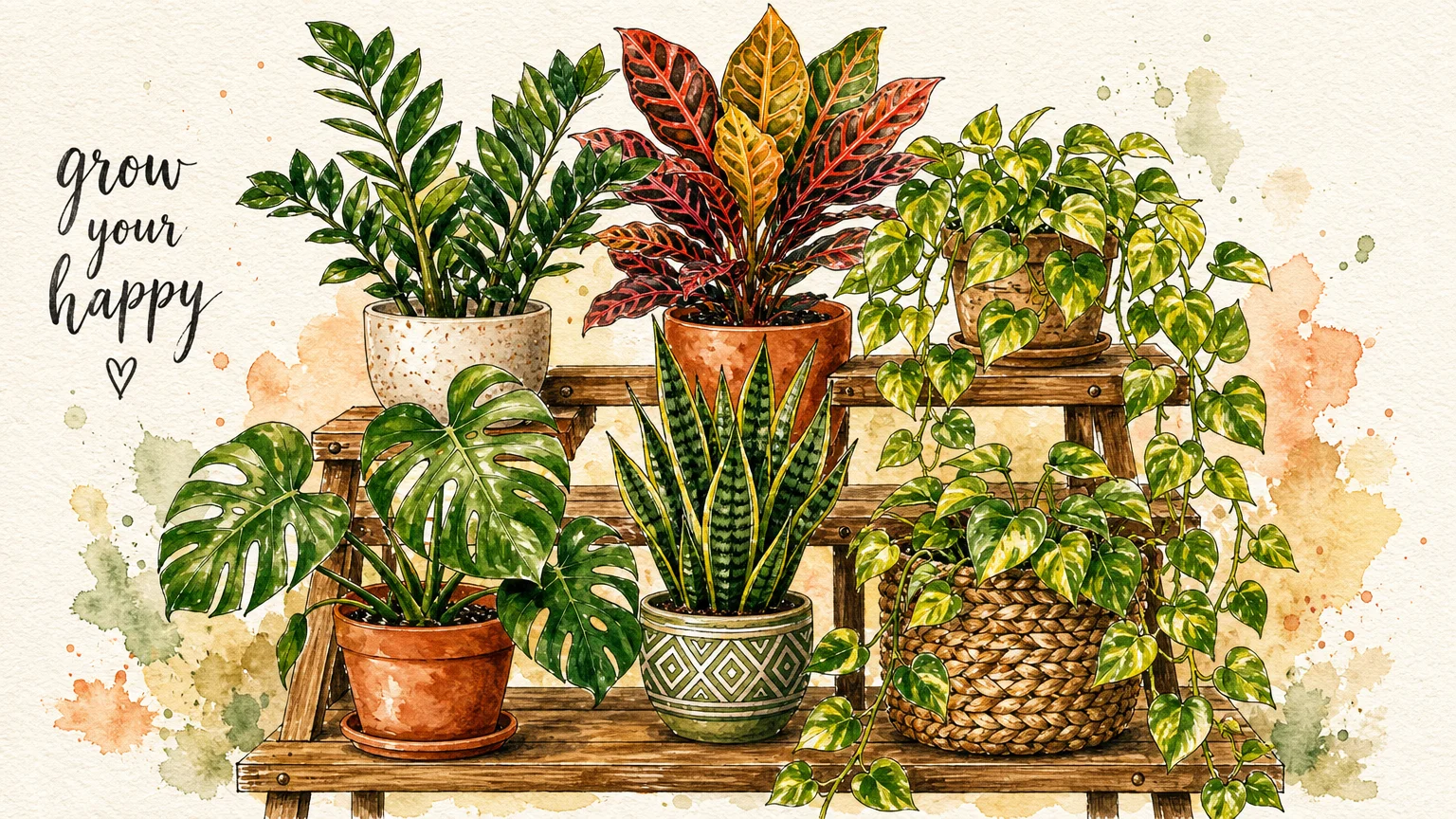
Putting It All Together: Enjoy Your Beautiful Garden
Bringing life and color into your home through vibrant greenery transforms static rooms into dynamic, breathing sanctuaries. By selecting a diverse mix of trailing vines, structural centerpieces, and colorful plants, you construct an engaging, multi-layered visual experience. Remember that successful indoor gardening relies entirely on matching the right plant to the specific light and humidity conditions of your space. Start your journey with a few resilient varieties like the ZZ Plant or Golden Pothos, and gradually introduce more demanding selections like the Fittonia or Croton as your confidence grows. Do not be afraid to experiment with different decorative pots, modern plant stands, and woven hanging baskets to elevate the aesthetic impact of your botanical collection. Embrace the therapeutic process of watering, pruning, and observing new growth. You now possess the practical knowledge needed to cultivate a thriving indoor oasis, so take that first step and breathe vibrant, beautiful life into your home today.
Frequently Asked Questions
How do I know if my indoor plants are getting the right amount of light?
Observing your plant’s foliage is the most accurate way to gauge light levels. If your colorful plants are stretching, growing long, weak stems, or losing their vibrant variegation, they likely need more light. Conversely, if you notice scorched, crispy brown spots appearing on the leaves, the plant is receiving too much direct, harsh sunlight and should be pulled back from the window immediately.
What is the best way to water houseplant decor without causing root rot?
The golden rule for watering is to always check the soil moisture before you water, rather than sticking to a strict calendar schedule. Insert your finger about two inches into the potting mix; if it feels completely dry, it is time to water. Always use pots with drainage holes at the bottom, and empty the drainage saucer after thirty minutes so the plant never sits in stagnant water.
How can I safely eliminate common pests from my indoor collection?
If you spot fungus gnats, spider mites, or mealybugs on your plants, isolate the affected plant immediately to prevent the pests from spreading. Wipe the leaves down with a mild solution of water and gentle dish soap, or treat the foliage thoroughly with cold-pressed neem oil. Regularly inspecting the undersides of the leaves during your watering routine helps catch infestations early before they cause major damage.
Should I fertilize my foliage year-round?
You should only fertilize your plants during their active growing seasons, which typically span from early spring through late summer. Applying a diluted, balanced liquid fertilizer once a month provides the necessary nutrients for robust growth and vibrant color. Pause fertilization entirely during the fall and winter months when the plants enter a period of natural dormancy.
For region-specific advice, consult your local University Extension program (find yours via the USDA directory). For plant databases and inspiration, visit the Missouri Botanical Garden or the Royal Horticultural Society.
Disclaimer: This article provides general gardening advice. Always consider your specific climate, soil conditions, and local pests. Follow safety guidelines when using gardening tools and products.