When your lush garden plants suddenly droop or develop crisp edges, your natural reflex is to reach for the hose. Pouring more water onto the soil, however, can silently starve your plants of vital structural minerals.
Distinguishing between overwatering vs calcium deficiency saves your vegetables from preventable ruin. Recognizing these warning signs early allows you to correct the true root cause before your harvest suffers permanent damage.
Calcium strengthens cellular walls and anchors new growth; without it, plants show localized distress that mimics drought. Learn to spot these ten critical alerts so you can adjust your soil chemistry instead of drowning your roots.
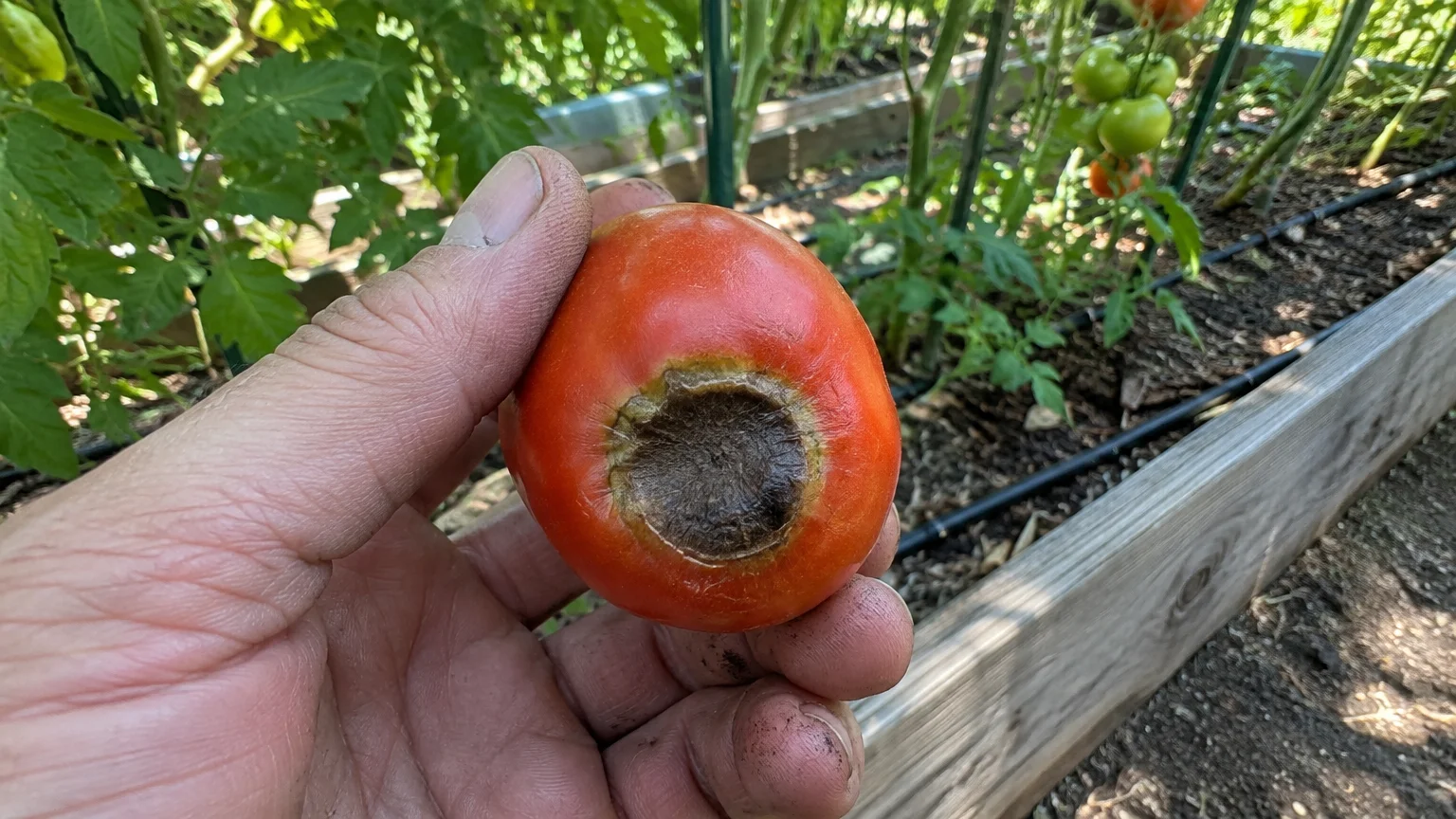
Tip #1: Blossom End Rot on Fruiting Crops
You walk into your garden and discover sunken, leathery black patches on the bottoms of your prize tomatoes. This classic affliction is blossom end rot, and it ruins squash, peppers, and eggplants just as swiftly.
Many gardeners assume scorching sun or thirsty roots caused the dark lesions during fruit development. In reality, blossom end rot causes stem from a failure to move calcium to the fruit’s furthest tip.
Calcium acts like structural cement within expanding cell walls. When cells divide faster than calcium arrives, the unsupported tissue collapses and turns black.
Flooding the plant with excess water only worsens the crisis. Saturated soil suffocates root hairs, which prevents them from absorbing dissolved mineral ions.
Maintain steady, uniform soil moisture using drip irrigation and mulching to keep transpiration active. Also, test your soil pH to keep it between 6.2 and 6.8 for optimal calcium availability.
If rapid growth outpaces nutrient flow, side-dress the bed with fast-acting gypsum. This soil amendment supplies readily available calcium without driving your soil pH too high.
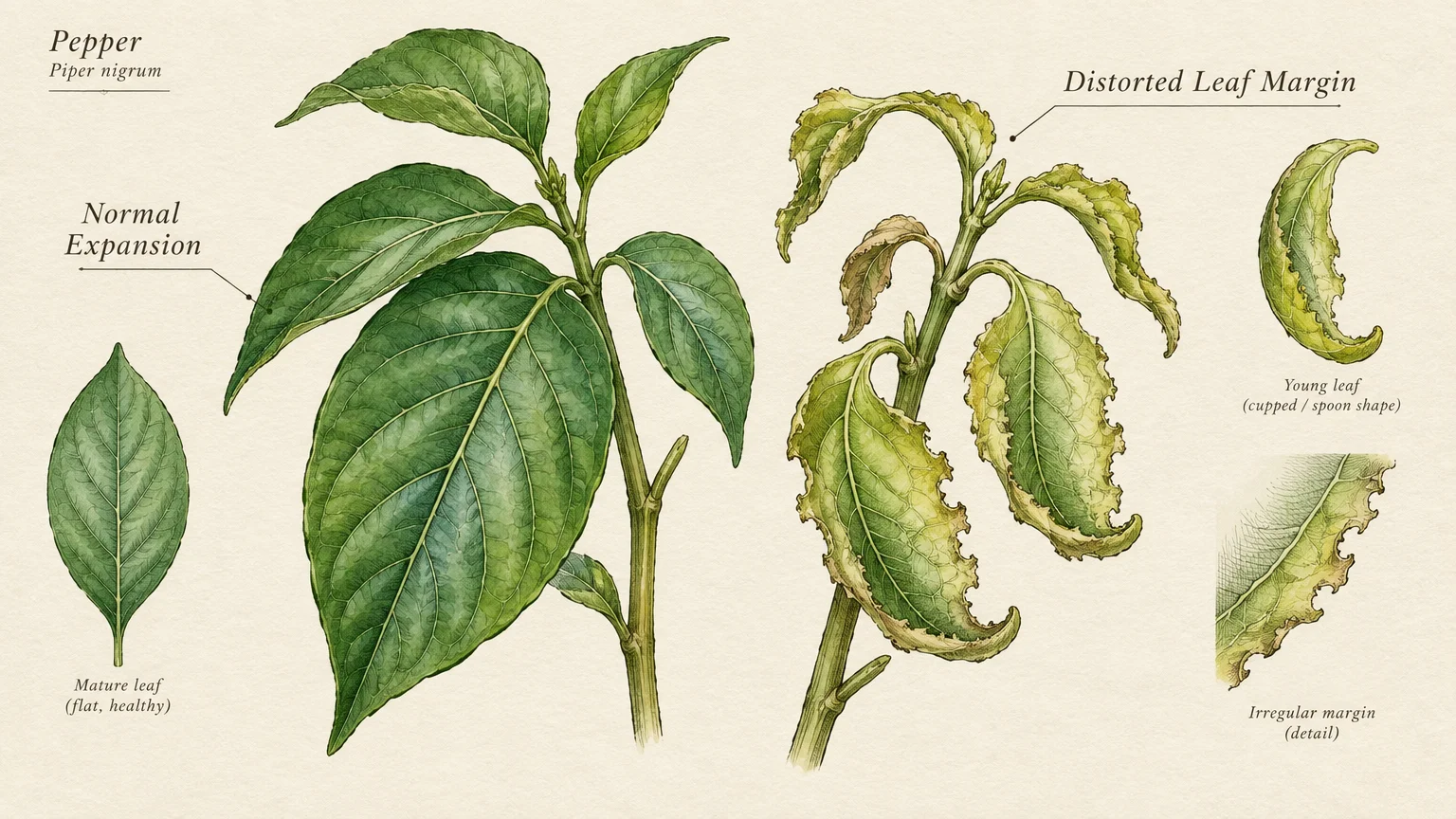
Tip #2: Cupped and Curled Young Leaves
Watch the youngest canopy leaves as they emerge from the central stems. When you notice new foliage curling downward into unnatural spoon shapes, your plant is signaling acute distress.
Because calcium is an immobile nutrient, plants cannot relocate it from older leaves to feed developing foliage. Newly unfurled leaves show immediate physical deformities when the sap lacks sufficient dissolved minerals.
Overwatering can cause general leaf curling, but signs plants need calcium feature distinct, jagged edges and irregular cup shapes. The outer leaf margin simply fails to expand alongside the main leaf blade.
Check your fertilization schedule to confirm you are not oversupplying potassium or ammonium nitrogen. Excess concentrations of competing salts actively lock out calcium ions at root absorption sites.
Apply a diluted liquid calcium foliar spray directly onto the distorted foliage for immediate relief. The leaves will absorb the nutrient directly through their stomata while the root zone recovers.
Flush container plants with clean rainwater if salt accumulation from synthetic fertilizers caused the nutrient lockout. This practice reopens the pathways your plant needs to take up calcium smoothly.
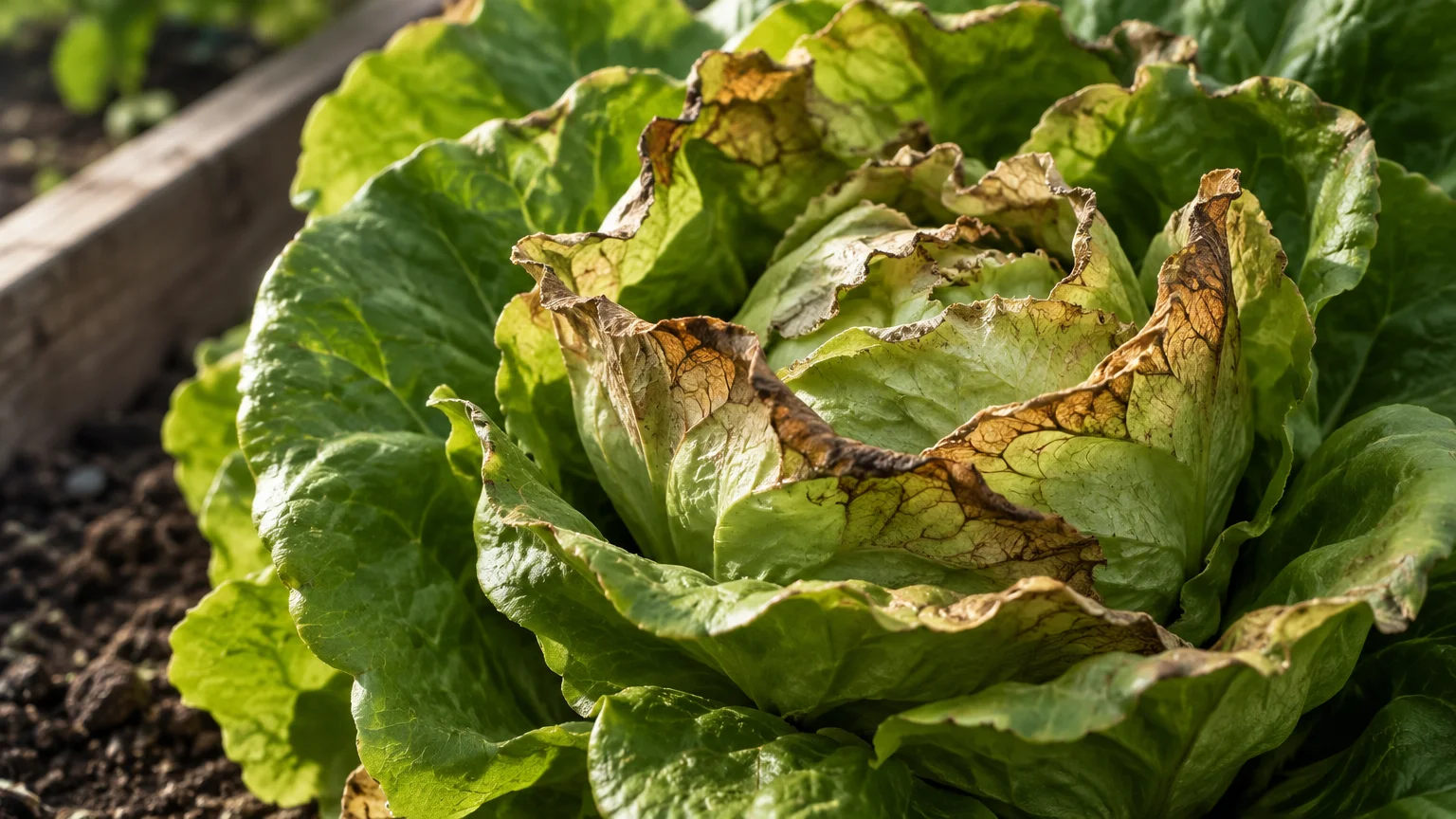
Tip #3: Brown Tip Burn on Leaf Margins
Leaf tip burn frequently strikes fast-growing leafy greens such as romaine, butterhead lettuce, and Swiss chard. You will spot dead, papery margins framing otherwise vibrant green foliage.
Many growers mistake these scorched edges for solar sunburn or under-watering stress. However, this crisp browning highlights localized tissue collapse where vascular fluids failed to deposit mineral ions.
When ambient humidity spikes or air circulation stagnates, transpiration slows to a crawl. Without steady evaporation pulling moisture up through the plant, calcium stops traveling toward the outer leaf margins.
Resist the temptation to dump extra buckets of water onto the garden bed. Saturated soil cannot compensate for stagnant air that prevents proper water evaporation from leaf pores.
Install an oscillating fan in greenhouses or space your garden plants wider apart to stimulate natural breezes. Improved airflow revives the transpiration stream, sweeping calcium straight to vulnerable leaf tips.
Harvest sensitive greens during cooler morning hours before heat intensifies transpiration demands. Shading your greens with lightweight cloth also reduces the leaf-margin stress that triggers tip burn.
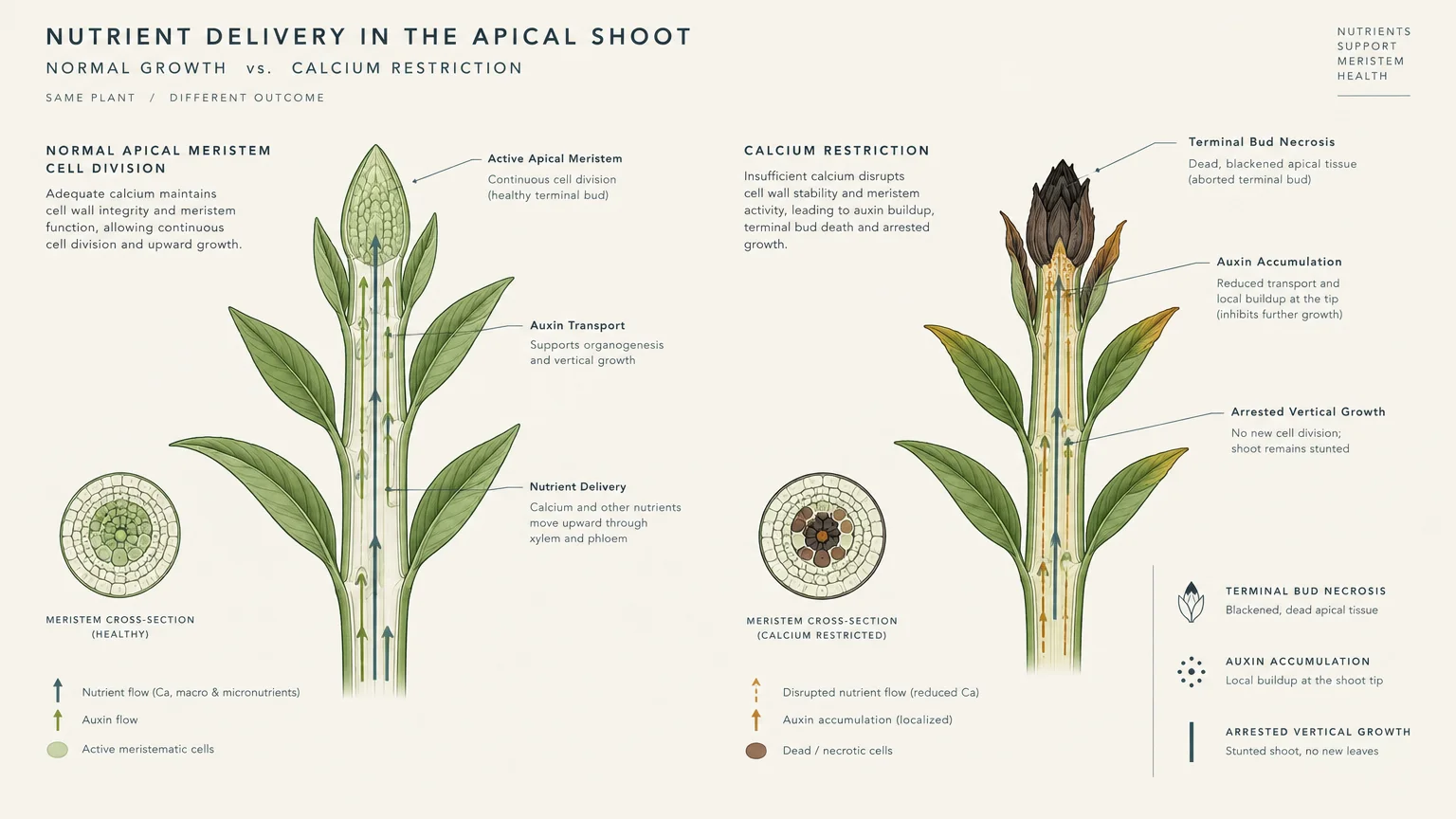
Tip #4: Stunted or Aborted Growing Tips
Look closely at the terminal buds where your plant generates its freshest shoots. When calcium levels plummet, the central growing point halts abruptly and may turn black and die.
Horticulturalists call this severe condition apical meristem necrosis. The rapidly dividing cells at the shoot tip require continuous supplies of calcium pectate to build stable membrane walls.
You might assume that a wilting, dying terminal shoot indicates water stress on a hot summer afternoon. Yet pouring more water into the soil does nothing to revive dead growing tips.
Prune away the blackened tip carefully with sterilized garden snips to stimulate dormant lateral buds. This pruning forces the plant to redirect its energy into fresh, healthy side branches.
Top-dress your soil with bone meal or gypsum to supply steady calcium to the emerging shoots. Providing adequate soil aeration ensures root systems absorb these vital minerals without hindrance.
Monitor the recovery over the next two weeks as new shoots emerge from leaf axils. Healthy side growth confirms your mineral balance has stabilized.
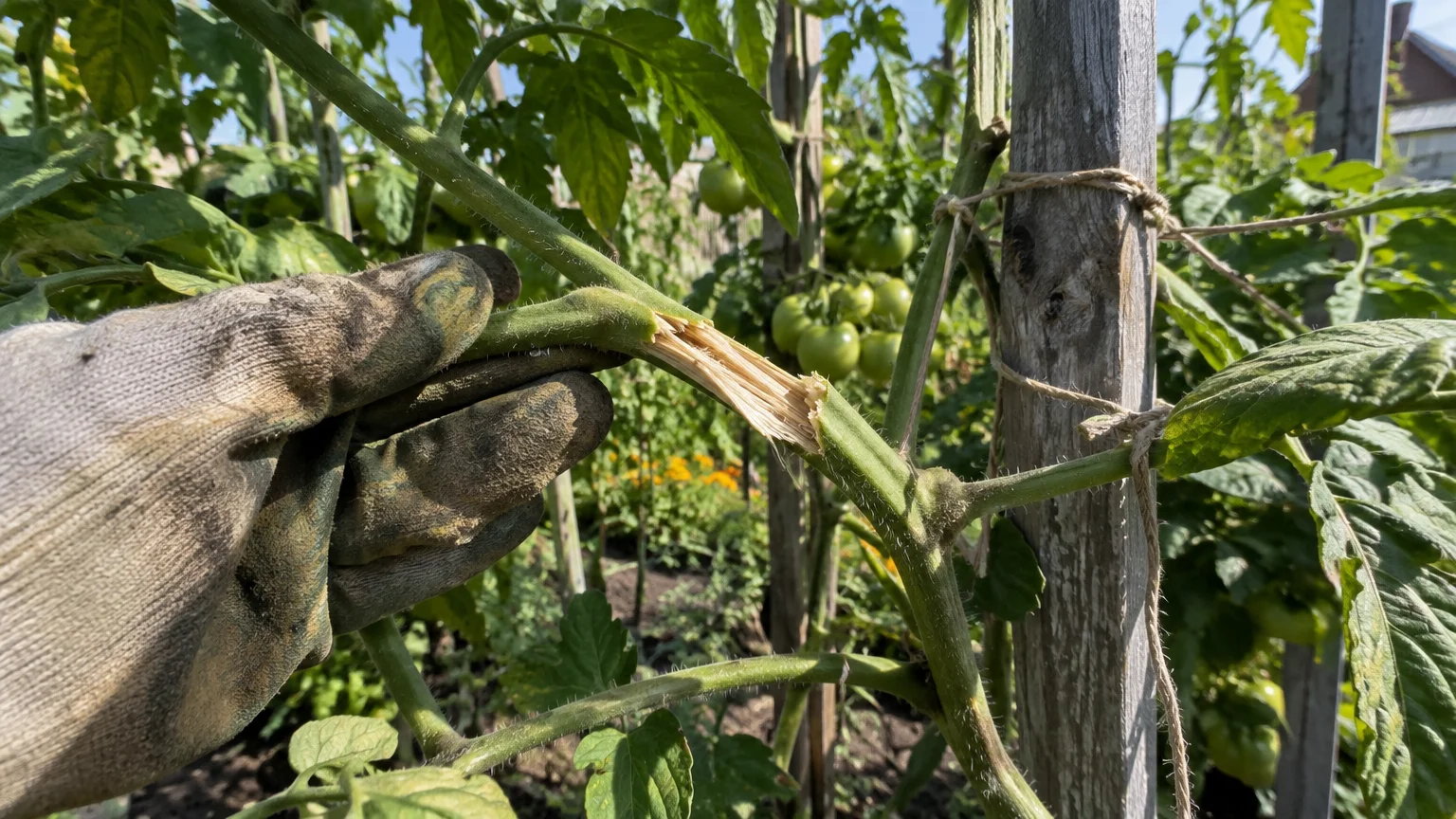
Tip #5: Brittle Stems That Snap Easily
Healthy stems bend gracefully in summer breezes, absorbing gusts without cracking. If your plant stems feel brittle or snap under the slightest touch, calcium shortage is the prime culprit.
Calcium plays an essential structural role in the middle lamella, which binds adjacent plant cells together like mortar between bricks. Without adequate calcium, plant tissues lose their tensile strength.
Gardeners often believe weak stems result from insufficient watering, leading them to saturate the soil bed. In soggy soil, however, lack of oxygen impairs root metabolism and exacerbates structural frailty.
Stake vulnerable branches immediately to prevent heavy fruit from tearing the main stem. Trellising relieves mechanical tension while the plant works to reconstruct sturdier cellular walls.
Feed the bed with calcium chelate, which provides rapidly absorbable ions to reinforcing stems. Chelated formulas remain bioavailable across a broader pH range than conventional garden lime.
Avoid excessive applications of high-potassium fertilizers during vegetative growth phases. Potassium competition often undermines the structural integrity of stems by restricting calcium uptake.
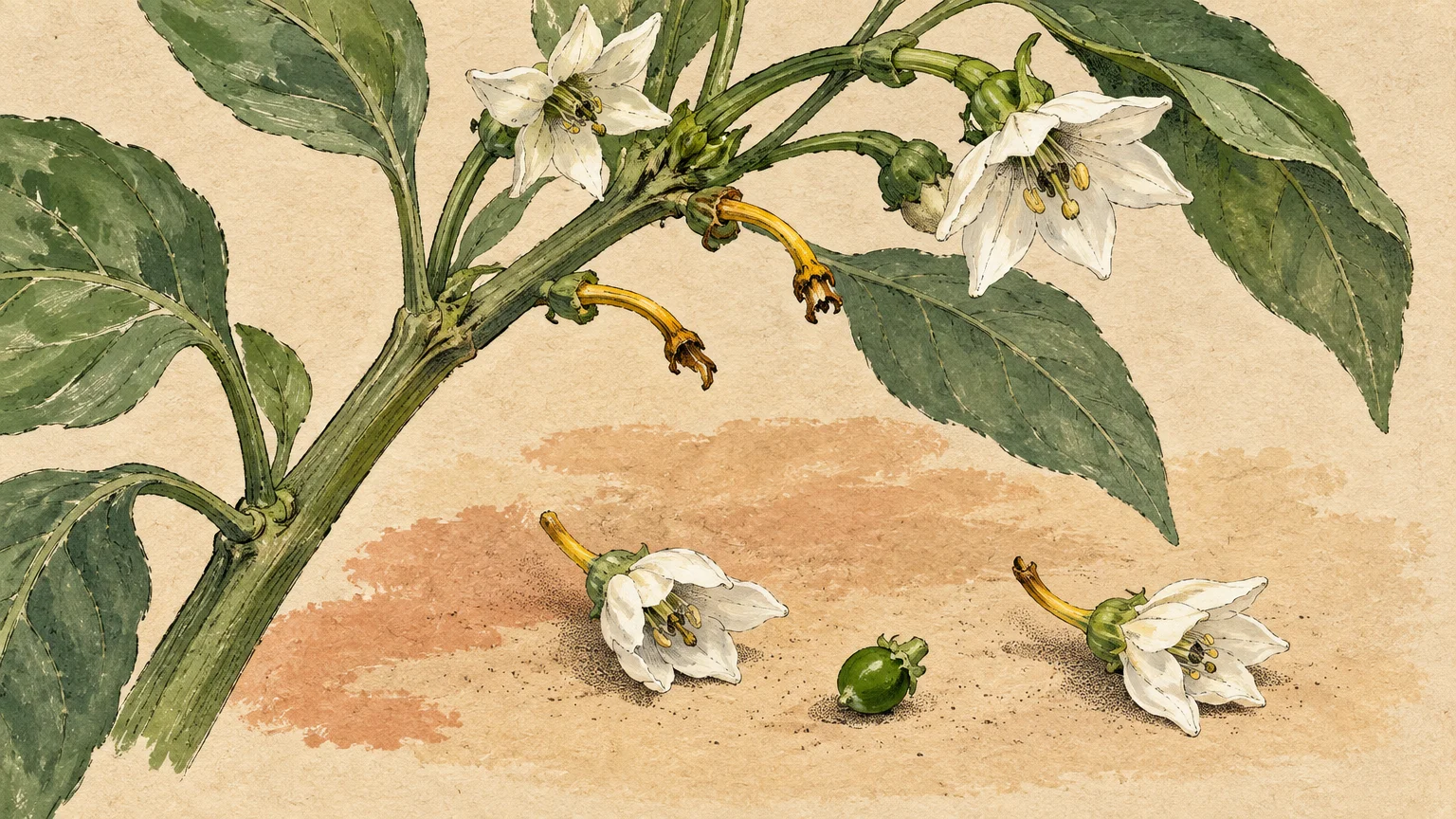
Tip #6: Premature Flower and Fruit Drop
Few things break a gardener’s heart faster than watching healthy flower buds drop onto the mulch before opening. Peppers, tomatoes, and citrus trees frequently shed nascent blooms when calcium runs short.
The plant forms an abscission layer at the base of the flower stem when stress strikes. Calcium strengthens this precise junction, anchoring the flower firmly to the parent branch.
While drought stress triggers bloom drop, pouring surplus water onto well-drained soil will not rescue falling buds. In fact, overwatering vs calcium deficiency confusion often leads gardeners to drown roots while flowers drop.
Check your irrigation depth with a soil moisture probe before you reach for the hose. If the top four inches feel moist, refrain from adding more water.
Apply a balanced calcium-magnesium foliar spray early in the morning when the flower clusters are developing. Direct absorption strengthens the floral stems before the blooms have a chance to abort.
Maintain consistent soil moisture levels using drip emitters to prevent sudden hydraulic swings. Steady water movement guarantees continuous nutrient delivery right into the delicate pedicels of each bloom.
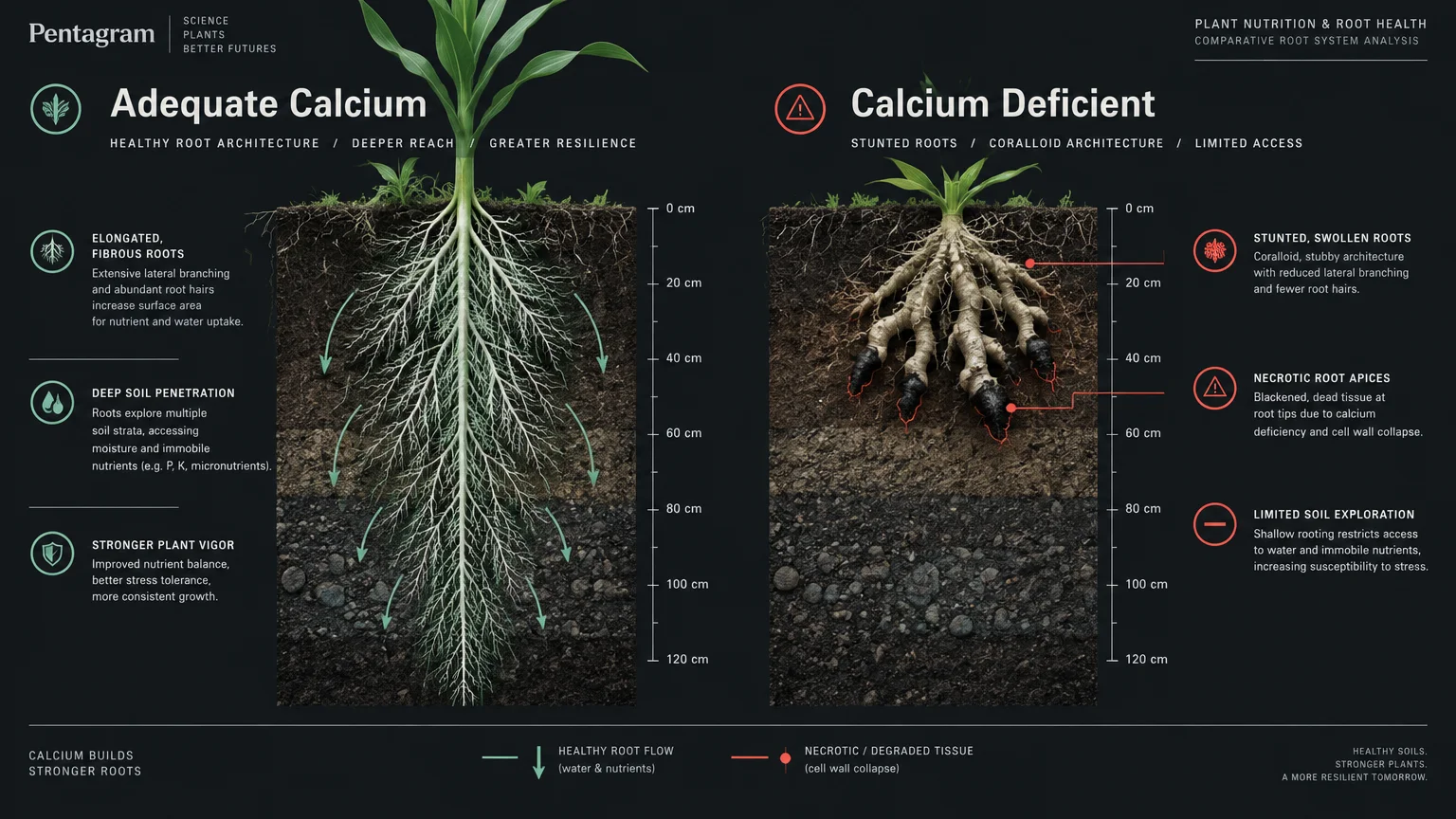
Tip #7: Blackened and Stubby Root Tips
When troubleshooting mysterious decline, sliding a potted plant from its container reveals vital subterranean clues. A healthy root system shows creamy white, fibrous strands spreading evenly through the potting media.
Calcium-starved roots appear short, bulbous, and dark brown or black at the tips. The root apical meristem literally stops dividing, leaving the root system unable to explore for nourishment.
Overwatering causes root rot characterized by foul odors and mushy decay, whereas calcium starvation produces blunt, brittle roots. Recognizing this difference helps you identify true plant nutrient deficiency symptoms beneath the soil.
Improve drainage by amending heavy garden clay with coarse perlite or organic compost. Well-aerated soil gives root tips the oxygen they require to process incoming mineral ions.
Drench the root zone with a light calcium nitrate solution to stimulate immediate root elongation. Calcium ions encourage fresh root tips to push forward and anchor the plant.
Avoid disturbing the fragile root mass with harsh cultivation tools while roots recover. Gentle care allows fresh root hairs to colonize the surrounding soil undisturbed.
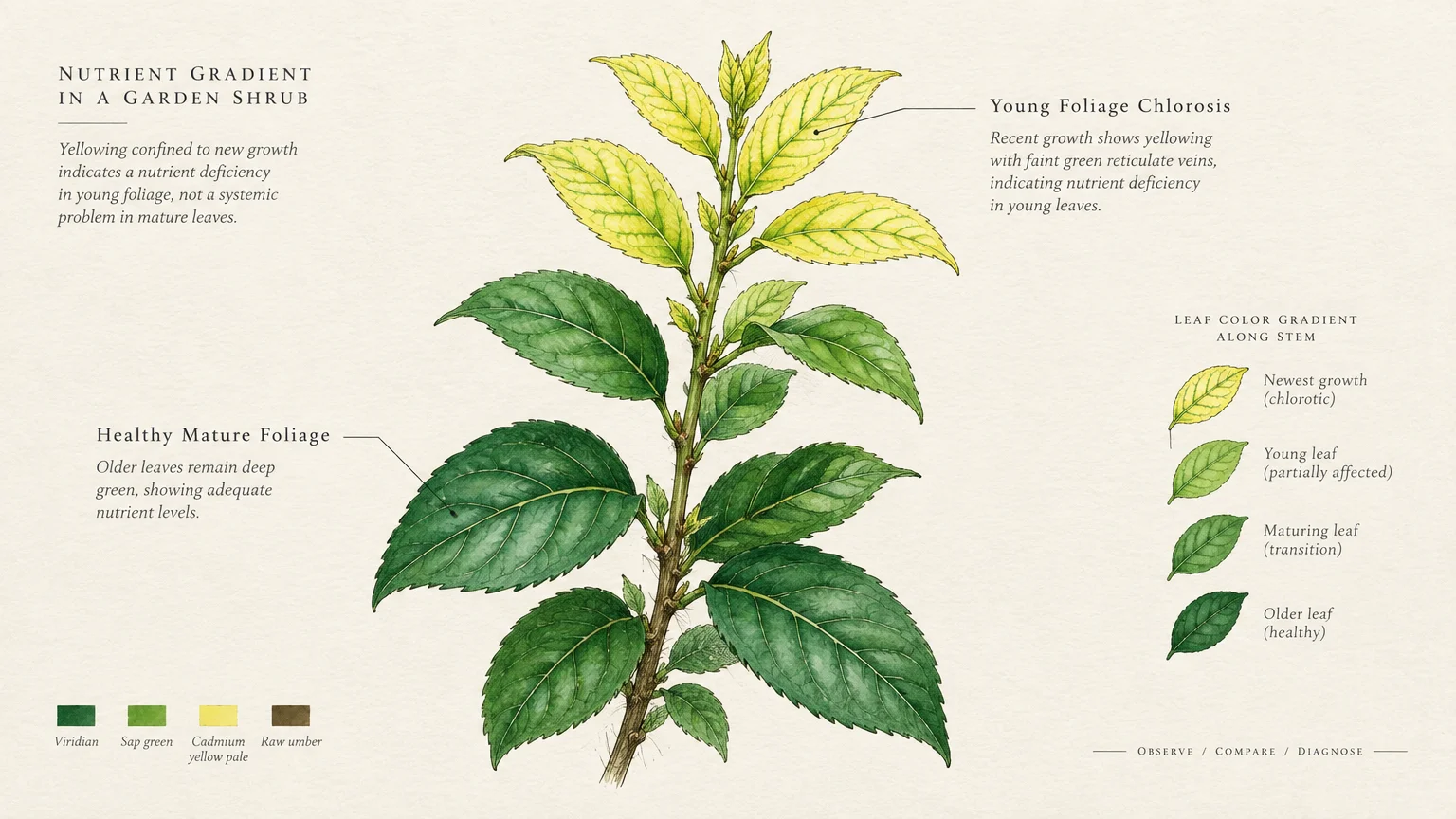
Tip #8: Chlorosis Confined to New Foliage
Chlorosis, or yellowing tissue between green leaf veins, often puzzles even seasoned horticulturalists. The critical diagnostic clue lies in which leaves show the yellowing first.
Nitrogen and magnesium are mobile nutrients; plants easily siphon them from old bottom leaves to feed young growth. Calcium, by contrast, is completely immobile once bound within plant cells.
If the oldest bottom leaves remain rich emerald green while fresh upper leaves turn pale or yellow, suspect calcium deficiency in plants. More water will only wash away available soil nutrients and deepen chlorosis.
Test your irrigation water, as highly acidic well water can suppress calcium availability. Broadcast agricultural lime on acidic beds to unlock balanced mineral nutrition and restore proper soil chemistry.
Mix worm castings into the topsoil to enhance microbial life around the root perimeter. Beneficial microbes break down complex minerals into bioavailable forms that roots can absorb effortlessly.
Keep nitrogen fertilizer inputs moderate to avoid rapid, pale vegetative growth that dilutes calcium reserves. Controlled growth produces thick, dark green leaves with robust structural defense.
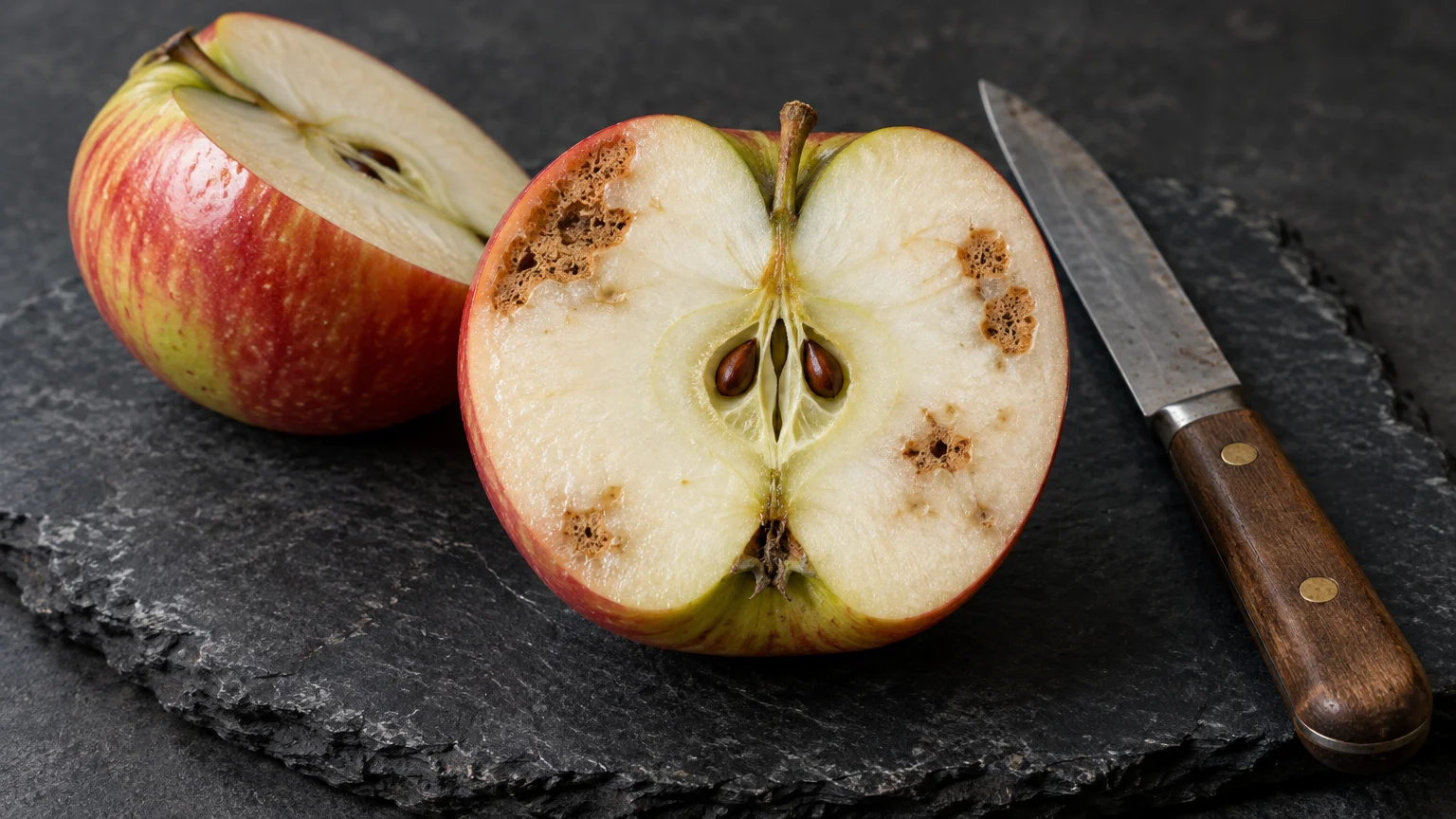
Tip #9: Bitter Pit and Internal Corking
Apple growers and fruit hobbyists dread bitter pit, a condition marked by sunken brown spots beneath the fruit skin. These small, spongy craters ruin the crisp texture and flavor of harvest-ready fruit.
Bitter pit develops when rapidly expanding fruit cells run out of calcium during mid-season growth. The cell membranes lose permeability, causing localized cell dehydration and brown corky lesions.
Deep watering will not fix bitter pit once hot weather accelerates fruit expansion. Excessive irrigation actually drives leafy vegetative growth, which steals incoming calcium away from the developing fruit.
Spray developing fruit clusters with food-grade calcium chloride sprays throughout early summer. Foliar application bypasses the foliage and supplies calcium directly to the developing skin and flesh.
Prune heavy summer water sprouts so calcium channels directly into your ripening crop. Controlling vegetative vigor ensures that expanding fruit receives its fair share of xylem transport.
Apply organic mulch beneath fruit trees to stabilize soil moisture during intense heat waves. Consistent soil moisture prevents the sudden growth surges that trigger internal corking.
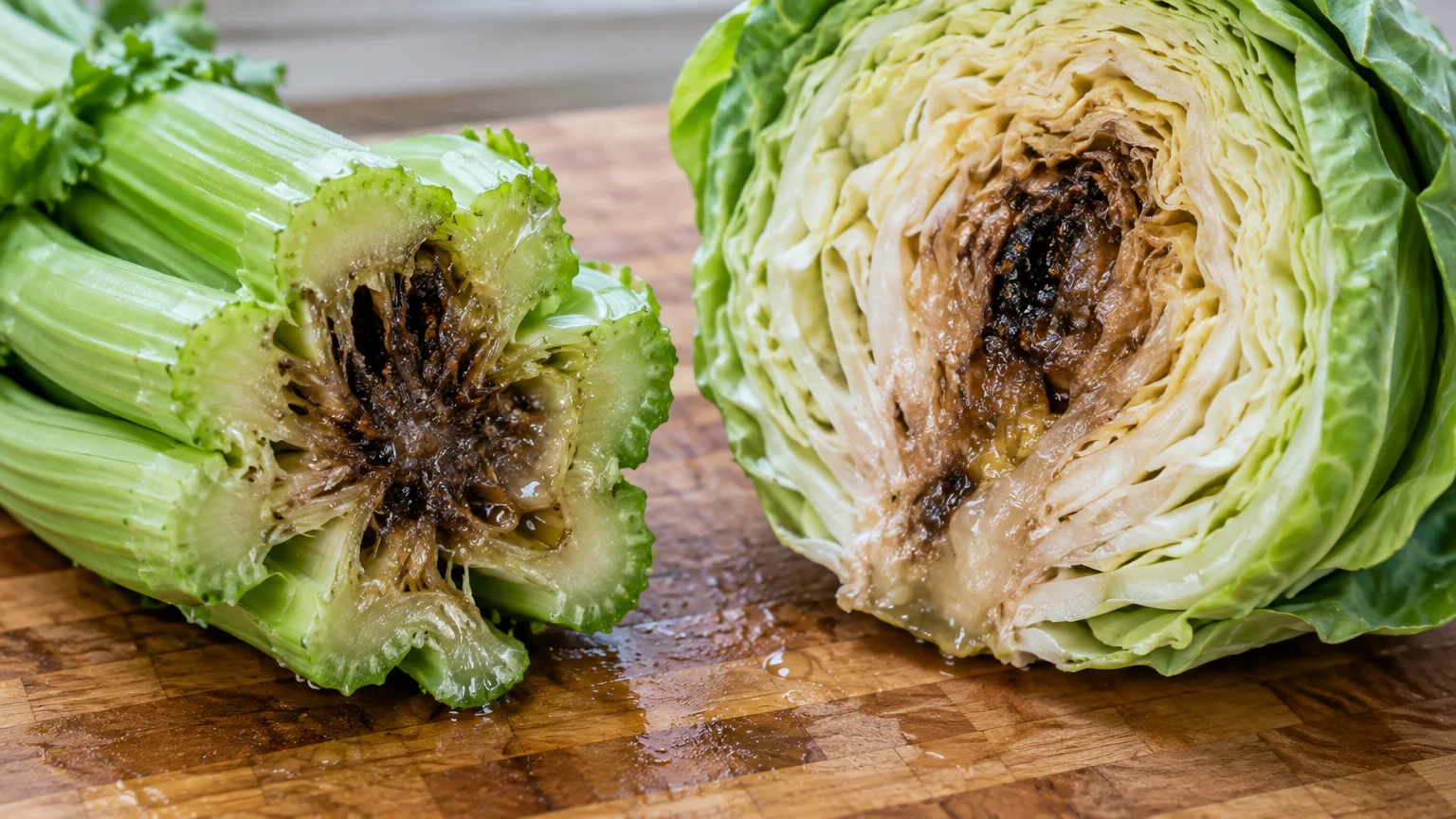
Tip #10: Internal Tissue Breakdown and Blackheart
Celery, carrots, and brassicas occasionally develop blackheart or cavity spot, where interior tissues turn brown and collapse. The outer leaves might look robust, masking catastrophic damage deep within the core.
Rapid growth fueled by excess moisture and nitrogen fertilizer outpaces the plant’s capacity to transport calcium inward. The dense heart tissues collapse internally while exterior leaves continue transpiring normally.
When gardeners notice sluggish growth, they often soak the soil bed repeatedly. That extra water worsens plant nutrient deficiency symptoms by accelerating dangerous growth spurts without providing balanced minerals.
Cool your garden beds using organic straw mulch to moderate both soil temperature and evaporation rates. Consistent, moderate conditions ensure smooth, uninterrupted calcium uptake throughout the entire season.
Avoid high-nitrogen fertilizers once plants enter their bulking or heart-forming stages. Balanced fertilization prevents the explosive foliage growth that leaves interior tissues structurally starved.
Incorporate calcitic limestone into vegetable plots during autumn soil preparation. Pre-season amendments give calcium ample time to integrate into the soil structure before spring planting begins.
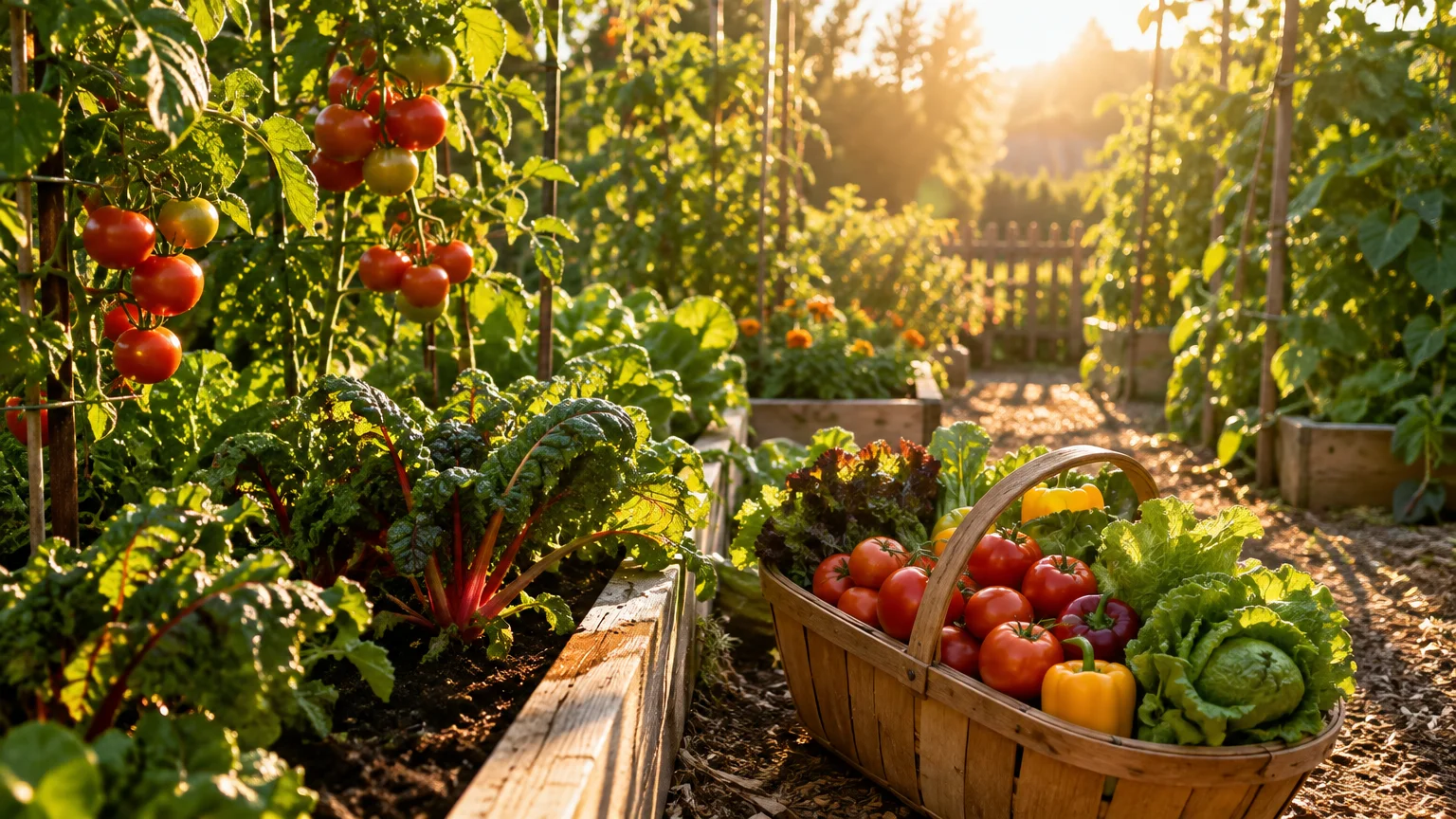
Putting It All Together: Enjoy Your Beautiful Garden
Gardening thrives on patient observation and thoughtful care. When your plants exhibit curling leaves or darkened fruit, take a breath before reaching for your garden hose.
Evaluating whether your garden suffers from overwatering vs calcium deficiency protects your soil ecosystem. Balanced moisture combined with accessible minerals empowers your vegetables to flourish.
Regular soil testing provides the precise blueprint you need for seasonal success. Amending your soil with garden gypsum or organic compost unlocks vibrant blooms and crisp, bountiful harvests.
Celebrate every lesson your garden offers along the way. With these diagnostic skills in hand, you can nurture a resilient, thriving landscape all season long.
Take pride in reading your plants’ subtle signals and responding with precision. Your attentive care creates the foundation for a vibrant, productive garden that rewards you every day.
Remember that healthy soil biology drives healthy nutrient movement. Feed your soil microbes with diverse organic matter, and they will help nourish your plants through every season.
Observe your garden with confidence as you put these principles to work. Your dedication to balanced soil health will produce stronger plants and more delicious harvests year after year.
For region-specific advice, consult your local University Extension program (find yours via the USDA directory). For plant databases and inspiration, visit the Missouri Botanical Garden or the Royal Horticultural Society.
Frequently Asked Questions
Can you fix calcium deficiency simply by watering more?
No, adding extra water often worsens the problem. Calcium travels through transpiration, but waterlogged roots lose oxygen and cannot absorb minerals.
Instead of soaking the soil, maintain consistent, moderate moisture levels. This approach allows roots to breathe and transport calcium efficiently.
What is the fastest way to add calcium to plants?
Foliar spraying with a diluted calcium nitrate or chelated calcium solution offers the fastest relief. Leaves absorb these dissolved nutrients directly through their stomata within hours.
For long-term soil health, apply agricultural gypsum or calcitic lime to the root zone. These amendments replenish soil reserves for future growing seasons.
Do crushed eggshells cure immediate calcium deficiency?
Crushed eggshells break down very slowly in garden beds over several months or years. They cannot resolve acute calcium starvation in fast-growing summer vegetables.
Use finely pulverized eggshells in your compost pile for long-term soil conditioning. When facing an active crisis, rely on soluble amendments like gypsum instead.
How do high temperatures impact calcium uptake?
Extreme heat forces plants to close their leaf stomata to conserve internal moisture. This protective response halts transpiration, stranding calcium ions in the root zone.
Erect shade cloth over sensitive crops during summer heatwaves to reduce thermal stress. Lower canopy temperatures keep transpiration flowing and prevent blossom end rot.
Disclaimer: This article provides general gardening advice. Always consider your specific climate, soil conditions, and local pests. Follow safety guidelines when using gardening tools and products.