Your home deserves thriving greenery, not a collection of declining foliage that causes you daily stress. While social media showcases exotic indoor jungles, certain popular varieties demand greenhouse-level conditions that prove nearly impossible to replicate in a standard living room. Ditching high-maintenance houseplants saves you significant time, money, and frustration, allowing you to focus on resilient varieties that actually want to grow. You need practical solutions that fit a busy lifestyle rather than delicate species requiring humidifiers, distilled water, and perfect lighting. By avoiding these notoriously difficult houseplants, you easily curate an indoor garden that brings joy instead of disappointment—giving you the beautiful, lush aesthetic you crave without the exhausting upkeep.
Tip #1: The Fiddle Leaf Fig (Ficus lyrata)
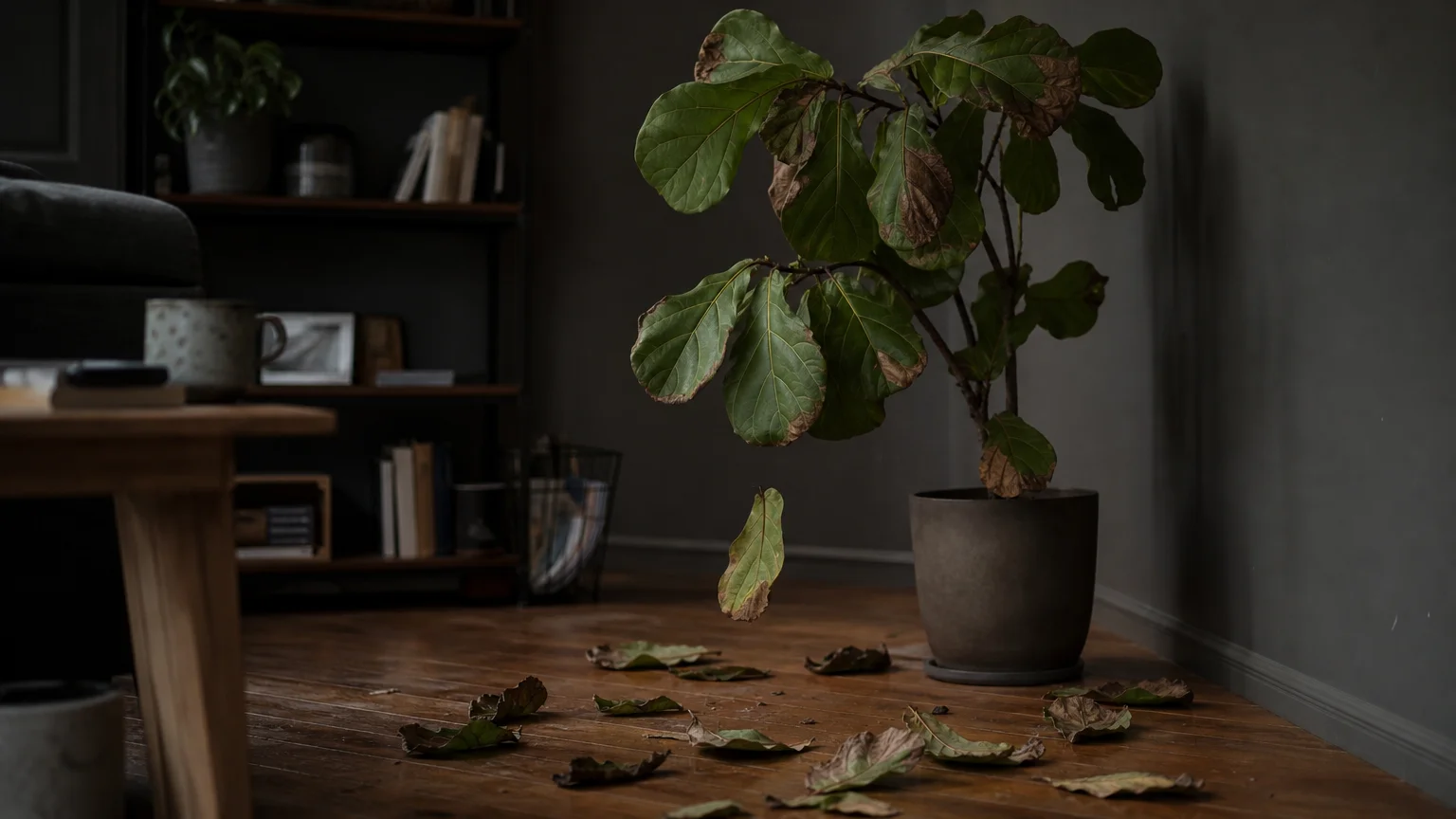
Few plants dominate interior design quite like the Fiddle Leaf Fig, but this West African native often behaves like a spoiled celebrity in your living room. The Fiddle Leaf Fig requires extremely specific conditions to thrive, making it one of the most frustrating high-maintenance houseplants you can buy. These trees naturally grow in humid rainforests with abundant, dappled sunlight. When you place them in a dry, air-conditioned home, they protest loudly by dropping their massive, leathery leaves.
You must provide this plant with bright, filtered light—ideally directly in front of an east-facing or south-facing window. Move the plant just a few feet away into a darker corner, and it quickly starves. Fiddle Leaf Figs also despise environmental changes. A slight draft from a heating vent, a sudden drop in room temperature, or a relocation across the room triggers a severe stress response. Furthermore, watering requires absolute precision; you must drench the soil completely but never let the roots sit in standing water, which instantly causes root rot.
The Easier Alternative: If you want a bold, tree-like statement piece without the daily anxiety, choose the Rubber Plant (Ficus elastica). Rubber plants offer dramatic, oversized foliage but tolerate lower light levels and occasional missed waterings with remarkable grace.
Tip #2: The Maidenhair Fern (Adiantum)
With its delicate, lace-like fronds and bright green color, the Maidenhair Fern tempts countless home gardeners at the nursery. Unfortunately, bringing one into a standard home usually starts a rapidly ticking clock toward its demise. In their natural habitat, these graceful ferns grow near waterfalls and shaded streams where the air remains saturated with moisture. Your living room, especially during the winter months when the heater runs, provides the exact opposite environment.
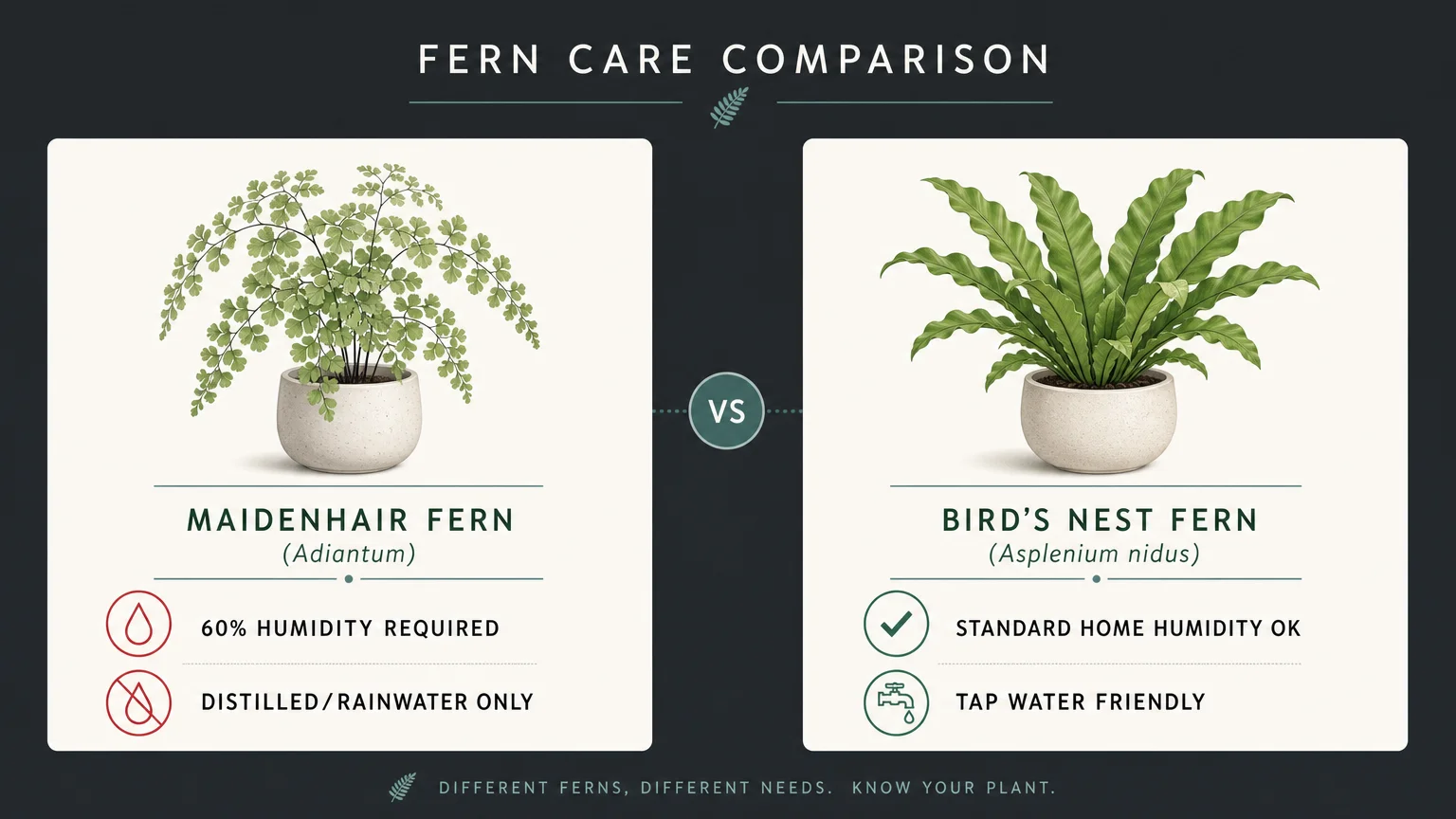
Maidenhair Ferns demand an ambient humidity level of at least 60 percent. Unless you plan to run a dedicated humidifier right next to the plant or keep it inside a sealed terrarium, those delicate leaves turn crisp and brown overnight. Misting the plant offers only a temporary fix and often encourages fungal diseases rather than actually raising the humidity. Furthermore, this difficult houseplant refuses to tolerate municipal tap water. The chlorine and fluoride present in city water systems burn the fragile root hairs, meaning you must collect rainwater or purchase distilled water to keep it hydrated. Even a single day of dry soil causes irreversible damage to the fronds.
The Easier Alternative: For a lush, leafy look that survives normal household humidity, pick up a Bird’s Nest Fern (Asplenium nidus). Its solid, crinkly leaves hold onto moisture much better, making it a highly resilient indoor companion.
Tip #3: The Calathea (Goeppertia species)
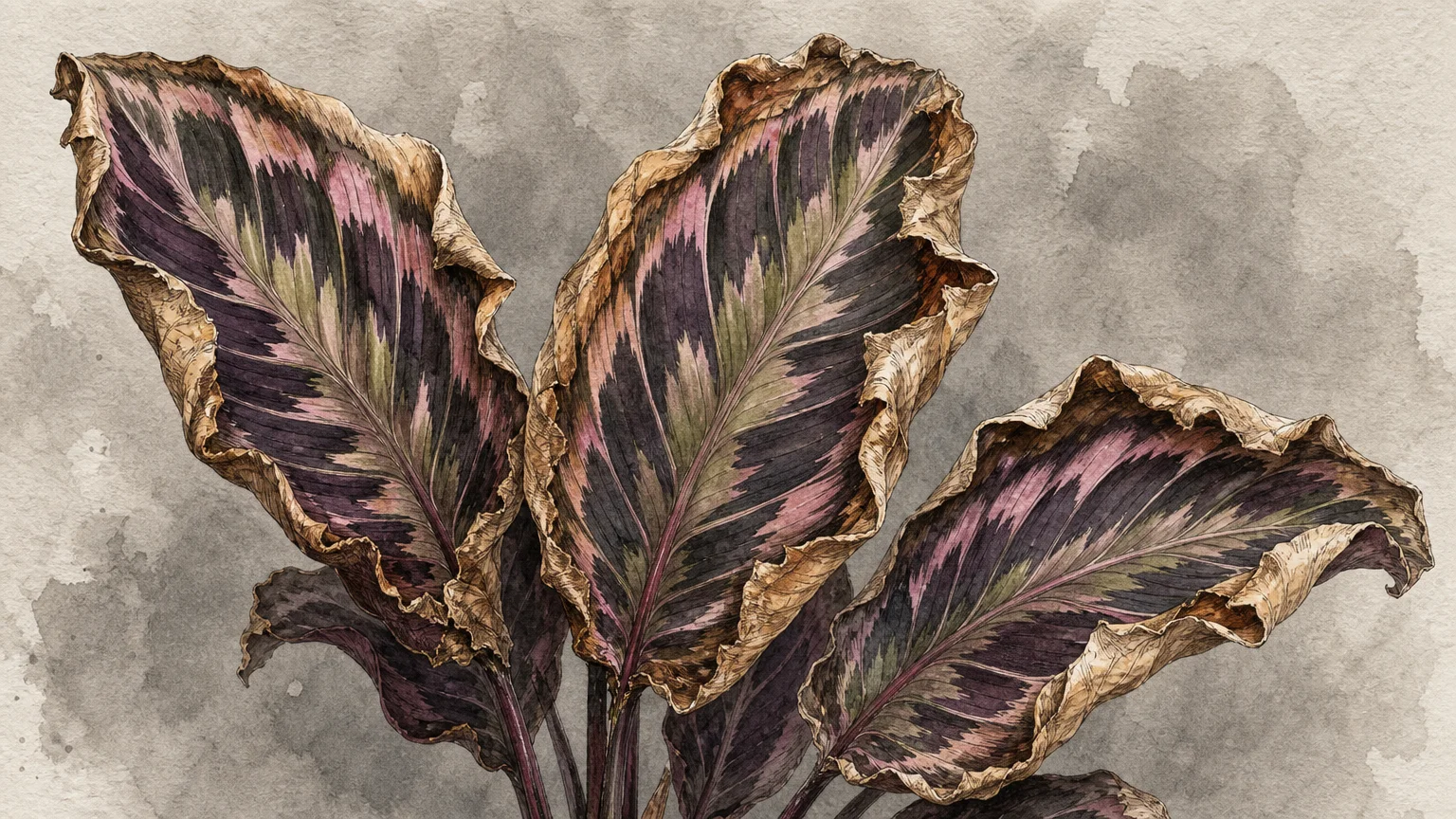
Calatheas feature some of the most spectacular foliage in the botanical world, sporting intricate patterns of pink, white, and deep purple. They even fold their leaves up at night in a fascinating process called nyctinasty. However, the price you pay for this visual show makes the Calathea one of the most notorious houseplant mistakes a beginner can make. These tropical divas demand absolute perfection when it comes to their daily indoor plant care routine.
The primary issue stems from their extreme sensitivity to water quality. If you water a Calathea with standard tap water, the dissolved minerals and salts accumulate in the soil and travel to the edges of the leaves, resulting in ugly, crispy brown margins. You must flush the soil regularly with distilled or reverse-osmosis water to keep the foliage pristine. Additionally, Calatheas act as magnets for spider mites. These microscopic pests thrive in the exact conditions that stress the plant—warm, dry air. Before you know it, fine webbing covers the intricate leaves, and the plant slowly declines.
The Easier Alternative: Achieve a similarly striking, patterned look by growing a Chinese Evergreen (Aglaonema). These incredibly forgiving plants come in vibrant shades of pink and red but happily tolerate low light, dry air, and standard tap water.
Tip #4: The String of Pearls (Senecio rowleyanus)
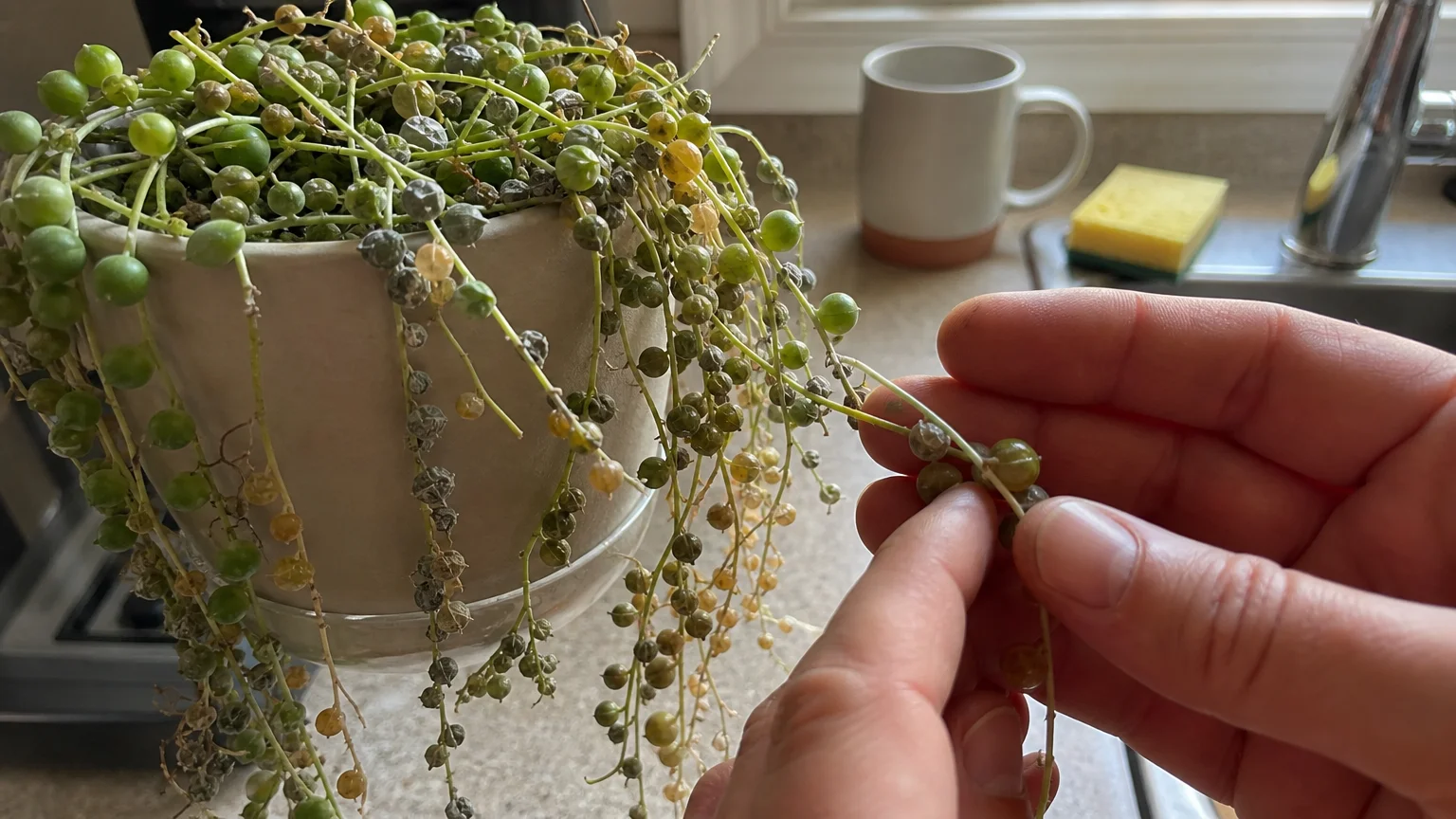
The cascading, bead-like vines of the String of Pearls look phenomenal trailing from a hanging basket or floating off the edge of a bookshelf. Because nurseries label them as succulents, home gardeners assume they require zero effort. In reality, the String of Pearls presents a highly specific set of demands that routinely leads to sudden plant death, frustrating both novices and experienced growers alike.
This finicky succulent possesses incredibly shallow root systems that rot at the slightest hint of excess moisture. If your potting soil retains water for more than a few days, the spherical leaves turn mushy, and the stems collapse. Watering requires a delicate touch; you must wait until the small green spheres slightly pucker before offering a thorough soak. Light poses an even bigger challenge. While the trailing vines look great hanging down, the actual crown of the plant—sitting at the soil surface—must receive bright, direct sunlight. If the top of the pot sits in the shadow of the window frame, the crown rots away, and the entire vine detaches.
The Easier Alternative: Hang a String of Hearts (Ceropegia woodii) instead. This delicate-looking trailing vine possesses thick, tuberous roots that store water efficiently, making it highly resistant to underwatering and much less prone to crown rot.
Tip #5: The Boston Fern (Nephrolepis exaltata)
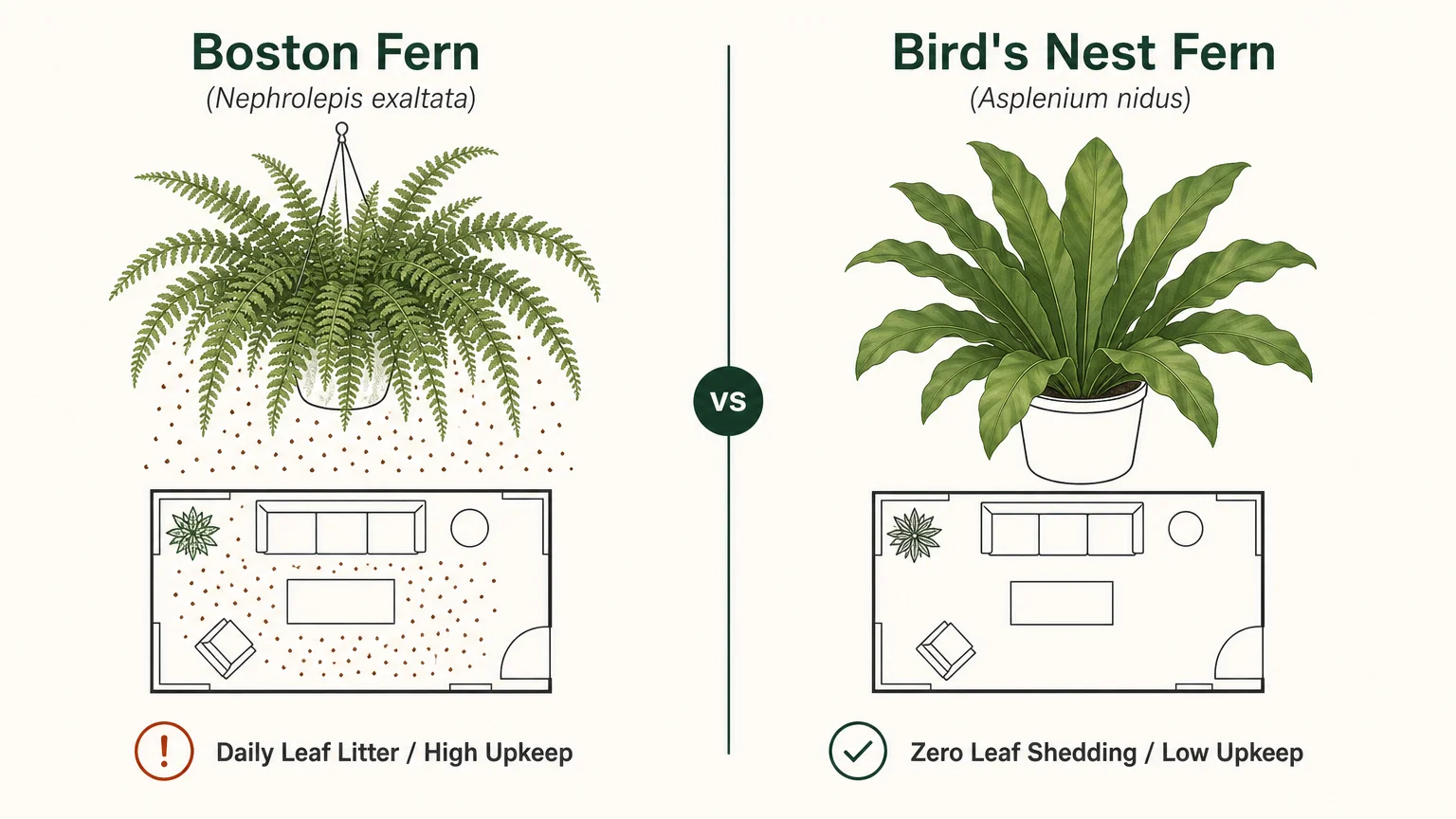
The Boston Fern offers a classic, voluminous burst of greenery that looks spectacular on a covered porch during the humid summer months. Bringing that same fern indoors for the winter, however, transforms it into a high-maintenance chore that will have you reaching for the vacuum cleaner every single day. The Boston Fern sheds continuously when stressed, dropping thousands of tiny, dry leaflets all over your carpets and hardwood floors.
To keep a Boston Fern looking lush and full indoors, you must replicate a humid, subtropical environment. The soil must remain consistently moist—but never soggy—which often means checking the pot every single day. If you let the top inch of soil dry out completely, the plant retaliates by browning heavily from the center outward. They also require bright, indirect light; too much shade causes them to become sparse and leggy, while direct sun scorches the fronds. Maintaining the perfect balance of light, moisture, and humidity requires a level of daily vigilance that few home gardeners can sustain.
The Easier Alternative: The Spider Plant (Chlorophytum comosum) provides a similar arching, grassy aesthetic but thrives on neglect. It actively tolerates missed waterings, easily adapts to average room humidity, and rarely drops healthy foliage.
Tip #6: The Croton (Codiaeum variegatum)
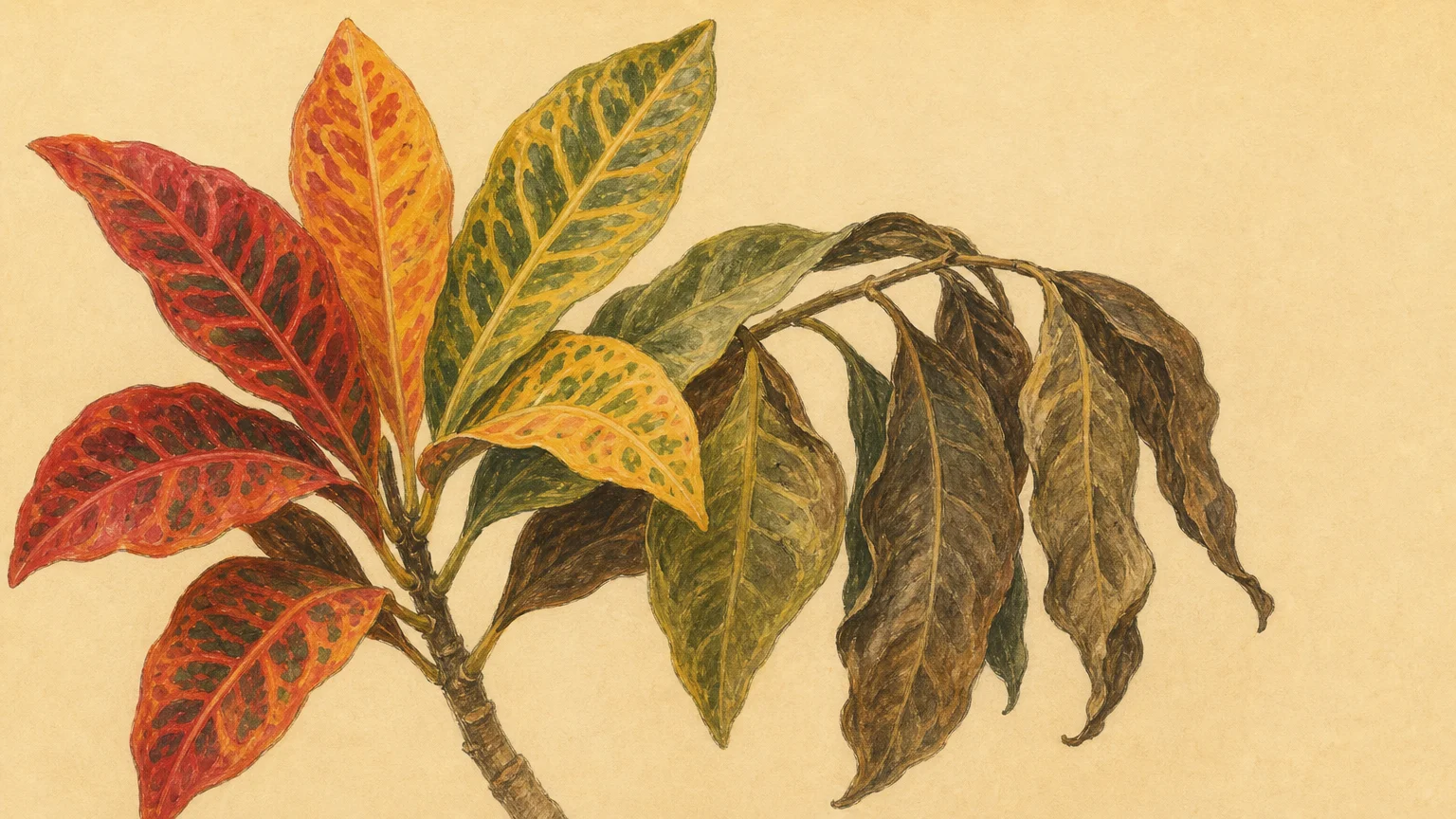
Crotons capture your attention from across the garden center with their explosive, fiery colors ranging from neon yellow to deep crimson. They look like a tropical sunset contained in a single pot. Unfortunately, the moment you bring a Croton through your front door, it often begins a rapid decline. This spectacular coloring serves as a direct response to intense sunlight, and maintaining that vibrancy indoors proves incredibly challenging.
Your typical indoor lighting simply cannot sustain a Croton. Without six to eight hours of bright, direct sunlight every day, the new leaves emerge as a dull, flat green, and the existing colorful foliage frequently drops off. Furthermore, Crotons hate being moved. Even the brief transition from the nursery to your living room causes severe environmental shock, prompting the plant to shed a terrifying number of leaves. They also require consistent warmth; a draft from a nearby window or an air conditioning vent easily triggers another massive leaf drop. You end up with a bare, woody stick sporting a few green leaves at the very top.
The Easier Alternative: If you love vibrant, non-green foliage, try the Peperomia obtusifolia Variegata or a colorful variety of indoor Coleus. Both offer fantastic visual interest without demanding a premium spot right against a scorching south-facing window.
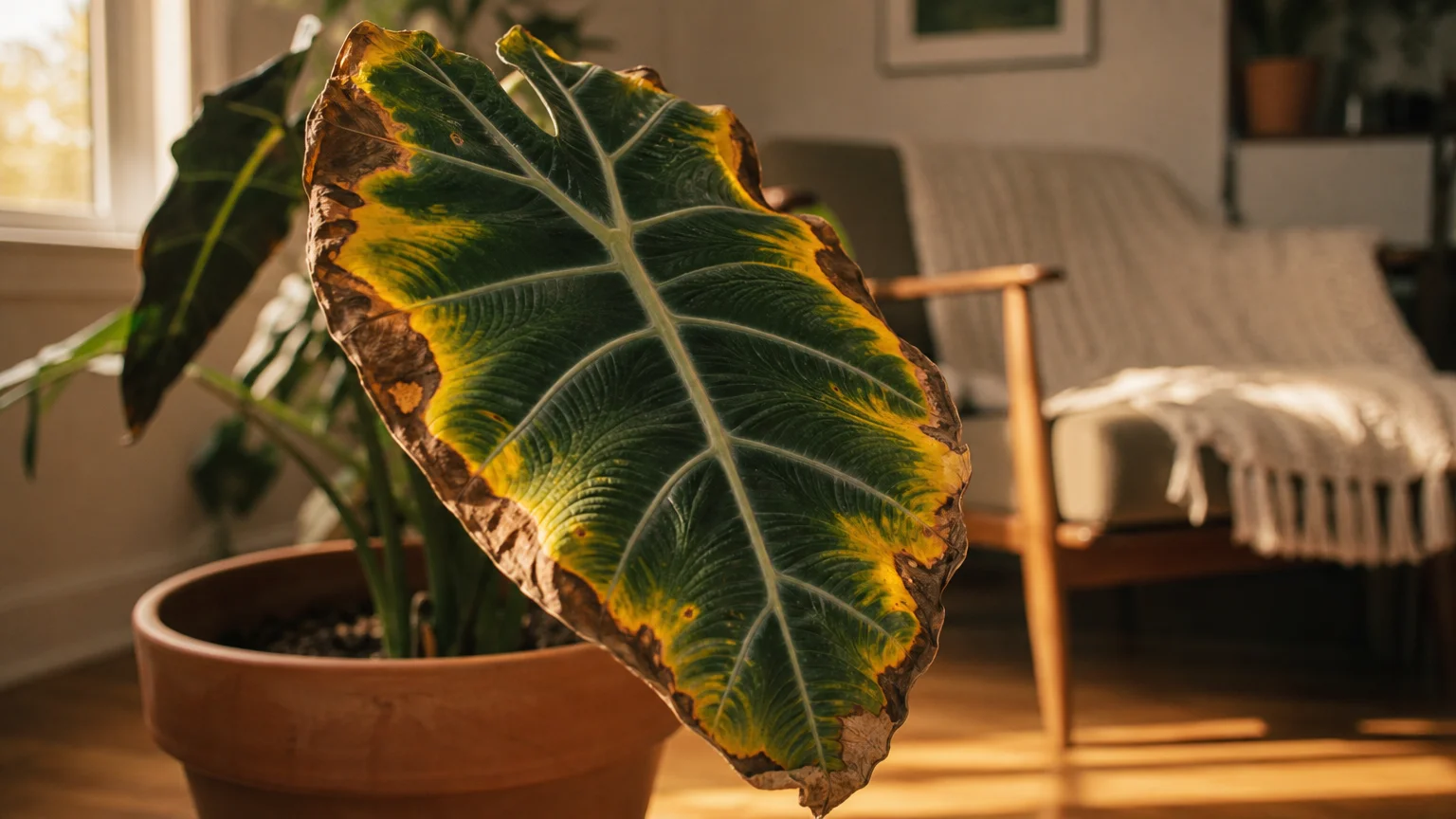
Tip #7: The Alocasia (Elephant Ear)
With their dramatic, arrow-shaped leaves and stark, contrasting veins, Alocasias look like living sculptures. These stunning tropicals dominate social media feeds, leading many eager gardeners to purchase them without understanding their complex lifecycles. Caring for an indoor Alocasia quickly turns into an exhausting battle against pests, watering issues, and unexpected periods of dormancy.
Alocasias are heavy feeders that require a precise regimen of fertilizer to support their massive leaves. They naturally grow from tuberous corms, which means they hold onto water tightly. Overwatering leads to rapid bulb rot, while underwatering causes the heavy leaves to droop permanently. The most frustrating aspect of Alocasia care is their tendency to go dormant. When temperatures drop or light levels decrease in the winter, the plant often kills off all its foliage, leaving you staring at a pot of empty dirt. Finally, spider mites consider Alocasia leaves to be a five-star buffet. You must inspect the undersides of the foliage weekly and wipe them down with neem oil to prevent severe infestations.
The Easier Alternative: Get that large, tropical leaf aesthetic with a Monstera deliciosa. The classic Swiss Cheese Plant grows vigorously in standard home environments, resists most pests, and never goes into dramatic dormancy periods.
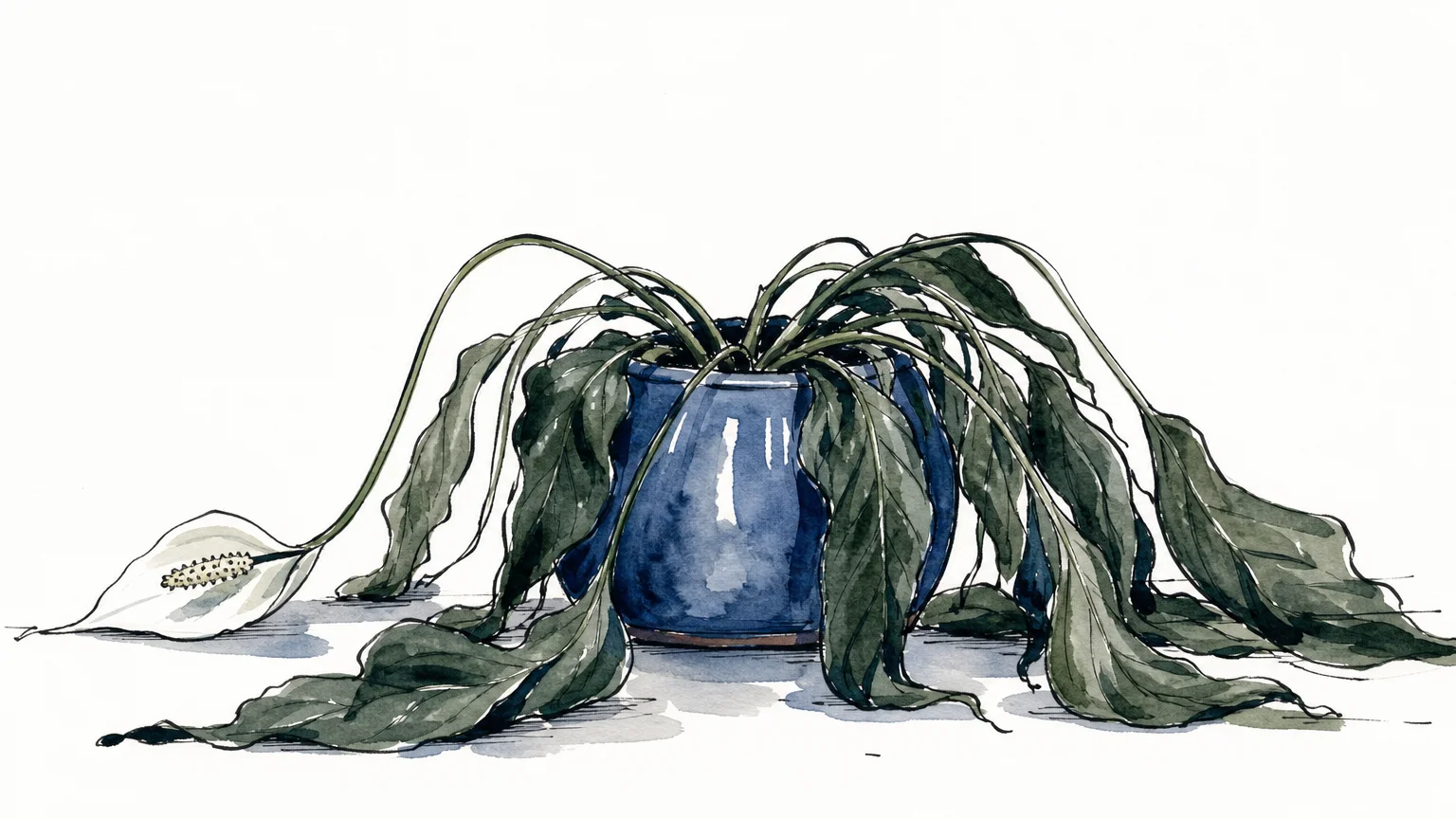
Tip #8: The Peace Lily (Spathiphyllum)
Many garden centers advertise the Peace Lily as an unkillable beginner plant, making its inclusion on a list of difficult houseplants somewhat controversial. While a Peace Lily will survive in a dark corner, it certainly will not thrive, and keeping it looking pristine requires a surprising amount of effort. Most home gardeners quickly discover that this popular plant leans heavily toward the dramatic side of the spectrum.
The Peace Lily frequently collapses into a sad, wilted heap the moment the soil dries out. While it bounces back after a good soak, this extreme wilting damages the microscopic root hairs, slowly weakening the plant over time. To complicate matters, you cannot simply use tap water to rehydrate it. Like the Calathea, Peace Lilies are highly sensitive to chlorine and fluoride, which manifest as ugly, black tips on the end of every dark green leaf. Attempting to get the plant to re-bloom indoors also presents a major hurdle; without the perfect combination of bright, indirect light and precise fertilization, your Peace Lily will remain a purely foliage plant for years.
The Easier Alternative: The Cast Iron Plant (Aspidistra elatior) earns its tough-as-nails name. It offers dark green, lance-shaped leaves similar to the Peace Lily but truly thrives in low light and never faints when you forget to water it.
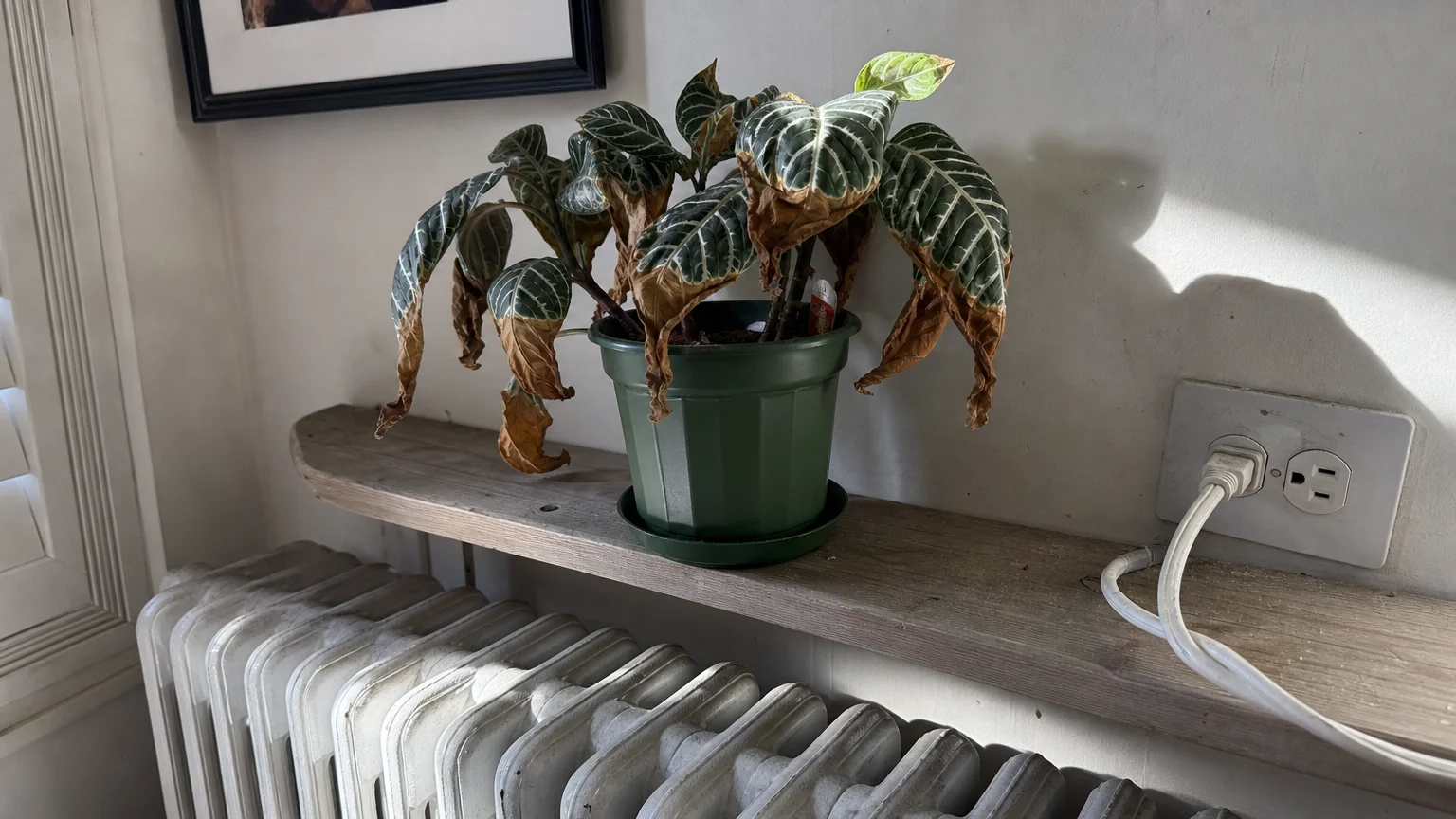
Tip #9: The Zebra Plant (Aphelandra squarrosa)
The Zebra Plant lures you in with striking, dark green leaves heavily striped with bright white veins. When in bloom, it produces a bizarre, bright yellow, towering flower bract that looks incredibly exotic. However, keeping a Zebra Plant alive long enough to see a second bloom requires greenhouse-level precision that makes indoor plant care feel like a full-time job.
This Brazilian native refuses to compromise on humidity. Without a constant humidity level of 60 to 70 percent, the stunning striped leaves curl inward, turn brown at the edges, and ultimately drop off the stem. Watering the Zebra Plant demands a tightrope walk; the soil must remain consistently damp, but a single day of sitting in waterlogged soil triggers fatal root rot. Conversely, if the topsoil dries out for even a few hours, the lower leaves instantly detach. Because they grow so quickly when conditions are ideal, they also require frequent repotting and heavy feeding. Over time, indoor Zebra Plants tend to become incredibly leggy and unattractive, featuring a long bare stem with just a tuft of foliage at the top.
The Easier Alternative: The Nerve Plant (Fittonia albivenis) offers incredibly similar, striking leaf venation in white, pink, or red. While it also likes moisture, it stays compact and recovers gracefully if it accidentally wilts from thirst.
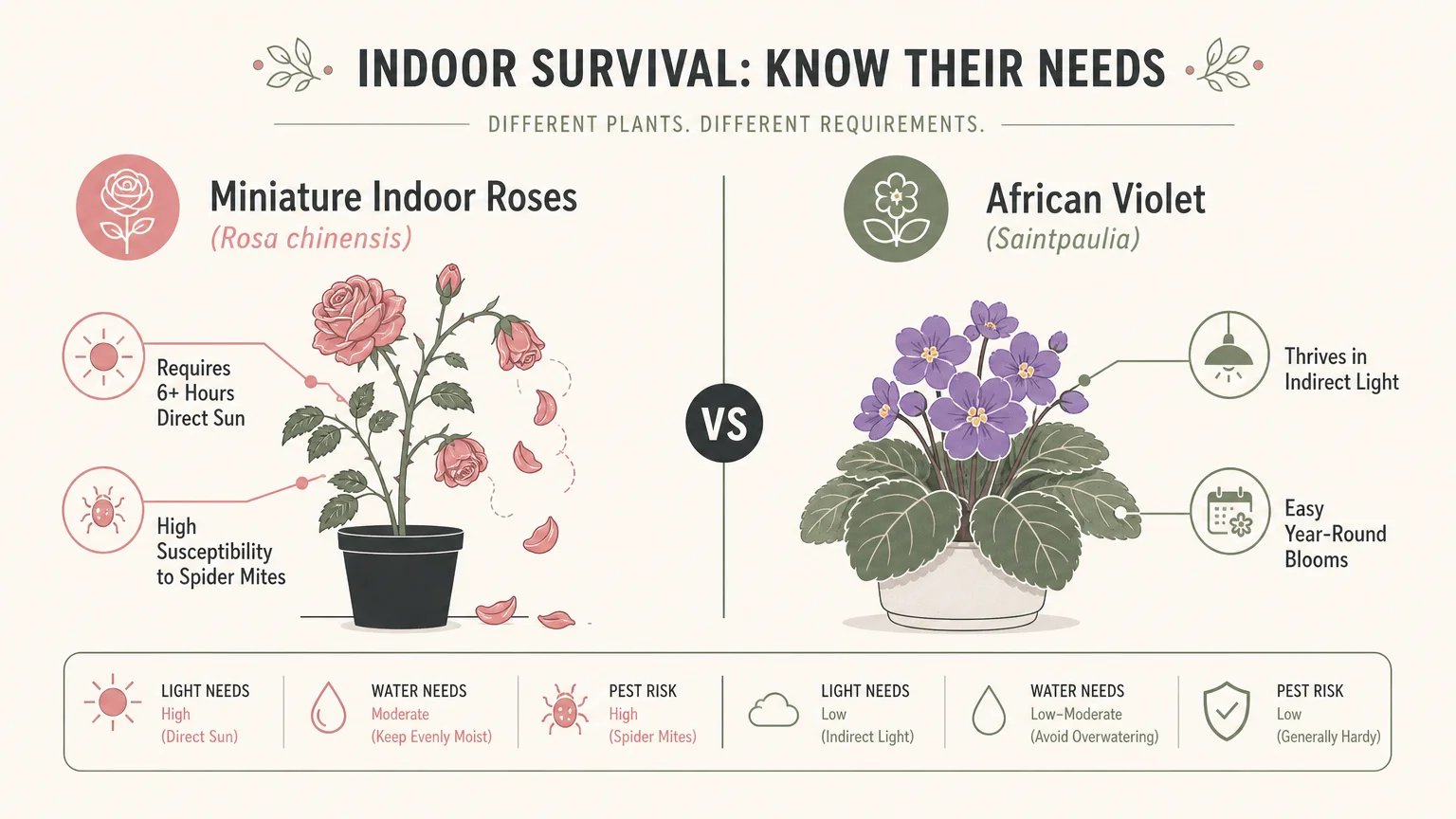
Tip #10: Miniature Indoor Roses (Rosa chinensis)
Supermarkets and florists constantly sell tiny, perfect pots of miniature roses, especially around spring holidays. They look like charming, permanent fixtures for a sunny windowsill. In truth, roses evolved to live outdoors, and forcing them to survive inside your home almost always ends in heartbreak and a messy disposal. They simply belong outside in the garden.
Miniature roses require at least six hours of blazing, direct sunlight every single day just to maintain their current foliage, let alone produce new blooms. Even placing them in a south-facing window rarely provides enough intense energy. Without adequate light, the plants grow weak, spindly, and pale. More importantly, indoor environments lack the necessary air circulation to keep roses healthy. Within weeks, the stagnant indoor air invites severe fungal infections like powdery mildew, which coats the leaves in a white, dusty film. A weakened indoor rose also serves as a beacon for aphids and spider mites, turning your beautiful gift into a highly contagious pest incubator that threatens your other healthy plants.
The Easier Alternative: Embrace the cheerful, continuous blooms of African Violets (Saintpaulia). These compact beauties evolved to grow perfectly under standard indoor lighting and bloom reliably throughout the year with very basic care.
Putting It All Together: Enjoy Your Beautiful Garden
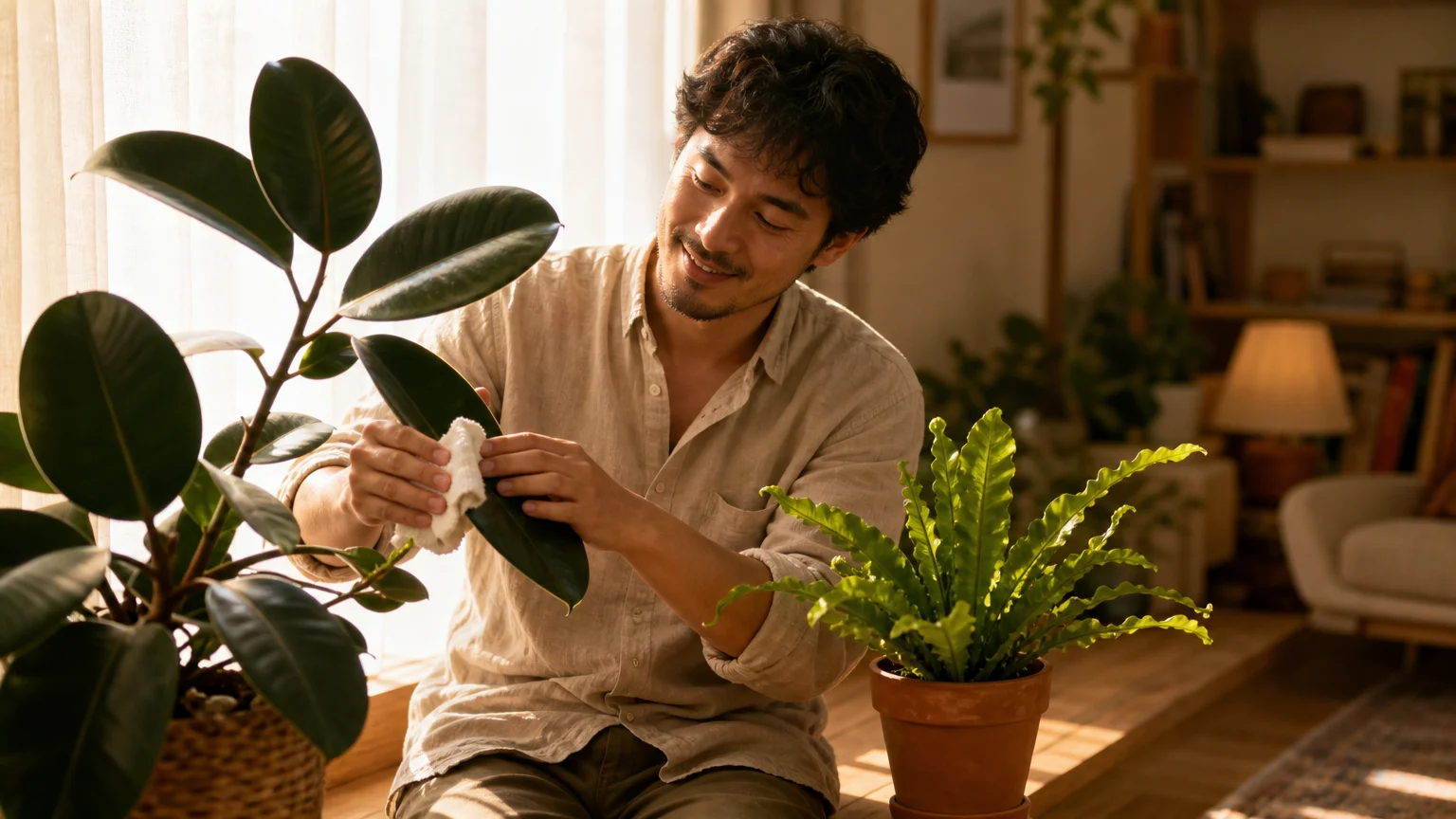
Curating an indoor garden should lower your stress levels, not raise them. When you eliminate high-maintenance houseplants from your collection, you instantly free up valuable time and energy to focus on the plants that genuinely want to grow in your living space. You do not need to feel guilty about passing on the Fiddle Leaf Fig or saying goodbye to a struggling Calathea. True gardening success comes from matching the right plant to the right environment, rather than fighting an endless, uphill battle against nature.
Embrace resilient, forgiving species that fit seamlessly into your busy lifestyle. Whether you swap a demanding fern for a sturdy Spider Plant or trade a finicky Alocasia for a vibrant Monstera, you take a massive step toward building a sustainable, lush home. Focus your efforts on the beautiful varieties that reward your basic care with steady growth. By avoiding these notorious houseplant mistakes, you guarantee yourself a thriving, green oasis that brings lasting joy and vibrant life to your home.
Frequently Asked Questions
Why do my houseplants keep getting brown, crispy tips?
Crispy brown tips usually point to two main culprits: low ambient humidity or poor water quality. Tropical plants, particularly high-maintenance houseplants like Calatheas and Peace Lilies, struggle with the dry air generated by indoor heating systems. Additionally, municipal tap water contains fluoride and chlorine, which accumulate in the soil and burn the delicate leaf edges. Switching to filtered or distilled water and grouping plants together to raise local humidity provides a highly effective solution.
Can I ever keep a difficult houseplant alive indoors?
You certainly can, provided you commit to replicating their natural environment. Keeping difficult houseplants alive often requires investing in specialized equipment like glass terrariums, digital hygrometers, dedicated humidifiers, and full-spectrum LED grow lights. If you enjoy the daily routine of checking soil moisture and tweaking environmental conditions, you can find success. However, for most casual home gardeners, the required daily effort heavily outweighs the visual reward.
What makes a plant easy to care for versus high maintenance?
Easy houseplants possess strong, adaptable root systems and thick, waxy foliage that retains moisture efficiently. They naturally tolerate a wide spectrum of light conditions and forgive occasional neglect. In contrast, high-maintenance houseplants evolved in highly specific, stable climates—like dense, humid rainforests—and lack the biological tools to cope with sudden temperature shifts, dry indoor air, or missed watering days.
How often should I fertilize indoor plants?
During the active growing seasons of spring and summer, feed most indoor plants every four to six weeks using a balanced, water-soluble liquid fertilizer diluted to half strength. Never fertilize an actively struggling or dormant plant, as the excess nutrients will burn the root system. Always observe the specific growth patterns of your easy houseplants and adjust your feeding schedule accordingly to support steady, healthy foliage.
For region-specific advice, consult your local University Extension program (find yours via the USDA directory). For plant databases and inspiration, visit the Missouri Botanical Garden or the Royal Horticultural Society.
Disclaimer: This article provides general gardening advice. Always consider your specific climate, soil conditions, and local pests. Follow safety guidelines when using gardening tools and products.