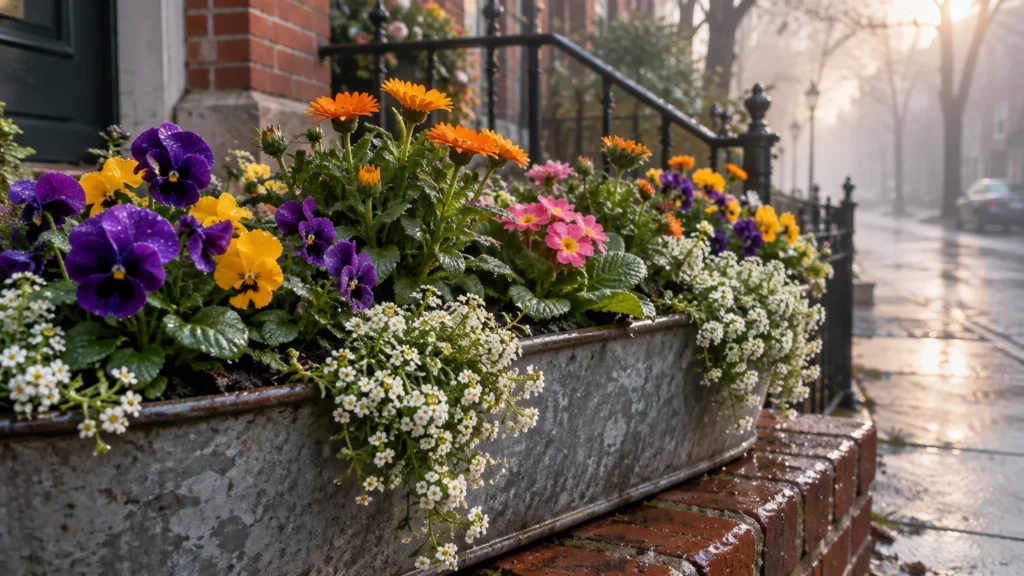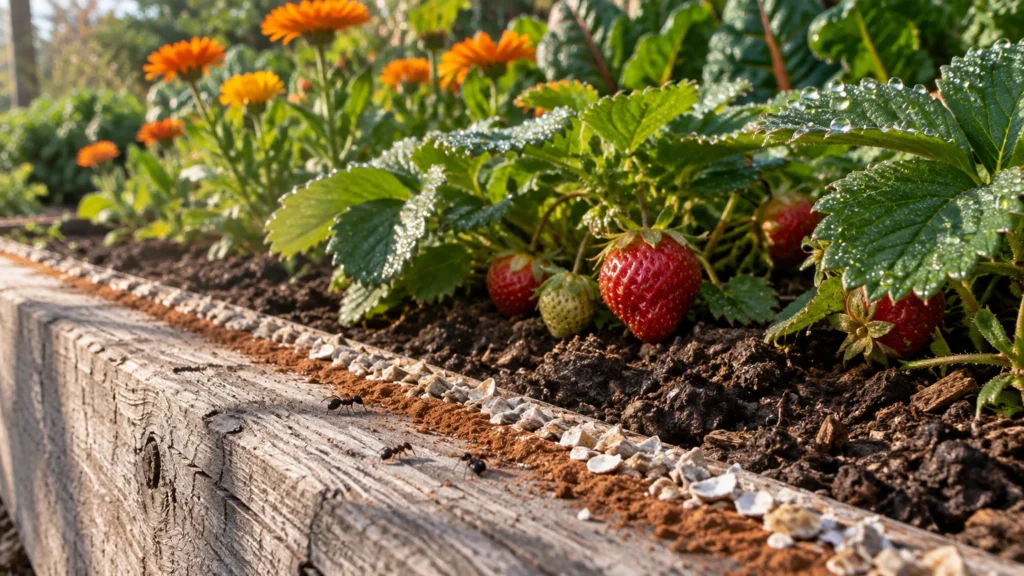
Transform your living space instantly by introducing vibrant red leaf houseplants that command attention in any room. These fiery foliage specimens provide a dramatic contrast against traditional green greenery and revitalize your home aesthetic.
You do not need expert skills to cultivate colorful houseplants with radiant crimson, burgundy, or ruby tones. With the right moisture balance and exposure to bright indirect sunlight, your indoor display will flourish year-round.
Explore seven remarkable indoor plants red foliage enthusiasts adore, complete with professional care advice and creative houseplant ideas to elevate your personal plant decor.
Houseplant Secret #1: Aglaonema ‘Siam Aurora’
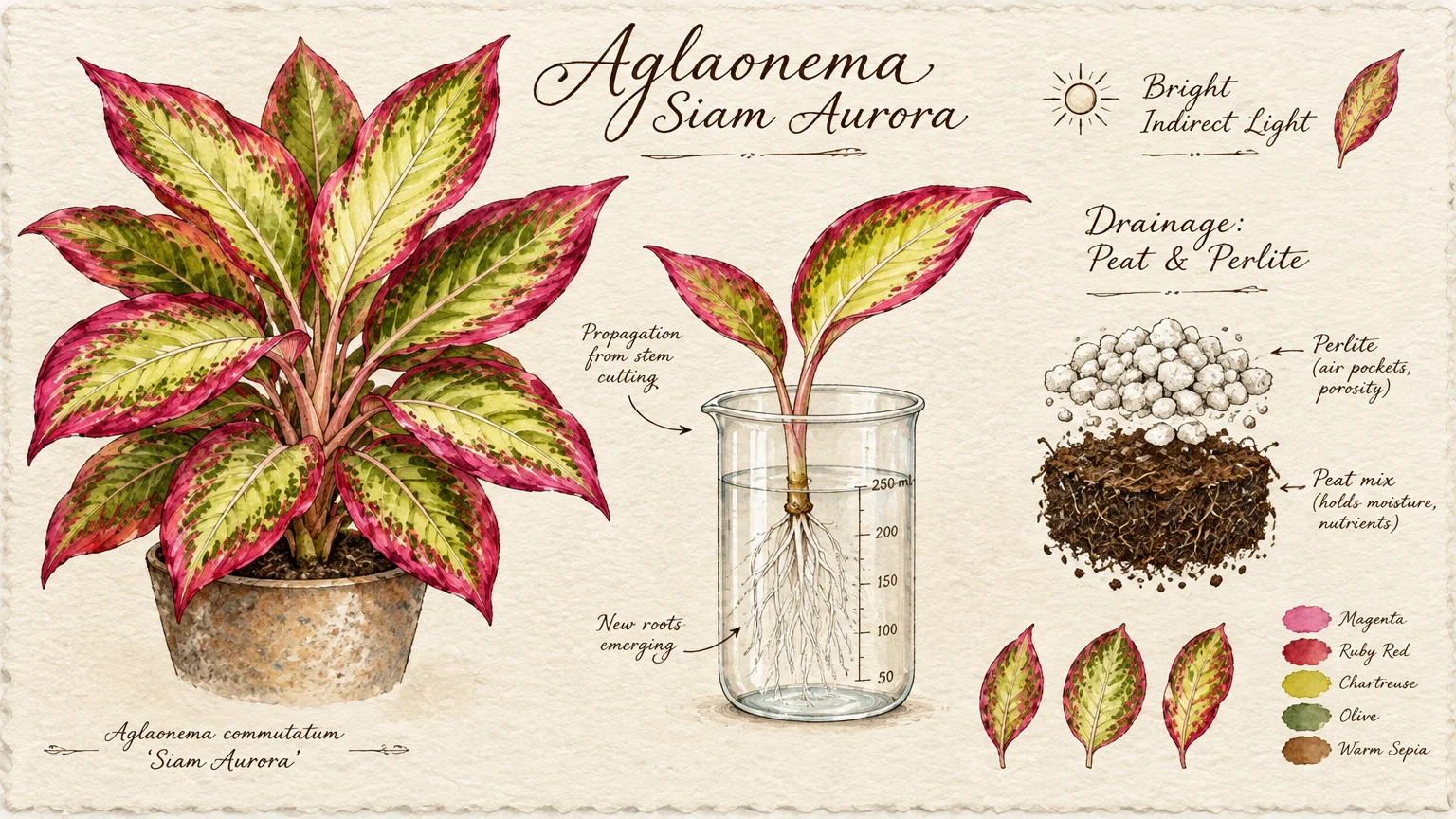
Aglaonema ‘Siam Aurora’ captivates plant lovers with glowing magenta-pink margins and bright chartreuse leaf centers. This striking showstopper brings an artistic flair to coffee tables and sunny credenzas.
Provide your Chinese evergreen with moderate to bright, indirect light to preserve its vivid red margins. While green varieties tolerate deep shade, red cultivars lose their brilliance in dim rooms.
Allow the top two inches of potting mix to dry out before watering thoroughly. Overwatering leads to root rot; err on the side of underwatering if you feel uncertain.
Plant your Aglaonema in a loose, peat-based potting soil mixed with perlite. This blend guarantees free drainage while retaining essential moisture around delicate roots.
Average room humidity suits this forgiving perennial, though it appreciates levels above fifty percent. Keep it away from chilly drafty windows and heating vents.
Pair this gem with a minimalist matte white or soft gray ceramic container. Neutral planters let the fiery scarlet edges command center stage.
Wipe the broad foliage gently with a damp microfiber cloth every month. Clean surfaces absorb ambient light much more effectively.
Propagate mature stems easily during spring by taking stem cuttings and rooting them in clean water. You will expand your colorful collection effortlessly while encouraging bushier parent growth.
Inspect the undersides of the leaves periodically for common indoor pests like mealybugs. Promptly wiping leaves with diluted neem oil prevents minor infestations from spreading.
Houseplant Secret #2: Cordyline Fruticosa (Red Sister Ti Plant)
Cordyline fruticosa, commonly called the Red Sister Ti plant, showcases dramatic lance-shaped leaves flushed in neon cranberry and deep plum. It acts as an architectural focal point in brightly lit living spaces.
Position your Ti plant in a spot that receives several hours of bright, filtered sunlight daily. Intense morning sun enhances leaf coloration without scorching the foliage.
Keep the soil consistently moist during the active growing season of spring and summer. Never allow the root ball to become waterlogged or sit in standing drainage water.
Use filtered water or collected rainwater whenever possible. Cordylines are sensitive to fluoride in municipal tap water, which causes unsightly brown leaf tips.
Maintain elevated humidity around your plant using a dedicated room humidifier or pebble tray. Dry indoor air frequently invites spider mites onto the broad leaves.
Repot your specimen into a heavy ceramic vessel filled with rich, well-draining potting soil. The upright growth habit requires a stable base to prevent tipping.
Prune off lower leaves as they age to expose the woody cane underneath. This natural maturation creates a miniature palm-tree silhouette that adds tropical structure to your home.
Fertilize every two weeks with a balanced liquid plant food throughout the warm months. Pause all feeding when growth naturally slows during winter.
Houseplant Secret #3: Caladium Bicolor (Heart of Jesus)
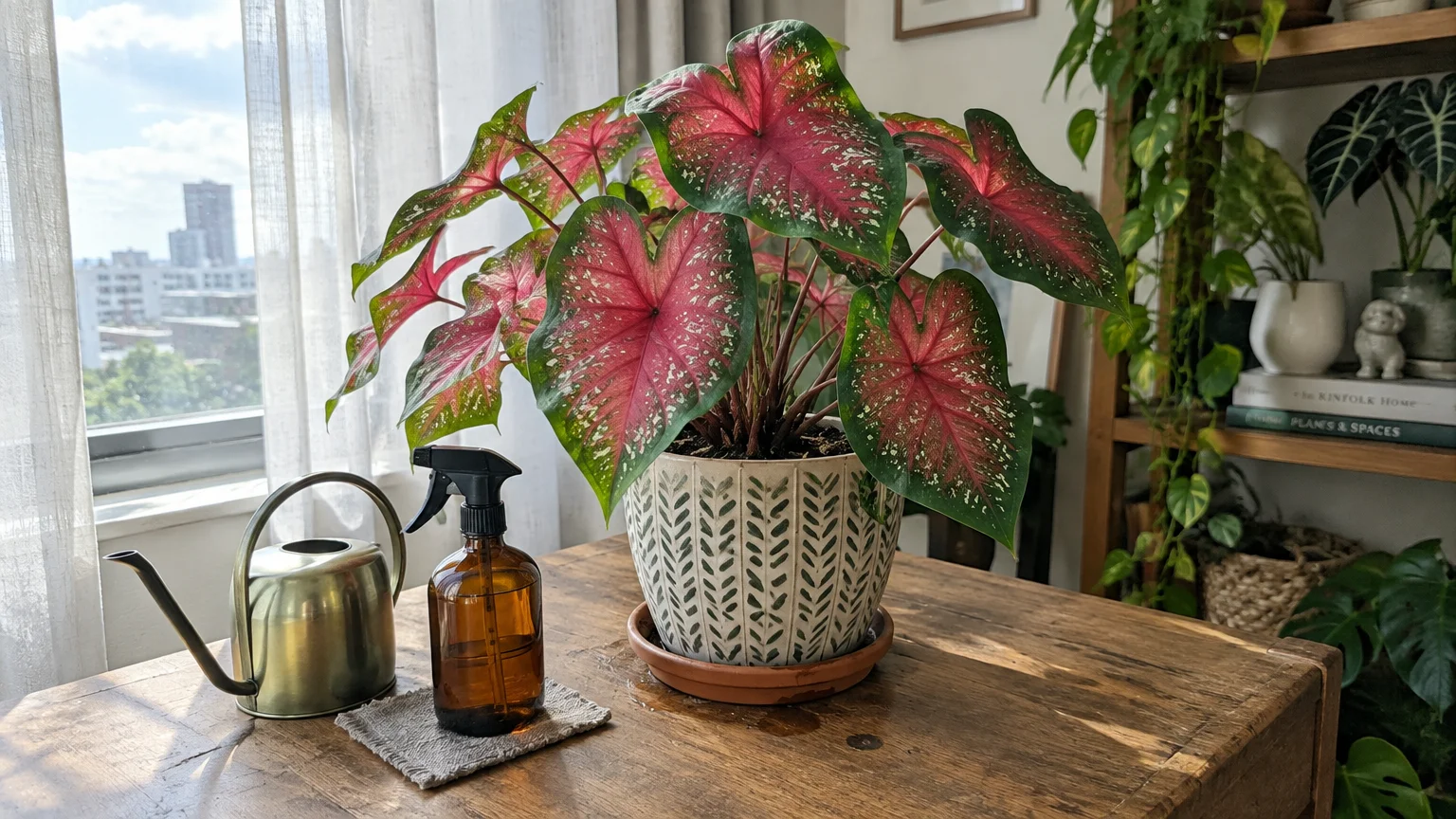
Caladium bicolor features delicate, paper-thin leaves shaped like broad hearts, splashed with brilliant scarlet and emerald borders. Cultivars like ‘Red Flash’ deliver breathtaking, high-impact vibrancy to your indoor plant collection.
Caladiums thrive in bright, indirect light where gentle illumination filters through sheer curtains. Harsh direct midday sun will scorch their tissue-thin foliage instantly.
Hydrate the potting medium as soon as the top surface feels slightly dry to the touch. These thirsty tropicals demand steady moisture throughout their active summer growth period.
Boost environmental humidity to sixty percent or higher to prevent leaf edges from curling and browning. A warm bathroom with a frosted window offers the ideal microclimate.
Remember that caladiums sprout from tubers and enter natural dormancy during late autumn and winter. The foliage will wither and die back completely as daylight hours diminish.
Store the dormant tuber in its dry pot in a dark, temperate closet until spring returns. Resume watering once new pink shoots emerge to begin the growth cycle anew.
Display your caladium in an unglazed terracotta pot to balance soil aeration and prevent tuber rot. The earthy clay color accentuates the rich crimson leaf centers.
Shield the delicate stems from drafty hallways and direct breezes from ceiling fans. Strong drafts cause the slender petioles to droop and bend under the weight of the leaves.
Houseplant Secret #4: Fittonia Albivenis (Red Nerve Plant)
Fittonia albivenis, known as the red nerve plant, displays a dense mosaic of crimson veins across dark forest-green foliage. This compact creeper packs exceptional visual intrigue into tiny footprints.
Set your Fittonia in medium to low indirect light away from blazing window sills. Direct rays bleach the fine veining and crisp the delicate foliage.
Water whenever the top inch of soil feels dry, keeping the substrate consistently damp like a wrung-out sponge. Fittonias faint dramatically when thirsty, but perk up quickly after a thorough drink.
This Peruvian native thrives in high-humidity conditions exceeding sixty percent. It makes a premier candidate for sealed glass terrariums and desktop bottle gardens.
Pinch back leggy stems regularly to promote bushy, compact foliage clusters. Frequent pinching prevents the plant from growing sparse and spindly over time.
Select a shallow decorative bowl or wide dish planter for optimal root spread. Fittonias feature shallow root systems that do not require deep containers.
Combine your red nerve plant with lime-green mosses inside a glass cloche for an enchanting living centerpiece. The trapped humidity keeps the crimson network glowing with vitality.
Repot annually into fresh, peat-rich soil to replenish soil nutrients and encourage vigorous root growth. Always handle the brittle root ball with care during the transplanting process.
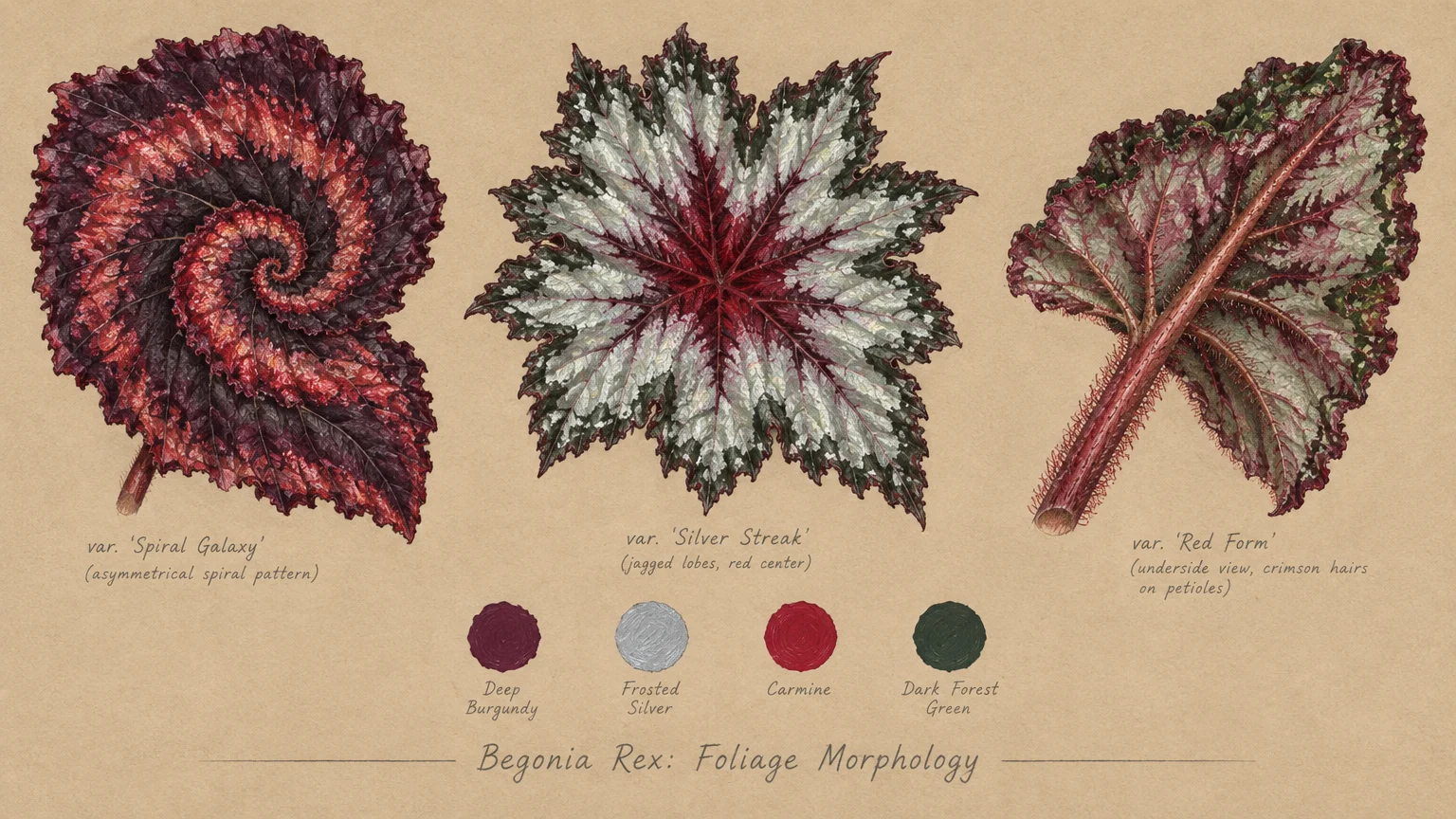
Houseplant Secret #5: Begonia Rex (Painted-Leaf Begonia)
Rex begonias are prized for their sensational swirling patterns, metallic sheens, and ruby-red leaves. Varieties such as ‘Red Kiss’ turn any plant shelf into an exhibition of living artwork.
Place your Rex begonia in bright, ambient indirect light to sustain its dazzling coloration. Avoid direct sunlight, which burns the textured leaf surfaces.
Water carefully around the base of the plant only when the top half of the potting mix feels dry. Keep water off the fuzzy leaves to prevent fungal infections and powdery mildew.
Rex begonias demand high ambient humidity paired with steady, gentle air circulation. Use a cool-mist humidifier nearby rather than misting the foliage directly.
Plant in a porous, airy substrate containing generous portions of perlite and orchid bark. Heavy garden soils suffocate their fragile rhizomes and cause sudden rot.
Turn the pot a quarter-turn each week to encourage balanced, symmetrical foliage growth. Rotating ensures every leaf receives an even distribution of ambient daylight.
Showcase this textured beauty inside a burnished brass or matte black planter to accentuate its jewel-toned luster. The contrasting metallic sheen highlights the rich burgundy hues.
Snip away faded leaves and spent blooms at the base to direct energy toward producing fresh foliage. Clean pruning keeps your display tidy and deters fungal mold.
Houseplant Secret #6: Peperomia Caperata ‘Rosso’
Peperomia caperata ‘Rosso’ mesmerizes with its deeply grooved emerald leaves backed by brilliant scarlet undersides. The striking bicolored appearance creates captivating visual contrast when viewed from any angle.
Position this compact specimen on an east-facing window sill where it receives soft morning light. The plant maintains its intense ruby pigmentation without risking sunburn.
Treat this semi-succulent with restraint at the watering can. Water only after the potting medium dries out halfway down the container.
Employ the bottom-watering technique by placing the nursery pot in a shallow bowl of room-temperature water. This method keeps the dense crown dry and prevents stem collapse.
Provide standard household humidity and warm room temperatures between sixty-five and seventy-five degrees. ‘Rosso’ adapts effortlessly to typical modern apartment environments.
Choose small, well-draining ceramic containers with adequate drainage holes. Over-potting traps excess moisture around the diminutive root system.
Feed your Peperomia monthly during spring and summer with a balanced organic houseplant fertilizer diluted to half-strength. Suspend feeding throughout the dormant winter season.
Group ‘Rosso’ alongside smooth-leaved succulents to contrast its corrugated texture and fiery underleaf tones. The structural diversity creates a captivating miniature tabletop display.
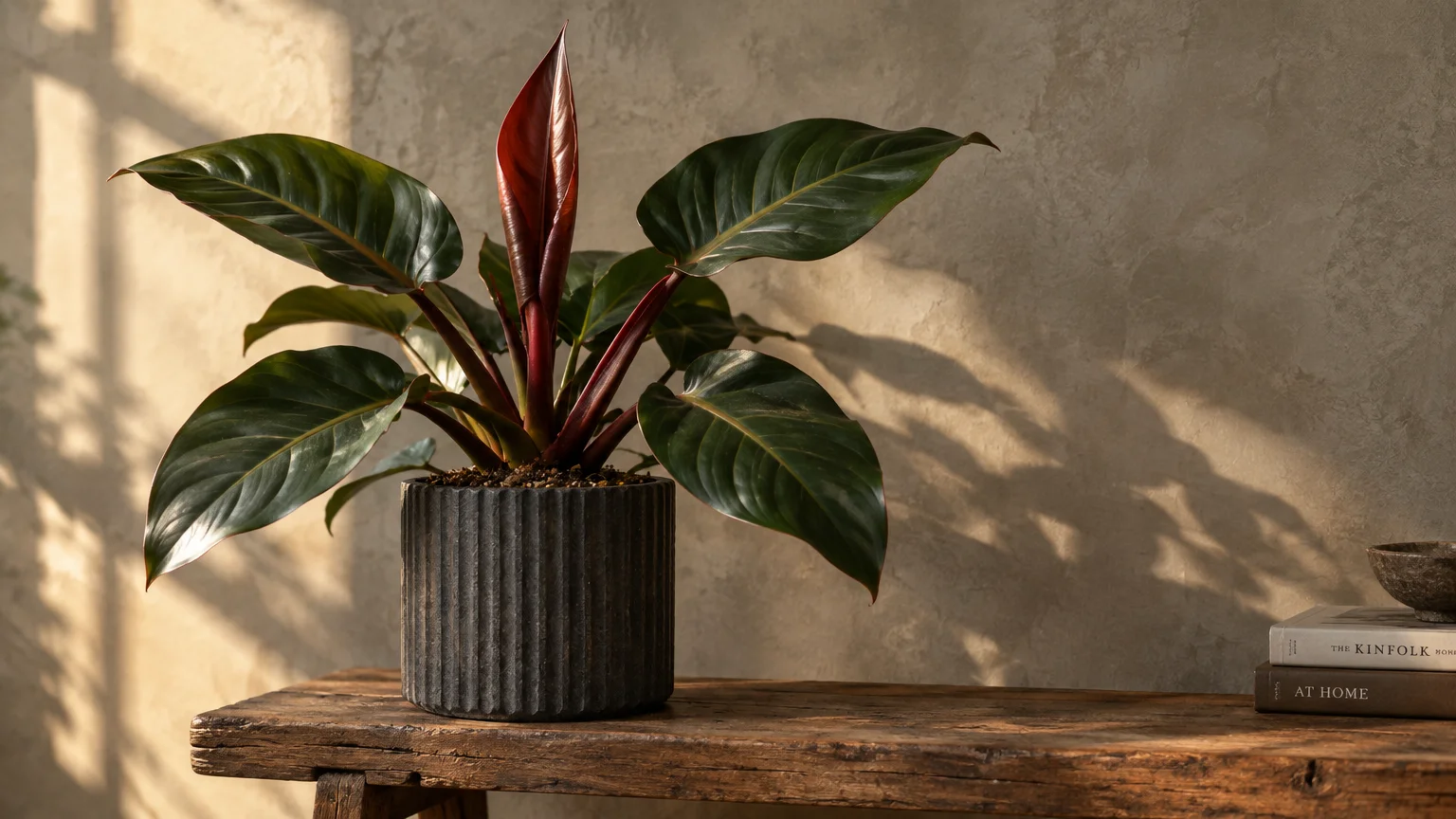
Houseplant Secret #7: Philodendron ‘Rojo Congo’
Philodendron ‘Rojo Congo’ makes a grand interior statement with thick, glossy foliage emerging in deep carmine red before maturing into rich burgundy green. Its sturdy petioles retain their vivid blood-red color indefinitely.
Provide bright, filtered sunlight to encourage vigorous growth and bold pigmentation. This robust self-heading philodendron also tolerates moderate indirect light better than many other colorful houseplants.
Drench the potting soil thoroughly once the top two to three inches feel completely dry. Always discard drainage runoff collected in the saucer beneath the container.
House your ‘Rojo Congo’ in a chunky potting mix rich in coarse perlite, coco coir, and horticultural charcoal. This aerated structure mimics the natural jungle floor environment.
Wipe down the large paddle-shaped leaves periodically with tepid water to keep them glossy and dust-free. Clean foliage maximizes photosynthesis and deters common houseplant pests.
Give this vigorous grower plenty of floor space, as its rosette can easily spread three feet across. Its substantial architecture anchors living room seating areas with tropical elegance.
House it in a sleek cylindrical planter made of natural stoneware or warm terracotta. The earthy finish balances the dramatic crimson hues of the stems.
Support its broad growth habit by top-dressing the container with fresh organic compost every spring. This seasonal boost provides sustained nutrients without shocking the established root system.
Choosing the Right Plant for Your Space
Selecting the right red leaf houseplants requires assessing your room’s environmental light levels and ambient humidity. Matching a plant’s biology to your space guarantees lasting color and steady growth.
Evaluate the light coming through your windows throughout the day. South-facing and west-facing windows offer intense brightness, while north-facing windows yield gentle, cool exposure.
Place sun-loving species like Cordyline near bright windows where indirect light pours in for hours. Keep more sensitive specimens like Caladium slightly farther away behind sheer curtains.
Consider your home’s natural humidity levels during different seasons. Winter heating systems often dry out indoor air, challenging tropical varieties that crave fifty percent humidity or higher.
Choose tough, resilient plants like Aglaonema ‘Siam Aurora’ if your room tends to have dry air and fluctuating temperatures. It withstands occasional neglect without losing its vivid pinkish-red margins.
Factor your personal gardening schedule into your final selection. Busy professionals who travel frequently benefit from drought-tolerant choices like Peperomia ‘Rosso’.
Avid hobbyists who enjoy attentive daily routines will relish the hands-on care needed for humidity-loving Fittonias and moisture-demanding Caladiums.
Inspect the physical footprint of the mature plant before purchasing. Ensure your tabletop, shelf, or floor corner provides adequate clearance for future growth.
Check temperature stability across seasons in your chosen spot. Avoid placing delicate indoor plants red foliage specimens near drafty exterior doors, air conditioners, or direct heat sources.
Assess whether your selected space is accessible to curious pets or small children. Many colorful houseplants contain defensive compounds that necessitate hanging baskets or high shelving.
Aesthetic Tips for Styling Your Indoor Plants
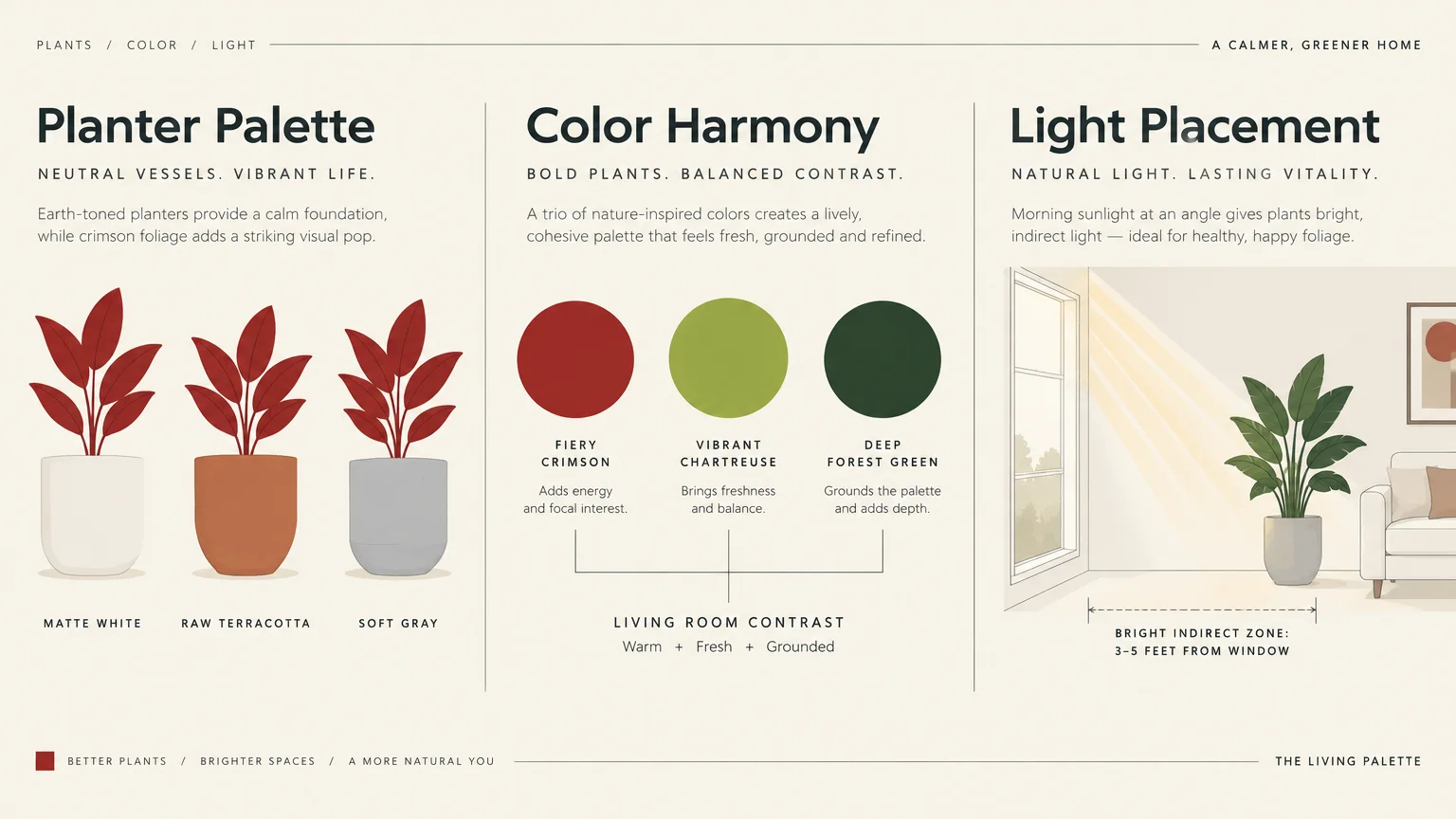
Integrating plant decor with bold red foliage creates instant drama and warms up neutral interior palettes. Use these design strategies to showcase your colorful houseplants like professional decorators.
Pair ruby foliage with neutral container materials such as matte white ceramic, dark charcoal stoneware, or weathered terracotta. Neutral pots prevent sensory overload and let leaf pigments shine.
Contrast red foliage against deep green houseplants like monsteras, pothos, and snake plants. The visual juxtaposition makes both colors appear more vivid and dynamic in your living room.
Arrange your containers in odd-numbered clusters, grouping specimens in trios of varying heights. Place a tall Cordyline in the rear, flanked by an Aglaonema and a trailing Fittonia.
Use decorative plant stands made of warm natural wood or sleek black metal. Elevating plants at varying heights creates depth and draws eyes vertically through your indoor jungle.
Position red plants against light-colored backdrops such as white, cream, or soft gray walls. Bright backgrounds reflect natural light onto the foliage and make crimson margins pop dramatically.
Integrate focused accent lighting, such as warm LED spotlights or stylish gooseneck grow lights. Dedicated illumination highlights subtle leaf veins and enhances leaf luminescence during evening hours.
Incorporate metallic accents like brushed brass or copper planters into your houseplant ideas. Warm metals harmonize beautifully with deep burgundy tones in Philodendron and Begonia leaves.
Add trailing green vines nearby to soften the architectural lines of upright red cultivars. Layered textures create the immersive feeling of a lush botanical greenhouse.
Rotate seasonal accent pillows or art prints to echo the crimson hues of your indoor plants red foliage specimens. Cohesive color echoes tie your horticultural display directly into your interior design.
Frequently Asked Questions
Why are the red leaves on my houseplant fading to green?
Red foliage fades to green when the plant receives insufficient light. Without bright, indirect sunlight, plants produce excess green chlorophyll to capture whatever scarce light is available.
Move your houseplant closer to a bright window or supplement with an LED grow light. Within a few weeks, newly emerging leaves will display their signature fiery coloration.
Are red-leafed houseplants toxic to dogs and cats?
Many popular colorful houseplants, including Philodendrons, Caladiums, and Aglaonemas, contain insoluble calcium oxalate crystals that cause oral irritation in pets.
Keep toxic varieties on tall plant stands, wall-mounted brackets, or in rooms inaccessible to curious pets. Peperomia varieties provide a safe, non-toxic alternative for pet owners.
How do I prevent crispy brown tips on red foliage?
Brown, crispy edges typically result from low indoor humidity, uneven watering, or excess mineral salts from tap water.
Run a cool-mist room humidifier to raise ambient moisture above fifty percent. Switch to distilled water or rainwater if your tap water contains high levels of chlorine or fluoride.
How often should I fertilize indoor plants with red foliage?
Feed your plants once a month during spring and summer using a balanced liquid houseplant fertilizer diluted to half strength.
Cease fertilization during late autumn and winter when plant growth naturally slows down. Over-fertilizing during dormant periods can burn root tips and damage tender foliage.
For information on plant toxicity to pets, consult the ASPCA’s plant list. Find inspiration at major conservatories like the U.S. Botanic Garden.
Disclaimer: This article provides general advice for houseplants. Every home environment is different, so observe your plants carefully and adjust care as needed.