Multiplying your indoor jungle does not require another expensive trip to the nursery. With sterilized snips and a bright windowsill, you can grow lush new plants from cuttings right in your living room.
Plant propagation transforms one thriving parent plant into trailing shelf accents, desktop companions, and thoughtful gifts. Even brand-new plant parents build confidence quickly with easy plants to propagate.
You will learn exact stem lengths, soil blends, and humidity tricks for seven resilient houseplants. Put these practical gardening tips to work and style your fresh houseplant cuttings beautifully.
Houseplant Secret #1: Pothos (Epipremnum aureum)
Golden pothos earns its reputation as the ultimate gateway into indoor gardening. Its heart-shaped leaves cascade in ribbons of emerald, chartreuse, or marbled cream that brighten dim corners and high bookshelves alike.
Light, Humidity, and Watering Needs
Your pothos thrives in bright, indirect light, though variegated varieties keep their splashy patterns best near an east-facing window. Let the top inch or two of potting mix dry out between thorough waterings.
Standard household humidity suits this forgiving vine, making it effortless in bedrooms, kitchens, and home offices. Choose a container with drainage holes so excess moisture escapes instead of sitting around delicate roots.
How to Propagate Pothos Cuttings
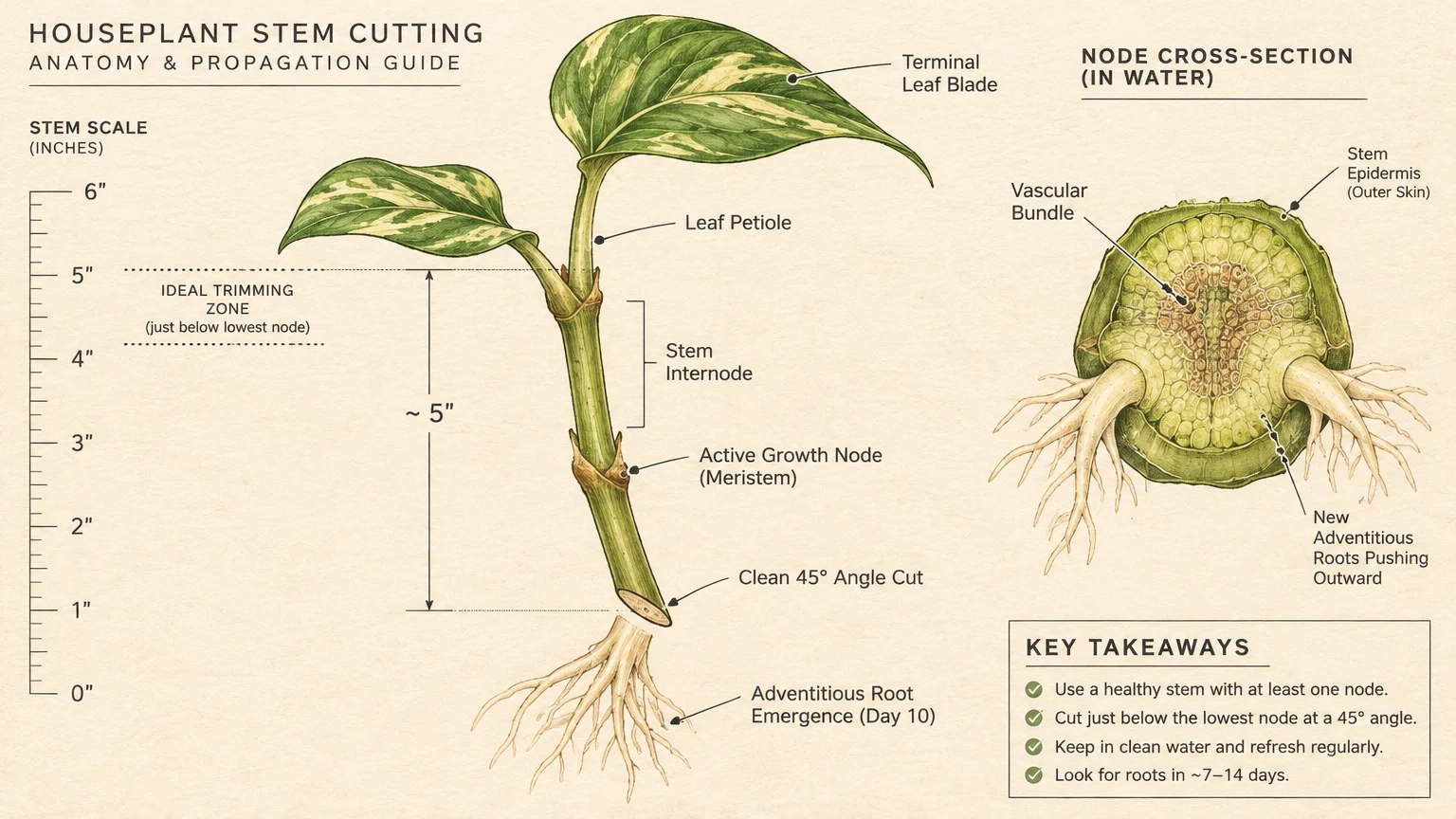
Snip a healthy vine into 4-to-6-inch houseplant cuttings when propagating in water, making your cut just below a brown root node. Strip away the lowest leaves so two or three glossy foliage blades remain above the waterline.
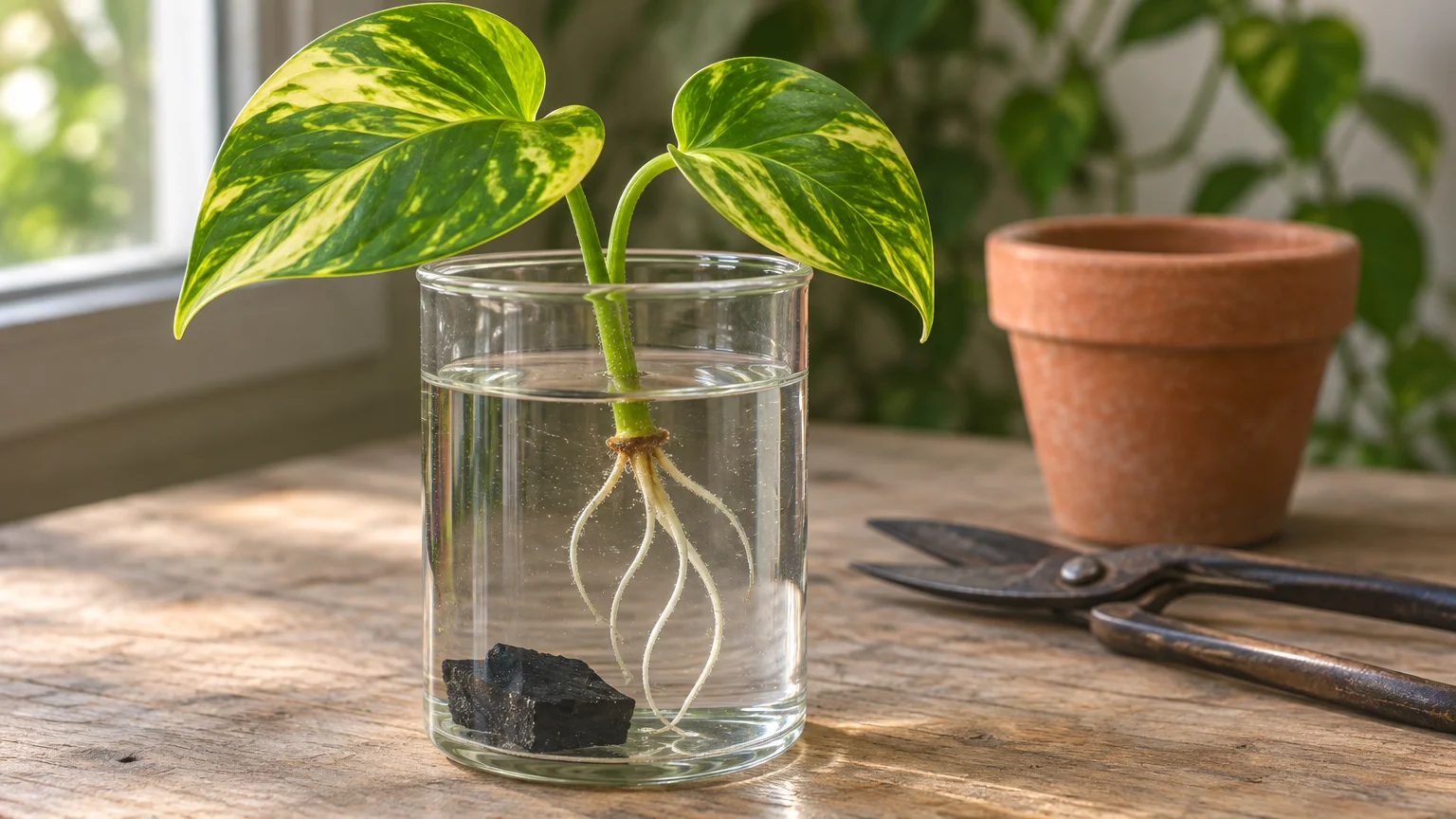
You can root tip or stem sections directly in damp potting mix or a clear glass of tap water. In water, delicate white roots typically emerge within 10 days, according to University of Nevada, Reno Extension.
Swap out the water every few days to keep oxygen flowing, or drop in a small piece of horticultural charcoal to prevent cloudiness. Once a modest root network forms, move your starter plant into a 3-inch container; overly long water roots struggle to adapt to soil.
Keep pothos vines out of reach of curious pets, because the leaves contain insoluble calcium oxalates that are toxic to dogs and cats.
Houseplant Secret #2: Heartleaf Philodendron (Philodendron hederaceum)
Velvety, bronze-tinted new growth unfurls into deep jade hearts along the graceful stems of a heartleaf philodendron. This South American native drapes effortlessly over curtain rods and frames sunny doorways with tropical elegance.
Light, Humidity, and Watering Needs
Give your philodendron medium to bright, indirect light while shielding its tender foliage from harsh afternoon sunbeams. Water whenever the upper half of the potting medium feels dry to your fingertip.
Mist-loving foliage appreciates moderate indoor humidity, so grouping it near other plants helps maintain buoyant moisture in the air. A porous terracotta or glazed ceramic pot with drainage keeps its shallow root system balanced.
Propagating Nodes With Ease
Look along the trailing stems for slight bumps where aerial roots form, then take tip or stem cuttings that include at least two bare nodes. Remove bottom leaves cleanly so bare stem tissue touches your rooting medium rather than submerged foliage.
Drop the prepared stems into clean water or tuck them into a 50:50 blend of peat-free multipurpose compost and perlite. Roots begin pushing out of water-rooted stems within 10 days, while soil-rooted cuttings anchor themselves in roughly 3 to 6 weeks.
For an extra low-risk method, pin a trailing stem onto an adjacent pot of damp mix while keeping it attached to the mother plant. Once roots anchor firmly, sever the bridge stem and enjoy two independent plants.
Note that heartleaf philodendron contains insoluble calcium oxalates, making it toxic to dogs, cats, and horses if chewed.
Houseplant Secret #3: Spider Plant (Chlorophytum comosum)
Few houseplants feel as generous or whimsical as a mature spider plant spilling arching, striped blades over a woven basket. In bright rooms, healthy plants send out slender golden stems tipped with miniature rosettes that practically beg for their own pots.
Light, Humidity, and Watering Needs
Place your spider plant in bright, filtered sunlight to maintain crisp white-and-green variegation without scorching leaf tips. Water evenly once the soil surface dries, using filtered or rainwater if tap minerals cause brown leaf ends.
Average household humidity works wonderfully, and fleshy tuberous roots store extra moisture for occasional busy weeks. Because those thick roots push soil upward over time, pick a sturdy pot with generous drainage.
Rooting Runners and Plantlets
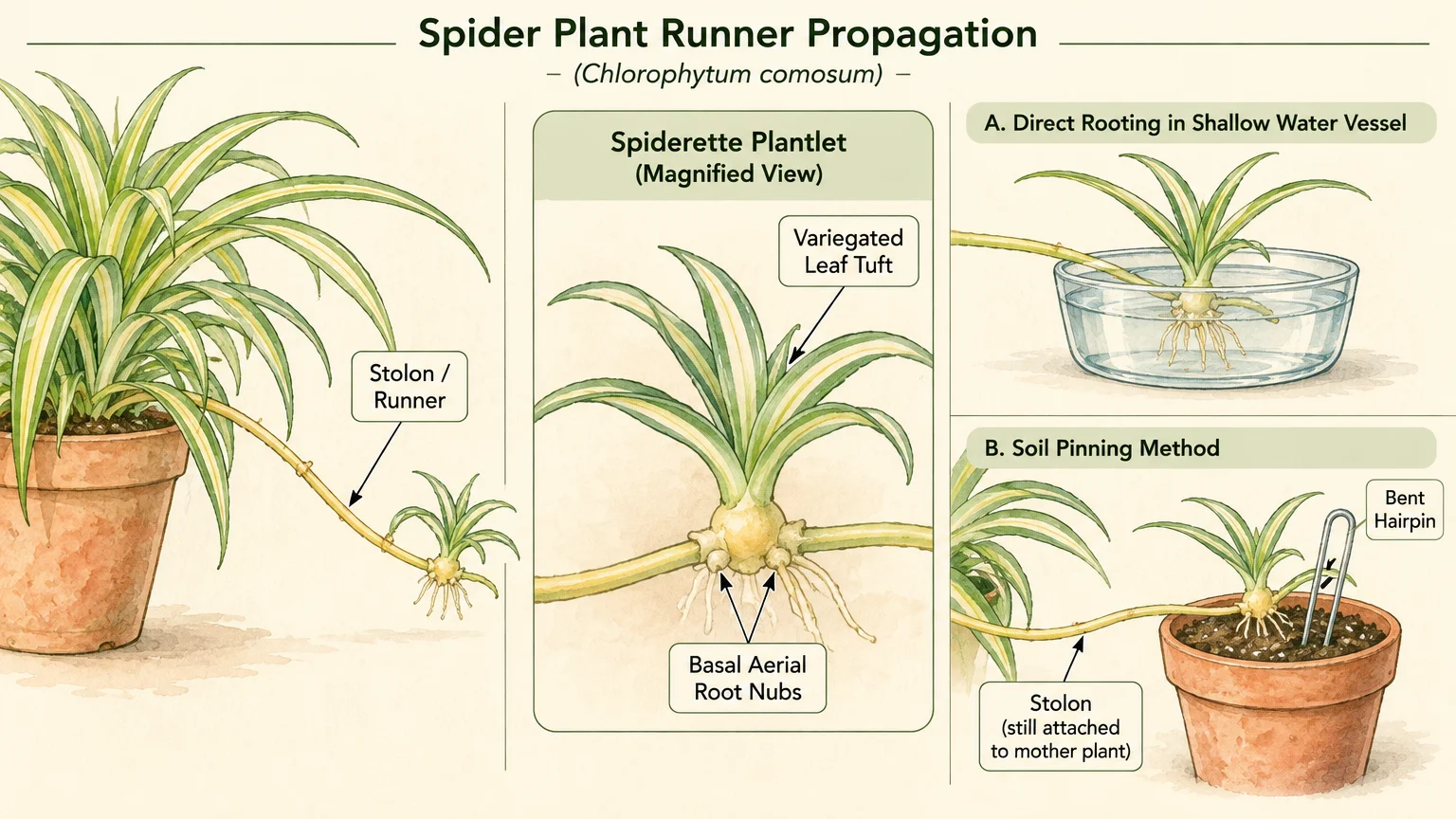
Spider plants excel at natural propagation through dangling baby plantlets, also called runners. You can pot a rosette while it still clings to its parent stem, or snap off a vigorous baby that already shows tiny root nubs.
When potting directly into moist compost, leave about 1 inch of the connecting stalk intact to steady the young crown. Gently press the base onto damp, well-aerated medium or suspend just the root crown over water.
New roots form within a few weeks, and you can snip the umbilical stalk once a gentle tug meets resistance. You can also divide overcrowded clumps in early spring by slicing the root ball cleanly with a sterilized knife.
Pet parents adore this cheerful specimen because the ASPCA lists spider plants as non-toxic to dogs, cats, and horses, though even small nibbles may still cause mild vomiting or diarrhea.
Houseplant Secret #4: Snake Plant (Dracaena trifasciata)
Architectural and sculptural, the snake plant stands tall like living modern art in minimalist bedrooms and sunlit foyers. Sword-shaped leaves patterned in silver, sage, and gold bring dramatic vertical structure to spaces where trailing vines feel too busy.
Light, Humidity, and Watering Needs
Although snake plants tolerate lower light corners, they grow fastest and display richer markings in bright, indirect sun. Allow the chunky potting mix to dry completely from top to bottom before watering again.
Dry indoor air never bothers this rugged succulent, making it ideal near heating vents where tropical ferns sulk. Heavy ceramic or concrete planters prevent tall foliage fans from tipping over as they mature.
Mastering Leaf Section Cuttings
Unlike vining plants, snake plants multiply effortlessly from sturdy 2-inch leaf section cuttings or clump division. Slice a healthy leaf horizontally into neat segments using sharp, disinfected shears.
Pay strict attention to polarity, because leaf cuttings will never root if planted upside down. Notch the bottom edge or mark the base with a tiny arrow so you always insert the basal end downward into your rooting medium.
Set your segments in damp perlite, coarse sand, or a breathable peat-free compost blend kept around 70 to 75 degrees Fahrenheit. Be patient, as snake plant cuttings root slowly and send up baby pups after several weeks.
Remember one charming quirk of variegated cultivars like Laurentii: leaf cuttings can revert to solid green foliage. Keep snake plants away from pets, since natural saponins in the leaves can cause nausea, vomiting, and diarrhea in dogs and cats.
Houseplant Secret #5: Jade Plant (Crassula ovata)
Glossy, plump leaves give the jade plant an heirloom charm that deepens as its woody stems thicken into a miniature bonsai tree. With steady light and attentive pruning, a single windowsill jade can live for decades and stock an entire neighborhood with baby plants.
Light, Humidity, and Watering Needs
Position your jade plant in a bright spot where it receives plenty of indirect light plus gentle morning rays. Soak the soil thoroughly, then wait until the mix dries completely and leaves feel slightly less firm before watering again.
Low indoor humidity suits this South African succulent far better than steamy bathrooms. Terracotta pots work magic here because porous clay wicks away excess moisture before fleshy roots can rot.
Callousing Succulent Stems and Leaves
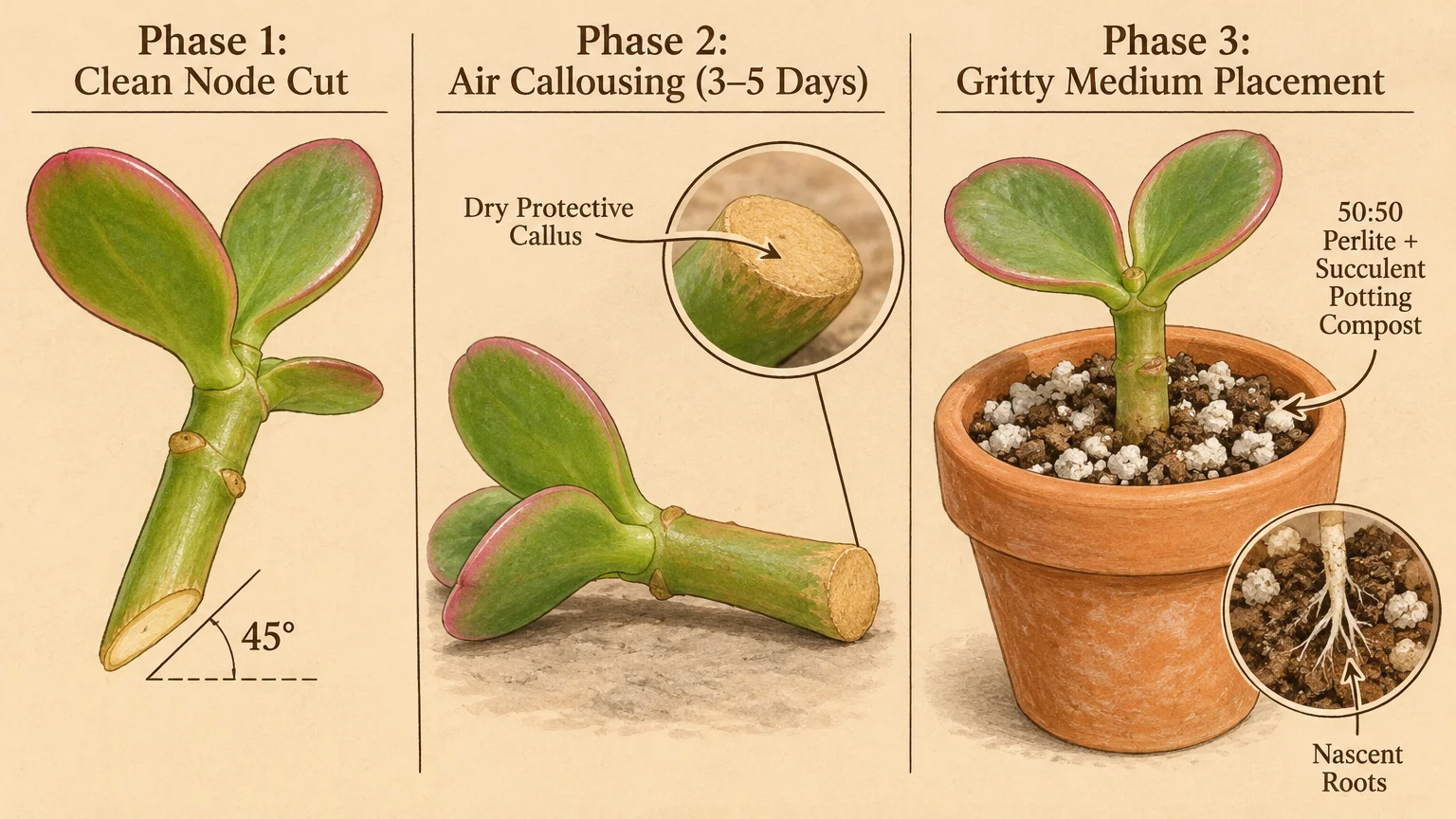
Take 3-to-5-inch tip cuttings from healthy branches, or gently twist off whole, undamaged leaves right at the stem joint. Unlike leafy tropicals, jade cuttings must never go straight into wet potting soil.
Set your freshly cut stems or leaves on a dry paper towel out of direct sun for 1 to 7 days until the wound forms a dry, protective callous. Skipping this drying period invites fungal mush before roots ever appear.
Once calloused, insert leaves about one-third of their length into coarse sand or gritty succulent mix, or lay them flat atop damp perlite. Never drape a plastic humidity bag over jade cuttings, because trapped condensation quickly causes rot.
Keep jade plants out of reach of curious animals, as ingestion can trigger digestive upset, lethargy, or tremors in cats, dogs, and horses.
Houseplant Secret #6: African Violet (Saintpaulia spp.)
Velvety foliage rosettes crowned with clusters of jewel-toned blooms make African violets irresistible focal points for coffee tables and bright kitchen sills. Despite their delicate appearance, these compact charmers are surprisingly easy plants to propagate from a single leaf.
Light, Humidity, and Watering Needs
African violets bloom faithfully in bright, indirect light—an east-facing sill delivers ideal morning warmth without scorching fuzzy leaves. Water from the bottom or slip a narrow spout beneath the canopy so cold droplets never spot the foliage.
Warm rooms between 70 and 75 degrees Fahrenheit with moderate humidity keep flower buds forming throughout the year. Shallow, wide pots suit their compact root systems far better than deep containers that stay soggy underneath.
Propagating Fuzzy Leaf Petioles
Select a firm, mature leaf from the middle ring of your rosette—not the oldest outer leaves or tiniest center shoots. Slice the leaf stalk cleanly with a razor or sterilized blade, leaving a petiole between half an inch and one and a half inches long.
Let the trimmed stalk rest for about an hour if using a longer petiole, then dip the cut tip into a gritty mix of perlite and peat-free compost. Angle the leaf slightly upward so the fuzzy blade stays dry above the damp medium.
Unlike succulents, African violet leaf cuttings welcome gentle humidity from a clear dome or vented bag propped off the foliage. Cluster-like baby plantlets emerge around the petiole base over several weeks, ready for separation once each crown sports a few leaves.
Best of all, African violets are non-toxic to dogs, cats, and horses, making them worry-free treasures for pet-friendly homes.
Houseplant Secret #7: Inch Plant (Tradescantia spp.)
Shimmering stripes of amethyst, silver, and burgundy make the inch plant an instant showstopper in hanging planters. When sunlight catches its iridescent foliage, every trailing stem looks dusted with subtle metallic glitter.
Light, Humidity, and Watering Needs
Bright, indirect light preserves tight leaf spacing and vivid purple undertones; dim corners cause long, bare stretches between nodes. Water thoroughly whenever the top inch of soil dries out, keeping the root zone lightly moist rather than waterlogged.
Pinch back leggy tips regularly to encourage bushy branching across the top of the pot. Every stem you trim for shaping becomes a ready-made cutting to thicken the mother pot or start an entirely new display.
Fast Rooting From Stem Tips
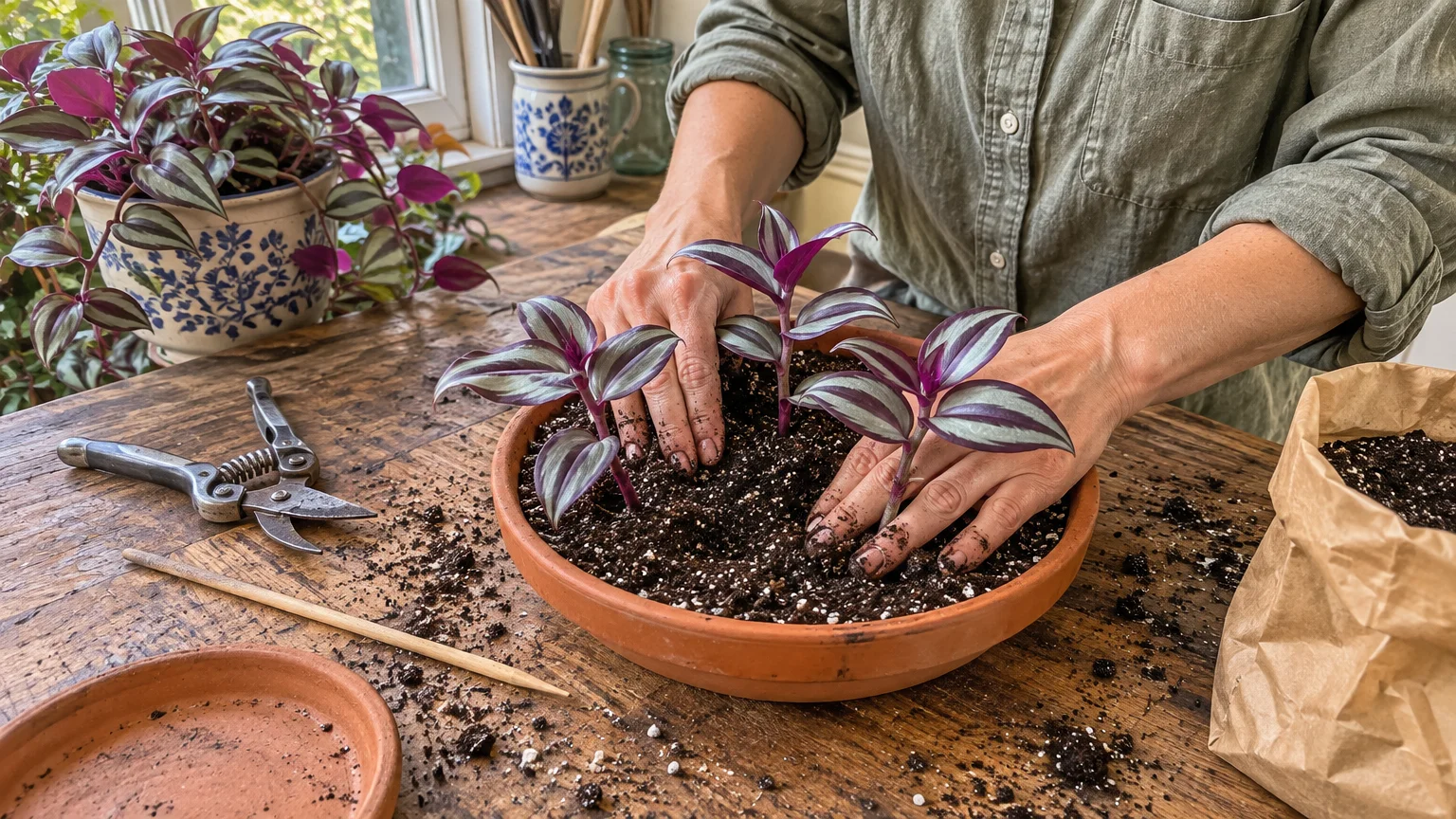
Cut 3-to-5-inch herbaceous stem tips just below a leaf node, stripping off foliage from the bottom inch or two of stem. Because Tradescantia stems are crisp and succulent-like, handle them gently so you do not crush the vascular tissue.
Pop your cuttings straight into a jar of clean tap water or poke them into a pre-moistened pot of airy potting mix. Roots sprout rapidly at room temperatures between 70 and 75 degrees Fahrenheit.
Plant five or six rooted stems together in a single hanging basket for an instant, overflowing cascade of color. Note that sap from some Tradescantia species can mildly irritate sensitive skin or pets, so wash your hands after pruning.
Choosing the Right Plant for Your Space
Indoor gardening continues booming across American homes; according to the 2026 National Gardening Survey, U.S. lawn and garden spending hit a record $79.0 billion in 2025, with households averaging $740. Meanwhile, USDA figures released in February 2026 show indoor and patio foliage plants generated $931.64 million across 2,524 operations.
Growing plants from cuttings lets you join that thriving movement without stretching your budget. Selecting the right candidate starts with honestly assessing the light, warmth, and daily care your rooms actually provide.
Matching Light and Microclimates
Walk through your rooms at midday and notice where shadows fall before choosing your next propagation project. East-facing windows offer gentle morning brightness ideal for pothos, African violets, and rooting trays.
South and west windows often run too bright and warm for tender unrooted stems unless diffused by sheer curtains. Dim north windows suit shade-tolerant heartleaf philodendrons or snake plants, though cuttings root fastest in brighter indirect spots.
Keep both room air and rooting media between 70 and 75 degrees Fahrenheit for reliable root initiation. Because winter potting soil can lag 10 to 20 degrees behind room air temperature, slipping a gentle seedling heat mat beneath trays speeds up sluggish winter cuttings.
Timing, Hygiene, and Soil Media
Early spring delivers the fastest results because mother plants surge with active growth hormones, though indoor propagation succeeds year-round under steady lighting. Before making a single cut, wash your pots and shears in a 10 percent bleach solution and dry them thoroughly.
Disinfect blades between different plants so hidden pests or viral diseases never hitch a ride across your collection. Skip backyard garden soil entirely, since outdoor dirt compacts indoors and harbors pathogens.
Instead, blend equal parts peat-free multipurpose compost and perlite, or use sterile vermiculite or clean construction-grade sand. If you ever reuse non-sterile potting media, bake it between 150 and 200 degrees Fahrenheit for 20 to 30 minutes first.
Match your plant choice to your watering habits as well. Busy travelers thrive with drought-hardy jade and snake plants, while attentive daily observers love watching African violets and inch plants surge with new growth.
Aesthetic Tips for Styling Your Indoor Plants
Healthy plants deserve containers and arrangements that elevate your entire room rather than looking like a cluttered laboratory. Thoughtful styling turns tiny houseplant cuttings into cohesive botanical vignettes.
Create Glass Propagation Stations
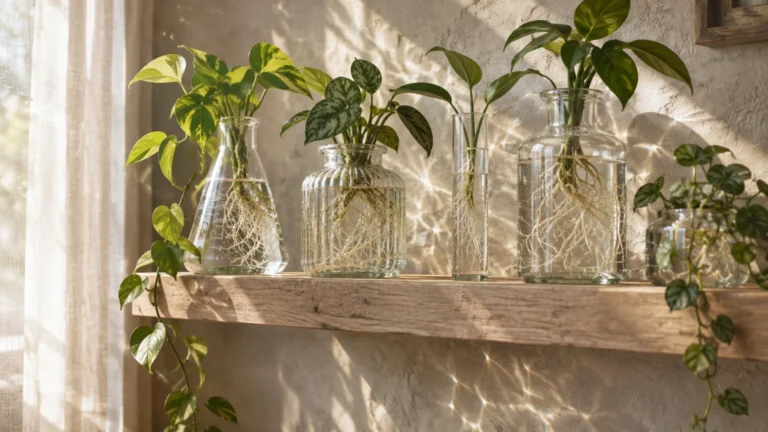
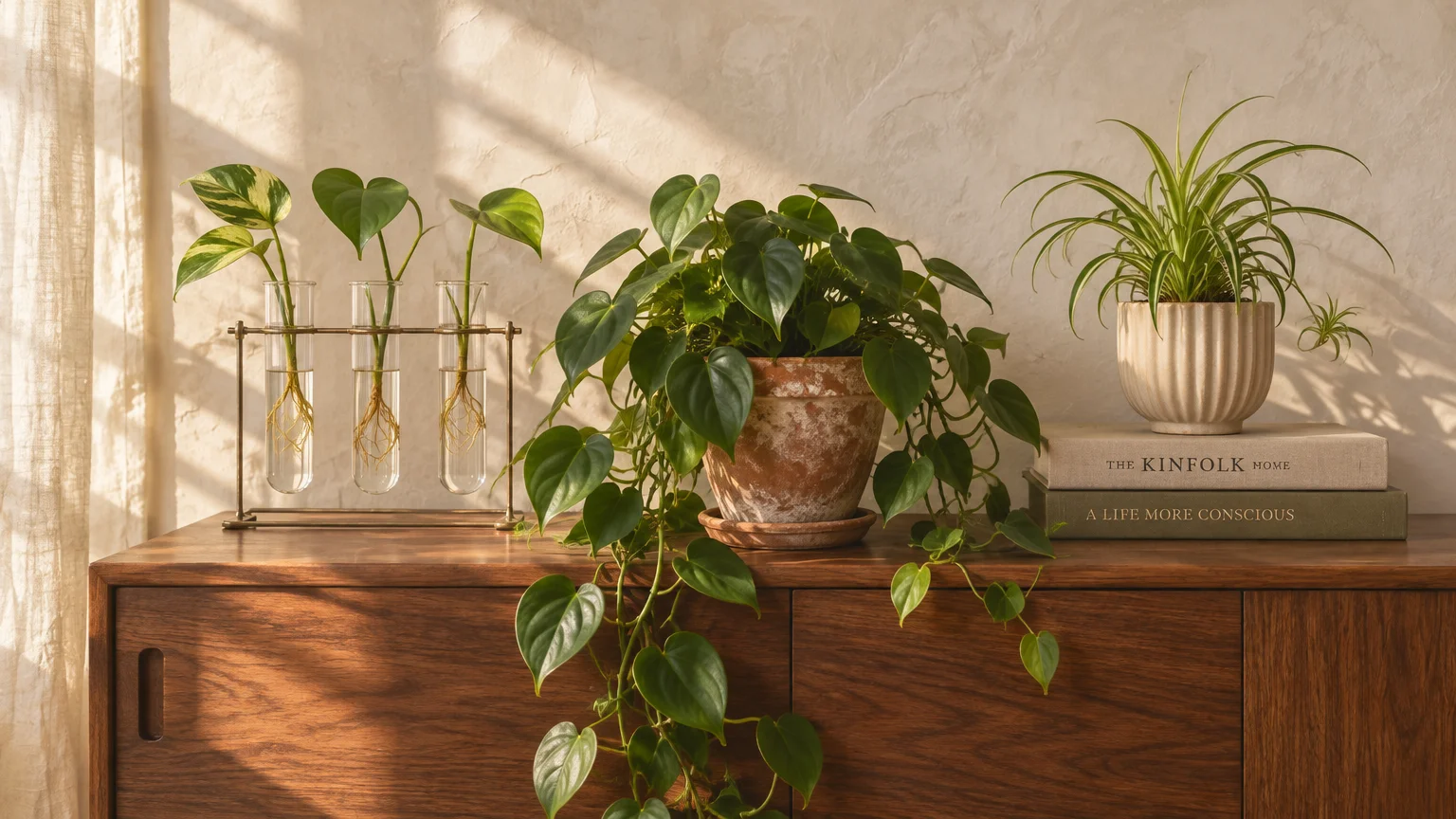
Clear bud vases, apothecary bottles, and wooden wall-mounted test-tube racks transform water rooting into kinetic sculpture. Watching snowy roots spiral inside sunlit amber or cobalt glass adds living art to kitchen backsplashes and desk corners.
Refresh the water every few days so vessels stay sparkling clear instead of growing green algae. Once roots reach roughly an inch, graduate those starters into stylish ceramic planters and replace them with fresh trims.
Group by Texture, Height, and Pot Tone
Arrange plants in odd-numbered clusters of three or five to create effortless visual rhythm on sideboards and plant stands. Pair upright sword leaves of a snake plant beside a trailing heartleaf philodendron and a compact, velvety African violet.
Stick to a unified palette of two or three pot finishes—such as warm terracotta, matte cream stoneware, and woven seagrass—so diverse foliage colors look intentional rather than chaotic. Always drop plastic nursery pots inside decorative cachepots with saucers to protect wooden furniture from moisture rings.
Find inspiration at major conservatories like the U.S. Botanic Garden.
Frequently Asked Questions
Should I use rooting hormone on easy houseplant cuttings?
Rooting hormone containing auxins like IBA or NAA can speed up root formation and boost success rates, though easy species root happily without it. If you use powder or gel, pour a small spoonful onto wax paper first instead of dipping stems directly into the main jar.
Using too much concentrated hormone actually backfires by triggering tight clusters of stunted roots. A light dusting on the bottom node of woody jade stems or sluggish winter cuttings is plenty.
How long does it take for cuttings to root in soil versus water?
Water-rooted pothos and philodendrons frequently show tiny root nubs within 10 days, while most soil-rooted tropical stem cuttings take 3 to 6 weeks. Across different plant families, full rooting timelines span anywhere from 2 to 16 weeks depending on warmth and light.
Test soil cuttings gently after 2 to 3 weeks by giving the stem a whisper-light tug. Once roots measure an inch or longer, transition your new plant into standard potting mix and gradually reduce any humidity dome cover so leaves adapt smoothly to room air.
Why do my stem cuttings rot instead of growing roots?
Soggy, airless potting mix, cold rooms, and submerged leaves are the top culprits behind rotting cuttings. Always strip lower foliage so no green leaves sit beneath the soil line or below water, where decay bacteria multiply quickly.
Sterilize tools between cuts, choose airy perlite-rich blends, and let succulent stems like jade callous for up to a week before touching damp media. Warmth around 70 to 75 degrees Fahrenheit encourages brisk root growth before fungi gain a foothold.
Which easy-to-propagate houseplants are safe for homes with pets?
Spider plants and African violets are standout pet-friendly choices listed as non-toxic to dogs, cats, and horses. By contrast, pothos, philodendrons, snake plants, and jade plants can all cause digestive upset or more serious symptoms if chewed.
Place toxic vines on high ceiling hooks or dedicated plant shelves well beyond leaping paws and curious noses. For information on plant toxicity to pets, consult the ASPCA’s plant list.
Disclaimer: This article provides general advice for houseplants. Every home environment is different, so observe your plants carefully and adjust care as needed.