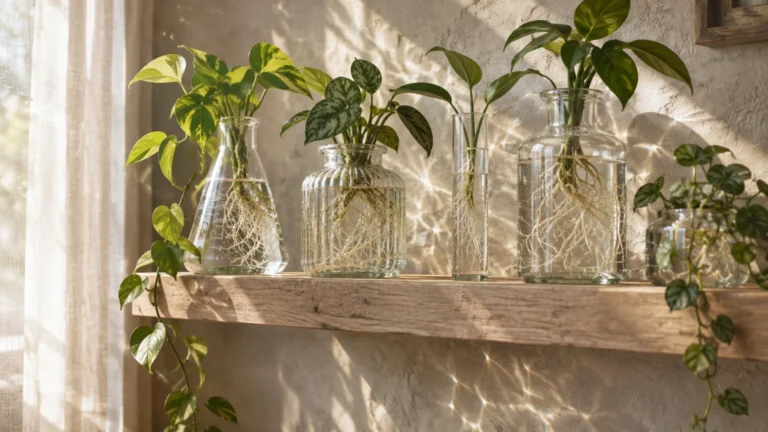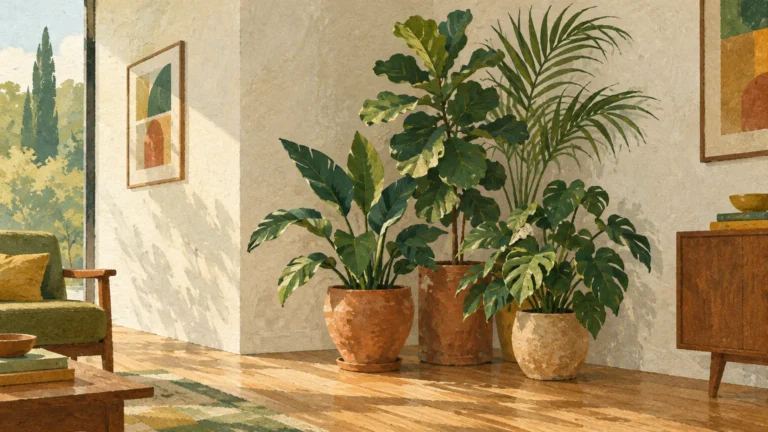
Watch your indoor jungle shift as winter arrives, and you will notice fewer hours of sun and drier indoor air. Mastering houseplant care winter routines keeps your lush leaves vibrant instead of watching houseplants dying on the windowsill.
Roughly 66 percent of U.S. households decorate with at least one houseplant, yet cold seasons catch many devoted plant lovers off guard. Most winter losses trace back to seven easily fixed habits rather than a black thumb.
Follow these practical winter plant care tips to match your watering, lighting, and humidity to the colder months. Your tropical companions will reward you with steady resilience until spring growth returns.
Houseplant Secret #1: Stopping Overwatering Before Root Rot Strikes
Overwatering houseplants ranks as the single most common cause of indoor plant death. A UK survey commissioned by Miracle-Gro found that over 50 percent of houseplant owners have accidentally killed an average of five plants, citing overwatering as the top culprit.
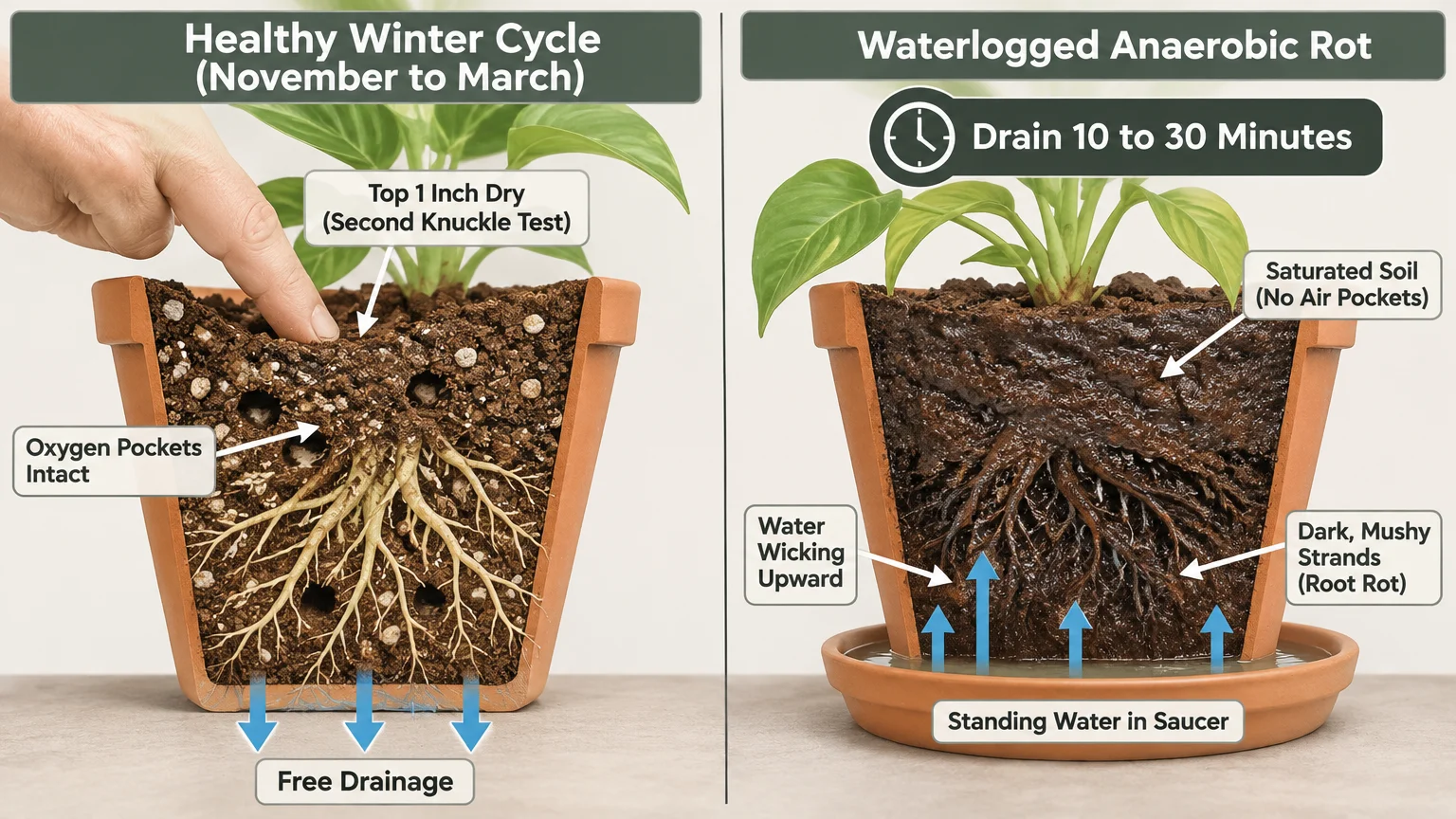
Soggy potting mix suffocates your plant by pushing vital oxygen out of the tiny air pockets around its roots. Iowa State University Extension and Purdue Extension both warn that waterlogged soil quickly invites root rot, turning firm white roots into dark, mushy strands.
Respect the Winter Resting Period
Shorter days and dimmer sun signal most indoor plants to enter quiescence, a natural resting phase lasting roughly from November to March. University of Vermont Extension notes that slower winter growth drastically reduces both water uptake and transpiration through foliage.
When you keep pouring the same generous summer doses, unused moisture pools at the bottom of the pot. Your tropical beauties simply cannot drink fast enough to keep pace with a rigid calendar schedule.
Test the Soil Instead of Watching the Clock
Ditch fixed weekly watering routines during winter and let your fingertips guide every pour. Press your index finger into the potting mix before reaching for your watering can.
For typical leafy foliage plants, Extension guidelines recommend waiting until the top half-inch to one inch of soil—roughly down to your second knuckle—feels dry. Desert cacti and succulents need even drier conditions, so wait until their mix feels completely dry or barely damp.
Empty Saucers and Check Drainage Holes
Even well-timed watering turns deadly when pots sit trapped in puddles inside decorative cachepots or saucers. Standing water wicks straight back up through drainage holes and saturates the lower root ball.
Allow excess water to drain freely for 10 to 30 minutes after each session, matching advice from the Royal Horticultural Society and Extension Chippewa County. Always pour off whatever collects in the tray so roots breathe comfortably between drinks.
Houseplant Secret #2: Adjusting for Winter Light Drops and Window Placement
Winter transforms your brightest living room into a surprisingly dim sanctuary for sun-loving tropicals. You lose 5 to 6 hours of daily sunlight, and the sun travels across a much lower, weaker angle in the sky.
In northern climates, indoor light levels can plunge 40 to 60 percent below summer intensity. Plants that thrived effortlessly several feet from a sunny glass door in July may quietly starve in January.
Understand How Fast Indoor Light Fades
Even bright rooms pale beside outdoor illumination. UF/IFAS and Illinois Extension report that full summer sun delivers 10,000 to 12,000 foot-candles and clear winter noon outdoors exceeds 4,000 foot-candles, whereas a north-facing window may never reach 400 foot-candles.
Light also obeys the inverse-square law as it travels across your room. The University of Idaho Master Gardener Handbook shows that 100 foot-candles measured one foot from glass plummets to 25 foot-candles at two feet and just 11 foot-candles at three feet.
That dramatic drop explains why a lush philodendron or fiddle-leaf fig begins shedding lower leaves mid-winter. Moving containers closer to unobstructed south- or west-facing windows helps capture every precious winter ray.
Support Struggling Foliage With Clean Leaves and Grow Lights
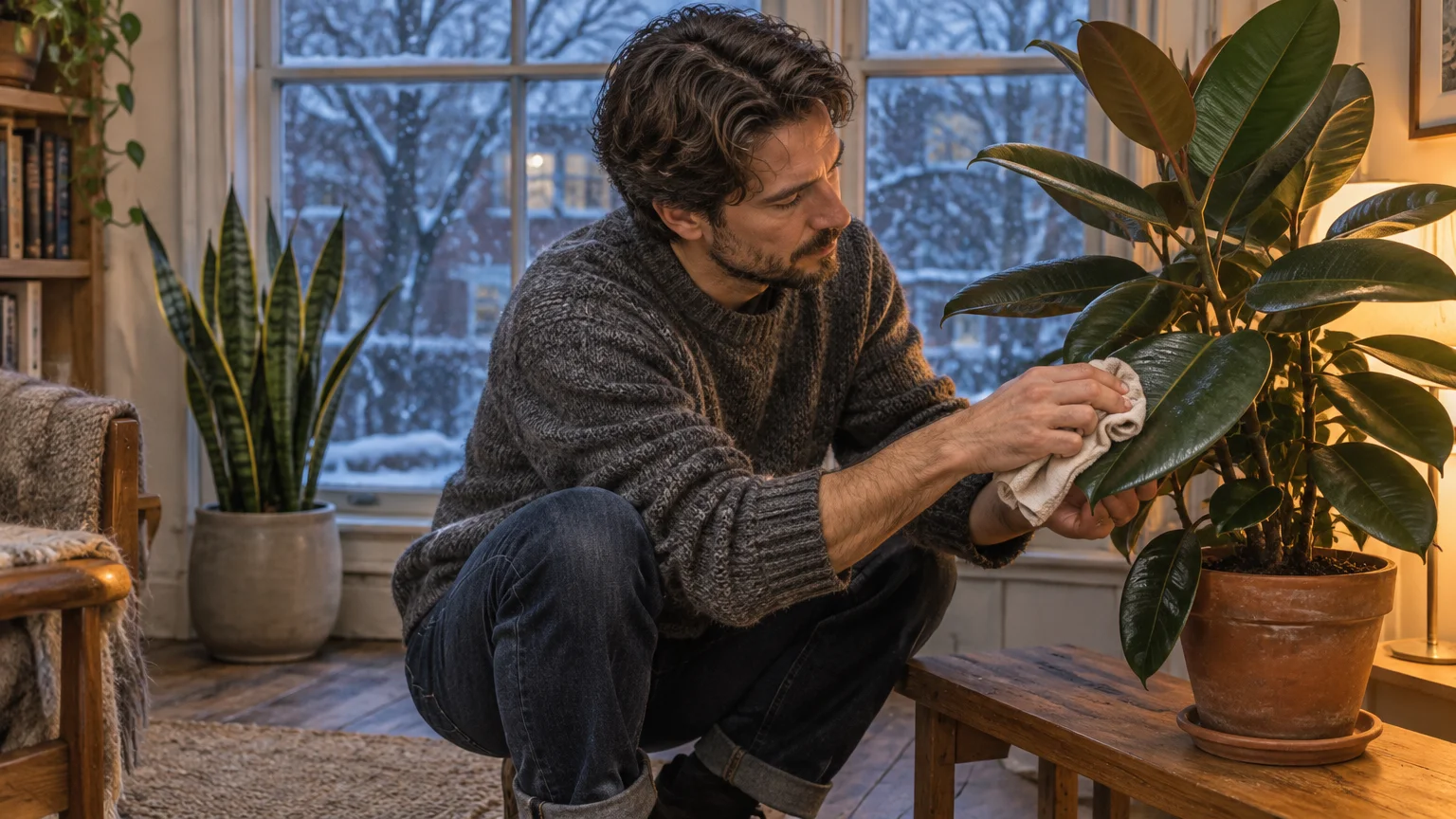
Dust quietly steals light from indoor foliage like a gray curtain drawn across solar panels. Clemson HGIC recommends wiping smooth leaves gently with plain damp water and brushing fuzzy leaves, such as African violets, with a soft brush.
Skip commercial leaf-shine sprays altogether. University of Georgia CAES advises against waxy leaf coatings because their residue interferes with natural gas exchange across leaf pores.
For darker rooms, full-spectrum LED grow lights bridge the seasonal gap without cluttering your decor. Non-flowering foliage houseplants generally perform best with 12 to 16 hours of supplemental light daily, while indoor plants low light varieties like snake plants and ZZ plants survive around 50 to 150 foot-candles.
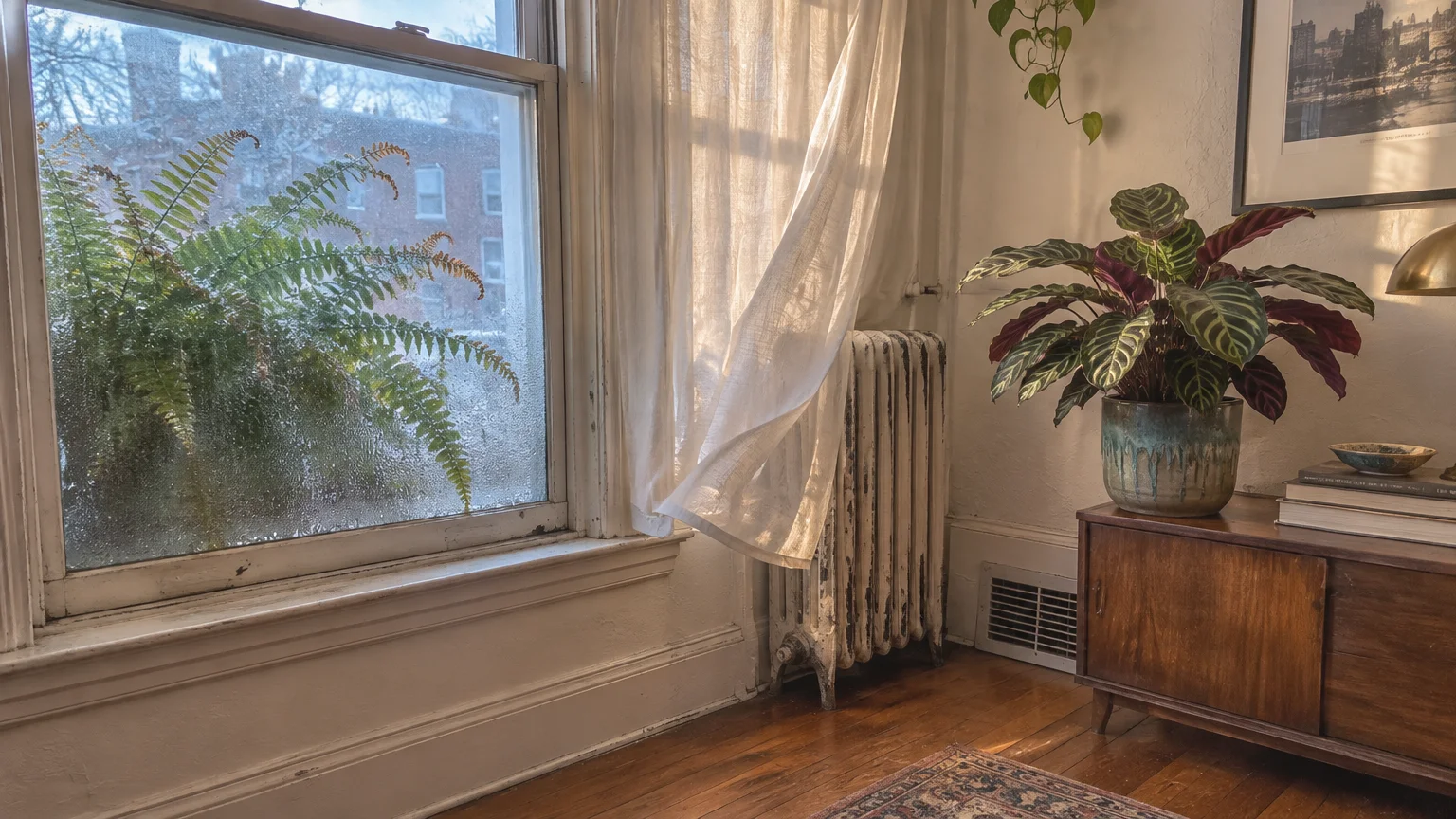
Houseplant Secret #3: Protecting Foliage From Cold Drafts and Heat Vents
Your cozy winter thermostat hides microclimates around windows and vents that shock sensitive tropical leaves. Most popular foliage houseplants prefer daytime temperatures between 65 and 75 degrees Fahrenheit, dropping gently by about 10 degrees to 55 to 65 degrees at night.
Rapid swings outside that comfort zone stress plant cells fast. Tender tropicals begin suffering chill injury below 55 to 60 degrees, and temperatures under 50 degrees Fahrenheit can cause lasting cellular collapse.
Watch Out for Frosty Glass and Hidden Curtain Traps
Leaves pressed directly against cold windowpanes can freeze overnight even in a heated house. Trapping pots between frosty single-glazed glass and heavy drawn drapes creates a miniature icebox after sunset.
Slide plants back a few inches from chilly glass at dusk or tuck a sheet of cardboard between panes and pots during hard freezes. Keeping exterior doors and drafty older sashes sealed also shields delicate stems from sudden icy blasts.
Relocate Plants Away From Radiators and Hot-Air Vents
Dry, scorching heat poses an equally harsh threat right beside cold drafts. Radiators, fireplaces, space heaters, and forced-air vents blast foliage with parched air that crisps leaf margins and triggers sudden leaf drop.
Rearranging furniture slightly gives your greenery breathing room away from heating registers. Remember too that a few cool-loving plants have special winter needs; potted rosemary prefers 45 to 55 degrees, while Christmas cactus (Schlumbergera) fails to set flower buds above 65 degrees or under evening room lights.
Warm Your Watering Can Before You Pour
Chilled tap water straight from winter pipes shocks roots just like an icy draft shocks leaves. The Royal Horticultural Society and Washington State University Extension note that cold water triggers drooping, bud drop, and pale straw-colored or white spots on sensitive African violet leaves.
Fill your watering can ahead of time and let it reach room temperature overnight. Tepid water flows smoothly through root systems without jolting delicate feeder hairs.
Houseplant Secret #4: Fixing Dry Heated Air Without Relying on Misting
Cranking up your furnace keeps your toes warm while turning indoor air as parched as a desert. Most tropical houseplants flourish at 40 to 50 percent relative humidity—sometimes up to 60 percent—yet heated winter homes routinely plummet to 10 or 20 percent.
When indoor air dries out, leaves lose moisture faster than sluggish winter roots can replace it. Crispy brown leaf tips on calatheas, ferns, and palms are often your first warning of severe winter dryness.
Why Hand Misting Falls Short
Spritzing leaves with a spray bottle feels soothing and ritualistic, yet it barely alters your room’s microclimate. University of Nebraska–Lincoln Water reports that misting boosts humidity around foliage for only 10 to 15 minutes before evaporating back into dry ambient air.
Repeatedly wetting cool winter leaves also invites fungal leaf spots when air circulation stalls. Save your spray bottle for wiping dust off sturdy foliage rather than fighting furnace dryness.
Smarter Ways to Boost Humidity Safely
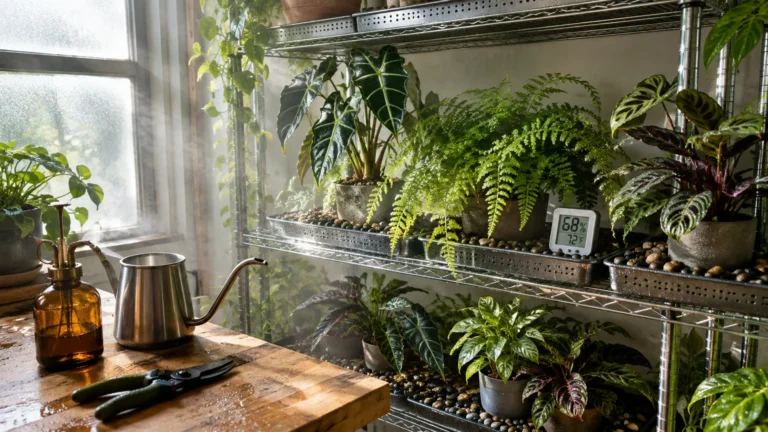
A cool-mist humidifier delivers steady, measurable moisture exactly where your tropicals cluster. Keep a small digital hygrometer nearby so you can monitor moisture levels effortlessly.
For home health and mold prevention, the U.S. Environmental Protection Agency advises keeping indoor humidity below 60 percent, ideally between 30 and 50 percent, to stop condensation on cold winter windows. Aiming right around 45 percent satisfies both your home and your foliage.
You can also cluster moisture-loving plants together so their shared transpiration creates a gentle humid pocket. Setting pots on pebble trays filled with water works well too, provided pot bottoms rest firmly on dry stones above the waterline.
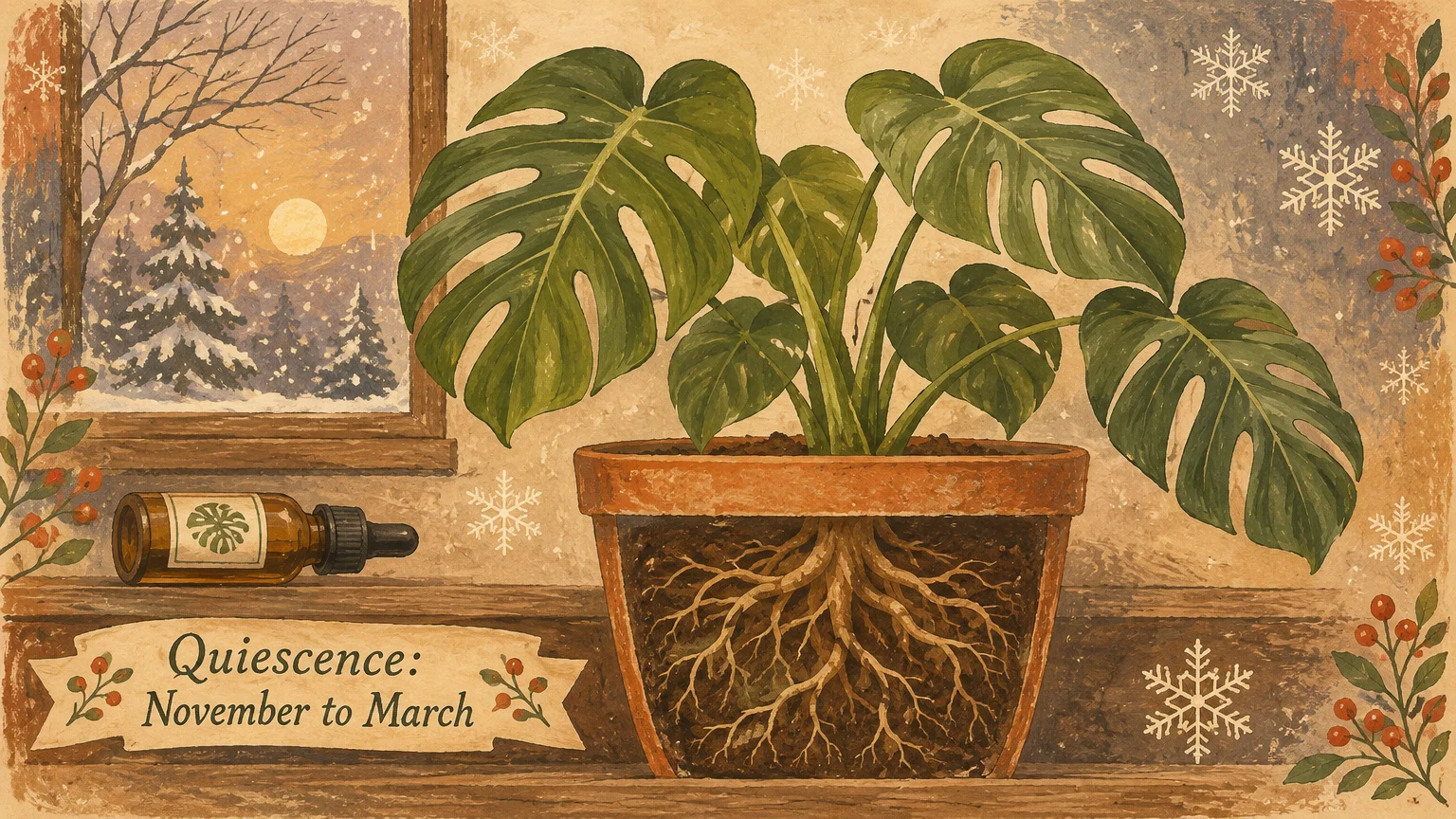
Houseplant Secret #5: Pausing Fertilizer During Winter Dormancy
Feeding a resting plant in December is a bit like serving a five-course feast to someone fast asleep. When dim winter light slows photosynthesis, houseplants simply cannot absorb heavy doses of nitrogen, phosphorus, and potassium.
Iowa State University Extension, Michigan State University, and Clemson HGIC advise pausing fertilizer through winter dormancy and resuming feeding in March or April when fresh shoots emerge. Only plants growing vigorously under bright supplemental grow lights should receive fertilizer, and even then at half the normal rate or less.
Spot the Signs of Soluble Salt Buildup
Unused fertilizer minerals linger in potting soil long after winter water evaporates. Over weeks, those concentrated salts form a chalky white or yellow crust along the soil surface and around terracotta rims.
Nebraska Extension and Washington State University Extension explain that excess soluble salts actually pull moisture backward out of tender root tips. You will notice scorched brown leaf edges, stunted growth, and higher vulnerability to root rot.
Flush Away Old Salts Every Few Months
Refresh your containers before spring growth wakes up by leaching stale minerals from the potting mix. Every four to six months, carry pots to a sink or bathtub and slowly pour tepid water equal to twice the pot’s volume.
Let all that flush water stream freely out the bottom drainage holes until clean water runs clear. During routine winter waterings, allowing roughly one-tenth of the pot’s volume to drain out helps keep mineral salts from creeping back up.
Houseplant Secret #6: Resisting the Urge to Repot in Mid-Winter
Seeing a few yellowing leaves in January often tempts devoted plant parents to upgrade containers right away. Resist that impulse unless a plant sits in waterlogged, rotting mix or a shattered pot.
Repotting disturbs fine root hairs and signals a plant to push fresh root and stem growth. During dark winter weeks, your houseplant lacks the solar energy needed to heal broken roots and colonize damp new potting soil.
Wait for Longer Days and Active Growth
Most houseplants actually prefer slightly snug quarters and only require repotting every three to five years. Rarely does any established indoor specimen need fresh soil more than once a year.
The University of Arkansas Cooperative Extension Service emphasizes waiting until late winter or early spring when lengthening daylight powers rapid root recovery. Surrounded by oversized damp soil in mid-winter, slow-growing roots easily drown before they ever expand.
Simple Winter Refresh Tricks That Do No Harm
If crusty mineral buildup mars your soil surface, gently scrape off the top half-inch with a spoon and top-dress with fresh potting mix. You tidy the pot instantly without bruising a single deep root.
Use chilly evenings instead to shop for breathable terracotta or ceramic planters with generous drainage holes for spring. Having fresh orchid bark, perlite, and indoor potting mix ready lets you repot smoothly the moment March sunshine arrives.
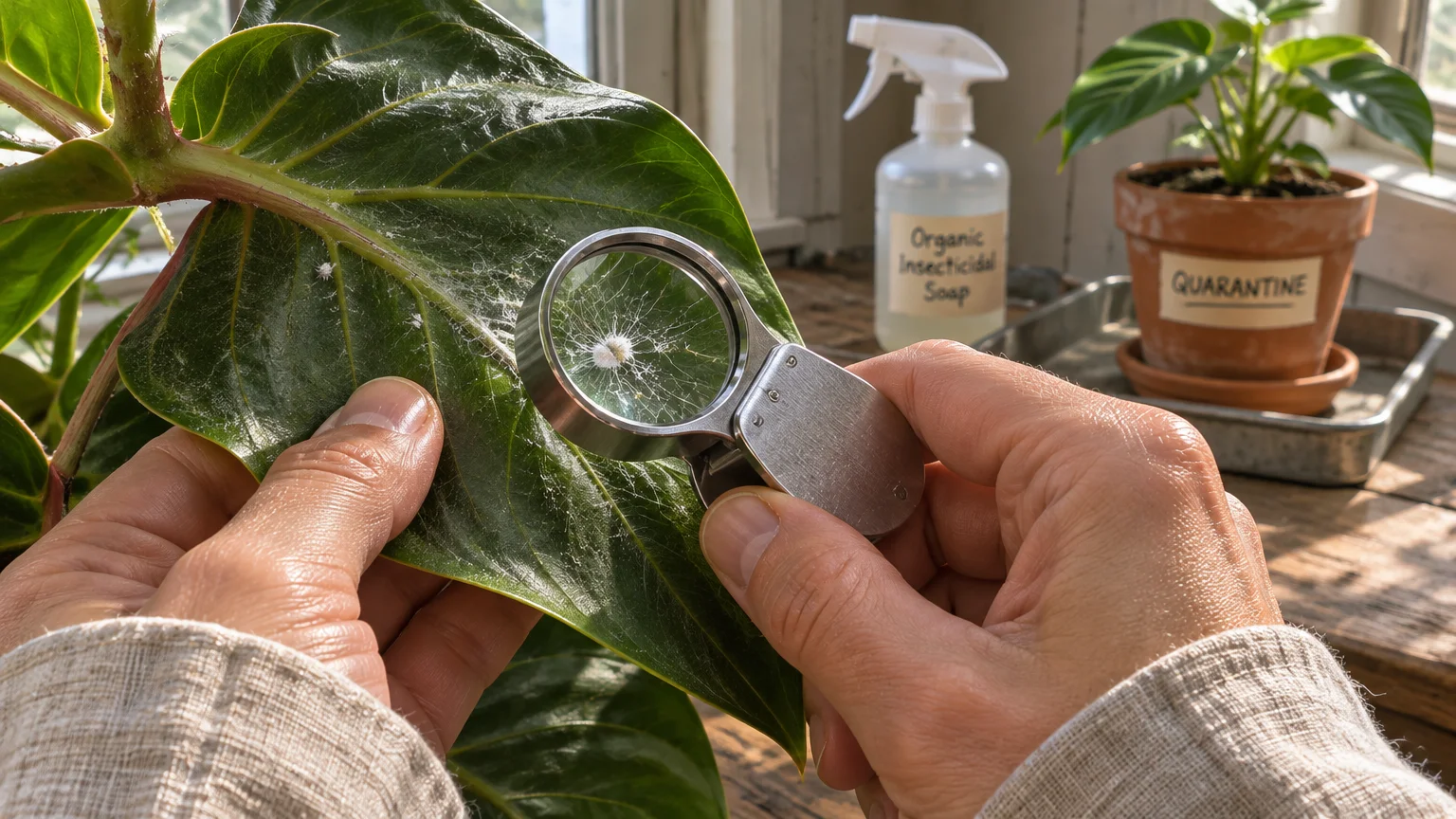
Houseplant Secret #7: Catching Winter Pests Early and Quarantining New Arrivals
Cozy indoor heat and stressed winter foliage create an open invitation for sap-sucking pests. Without outdoor predators like ladybugs or rainstorms to wash leaves clean, tiny hitchhikers multiply rapidly indoors.
Spend two minutes inspecting the undersides of leaves and soil surfaces every time you check soil moisture. Early detection turns a potential infestation into a quick, painless cleanup.
Tackle Dry-Air Spider Mites and Damp-Soil Fungus Gnats
Spider mites flourish in hot, parched rooms and target dusty or water-stressed plants such as palms, crotons, and English ivy. University of Alaska Fairbanks Cooperative Extension and Penn State Extension note that their feeding causes fine pale stippling, dull bronze or gray leaves, delicate webbing, and premature leaf drop.
Boosting ambient humidity and rinsing sturdy leaves under lukewarm water knocks mite populations down fast. Follow up with insecticidal soap or horticultural oil when webbing persists.
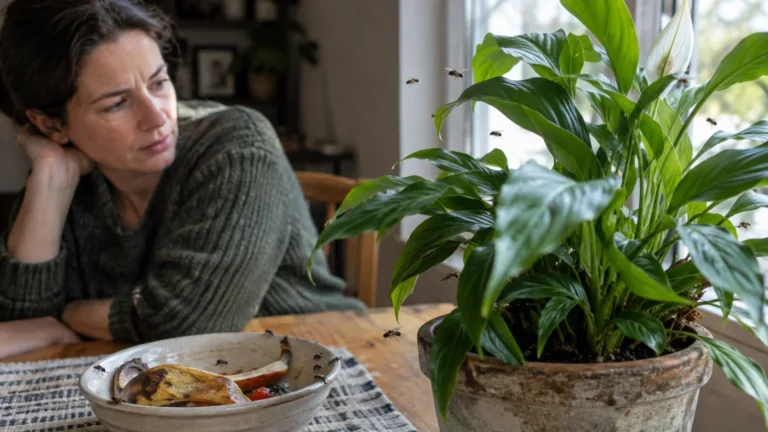
Meanwhile, tiny fungus gnats—measuring just one-sixteenth to one-eighth of an inch long—swarm around houseplants kept too wet in winter. While adult gnats merely annoy you near lamps and mugs, their soil-dwelling larvae feed on fungi and chew tender plant roots.
Letting the top inch of potting mix dry thoroughly between waterings starves out fungus gnat larvae naturally. Yellow sticky traps catch wandering adults while your soil dries back to a healthy rhythm.
Always Quarantine New or Returning Plants
A September 2026 survey revealed that 31 percent of houseplant owners bought a plant after spotting it on social media, often rushing straight into display spots without checking foliage closely. Similarly, plants summering outdoors on patios frequently smuggle invisible eggs back inside come autumn.
Illinois Extension and Penn State Extension recommend isolating every new purchase or returning outdoor plant in a separate room for three to four weeks. Inspect stems, leaf axils, and undersides weekly for hidden scale, mealybugs, aphids, or mites before introducing newcomers to your main collection.
Choosing the Right Plant for Your Space
Every thriving indoor jungle starts with matching a plant’s natural habitat to the real conditions inside your home. U.S. indoor houseplant gardening spending climbed from 2.3 billion dollars to 3.4 billion dollars in recent years, proving how eagerly people bring greenery indoors.
Before falling in love with a dramatic botanical silhouette online, take stock of your light direction, winter drafts, and watering habits. Choosing compatible species prevents frustration and keeps both beginners and collectors confident.
Best Picks for Dim Corners and Busy Schedules
If your rooms rely on north-facing windows or lie several feet back from glass, lean into resilient indoor plants low light champions. Cast-iron plant, ZZ plant, snake plant, and golden pothos tolerate 50 to 150 foot-candles gracefully while forgiving occasional missed waterings.
Heartleaf philodendron and Chinese evergreen also adapt smoothly to modest winter light without losing their sculptural charm. Their glossy leaves bring life to bookshelves, entryways, and shaded office desks.
Showstoppers for Bright Windows and Humid Baths
Sunny south- or west-facing sills reward light-hungry treasures like jade plants, echeveria, fiddle-leaf figs, and trailing string of pearls. Place desert succulents right up near bright glass where crisp winter rays keep stems compact rather than leggy.
Steam-filled bathrooms with frosted daylight suit moisture lovers such as Boston ferns, bird’s nest ferns, and prayer plants. Their lush, patterned foliage drinks in lingering shower humidity while softening sleek tile lines.
Check Pet Safety Before Bringing Foliage Home
Curious cats and playful dogs often nibble trailing vines or paw at fresh potting soil during long winter days indoors. True lilies, sago palms, pothos, and philodendrons can irritate or severely harm pets if chewed.
Luckily, striking pet-friendly alternatives abound, including spider plants, parlor palms, calatheas, peperomias, and Boston ferns. Always verify botanical names against reliable veterinary toxicology databases before placing pots within paw’s reach.
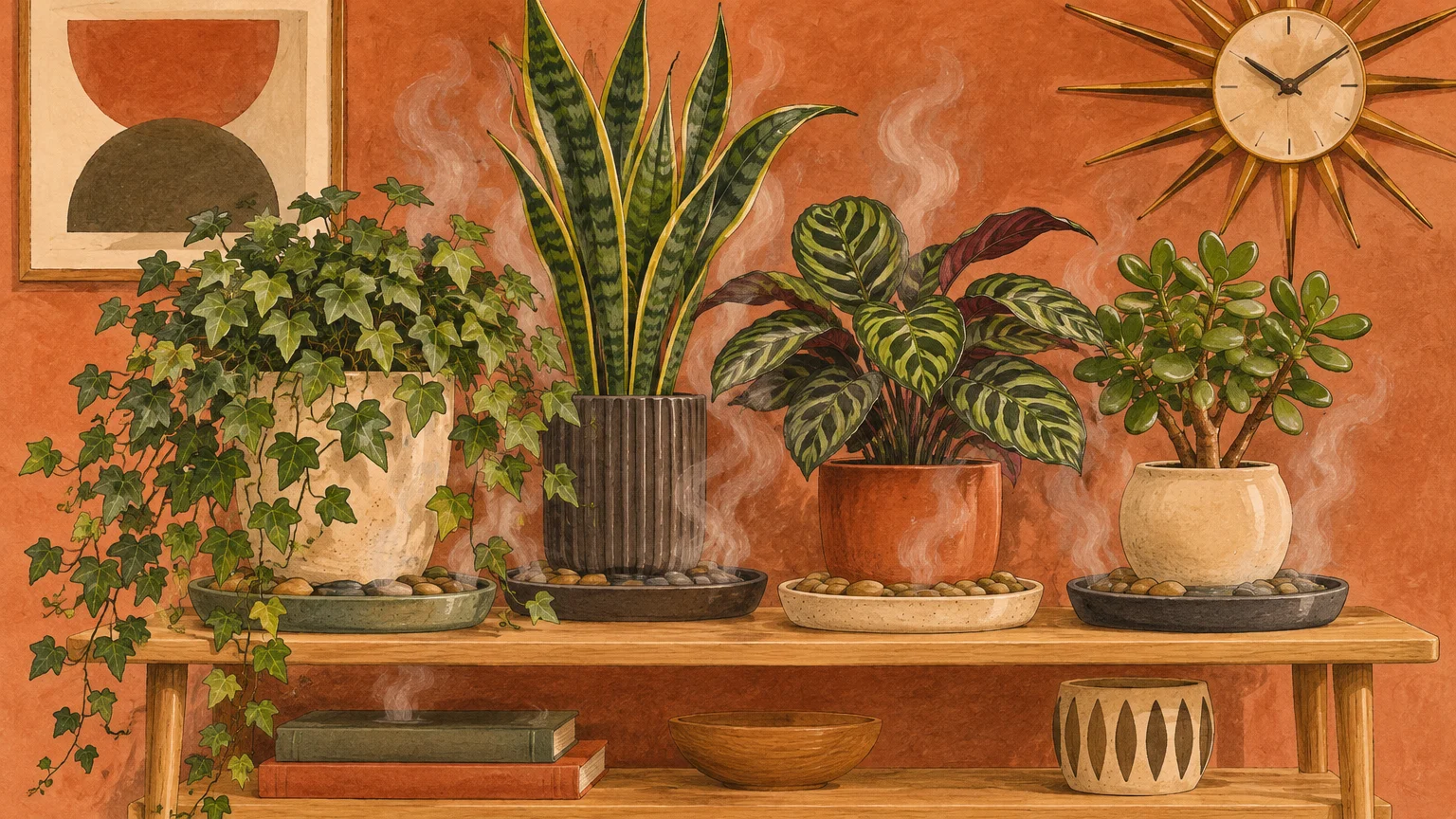
Aesthetic Tips for Styling Your Indoor Plants
Healthy plants double as living sculpture, infusing winter rooms with warmth, texture, and organic calm. Smart styling also works alongside good winter plant care tips by clustering species with matching light and moisture needs.
Layer Heights and Leaf Textures Like a Designer
Group odd numbers of plants—such as threes or fives—to create effortless visual balance on consoles and corner plant stands. Pair upright architectural swords like a snake plant beside billowy ferns and cascading trailing pothos vines.
Contrasting leaf shapes make every green shade pop without overwhelming smaller rooms. Variegated leaves brighten dark corners visually while deep emerald foliage grounds bright minimalist shelves.
Choose Pots That Flatter Both Roots and Decor
Match planter materials to your watering style as carefully as you match room colors. Unsealed terracotta breathes air through porous walls and dries faster, making it ideal for succulents or heavy-handed waterers.
Glazed ceramic and thick fiberglass hold soil moisture longer, giving thirsty tropicals extra hydration between winter drinks. If you adore a decorative pot without drainage holes, slip a plain plastic nursery pot inside so you can lift it out cleanly for watering.
Use Botanical Color to Soften Winter Rooms
Warm clay pots, woven seagrass baskets, and matte stoneware add cozy tactile warmth against pale winter light. Elevating favorite specimens on mid-century wooden plant stands lifts foliage closer to bright windowpanes while freeing up floor space.
Frequently Asked Questions
Why are my houseplants dropping green or yellow leaves in winter?
Sudden leaf drop almost always signals an abrupt drop in light, chilly window drafts, or overwatering houseplants during dormancy. Move pots closer to bright glass away from vents, and wait until the top inch of soil dries before watering again.
Should I use warm or cold water on indoor plants during winter?
Always reach for tepid, room-temperature water instead of icy tap water straight from winter pipes. Cold water shocks tropical roots, causes droopy foliage, and leaves pale spots on sensitive plants like African violets.
How can I tell if crispy brown leaf tips come from dry air or salt buildup?
Dry heated air under 30 percent humidity commonly crisps delicate leaf tips on ferns and calatheas, while crusty white residue on soil points to unused fertilizer salts. Flush pots thoroughly with tepid water and raise room humidity toward 40 to 50 percent.
Where can I verify whether a new houseplant is safe around cats and dogs?
Check botanical names before buying because common names vary widely across garden centers and social feeds. For information on plant toxicity to pets, consult the ASPCA’s plant list. Find inspiration at major conservatories like the U.S. Botanic Garden.
Disclaimer: This article provides general advice for houseplants. Every home environment is different, so observe your plants carefully and adjust care as needed.