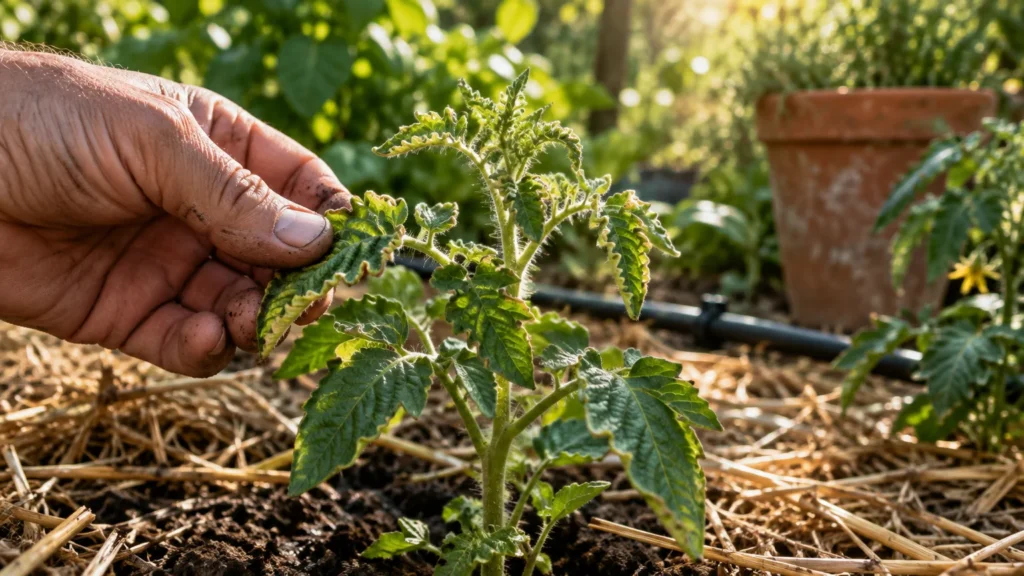
Adding plants with unusual leaves to your indoor collection instantly transforms an ordinary windowsill into a living botanical gallery. Instead of relying on fleeting blooms, you can enjoy sculptural textures, translucent windows, and metallic veins every single day of the year.
Evolution shaped these strange houseplants to survive extreme habitats—from shadowy rainforest floors to scorching desert sands. Those wild adaptations created corkscrew spirals, insect-trapping pitchers, and leaves that fold together at night.
Whether you tend a humid terrarium or a sunny apartment shelf, these twelve unique foliage plants offer striking visual drama alongside straightforward, step-by-step care routines.
Tip #1: Showcase the Spiked Armor of Begonia Ferox
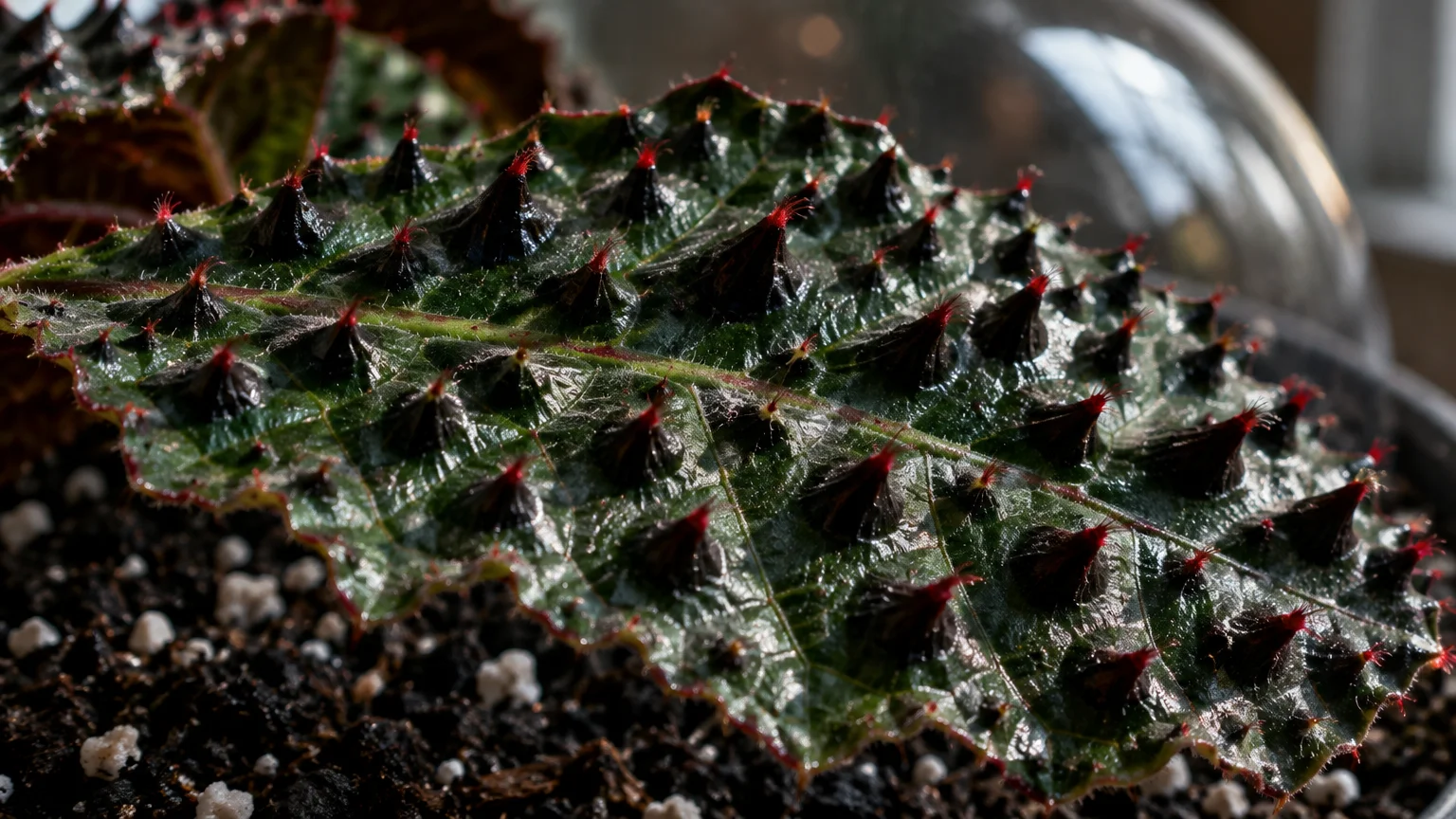
Few exotic leaf plants look as prehistoric as Begonia ferox, commonly known as the Troll Begonia. Native to limestone karst hills in Guangxi, China, this compact species develops dark, conical spikes across its emerald leaf surface that resemble dragon scales.
Botanists call these raised bumps bullae, and each dramatic cone is tipped with a fine red hair. Juvenile leaves emerge completely flat and smooth, allowing you to watch the dark texture bubble up as the foliage matures.
To keep those textured blades pristine, house your Begonia ferox inside a glass terrarium or cabinet where relative humidity stays between 65% and 80%. Maintain steady indoor temperatures between 60°F and 78°F, away from heating vents.
Plant it in an airy mix of 40% perlite, 40% peat moss or coco coir, and 20% fine orchid bark. Adding a teaspoon of crushed oyster shell or horticultural limestone per quart of soil mimics its native alkaline cliffs.
Water only when the top inch of substrate feels slightly dry to the touch, and never mist the bumpy leaves directly. Standing water trapped between the bullae quickly triggers bacterial leaf spot and fungal decay.
Tip #2: Cultivate the Geometric Spirals of Albuca Spiralis
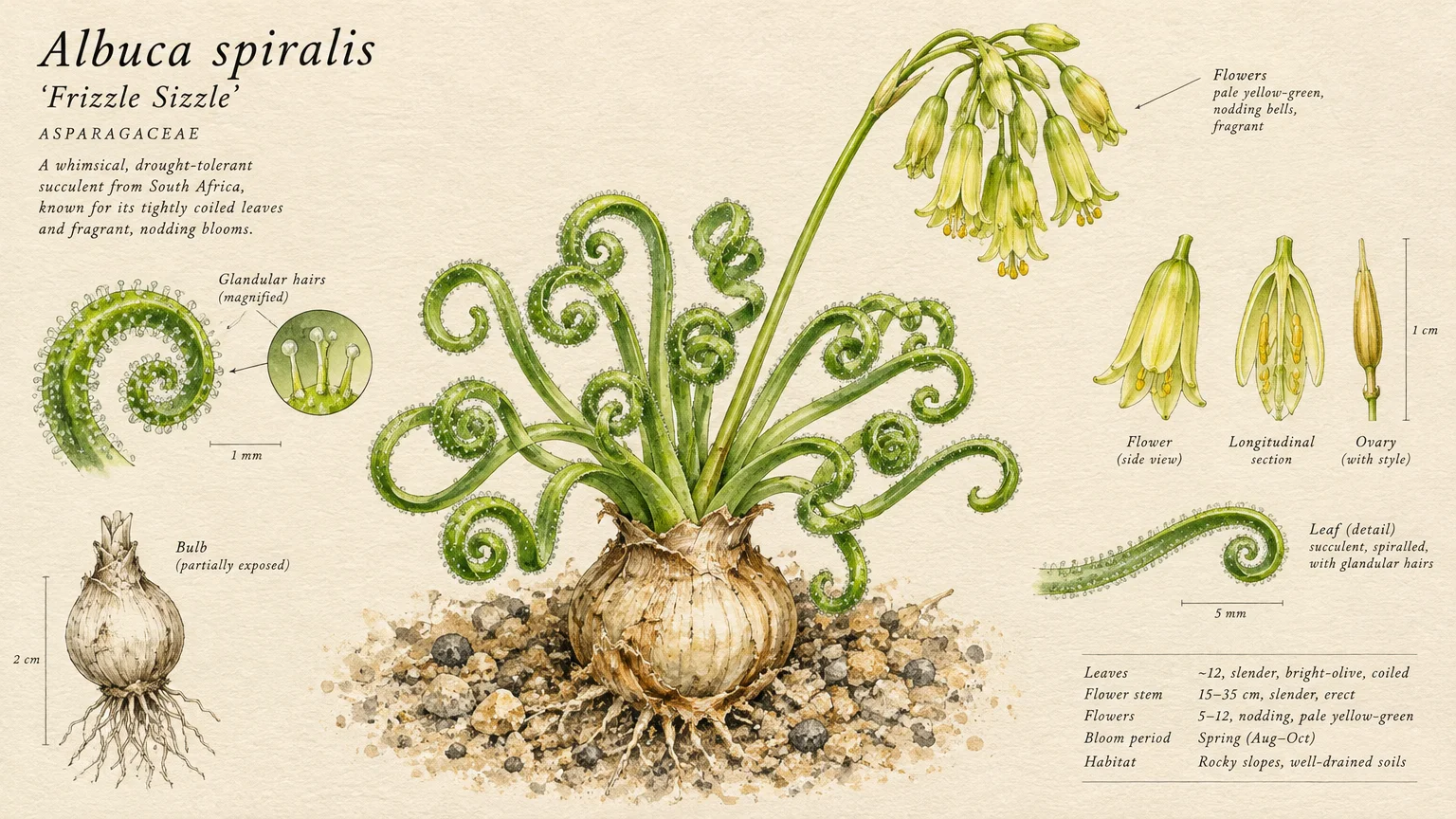
If your sunny windowsill needs whimsical movement, Albuca spiralis—affectionately nicknamed Frizzle Sizzle—delivers tighter coils than almost any other plant on earth. This winter-growing bulbous geophyte hails from the arid Namaqualand region of South Africa.
Its narrow, succulent green blades twist into springy corkscrews covered in microscopic glandular hairs that give the foliage a frosted texture. In late spring, a tall flower spike rises above the curls, releasing a strong fragrance of warm vanilla and butterscotch.
The secret to maintaining tight spirals lies in intense light and cool winter temperatures. Give your bulb 5 to 6 hours of direct sunlight daily—or place it 6 inches beneath a full-spectrum LED grow light—while keeping winter temperatures between 50°F and 65°F.
Without bright light and cool air during its active winter growth phase, the new leaves emerge completely straight and floppy. Pot the bulb with its top quarter exposed in a gritty mix of 50% pumice and 50% cactus soil.
When summer heat arrives, the coiled foliage naturally yellows and withers as the bulb enters dormancy. Stop watering almost completely from June through August until fresh green tips poke out of the bulb in early autumn.
Tip #3: Hang the Translucent Orbs of Curio Rowleyanus
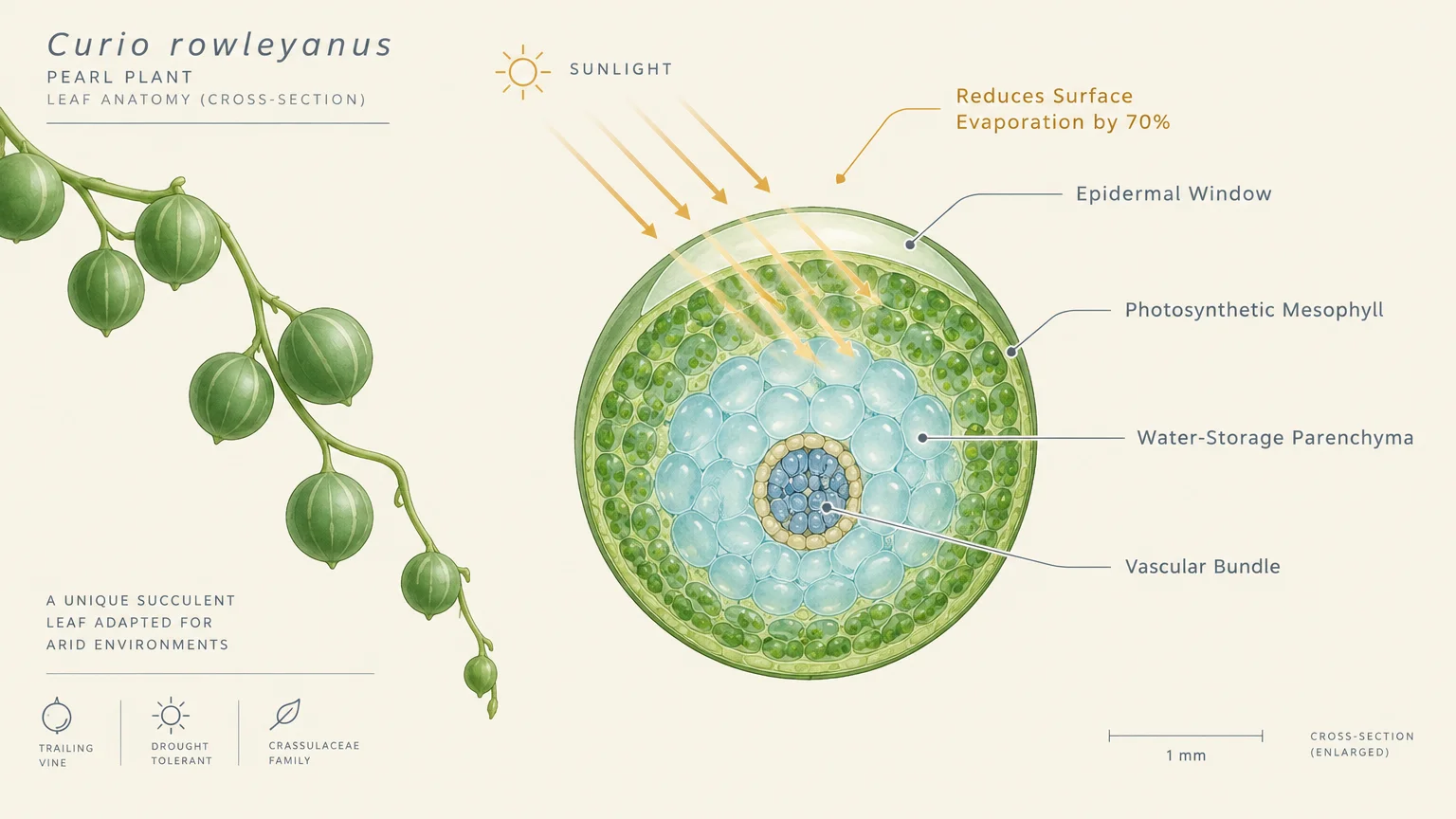
Known universally as String of Pearls, Curio rowleyanus replaces flat leaf blades with plump, pea-sized spheres that cascade up to 3 feet down from hanging baskets. Each emerald bead is actually a modified leaf engineered to store water in Southwest Africa’s dry scrublands.
Look closely at a single pearl and you will spot a crescent-shaped band of translucent tissue called an epidermal window. This evolutionary marvel lets sunlight penetrate deep into the spherical leaf interior while reducing surface evaporation by more than 70%.
Because String of Pearls grows shallow, fibrous roots that only reach 2 to 4 inches deep, choose a wide, shallow terracotta pot rather than a deep plastic container. Terracotta wicks away excess moisture and prevents stem rot at the soil line.
Use those translucent leaf windows as your built-in hydration gauge instead of watering on a rigid calendar schedule. When the pearls are plump and fully hydrated, the clear window stays wide; when the plant needs water, the window narrows into a thin slit.
Hang your pot where the top of the soil receives bright indirect light plus 2 hours of gentle morning sun. Keeping the crown illuminated prevents the cascading stems from turning bare andbald near the rim of the pot.
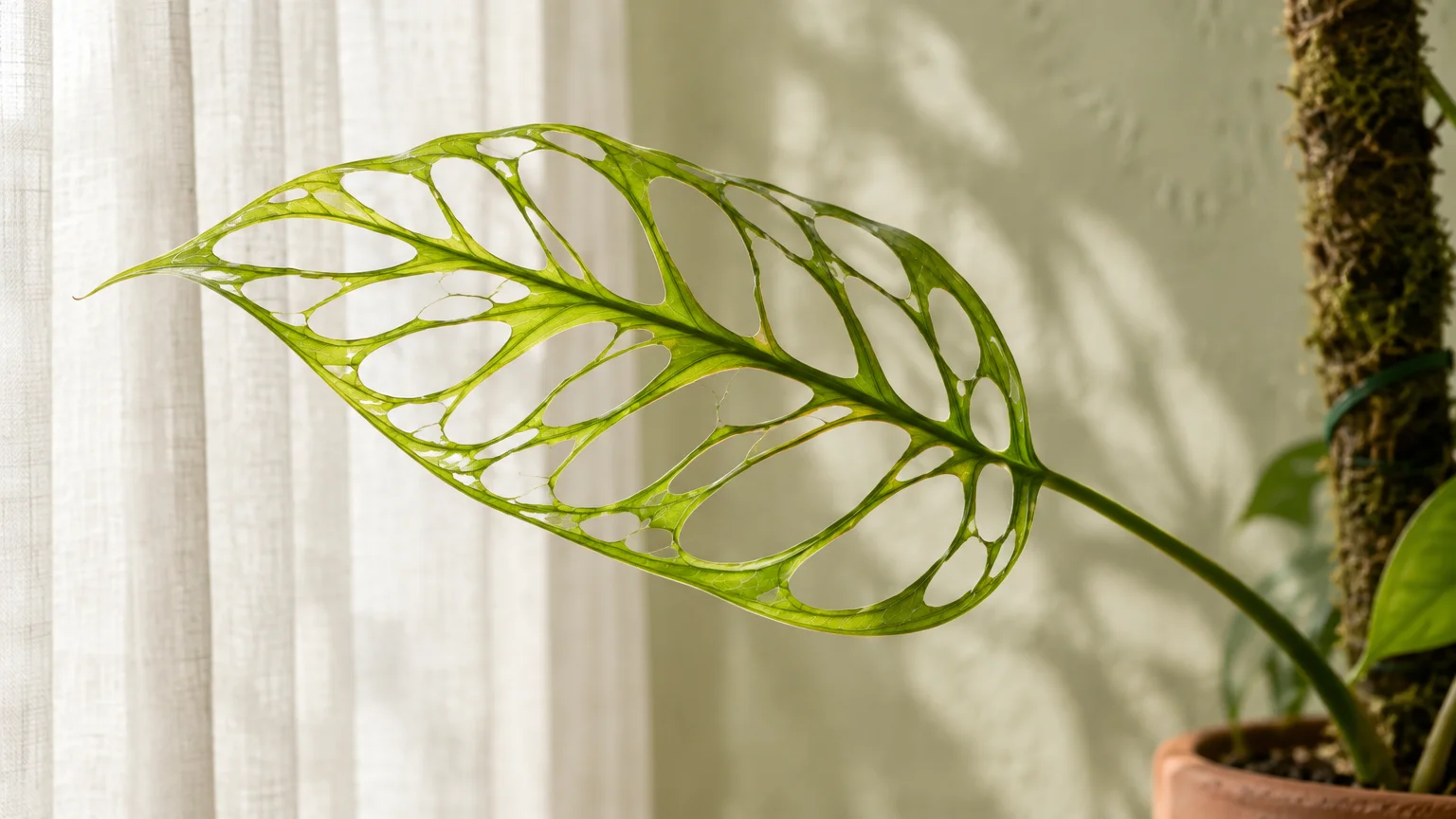
Tip #4: Display the Living Lace of Monstera Obliqua
While many houseplant enthusiasts grow Swiss cheese vines, true Monstera obliqua (particularly the Peruvian form) pushes leaf perforation to a breathtaking botanical extreme. Mature blades on this rainforest climber consist of 85% to 90% open space, leaving only delicate green ribbons holding the leaf margins together.
In the wild Amazonian understory, these massive fenestrations allow heavy tropical downpours and wind gusts to pass straight through without shredding the paper-thin foliage. The holes also let dappled sunflecks reach lower leaves along the stem.
Because the leaf tissue is only a few cell layers thick, ordinary household air will crisp the edges within days. You must grow Monstera obliqua inside an enclosed greenhouse cabinet or wardian case with 75% to 90% humidity and temperatures between 70°F and 85°F.
Provide a damp sphagnum moss pole from day one so its nodes can anchor securely as they climb. When stems lose vertical support, the plant stops making lacy leaves and sends out bare, leafless runners called stolons across the floor.
Pot the roots in a chunky aroid mix made of equal parts medium fir bark, coarse perlite, coco husk chunks, and worm castings. Keep the substrate evenly moist and flush it monthly with tepid water to prevent mineral buildup.
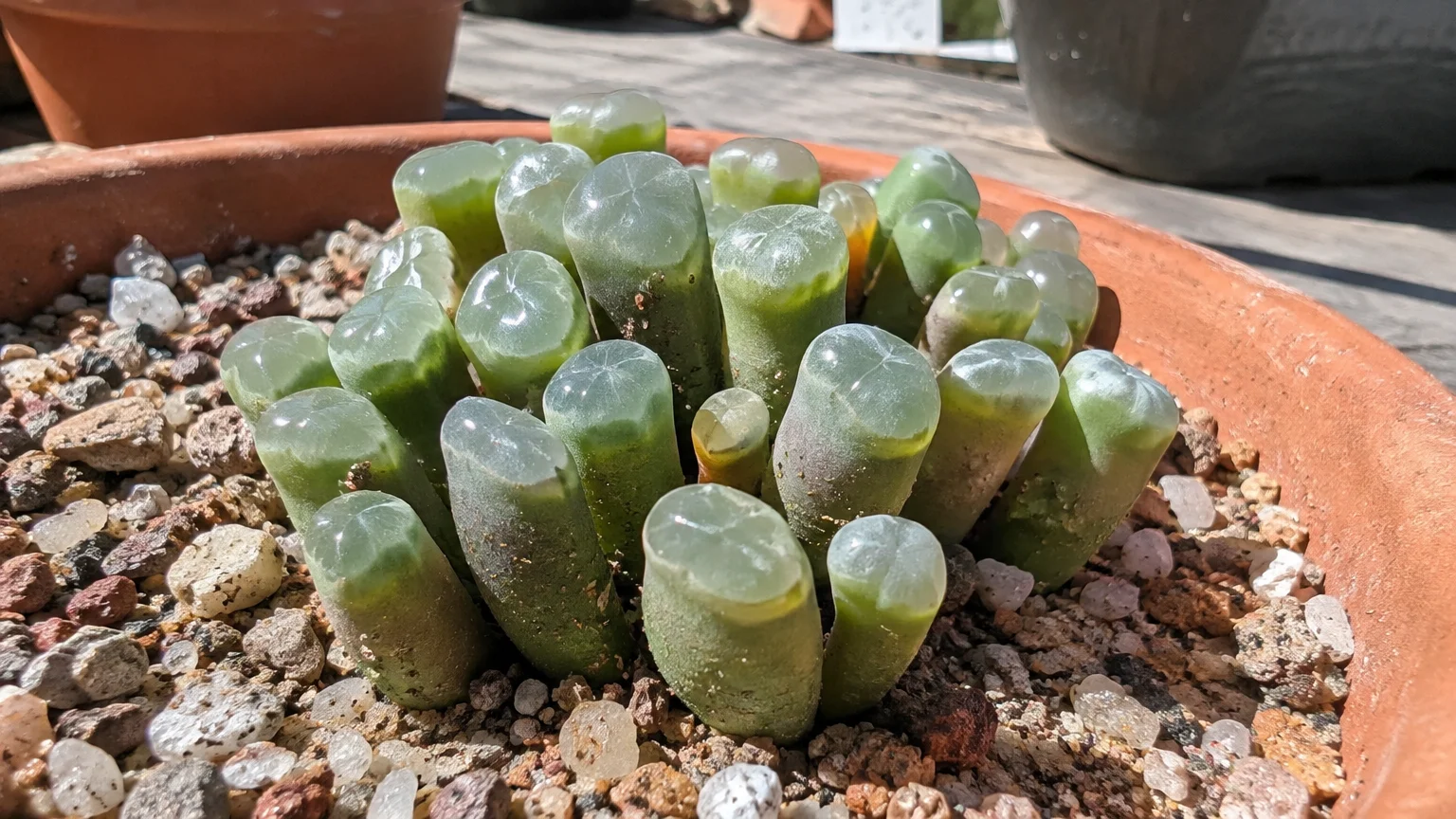
Tip #5: Grow the Living Pebble Traps of Fenestraria Rhopalophylla
Commonly called Baby Toes, Fenestraria rhopalophylla forms tight clusters of upright, cylindrical leaves that look like tiny green feet poking out of the sand. In its native Namib Desert habitat, blowing sand buries the entire plant except for the flat, transparent leaf tips.
Those clear membranes act as natural optical lenses that filter harsh ultraviolet radiation before channeling gentle light down into the buried green tissue below. This clever subterranean strategy allows the plant to photosynthesize without cooking in 110°F surface temperatures.
At home, you should plant Baby Toes slightly higher than in nature, leaving the green sides of the clubs above the substrate to prevent collar rot. Blending 75% mineral grit—such as pumice, coarse silica sand, or decomposed granite—with 25% organic cactus soil ensures rapid drainage.
Like many South African mesembs, Fenestraria grows actively during the cooler months of autumn and spring while resting in high summer. Water lightly only when you see fine vertical wrinkles appear along the sides of the club-shaped leaves.
Never water if the leaves feel firm, and hold back moisture entirely during July and August. Overwatering a dormant clump causes the translucent window tips to burst open and scar permanently.
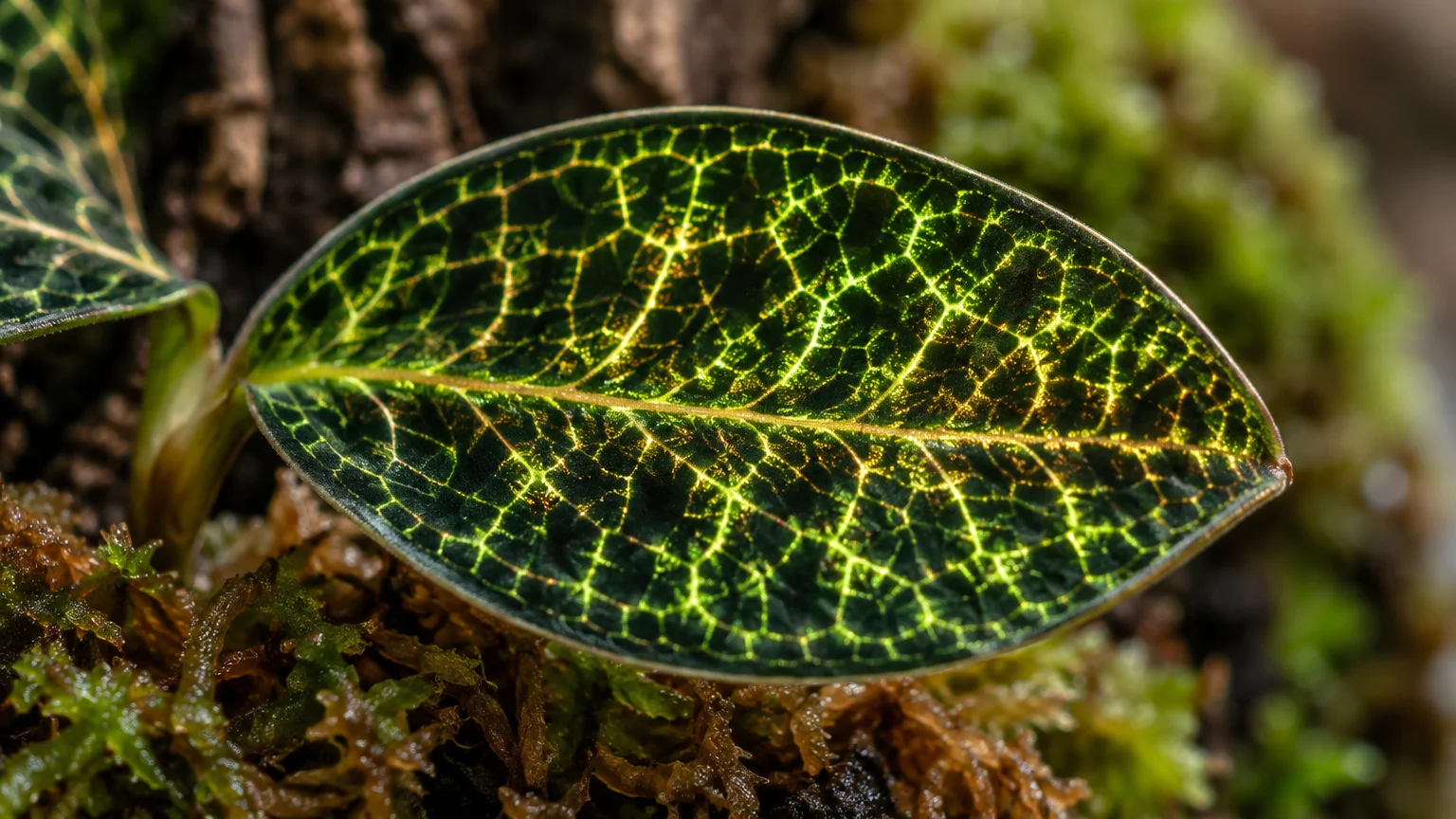
Tip #6: Marvel at the Optical Illusion of Macodes Petola
Most gardeners buy orchids for their flowers, yet Macodes petola—the Lightning Bolt Jewel Orchid—steals the spotlight with decorative foliage that looks wired with electricity. Its velvety, dark green leaves shimmer with iridescent golden veins that flash and shift as you walk past.
This metallic sparkle comes from specialized dome-shaped epidermal cells that catch and refract ambient light across the leaf blade. In the shadowy leaf litter of Southeast Asian cloud forests, that optical structure helps the plant capture every available photon.
Because it evolved on the dim forest floor, Macodes petola thrives in low to medium indirect light (around 500 to 1,000 lux) where high-light houseplants fail. Direct afternoon sun will bleach the velvety emerald background to a dull yellow within hours.
Pot this terrestrial orchid in a shallow dish filled with 50% chopped New Zealand sphagnum moss, 25% fine orchid bark, and 25% perlite. Its fleshy, fuzzy rhizomes prefer creeping horizontally across the surface rather than plunging into deep soil.
Keep the potting medium damp like a wrung-out sponge, and maintain 60% to 75% humidity around the foliage. If a modest spike of tiny brown-and-white flowers appears in winter, snip it off early so the plant directs all its energy into growing larger, sparkling leaves.
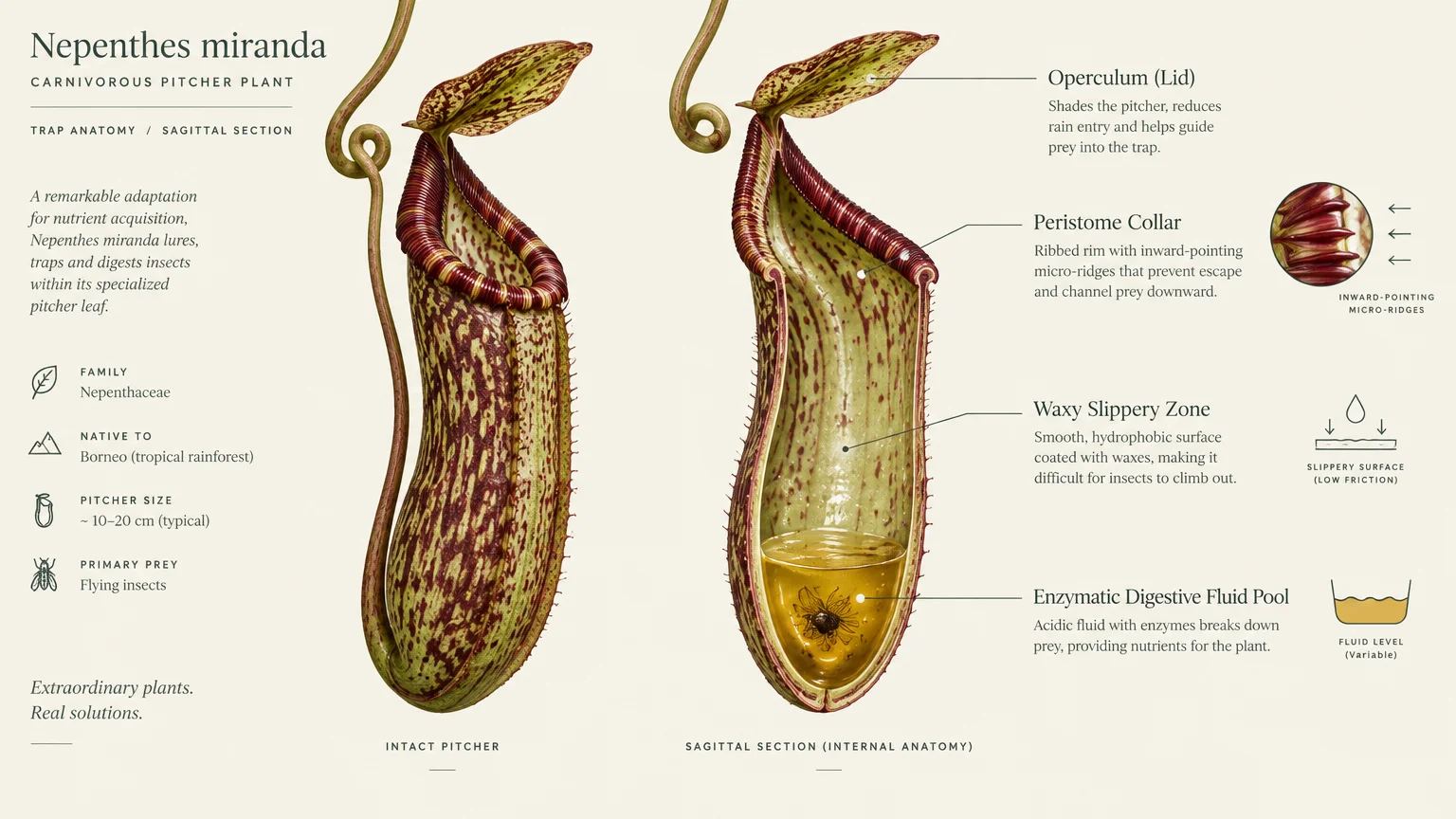
Tip #7: Add the Carnivorous Pitchers of Nepenthes Miranda
When you examine the hanging traps of Nepenthes × miranda, you are actually looking at one of nature’s most radical leaf modifications. What starts as a broad, glossy green blade extends a long tendril from its central midrib that inflates into a winged, speckled crimson pitcher up to 10 inches tall.
Inside that modified leaf tip, nectar glands along the ribbed rim lure insects into a pool of digestive enzymes at the base. The plant absorbs nitrogen and phosphorus directly through the inner walls of the leaf trap to compensate for nutrient-poor rainwater.
Water quality is the single most important factor when caring for any carnivorous pitcher plant. Always irrigate with distilled water, reverse osmosis water, or collected rainwater measuring under 50 parts per million of total dissolved solids.
Standard tap water or mineral water will burn the roots and stop new tendrils from inflating into pitchers. Likewise, never apply standard potting soil or root fertilizer; instead, use a 50/50 blend of long-fiber sphagnum moss and coarse perlite.
Hang your Nepenthes miranda in a bright east- or west-facing window with at least 50% humidity. If the plant stopped producing pitchers after moving into your home, increasing light intensity for 12 hours a day almost always restarts trap formation.
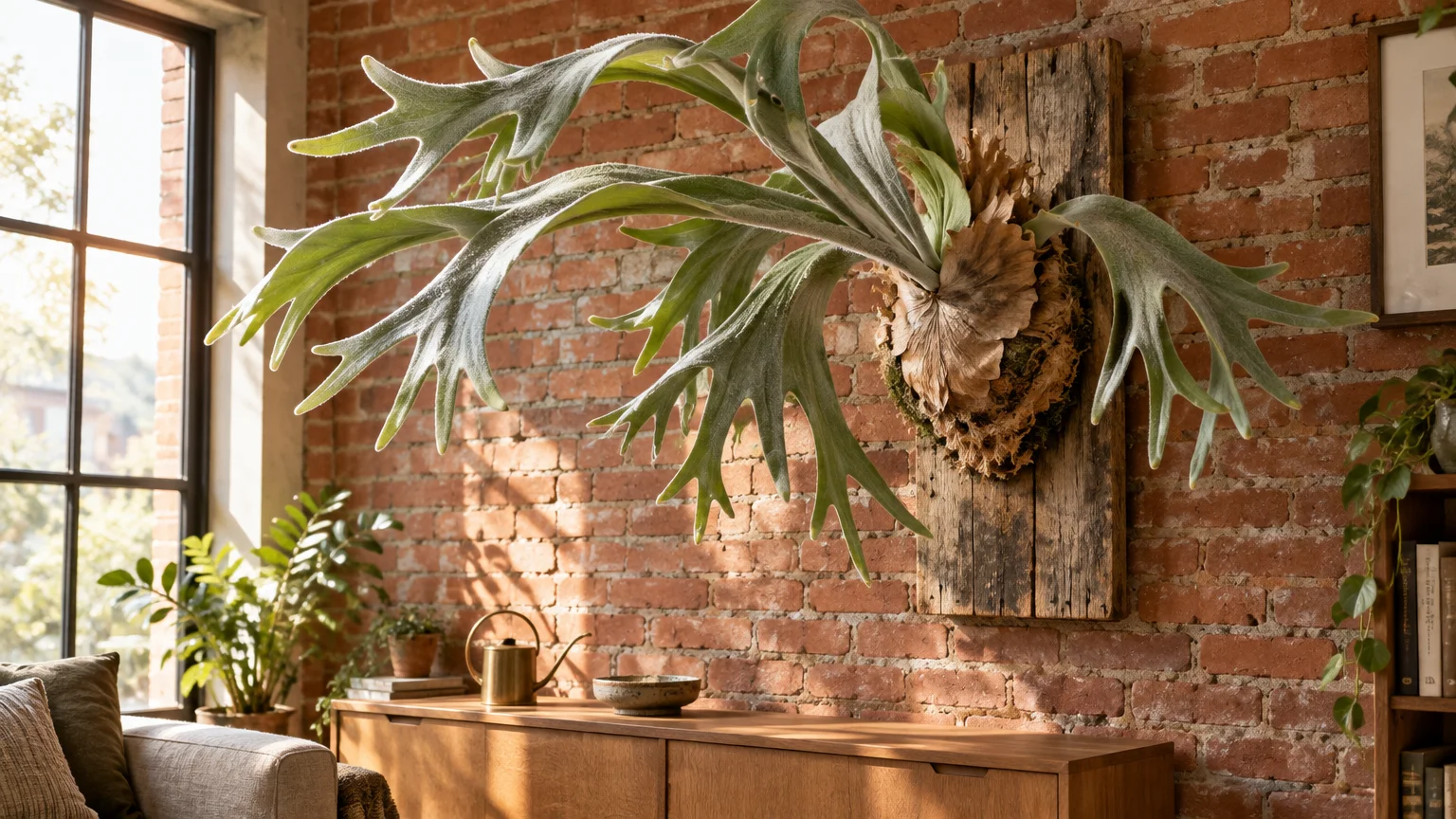
Tip #8: Frame Your Space With the Antler Fronds of Platycerium Bifurcatum
The Staghorn Fern (Platycerium bifurcatum) stands out among unique foliage plants because it produces two completely different leaf forms on the very same rootstock. First, it grows round, flat basal fronds—called shield fronds—that clasp tightly over tree bark like layered leather armor.
Second, it extends arching, silvery-green fertile fronds up to 3 feet long that fork repeatedly at the tips like deer antlers. Fine star-shaped hairs coat these antler fronds, trapping moisture from humid breezes and reflecting harsh sunlight.
Because Staghorn Ferns are epiphytes that grow perched on branches rather than buried in dirt, they look best mounted vertically on a cedar or cork plaque. Cushion the root ball in damp sphagnum moss and secure it firmly to the wood using clear nylon fishing line.
As the round shield fronds age, they naturally turn papery brown from the center outward. Never peel or trim these brown shields away; they protect the delicate roots underneath and slowly decompose into nitrogen-rich plant food.
To water your mounted fern, take the entire wooden board down once a week and submerge the moss ball in a basin of room-temperature water for 15 minutes. Let it drain completely in the sink before hanging it back in bright, filtered light.
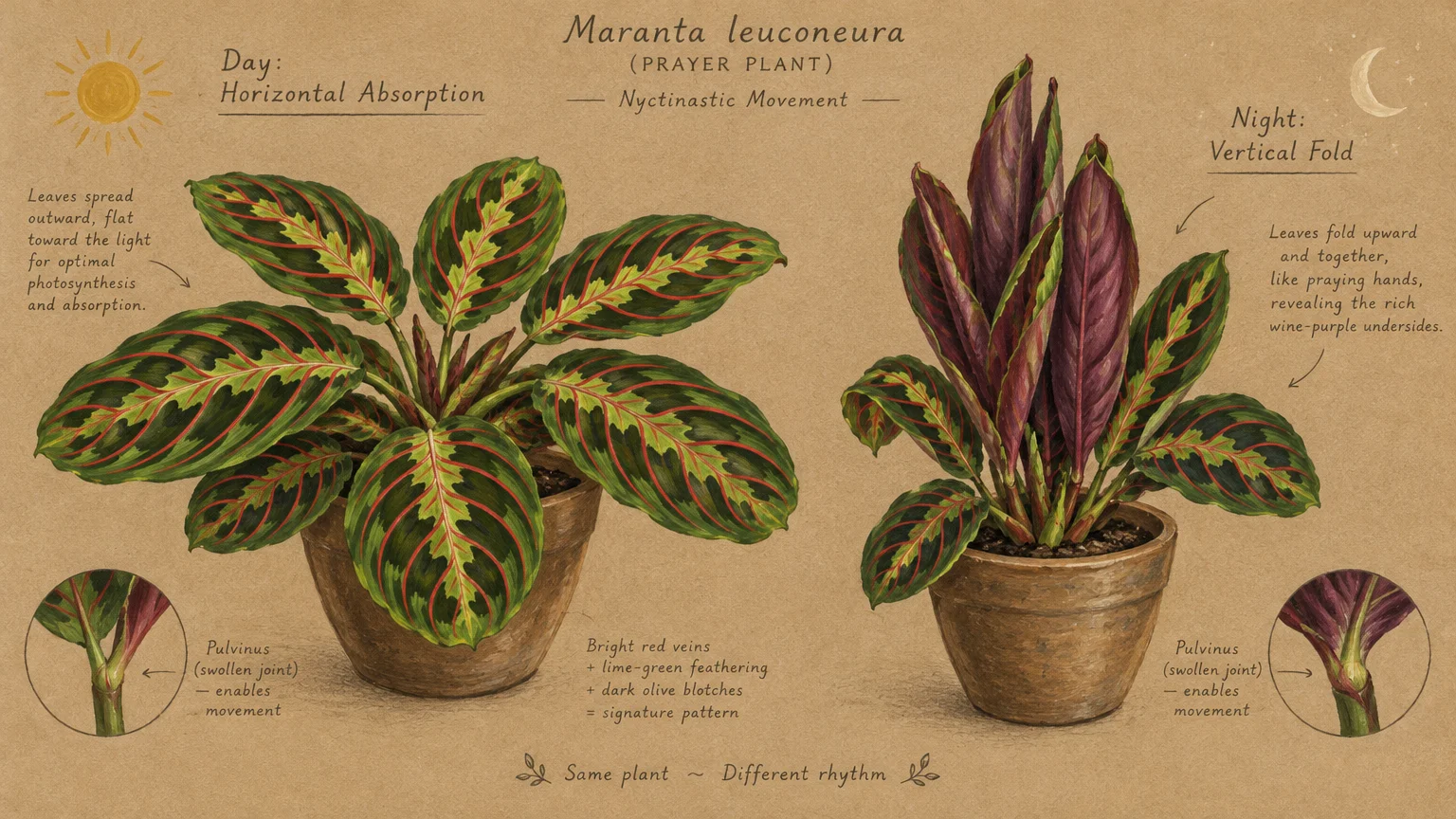
Tip #9: Admire the Folding Leaves of Maranta Leuconeura
Few strange houseplants feel as responsive and alive as Maranta leuconeura, the classic Red Prayer Plant. Its oval blades combine deep forest-green patches, feathery lime-green midribs, and vibrant magenta veins arranged in a crisp herringbone pattern.
Every evening as daylight fades, a swollen motor organ at the base of each leaf stalk—known botanically as a pulvinus—pumps water and potassium ions between cells. This hydraulic shift raises the leaves straight up into a vertical bundle that resembles folded hands.
Scientists believe this nocturnal movement, called nyctinasty, sheds stagnant rainwater from the leaf surface and discourages nighttime fungal infections. At dawn, you can sometimes hear a faint rustling sound as the blades unfold horizontally to catch the morning light.
To keep those painted veins crisp and free of brown tips, water your Prayer Plant with filtered water or tap water left out overnight to allow chlorine to dissipate. This species is highly sensitive to fluoride and dissolved salts in municipal water supplies.
Place the pot in medium indirect light—such as 5 feet back from an east window—and keep the soil lightly moist using a mix of 60% peat-free potting soil, 20% perlite, and 20% coco coir. Feed once a month during spring and summer with a balanced liquid fertilizer diluted to quarter strength.
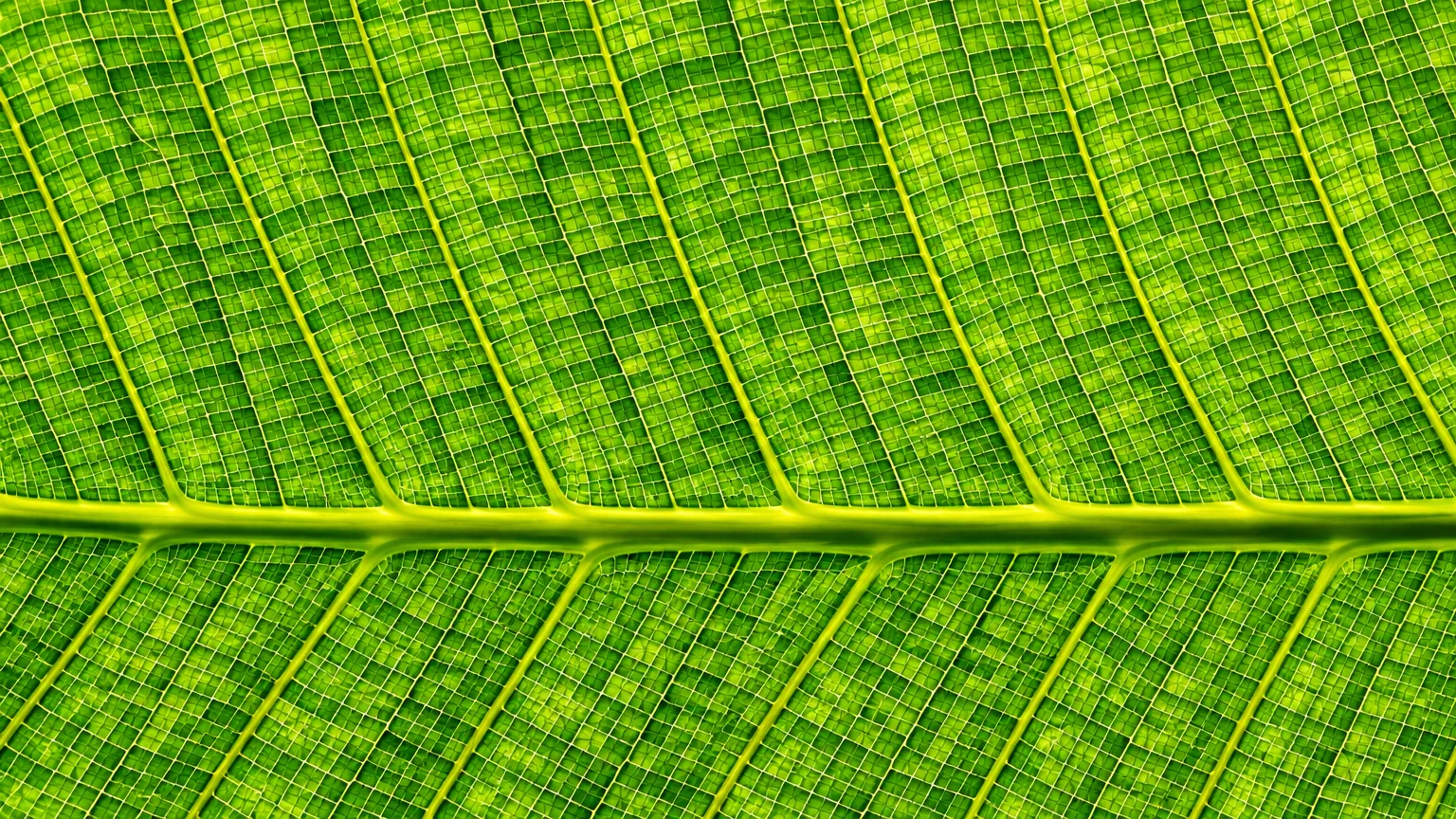
Tip #10: Cultivate the Origami Blades of Calathea Musaica
While most plants display branching veins that radiate outward like tree limbs, Calathea musaica (botanically reclassified as Goeppertia kegeljanii) features an intricate rectangular grid that looks like fine lace or digital pixels. When morning sunlight shines through the chartreuse blade, every tiny square glows like a miniature stained-glass window.
This geometric cross-venation distributes water and nutrients evenly across the wide leaf surface, preventing tears in heavy rainforest winds. Up close, the pattern looks so precise that first-time viewers often touch the leaf to verify it is real.
Compared to finicky velvet-leafed calatheas that curl at the slightest dip in humidity, Calathea musaica adapts remarkably well to average living rooms with 45% to 55% humidity. Its smooth, leathery cuticle retains internal moisture much more effectively than thinner relatives.
Position your plant where it receives bright, indirect light so the chartreuse and deep green mosaic contrast remains sharp. In overly dark corners, the intricate netting blends together and new leaves emerge solid green.
Maintain consistent soil moisture by watering whenever the top inch of soil dries out, using a rich blend of 60% coco coir, 20% perlite, and 20% worm castings. Wipe the broad blades with a damp microfiber cloth every two weeks to keep dust from dimming the mosaic pattern.
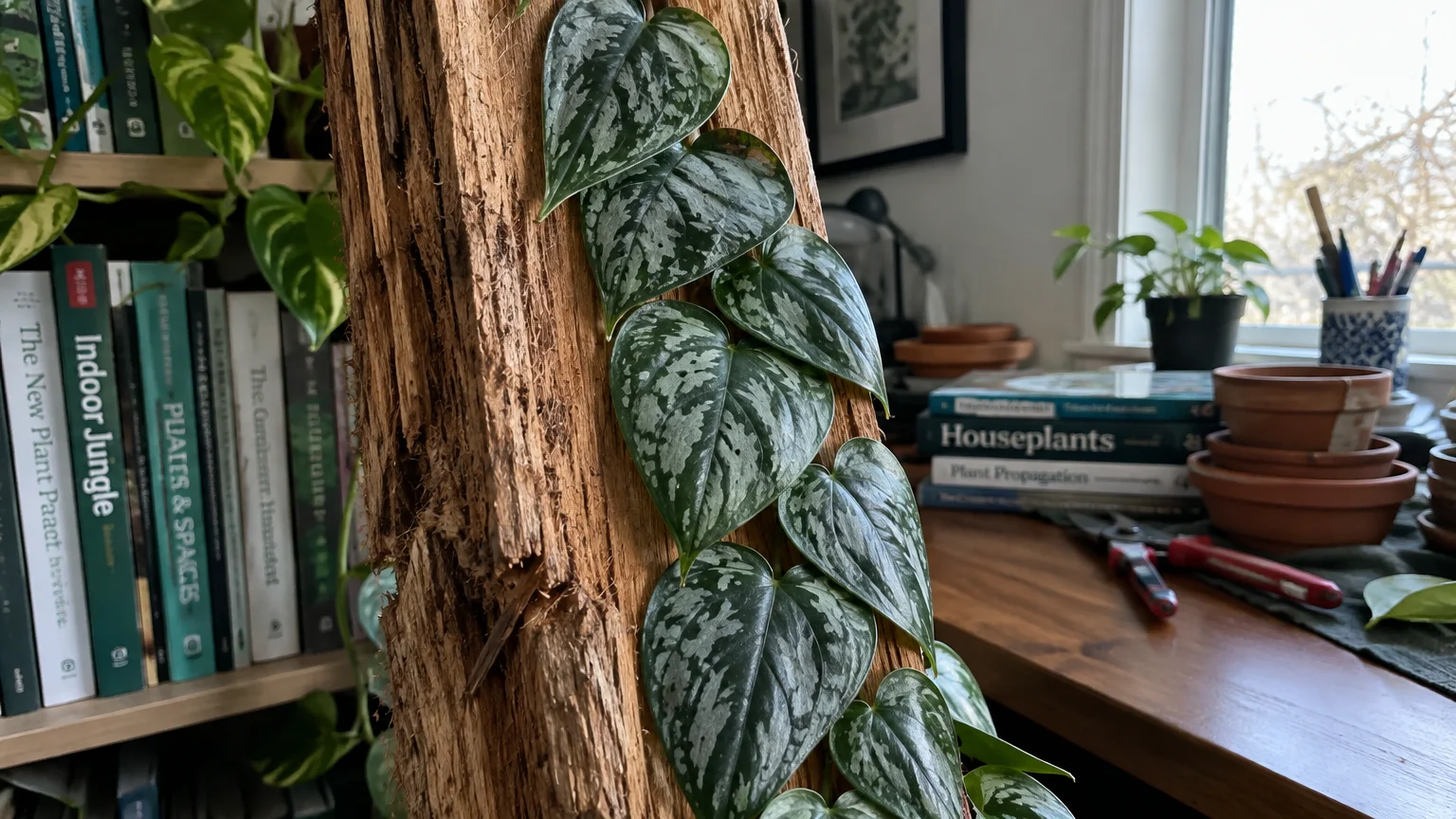
Tip #11: Train the Living Shingles of Rhaphidophora Cryptantha
If you want decorative foliage that breaks every rule of how a potted plant should sit on a shelf, look no further than Rhaphidophora cryptantha. Instead of angling its leaves outward toward the sun, this climbing aroid presses its heart-shaped blades completely flat against vertical surfaces like overlapping roof shingles.
Striking silver veins trace across the dark green leaves, which measure 2 to 4 inches wide and curve tightly around wooden boards or tree trunks. Tiny adhesive roots along the stem cement the underside of each leaf directly against the backing material.
In nature, shingling protects the vine from drying breezes and creates a humid microclimate trapped beneath the leaf blades where beneficial ants often shelter. Once the plant reaches the top of its support in the wild, it abruptly changes leaf shape, producing large, split adult leaves.
To succeed with Rhaphidophora cryptantha indoors, provide a flat, untreated cedar plank, tree fern panel, or cork slab at least 24 inches tall when potting. If the growing tip runs out of vertical wood to grip, it immediately stops forming leaves and sends out skinny, bare runners.
Mist the wooden plank daily or house the plant in 60% to 75% humidity so the aerial roots fuse tightly to the grain as each new shingle unfurls. Keep the root zone at the base of the board in a fast-draining aroid mix and water when the top half of the pot feels dry.
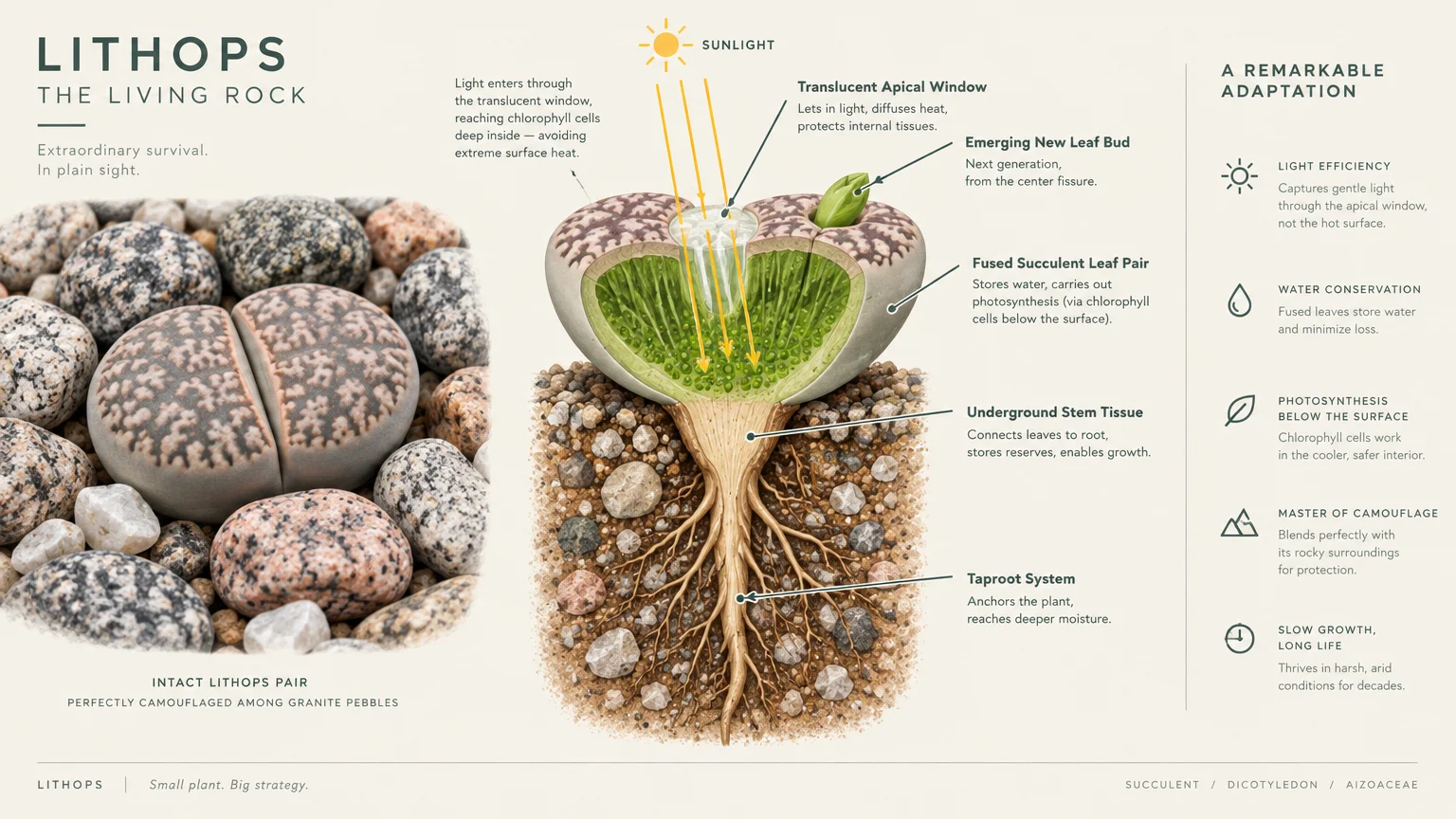
Tip #12: Grow the Alien Rosettes of Lithops
Rounding out our list of plants with unusual leaves are Lithops, the famous Living Stones of southern Africa. Each plant consists of just two thick, fused succulent leaves separated by a shallow central fissure, making the entire specimen look identical to a mottled riverbed pebble.
This stone mimicry camouflages the water-rich leaves from grazing tortoises and antelopes during prolonged droughts. Like Fenestraria, the flattened top surface of each leaf contains translucent windows mottled with iron-oxide pigments in shades of rust, violet, cream, and slate gray.
The strangest moment in a Lithops life cycle happens between late winter and spring, when a brand-new pair of leaves splits through the center crease. As the inner pair expands, it sucks every drop of moisture out of the two older outer leaves until they shrivel into dry papery husks.
Understanding this annual leaf-replacement cycle is essential because watering at the wrong time will kill the plant within days. You must never water a Lithops while it is splitting in winter and spring; adding water prevents the old leaves from drying up and causes the plant to rot or burst.
Pot your Living Stones in a 4- to 5-inch-deep pot filled with 85% inorganic grit (pumice, lava rock, or calcined clay) and only 15% sifted soil to accommodate their long taproot. Give them 4 to 5 hours of direct sunlight daily and water only a few times in autumn and late spring when the sides of the stone look deeply wrinkled.
Putting It All Together: Enjoy Your Beautiful Garden
Exploring the world of exotic leaf plants proves that foliage can be every bit as thrilling and colorful as a vase of cut flowers. When you understand the native habitat behind a strange leaf shape—whether it is a desert pebble window or a rainforest drip hole—you automatically know what that plant needs to thrive.
Start by selecting just one or two specimens that match the natural conditions you already have in your home. Match sun-loving succulents like Albuca spiralis and Lithops to your brightest south-facing windowsills, and reserve humid bathroom shelves or glass cabinets for tropical treasures like Begonia ferox and Macodes petola.
For region-specific advice, consult your local University Extension program (find yours via the USDA directory). For plant databases and inspiration, visit the Missouri Botanical Garden or the Royal Horticultural Society.
Frequently Asked Questions
Why do my strange houseplants lose their unusual leaf textures or patterns indoors?
Most unique foliage plants lose their signature traits when light intensity or temperature falls outside their natural range. For example, Albuca spiralis uncurls in dim light, while variegated and net-veined plants like Calathea musaica produce solid green leaves to maximize chlorophyll when placed in dark corners.
Can I group humid-loving exotic leaf plants together to raise humidity naturally?
Grouping tropical plants like Maranta leuconeura and Calathea musaica close together creates a localized pocket of moisture as their leaves transpire water vapor. However, extreme high-humidity species like Begonia ferox and Monstera obliqua still require an enclosed terrarium or room humidifier to stay above 70% humidity.
Are plants with unusual leaves harder to propagate than common houseplants?
Many strange houseplants propagate just as easily as standard pothos or philodendrons once you use the right method. You can root stem cuttings of Curio rowleyanus, Maranta leuconeura, and Macodes petola in damp sphagnum moss or water within 3 to 4 weeks during warm spring weather.
How should I clean dusty leaves that have spikes, hairs, or velvet textures?
Never wipe fuzzy or spiked leaves—such as Begonia ferox or Albuca spiralis—with a wet cloth, which crushes delicate foliar hairs and traps moisture. Instead, gently brush away dust using a dry, soft-bristled artist paintbrush or a manual camera lens air blower.
Disclaimer: This article provides general gardening advice. Always consider your specific climate, soil conditions, and local pests. Follow safety guidelines when using gardening tools and products.