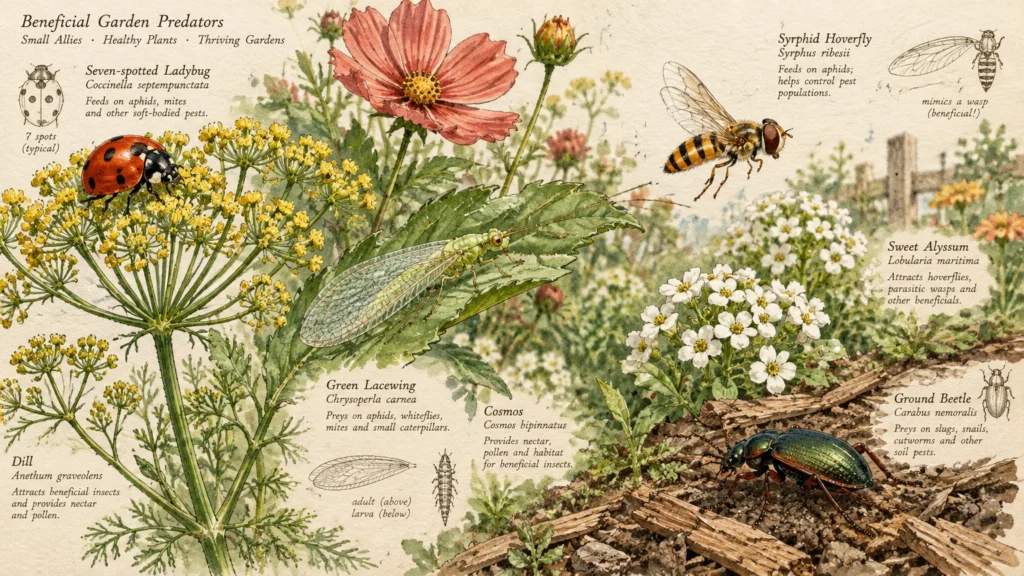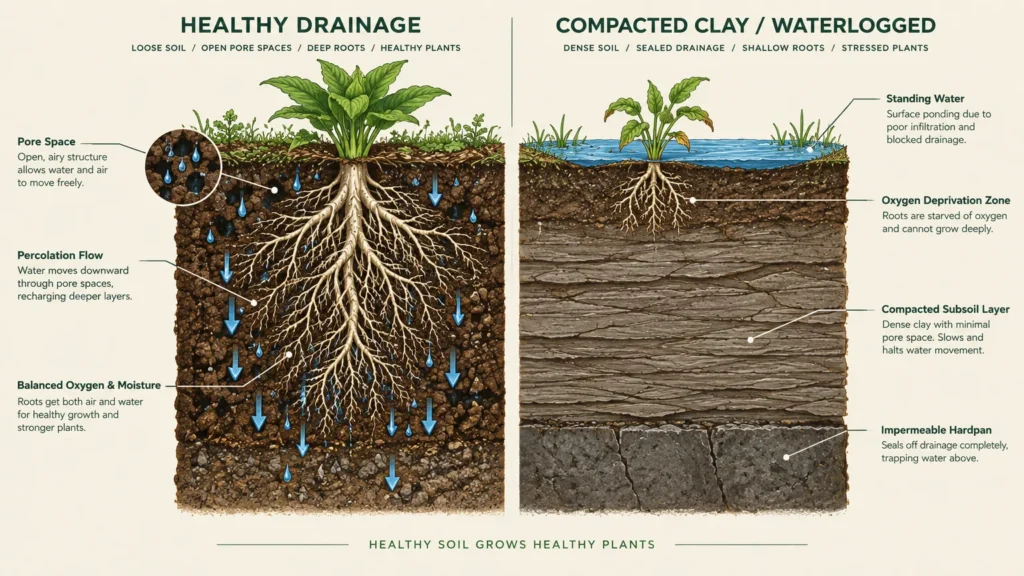
Pairing the right herbs together accelerates plant growth and enhances culinary flavor while deterring garden pests naturally. You can transform a small raised bed or patio container into a self-sustaining powerhouse with smart companion planting herbs.
Successful co-planting depends on grouping herbs by their shared light, moisture, and soil needs. When you respect these environmental preferences, your herbs thrive without competing for root space or essential nutrients.
Explore these ten herbs that grow well together to design a bountiful, low-maintenance harvest right outside your kitchen door. These practical pairings will elevate your garden health and maximize your homegrown yields this season.
Tip #1: Rosemary
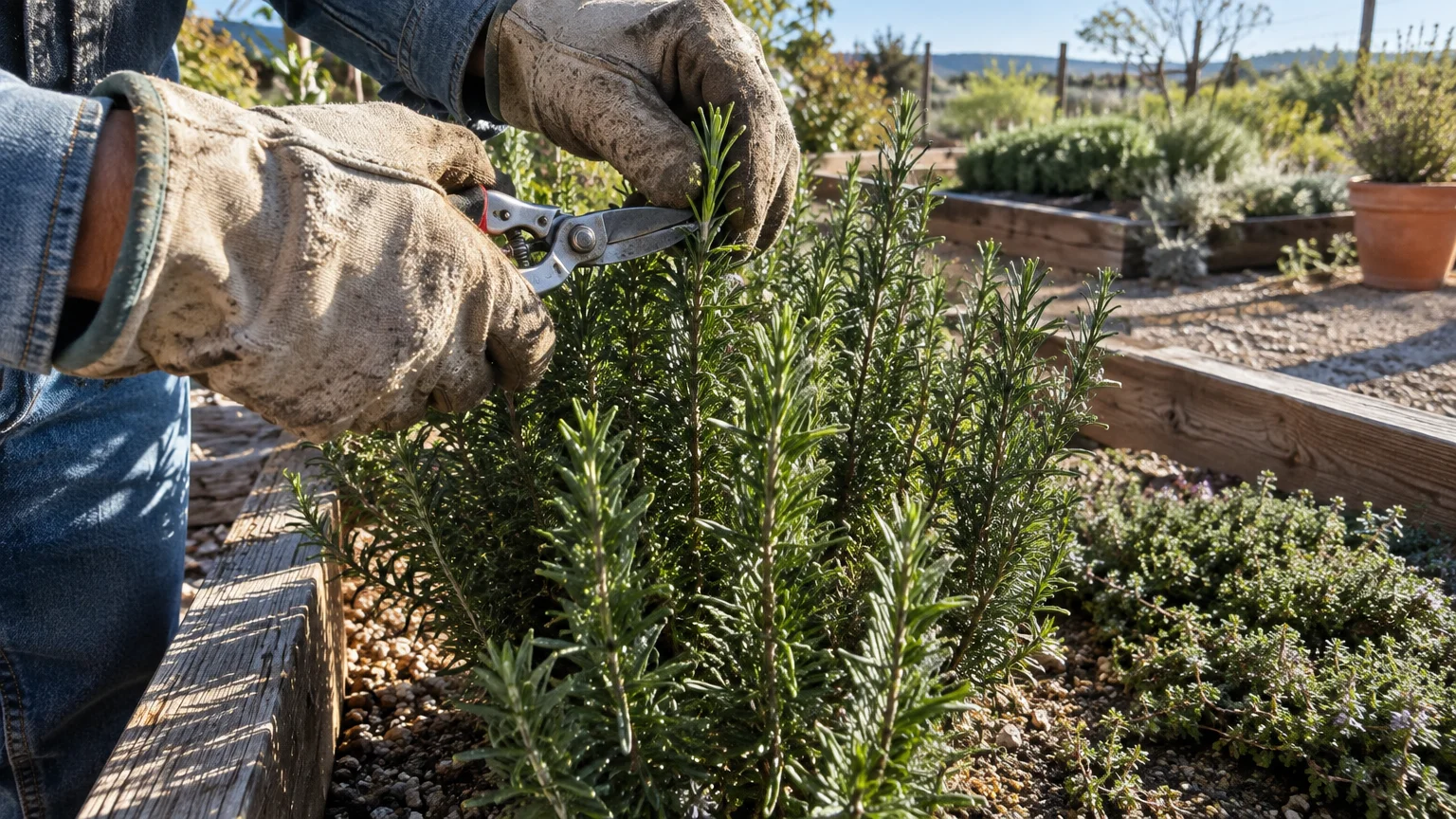
Rosemary acts as an aromatic anchor in sunny beds, pairing effortlessly with woodier companions like thyme and sage. This evergreen perennial thrives in sandy, fast-draining soil and craves at least six to eight hours of direct sunlight daily.
You should position rosemary alongside thyme because both species share low moisture requirements and identical nutritional needs. Grouping them prevents root rot, a fungal disease that rapidly strikes drought-adapted Mediterranean herbs grown in waterlogged ground.
Rosemary emits pungent camphoraceous terpenes that confuse insect pests, shielding surrounding greens from harmful aphids and cabbage moths. In return, smaller companions stabilize the surrounding topsoil without stealing moisture from rosemary’s extensive root system.
To plant them together, space rosemary bushes roughly twenty-four inches away from nearby companions to allow adequate air circulation. Prune young stem tips frequently throughout spring to encourage bushy foliage and maintain accessible growth for kitchen harvesting.
Maintain a slightly alkaline to neutral soil pH between 6.5 and 7.0 for optimal root uptake. Water only when the top two inches of topsoil feel completely dry to the touch.
Tip #2: Thyme
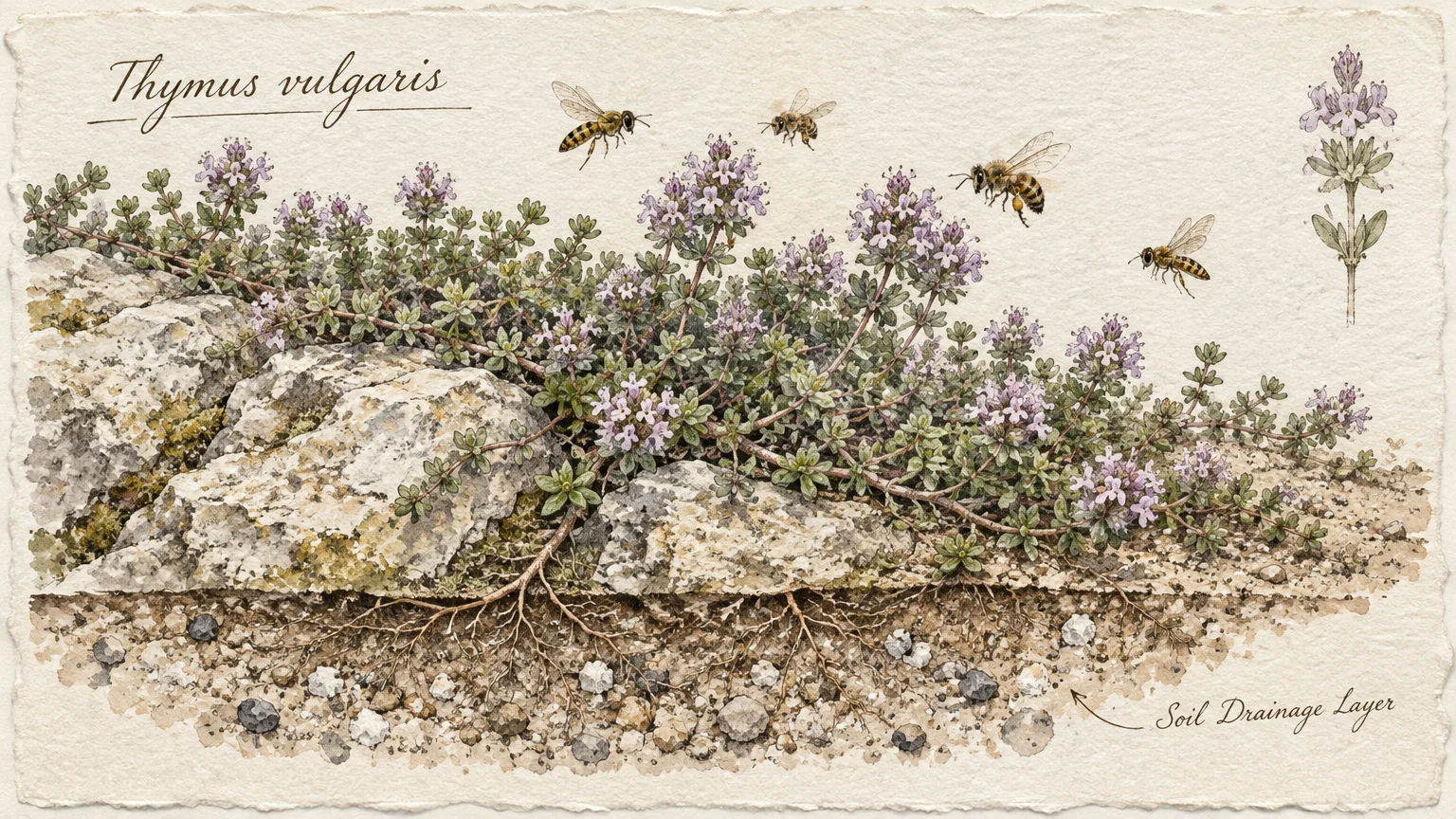
Thyme serves as a resilient, low-growing groundcover that pairs brilliantly with taller sun-loving herbs such as rosemary and oregano. Its dense, creeping foliage shades the earth, which locks in residual warmth while suppressing invasive garden weeds.
When growing herbs together in gravelly or poor soil, thyme thrives where high-fertility crops struggle. Pairing thyme with oregano ensures both plants flourish under lean conditions without competing for excessive nitrogen or moisture.
Thyme releases potent thymol into the immediate air corridor, acting as an organic deterrent against hornworms and flea beetles. Hoverflies and honeybees flock to thyme’s tiny blossoms, boosting pollination rates across your entire garden plot.
Tuck thyme plants twelve to fourteen inches apart around the sunny base of upright herb shrubs. You can harvest individual sprigs continuously without shocking the crown, provided you leave three inches of green stem intact.
Ensure your garden bed features coarse grit or perlite mixed into the native soil. Thyme demands rapid drainage and will quickly decline if exposed to standing puddle water.
Tip #3: Sage
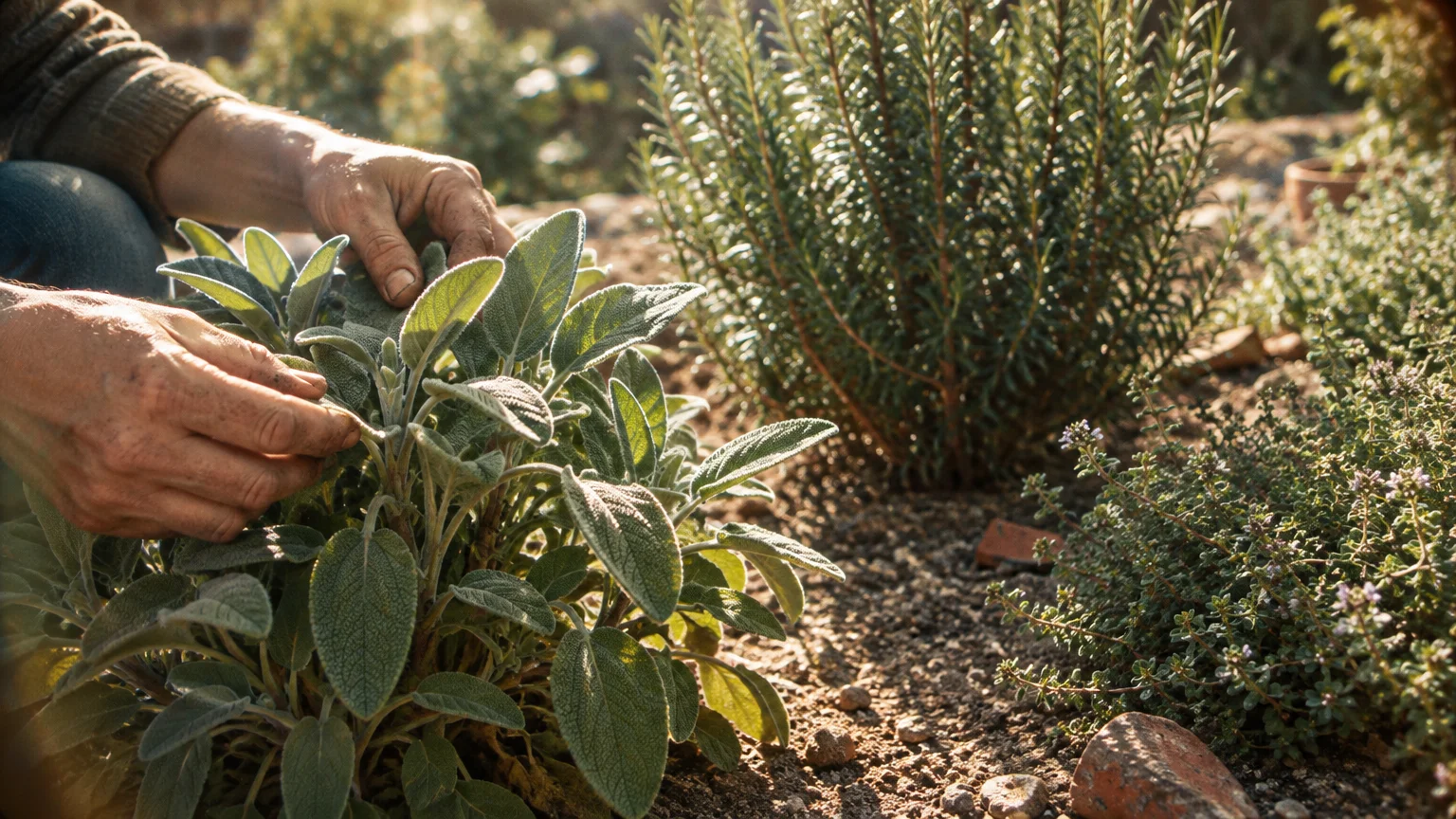
Common garden sage brings broad, velvety foliage and earthy flavor into your companion planting layout, making it an ideal partner for rosemary and thyme. Its semi-woody stems handle harsh afternoon sun with ease.
Sage partners seamlessly with other Mediterranean perennials because it dislikes rich, damp soil that leads to root rot. Keeping sage alongside thyme and oregano creates a unified dry-zone bed that simplifies your watering schedule.
The intense fragrance of sage foliage repels destructive cabbage loopers, carrot rust flies, and burrowing wireworms. Interplanting sage near your kitchen pathways also provides reliable year-round foliage that withstands chilly winter frosts.
Plant juvenile sage starts eighteen to twenty inches apart to accommodate their mature two-foot spread. Prune back woody branches each spring by one-third to spur vibrant, tender new shoots for culinary seasoning.
Avoid planting sage near moisture-craving herbs like mint or basil, which demand constant dampness. Instead, provide coarse, lean soil and let the soil dry out thoroughly between light waterings.
Tip #4: Oregano
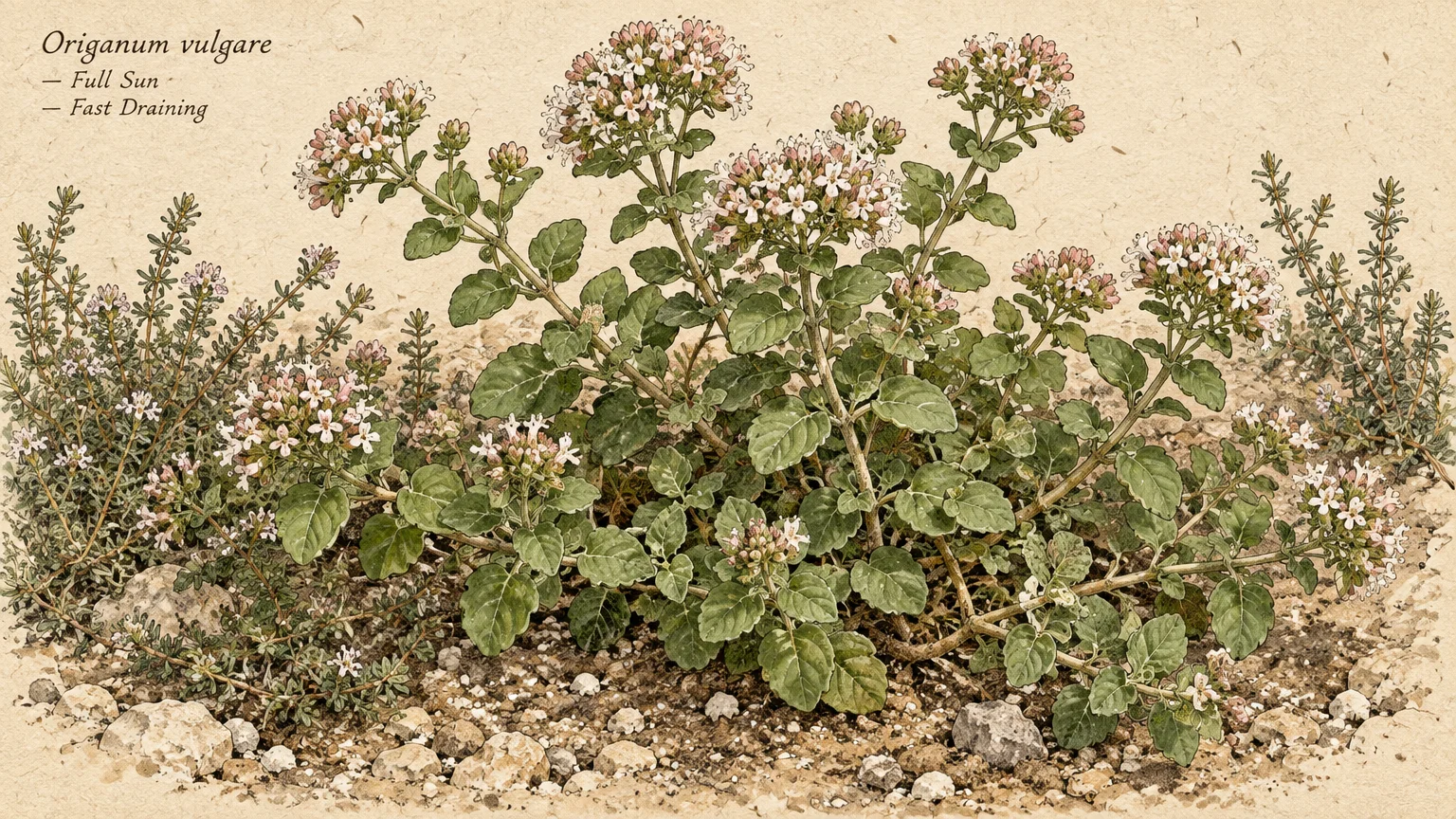
Oregano forms a lush, sprawling carpet of aromatic leaves that thrives alongside sage, rosemary, and thyme. This vigorous perennial creates living mulch that protects delicate topsoil from intense sun scorch.
Gardeners love grouping oregano with other dry-tolerant herbs because their care requirements align perfectly. You can manage their irrigation simultaneously, saving valuable time and conserving household water during hot summer stretches.
Oregano acts as a natural pest repellent by masking the scent of neighboring crops with aromatic carvacrol oil. During midsummer, its delicate lilac flowers attract beneficial predatory wasps that eliminate garden caterpillars naturally.
Give oregano twelve to eighteen inches of breathing room so its trailing runners can spread comfortably without smothering neighboring herbs. Cut plants back by half just before flowering to trigger a flush of savory, sweet leaves.
Use a well-draining garden soil mix amended with pumice or fine gravel. Oregano requires minimal fertilizer, as excess nitrogen dilutes its concentrated essential oil production and weakens leaf flavor.
Tip #5: Lavender
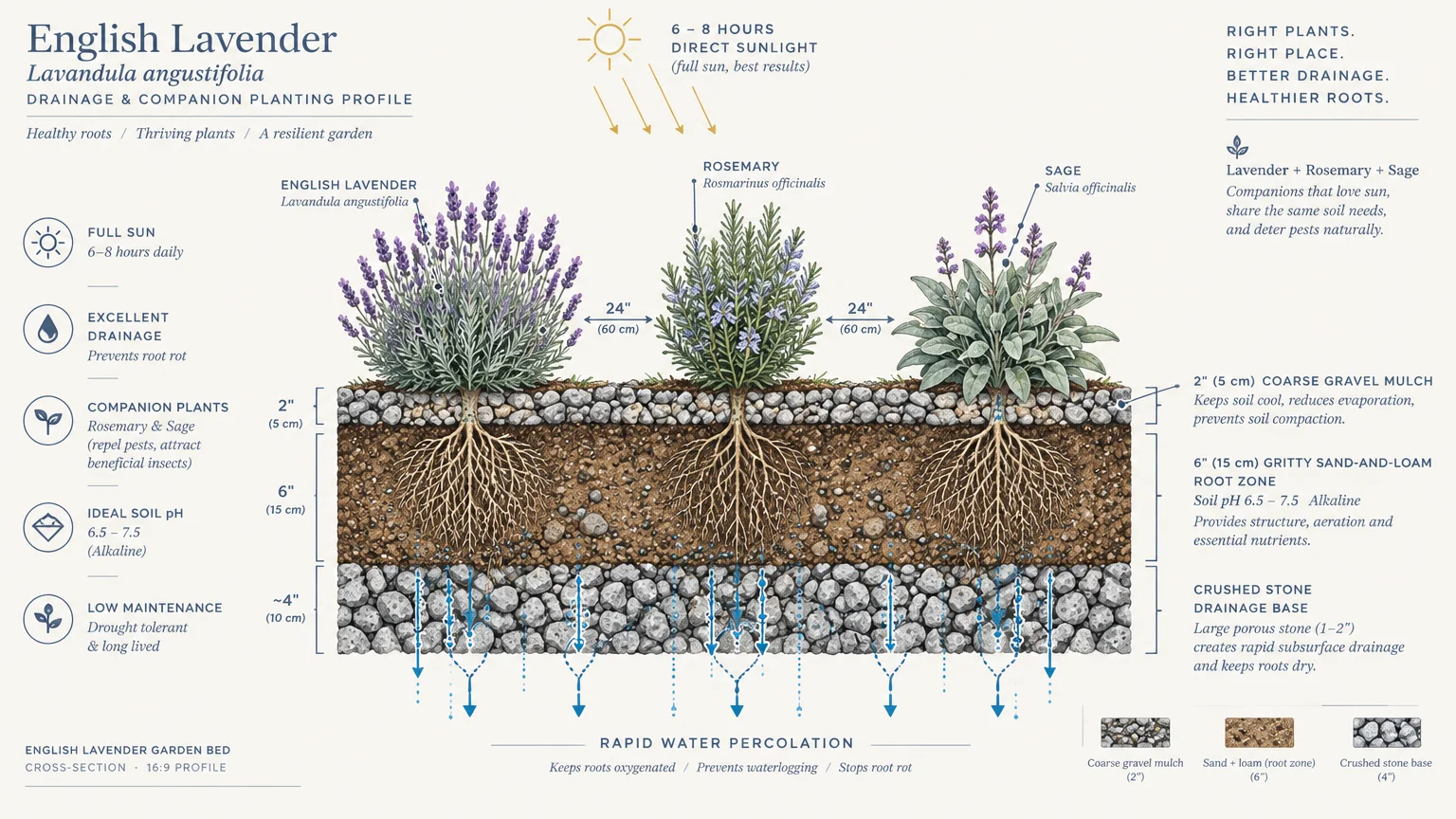
Lavender delivers elegant silver-gray foliage and soothing floral spikes that complement rosemary, sage, and thyme in outdoor garden beds. Its upright structure creates stunning visual height in an organized herb garden layout.
Like its woody counterparts, lavender requires gritty, alkaline soil and scarce supplemental irrigation once established. Planting lavender alongside rosemary creates an enduring drought-hardy hedge that survives prolonged summer dry spells without wilting.
Lavender’s sweet floral aroma repels troublesome pests such as mosquitoes, ticks, and whiteflies while attracting crucial pollinators. Bumblebees and butterflies frequent lavender blooms all summer long, creating a bustling, healthy backyard ecosystem.
Position lavender plants two to three feet apart to maximize full sun exposure and continuous airflow around the foliage. Trim back the flower stems immediately after blooming to maintain a tidy, compact bush shape.
Test your soil before planting to confirm a pH between 6.5 and 7.5. Add agricultural lime if your local soil leans acidic, ensuring optimal root development and long-term plant longevity.
Tip #6: Basil
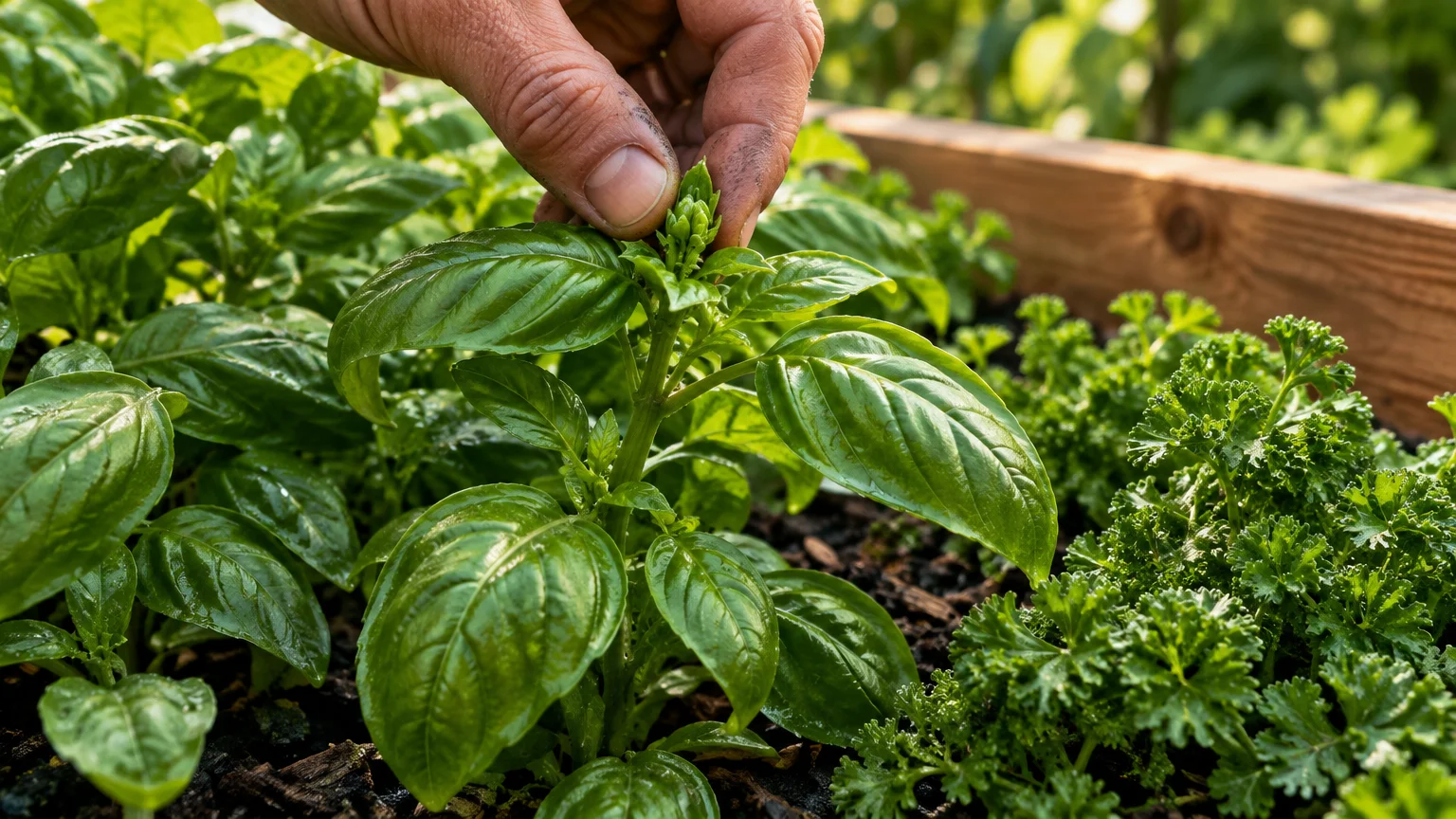
Sweet basil represents the star of warm-weather companion planting herbs, pairing exceptionally well with moisture-loving parsley and chives. It features tender, broad leaves that require nutrient-rich soil and consistent hydration to produce vigorous yields.
Placing basil near parsley creates a balanced culinary zone with shared feeding and watering routines. Both plants relish rich compost and warm summer temperatures, making them dependable companions in garden beds and window containers alike.
Basil emits aromatic eugenol compounds that effectively deter harmful thrips, hornworms, and garden flies. Many experienced gardeners also find that growing basil near companion crops noticeably enriches their overall flavor profiles.
Space basil seedlings ten to twelve inches apart in a sunny spot receiving six hours of sunlight. Pinch the central stem tips regularly above a leaf node to stimulate bushy lateral growth and postpone flowering.
Feed your basil bed with balanced organic liquid fertilizer every three weeks during active summer growth. Keep the soil evenly moist but never soggy, watering exclusively at the soil base to avoid leaf spotting.
Tip #7: Parsley
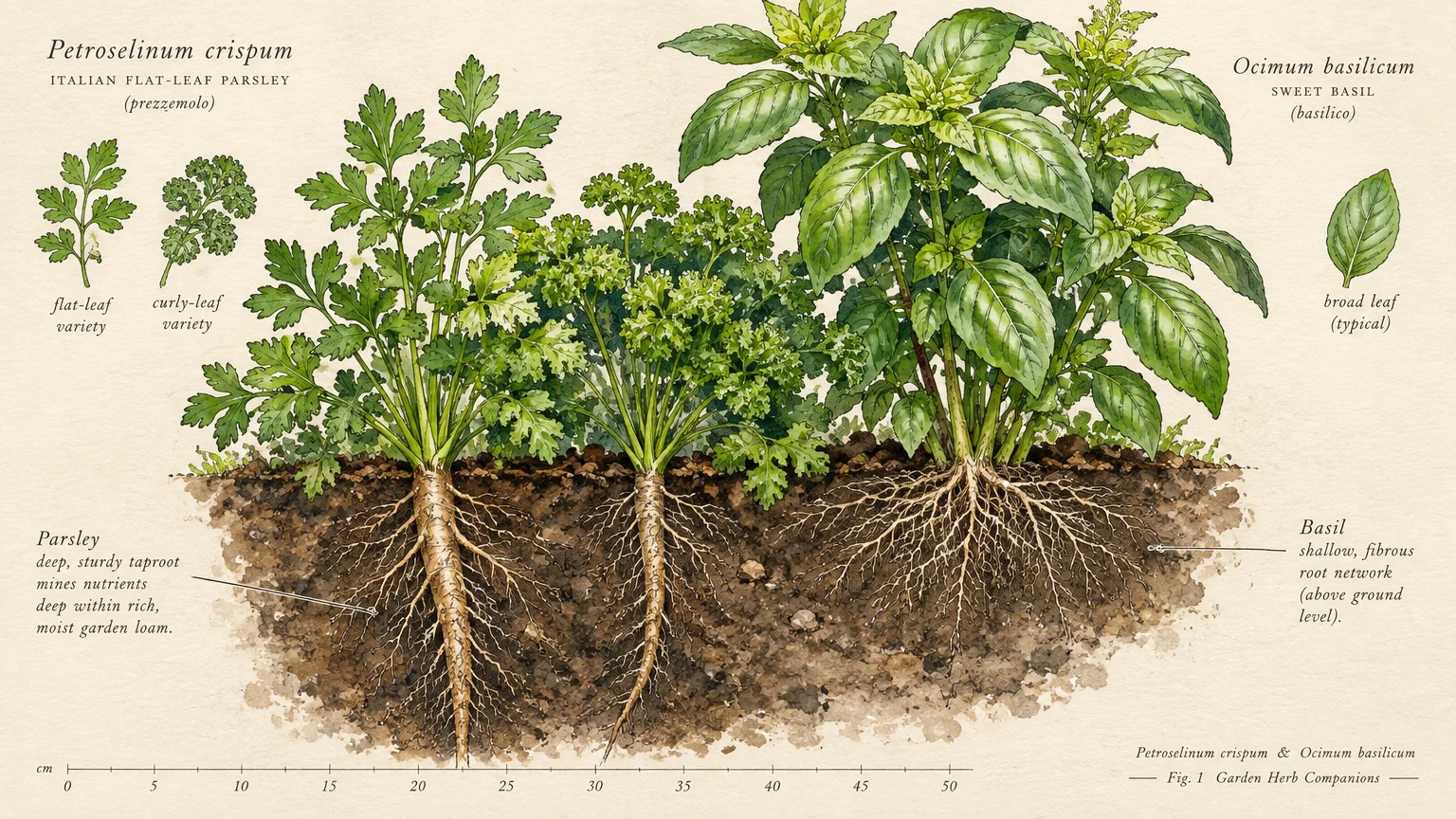
Parsley serves as a dependable, nutrient-dense biennial that thrives alongside companion herbs such as basil, chives, and cilantro. Its lush, ruffled foliage provides dense understory cover that retains cool soil moisture during sunny afternoons.
Parsley pairs harmoniously with basil and chives because all three crave moderately damp, loamy soil with steady nitrogen availability. By grouping them together, you prevent accidental overwatering of your drier Mediterranean herb collections.
Parsley’s taproot pulls trace minerals from deep within the subsoil, improving root-zone fertility for shallower neighbors. When allowed to bloom in its second year, parsley attracts swallowtail butterflies and predatory tachinid flies.
Transplant parsley seedlings six to eight inches apart in partial to full sun. Harvest the outer stems first by snipping near the base, allowing the inner crown to produce fresh culinary leaves continuously.
Work aged compost into the top four inches of your planting bed before sowing seeds or starts. Apply an organic mulch layer around plants to stabilize soil temperatures and prevent moisture evaporation.
Tip #8: Chives
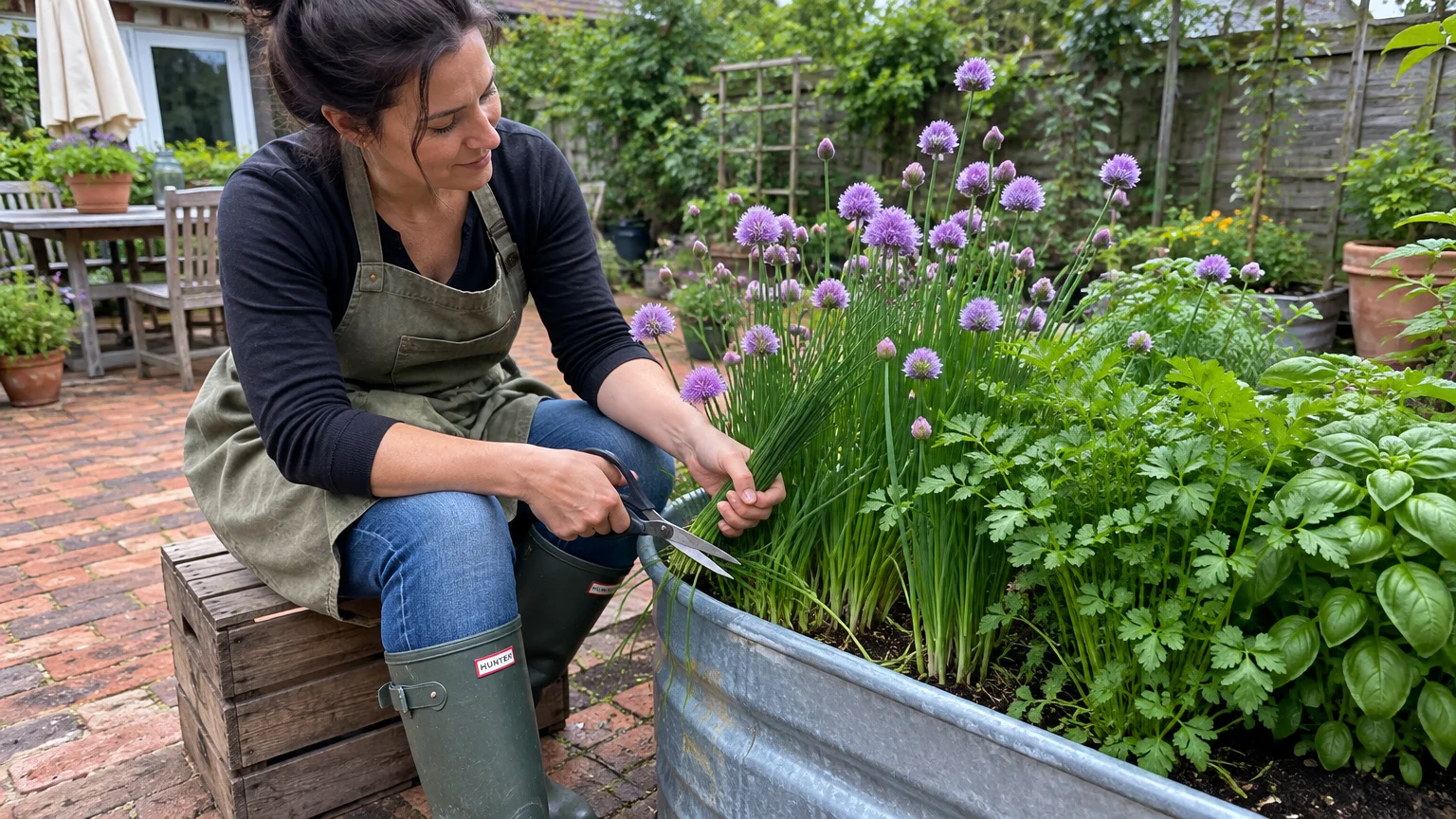
Chives provide slender green scapes and edible purple pompom flowers, making them an indispensable partner for parsley, dill, and cilantro. This cold-hardy allium returns reliably each spring, offering early-season harvest opportunities.
Growing herbs together like chives and parsley works remarkably well because both prefer steady moisture and rich soil textures. Chives occupy minimal horizontal space, allowing you to interplant them along bed borders without crowding leafy neighbors.
Chives produce natural sulfur compounds that drive away aphids, spider mites, and Japanese beetles from adjacent plants. Their vibrant blossoms also supply nectar to solitary bees and other beneficial garden insects early in the growing season.
Plant chive bulbs in compact clumps spaced six inches apart in full sun or light afternoon shade. Snip leaves about two inches above the soil line using sharp shears to encourage rapid, upright regrowth.
Divide established chive clumps every three years to prevent root overcrowding and maintain vigorous scape production. Water your chive patches regularly during heatwaves to stop the hollow leaf tips from turning yellow.
Tip #9: Dill
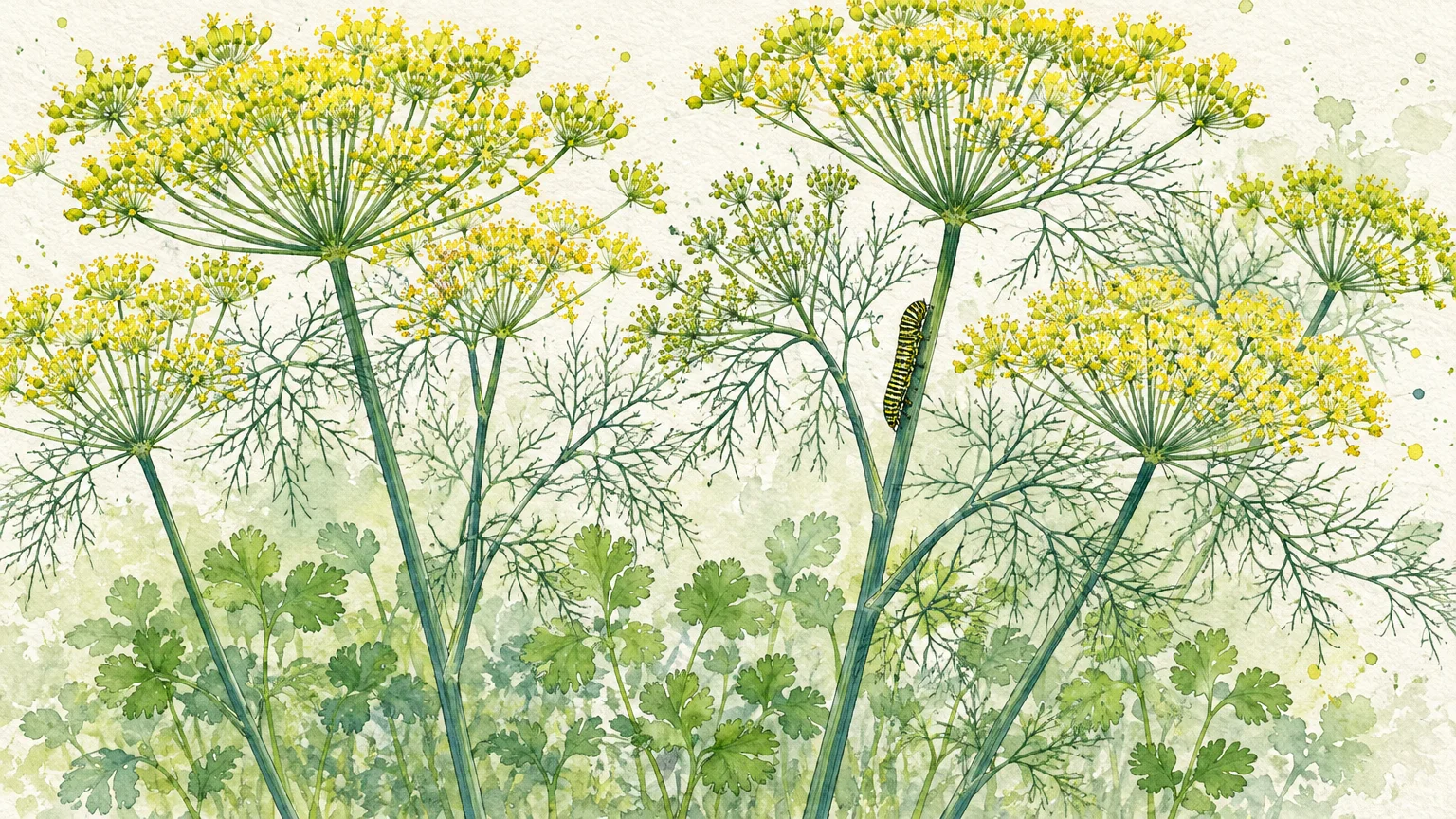
Dill stands out with feathery blue-green foliage and expansive golden flower umbels that complement cilantro and chives seamlessly. Its vertical growth pattern adds height and dimension to your backyard herb garden layout.
Dill and cilantro share comparable lifecycles, thriving during cool spring and autumn windows while tolerating similar watering cadences. Co-planting them allows you to manage their rapid growth cycles together and replant simultaneously when warm weather arrives.
Dill flowers serve as exceptional landing pads for lacewings, ladybugs, and parasitic wasps that prey upon garden pests. Planting dill beside chives shields your tender herbs from damaging caterpillar and aphid populations without chemical sprays.
Sow dill seeds directly into garden beds twelve inches apart, as dill’s sensitive taproot resents container transplanting. Provide shelter from strong wind gusts to keep mature, flower-laden stems from bending or snapping prematurely.
Maintain loose, well-aerated soil rich in decomposed leaf mulch or compost. Harvest dill fronds when young and tender, snipping stems just above a set of healthy branch nodes.
Tip #10: Cilantro
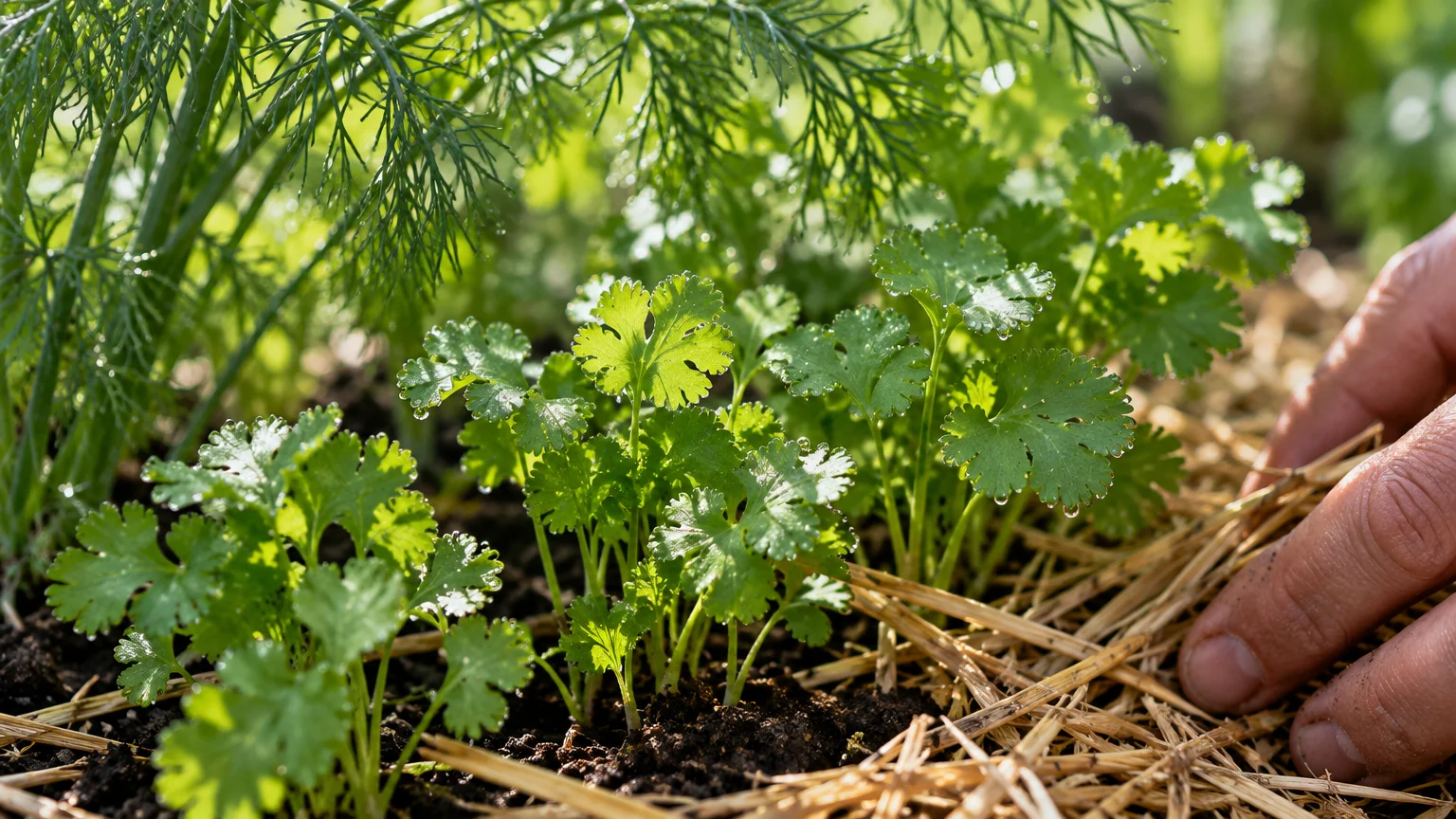
Cilantro delivers crisp, citrusy foliage that pairs naturally with dill, parsley, and chives in cool-season garden plots. As an added benefit, cilantro produces aromatic coriander seeds that you can collect for culinary spice storage.
Cilantro and dill make exceptional bedfellows because they enjoy cool spring conditions and moist, loose soil. You can intercrop cilantro between slower-growing herbs to maximize square footage while waiting for companion plants to fill out.
Cilantro’s scent repels spider mites, whiteflies, and potato beetles, protecting tender neighboring foliage throughout the season. When cilantro bolts in summer heat, its dainty white blooms attract beneficial syrphid flies that devour nearby aphids.
Sow cilantro seeds directly into garden beds every two to three weeks for continuous successive harvesting. Space rows eight inches apart in a spot that receives morning sunlight and gentle afternoon shade.
Keep the soil consistently moist to delay premature bolting during sudden spring heatwaves. Harvest outer stems regularly with clean scissors, cutting close to the base to stimulate ongoing foliage production.
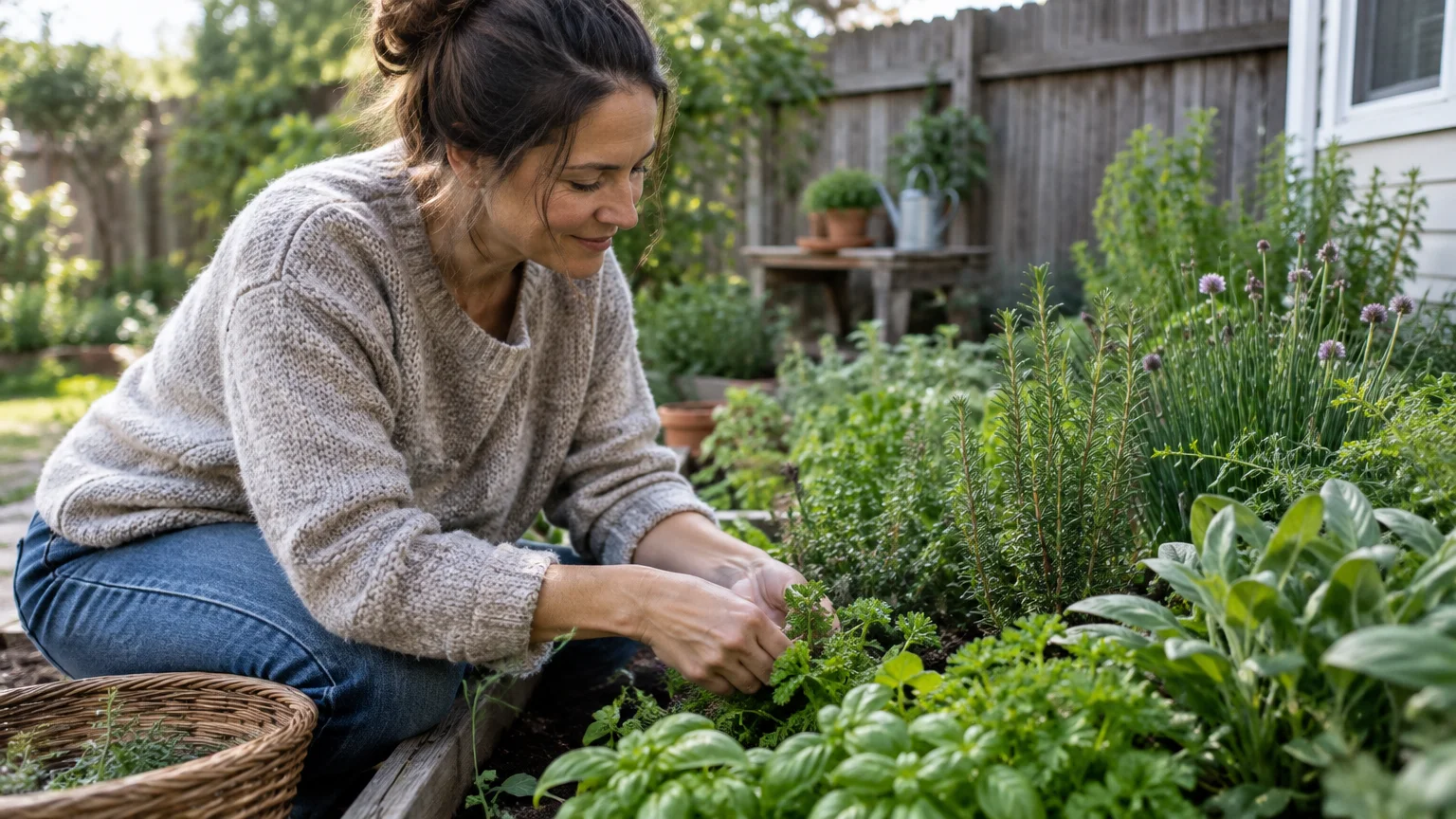
Putting It All Together: Enjoy Your Beautiful Garden
Creating a thriving herb sanctuary begins with grouping plants that share matching soil moisture, drainage, and sun requirements. When you balance Mediterranean drought lovers with moisture-craving soft herbs, your companion planting herbs flourish with minimal effort.
Strategic herb combinations do more than simplify daily irrigation routines; they deter destructive pests and invite helpful pollinators. These natural plant partnerships build a self-sustaining micro-ecosystem that rewards you with vigorous growth and intense kitchen flavors.
You can begin implementing these practical herb garden tips in simple raised beds, garden borders, or grouped patio containers. Take advantage of their natural synergies today, and enjoy a fragrant, healthy harvest throughout the entire growing season.
Frequently Asked Questions
Can you plant all ten herbs in the same garden bed?
You can plant all ten herbs in one bed if you divide the space into two separate watering zones. Place Mediterranean herbs like rosemary, thyme, sage, oregano, and lavender in sandy, dry soil on the sunniest side.
Position moisture-loving herbs such as basil, parsley, chives, dill, and cilantro in a richer soil pocket nearby. This zoning strategy gives every plant its ideal growing environment without triggering root rot or drought stress.
Which herbs should never be planted together?
Never plant moisture-loving herbs like mint or basil directly beside drought-adapted herbs like rosemary or lavender. Mint requires aggressive containment because its invasive underground runners quickly choke out neighboring root systems.
Similarly, keep dill away from fennel in your garden beds. These two closely related species can cross-pollinate, resulting in bitter-tasting seedlings and compromised culinary flavors.
How much sunlight do companion herbs need each day?
Most culinary herbs require at least six hours of direct, unfiltered sunlight each day to produce potent aromatic oils. Mediterranean varieties such as rosemary and lavender perform best with eight full hours of intense daily sun.
Leafy herbs like parsley and cilantro tolerate partial afternoon shade, particularly in regions with extreme summer heat. Providing afternoon shade shields their delicate foliage from scorching and delays premature bolting.
Can you grow these companion herbs together in pots?
Yes, you can easily grow compatible herbs together in wide containers with ample drainage holes. Combine drought-hardy varieties like thyme and oregano in one terra-cotta pot using coarse, gritty potting mix.
Plant basil, parsley, and chives together in a separate, moisture-retentive container filled with organic potting compost. This container separation allows you to tailor watering schedules to each herb family’s distinct needs.
For region-specific advice, consult your local University Extension program (find yours via the USDA directory). For plant databases and inspiration, visit the Missouri Botanical Garden or the Royal Horticultural Society.
Disclaimer: This article provides general gardening advice. Always consider your specific climate, soil conditions, and local pests; follow safety guidelines when using gardening tools and products.