You can harvest sweet, crisp produce well into autumn when you grow the right cool season crops. A light frost between 28°F and 32°F actually enhances the flavor of many resilient garden plants.
Chilly temperatures trigger a natural defense mechanism that converts stored starches into complex sugars. This chemical transformation prevents cellular freezing and delivers an exceptionally rich harvest straight to your table.
Discovering which cold hardy vegetables thrive through freezing weather lets you extend your growing season for weeks. Plant these nine dependable varieties to enjoy fresh food long after summer fades.
Tip #1: Curly and Tuscan Kale
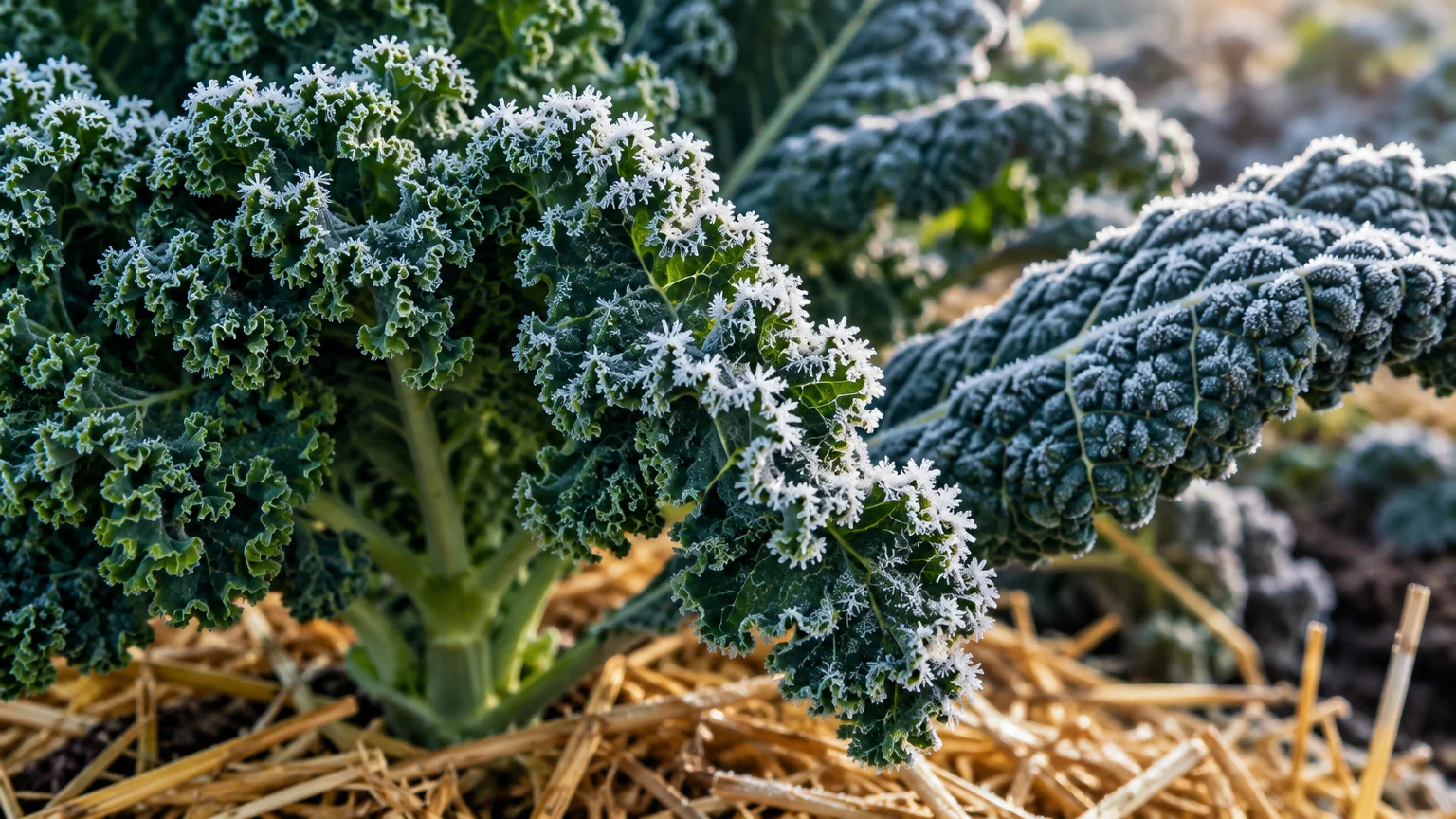
Kale reigns as one of the most reliable frost tolerant vegetables in any home garden. It easily withstands overnight dips down to 20°F without dropping a single leaf.
Cold nights force the plant to concentrate its cellular sugars, which act as a natural anti-freeze. This biological shift replaces summer bitterness with a delightful, nutty sweetness.
Sow seeds directly in late summer, or transplant vigorous nursery starts roughly six weeks before your first expected frost. Give each plant eighteen inches of space to maximize air circulation.
Harvest the lowest outer leaves first so the central rosette continues producing through winter. Mulch the soil heavily with clean straw to protect the root crown from severe freezing.
Varieties like ‘Winterbor’ and ‘Lacinato’ produce dense, crinkled foliage that easily sheds morning ice glaze. You will enjoy crisp, nutrient-dense salads long after the first snowfall blankets the ground.
Brush off light snow before picking to prevent snapping the chilled leaf stems. Rinse the harvested leaves in cool tap water to refresh their crisp texture before cooking.
A thick four-inch layer of shredded leaves around the base keeps the soil warm; it also conserves essential root moisture.
Tip #2: Cold-Hardy Spinach
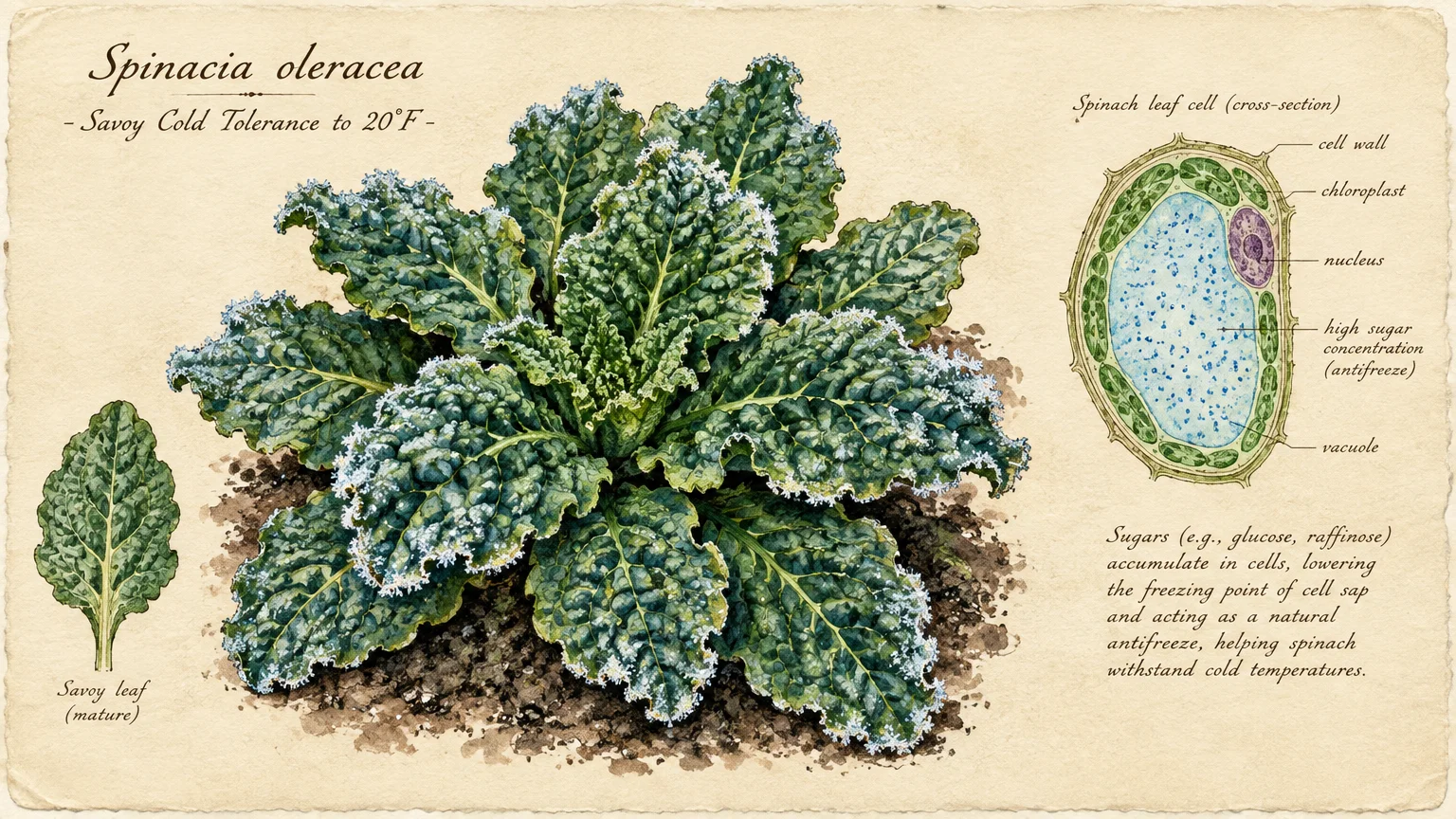
Spinach is an exceptional cool season crop that laughs off overnight freezes down to 20°F. The dense, deep-green leaves survive heavy frost with remarkable resilience.
Freezing conditions cause the plant to pack its cells with protective dissolved sugars. This biological safeguard makes late-autumn spinach tender, succulent, and noticeably sweeter than spring harvests.
Plant Savoy-leaf cultivars like ‘Bloomsdale’ or ‘Tyee’ in late summer for an extended autumn yield. Their crinkled, thick leaf structure sheds frost crystals far better than smooth-leaf types.
Keep the soil consistently moist while young seedlings establish during late summer heat. Once cooler autumn air arrives, reduce your watering schedule to avoid fungal problems.
Pick individual outer leaves continuously to spur fresh growth from the plant’s crown. If temperatures plunge into the teens, cover the bed with floating row fabric for seamless harvesting.
The low-growing rosettes nestle close to the ground, capturing radiant warmth from the dark garden soil. You can harvest these nutrient-rich greens throughout the coldest months of the year.
Even when frozen stiff at dawn, the leaves thaw rapidly and remain wonderfully crisp by midday.
Tip #3: Brussels Sprouts
Brussels sprouts belong to the elite tier of fall garden vegetables that actually require frost to taste their best. Untouched by cold, these mini cabbages can taste sharp and unpleasantly sulfurous.
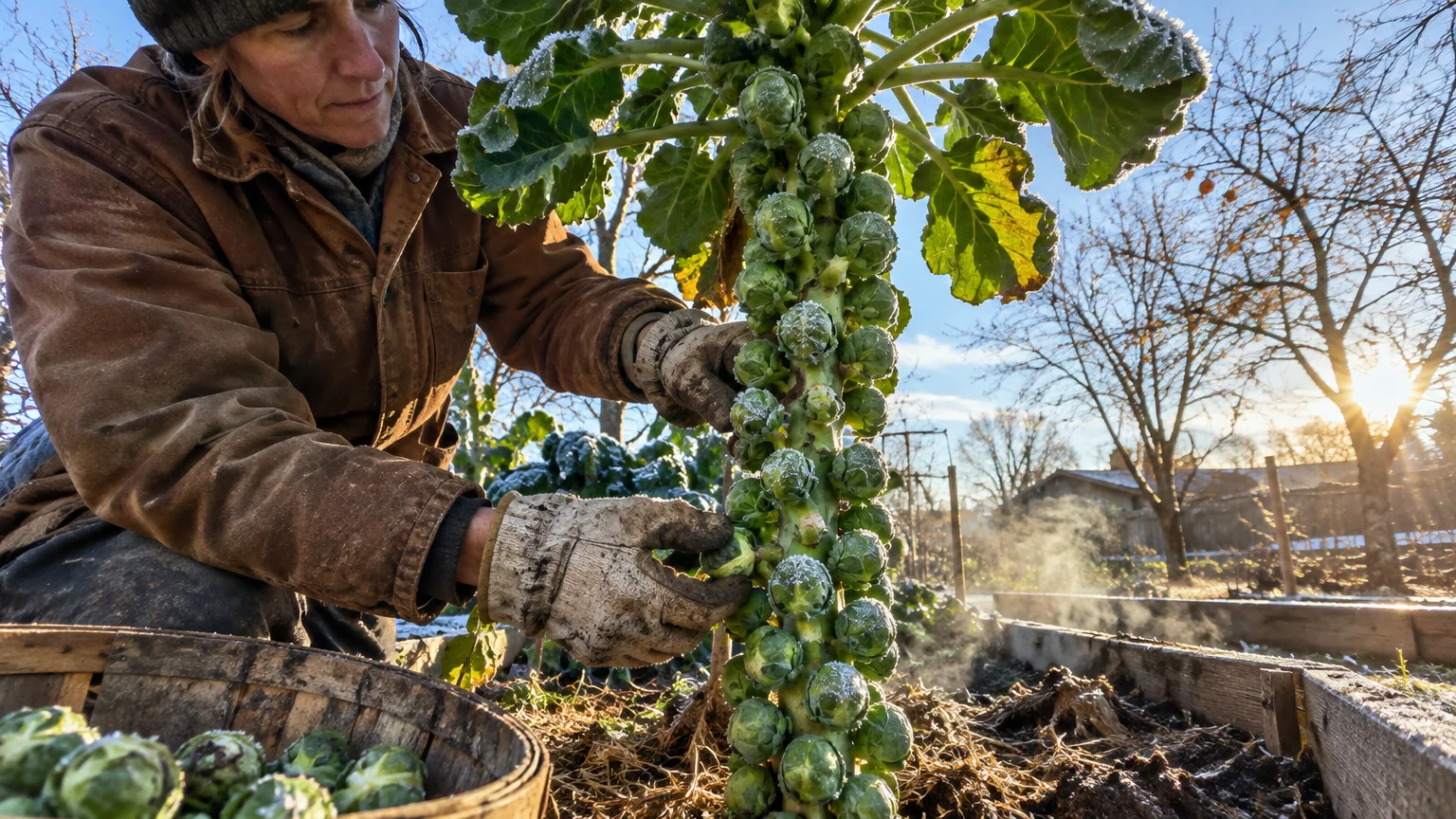
Several touches of freezing weather convert those harsh compounds into rich, sweet starches. You can safely harvest them in temperatures plummeting as low as 20°F.
Start your plants in early summer so they have roughly one hundred days to mature before cold sets in. Sturdy stalks need full sun and rich, firm soil to support heavy yields.
Pinch off the growing tip of the main stem about four weeks before your average first frost. This focuses the plant’s final energy surge into plumping up the lower sprouts.
Twist the firm lower buds off the stem as you need them for roasting or sautéing. The protective outer wrapper leaves shrug off early ice storms without damaging the tender interior.
Leave the rest of the stalk standing tall in the garden well past Thanksgiving. Snow cover merely insulates the sprouts, keeping them fresh until you are ready to cook.
Mulching around the base with chopped straw helps prevent the tall stems from shifting during gusty autumn winds.
Tip #4: Sweet Autumn Carrots
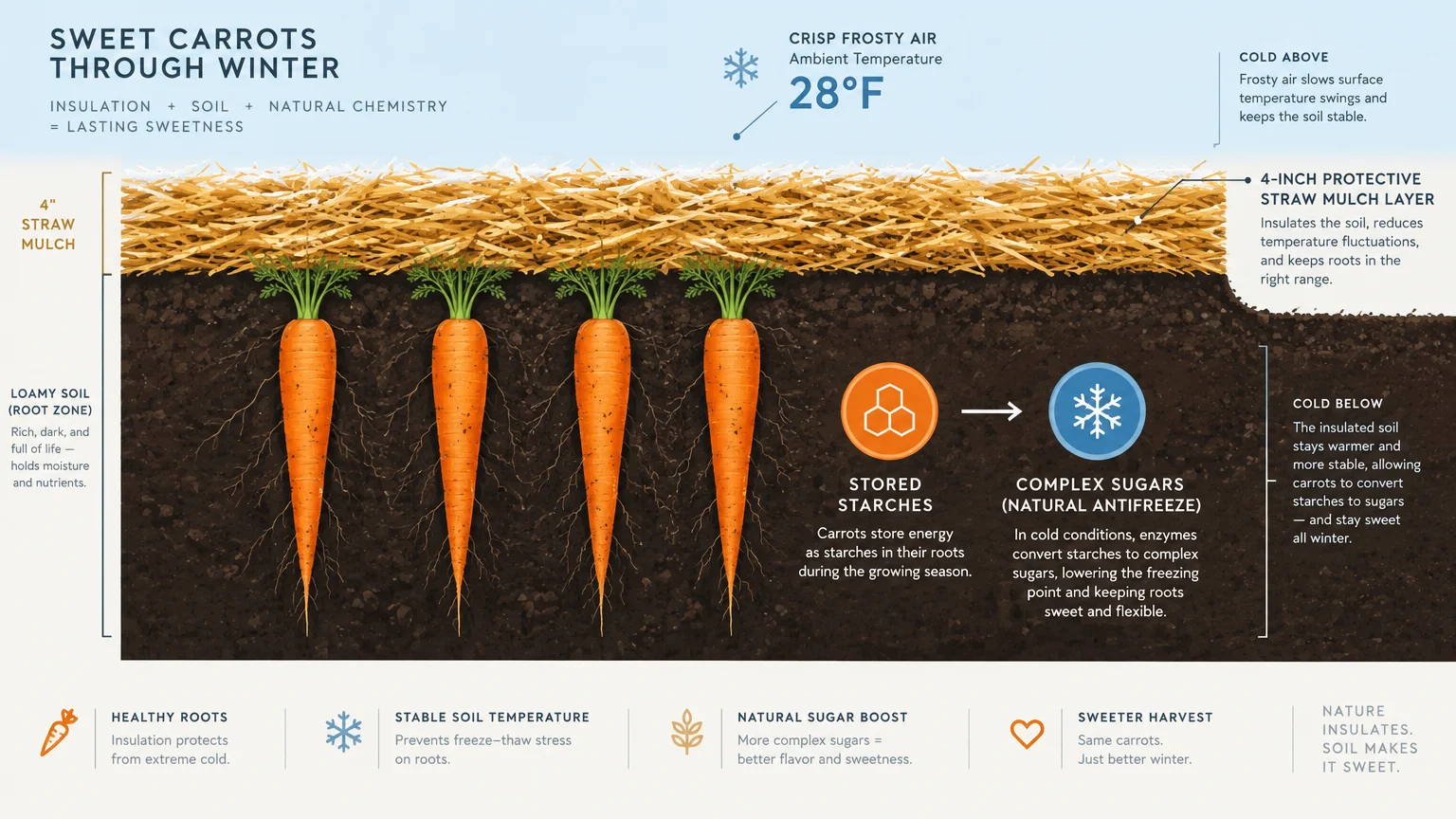
Carrots rank among the best vegetables that survive frost, hiding their prized taproots safely beneath the soil line. While delicate tops may wilt slightly, the underground roots remain completely unharmed.
Cold soil stimulates an intense sugar accumulation that turns standard carrots into sweet, candy-like treats. Gardeners often consider frost-sweetened carrots the crown jewel of the autumn harvest.
Choose cold-hardy varieties such as ‘Napoli’ or ‘Bolero’ for your late-season sowings. Sow them directly into loose, well-draining garden soil about ten weeks before your first hard frost.
Spread a generous six-inch layer of straw directly over the carrot shoulders before the ground freezes solid. This organic blanket traps earth heat and prevents the soil from locking up.
You can dig roots on demand all winter simply by pushing back the thick mulch blanket. Freshly dug winter carrots offer an unbeatable crisp crunch and rich, earthy flavor.
Water the bed thoroughly before the first freeze settles across your area. Hydrated soil retains thermal energy significantly longer than dry, powdery dirt.
Harvest gently using a garden fork rather than pulling the brittle frozen tops by hand.
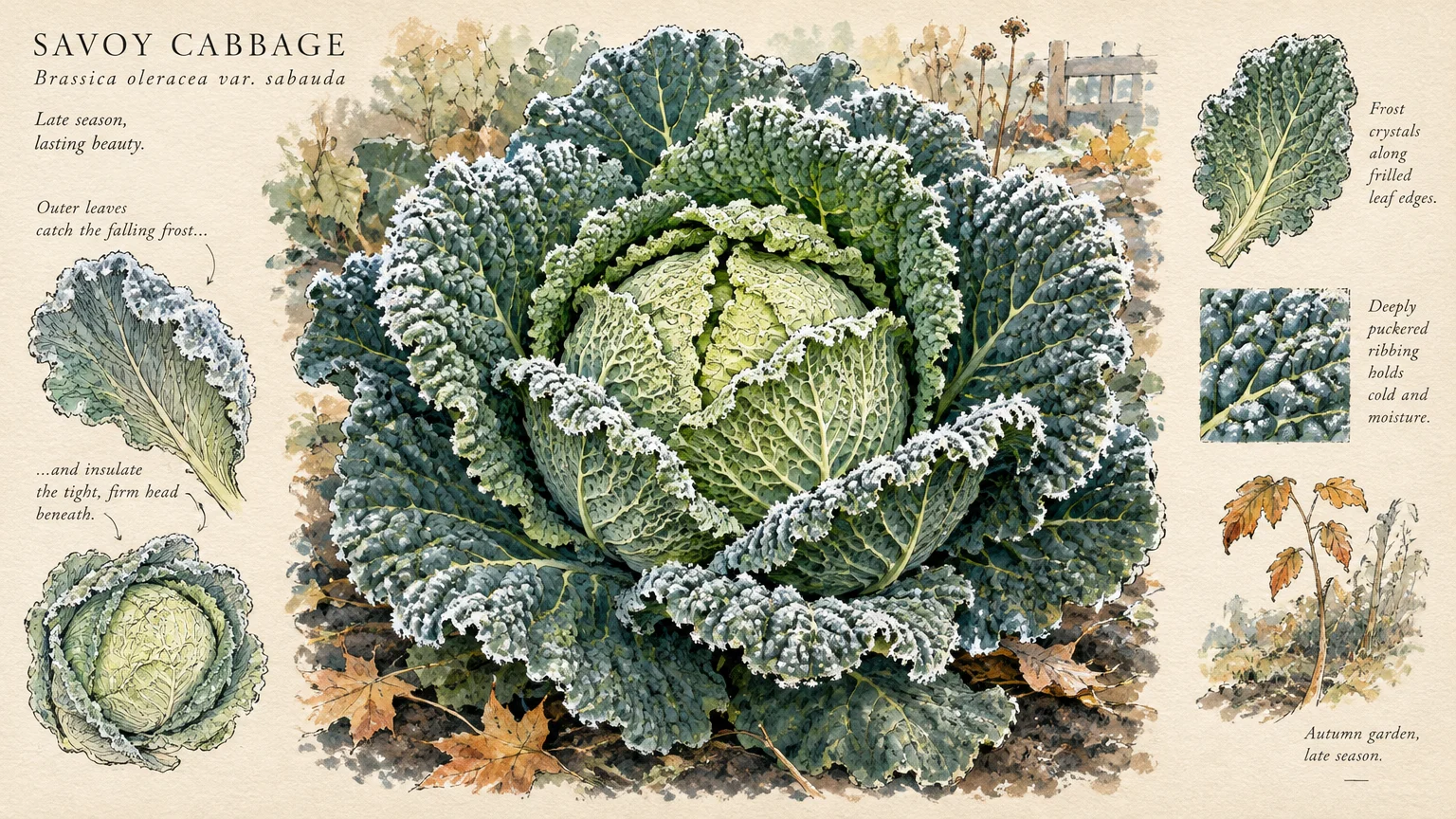
Tip #5: Late-Season Cabbage
Solid head cabbage stands proud as a heavyweight champion among frost tolerant vegetables. Mature heads easily endure temperatures falling into the upper twenties without losing structural integrity.
Chilly weather tightens the outer leaves around the core, preserving moisture and concentrating natural sugars. The resulting heads yield a crisp, satisfying crunch for autumn slaws and warming braises.
Plant late-maturing savoy or storage varieties like ‘Danish Ballhead’ in midsummer for best cold endurance. Their dense cell structure resists tissue breakdown during sudden overnight temperature drops.
Feed your cabbages with balanced organic fertilizer early in their growth cycle to build broad, healthy leaves. Avoid heavy nitrogen applications late in autumn, which can stimulate tender, frost-sensitive shoots.
Harvest heads when they feel solid and heavy when squeezed firmly between your palms. If an early morning freeze coats the head in frost, wait until afternoon sun thaws the tissue before cutting.
Cabbage keeps exceptionally well right in the garden bed or inside an unheated root cellar. Proper spacing of twenty-four inches ensures each head expands to its maximum potential.
Simply peel away the outermost frosted leaves in your kitchen to reveal pristine, crisp layers underneath.
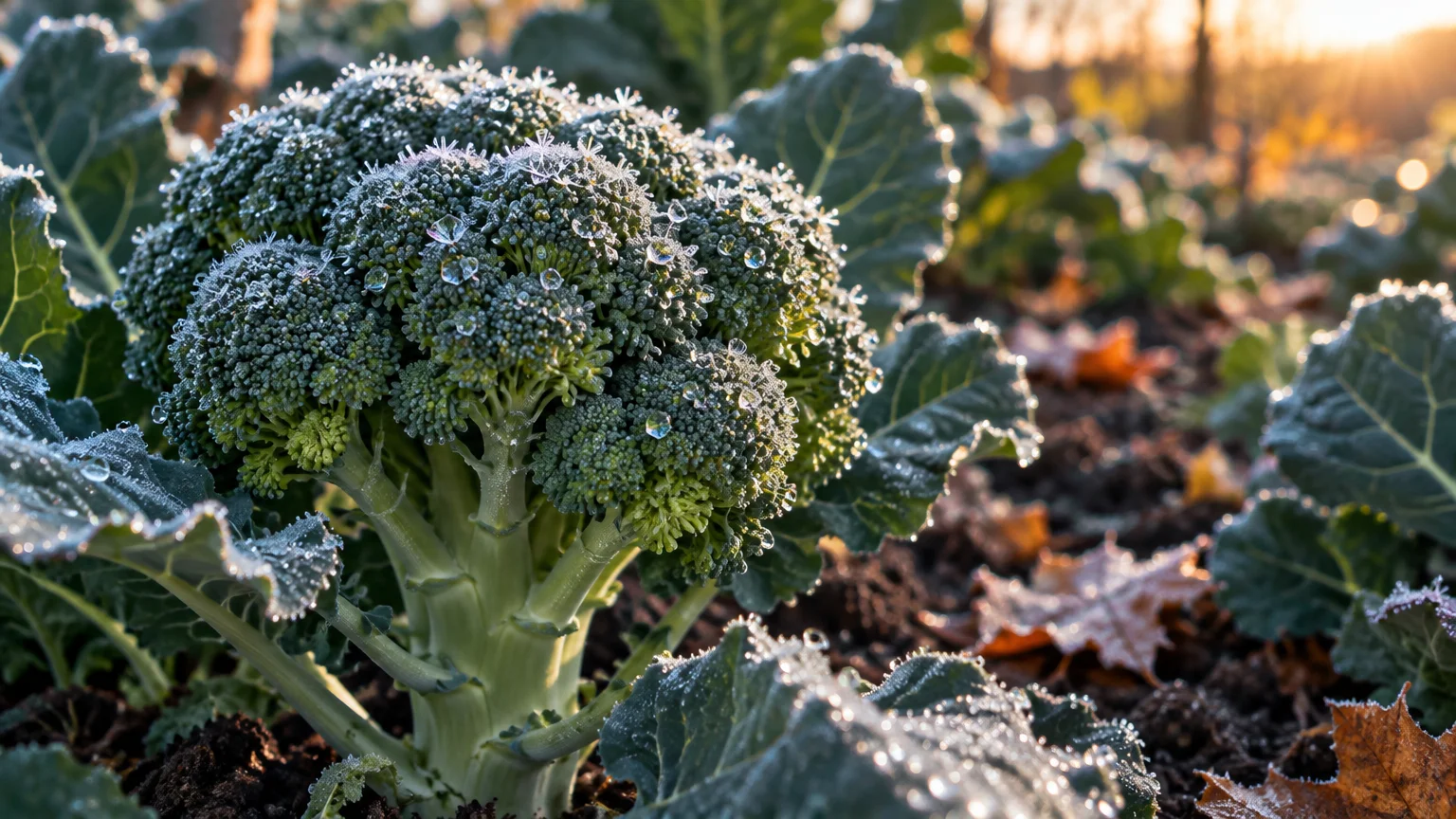
Tip #6: Frost-Kissed Broccoli
Broccoli thrives when daytime temperatures stay cool and nighttime conditions dip toward 28°F. The tight flower buds tolerate light freezing weather far better than the searing heat of midsummer.
Exposure to light frost enhances the natural sugars within both the central crown and tender stems. You will notice a milder, sweeter flavor compared to heads cut in July.
Select cold-tolerant varieties like ‘Marathon’ or ‘Waltham 29’ for your late-summer garden plantings. Set out sturdy transplants roughly ten weeks before your historical first frost date.
Cut the central head while the florets remain tightly closed and dark blue-green. Make a clean, angled cut on the stalk to prevent pooled rainwater from causing rot.
Do not remove the plant after cutting the main crown from the center. Light frost stimulates abundant side shoots, rewarding you with smaller secondary florets for several additional weeks.
Keep the roots hydrated during dry autumn spells to support steady cellular turgor pressure. Well-watered broccoli plants resist freezing damage substantially better than stressed, thirsty specimens.
Harvest heads in the afternoon after the sun melts away any overnight frost on the buds.
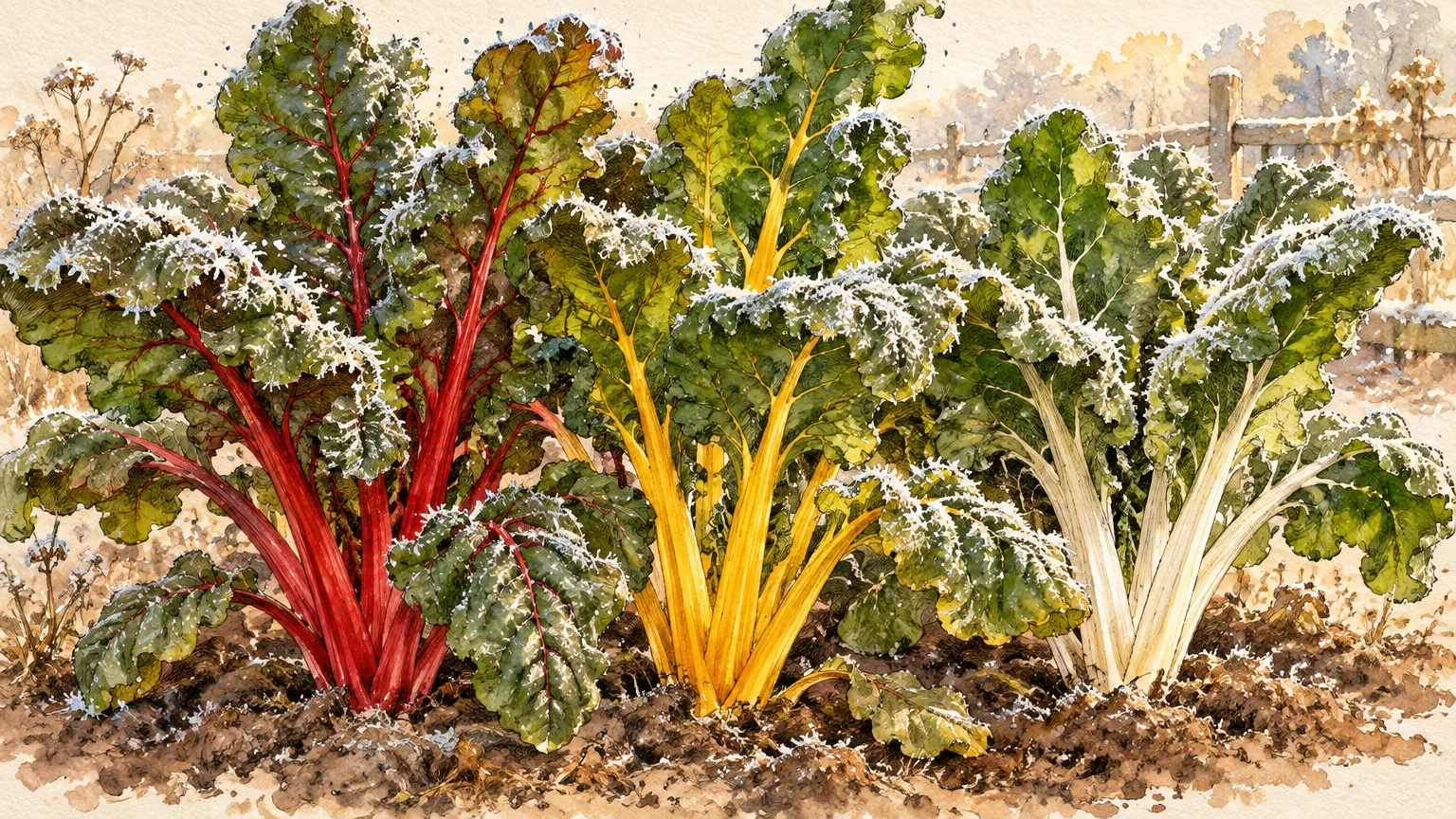
Tip #7: Vibrant Swiss Chard
Swiss chard brings sensational ruby, gold, and emerald tones to your frosty autumn garden beds. This hardy biennial continues producing glossy foliage even as overnight frost coats the garden.
While severe freezes below 20°F will eventually damage the outer stalks, light frost merely thickens the leaves. The chilly weather tames oxalic acid levels, creating a sweeter, milder culinary profile.
Plant varieties like ‘Fordhook Giant’ or ‘Bright Lights’ for exceptional cold resistance and brilliant color. Sow seeds directly in midsummer so plants establish robust crowns before chilly nights arrive.
Harvest outer stalks regularly by slicing them off clean at the base with a sharp pocketknife. This encourages the central core to produce tender new leaves as long as daylight permits.
The glossy leaves may droop dramatically during frosty mornings when ice crystals form between cells. Do not panic; they perk right back up as the autumn afternoon warms the air.
Mound shredded bark or straw around the base to insulate the tender growing crown. This simple barrier allows chard to rebound quickly after sub-freezing autumn cold snaps.
Pair chard stems with garlic and olive oil for a rich, warming autumn side dish.
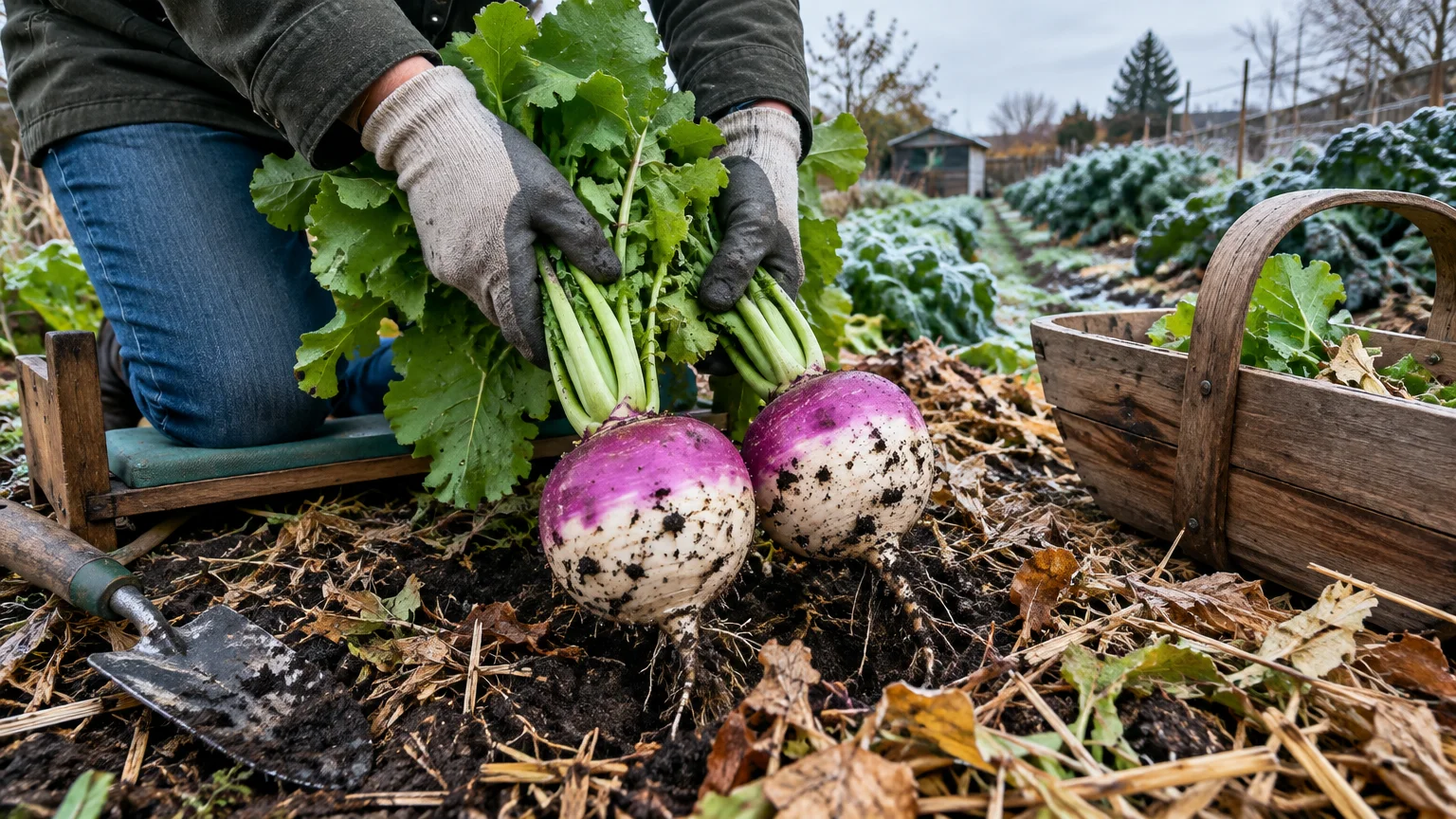
Tip #8: Crisp Garden Turnips
Turnips provide a double reward in the autumn garden by producing both savory roots and nutrient-packed greens. Both parts of this root crop shrug off light frost with remarkable ease.
Chilled autumn soil prompts turnips to convert their complex starches into sweet, delicate sugars. This transformation eliminates the peppery bite often found in spring-grown roots.
Sow seeds directly into fertile, loose garden soil about two months before your first autumn freeze. Thin seedlings promptly to four inches apart to ensure roots have room to expand.
Classic varieties like ‘Purple Top White Globe’ develop crisp, juicy flesh under cool autumn skies. You can harvest the tender young greens continuously while waiting for the roots to mature.
Pull the roots once they reach two to three inches in diameter for the most delicate texture. Larger roots can remain in the soil under a straw mulch blanket until you want them.
Ensure the bed receives at least six hours of direct sunlight every day. Sunlight warms the soil during crisp afternoons, helping plants recover swiftly from cold night temperatures.
Roast harvested turnips with root vegetables to showcase their concentrated, post-frost sweetness.
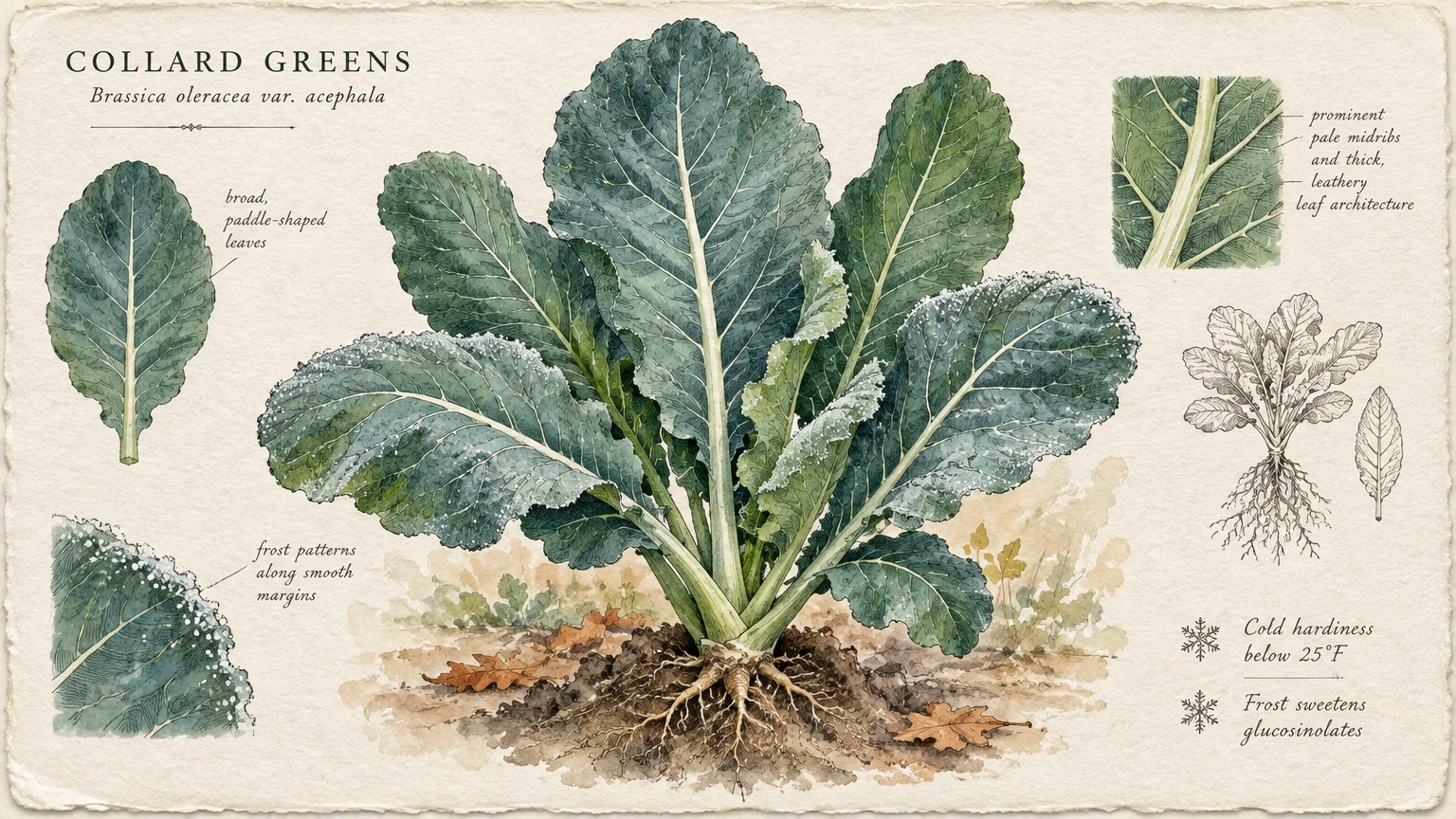
Tip #9: Resilient Collard Greens
Collard greens are practically legendary for their rugged endurance in freezing late-autumn weather. These broad-leafed staples survive temperatures as low as 15°F without flinching.
Southern gardeners have long known that collards require several frosty mornings to unlock their finest flavor. Cold breaks down bitter compounds while elevating cellular sugars to delicious new levels.
Direct seed or transplant collards in midsummer alongside your other fall garden vegetables. Space plants eighteen inches apart in deep, nutrient-rich soil that retains consistent moisture.
The waxy blue-green leaves naturally repel ice crystals and shed early seasonal snowfall. Harvest leaves from the bottom upward, leaving the central growing point intact for ongoing production.
Varieties such as ‘Georgia Southern’ and ‘Champion’ display incredible cold tolerance and steady vigor. Their hearty leaves hold up beautifully in comforting soups, savory stews, and traditional braises.
Apply an organic nitrogen-rich top dressing such as composted chicken manure around the plants in early autumn. This fuels robust leaf development right before the coldest weather settles in.
A sturdy bed of collards will feed your family nourishing greens well past early winter storms.
Frost makes the broad, fibrous leaves dramatically more tender, cutting down your required kitchen cooking time.
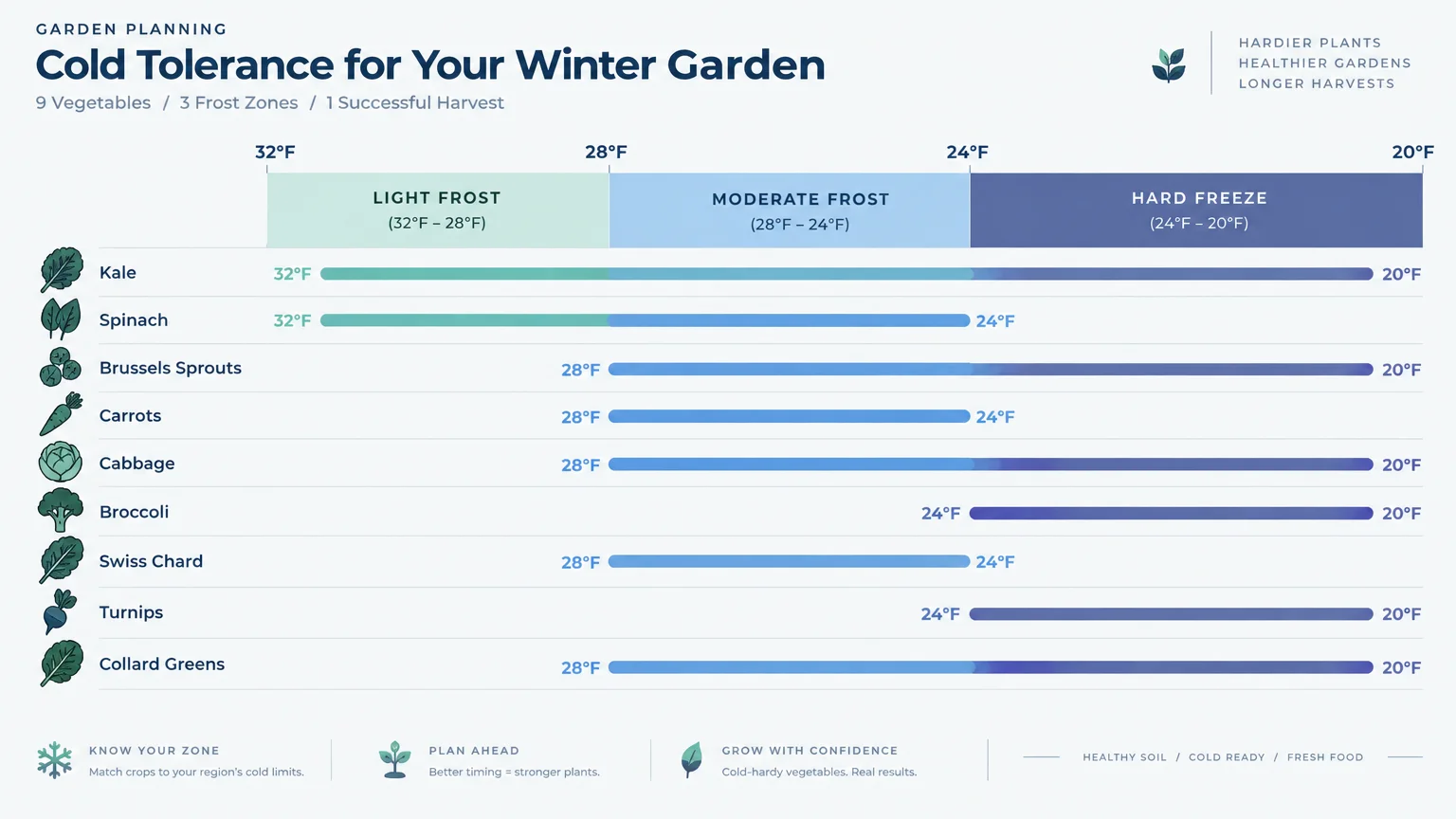
Putting It All Together: Enjoy Your Beautiful Garden
Planting cold hardy vegetables changes the way you look at the approaching winter season. Freezing temperatures transform into a culinary tool that enhances natural flavors rather than ending your garden.
With thoughtful planning, your beds will remain productive and green long after traditional warm-weather crops perish. You can step outside in November and gather fresh ingredients for comforting, homegrown dinners.
Take time to monitor local forecast trends and keep insulating materials like clean straw or row covers nearby. A little preparation guarantees your cool season crops thrive through whatever weather autumn brings.
Celebrate each crisp morning by exploring your garden beds to observe how these resilient vegetables adapt. You will find immense satisfaction in harvesting vibrant, frost-kissed food straight from the chilly earth.
Embrace the cooler weather, tend your autumn beds with confidence, and enjoy the bountiful, sweet rewards of late-season gardening.
For region-specific advice, consult your local University Extension program (find yours via the USDA directory). For plant databases and inspiration, visit the Missouri Botanical Garden or the Royal Horticultural Society.
Disclaimer: This article provides general gardening advice. Always consider your specific climate, soil conditions, and local pests. Follow safety guidelines when using gardening tools and products.
Frequently Asked Questions
What temperature is considered a light frost in the garden?
A light frost occurs when air temperatures hover between 28°F and 32°F (-2°C to 0°C).
This brief freeze forms ice crystals on outer foliage without freezing the underlying soil or plant root crowns.
Why do frost tolerant vegetables taste sweeter after freezing weather?
Cold temperatures trigger plants to convert complex starches into simple sugars like glucose and fructose.
These dissolved sugars lower the freezing point inside plant cells, acting as natural antifreeze while dramatically boosting culinary flavor.
Should I wash frost-covered vegetables immediately after harvesting?
Allow frozen vegetables to thaw naturally in the garden before harvesting whenever possible.
If you must pick frozen leaves, soak them in cool water to gently bring them back to room temperature.
Do cool season crops need watering during frosty autumn months?
Yes, maintaining adequate soil moisture is vital because moist earth retains solar heat far better than dry soil.
Water your beds during warm morning hours so plant roots absorb moisture before nighttime temperatures plummet below freezing.