You can revive your turf quickly once you identify whether dry weather or a hidden pathogen causes those unsightly turf patches. Recognizing active lawn fungus signs early protects your roots before widespread disease destroys your hard work.
Drought stress recovers with watering, but moisture actually accelerates an aggressive lawn disease across your yard. Applying extra water to fungal infections will rapidly turn small blemishes into widespread decay.
Learning to distinguish real fungal symptoms from standard dead spots in lawn turf saves your grass and your weekend budget. Use these proven diagnostic clues to restore a vibrant, resilient carpet of green.
Tip #1: Web-Like Threading and White Mycelium
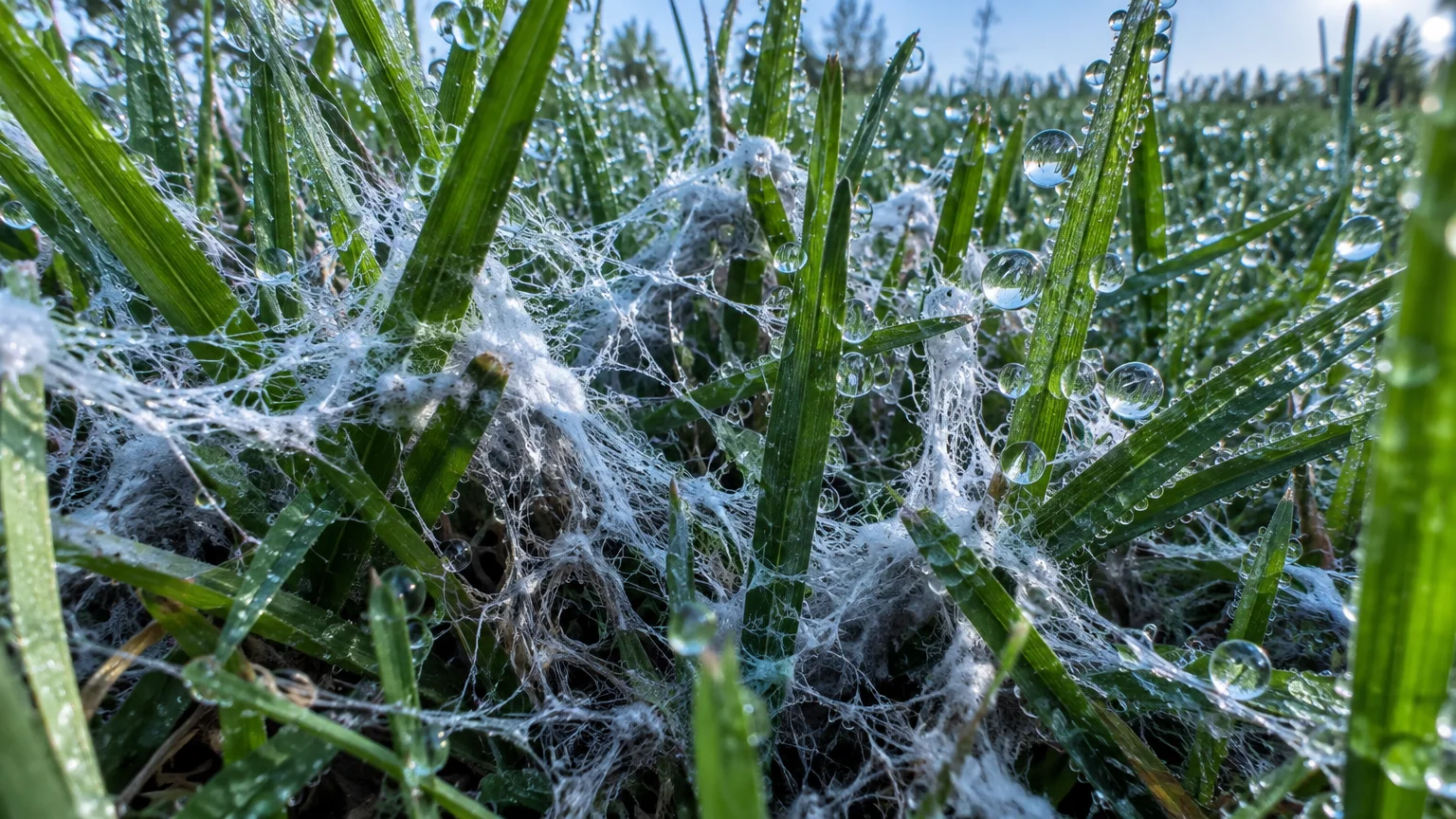
Look closely at your grass during early morning dew to spot delicate, cottony webs sprawling across the blades. These thread-like structures indicate fungal mycelium rather than ordinary spider webs.
Pathogens like dollar spot and Pythium blight produce this dense vegetative growth when humidity levels spike above eighty percent. The threads actively digest leaf tissue, pulling vital nutrients straight from the grass cells.
Morning dew accelerates this spreading network across tender blades. If you disturb the web and notice it rapidly returns within twenty-four hours, fungus is actively colonizing your lawn.
Combat mycelium by knocking down morning moisture with a standard garden hose or leaf rake. Improving airflow across your yard helps dry the canopy quickly and halts overnight fungal growth.
Adjust your irrigation timer to run between four and eight in the morning. This simple schedule switch starves the fungal network before it inflicts permanent structural damage.
Prune overhanging tree branches to maximize sunlight penetration across shaded, damp lawn pockets. Direct sunlight naturally warms the ground and burns off lingering fungal spores.
Tip #2: Distinct Bronze Patches with Dark Smoke Rings
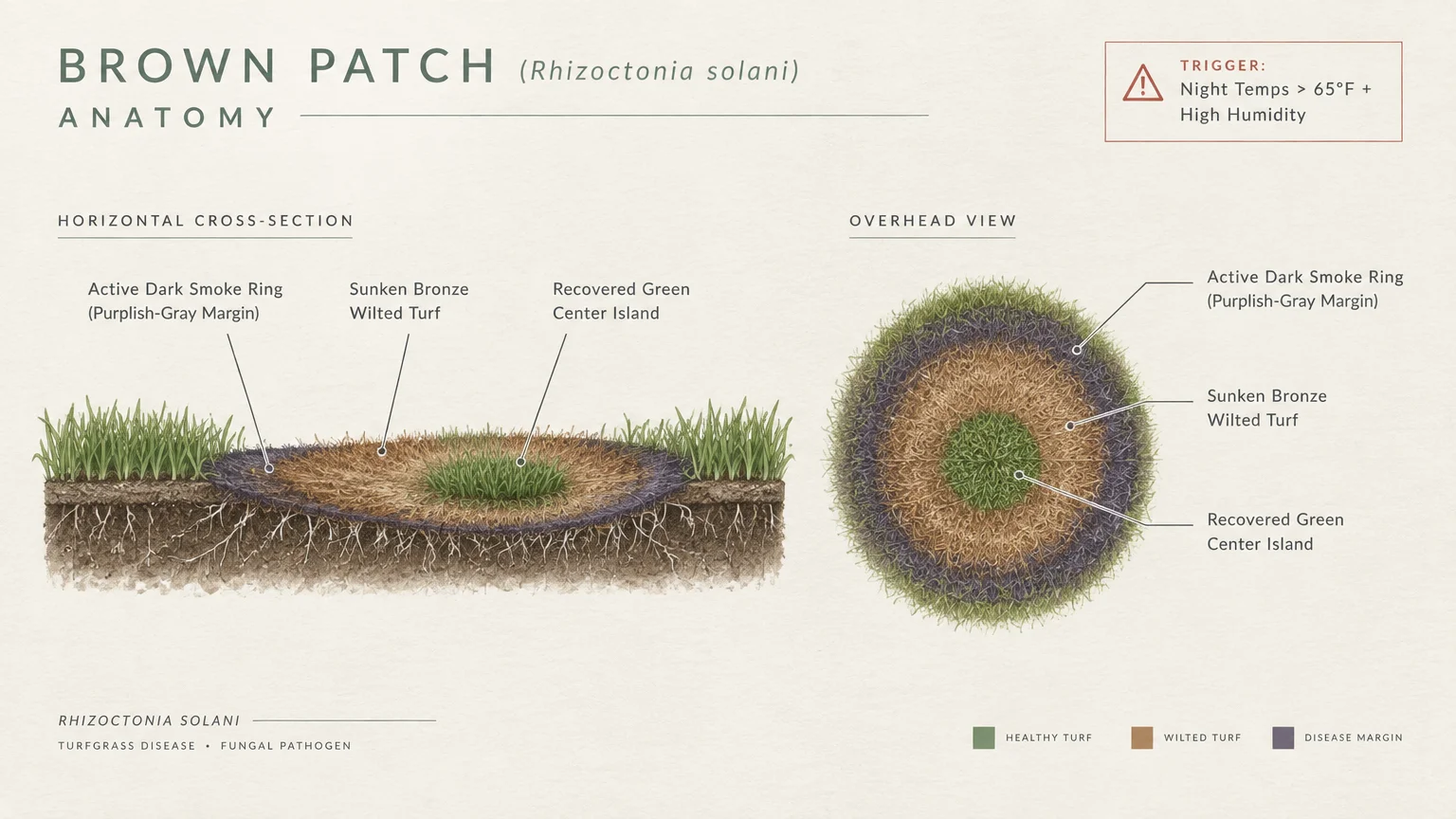
Brown patch fungus creates circular sunken patches that can swell from several inches to several feet across overnight. These patches display a distinct, purplish-gray smoke ring along the outer perimeter during active spreading.
Rhizoctonia solani thrives when nighttime temperatures stay above sixty-five degrees Fahrenheit alongside damp conditions. The dark outer ring consists of freshly infected, water-soaked grass blades that wilt under fungal pressure.
Ordinary dead spots in lawn grass turn a uniform straw color without changing borders. In contrast, brown patch displays active margin decay while leaving a slightly recovered tuft of green inside the center.
Reduce heavy nitrogen fertilizer applications during hot, muggy summer stretches. Excess nitrogen produces tender, succulent leaf growth that invites fungal spores to take hold immediately.
Aerate compacted soil every autumn to boost internal drainage and promote root oxygenation. Healthier roots naturally resist the invasive spread of persistent summer pathogens.
Collect grass clippings during active outbreaks rather than letting them decompose on your lawn. Removing infected clippings prevents fungal sclerotia from overwintering and reinfecting next season.
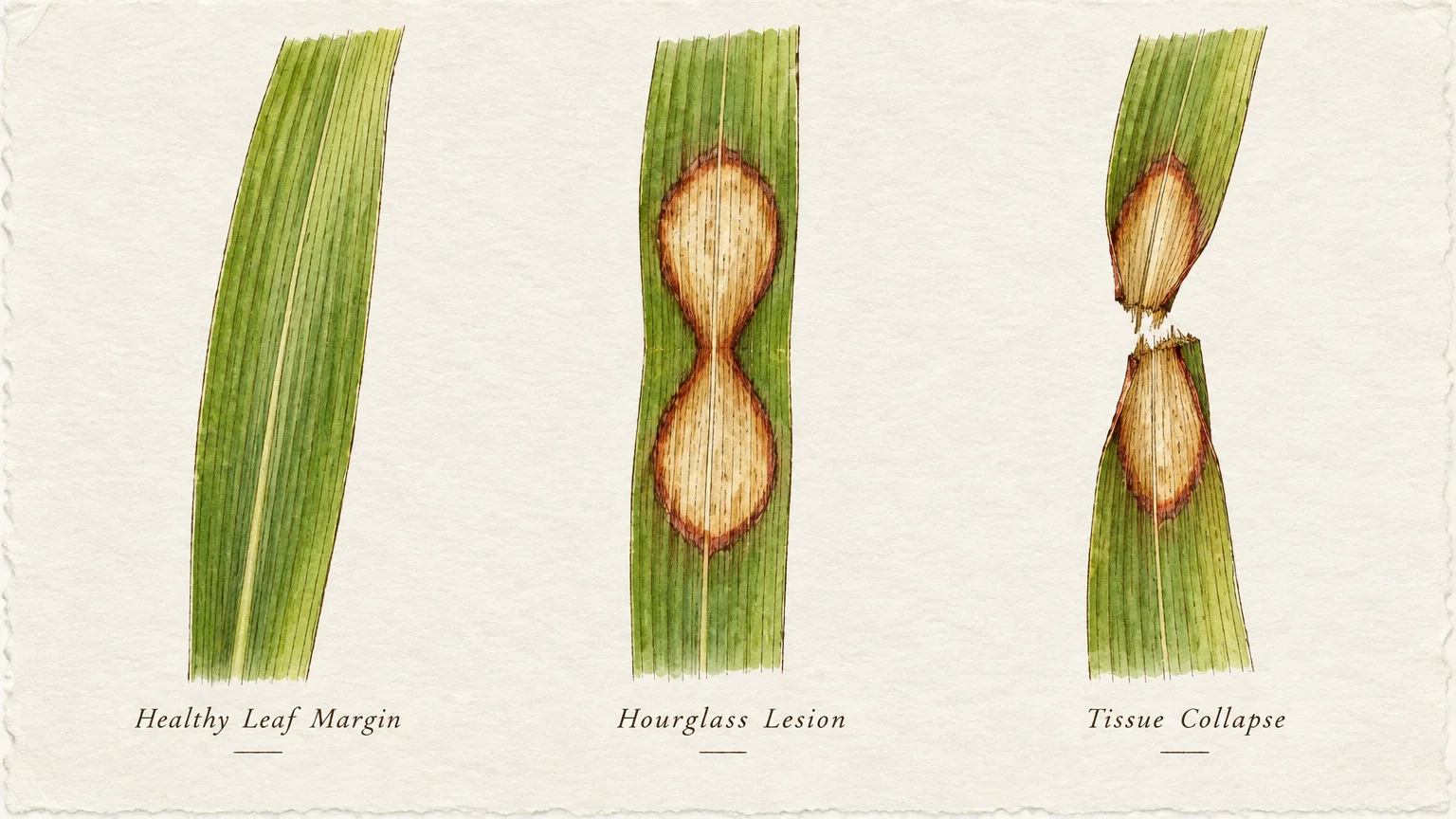
Tip #3: Lesions and Hourglass Marks on Grass Blades
Inspect individual grass blades near the borders of browning areas for distinctive bleached spots. Fungal diseases frequently leave tan lesions with dark reddish-brown borders shaped like tiny hourglasses.
Dollar spot produces these characteristic lesions, constricting the width of the grass blade. Drought stress simply dries the tip uniformly; it never causes focused, patterned banding along the leaf stem.
This targeted destruction occurs when the pathogen enters natural leaf openings and cuts off water transport. As the tissue collapses, the leaf starves above the lesion point and drops dead.
Maintain balanced soil nitrogen levels to help your lawn outgrow dollar spot activity. Light applications of slow-release nitrogen provide steady vigor without fueling explosive fungal outbreaks.
Sharpen your lawn mower blades after every twenty hours of mowing. Dull blades rip leaf tissue violently, creating jagged wounds that welcome pathogenic fungal spores into the plant.
Apply a fine layer of screened compost across damaged turf to introduce beneficial antagonistic bacteria. These native microbes actively feed on harmful fungal hyphae and suppress disease progression.

Tip #4: Orange Spores That Rub Off on Your Shoes
Walking across an infected lawn can coat your shoes and tools with a fine, powdery dust. This bright orange or yellowish powder indicates a severe lawn disease called rust fungus.
Lawn rust takes advantage of stressed grass experiencing slow growth during cool, overcast weather. Millions of microscopic fungal spores cluster inside pustules on the blades, rupturing through the cuticle.
Dry weather patches never leave colorful, powdery pigments on your footwear or mower deck. If a white cloth swiped across the grass turns yellow or rust-colored, you face an active fungal population.
Mow regularly to trim away infected blade tips before the pustules burst and spread. Always collect and bag clippings during an active outbreak to prevent dispersing spores across healthy lawn zones.
Apply a balanced fertilizer to stimulate fresh, active vertical leaf growth. Vigorously growing grass naturally outpaces rust infections when you combine proper nutrition with consistent sunlight exposure.
Wash garden tools and boots thoroughly with soapy water after treating rust-infected areas. Preventing accidental spore transport keeps the rest of your garden pristine and vibrant.
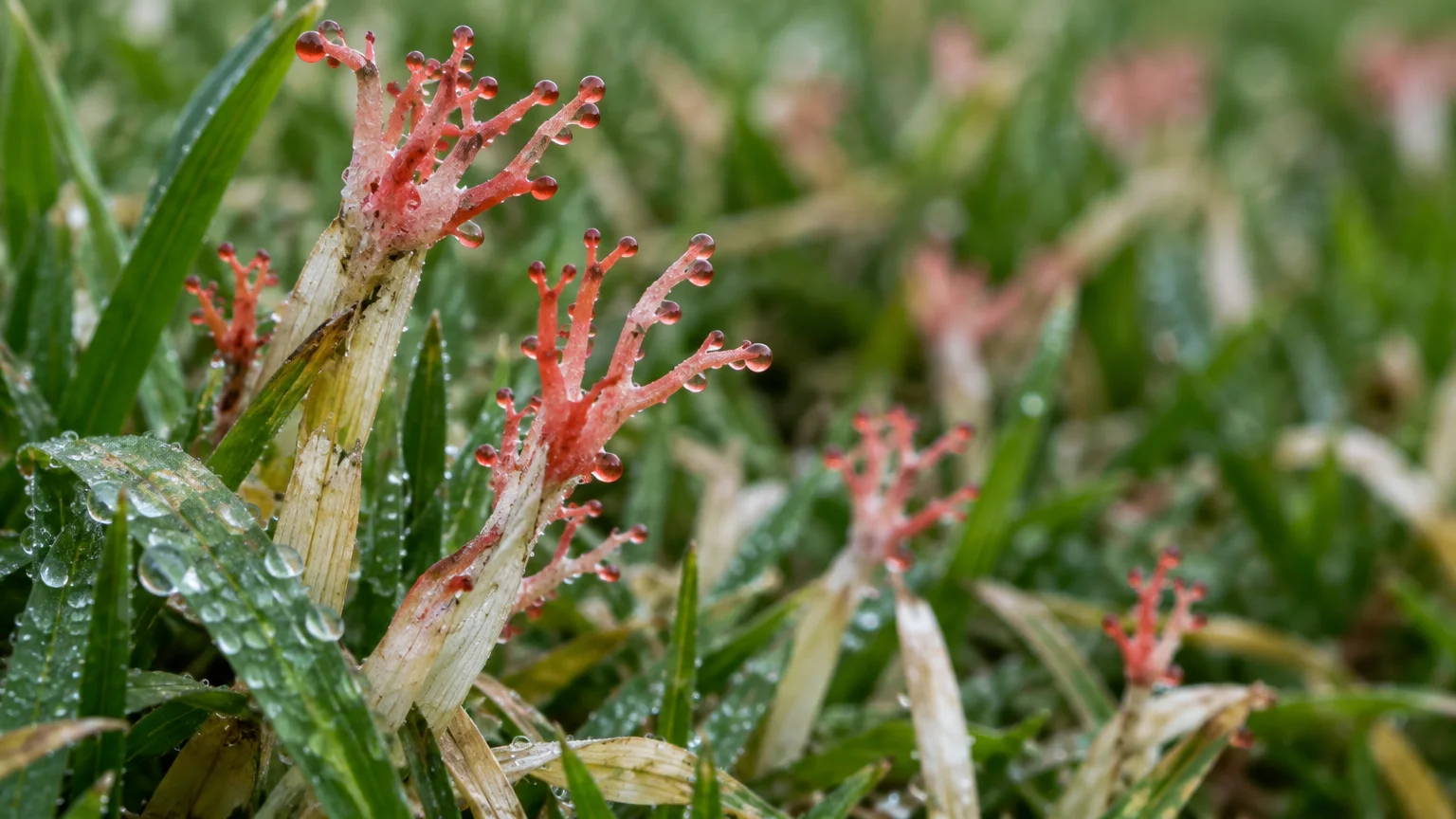
Tip #5: Pink Gelatinous Needles and Red Thread Filaments
Look closely at ragged turf to find delicate, pink webbing or stiff red antler-like horns protruding from blade tips. These bright red threads characterize Laetisaria fuciformis, commonly known as red thread disease.
This fungus flourishes in mild, damp spring and autumn conditions between sixty and seventy-five degrees. The vibrant filaments are dense collections of fungal mycelium that survive harsh winters and dry spells unharmed.
Dead patches from simple dehydration appear bleached and dry without structural growths. Red thread, however, binds dying blades together with tough, pinkish cords that feel brittle under your fingers.
Correct low nitrogen levels immediately; red thread primarily targets nutrient-deficient turf. A mild application of organic fertilizer gives your turf the stamina it needs to shrug off the infection.
Test your soil pH every few seasons to keep levels between 6.0 and 7.0. Balanced soil chemistry allows roots to absorb critical micronutrients that fortify cell walls against fungal penetration.
Avoid watering late in the afternoon so leaf blades do not stay wet through chilly evenings. Consistently dry foliage dramatically reduces red thread germination rates across your property.
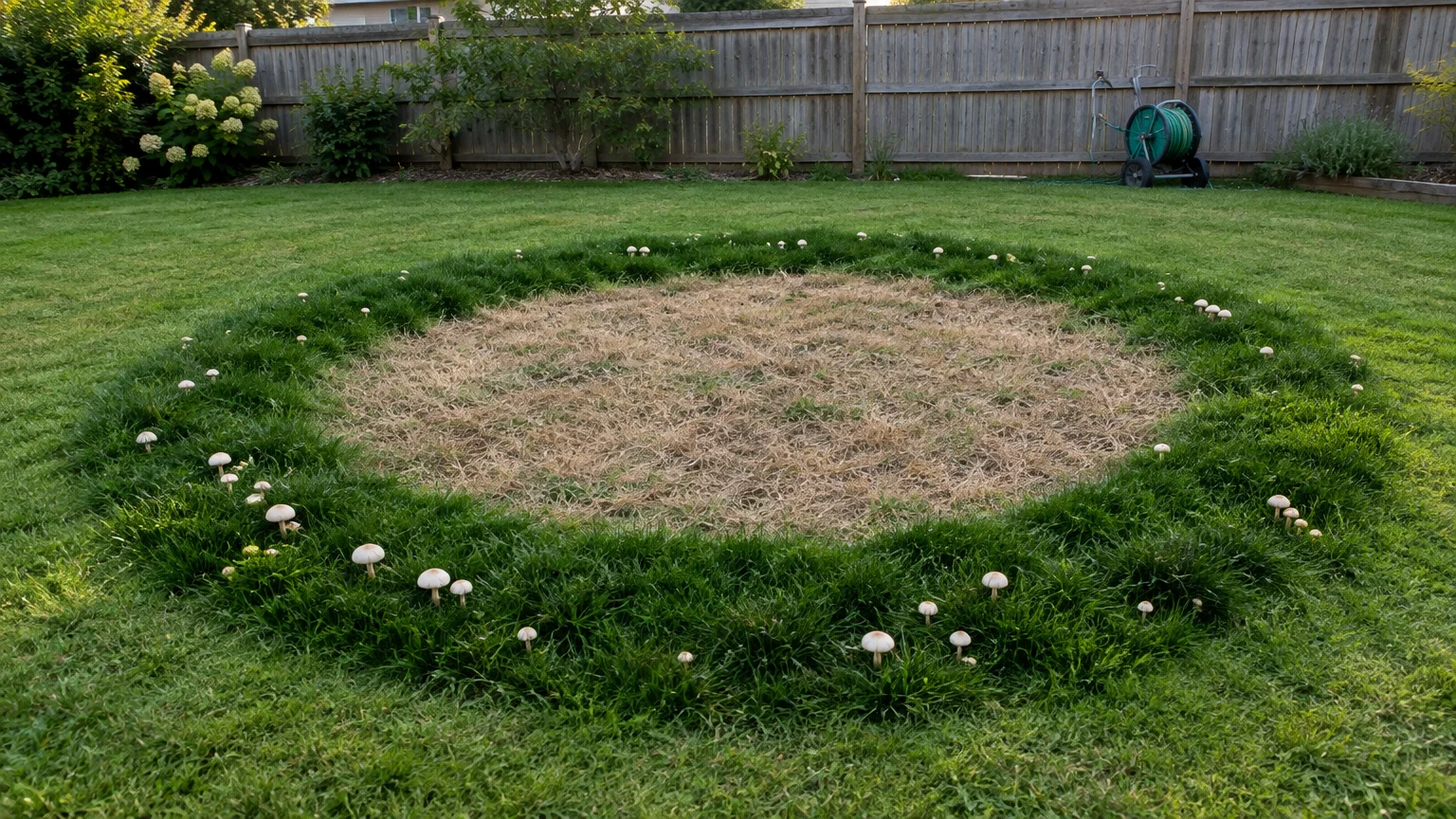
Tip #6: Circular Fairy Rings and Mushrooms
Sudden dark green circles or concentric arcs flanked by mushrooms reveal the presence of fairy ring fungi. These subterranean networks spread outward, consuming buried organic matter such as decaying tree roots or construction debris.
As the underground fungal body decomposes organic material, it initially releases nitrogen, creating lush, emerald bands. Soon after, the dense subterranean mat becomes hydrophobic, repelling water and suffocating the turf above.
Drought stress never creates perfect geometric circles with thriving outer borders and parched interiors. If you push a screwdriver into the dead band, you will discover rock-hard, bone-dry soil despite heavy rains.
Aerate the hydrophobic ring deeply with a core aerator or garden fork to break up the dense mat. Apply a liquid lawn wetting agent immediately afterward to force moisture back into the root zone.
Remove thatch build-up annually to deprive fairy ring fungi of their favored food sources. Dethatching removes dead organic layers and restores proper gas exchange throughout your lawn.
Dig out stubborn mushroom clusters by hand and dispose of them in household waste bins. Removing visible fruiting bodies prevents the distribution of billions of airborne fungal spores.
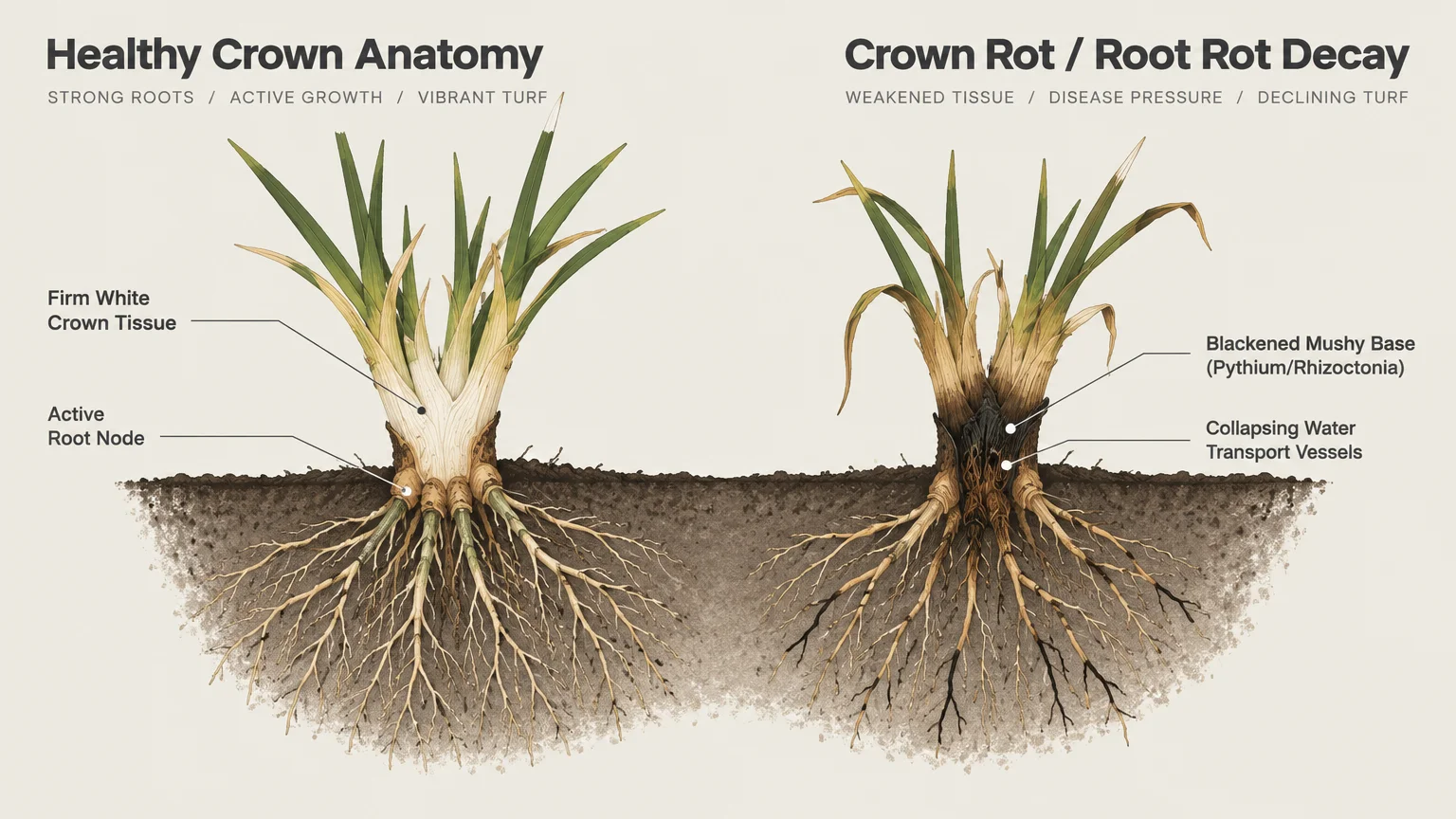
Tip #7: Blackened, Mushy Stems and Crown Rot
Pull gently on yellowing grass shoots within dead patches to test their structural integrity. If the blades slide out effortlessly with blackened, foul-smelling bases, you are dealing with crown and root rot.
Fungal invaders like Bipolaris and Fusarium attack the vital crown where stems and roots meet. Healthy grass roots resist light tugging, whereas rotted crowns detach instantly because their cellular architecture has dissolved.
Heat stress causes grass to wilt, but the crowns remain firmly anchored in the soil bed. In contrast, crown rot destroys the plant’s core plumbing, making recovery impossible without prompt intervention.
Avoid overwatering saturated soil; waterlogged conditions deprive beneficial microbes of oxygen and stimulate anaerobic fungi. Allow the top two inches of soil to dry out completely between thorough watering sessions.
Topdress low spots in your yard with coarse sand or aerated compost to eliminate pooling water. Leveling your lawn prevents stagnant puddles from incubating crown-destroying pathogens.
Reseed rotted patches in early autumn using modern turf varieties bred for superior disease resistance. Fresh, certified seed quickly fills bare spots and restores uniform, vigorous density.
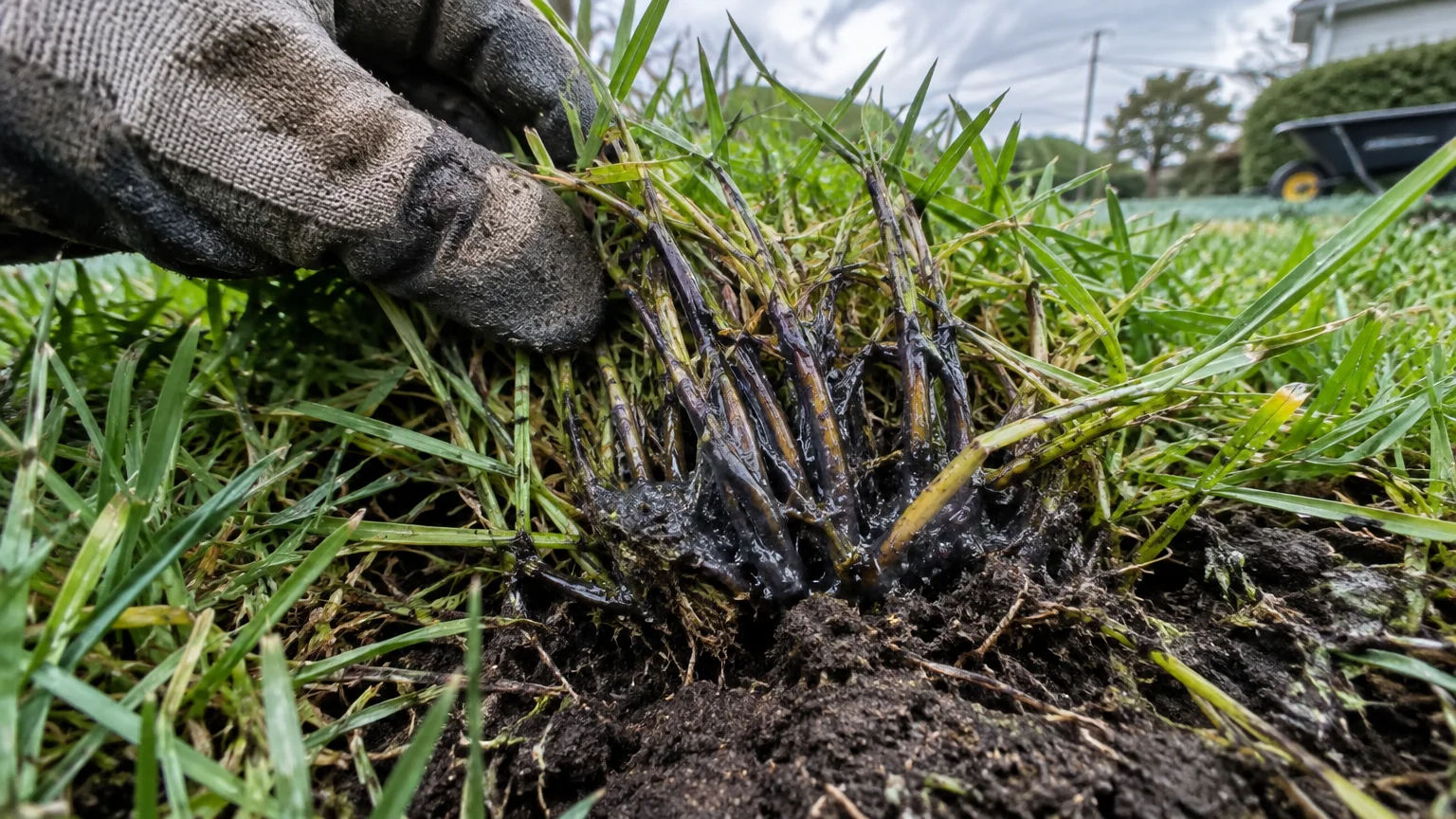
Tip #8: Greasy, Dark Streaks and Sudden Slime Molds
Pay attention if patches of your lawn look water-soaked, dark, and oily in early morning heat. Pythium blight creates this greasy texture, causing grass blades to collapse into flat, matted clumps.
Pythium strikes during sweltering, humid weather when nighttime temperatures hover above seventy degrees. The pathogen travels rapidly along water drainage paths, leaving dramatic streaks of dead grass across your yard.
Similarly, crusty gray or purple slime molds can suddenly envelop grass blades after extended rainy periods. While slime molds consume surface debris rather than grass cells, they shade blades and trigger underlying fungal stress.
Refrain from walking or mowing across wet turf when you notice greasy, blackened streaks. Equipment tires and foot traffic quickly spread microscopic spores across unaffected sections of your lawn.
Improve subsoil drainage by installing French drains or grading slopes away from flat turf areas. Swift surface runoff denies water molds the stagnant environment they require to spread.
Rake away crusty slime mold patches gently using a flexible leaf rake on dry afternoons. Exposing smothered grass to direct sunlight and fresh air speeds natural recovery.
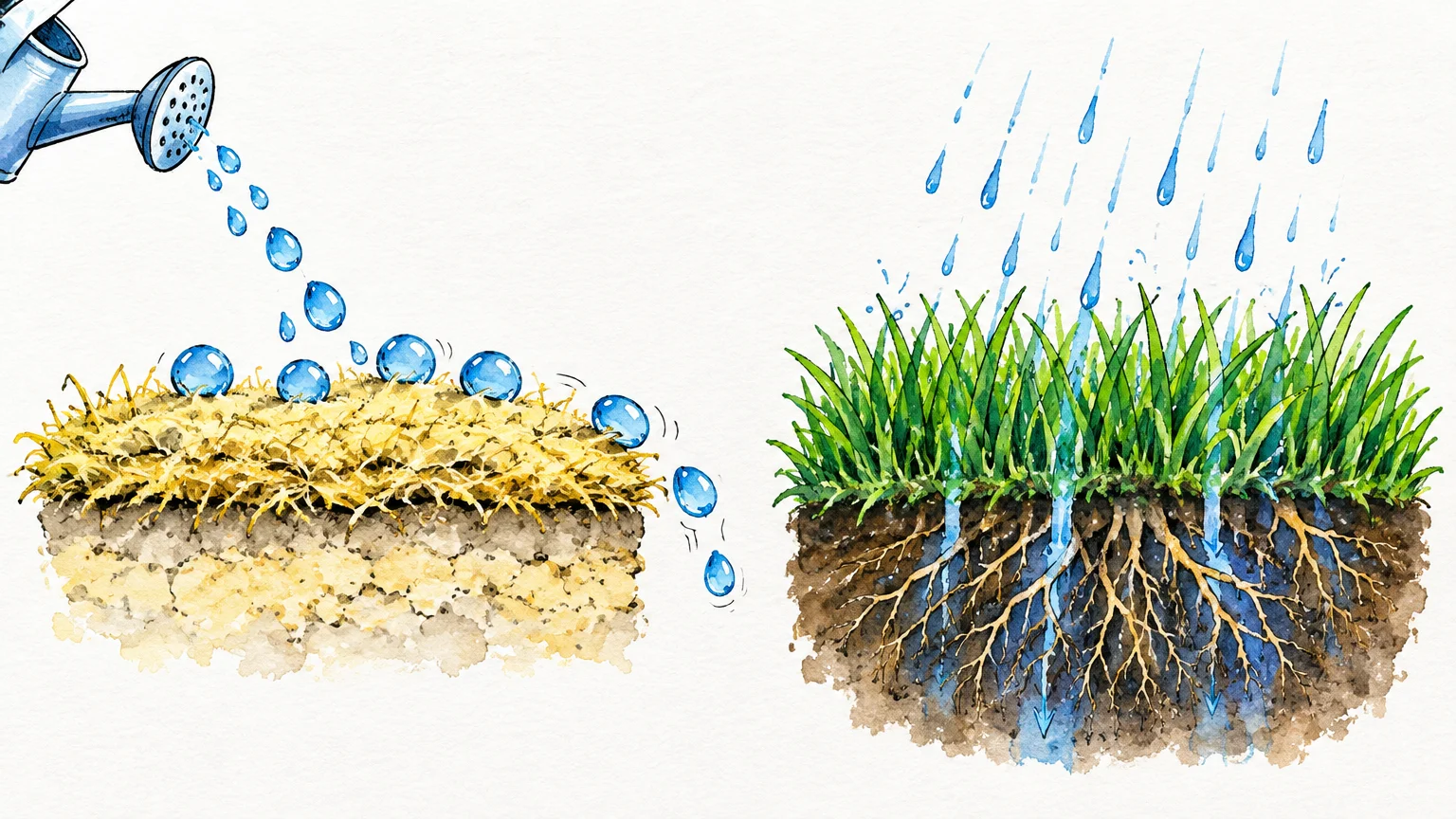
Tip #9: Bleached Yellow Turf That Resists Water
Take note when patches of grass turn pale yellow or bleached straw and refuse to green up after irrigation. If watering fails to produce improvement within two days, you likely face summer patch disease.
Summer patch attacks roots during warm spring weather, but symptoms appear only when summer heat stresses the plant. Because the fungal pathogen destroys root hairs, the grass cannot absorb moisture from the surrounding damp soil.
Applying extra water to these stubborn patches saturates the soil and accelerates fungal destruction. You can confirm root damage by digging a small plug; healthy roots are creamy white, while infected roots look dark brown and brittle.
Raise your mowing height by half an inch to reduce physiological stress on the compromised root system. Taller grass blades generate deeper root systems and shade the soil from intense solar heat.
Apply mild organic amendments to stimulate beneficial mycorrhizal fungi in the soil. These friendly microbes outcompete pathogenic organisms and bolster your lawn against environmental extremes.
Check soil compaction levels regularly using a six-inch metal probe or soil tester. Loosening dense soil layers encourages deep root penetration and improves vital oxygen exchange.
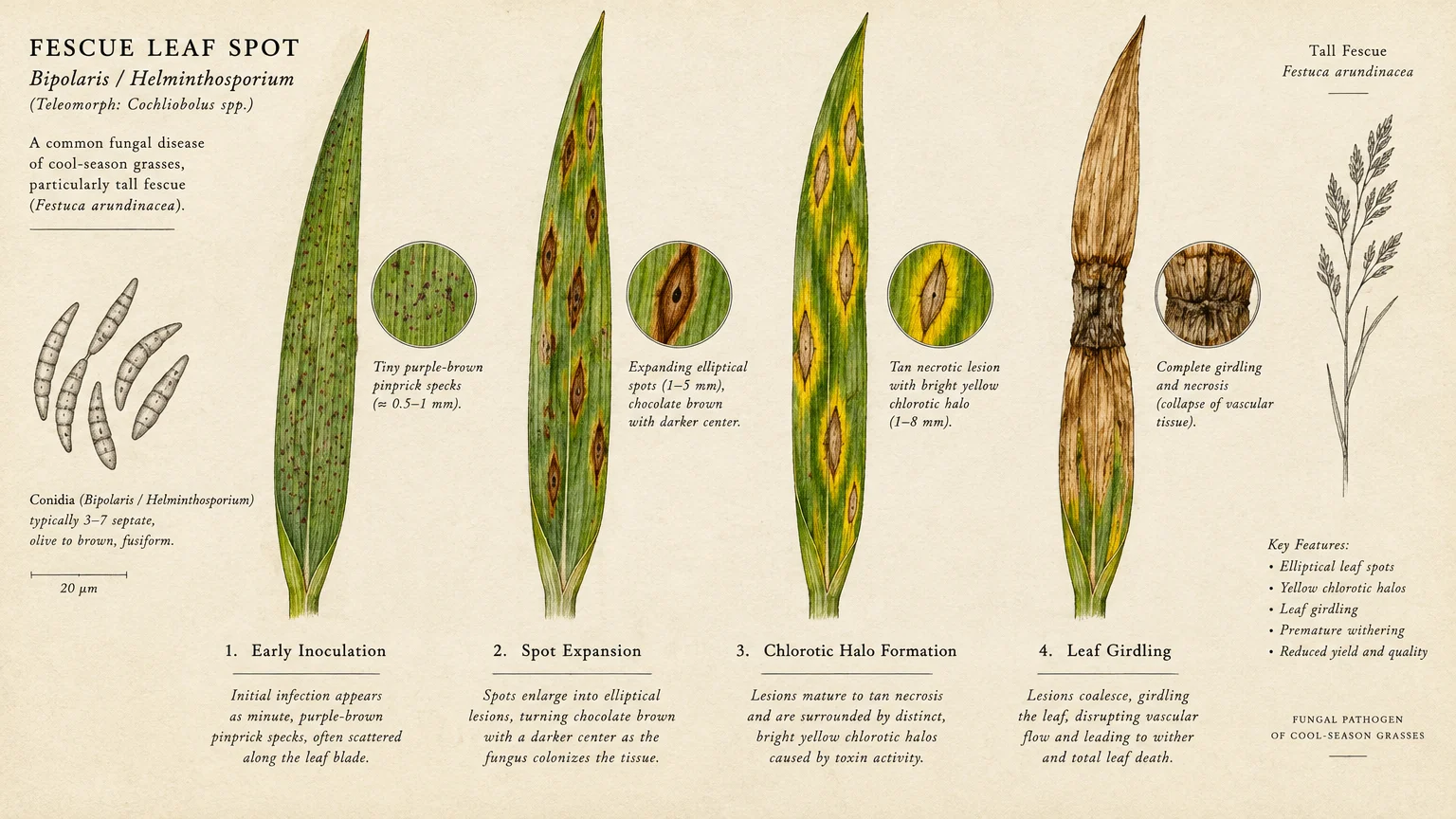
Tip #10: Dark Brown Leaf Spots with Yellow Halos
Examine thinning grass blades for tiny brown or purple flecks surrounded by distinct yellow halos. This classic symptom indicates melting-out disease, a destructive pathogen that attacks cool-season turf varieties.
The disease begins as leaf spots in cool, moist spring weather before progressing into full sheath rot. As the weather warms, these isolated flecks coalesce, causing widespread dieback and noticeable turf thinning.
Simple drought stress browns the entire leaf blade evenly from tip to base without forming distinct circular flecks. Yellow halos around dark centers represent plant defense mechanisms attempting to isolate the fungal pathogen.
Avoid high-nitrogen fertilizers early in the spring season when melting-out fungi remain most active. Rapid leaf growth produced by synthetic nitrogen lacks the cellular strength required to resist fungal entry.
Overseed thin zones in late summer with disease-resistant cultivars of Kentucky bluegrass or turf-type tall fescue. Modern grass varieties boast natural genetic resistance against common leaf spot pathogens.
Maintain a consistent mowing schedule to prevent cutting off more than one-third of the blade at once. Gentle mowing preserves plant energy reserves and strengthens natural immune defenses.

Putting It All Together: Enjoy Your Beautiful Garden
Spotting early lawn fungus signs empowers you to treat the root cause rather than guessing blindly. Tailoring your cultural lawn care tips to specific symptoms stops active fungal outbreaks before irreversible damage occurs.
Healthy soil ecology and smart maintenance routines form your strongest line of defense against recurring lawn disease. Simple adjustments in watering, mowing height, and aeration keep turf lush, vibrant, and naturally disease-resistant.
Take time each week to stroll through your yard and observe subtle shifts in blade color and texture. When you catch problems early, you save hours of frustrating renovation and protect your garden investment.
Consistent lawn care practices reward you with thick, resilient turf that withstands seasonal environmental stresses. Implement these proactive strategies today to cultivate an emerald lawn that brings you joy every single day.
For region-specific advice, consult your local University Extension program (find yours via the USDA directory). For plant databases and inspiration, visit the Missouri Botanical Garden or the Royal Horticultural Society.
Disclaimer: This article provides general gardening advice; always consider your specific climate, soil conditions, and local pests. Follow safety guidelines when using gardening tools and products.
Frequently Asked Questions
How do I know if dead grass is caused by fungus or lack of water?
Perform a simple tug test and look closely at the leaf blades for lesions, spots, or colored powder. Drought-stressed grass turns uniform straw brown and rebounds quickly after a deep soaking.
Fungal infections leave distinct borders, slimy patches, or damaged roots that pull easily from the soil. If watering the dead spot produces no improvement within two days, you face a fungal pathogen.
Should I apply a fungicide as soon as I see dead spots in lawn turf?
Cultural adjustments should always precede chemical fungicide applications in home gardens. Correcting poor drainage, raising mower heights, and eliminating nighttime watering often resolve fungal outbreaks without harsh chemicals.
If disease spreads rapidly despite cultural remedies, choose a targeted fungicide labeled for your specific turf pathogen. Always follow manufacturer instructions carefully to avoid harming beneficial soil microbes.
Can lawn fungus spread from my mower to other parts of my yard?
Lawn mower wheels and spinning blades easily pick up active spores and transfer them across healthy turf. Washing your mower deck with a mild bleach solution after cutting diseased sections prevents cross-contamination.
Always mow infected lawn areas last to keep spores isolated from healthy grass. Empty grass clippings into compost or waste bags instead of mulching diseased blades back into the soil.
What is the best time of day to water grass to prevent fungal growth?
Early morning between four and eight o’clock is the absolute ideal window for lawn irrigation. Morning watering gives moisture time to penetrate root zones before the afternoon sun causes evaporation.
Evening watering leaves foliage damp throughout the cool night, creating a prime breeding ground for fungal spores. Keeping your turf canopy dry overnight remains one of the simplest ways to prevent lawn disease.