A well-built walkway should provide safe, dry passage through your yard in every season. When water collects across your stones or pavers, it signals underlying yard drainage problems that threaten your landscape.
Ignoring water accumulation leads to ruined borders, sunken pavers, and expensive structural repairs. Catching moisture issues early allows you to install simple, effective drainage solutions for walkways without rebuilding from scratch.
Learn how to identify eight common garden path drainage warning signs before major damage occurs. Implementing timely fixes will preserve your walkway and keep your outdoor spaces stunning and functional.
Tip #1: Persistent Puddles on Garden Path Surfaces
Recognizing Standing Water Hazards
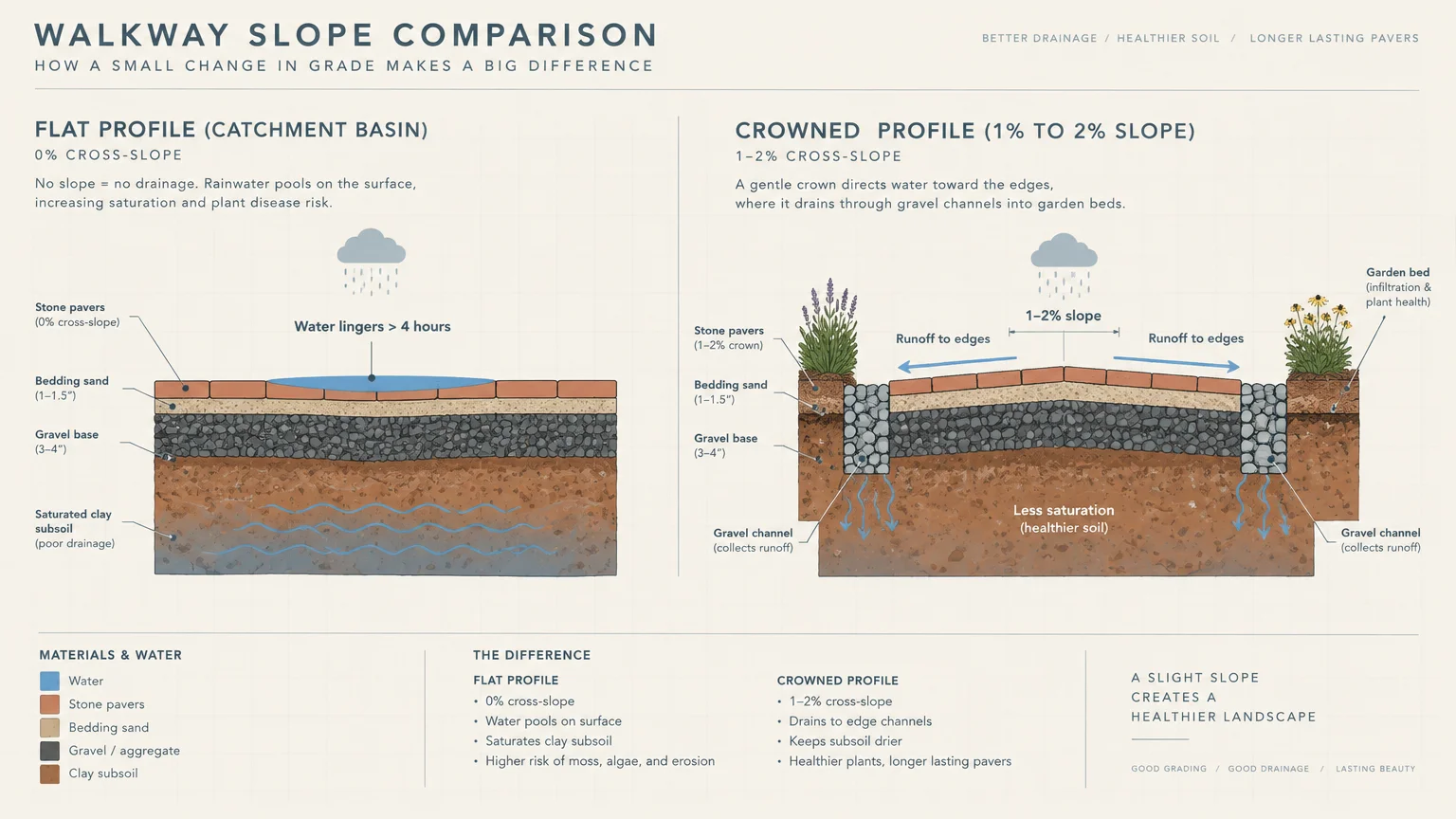
Puddles on garden path surfaces that linger longer than four hours after rainfall indicate inadequate drainage. A properly designed walkway sheds moisture quickly through surface slope and permeable foundation materials.
When you notice recurring ponds along your walking route, your path is acting as a catchment basin rather than a conduit. Standing water deteriorates paving materials while presenting an immediate slipping hazard for family members.
Why Water Pools on Walkways
Most puddling happens when installers fail to establish an adequate cross-slope during construction. Walkways require a minimum slope of one to two percent to encourage natural gravitational runoff toward garden beds.
Heavy clay subsoils beneath the path also prevent vertical absorption. Without an open-graded gravel reservoir below, excess rainwater has nowhere to go once surface pores saturate.
Practical Solutions for Persistent Puddling
You can resolve minor puddles by lifting low-lying stones and adding washed bedding sand beneath them. For broader issues, consider installing permeable paving that allows water to infiltrate directly through aggregate-filled joints.
Adding a subtle crown along the walkway center line directs water smoothly toward both outer edges. This simple adjustment ensures rainwater disperses evenly before deep puddles can form.
Grading adjacent turf so it sits slightly lower than the path edge also prevents runoff from backing up. Clear drainage pathways allow water to flow freely into designated garden collection zones.
Tip #2: Muddy Runoff and Edge Soil Erosion
Identifying Soil Displacement Along Paths
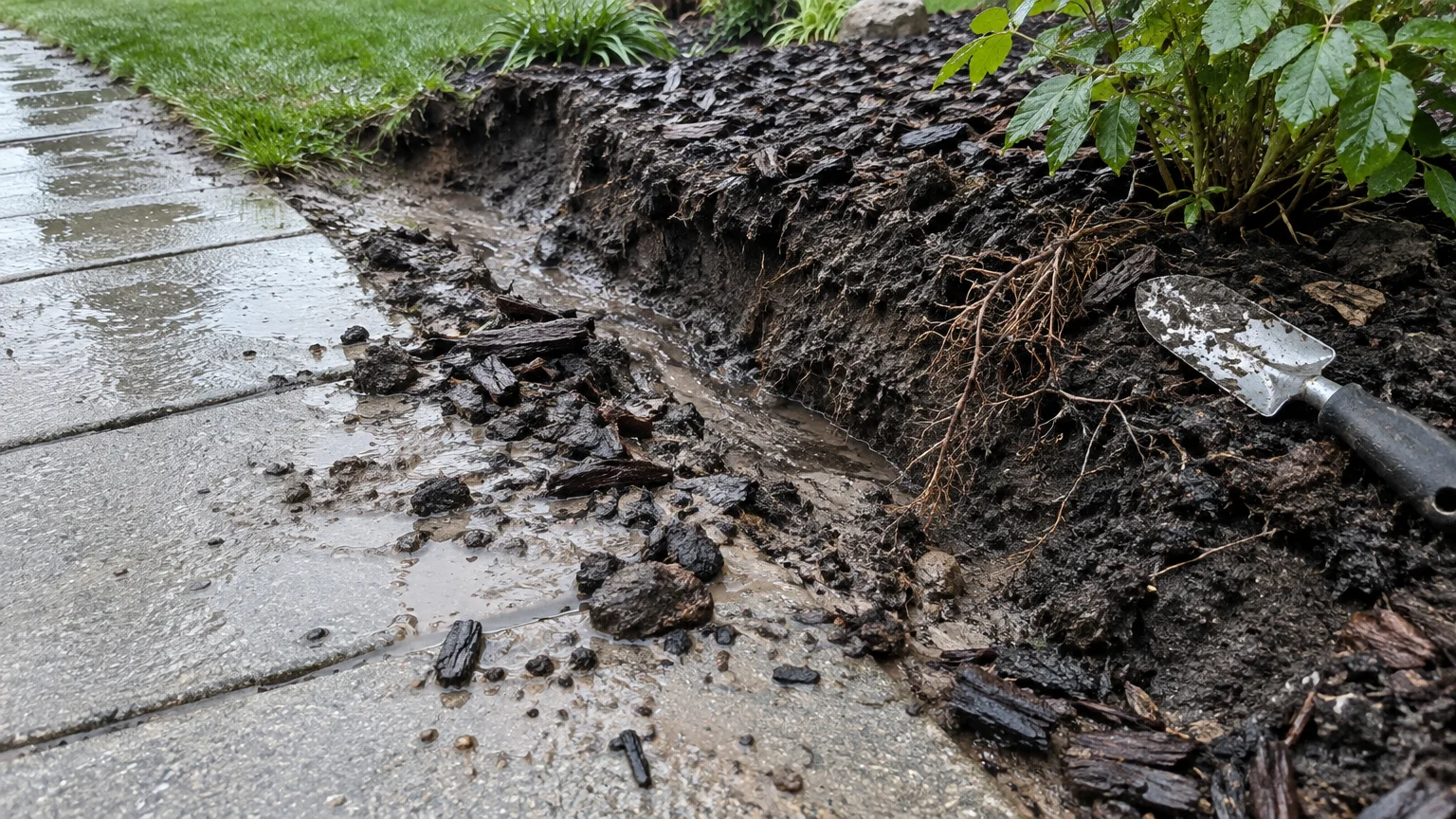
Heavy rain should never wash your garden soil or mulch across walkway borders. If you spot carved gullies or muddy deposits coating your flagstones, your path suffers from uncontrolled surface runoff.
Walkway surfaces are often less permeable than surrounding garden soil. Consequently, rain sheets off the path rapidly, scouring away fine soil particles and exposing delicate plant roots.
The Mechanics of Path Erosion
Standard solid pavers create an impervious surface that accelerates water velocity during storms. As high-speed runoff strikes unplanted border soil, it shears away topsoil and creates unsightly trenches.
Data shows that compacted soil loses up to eighty percent of its normal water infiltration capacity. When runoff concentrates along path borders, the ground quickly reaches saturation and liquefies.
How to Stabilize Path Edges
Line vulnerable borders with dense, deep-rooted groundcovers like creeping thyme or ornamental sedges. Their fibrous root networks anchor soil firmly in place against turbulent storm runoff.
Installing shallow gravel swales or river rock channels alongside the walkway also absorbs water energy. These rock-lined borders filter silt and guide excess moisture away before erosion can strip your garden.
You can also install sturdy metal or composite landscape edging to keep border soil elevated and contained. Rigid edging barriers prevent washouts and maintain crisp, clean separation between lawn and stone.
Tip #3: Sunken Pavers and Uneven Stepping Stones
Spotting Base Instability
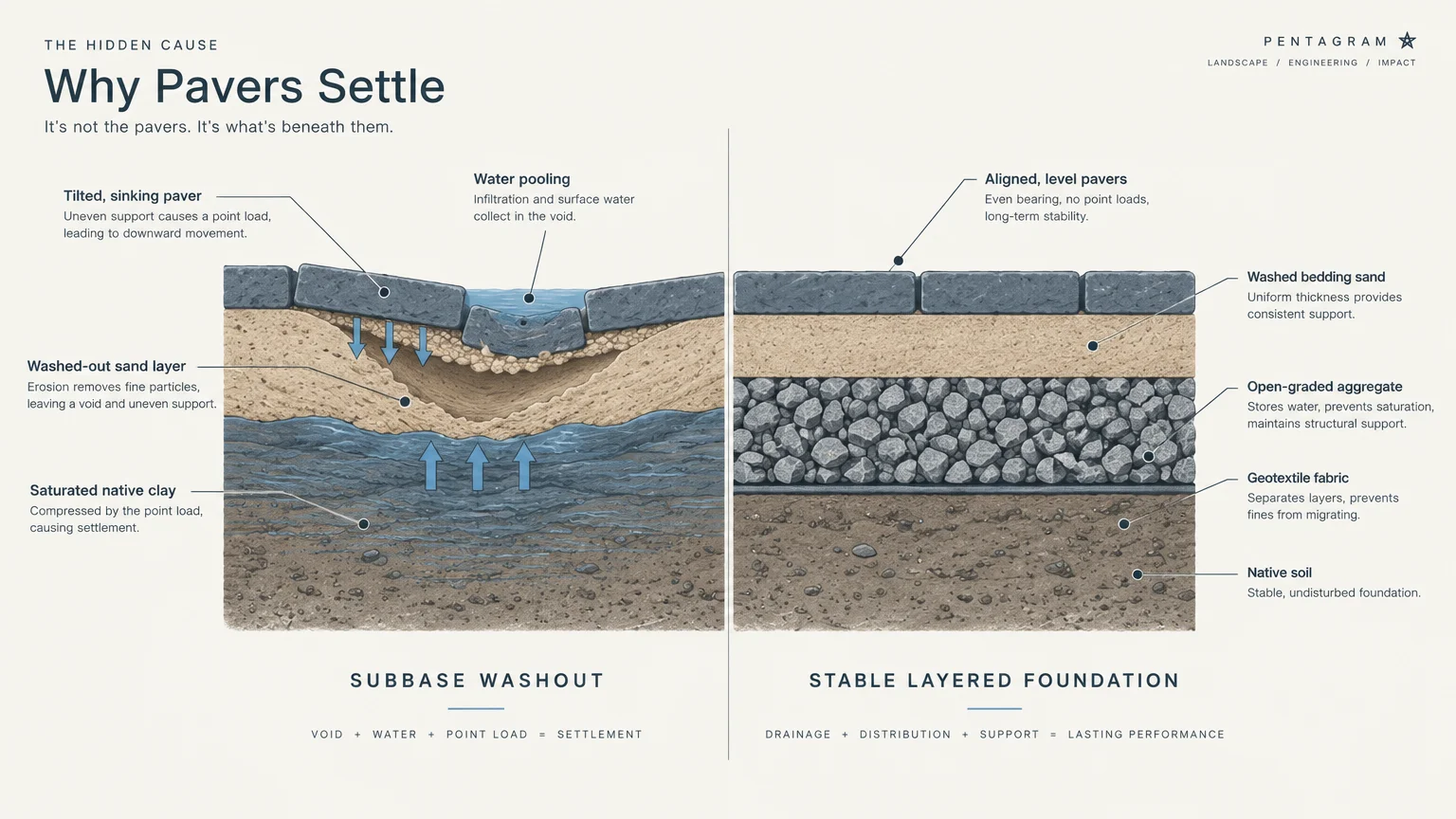
Walkway stones that tilt, wobble, or sink below grade reveal serious sub-base drainage failures. A stable walkway requires a firm foundation that stays dry and solid throughout wet seasons.
When you step on a paver and water squirts upward through the joints, subgrade liquefaction has occurred. This movement creates dangerous tripping hazards that worsen with each heavy rainfall.
Why Base Layers Wash Away
Water trapped beneath masonry units softens the underlying sand bedding and clay subsoil. Over time, dynamic pedestrian traffic pumps wet sand out from beneath the pavers, creating hollow voids.
Saturated soil loses up to half its load-bearing capacity compared to dry, compacted earth. Once the bedding collapses, heavy stones settle unevenly into the waterlogged subgrade below.
Rebuilding a Stable Walkway Base
Lift sunken pavers and shovel out degraded, silt-contaminated bedding sand. Replace it with coarse, angular crushed stone that allows water to filter through without shifting under foot traffic.
Lay a durable woven geotextile fabric between the subsoil and your new aggregate base. This barrier prevents fine subsoil particles from migrating upward while maintaining excellent vertical garden path drainage.
Tamp the fresh crushed rock thoroughly with a plate compactor before resetting your walkway pavers. A solidly compacted gravel base ensures your stones remain level and dry for decades.
Tip #4: Slippery Algae and Moss Growth
Recognizing Chronic Moisture Microclimates
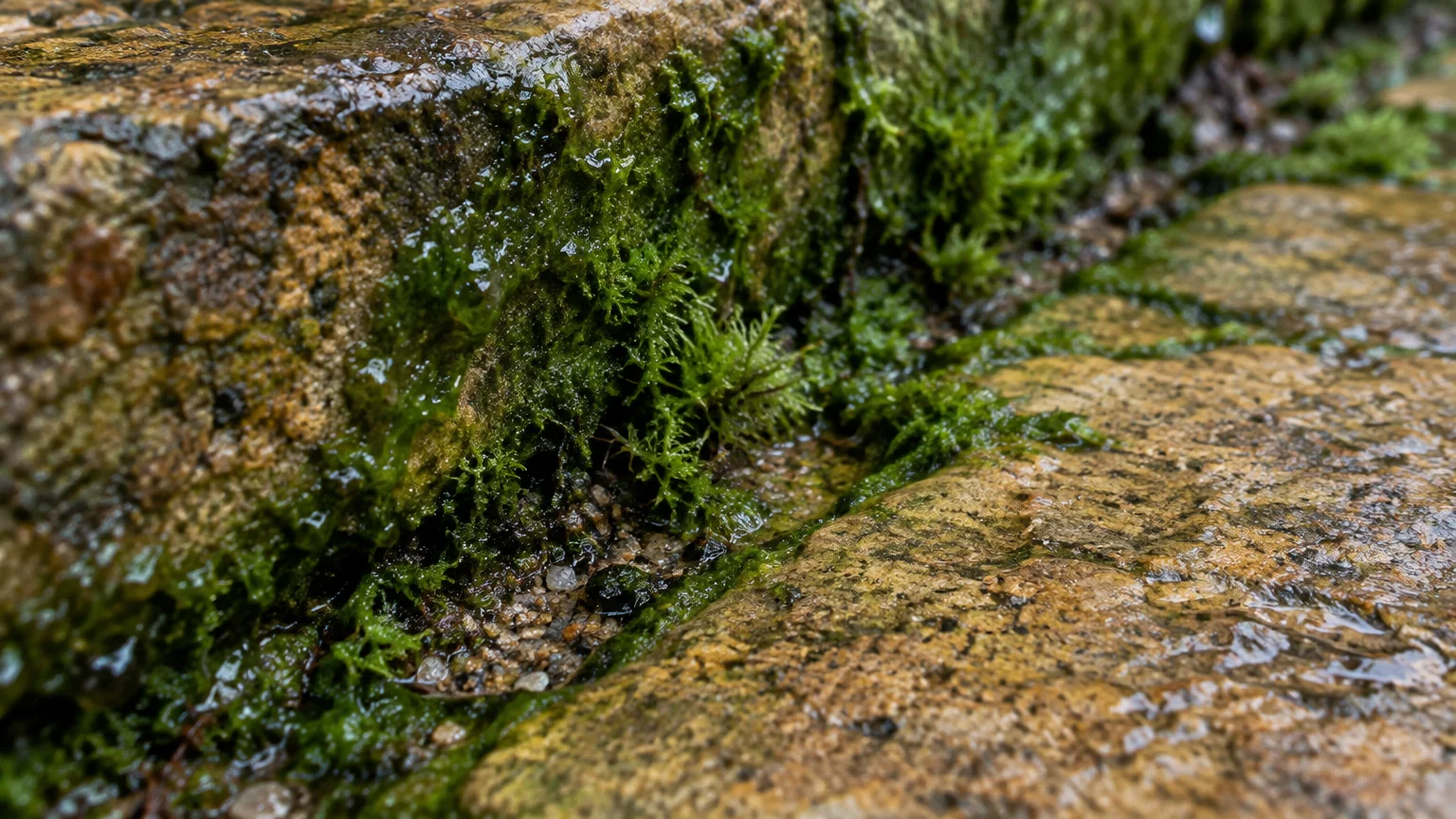
A green, slick film covering your garden stones is a clear indicator of persistent surface moisture. While a light dusting of moss adds rustic charm, thick algae growth turns walkways into dangerous hazard zones.
Algae and liverworts require continuous dampness to colonize stone, brick, or wood surfaces. If your path remains wet long enough to nourish these organisms, water is not draining away properly.
How Stagnant Water Encourages Biofilms
Dense garden canopies combined with flat, poorly graded walkways trap humidity at ground level. Without adequate drainage slopes, surface water evaporates very slowly in shaded outdoor rooms.
Porous paving materials absorb standing water like sponges during wet spells. As warmth returns, this trapped moisture wicks back to the surface, creating an ideal nursery for slick biological growth.
Restoring Grip and Surface Drainage
Prune back low-hanging tree limbs to allow sunlight and gentle breezes to reach the path surface. Improved air circulation accelerates drying times and deprives algae of the constant moisture it demands.
Sweep polymeric sand or fine crushed granite into stone joints to seal out stagnant pools. Proper joint filling prevents water accumulation while providing durable, slip-resistant traction across your walkway.
Clean existing slime using an oxygen bleach solution rather than harsh chlorine products. Oxygen bleach eradicates algae spores safely without harming neighboring border plants or contaminating soil.
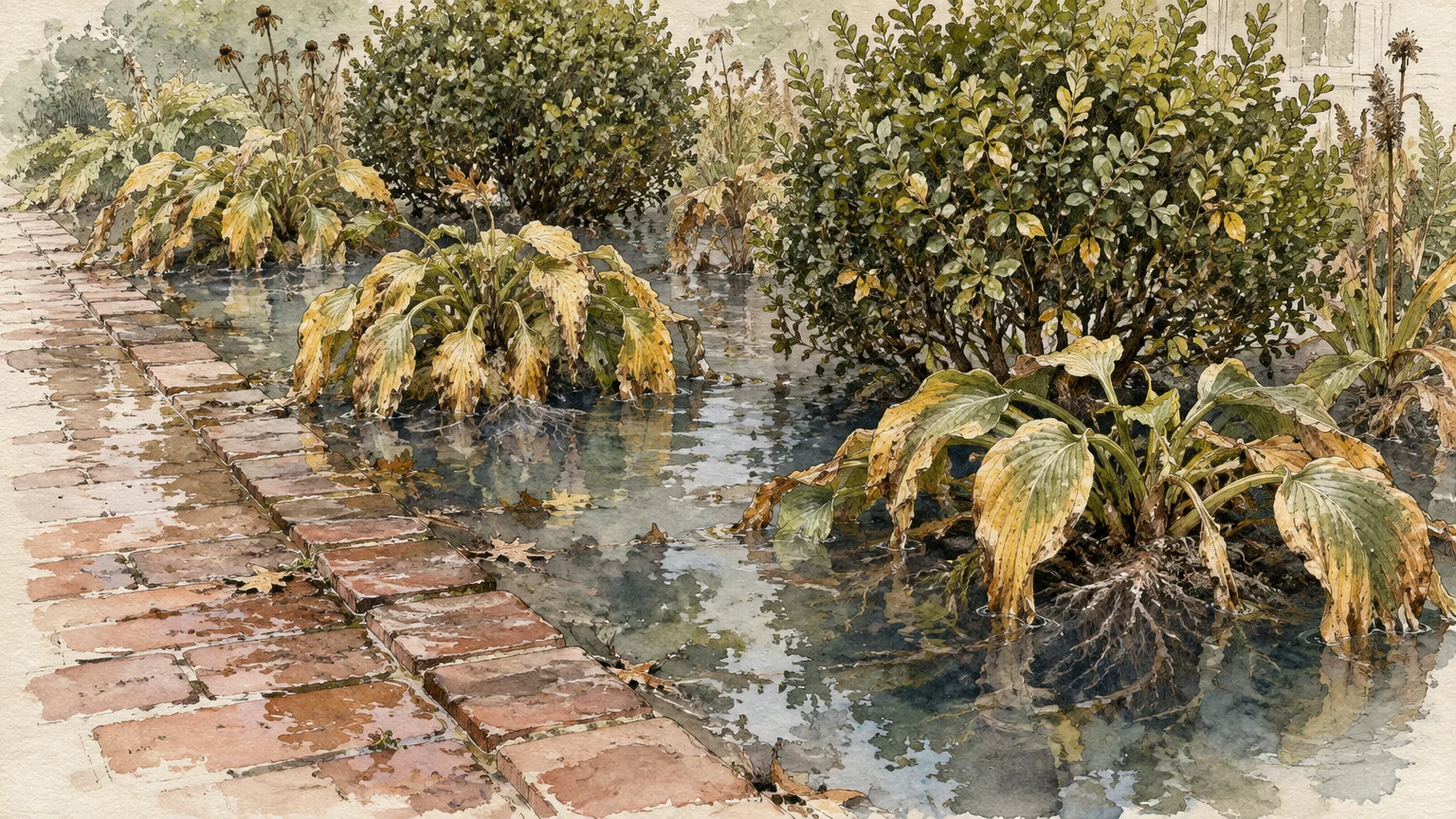
Tip #5: Waterlogged Soil in Adjacent Planting Beds
Examining Border Plant Distress
Check the health of perennials and shrubs growing immediately beside your walkway edges. Yellowing leaves, stunted shoots, and rotted root systems often indicate that path runoff is drowning your garden borders.
When you step into planting beds along the path, the soil should feel spongy rather than soupy. Squishy mud that persists for days reveals an overloaded border drainage system.
Why Paths Flood Neighboring Borders
Solid paving creates an impermeable barrier across your landscape, collecting rain that would otherwise soak in naturally. When an entire walkway sheds water toward one side, neighboring beds absorb double their normal moisture volume.
This excessive runoff suffocates plant roots by driving oxygen out of the surrounding topsoil. Beneficial aerobic soil microbes perish, leaving garden plants vulnerable to destructive fungal pathogens.
Diverting Excess Water from Plantings
Excavate a French drain along the path boundary to capture excess water before it floods nearby roots. A perforated pipe buried in washed gravel safely whisks water toward a dedicated discharge area.
Alternatively, install a rain garden filled with moisture-loving native species such as blue flag iris and ferns. These deep-rooted plants thrive in wet conditions and absorb surplus runoff naturally.
Incorporating generous amounts of coarse organic compost into border beds also improves local soil structure. Well-structured soil absorbs and percolates heavy rain much more effectively than dense, compacted ground.
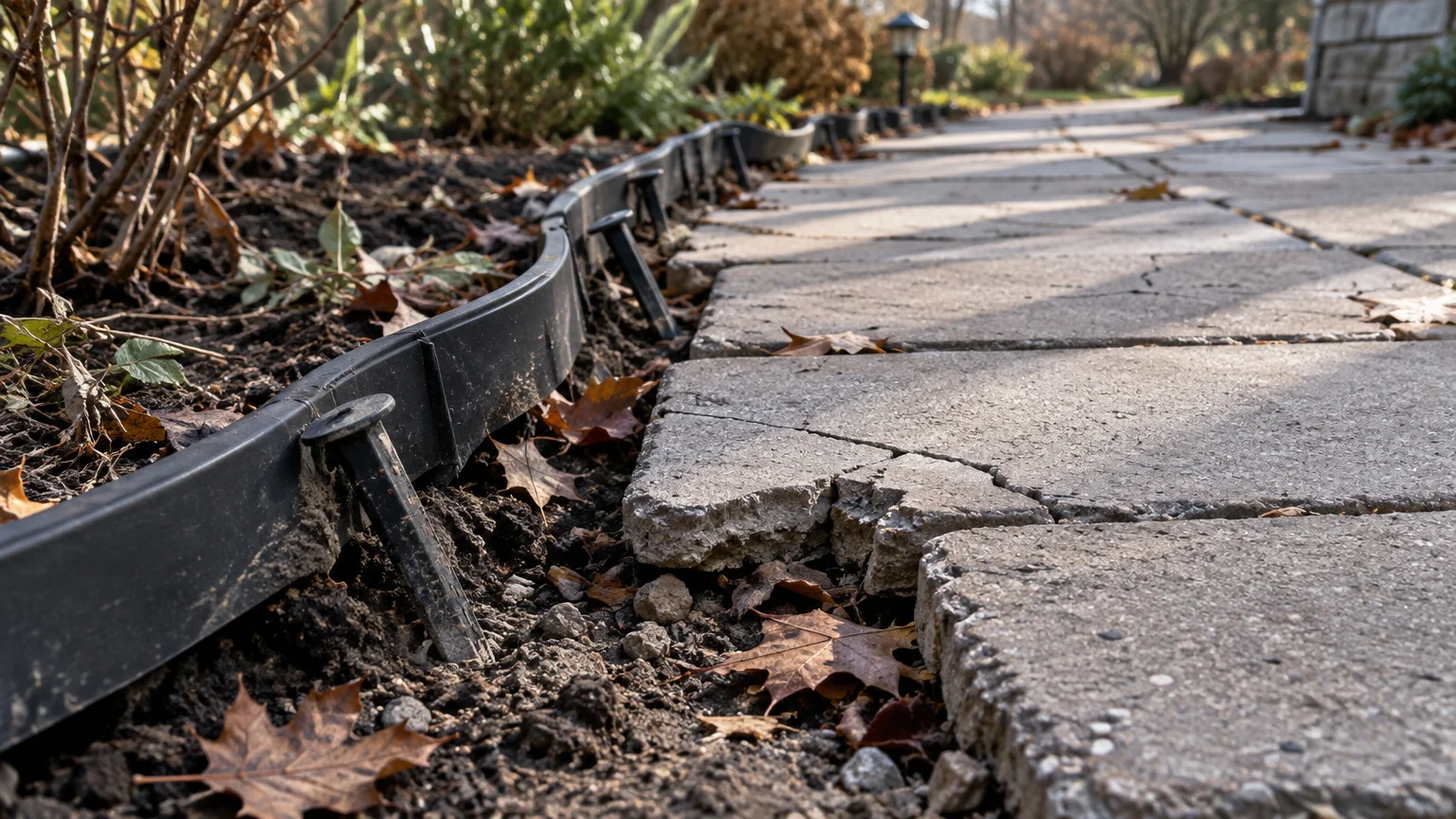
Tip #6: Cracking Pavement and Shifting Edging Restraints
Assessing Structural Fractures and Movement
Hairline fractures in concrete walkways or separated plastic edging restraints point toward severe subsurface moisture pressure. Water trapped beneath path materials expands and contracts constantly with seasonal temperature swings.
Notice whether individual edging spikes have backed out of the ground along your path margins. Pushed-out restraints confirm that hydrostatic pressure or frost heaves are destabilizing your walkway perimeter.
The Destructive Power of Frost Heave
Water expands by approximately nine percent in volume when it freezes into solid ice. In cold climates, saturated walkway bases freeze into solid lenses that exert thousands of pounds of upward force.
When spring arrives, this subsurface ice melts unevenly, leaving hollow gaps beneath rigid concrete or stone. Without uniform base support, heavy surface materials crack under their own weight.
Protecting Paths from Frost and Pressure
Ensure your path foundation extends below local frost penetration lines or features an open-graded aggregate base. Coarse gravel drains excess water away before freezing temperatures can trigger catastrophic frost heaves.
Anchor edge restraints with long steel spikes driven into compacted, well-draining crushed rock. Secure edging prevents lateral spread and preserves your walkway alignment through wet winters.
Seal existing concrete cracks with flexible polyurethane masonry caulk before cold weather sets in. Sealing fractures prevents surface moisture from entering the walkway core and freezing.
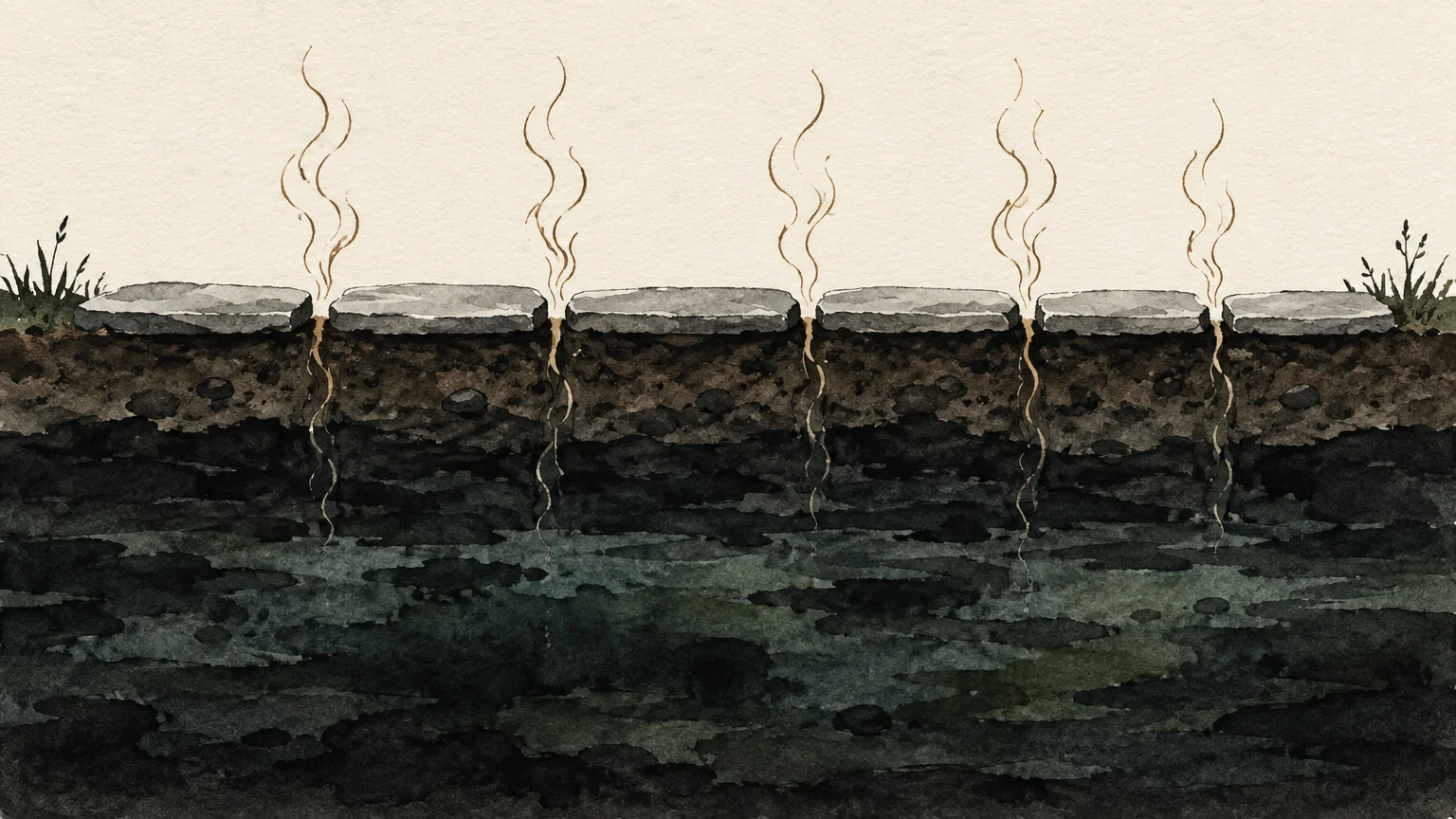
Tip #7: Persistent Musty Odors and Saturated Subgrades
Detecting Stagnant Subsurface Moisture
A healthy garden emits a rich, pleasant scent of fresh earth and growing vegetation. If your walkway borders smell sour, swampy, or like rotten eggs, you are smelling anaerobic decomposition caused by poor drainage.
This offensive odor arises when standing water fills all available soil pore space beneath your path. Without atmospheric oxygen, beneficial soil bacteria die, and anaerobic organisms take over the subgrade.
How Anaerobic Conditions Develop
Compacted clay beneath walkway bases acts like an impermeable bowl, holding trapped rainwater indefinitely. Over weeks of saturation, sulfur-producing bacteria thrive in these oxygen-starved pockets, producing smelly hydrogen sulfide gas.
Saturated subgrades also compromise structural support for the entire walkway. Chronic moisture turns solid subsoil into a weak slurry that cannot support regular wheelbarrow or foot traffic.
Restoring Soil Aeration and Movement
Aerate surrounding garden soil with a broadfork to break up compacted hardpans near the path edges. Relieving subsoil compaction restores natural infiltration pathways and allows trapped gases to escape harmlessly.
Dig narrow relief trenches filled with coarse pea gravel perpendicular to your walkway alignment. These simple stone wicks pull stagnant subsurface water away from the path foundation into drier garden zones.
Adding crushed gypsum to heavy clay soils alongside the path helps loosen tight mineral bonds. Improved clay flocculation speeds drainage and restores healthy oxygen exchange to stagnant garden ground.
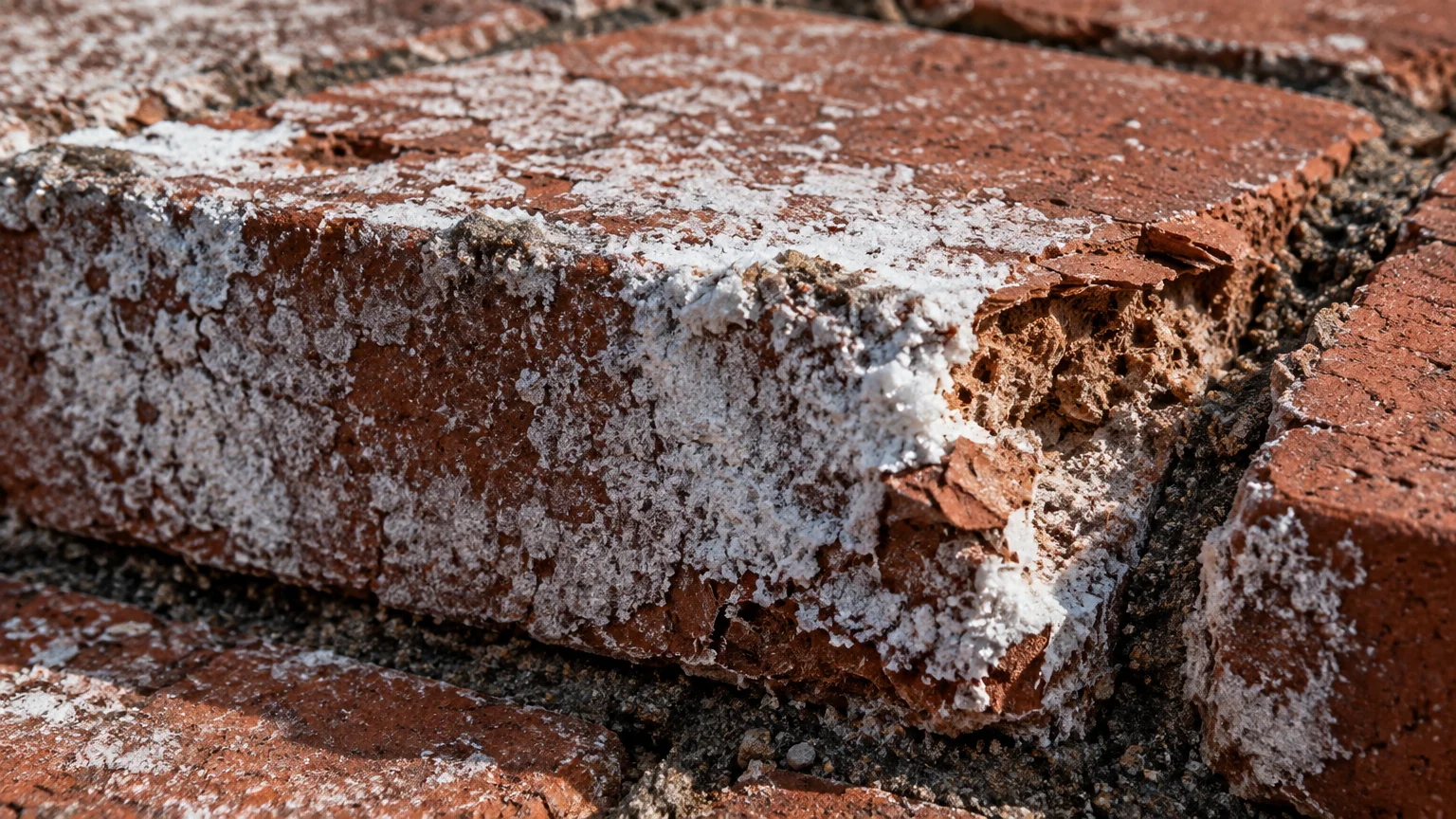
Tip #8: Surface Efflorescence and Premature Material Spalling
Identifying Salt Deposits and Flaking Stone
White, chalky powder dusting the surface of your brick or concrete pavers is known as efflorescence. This powdery residue is an unmistakable visual sign that water is migrating upward through your masonry.
If left unaddressed, efflorescence progresses to spalling, where the surface layers of stone flake, chip, and crumble away. This deterioration permanently ruins the aesthetic appeal and structural strength of your walkway.
The Chemistry of Water Migration
Porous masonry acts like a bundle of microscopic straws through capillary action. Ground moisture dissolves natural mineral salts from the underlying soil and wicks them upward toward the surface.
As surface water evaporates under the afternoon sun, dissolved salts crystallize and expand within masonry pores. This internal crystallization pressure fractures stone particles and triggers extensive surface flaking.
Eliminating Mineral Leaching at the Source
The only permanent cure for efflorescence is cutting off the supply of subsurface standing water. Upgrading to a permeable paving base made of clean, washed crushed stone stops capillary moisture wicking completely.
After addressing the sub-base drainage, scrub away existing salt deposits with a stiff brush and clean water. Apply a breathable, penetrating silane-based sealer to shield the walkway against future moisture infiltration.
Avoid using salt-based deicers during winter, as they accelerate chemical spalling on damp masonry. Choose traction grit or coarse sand instead to maintain safe walkways without ruining your stone.
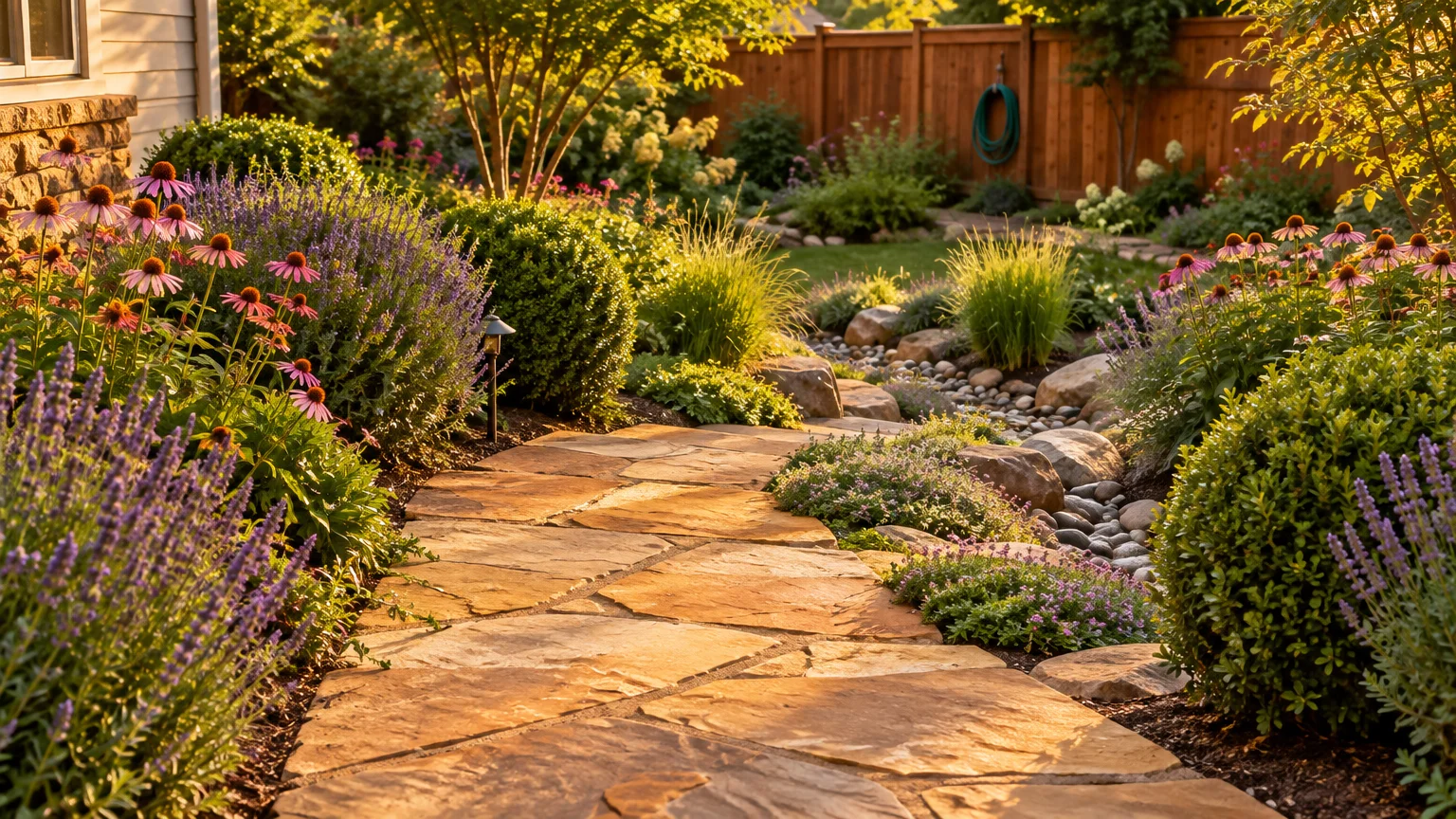
Putting It All Together: Enjoy Your Beautiful Garden
Maintaining proper garden path drainage protects your landscaping investment and ensures safe accessibility through all four seasons. When walkways shed moisture effectively, your entire garden ecosystem thrives with healthier soil and happier plants.
Take time to walk your outdoor paths immediately following the next heavy downpour. Look closely for puddles, soil washouts, or shifting pavers so you can address issues before structural failures happen.
Simple interventions like regrading stone, adding gravel swales, and aerating border soils yield tremendous long-term rewards. You do not always need an expensive overhaul to correct annoying yard drainage problems.
For larger projects, adopting permeable paving solutions offers an environmentally friendly way to manage stormwater on-site. Permeable walkways return clean rain directly into underground aquifers while keeping your walking surfaces pristine and dry.
A stable, well-drained walkway invites family and guests to explore your garden beds without stepping into mud. Tackle your drainage challenges today and take pride in an outdoor sanctuary that remains beautiful in every weather condition.
Frequently Asked Questions
How long should water take to drain from a garden path after rain?
A well-drained garden path should shed standing surface water within one to two hours following moderate rainfall. If puddles on garden path surfaces linger for twenty-four hours or more, you must improve your drainage system.
Slow drainage indicates compacted subsoil, inadequate slope, or poor foundation aggregate beneath the pavers. Addressing these issues promptly prevents structural damage and eliminates slippery algae growth.
What is the best material for drainage solutions for walkways?
Clean, washed crushed stone—such as ASTM No. 57 or No. 8 aggregate—provides the best drainage solutions for walkways. Unlike sand or unwashed gravel, angular crushed stone contains no fine particles that can clog water flow.
Using crushed stone creates an open reservoir beneath permeable paving stones that stores excess rain until it infiltrates naturally. This system prevents puddles while providing exceptional load-bearing support for everyday foot traffic.
Can I fix garden path drainage without removing existing pavers?
Yes, you can often resolve minor moisture issues without undertaking a complete path renovation. Installing a shallow gravel trench or French drain along the path perimeter intercepts runoff before water can accumulate.
Pruning overhead vegetation to increase sunlight and aerating adjacent garden soil also speeds surface drying dramatically. However, if individual pavers are sinking, you will need to lift and relevel those specific stones.
How does permeable paving help prevent yard drainage problems?
Permeable paving features wider joints filled with small aggregates that allow stormwater to pass instantly into a crushed stone base. This innovative design eliminates surface puddling by treating rainwater where it lands.
By capturing runoff on-site, permeable systems alleviate stress on surrounding garden beds and municipal storm sewers. They represent one of the most effective methods to prevent widespread yard drainage problems.
For region-specific advice, consult your local University Extension program (find yours via the USDA directory). For plant databases and inspiration, visit the Missouri Botanical Garden or the Royal Horticultural Society.
Disclaimer: This article provides general gardening advice; always consider your specific climate, soil conditions, and local pests. Follow safety guidelines when using gardening tools and products.