You can create an inviting, polished front landscape without spending your weekends mowing, weeding, and watering. Thoughtful design choices allow you to slash routine yard chores dramatically while elevating your home’s curb appeal.
Traditional turf grass demands intense labor and excessive resources, but resilient alternatives provide stunning visual interest throughout all four seasons. Swapping high-maintenance lawn for durable plantings creates an outdoor space that practically manages itself.
Whether you want a complete property renovation or a few strategic upgrades, these practical front yard solutions will give you your free time back.
Tip #1: Replace High-Maintenance Turf with Native Groundcovers
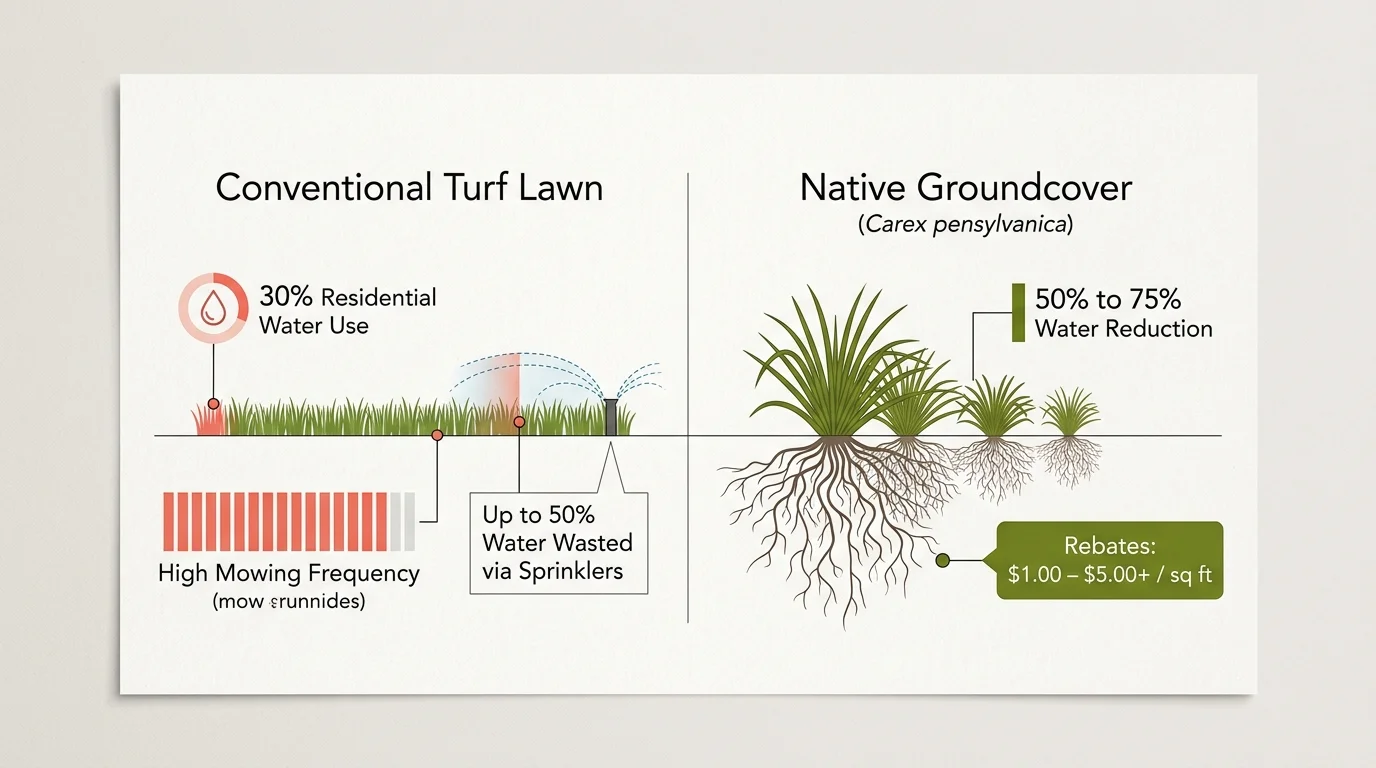
Traditional turf lawns demand constant mowing, fertilizing, and aerating to stay presentable. According to the EPA WaterSense program, landscape irrigation accounts for nearly 30% of all residential water use in the United States—translating to roughly 8 to 9 billion gallons per day—and climbs to 50% to 60% in arid regions. Even worse, standard sprinklers waste up to 50% of that water through evaporation, wind drift, and runoff.
You can eliminate this chore burden by converting open lawn areas into native groundcovers. Plants such as Pennsylvania sedge (Carex pensylvanica), creeping wild ginger, and clover thrive in local soils without supplemental synthetic fertilizers. Furthermore, replacing conventional turf with native, drought-tolerant alternatives lowers outdoor water consumption by 50% to 75%. Many regional water utilities offer turf replacement rebates between $1.00 and $5.00+ per square foot of removed grass, paying you directly to upgrade to an easy care front yard design.
Tip #2: Install Drip Irrigation with a Smart Weather Controller
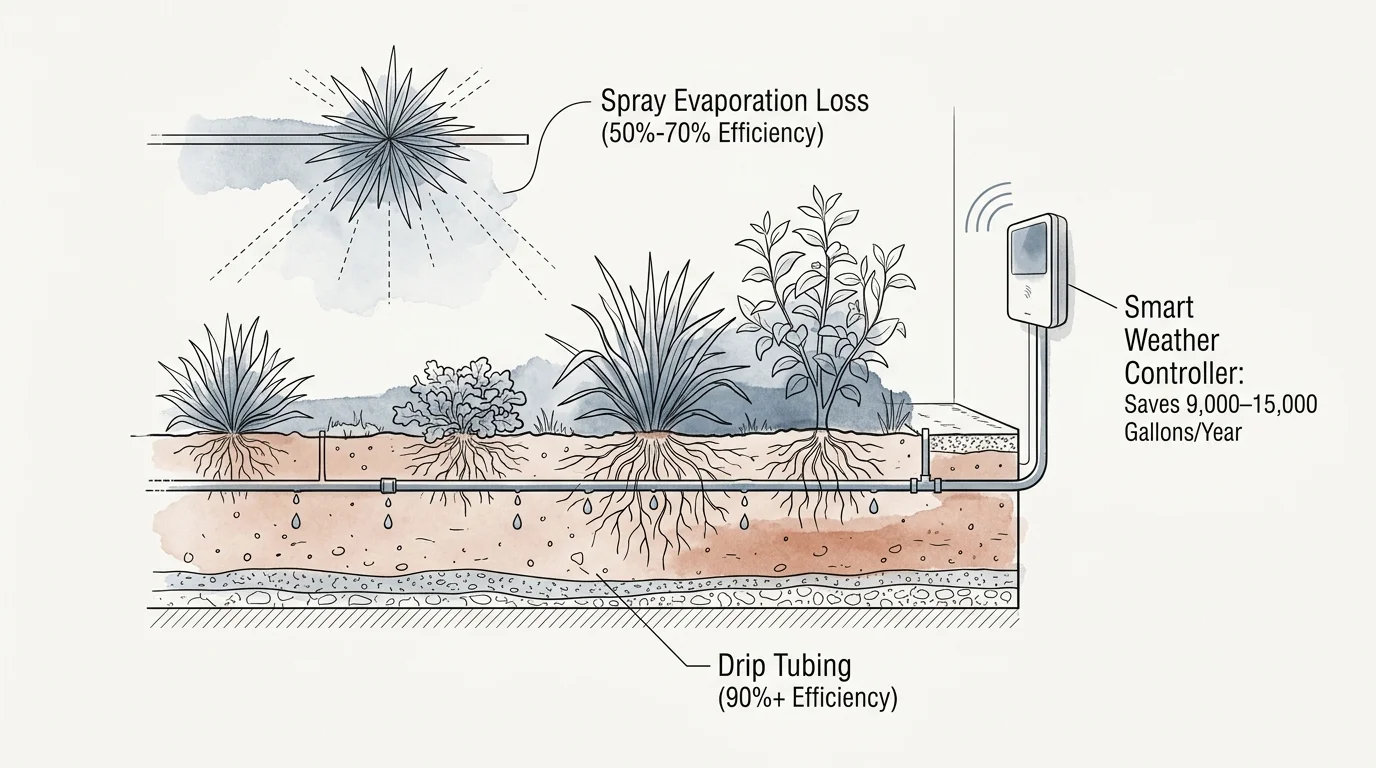
Dragging hoses and adjusting manual sprinklers eats up valuable hours every week. Standard spray sprinkler systems operate at only 50% to 70% efficiency, drenching sidewalks and losing water to the wind. In contrast, low-maintenance drip irrigation systems deliver moisture directly to plant root zones at an impressive 90%+ efficiency rate.
Pair your drip lines with an EPA WaterSense-labeled smart irrigation controller. These controllers monitor real-time local weather, humidity, and soil conditions to adjust watering schedules automatically. Upgrading from a standard clock-timer saves an average household 15% to 30% on irrigation water—amounting to roughly 9,000 to 15,000 gallons saved annually. You gain a self-regulating watering system that prevents plant stress, stops fungal diseases on leaves, and frees you from daily oversight.
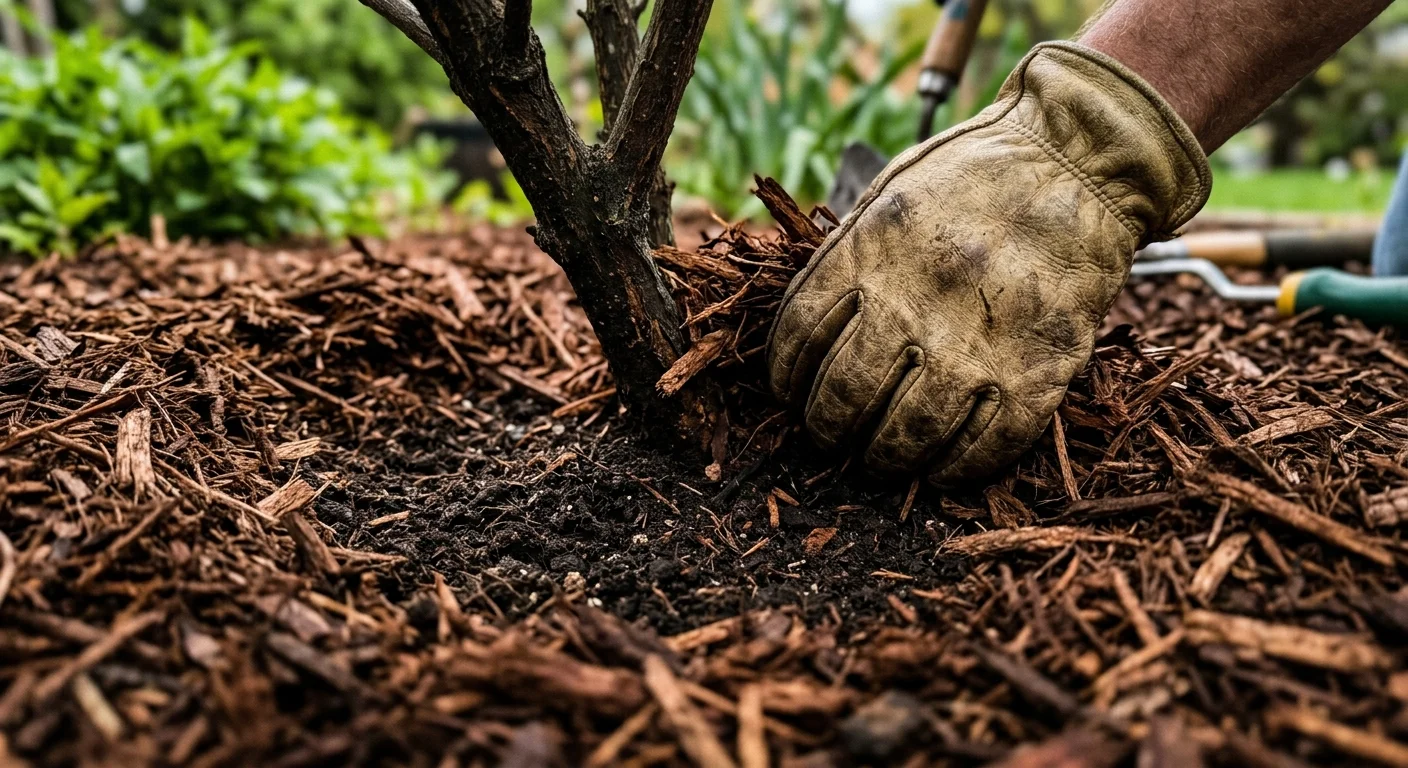
Tip #3: Apply a 2- to 3-Inch Layer of Organic Mulch
Weed pulling represents one of the most tedious front yard chores. Applying a consistent 2- to 3-inch layer of organic mulch across all planting beds stops up to 90% of weed seeds from germinating by blocking sunlight. Mulch also seals in soil moisture and moderates underground root temperatures during extreme summer heat and winter freezes.
Select shredded hardwood, cedar bark, or pine bark based on local availability. For large yards, purchasing bulk wood mulch delivery generally costs $30 to $135 per cubic yard, proving far more economical than bagged alternatives. Ensure you keep the mulch pulled back two to three inches from tree trunks and shrub bases; exceeding a four-inch depth risks suffocating plant root crowns and inviting fungal rot.
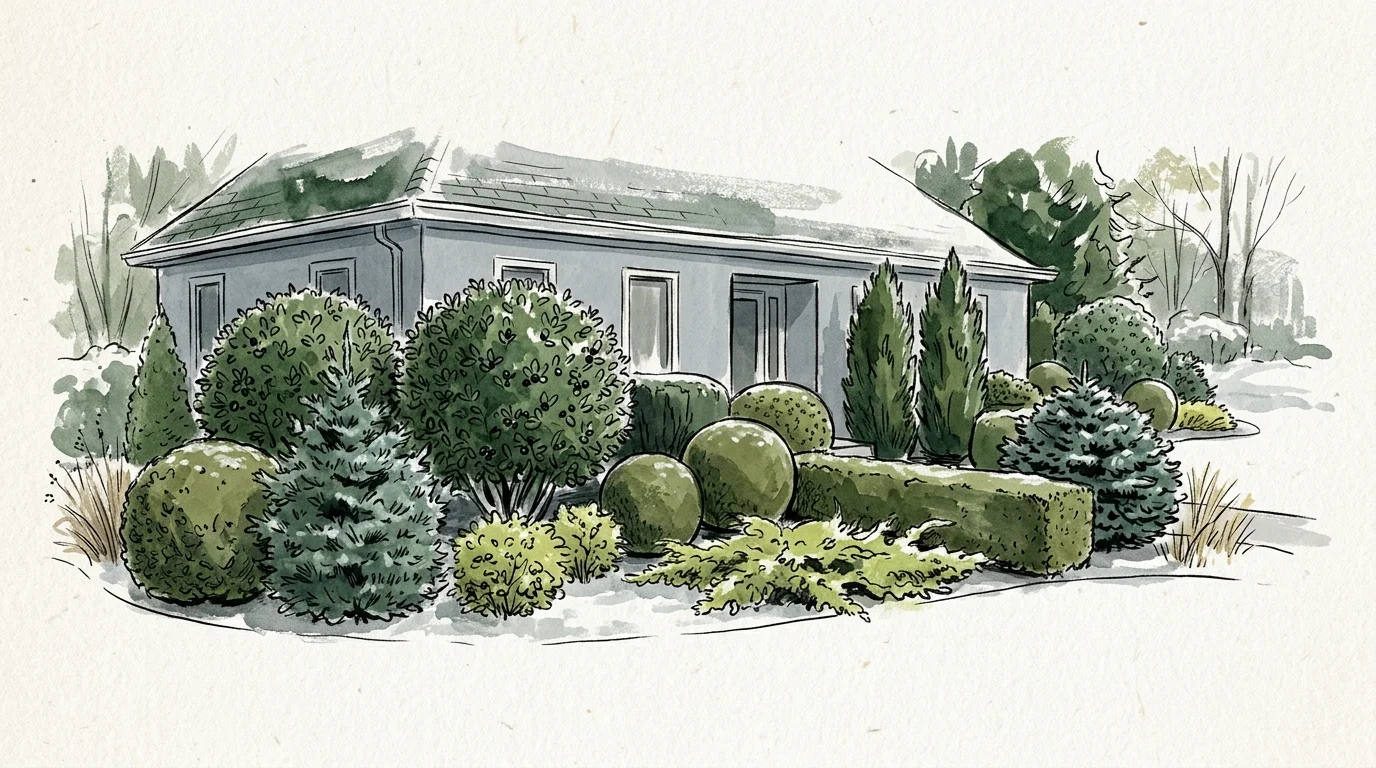
Tip #4: Frame Foundation Beds with Evergreen Shrubs
Perennials that die back completely in winter leave foundation beds looking sparse and require seasonal clearing. Evergreen shrubs solve this problem by establishing a permanent, sculptural framework that looks lush and structured 365 days a year without demanding constant deadheading or staking.
Choose slow-growing, naturally compact cultivars that match the mature dimensions of your space. Inkberry holly (Ilex glabra ‘Gem Box’), dwarf boxwoods, yews, and dwarf mugo pines maintain neat forms with minimal shaping. By planting varieties that reach only two to three feet in height, you eliminate the need for monthly hedge trimming while maintaining clean sightlines from your porch and windows.
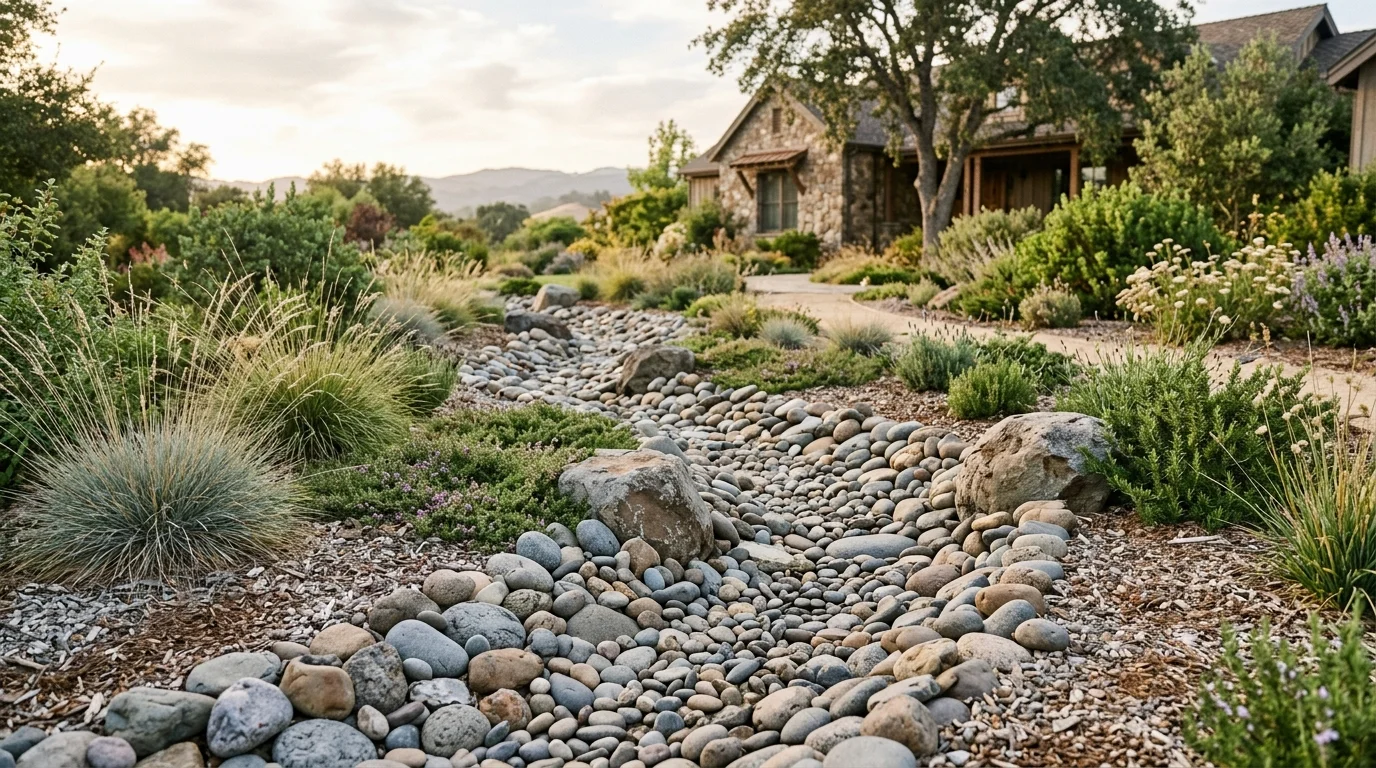
Tip #5: Construct a Dry Creek Bed for Drainage and Texture
If your front yard suffers from erosion, standing water, or steep slopes, mowing becomes both difficult and dangerous. A dry creek bed turns stormwater management into an artistic focal point using river rock, smooth stones, and landscape boulders. This feature captures roof and driveway runoff, allowing water to filter naturally into the subsoil.
Excavate a shallow, meandering trench along the natural drainage path, line it with heavy-duty commercial landscape fabric, and fill it with smooth river stones. Crushed stone and pea gravel range from $40 to $100+ per ton depending on your region and rock type. This architectural hardscape requires zero irrigation, zero mowing, and zero fertilizer, giving your yard a natural alpine or desert aesthetic that endures indefinitely.
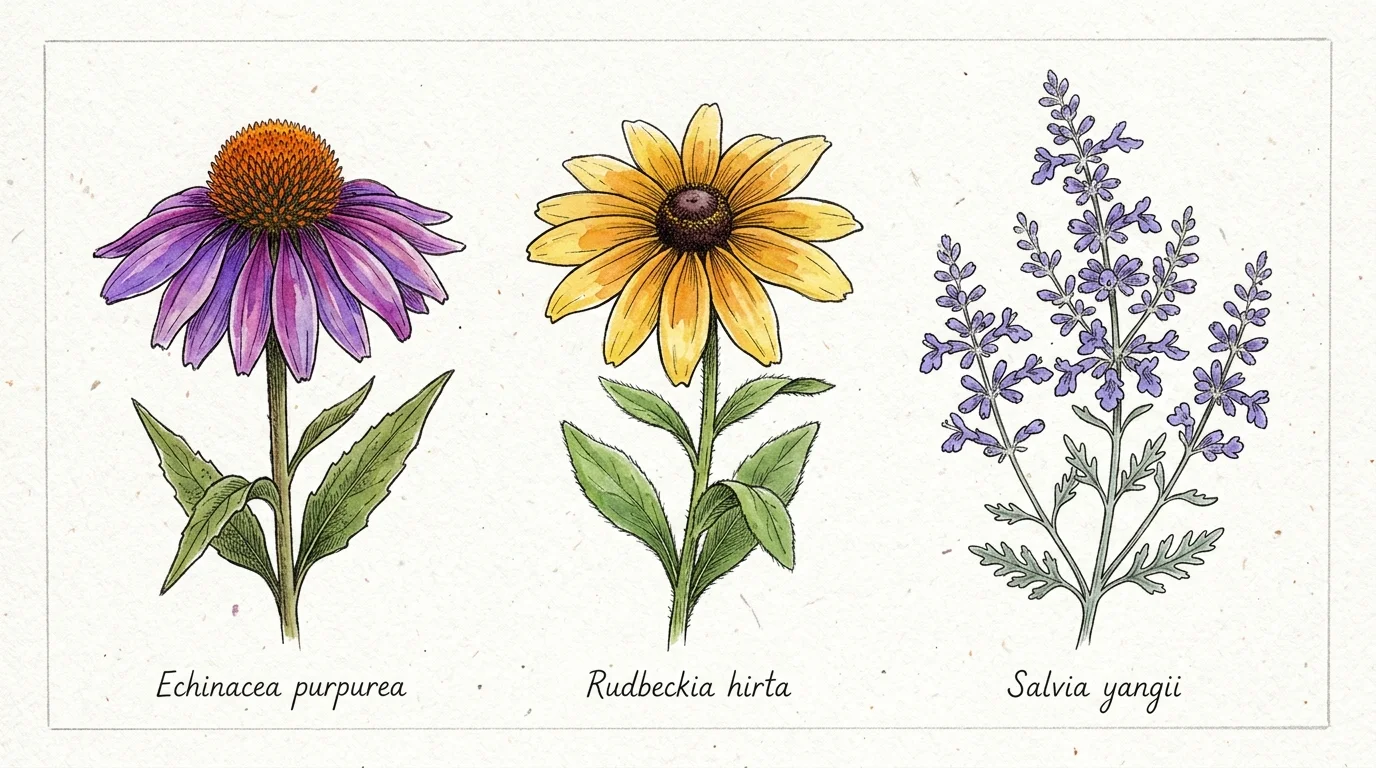
Tip #6: Plant Hardy, Long-Blooming Drought-Tolerant Perennials
Fussy annual flowers demand weekly deadheading, heavy feeding, and daily watering throughout the summer heat. In contrast, drought tolerant front yard landscaping relies on tough perennial workhorses that bloom for months on natural rainfall alone once their root systems establish.
Incorporate resilient species such as purple coneflower (Echinacea purpurea), ‘Goldsturm’ black-eyed Susan (Rudbeckia fulgida), Russian sage (Salvia yangii), and ‘Walker’s Low’ catmint (Nepeta). These varieties resist common garden pests, tolerate poor soils, and attract beneficial pollinators. You only need to cut them back once a year in late winter or early spring, saving dozens of hours compared to seasonal annual planting.
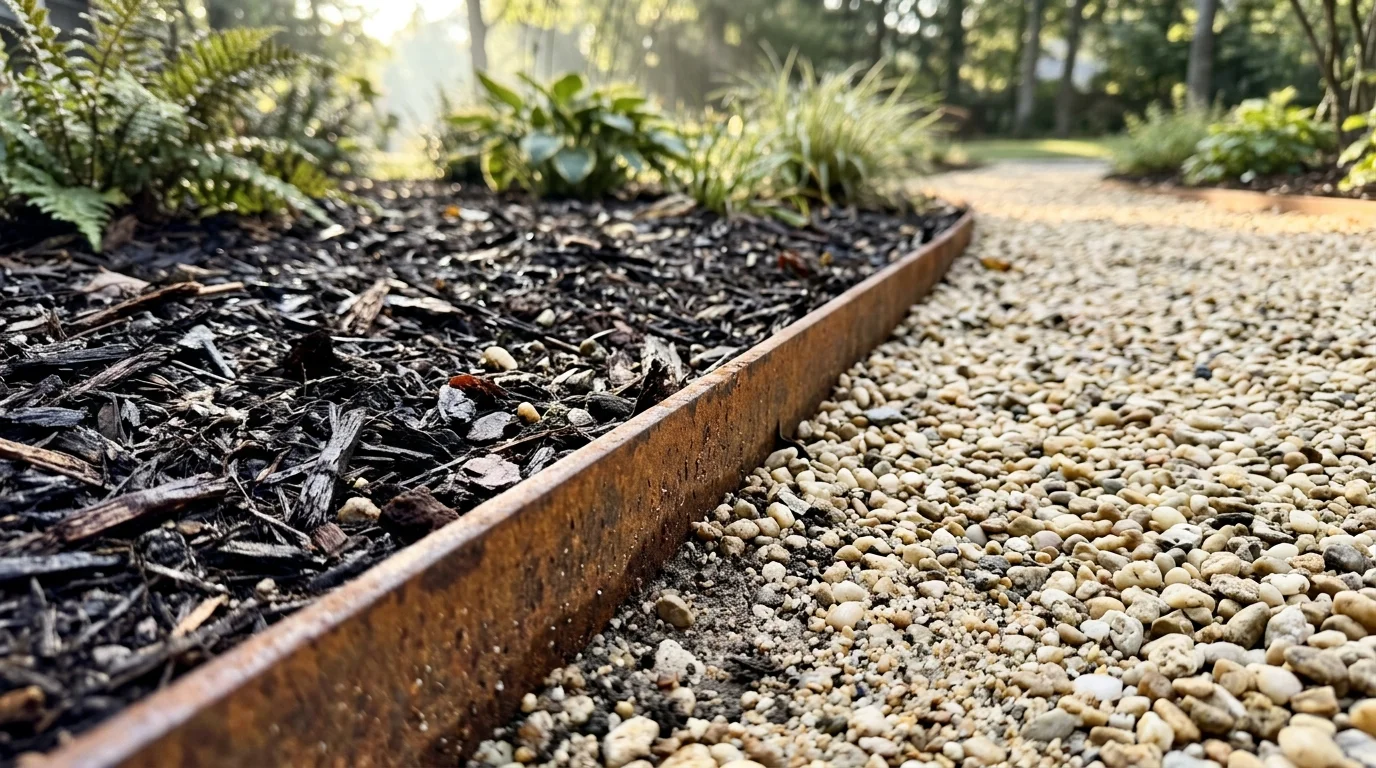
Tip #7: Establish Permanent Stone or Metal Edging
A messy garden boundary makes an entire front yard look untidy, forcing you to use string trimmers along every bed edge weekly. Installing permanent, deep-set landscape edging creates a clean barrier that stops aggressive turf grass roots from creeping into your flower beds.
Choose heavy-gauge steel edging, aluminum strips, or concrete pavers set level with the soil. By sinking the edging deep enough to block lateral rhizomes, you eliminate hand-trenching every spring. A level stone border also creates a convenient mowing strip; your lawnmower wheels can ride directly on top of the stone, cutting every blade of grass cleanly without requiring extra weed-whacking.
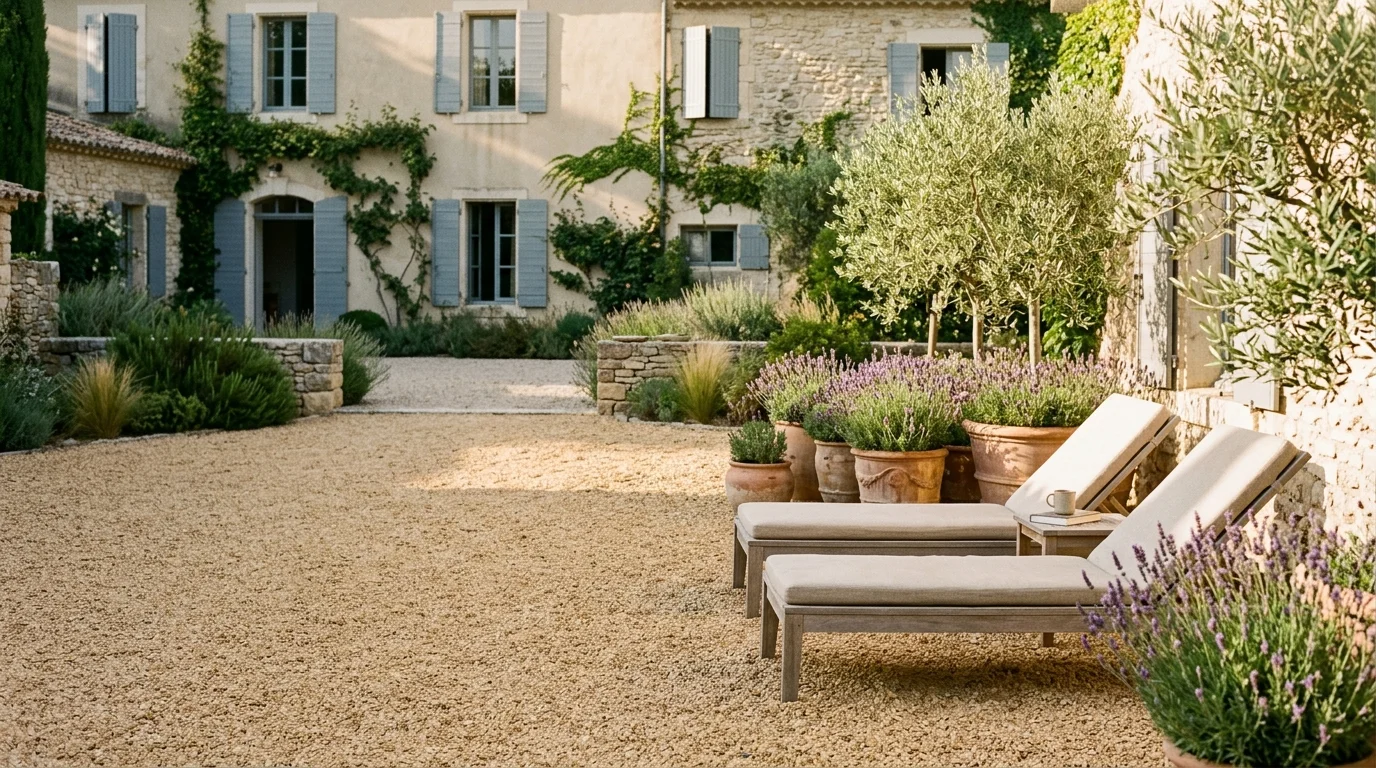
Tip #8: Convert Open Space into a Pea Gravel Courtyard
Large open expanses of lawn require heavy weekend upkeep. One of the most effective simple front yard makeover ideas is replacing underutilized turf with an elegant European-style gravel courtyard. A gravel patio introduces functional outdoor living space for seating, potted displays, or a small bistro table.
Professional xeriscaping conversions average between $5 and $20 per square foot, but you can build a DIY gravel courtyard affordably. Excavate the top layer of turf, lay down heavy woven geotextile fabric to prevent settling and weeds, and spread two to three inches of washed pea gravel or decomposed granite. The permeable surface lets rainwater drain directly into the ground while delivering a weed-free space that never needs mowing.
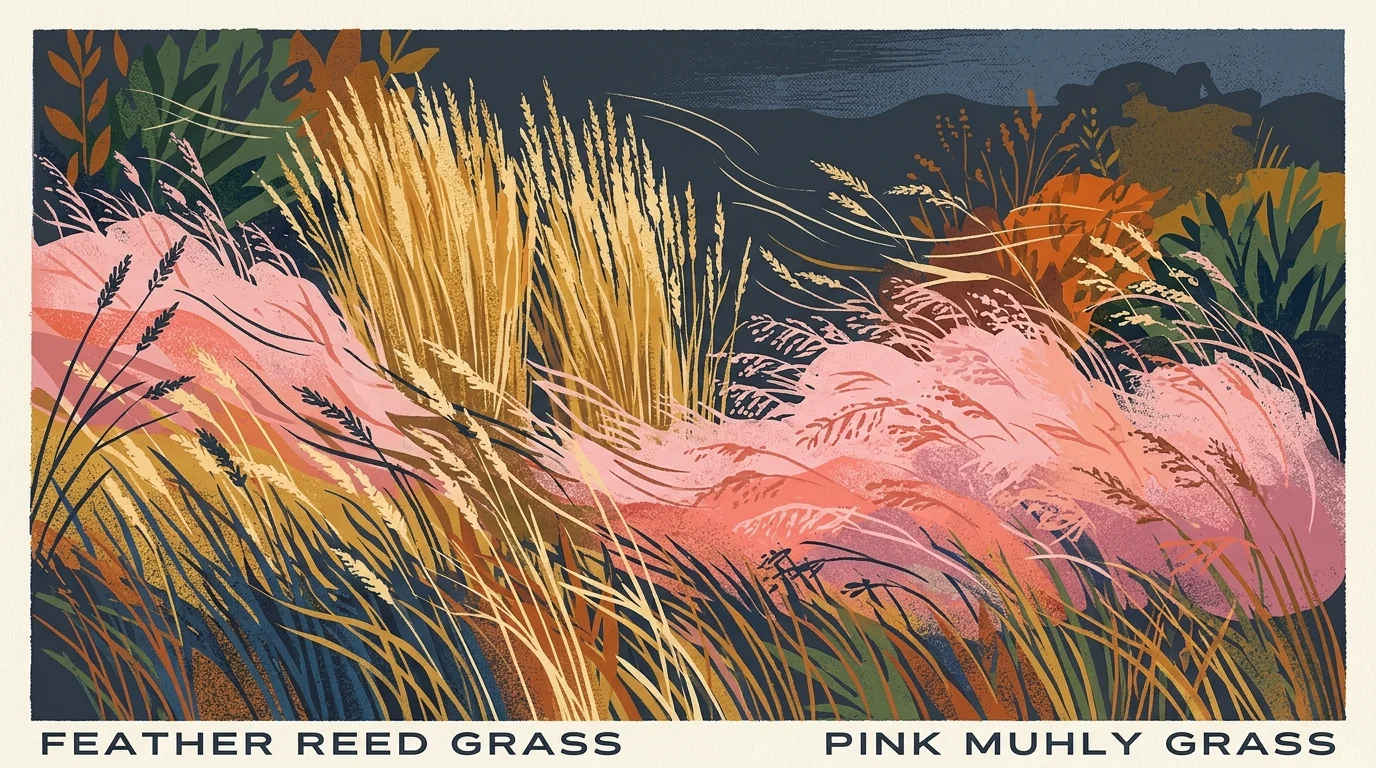
Tip #9: Plant Masses of Ornamental Grasses for Multi-Season Drama
Ornamental grasses deliver texture, graceful movement, and soft sound with almost zero maintenance. Once established, deep-rooting grasses withstand intense droughts, fierce winds, and poor clay or sandy soils without complaint.
Plant architectural varieties in broad sweeps for maximum visual impact. Feather reed grass (Calamagrostis x acutiflora ‘Karl Foerster’) provides vertical accent lines, while switchgrass (Panicum virgatum) and blue fescue (Festuca glauca) offer dynamic foliage colors. These grasses look striking through summer and retain their golden structures through heavy winter snow. Your only maintenance task is shearing the dried foliage down to the base once each spring before new shoots emerge.
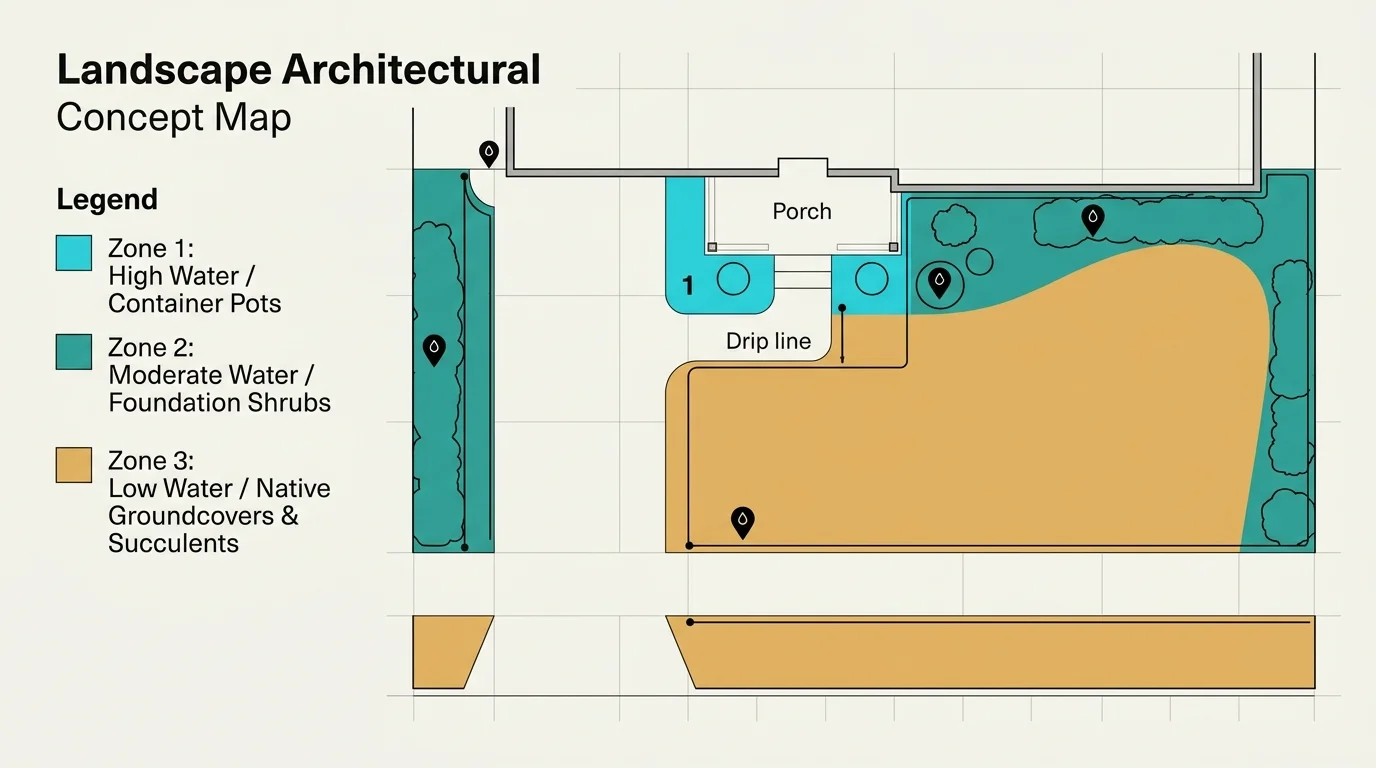
Tip #10: Organize Plantings into Strategic Hydrozones
Scattering plants with different moisture needs across your yard forces you to hand-water individual specimens constantly. Organizing your planting beds into hydrozones—grouping species with identical sunlight and moisture requirements together—streamlines your yard care instantly.
Place drought-resistant succulents, lavender, and ornamental grasses together in high-drainage, full-sun zones near the perimeter where hose access is limited. Position moderate-water shrubs closer to the house or beneath downspouts. Hydrozoning prevents accidental plant loss from overwatering, ensures your drip irrigation lines run on uniform schedules, and saves both water and labor.
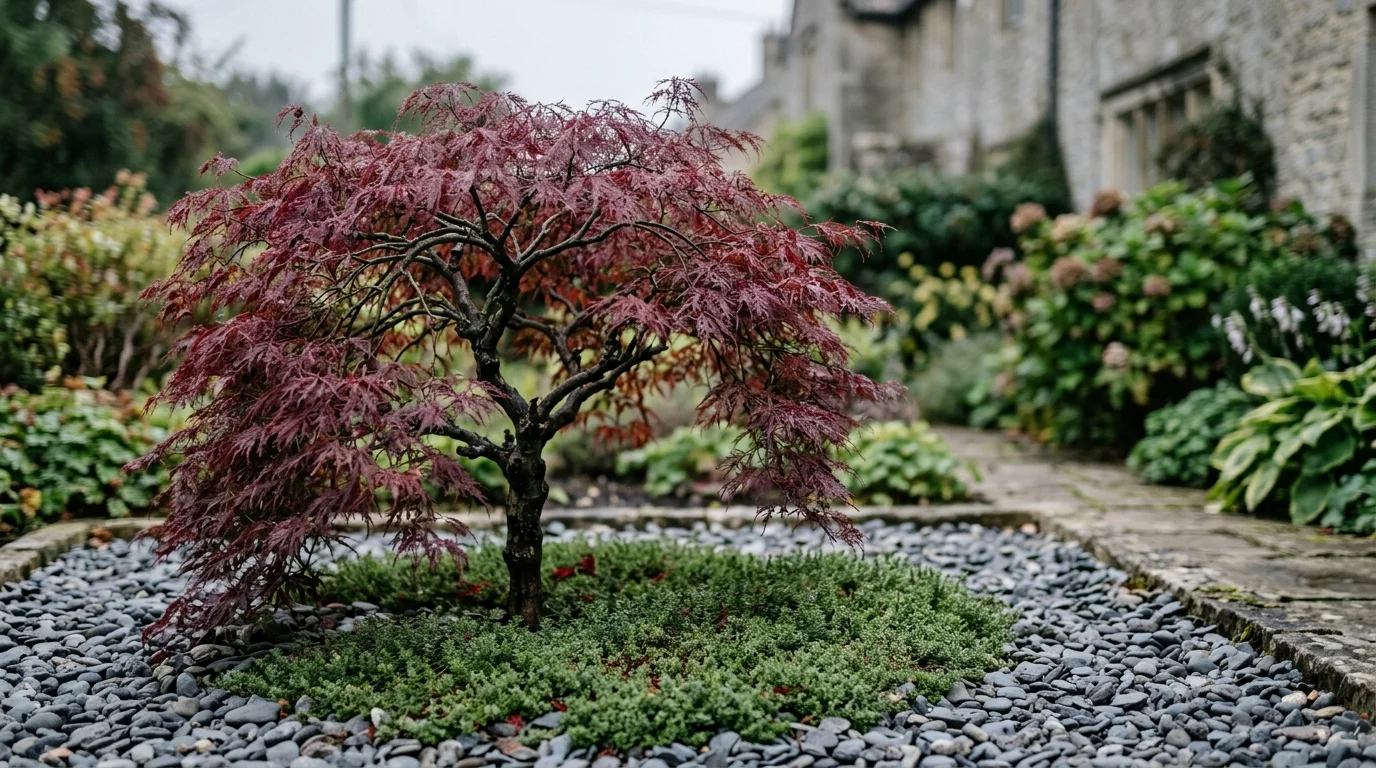
Tip #11: Choose Slow-Growing Dwarf Trees as Low-Pruning Anchors
Large standard shade trees often outgrow front yards, dropping thousands of leaves into gutters and requiring expensive professional arborists for canopy pruning. Dwarf trees provide the same architectural height and beauty while staying naturally compact.
Select ornamental specimens such as Japanese maples (Acer palmatum), dwarf serviceberry (Amelanchier), or dwarf weeping conifers. These varieties grow at a modest pace and rarely exceed ten to twelve feet in height. Because their natural growth habits remain balanced and tidy, you avoid annual limb thinning, power line clearance headaches, and overwhelming autumn leaf cleanup.
Tip #12: Feature Architectural Containers with Self-Watering Systems
Potted plants add curb appeal around entryways and along front walkways, but small terracotta containers dry out rapidly in summer heat, demanding daily watering. You can solve this by deploying large, weather-resistant architectural planters equipped with sub-irrigation reservoirs.
Self-watering planters utilize a bottom water reservoir and wicking chamber to deliver consistent moisture to plant roots from below. Large composite or fiberglass pots resist cracking in winter and insulate roots against summer heat. Filling the reservoir every two to three weeks keeps your entryway plantings lush and vibrant with practically zero daily effort.
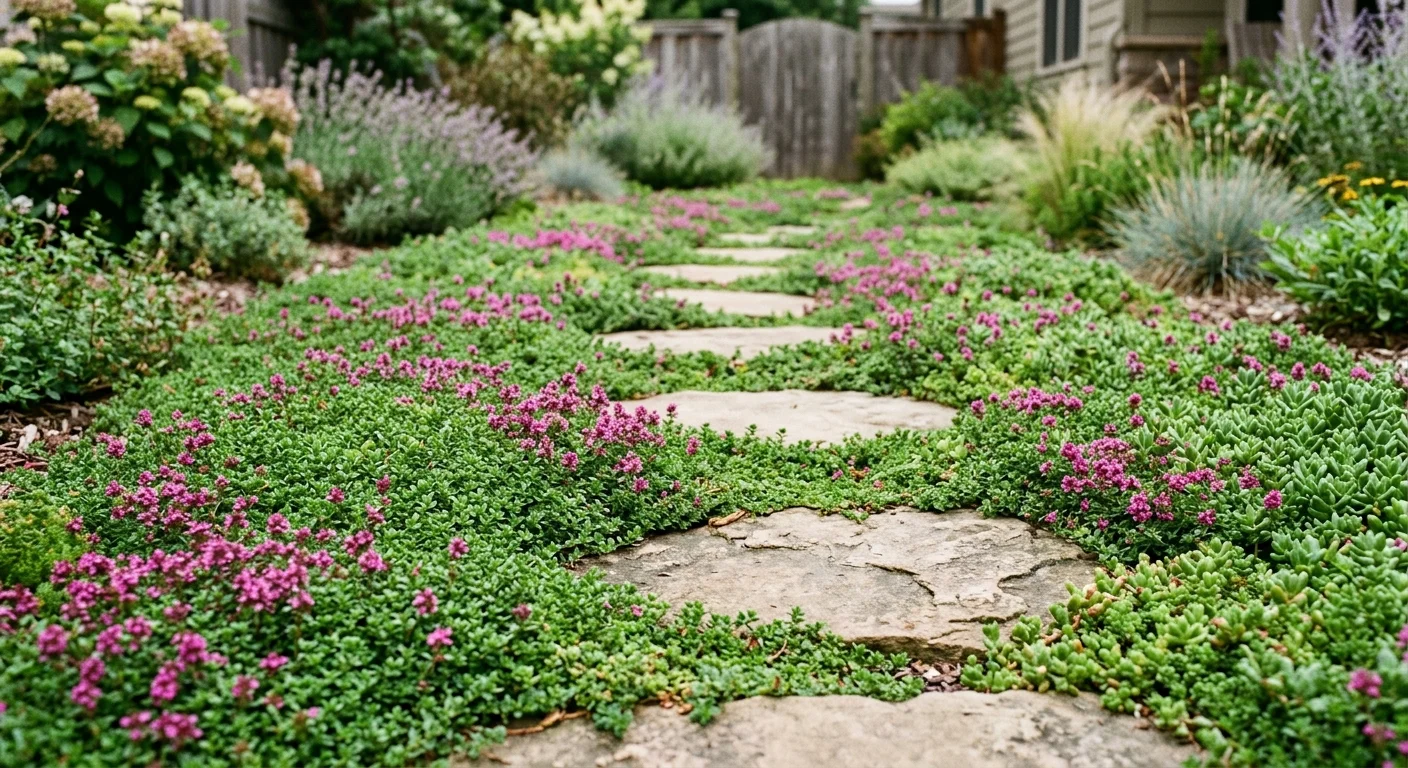
Tip #13: Establish a Dense Carpet of Creeping Groundcovers
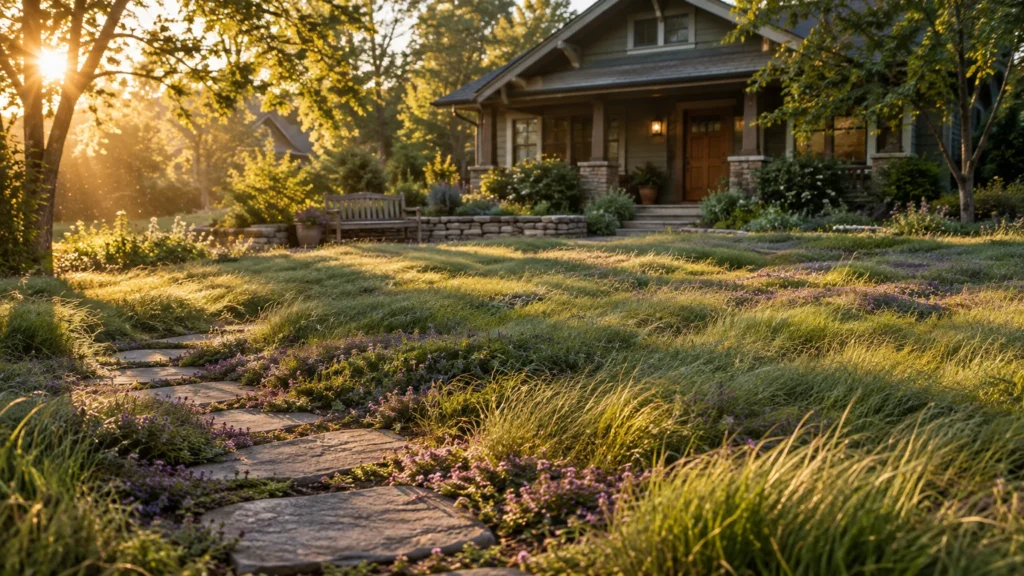
Mowing sloped front yards or rocky outcroppings poses physical safety hazards and causes ugly scalp marks on grass. Carpet-forming perennial groundcovers provide dense green foliage that smothers weeds, stabilizes steep soil banks, and tolerates light foot traffic.
Creeping thyme (Thymus serpyllum), creeping phlox (Phlox subulata), and various stonecrop sedums form tight mats that lock out airborne weed seeds. These low maintenance front yard landscaping ideas eliminate the need for mowing entirely. During late spring and summer, these living carpets burst into masses of colorful flowers that feed native bees and butterflies.

Tip #14: Install Automated Low-Voltage or Solar LED Lighting
A well-lit front yard boosts home security and curb appeal, but manual switches and burned-out incandescent bulbs create unnecessary maintenance headaches. Upgrading to modern low-voltage LED or high-lumen solar fixtures provides automated, maintenance-free evening illumination.
Cast brass or aluminum LED path lights withstand lawn equipment, weather exposure, and temperature swings for over 50,000 hours of run time. Connect your landscape transformer to an astronomical timer or photocell sensor that turns the system on at dusk and off at dawn automatically. You achieve professional landscape illumination that operates seamlessly without manual adjustments throughout the year.
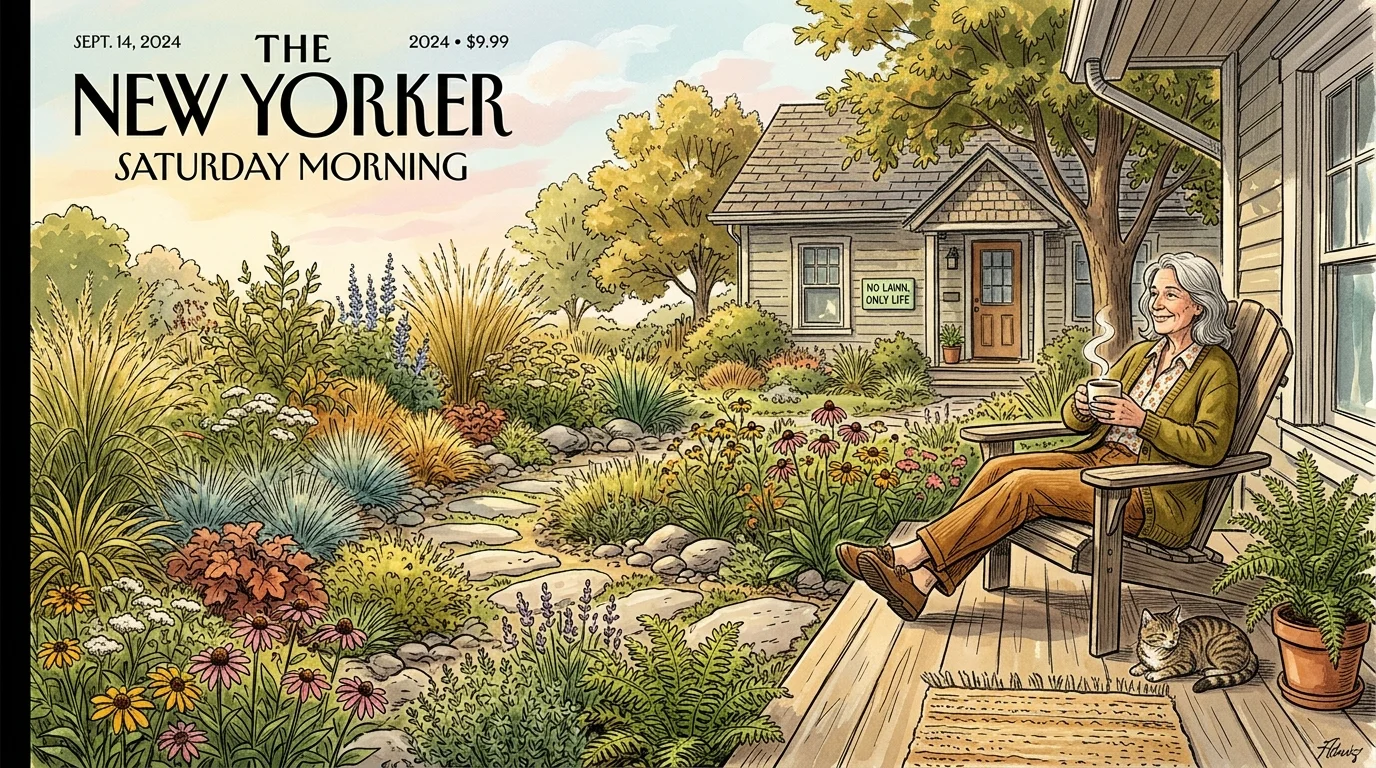
Putting It All Together: Enjoy Your Beautiful Garden
Designing an easy-care front yard does not mean settling for a barren or sterile landscape. By combining structural evergreens, hardy native perennials, smart drip irrigation, and durable stone hardscapes, you create front yard ideas that need little upkeep while increasing your home’s value and aesthetic charm.
Begin by identifying your highest-maintenance chores—whether that involves mowing a thirsty lawn, weeding unmulched beds, or dragging heavy hoses across the driveway. Implement these upgrades step by step, swapping high-effort zones for resilient, automated alternatives. You will soon enjoy a vibrant, welcoming front garden that thrives effortlessly throughout the seasons.
For region-specific advice, consult your local University Extension program (find yours via the USDA directory). For plant databases and inspiration, visit the Missouri Botanical Garden or the Royal Horticultural Society.
Frequently Asked Questions
How much money does converting a lawn to low-maintenance landscaping save?
Converting turf grass to drought-tolerant landscaping or xeriscaping typically reduces outdoor water consumption by 50% to 75%. Because landscape irrigation accounts for 30% to 60% of total residential water use, homeowners often save hundreds of dollars annually on utility bills. Additionally, you eliminate recurring costs for lawnmower fuel, blade sharpening, commercial fertilizers, and weed treatments. Many regional water authorities also offer turf removal rebates ranging from $1.00 to $5.00+ per square foot to offset project costs.
What is the most effective mulch depth for suppressing weeds?
The horticultural standard for weed suppression is a consistent layer of two to three inches of organic wood mulch (up to four inches for coarse bark chunks). This depth blocks up to 90% of weed germination and dramatically lowers soil moisture evaporation. Avoid piling mulch deeper than four inches or stacking it against tree trunks, as excessive depth suffocates root crowns and invites fungal rot.
Can an easy-care front yard remain colorful throughout the year?
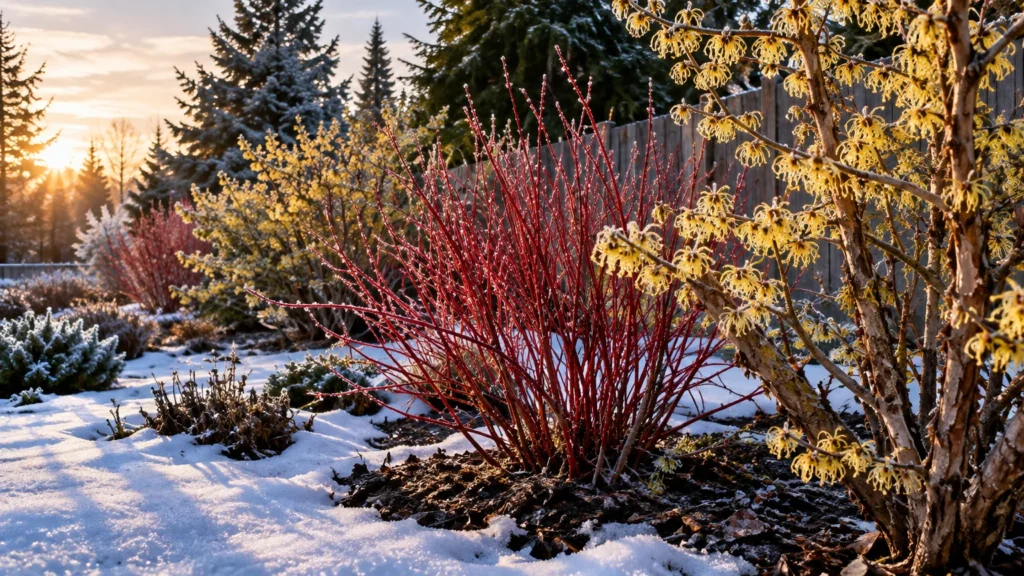
Yes. You can achieve four-season color without high maintenance by layering plants with staggered bloom times and varied foliage colors. Pair golden and blue ornamental grasses with evergreen conifers, red-twig dogwoods, and long-blooming perennials like coneflowers and Russian sage. Incorporating stone hardscapes, decorative boulders, and colorful mulch adds permanent visual interest even during the dormant winter months.
How do I prevent weeds from growing through gravel or rock beds?
Always install a heavy-duty, commercial-grade woven geotextile landscape fabric before spreading gravel or river stone. The fabric prevents stones from sinking into the subsoil while stopping deep-rooted perennial weeds from pushing up. Keep gravel beds blown free of organic debris like fallen leaves, which decompose into a fertile layer where airborne weed seeds can sprout.
Disclaimer: This article provides general gardening advice. Always consider your specific climate, soil conditions, and local pests. Follow safety guidelines when using gardening tools and products.