10 Plants That Actually Prefer Being a Little Root-Bound

Constantly repotting house plants into larger containers often causes more harm than good by triggering root rot and stunted top growth. Many popular indoor species thrive when their root systems fill out their pots, directing their precious energy into vibrant blooms, sturdy stems, and thick foliage rather than endless root expansion. Keeping these specific varieties tight in their containers encourages profuse flowering and protects against overwatering mistakes. By understanding which plants prefer cozy quarters and recognizing when not to repot, you can create a lower-maintenance container garden that flourishes year-round. Here are ten stunning house plants that actually prefer being a little root-bound.
Sunlit snake plant in a snug terracotta pot on a wooden windowsill.
Snug in its rustic terracotta pot, this vibrant snake plant thrives on a sunny wooden windowsill.

Tip #1: Snake Plant (Sansevieria)

Snake plants stand out as top-tier choices among plants that like tight pots. Their thick, rhizomatous root systems store substantial water, allowing them to withstand long periods of drought without flinching. When you plant a snake plant in an oversized container, the excess soil retains moisture too long; this soggy environment rapidly rots the underground rhizomes and causes foliage to turn yellow and soft. In contrast, keeping the root ball snug forces the plant to channel its energy into pushing up dense, upright leaves that add dramatic height to your room.

To keep your snake plant flourishing, select heavy ceramic or terracotta pots that leave only 1 to 2 inches of space around the root mass. Terracotta provides excellent breathability, which speeds up soil drying between deep waterings. You only need to consider repotting every three to five years, or when expanding rhizomes physically crack a plastic pot. Keeping them in tight containers maintains the ideal soil moisture balance and prevents destructive root rot.

Botanical diagram showing a cross-section of a spider plant with 80% to 90% of its pot occupied by fleshy tuberous roots.
This diagram shows how a spider plant thrives with a snug root mass and dangling offshoots.

Tip #2: Spider Plant (Chlorophytum comosum)

Spider plants are famous for their cascading variegated foliage and delicate plantlets, often called spiderettes. If you want your spider plant to produce dozens of these dangling offshoots, keep its roots snug. Root restriction signals to the spider plant that soil space is limited, triggering a natural survival response that compels the plant to send out long stems with miniature plantlets to reproduce. When grown in a pot that is overly spacious, it focuses almost entirely on developing thick tuberous roots underground, resulting in zero offshoots above the soil line.

For maximum plantlet production, allow the tuberous roots to occupy roughly 80 to 90 percent of the container volume. These fleshy roots store moisture effectively, making spider plants ideal plants for small containers hanging near bright windows. Repot your spider plant only when the root mass pushes the top layer of soil against the rim of the pot. Upgrading by just one pot size every two or three years maintains the exact root pressure needed to trigger continuous flowering.

Elegant watercolor and ink illustration of a blooming peace lily in a small, snug ceramic pot.
A beautiful watercolor peace lily shows off its single white bloom from a snug, patterned pot.

Tip #3: Peace Lily (Spathiphyllum)

Peace lilies captivate plant lovers with deep green glossy foliage and elegant white floral spathes. However, many indoor gardeners report that their peace lilies stop blooming after being transferred into roomier pots. Peace lilies belong to the select group of root bound plants that thrive when their root ball feels compressed inside the container. When root systems fill out a snug pot, the plant receives a biological signal that foliage expansion has reached its ceiling; this shifts the plant’s energy toward producing blooms.

When potting a peace lily, choose a container with no more than 1 inch of extra space around the root mass. Excess potting mix retains too much moisture, creating root decay and severe leaf droop. Keep your peace lily in its cozy pot until you must water it every two days to prevent leaf wilting. Respecting its preference for a snug container encourages continuous white blooms through spring and summer.

Close-up of a mature jade plant with a thick trunk in a tight, shallow clay pot.
This mature jade plant thrives in a snug clay pot on a wooden gardening table.

Tip #4: Jade Plant (Crassula ovata)

Jade plants are classic succulent shrubs that store massive quantities of water in their thick stems and fleshy leaves. Because their top-heavy structure needs solid support, gardeners often plant them in deep, wide containers. Unfortunately, deep pots hold large volumes of damp potting soil that the succulent’s compact root system cannot absorb quickly enough. Fungal rot quickly sets in at the base, causing thick stems to detach and fall over. Jade plants flourish in shallow, restricted containers where soil dries out rapidly after watering.

To maintain a thriving jade plant, pick heavy clay pots that match the overall width of the foliage canopy. A compact container forces the root system to interlock tightly with the soil, creating a sturdy anchor pad that stabilizes top-heavy growth. Apply these proven container gardening tips: repot your jade plant only every four to six years. Keeping the roots undisturbed fosters thick trunk development, tree-like branching, and occasional clusters of winter blooms.

Watercolor and ink botanical drawing of a trailing Hoya plant with a cluster of star-shaped pink flowers.
This botanical illustration of Hoya carnosa shows the gorgeous pink blooms of a happy, snug plant.

Tip #5: Hoya or Wax Plant (Hoya carnosa)

Hoyas produce clusters of sweet-smelling, porcelain-like flowers that look almost handcrafted. If your hoya has refused to flower for several seasons, its pot is likely far too large. In tropical rainforests, hoyas grow as climbing epiphytes, anchoring themselves to tree branches with shallow root clusters that draw moisture from air humidity and brief rain showers. Their root systems remain naturally small, meaning they thrive when confined in tight pots that emulate natural tree crevices.

To encourage continuous clusters of fragrant flowers on your hoya, keep it in a small 4-inch or 6-inch pot for multiple years without disturbing the root ball. Oversized pots hold too much moisture, which rots delicate hoya roots before they can establish properly. Leave your hoya in the same container until strong root strands fill the pot completely. Gentle root pressure paired with bright, indirect light provides the precise trigger required to form floral buds along mature vines.

Fuzzy-leaved African violet with rich purple flowers in a tiny terracotta pot.
A vibrant purple African violet blooms happily in a snug terracotta pot on a kitchen counter.

Tip #6: African Violet (Saintpaulia)

African violets are cherished indoor classics celebrated for velvety leaves and vibrant, multi-colored blossoms. Expert growers rely on a precise proportional rule when selecting container sizes for these delicate plants: the pot diameter should measure exactly one-third of the leaf canopy diameter. For instance, an African violet with a 12-inch leaf spread requires a 4-inch pot to perform at its peak. Moving an African violet into a pot larger than this standard ratio halts flower production completely.

African violet roots consist of fine, fragile threads that decompose quickly in waterlogged soil. Keeping them in small, shallow pots forces the root system to fill the container quickly, which triggers constant floral displays month after month. When you notice lower leaf stems lengthening, simply remove the oldest bottom leaves and repot the plant into the exact same pot size with fresh potting soil rather than upgrading to a bigger container.

Botanical diagram comparing compressed roots in a tight pot to flower bud formation on a Christmas cactus.
This diagram shows how a compressed root zone triggers bud initiation in a Christmas cactus.

Tip #7: Christmas Cactus (Schlumbergera)

Christmas cacti deliver spectacular jewel-toned blossoms during late autumn and winter. Unlike desert cacti, these jungle epiphytes naturally inhabit tree forks high in humid coastal rainforests. They require tight root quarters to regulate moisture absorption effectively and enter their annual blooming phase. When grown in oversized containers, Christmas cacti focus their energy on developing underground root branches rather than setting lush flower buds along leaf segments.

Keep your Christmas cactus in a compact container to ensure a dense flower display every holiday season. Shift your plant to a slightly larger pot only every three to four years, ideally in late spring after flowering ceases. Use an open, coarse potting mix enriched with perlite or orchid bark that drains immediately. Maintaining confined root space enables the plant to respond promptly to seasonal shifts in night length and cooler autumn temperatures, triggering vibrant red, magenta, or white flowers right on cue.

Vintage-style watercolor illustration of a blue Agapanthus flower globe in a tight pot.
A vintage botanical illustration of a vibrant blue Agapanthus thriving happily in a snug terracotta pot.

Tip #8: Agapanthus (Lily of the Nile)

Agapanthus produces magnificent globe-shaped clusters of deep blue or white flowers resting atop strong, elegant stalks. Whether cultivated indoors in bright sunrooms or outdoors on sunny patios, agapanthus is famous for needing tight root binding before setting flowers. When you plant young agapanthus divisions in large individual pots, you might wait three to five years without seeing a single bloom because the plant devotes all its energy to root expansion.

To achieve reliable summer flower displays, nestle two or three agapanthus plants tightly together inside a 10-inch or 12-inch container. The thick, fleshy roots will quickly bind together, generating beneficial root pressure that drives growth energy upward into tall flower stems. Leave your agapanthus in the same container until the muscular roots physically distort the pot walls. Recognizing when not to repot this sun-loving plant saves physical effort while guaranteeing a striking floral display every summer.

Fiery orange Clivia flowers in a snug ceramic pot sitting in a sunlit room.
This stunning orange Clivia blooms beautifully when nestled snugly inside its rustic terracotta pot.

Tip #9: Clivia (Kaffir Lily)

Clivia miniata features dark green, strap-shaped foliage and vivid clusters of fiery orange or pastel yellow trumpet flowers that brighten dark winter months. Clivias possess thick, tuberous roots that store generous amounts of moisture and nutrients. Because these fleshy roots take up considerable space, gardeners frequently make the mistake of potting clivias into expansive containers. Excess soil retains moisture too long, leading to root rot that ruins subterranean flower buds.

Clivias prefer remaining tightly root-bound for three to five years at a time. Indeed, mature clivias bloom most reliably when their roots crowd the container so tightly that virtually no soil remains visible on top. When potting clivias, select heavy ceramic or terracotta pots that stabilize top-heavy leaves. Allow potting soil to dry out almost completely between thorough waterings, particularly during their required winter rest period. Embracing tight root quarters yields healthy root systems and incredible late-winter floral shows.

Soft watercolor illustration of a Boston fern with cascading feathery green fronds in a hanging basket.
A lush Boston fern thrives in a hanging woven basket, proving that snug roots encourage vibrant growth.

Tip #10: Boston Fern (Nephrolepis exaltata)

Boston ferns bring soft, graceful texture and lush greenery to living rooms and sheltered porches. While ferns prefer consistent soil moisture and suffer when dried out, they flourish when their dense, fibrous root systems pack tightly inside their pots. Placing a small fern inside a large pot leaves wet, untouched soil pockets that choke delicate root hairs, leading to brown frond tips, leaf shed, and eventual plant decay.

A compact pot allows you to water your Boston fern deeply without leaving its core roots submerged in stagnant moisture. Repot your fern only when you observe that water runs straight through the container without soaking in, or when you find yourself watering the plant twice daily to prevent fronds from drooping. When repotting becomes necessary, step up by no more than 1 to 2 inches in pot diameter to preserve the compact root ball and maintain steady frond growth year after year.

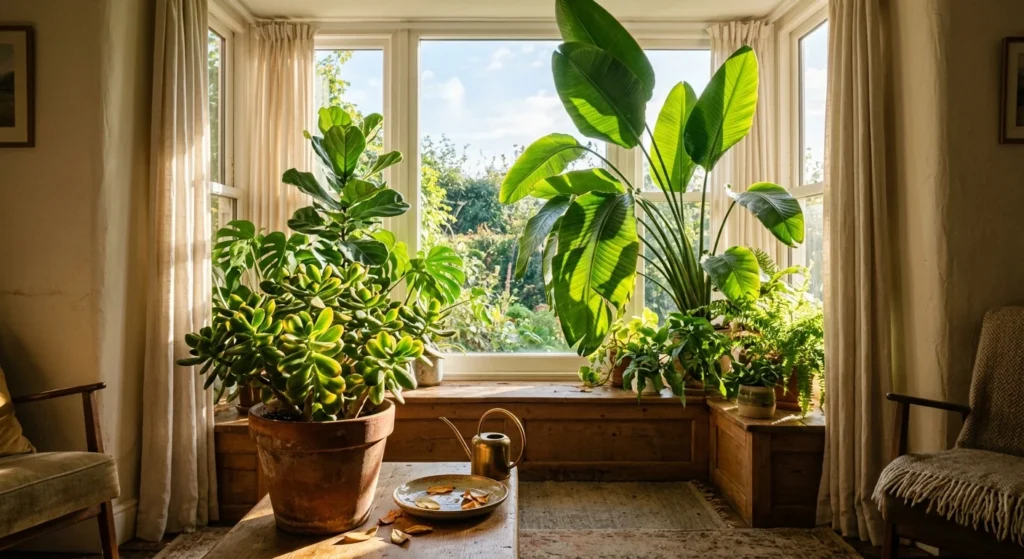
Cozy sunlit room with an array of healthy, snugly potted indoor plants on a wooden bench.
A woman gently mists her thriving collection of potted indoor plants displayed on a rustic bench.

Putting It All Together: Enjoy Your Beautiful Garden

Mastering indoor gardening requires aligning your care routine with each plant’s natural evolutionary habits. While fast-growing leafy plants require frequent pot upgrades, these ten exceptional species demonstrate that root restriction often yields healthier foliage, stronger disease resistance, and vastly superior floral displays. By keeping your plants in snug containers, you prevent overwatering mistakes, cut soil expenses, and minimize potting labor.

Monitor moisture levels carefully, apply balanced liquid fertilizers during active spring and summer growth to replenish depleted soil nutrients, and watch for key indicators that a plant has shifted from comfortably cozy to severely root-locked. With these actionable insights, you can cultivate a thriving indoor container garden that blooms reliably year after year.

For region-specific advice, consult your local University Extension program (find yours via the USDA directory). For plant databases and inspiration, visit the Missouri Botanical Garden or the Royal Horticultural Society.

Disclaimer: This article provides general gardening advice. Always consider your specific climate, soil conditions, and local pests. Follow safety guidelines when using gardening tools and products.

Frequently Asked Questions

How do I know when a plant is too root-bound and actually needs repotting?

A plant becomes dangerously root-bound when roots push out through drainage holes, lift the main crown out of the container, or split plastic pot walls. Additional warning signs include water running straight through the pot without soaking in, halted top growth during spring, and foliage wilting within hours of watering. When these signals appear, upgrade to a pot that is 1 to 2 inches larger in diameter.

Should I break up the root ball when repotting plants that prefer tight pots?

Avoid aggressive root tearing or cutting for species that prefer restricted root conditions. Lightly massaging the outer lower edges of the root ball is sufficient to encourage new roots to expand into fresh potting mix. For sensitive species like clivias, Hoyas, and African violets, leave the core root mass completely intact during repotting to prevent transplant shock.

How do I feed root-bound plants when there is little soil left in the container?

Because root-bound containers hold less potting soil to retain organic nutrients, feed your plants with a water-soluble liquid fertilizer diluted to half strength every two to four weeks during active spring and summer growth. Always apply liquid fertilizer to damp soil rather than bone-dry roots to avoid root burn.

What happens if I place a plant that likes tight pots into an oversized container?

Placing tight-pot enthusiasts into oversized containers leaves massive soil areas unpenetrated by roots. This excess soil holds standing water for weeks, creating anaerobic conditions that cause severe root rot, foliage drop, fungal diseases, and a complete cessation of flower production.

SHARE:

Leave a Reply

Your email address will not be published. Required fields are marked *

About the Author

More questions?

Most Popular

Be in the Know: Subscribe for Blooming Updates!