Transforming your backyard pool into a tropical oasis requires thoughtful planning, especially when selecting the surrounding flora. Plant the wrong trees near your swimming area, and you will face endless maintenance headaches, costly plumbing repairs, and stained decking. Aggressive root systems easily crack concrete pool shells and tear through underground pipes, while constant leaf litter and falling seeds clog expensive filtration pumps. By identifying the worst trees for pool landscaping before you dig, you protect your investment and preserve your weekend relaxation time. Smart choices now ensure crystal-clear waters and a serene poolside sanctuary that thrives for years to come without unnecessary headaches.
Tip #1: Willow Trees (Salix spp.)
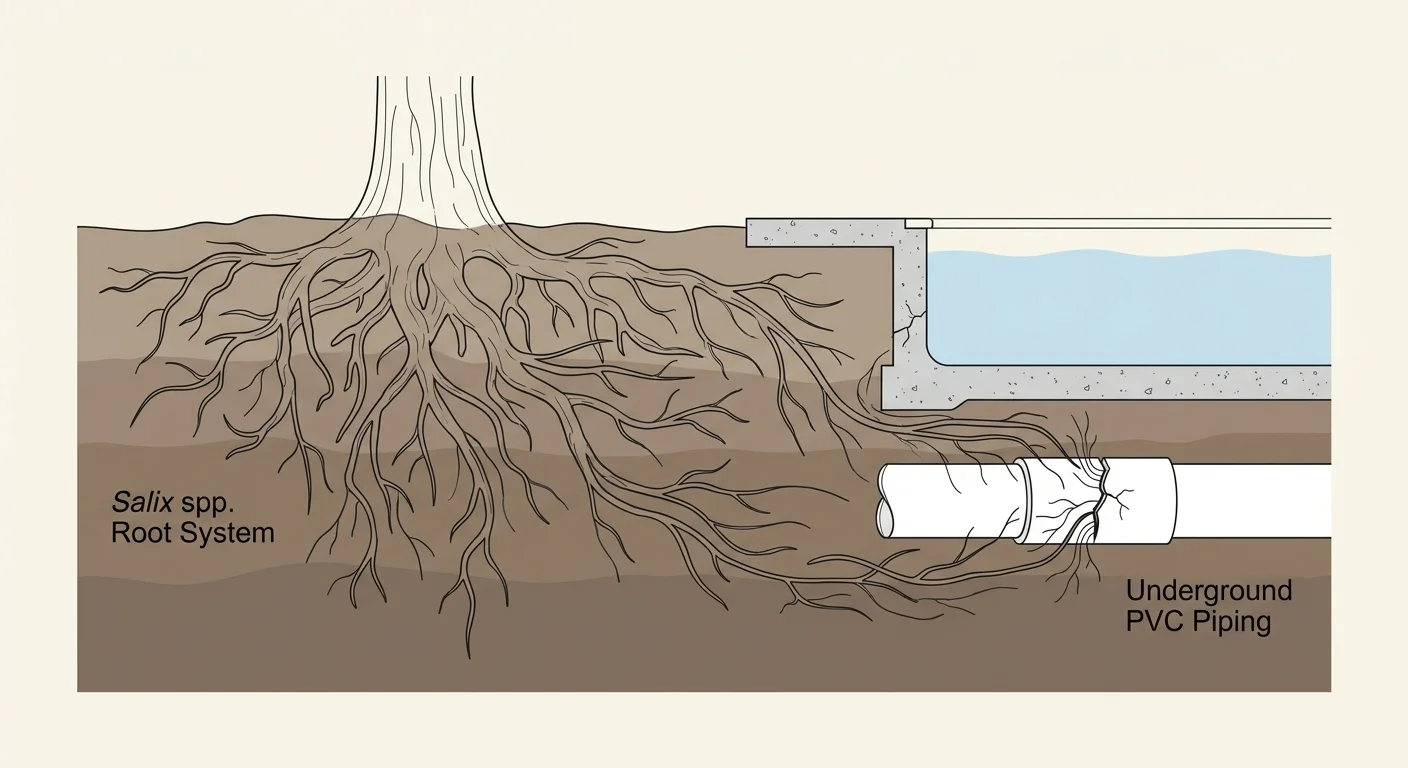
Willow trees stand among the top trees to avoid near pools due to their relentless search for water. A weeping willow’s root system spreads laterally up to three times the distance of its canopy height, aggressively seeking out any subterranean moisture. These thirsty roots detect microscopic leaks in underground PVC piping and force their way into joints; this causes severe blockages, pipe displacement, and structural deck damage. Beyond underground destruction, weeping willows continuously drop narrow leaves, delicate twigs, and catkins directly into your pool. This constant organic debris overloads surface skimmer baskets and fouls pump impellers, forcing you to skim the water multiple times a day. To protect your pool shell and plumbing, keep willows at least 50 feet away from any water features or underground utility lines.
Tip #2: Oak Trees (Quercus spp.)
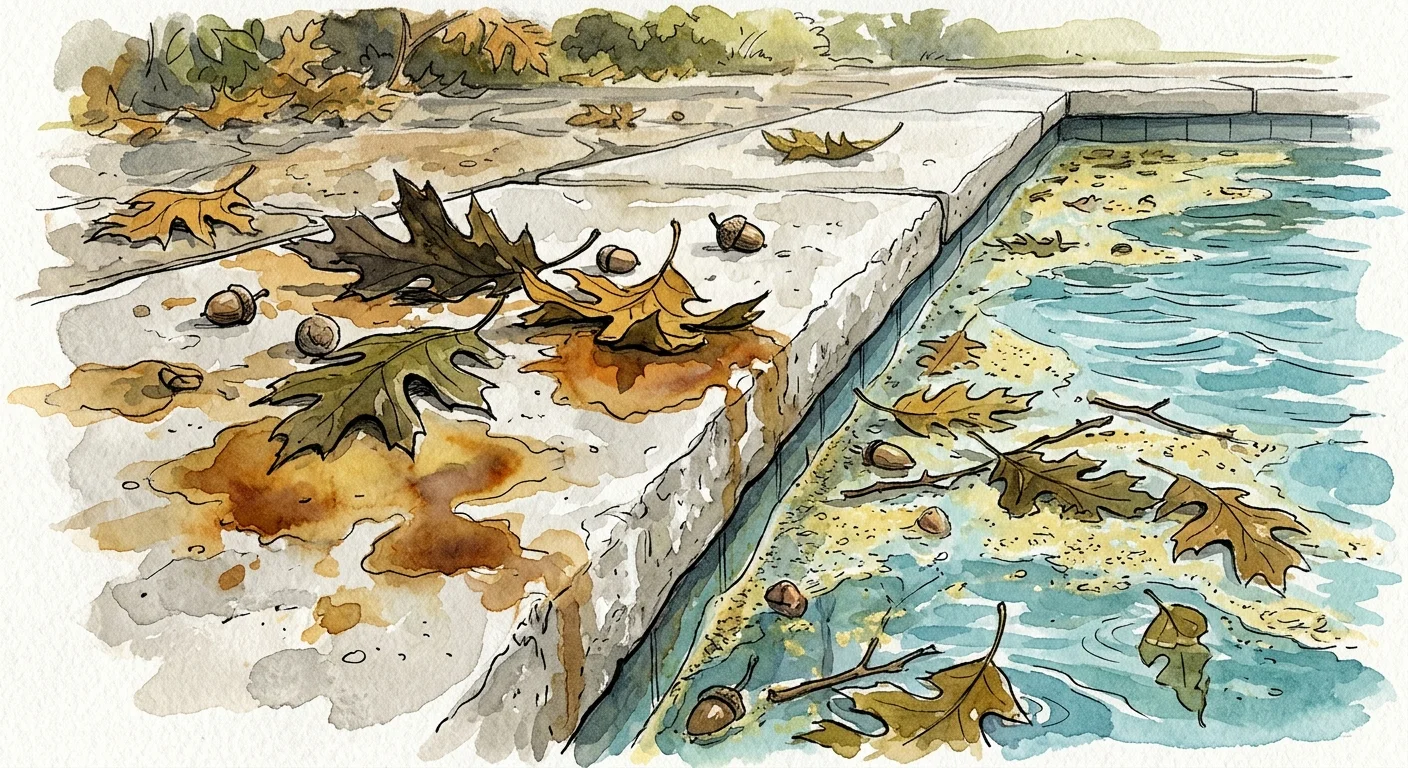
Oak trees provide majestic shade and timeless character, but they rank high among the worst trees for pool landscaping. In early spring, oaks shed massive quantities of fine pollen that coat pool water in a sticky yellow film. This heavy organic load rapidly consumes free chlorine, forcing you to shock your pool and rebalance water chemistry weekly. Later in the season, oak trees drop dense acorns and thick leaves loaded with natural tannins. When falling acorns and leaves sink to the bottom or rest on light-colored concrete coping, those tannins leach out; they leave stubborn brown stains that require heavy acid washing to scrub clean. Furthermore, mature oak trees develop massive structural roots that lift brick pavers, crack poured concrete aprons, and disrupt pool drainage systems.
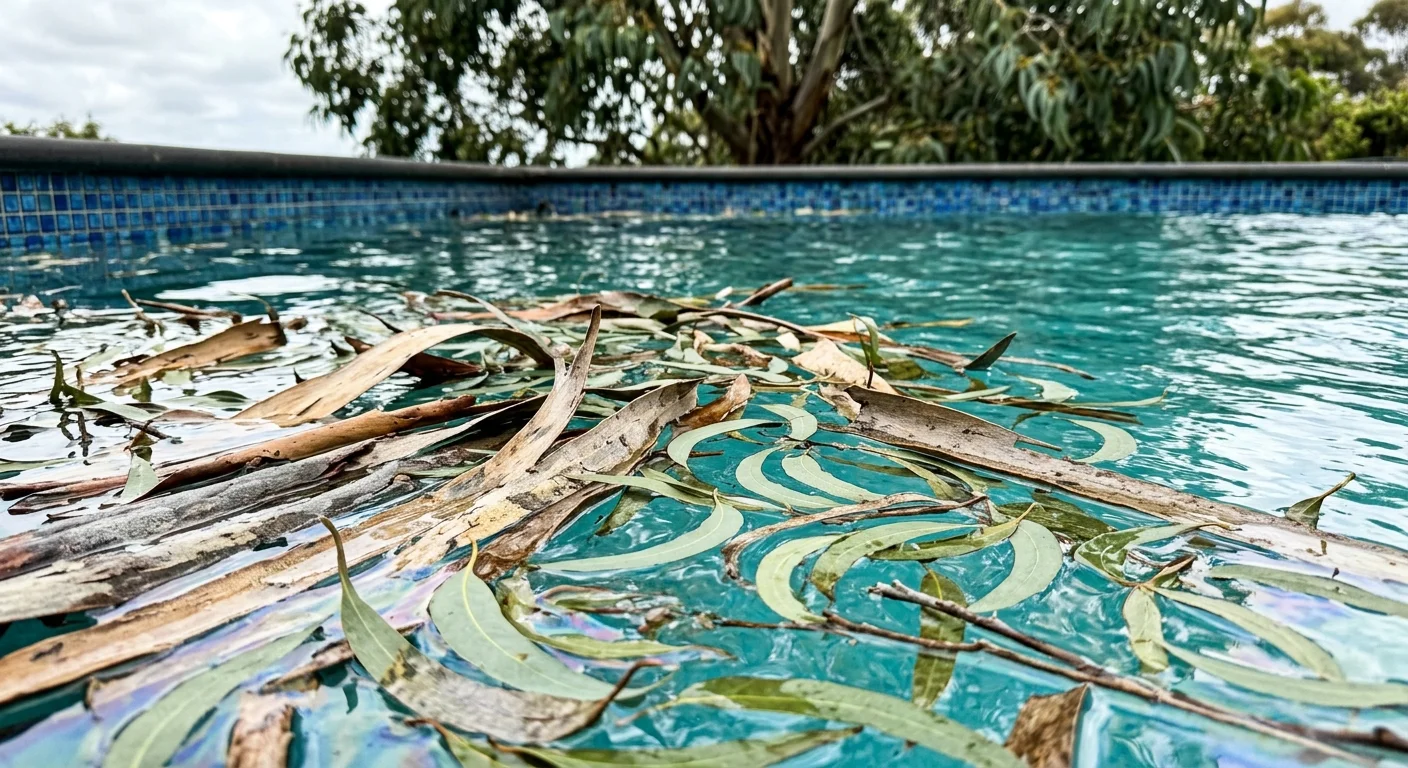
Tip #3: Eucalyptus Trees (Eucalyptus spp.)
Eucalyptus trees present several severe threats when planted anywhere near swimming pools. These fast-growing broadleaf evergreens continuously shed long strips of papery bark, heavy blue-green leaves, and hard seed capsules throughout the entire year. The shed bark and heavy foliage sink quickly to the pool floor, where they jam automatic pool sweeps and clog main drain grates. Additionally, eucalyptus leaves contain high concentrations of potent essential oils. These aromatic oils create an oily sheen across the water surface and disrupt standard water tension; this causes residual chlorine levels to plummet rapidly and increases your chemical maintenance costs. To make matters worse, eucalyptus trees possess aggressive, shallow root systems that easily tilt stone coping and break up concrete decks as the trunk expands.
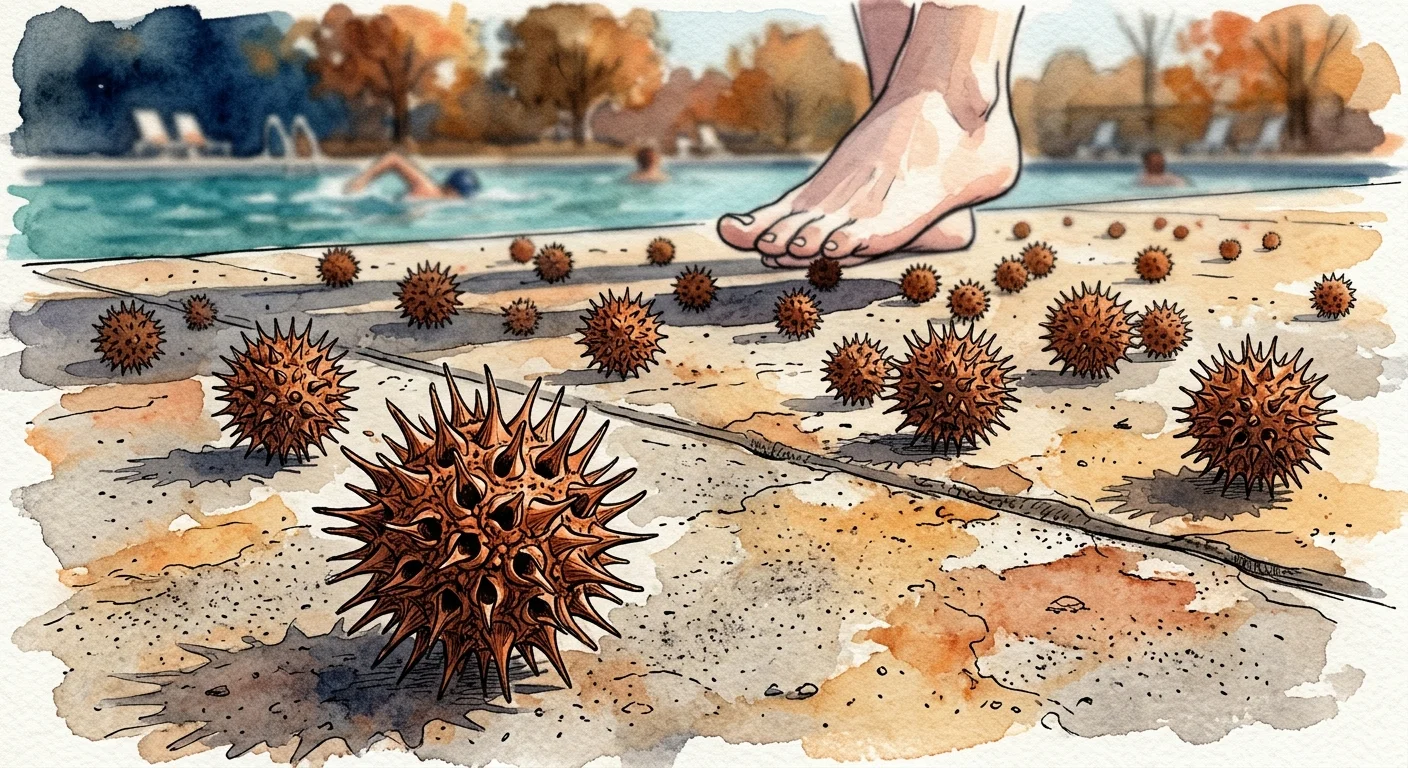
Tip #4: Sweetgum Trees (Liquidambar styraciflua)
Sweetgum trees earn their spot on the list of trees that damage pools primarily because of their hard, spiky fruit pods—commonly called “gumballs.” A single mature sweetgum drops hundreds of these solid, spherical seed capsules every autumn and winter. Rolling across hardscape surfaces, these spiky pods transform your poolside deck into a slipping and tripping hazard for barefoot swimmers. When gumballs blow into the pool, their woody exterior resists breakdown, quickly jamming skimmer throats and damaging mechanical pool vacuum pumps. Sweetgum trees also feature expansive, shallow root systems that ruthlessly heave concrete slabs, crack pool coping, and tilt heavy retaining walls. Keep sweetgum trees far outside your pool zone to preserve safety and structural integrity.
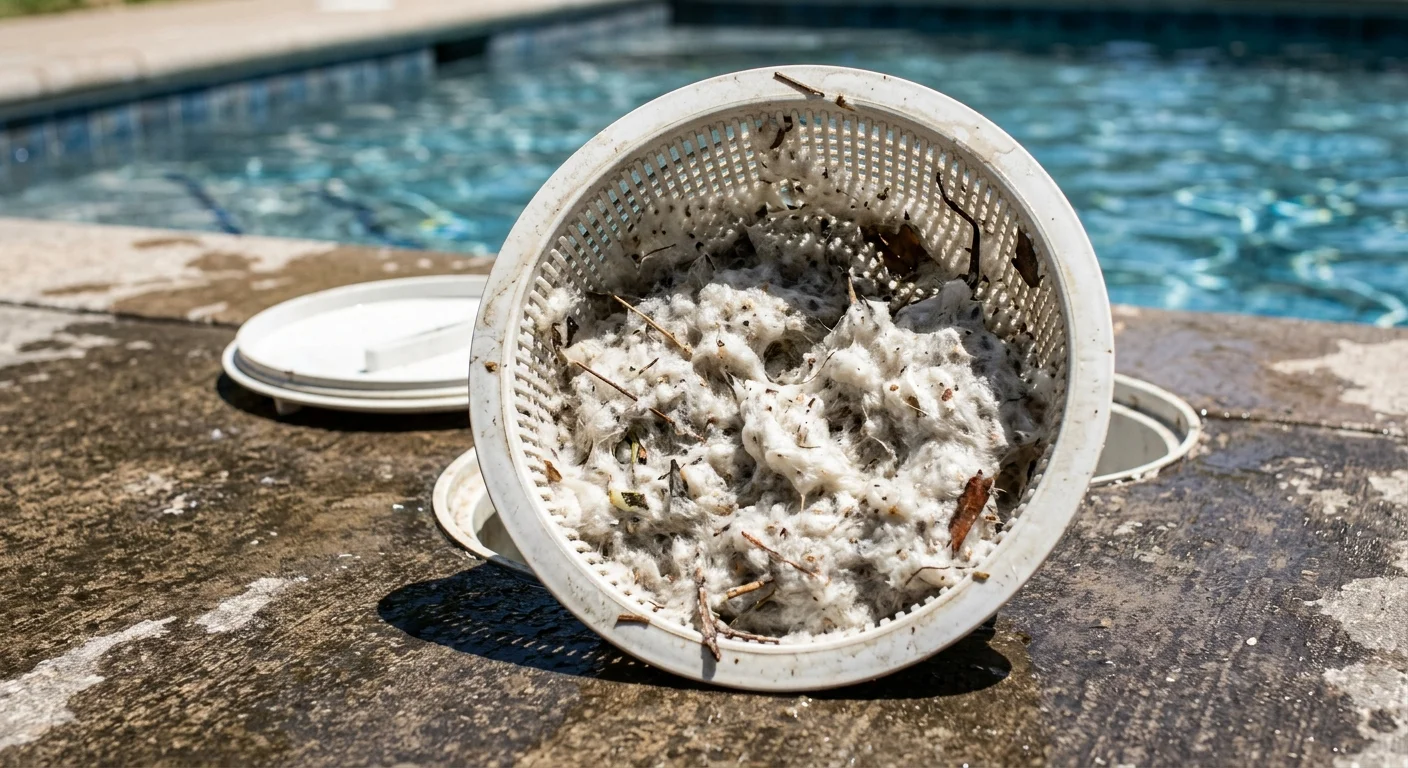
Tip #5: Eastern Cottonwood (Populus deltoides)
Eastern Cottonwood trees create a nightmarish maintenance situation for pool owners during late spring and early summer. Female cottonwood trees release millions of tiny seeds wrapped in soft, cottony fibers that drift through the air like summer snowstorms. This floating fluff settles on the water surface and forms a thick, impenetrable mat across your pool. The cottony fibers instantly blanket skimmer socks, coat pump baskets, and blind cartridge filter elements; this severely restricts water circulation and risks burning out expensive pump motors. Additionally, cottonwoods belong to the poplar family—a group infamous for fast-growing, water-hungry root systems that actively target underground pool pipes and fracture concrete pool walls. Always opt for pool-safe landscaping trees over fast-growing cottonwoods.
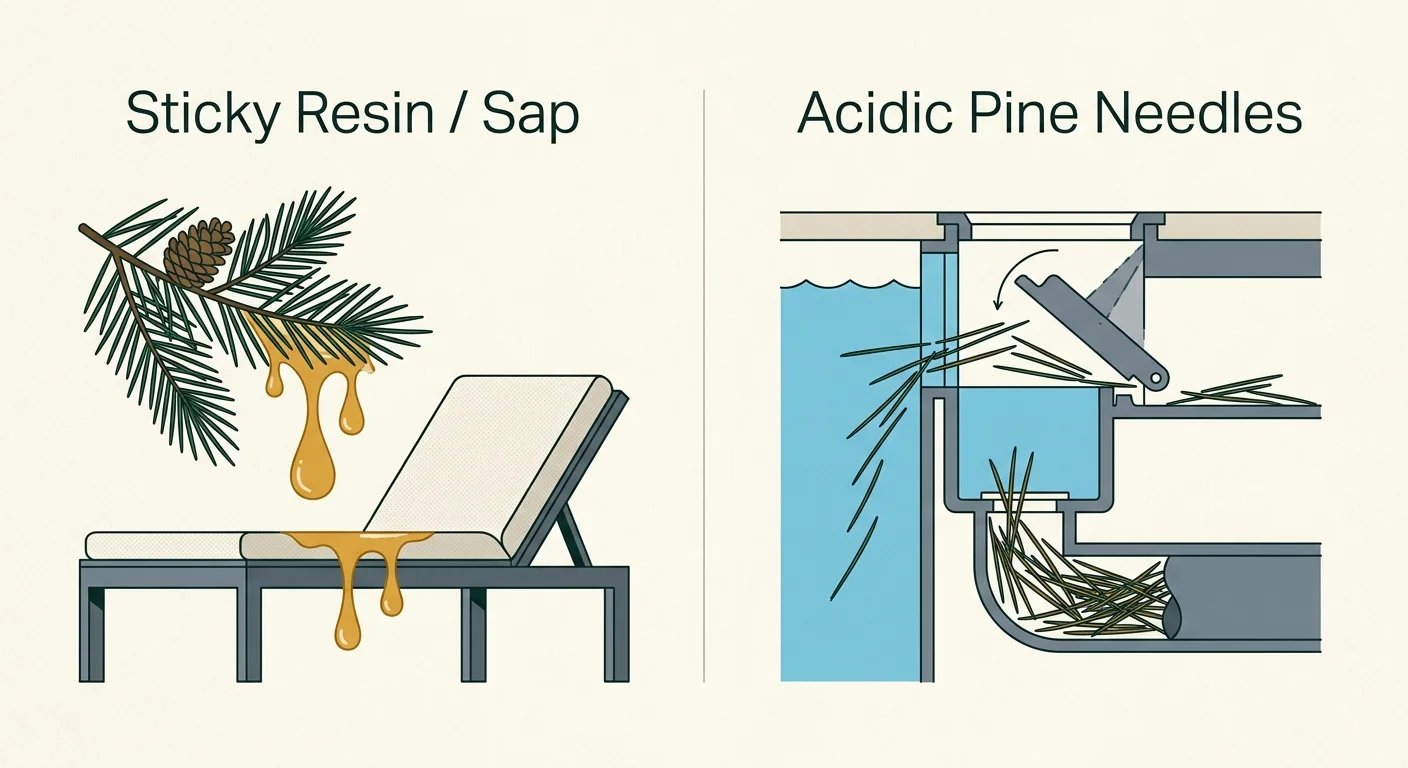
Tip #6: Pine Trees (Pinus spp.)
Pine trees rank among the most frustrating specimens to manage near any outdoor swimming area. Unlike deciduous trees that drop leaves once a year, evergreen pines drop sharp, slender needles continuously across all four seasons. These fine needles easily slip past standard skimmer baskets, travel down suction lines, and lodge inside pump impellers, leading to reduced water turnover and equipment overheating. Pine needles also release acidic compounds as they decompose in pool water, driving down pH levels and total alkalinity; this causes equipment corrosion and skin irritation for swimmers. Furthermore, pine trees drop sticky resin and sap that coats outdoor furniture, flagstone, and decking, requiring harsh chemical solvents to scrub clean.
Tip #7: Crape Myrtle (Lagerstroemia spp.)
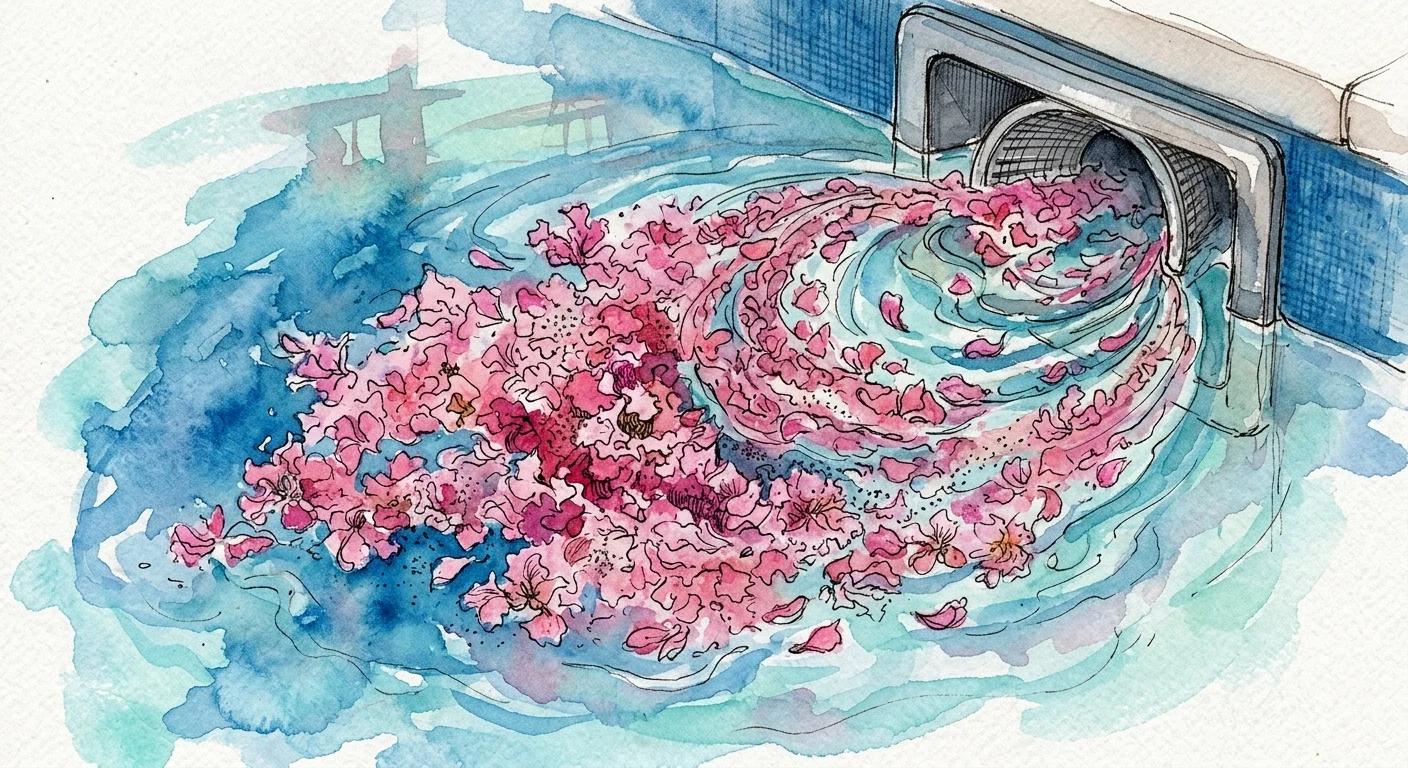
Crape myrtles are widely beloved for their vibrant summer blossoms, but planting them adjacent to a pool leads to non-stop daily cleanup chores. Throughout their extended blooming season, crape myrtles drop thousands of tiny, delicate flower petals into the air and onto the water surface. These small petals pass through skimmer baskets and decay rapidly, turning pool water cloudy and spiking combined chlorine levels. Crape myrtles also attract aphid infestations; these tiny insects secrete a sticky liquid known as honeydew. This honeydew coats poolside furniture, lounge chairs, and safety covers, quickly developing into unsightly black sooty mold that requires high-pressure washing to eliminate. Keep crape myrtles at least 20 to 25 feet away from water margins.
Tip #8: Fig Trees (Ficus carica & Ficus benjamina)
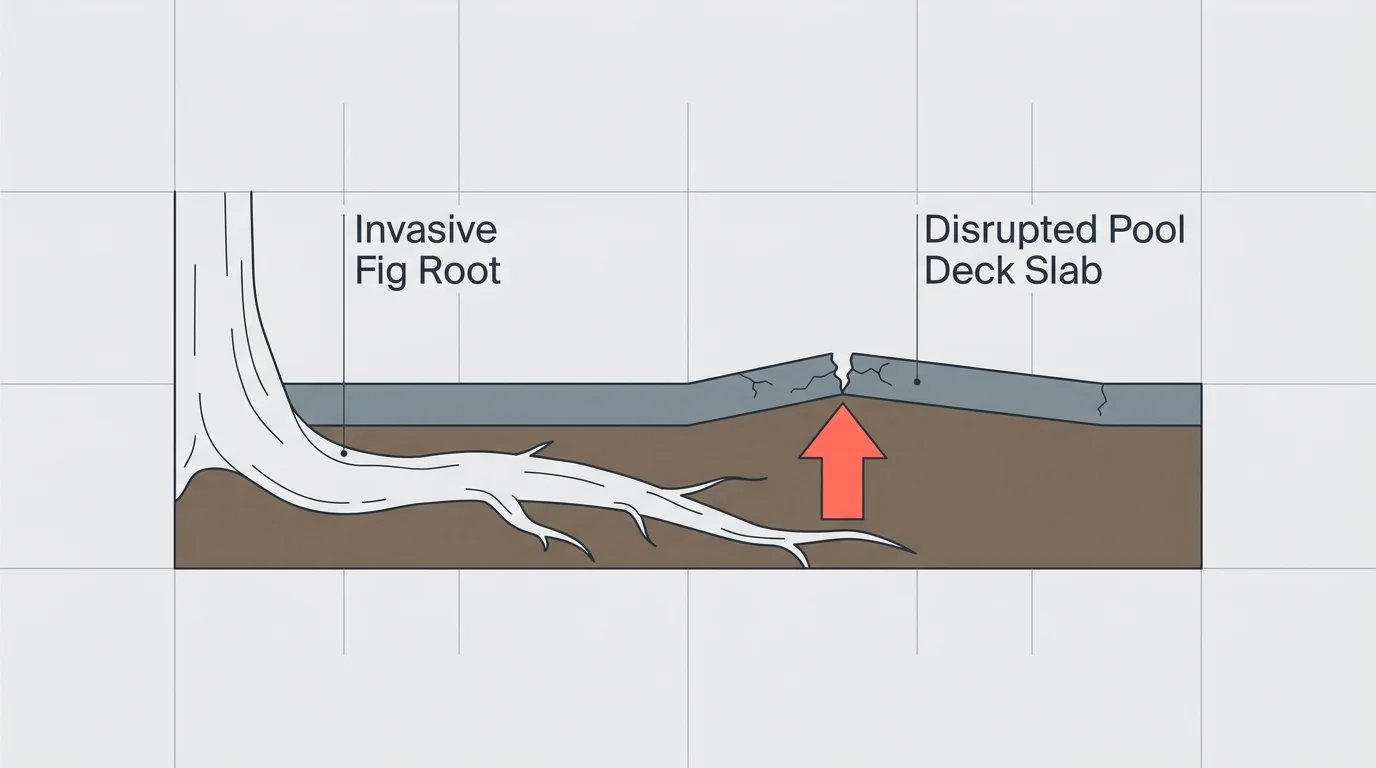
Ficus species—including edible fig trees and ornamental weeping figs—possess some of the most destructive root systems in the plant kingdom. A fig tree’s thick, muscular roots exert tremendous pressure on subterranean structures; they easily fracture gunite pool shells, puncture vinyl liners, and crush heavy PVC plumbing lines. Above ground, dropping soft, sugary figs create an intolerable mess on pool decks. Ripe figs smash upon impact, permanently staining flagstone and paver surfaces while attracting swarms of yellow jackets, wasps, and ants directly to your swimming area. The milky sap inside fig leaves and stems also causes skin irritation upon contact, making routine pruning around pool decks a genuine health hazard.
Tip #9: Mulberry Trees (Morus spp.)
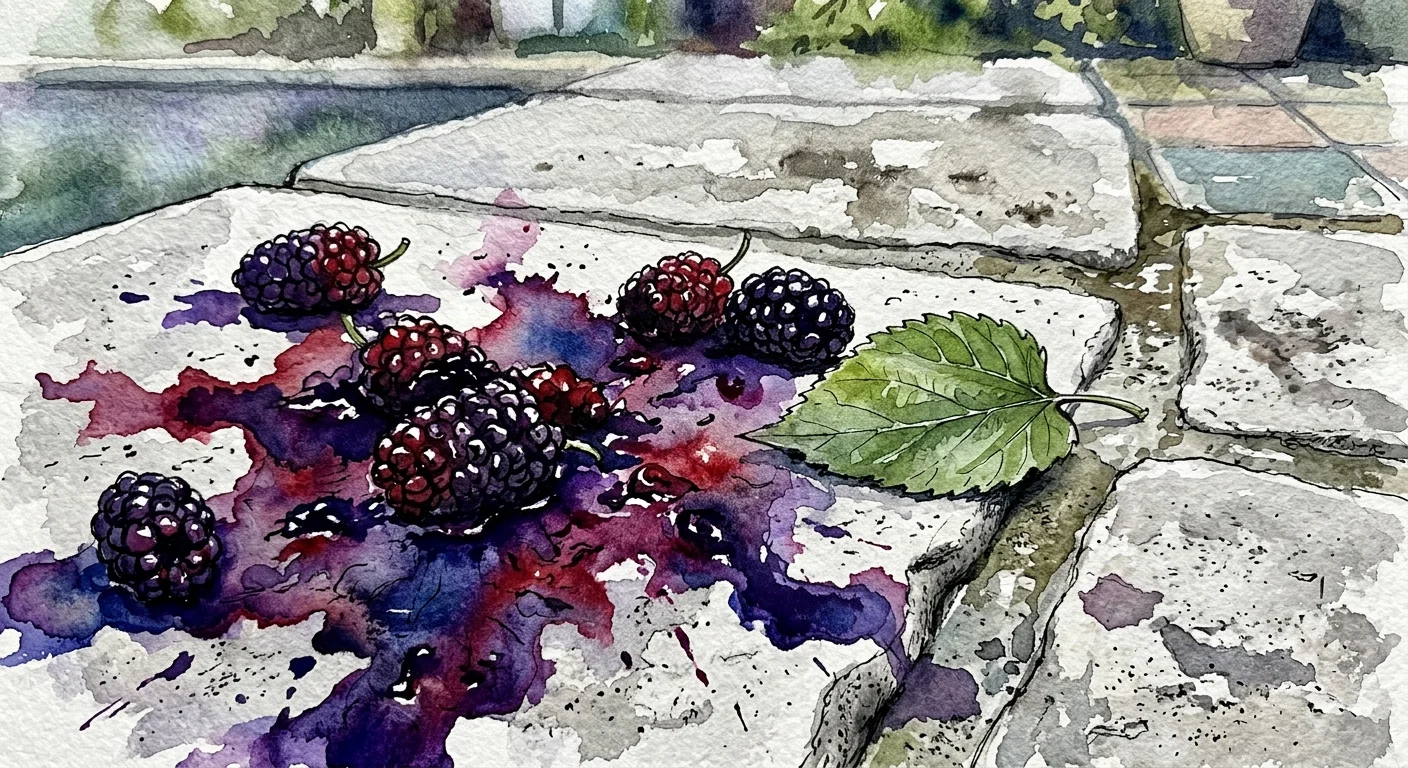
Mulberry trees present a severe double threat to pool owners in the form of deep staining and aggressive root development. Fruiting mulberry varieties produce an abundance of dark red and purple berries that fall directly onto decking, pool covers, and water surfaces. The rich juice from these berries acts like a permanent dye; it stains concrete, travertine, and light pool plaster upon contact. Birds feeding on mulberries spread deep-colored droppings across your entire backyard deck, requiring constant scrubbing and sanitizing. Beneath the soil, mulberry trees produce fast-spreading lateral roots that push up concrete aprons and disrupt underground plumbing networks, making them a clear choice to avoid near swimming pools.
Tip #10: Silver Maple (Acer saccharinum)
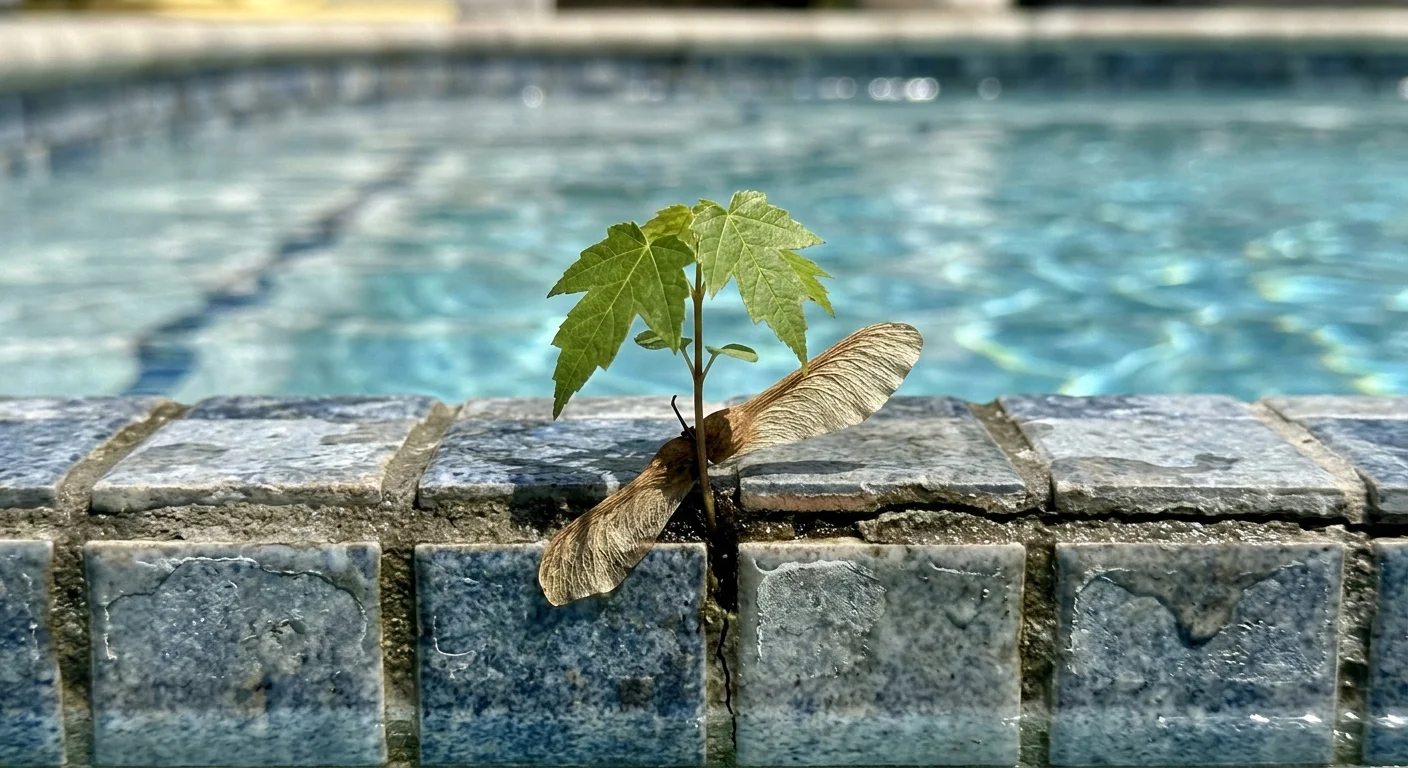
Silver maple trees grow rapidly, but their fast growth comes with weak wood structure and invasive surface roots. A silver maple’s root system stays close to the surface, eagerly seeking out soil moisture and breaking up concrete pool decks, flagstone patios, and retaining walls. In spring, silver maples drop massive quantities of winged seeds, commonly called “helicopters” or samaras. These winged seeds float across the water surface and lodge inside skimmer weir gates, preventing proper surface skimming. The heavy shade from a silver maple’s wide canopy also prevents the sun from warming your pool naturally, significantly increasing water heating costs throughout the swimming season.
Putting It All Together: Enjoy Your Beautiful Garden
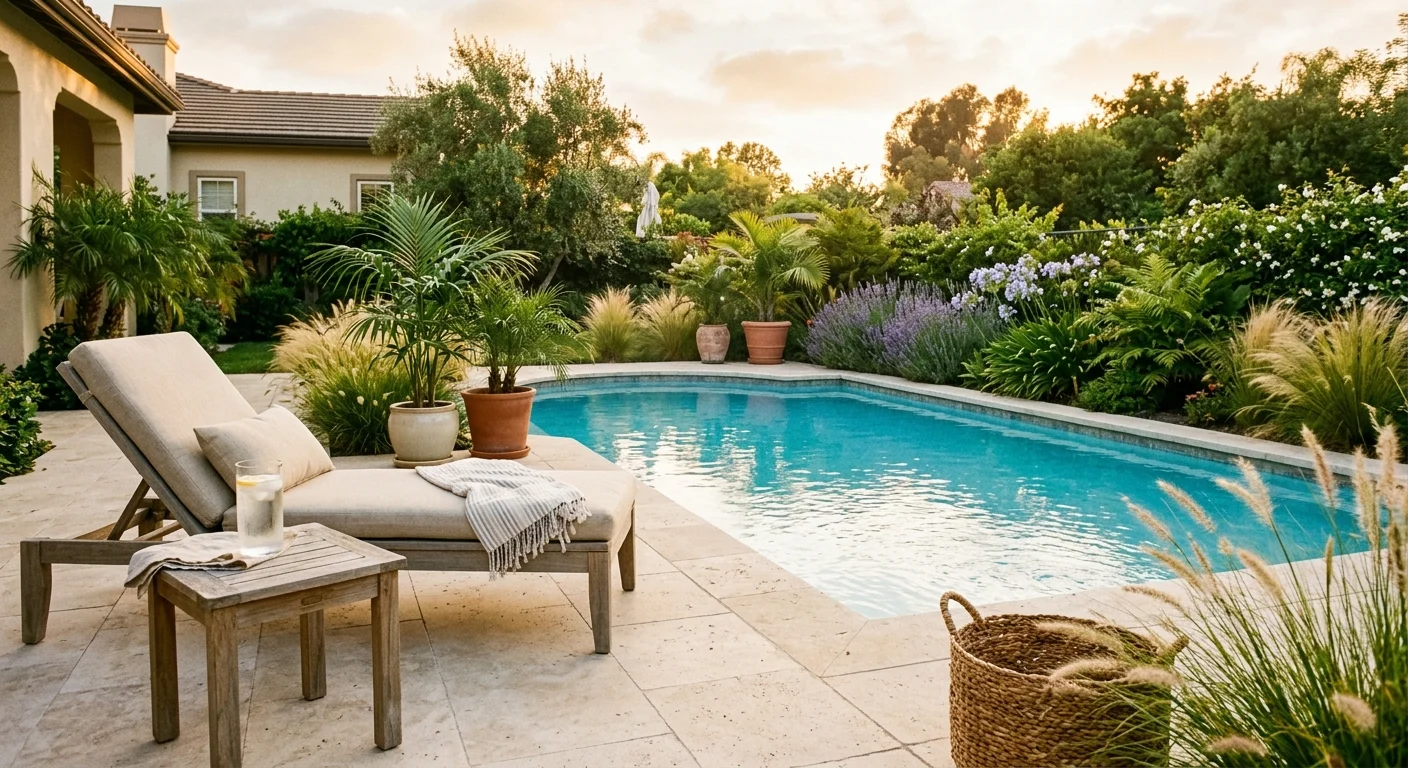
Creating a beautiful, low-maintenance paradise around your swimming area requires balancing shade, aesthetics, and structural safety. Incorporating smart backyard pool landscaping tips helps you enjoy lush greenery without spending every weekend clearing clogged filters or budgeting for expensive root damage repairs. When choosing pool-safe landscaping trees, look for evergreen species with non-invasive root systems, broad foliage that is easy to skim, and minimal fruit or sap production. Excellent alternatives include Windmill Palms, Mediterranean Fan Palms, Fruitless Olive trees, and dwarf citrus varieties grown in heavy containers. These well-behaved plants add tropical flair, texture, and privacy without threatening your underground plumbing or pool shell.
Always evaluate mature tree height, canopy spread, and root characteristics before planting near hardscape elements. Maintain a safe buffer zone of at least 15 to 20 feet between medium-sized trees and your pool edge, increasing that distance to 30 feet or more for larger shade trees. Installing root-barrier membranes along patio perimeters offers extra protection against stray roots. By carefully selecting non-messy, deep-rooted specimens, you create a seamless landscape that enhances your home’s outdoor living space and preserves your crystal-clear pool for endless summer enjoyment.
Frequently Asked Questions
How far away from a pool should I plant large trees?
Plant large shade trees at least 20 to 30 feet away from your pool edge, decking, and underground plumbing lines. For trees known for aggressive root systems—such as willows, maples, or figs—increase that distance to 50 feet or choose containerized dwarf alternatives instead.
What are the best pool-safe landscaping trees to plant nearby?
The best pool-safe landscaping trees include palm species like Windmill Palm and Mediterranean Fan Palm, Fruitless Olive trees, Japanese Maples (planted at a safe distance), and dwarf citrus trees. These plants offer low leaf drop, non-invasive roots, and zero sticky sap or heavy fruit mess.
Can tree roots actually crack a concrete or gunite pool shell?
Yes, aggressive tree roots exert immense physical pressure as they expand in search of water. When planted too close, expanding roots displace surrounding soil, cause ground movement, and directly crack gunite, concrete, or fiberglass pool walls and surrounding concrete decks.
How can I protect my pool if I already have a messy tree nearby?
If you have an existing tree near your pool, install subterranean physical root barriers along the pool deck edge to redirect roots downward. Trim overhanging branches annually to reduce leaf drop into the water, and use fine-mesh skimmer socks to prevent fine debris from clogging your filtration pump.
For region-specific advice, consult your local University Extension program (find yours via the USDA directory). For plant databases and inspiration, visit the Missouri Botanical Garden or the Royal Horticultural Society.
Disclaimer: This article provides general gardening advice. Always consider your specific climate, soil conditions, and local pests. Follow safety guidelines when using gardening tools and products.