Dark, moody foliage instantly transforms your living space by adding bold contrast and an undeniable edge to traditional green displays. You can cultivate a sophisticated atmosphere using striking black plants that serve as living art pieces—whether you place them on a sunny windowsill or incorporate them into a lush outdoor container garden. These deep-hued botanical wonders absorb more light, creating visual depth that makes surrounding colors pop with incredible vibrancy. By selecting dramatic plants featuring rich purple, deep burgundy, and near-black leaves, you elevate your houseplant decor from standard to spectacular. Here are ten phenomenal choices that thrive with basic care while delivering maximum aesthetic impact.
Tip #1: Raven ZZ Plant (Zamioculcas zamiifolia ‘Raven’)
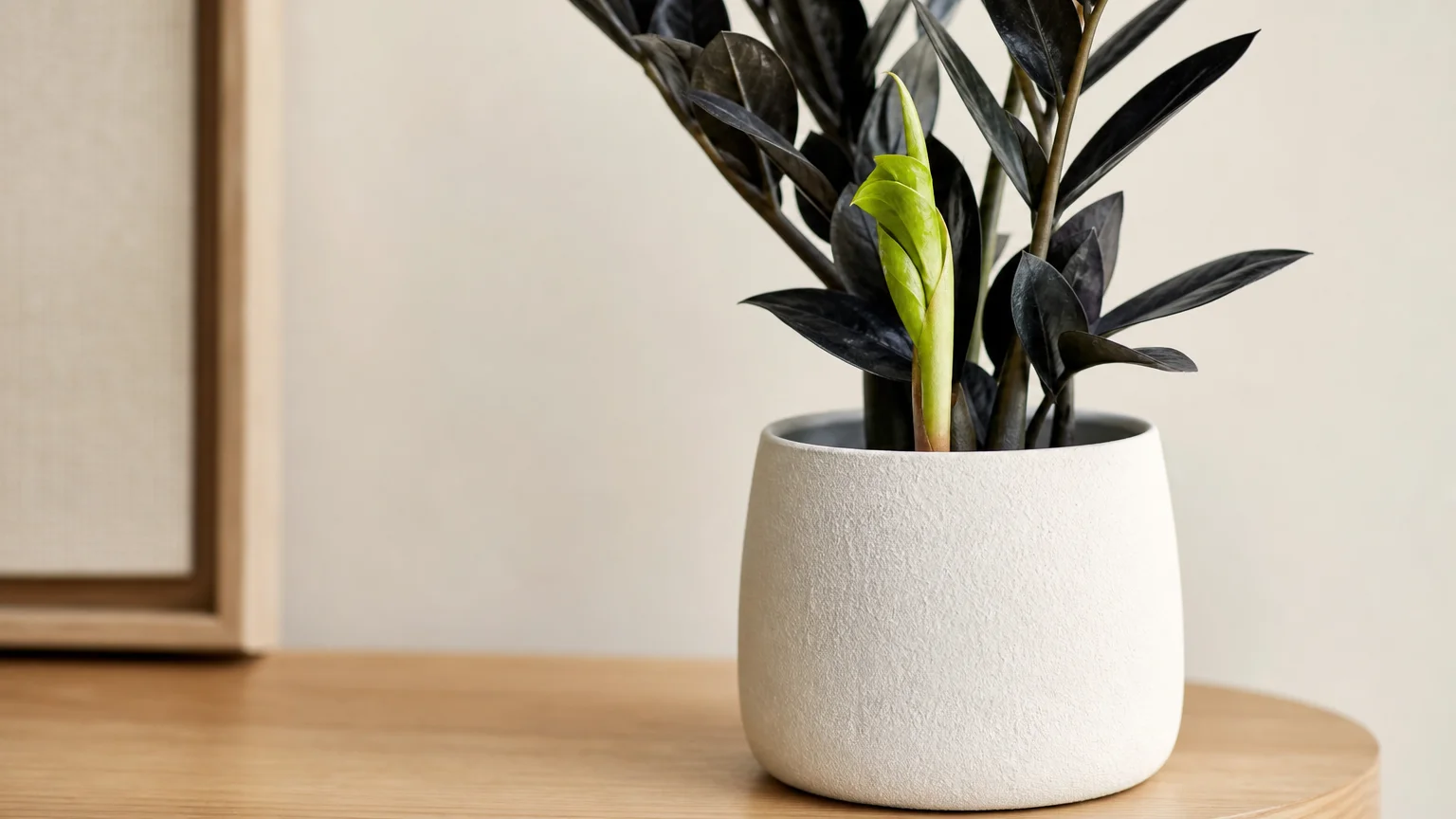
You rarely find a houseplant as forgiving and visually striking as the Raven ZZ Plant. When new growth emerges from the soil, it presents as a vivid lime green before slowly transitioning into a deep, glossy purple-black shade. This stunning color transformation adds a dynamic, living element to your houseplant decor. The Raven ZZ secures its place as one of the most resilient indoor plants available because it stores vital water reserves in potato-like rhizomes hidden beneath the soil. Thanks to these structures, you can confidently leave this plant unattended for three to four weeks without causing any harm to its foliage.
Native to eastern Africa, this architectural beauty tolerates extreme drought and adapts easily to environments with low to bright indirect sunlight. To keep your Raven ZZ perfectly healthy, use a highly porous, well-draining potting mix—incorporating generous amounts of perlite or pumice to ensure proper aeration. Water the soil thoroughly only when the pot feels entirely lightweight and the top two to three inches of dirt have completely dried out. If you overwater, the delicate rhizomes will quickly rot, so always err on the side of neglect. Place this dark specimen in a stark white ceramic pot to emphasize the intense contrast of its dramatic leaves.
Tip #2: Black Velvet Alocasia (Alocasia reginula ‘Black Velvet’)
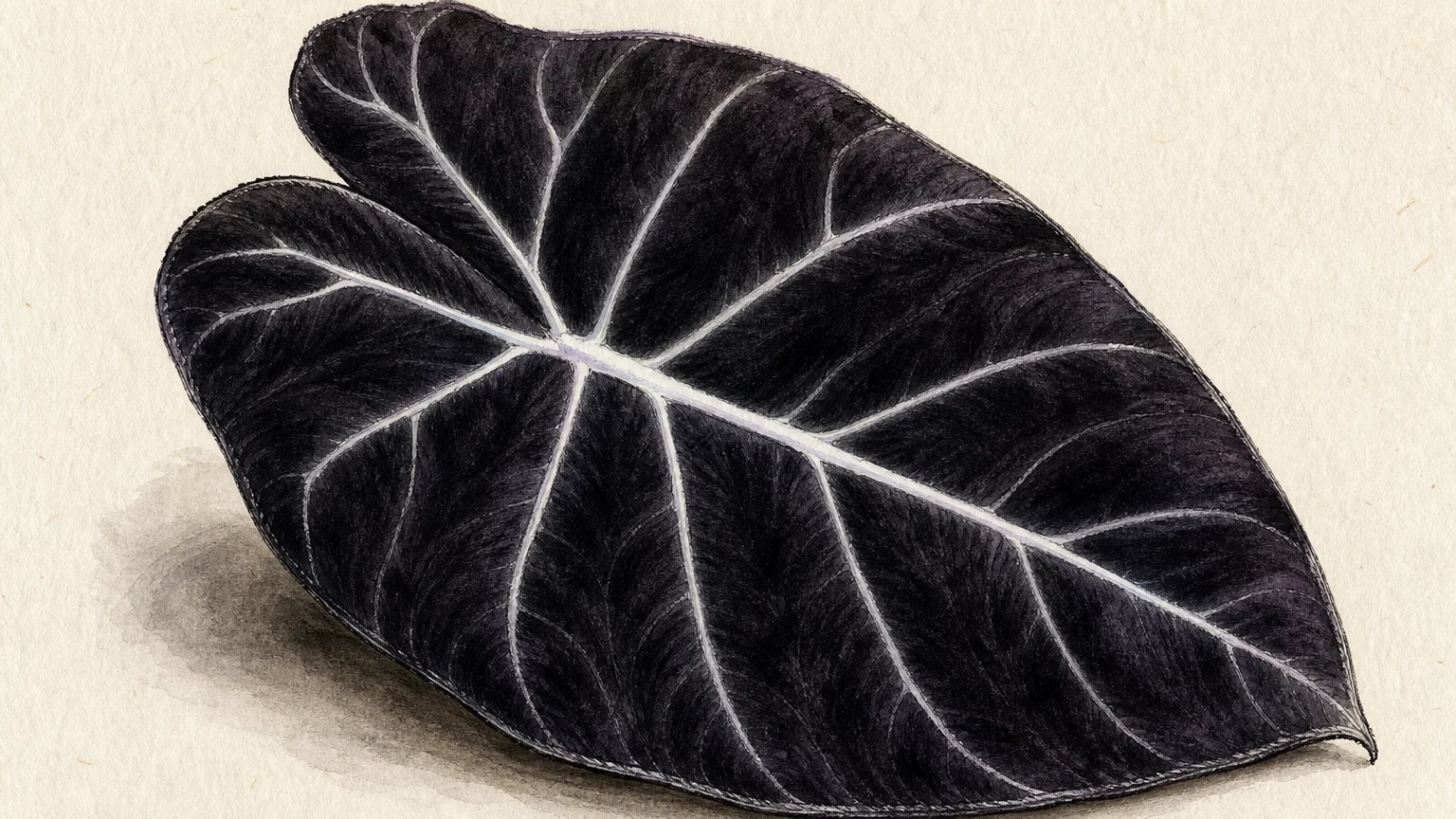
Alocasia reginula, commonly known as the Black Velvet Alocasia, offers an unparalleled tactile experience with its thick, fuzzy, charcoal-black leaves. Striking silvery-white veins run through the dark foliage, creating a mesmerizing web of contrast that makes this species a crown jewel among unique houseplants. Unlike larger Elephant Ear varieties that demand massive floor space, the Black Velvet stays relatively compact, maxing out at roughly twelve to eighteen inches in total height and width. This tidy growth habit makes it the perfect candidate for an executive desktop display or a curated, modern plant shelf.
Originating from the humid, shaded jungle floors of Southeast Asia, this dramatic plant requires a specific balance of ambient moisture and air circulation. You must provide high humidity—ideally between sixty and seventy percent—to prevent the delicate leaf edges from drying out and crisping. Keep the plant in bright, indirect sunlight; placing it in direct sun will quickly scorch the velvety surface. Plant your Alocasia in a chunky, airy soil mix composed of orchid bark, perlite, and a small amount of peat moss. Allow the top inch of soil to dry out entirely before watering again, ensuring the root system never sits in stagnant water.
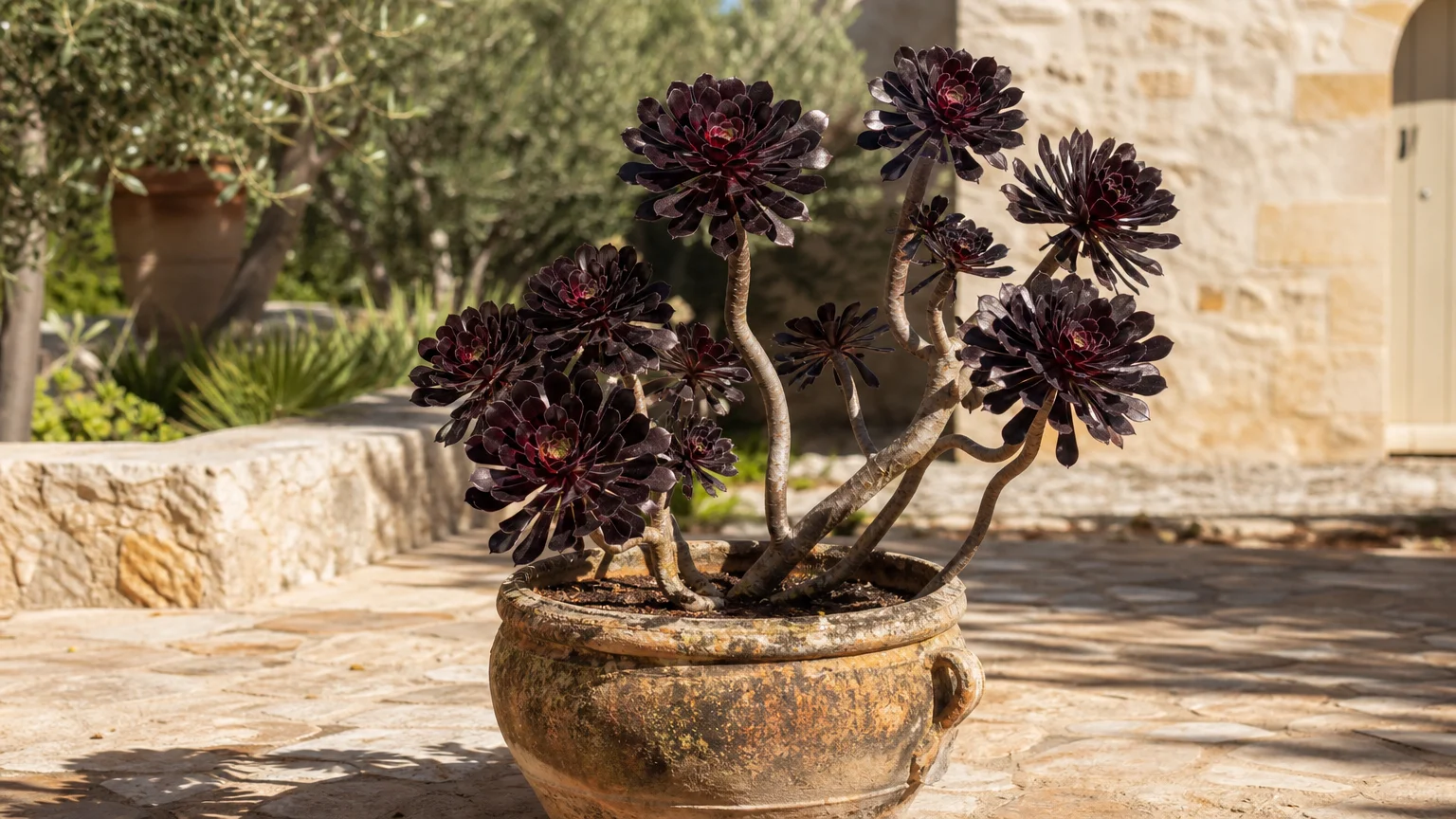
Tip #3: Black Rose Aeonium (Aeonium arboreum ‘Zwartkop’)
If you want to add architectural height and intense color to a sun-drenched space, the Black Rose Aeonium delivers outstanding visual results. Scientifically classified as Aeonium arboreum ‘Zwartkop’, this stunning succulent features large, fleshy rosettes of deep burgundy-black leaves perched atop tall, twisting, woody stems. When grown outdoors in mild Mediterranean climates, these dramatic plants can reach an impressive three to four feet in height. They act as bold structural focal points in drought-tolerant landscape designs, drawing the eye upwards while grounding the garden with their heavy, dark tones.
The intense dark pigment heavily relies on adequate sun exposure; you must provide at least six hours of direct sunlight daily to maintain the rich black coloration. If you place the plant in too much shade, the rosettes will rapidly revert to a standard, pale green. During the hot summer months, Aeoniums naturally enter a semi-dormant state to conserve energy and precious water. You should reduce your watering frequency significantly during this resting period. In the active growing seasons of spring and fall, water the plant thoroughly, but wait until the soil completely dries out before reaching for the watering can again. Use a sandy, fast-draining cactus mix to keep the roots healthy and prevent fungal rot.
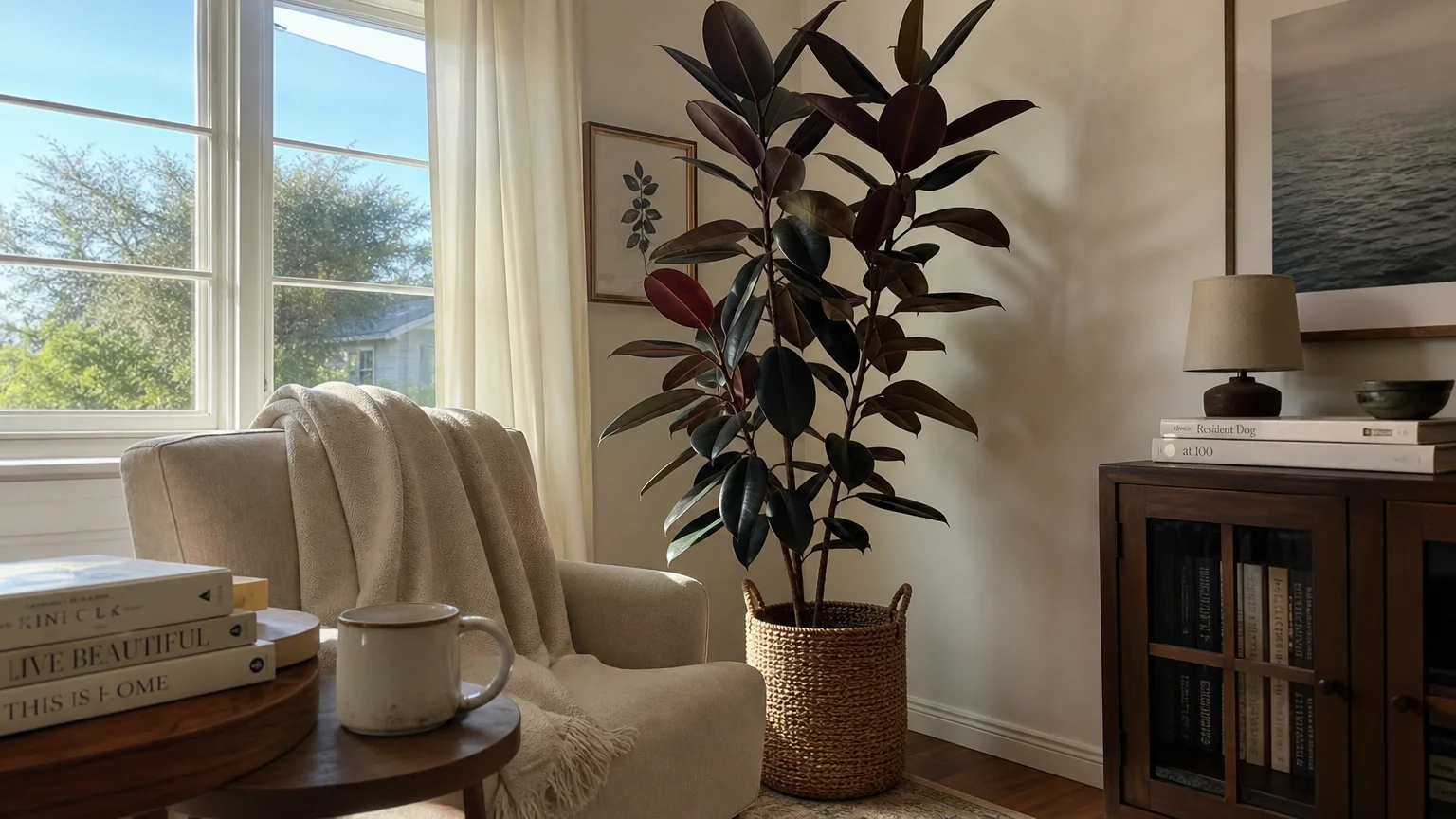
Tip #4: Burgundy Rubber Tree (Ficus elastica ‘Burgundy’)
The Burgundy Rubber Tree serves as a majestic, living anchor for any room, offering large, leathery leaves that appear almost jet-black under standard indoor lighting. Ficus elastica ‘Burgundy’ stands out as one of the most reliable indoor plants for creating vertical impact, easily growing to six or eight feet tall indoors when given the right environment. As new leaves unfurl from vibrant red protective sheaths, they mature into a glossy, dark reddish-black tone that instantly elevates your interior design aesthetic. Beyond its sheer physical beauty, the robust Rubber Tree actively improves indoor air quality by filtering out common airborne toxins.
To achieve the absolute darkest leaf coloration, place your Ficus in a spot that receives bright, indirect light, supplemented by a few hours of gentle, early morning sun. Rotate the pot a quarter-turn every week to encourage straight, even growth across the entire canopy. You must wipe the broad leaves with a damp, soft cloth every few weeks; simple dust accumulation prevents the plant from photosynthesizing efficiently and severely dulls its beautiful shine. Water the plant deeply when the top two inches of the potting mix feel completely dry to the touch, and always ensure the container features ample drainage holes.
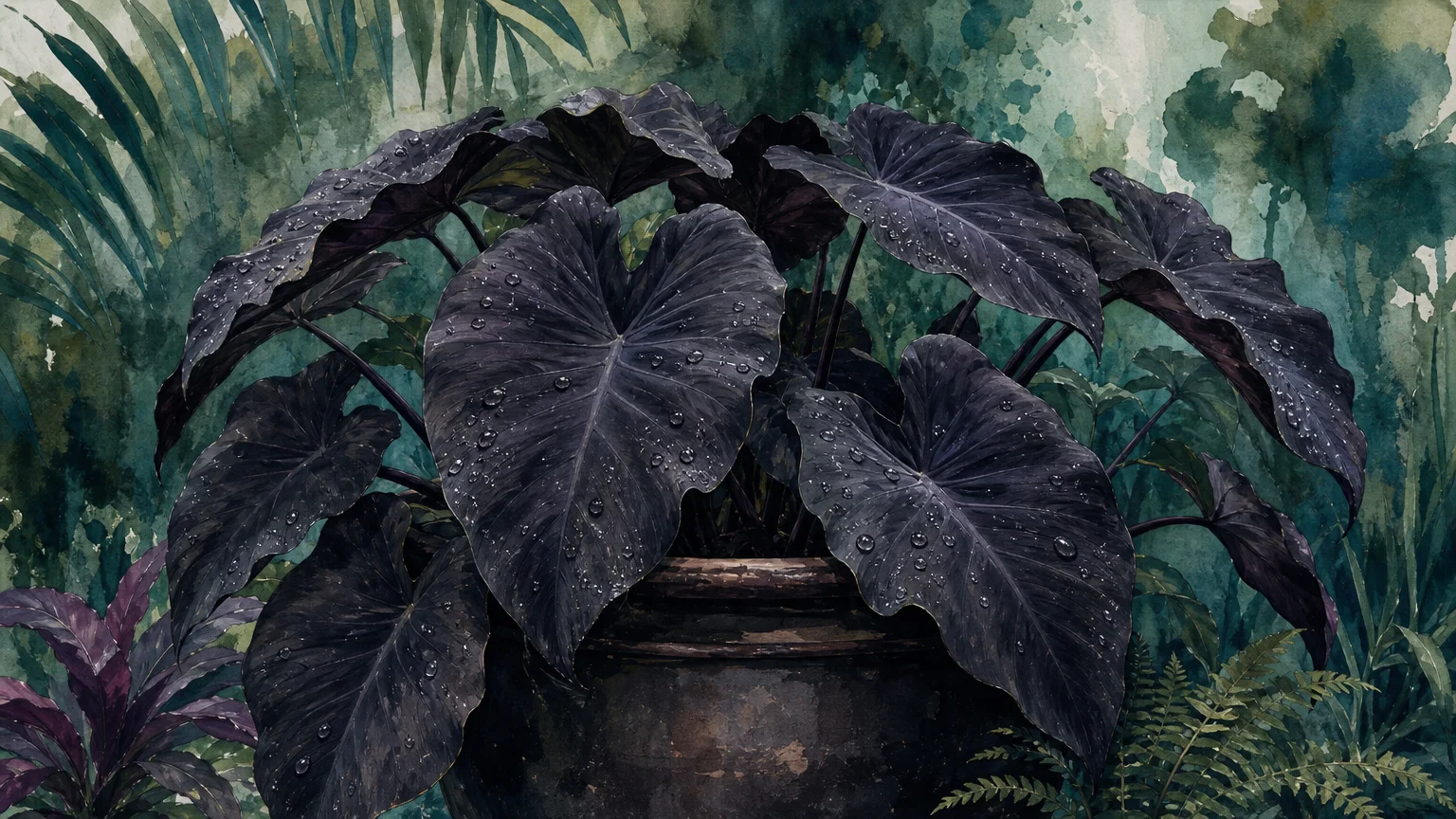
Tip #5: Black Magic Elephant Ear (Colocasia esculenta ‘Black Magic’)
Bring the feel of a tropical gothic paradise right to your patio with the spectacular Colocasia esculenta ‘Black Magic’. This outstanding outdoor specimen boasts gigantic, heart-shaped leaves that stretch up to two feet long, all completely saturated in a dusty, purple-black hue. As one of the most impressive dramatic plants available for container gardens, it rapidly grows into a massive, imposing clump standing three to six feet tall by mid-summer. The sheer scale and color of the foliage create an instant focal point that commands attention from anywhere in the yard.
‘Black Magic’ thrives under completely different rules than your typical drought-tolerant yard plants. It loves excessive water and flourishes naturally as a marginal aquatic plant—meaning you can literally submerge the bottom few inches of its pot directly into a water garden or a decorative koi pond. If you plant it in a traditional patio container, you must water it daily during the peak summer heat to physically support its massive foliage. Feed it generously with a balanced liquid fertilizer every two weeks to fuel its rapid, aggressive growth. Maximum sun exposure triggers the deepest black coloration. In zones colder than USDA Zone 8, you must dig up the tubers before the first frost and store them indoors over the winter.
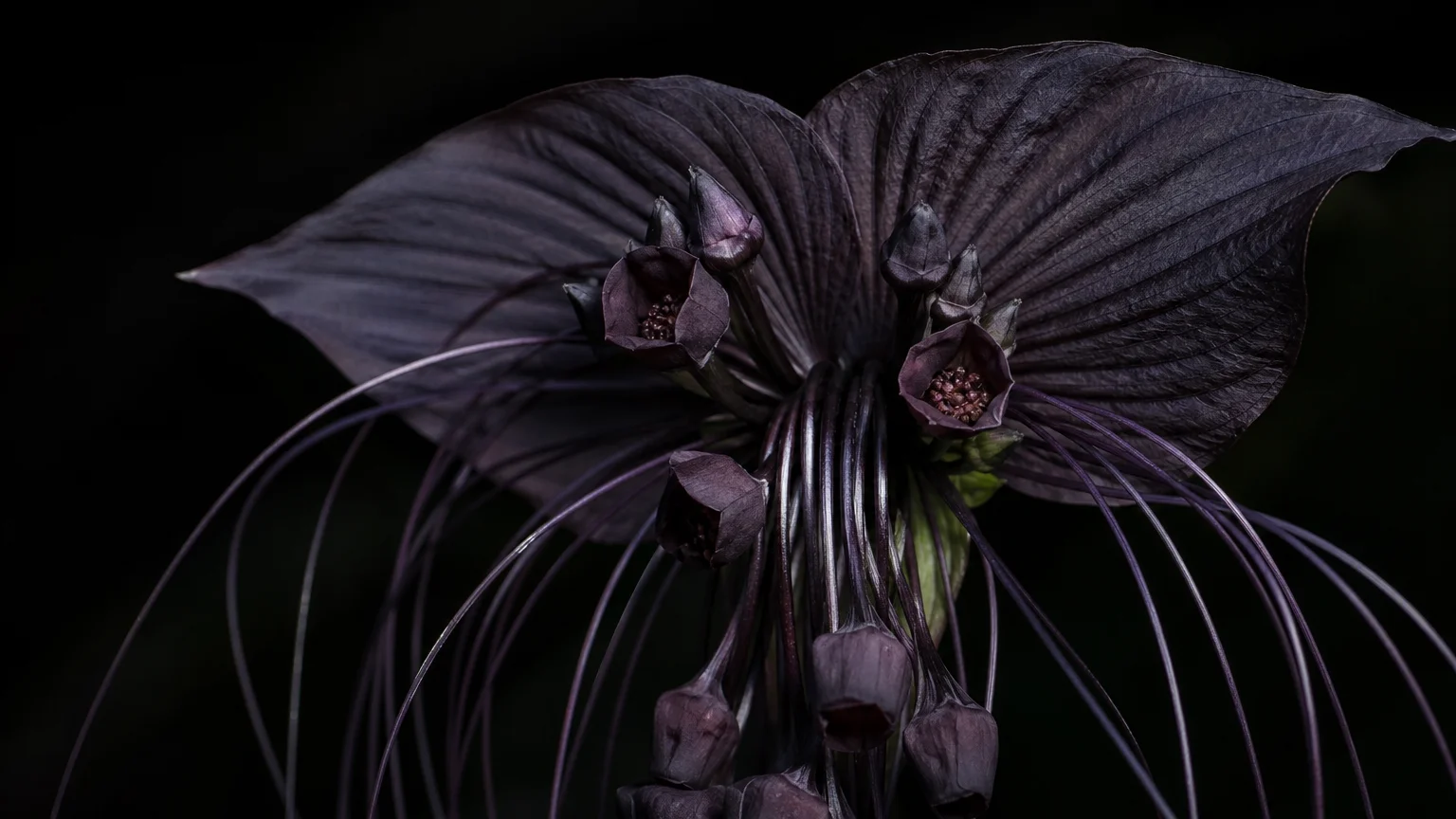
Tip #6: Black Bat Flower (Tacca chantrieri)
For the truly adventurous and dedicated grower, the Black Bat Flower ranks among the most fascinating and unique houseplants in existence. Tacca chantrieri produces bizarre, otherworldly blooms that closely resemble a bat in mid-flight, complete with dark, wing-like bracts and trailing seed pods that look exactly like long, drooping whiskers. These extraordinary black flowers can measure up to an astonishing twelve inches across, typically blooming from late summer straight through the autumn months. The striking visual payoff makes it a highly coveted collector’s piece.
Cultivating this exotic beauty requires serious dedication, as it demands strict greenhouse-like conditions to thrive. Originating from the dense, tropical understories of Southeast Asia, the Bat Flower absolutely detests dry air, sudden temperature drops, and cold drafts. You must maintain consistent room temperatures above sixty degrees Fahrenheit and provide ambient humidity levels exceeding seventy percent at all times. Run a quality humidifier nearby or place the pot directly on a large pebble tray filled with water. The root system remains notoriously sensitive, requiring a loose, highly aerated soil mix—try combining equal parts peat moss, pine bark, and perlite. Keep the soil evenly moist but never completely soggy.
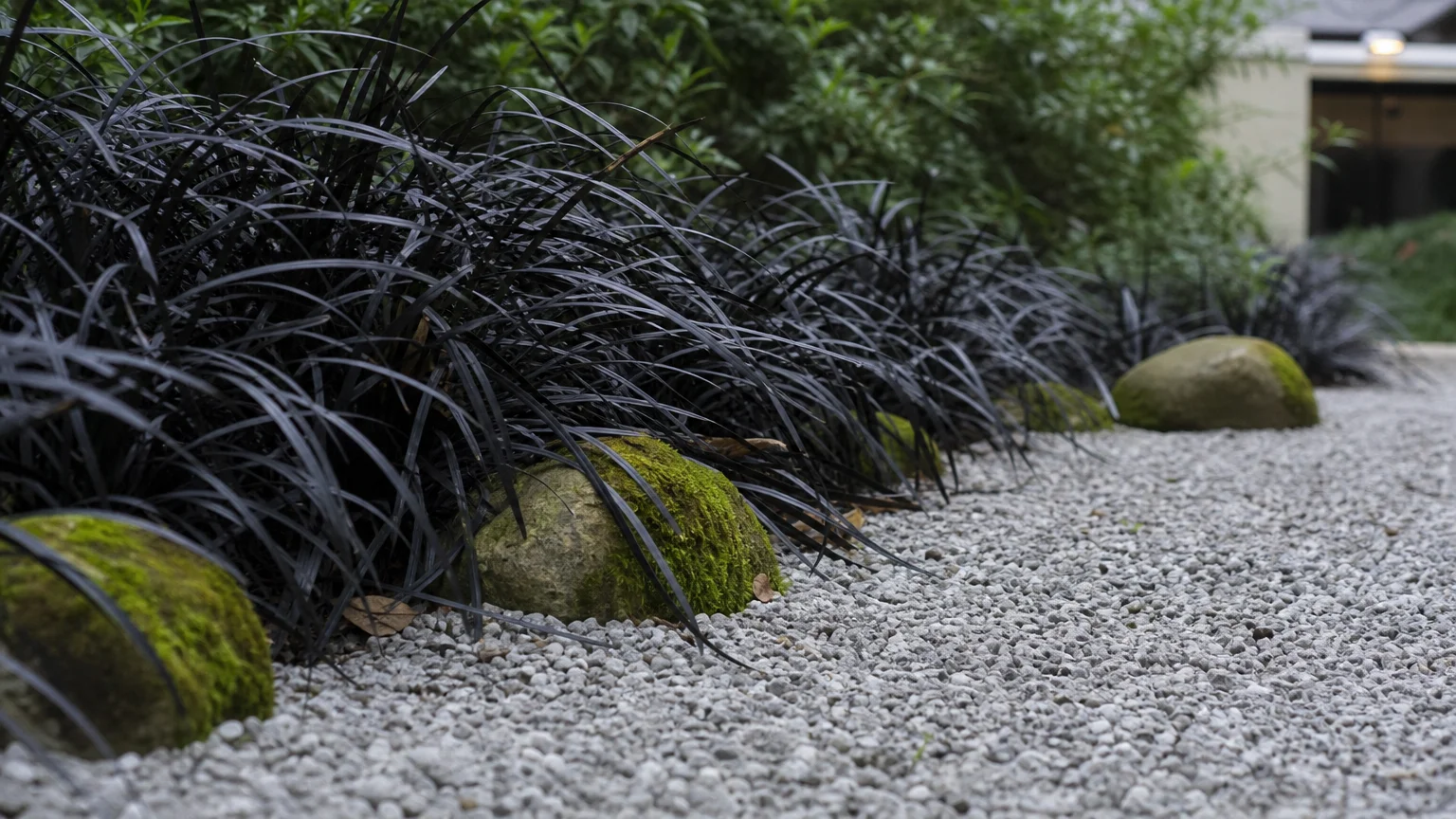
Tip #7: Black Mondo Grass (Ophiopogon planiscapus ‘Nigrescens’)
Ophiopogon planiscapus ‘Nigrescens’, commonly sold in nurseries as Black Mondo Grass, provides phenomenal ground-level contrast that completely redefines modern landscape design. This evergreen perennial forms dense, grassy tufts of strappy, jet-black foliage that maxes out at roughly eight to twelve inches tall. When you plant this striking black grass alongside bright lime-green hostas, golden creeping Jenny, or stark white decorative gravel, the resulting visual impact is nothing short of breathtaking. During the mid-summer months, tiny, bell-shaped, pale pink or lilac flowers emerge, eventually giving way to glossy, dark blue berries in the early fall.
Black Mondo Grass grows rather slowly, making it an excellent, low-maintenance border plant or a textural filler for mixed outdoor containers. It performs beautifully in partial shade, though it can easily tolerate full sun in cooler northern climates if you provide it with enough supplemental moisture. Plant it in rich, slightly acidic, well-draining soil, and water consistently during the first full year to establish a deep, robust root system. Once fully established, it exhibits impressive drought tolerance. Divide the expanding clumps every three to four years in the early spring to propagate fresh new plants and maintain vigorous, healthy growth.
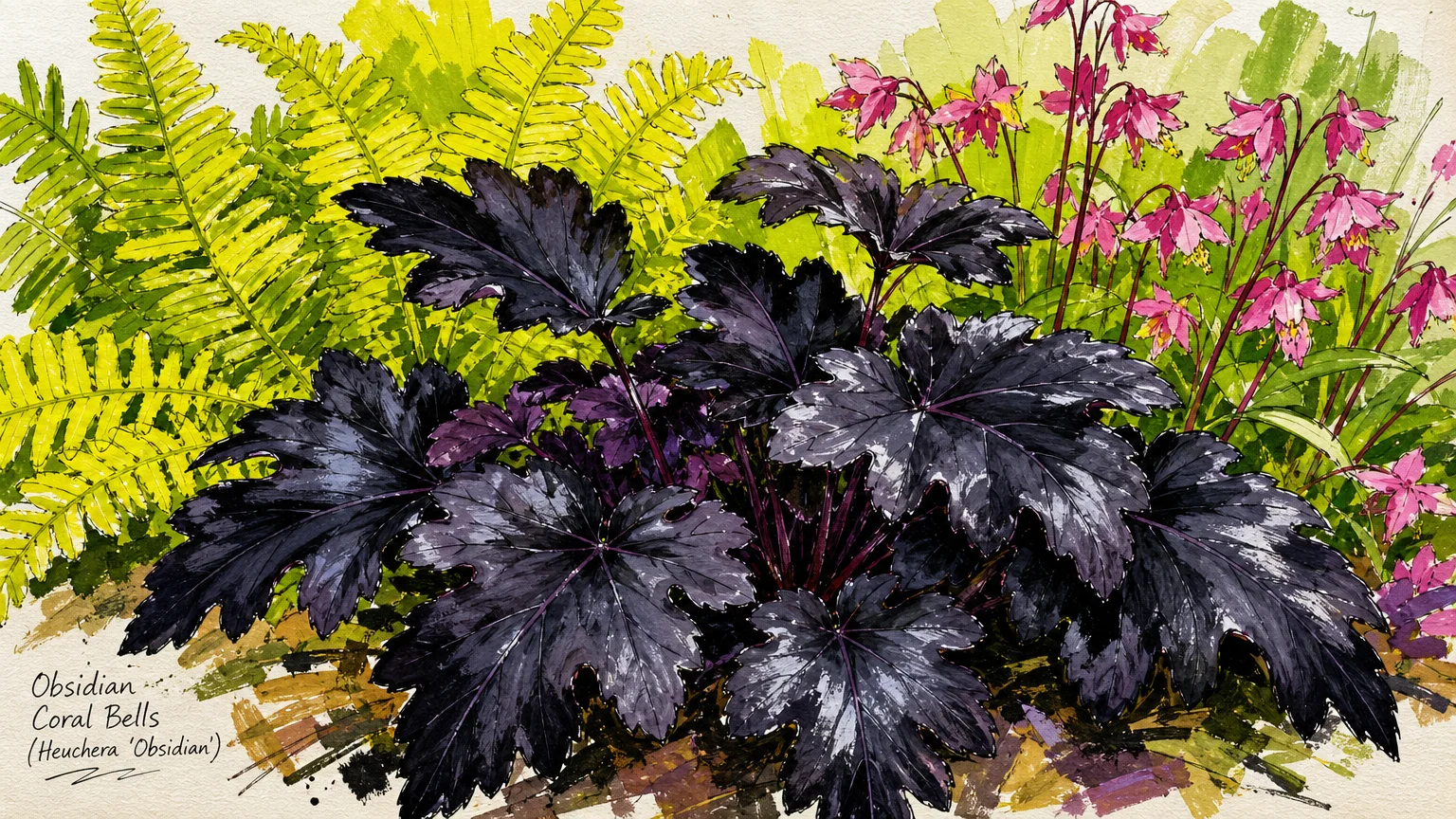
Tip #8: Obsidian Coral Bells (Heuchera ‘Obsidian’)
Heuchera ‘Obsidian’ reigns supreme among dark-foliage shade perennials. This particular variety of Coral Bells produces exceptionally smooth, broad, lobed leaves in an intensely deep, glassy purple-black shade. Unlike many other dark-leaved cultivars that frustratingly fade to a muddy bronze or dull green during the blistering heat of mid-summer, ‘Obsidian’ proudly retains its true, rich black coloration throughout the entire growing season. This highly reliable performance makes it an essential structural component for illuminating the darker, heavily shaded corners of your outdoor living space.
The plant forms neat, symmetrical, mounding clumps approximately ten to twenty-four inches wide, sending up delicate, airy sprays of tiny cream-colored flowers on wiry stems in late spring. You will achieve the absolute best results by planting Coral Bells in partial shade, carefully shielding them from the harsh, direct afternoon sun. They require fertile, humus-rich soil with excellent drainage; heavy, waterlogged soils will rapidly cause fatal crown rot, especially during the cold, wet winter months. In regions that experience severe winter freeze-thaw cycles, apply a thick layer of organic mulch around the base of the plant in late autumn to prevent the shallow roots from heaving out of the ground.
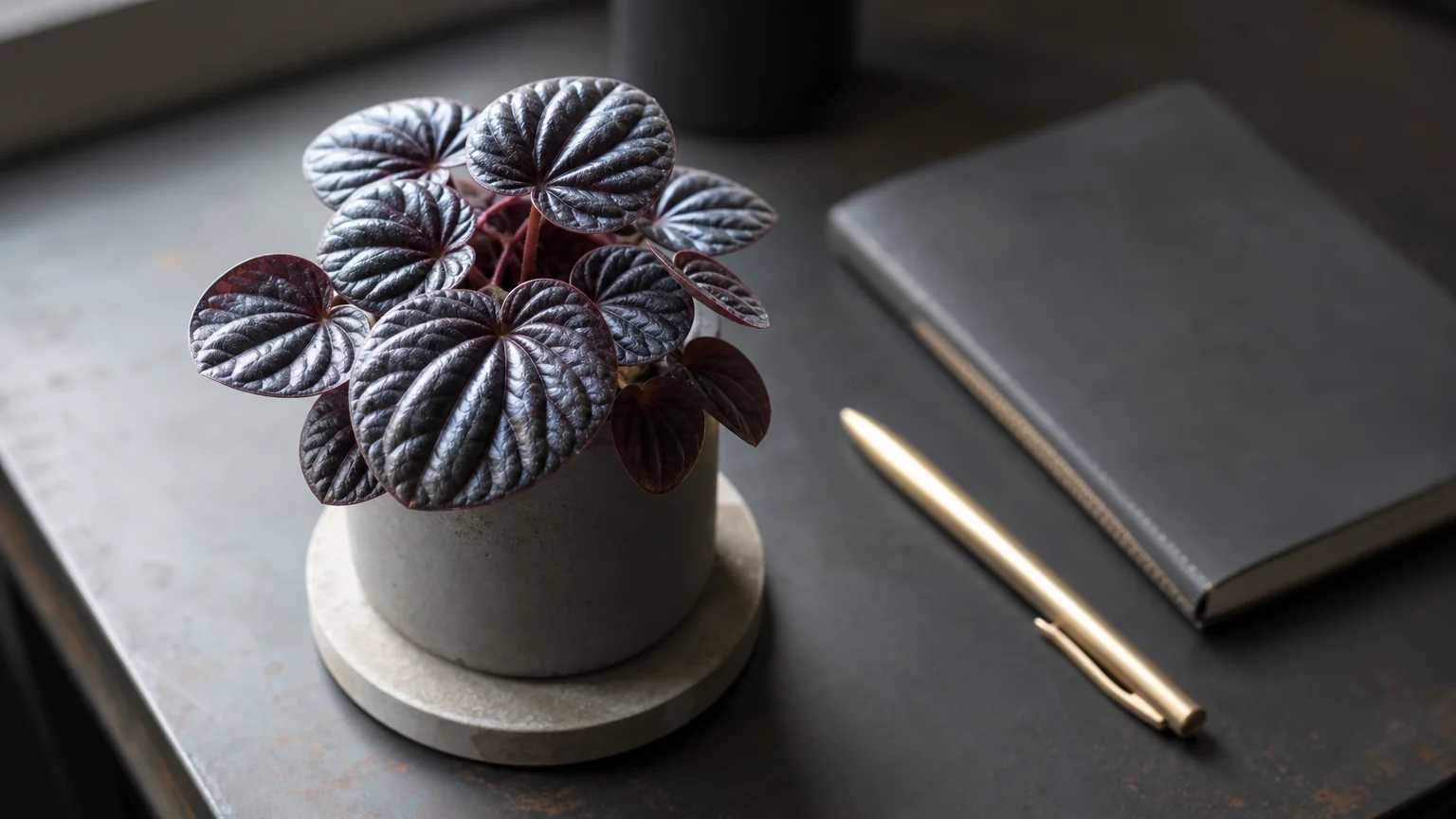
Tip #9: Geo Plant (Geogenanthus ciliatus)
The Geogenanthus ciliatus, affectionately known in the horticultural community as the Geo Plant, has recently surged in popularity, capturing the hearts of indoor plant enthusiasts everywhere. This striking species features thick, rounded, dark purple-black leaves that boast an incredibly glossy, almost patent-leather finish. A vivid, bright purple stripe runs directly down the center of each individual leaf, adding a mesmerizing geometric accent to your houseplant decor. Native to the lush, heavily shaded rainforest floors of South America, the Geo Plant naturally evolved to thrive in low-light environments, making it an excellent candidate for a north-facing window or a humid bathroom fitted with frosted glass.
However, you should know that this plant communicates its thirst very dramatically. The exact moment the soil dries out, the thick, fleshy stems will collapse, and the entire plant will droop miserably over the edge of its pot. To prevent this alarming display, you must keep the potting mix consistently damp, checking the moisture levels with your finger every few days. Do not mistake dampness for swampy conditions; ensure your pot drains freely after every single watering session. High humidity remains absolutely non-negotiable for the Geo Plant, so group it tightly with other transpiring tropical plants or place it safely inside a large glass terrarium.
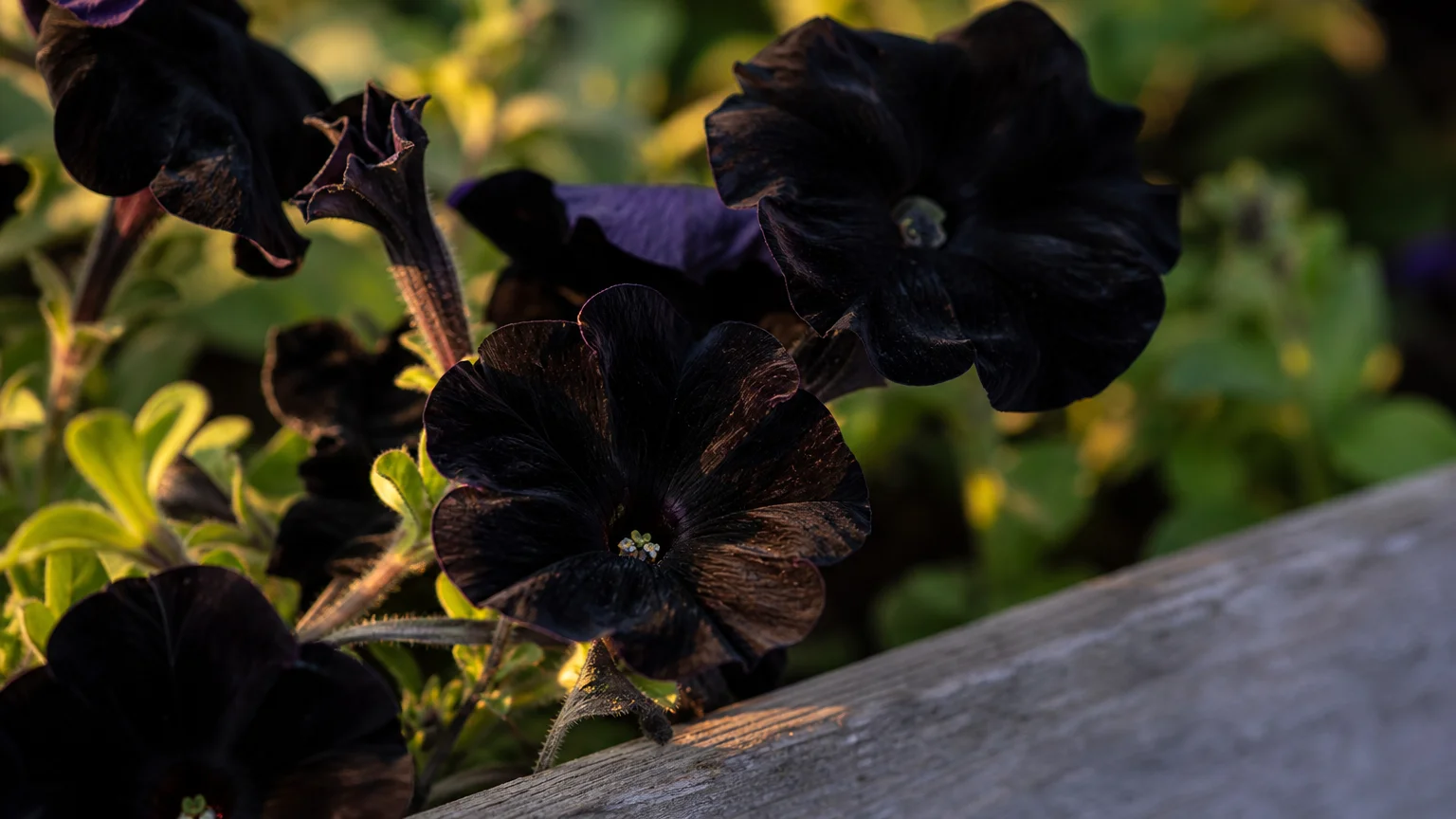
Tip #10: Black Velvet Petunia (Petunia ‘Black Velvet’)
Nothing adds instant, velvety drama to a sunny front porch quite like the magnificent Black Velvet Petunia. Introduced to the global horticultural world in 2010, this spectacular annual changed container gardening forever by offering the first truly black petunia flower—entirely free of genetic modification or artificial floral dyes. The wide, trumpet-shaped blooms appear pitch-black and feature a soft, suede-like texture that practically demands to be touched. When you cascade these dramatic plants over the edges of hanging baskets alongside bright yellow calibrachoa or pure white alyssum, the dark blooms look like literal voids of light scattered among the vibrant colors.
To keep your lovely petunias blooming profusely from the early days of spring straight until the first killing frost, you must provide them with full, unfiltered sun—requiring at least six to eight hours of direct light daily. Petunias naturally operate as incredibly heavy feeders; you need to apply a high-quality, water-soluble, bloom-boosting fertilizer every ten to fourteen days to sustain their energy. Additionally, practice regular deadheading by firmly pinching off the spent black flowers along with their sticky green bases. This vital step prevents the plant from wasting precious energy on seed production and immediately redirects its focus into generating massive new flushes of dark, captivating blossoms.
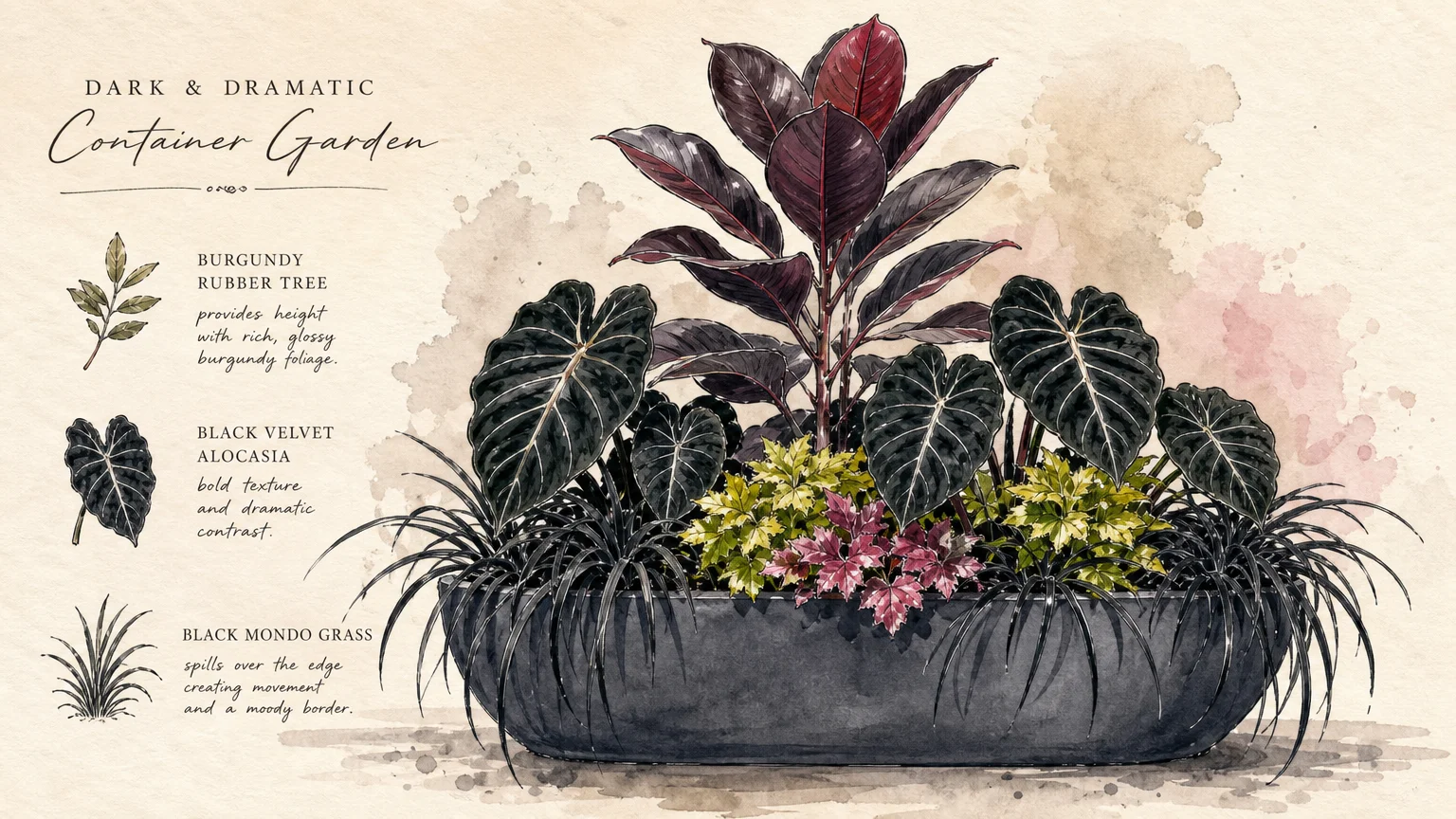
Putting It All Together: Enjoy Your Beautiful Garden
Incorporating dark, brooding foliage into your home or garden instantly elevates your overall design from ordinary to extraordinary. Striking black plants function as highly dramatic focal points, contrasting beautifully against traditional bright green leaves and vibrant floral blooms. Whether you choose to leverage the architectural height of the Black Rose Aeonium for your sunny patio or prefer the plush, tactile texture of the Black Velvet Alocasia for your indoor plant shelf, these unique botanical specimens prove that creative gardening extends far beyond standard shades of green.
You now possess the practical, actionable knowledge required to keep these deep-hued beauties thriving all year long. Remember to consistently monitor your specific light conditions and humidity levels, as dark plant pigments often rely heavily on precise environmental cues to maintain their stunning intensity. Embrace the bolder, moodier side of horticulture, mix and match these dark plants with bright, reflective pots, and watch your living space effortlessly transform into a sophisticated, modern sanctuary. Get your hands in the dirt and start cultivating your own moody botanical masterpiece today.
Frequently Asked Questions
Do black plants need more sunlight to maintain their dark color?
Light requirements depend entirely on the specific plant species rather than the color of the foliage itself. Succulents like the Black Rose Aeonium require intense, direct sunlight to produce the deep purple-black pigments that naturally protect their fleshy leaves from severe ultraviolet radiation. Conversely, shade-loving species like Obsidian Coral Bells or the Black Velvet Alocasia will suffer from severe leaf scorch if you expose them to direct afternoon sun. You should always check the individual care guidelines for your chosen plant to ensure optimal coloration and health.
Are there any truly black flowers in nature?
True black does not naturally occur in the botanical floral world. When you look at black flowers—like the Black Velvet Petunia or the Black Bat Flower—you are actually looking at incredibly concentrated deep purple or dark red pigments called anthocyanins. These specific pigments are packed so densely within the flower petals that they absorb almost all visible light, effectively tricking the human eye into perceiving the color as solid black. This fascinating evolutionary adaptation often helps the plant absorb more physical heat from the sun or attract specific native pollinators.
How do I style dramatic plants in my houseplant decor?
Contrast serves as the single most effective design tool when styling unique houseplants with dark foliage. You should position your black plants directly against light-colored walls or pair them with bright, contrasting containers made of stark white ceramic, raw terracotta, or highly reflective metallics. Placing a dark, moody plant directly next to a neon-green variety, such as a bright Neon Pothos or a Lemon Lime Philodendron, creates a striking, modern visual pop that perfectly highlights the unique attributes and textures of both specimens.
For region-specific advice, consult your local University Extension program (find yours via the USDA directory). For plant databases and inspiration, visit the Missouri Botanical Garden or the Royal Horticultural Society.
Disclaimer: This article provides general gardening advice. Always consider your specific climate, soil conditions, and local pests. Follow safety guidelines when using gardening tools and products.