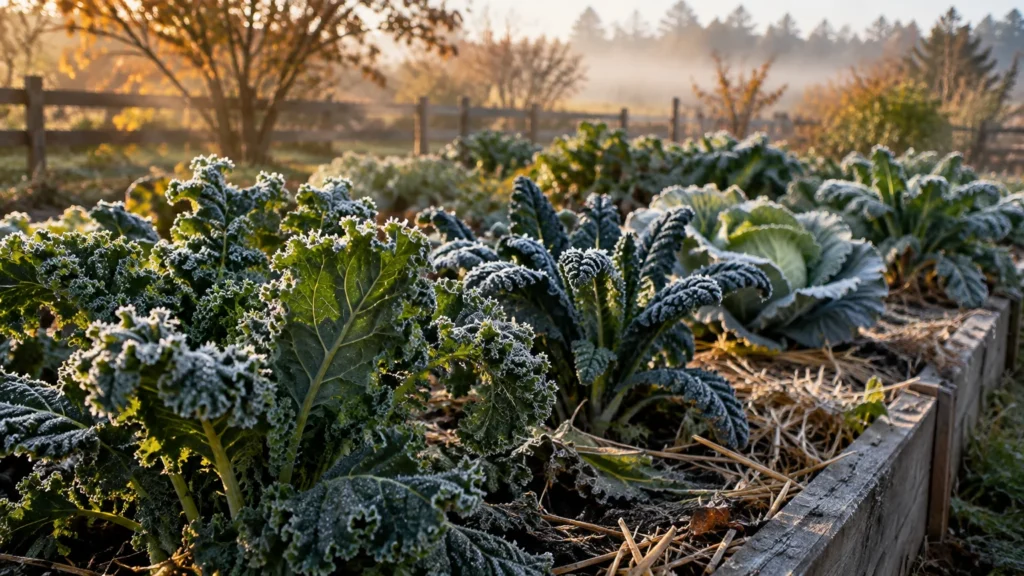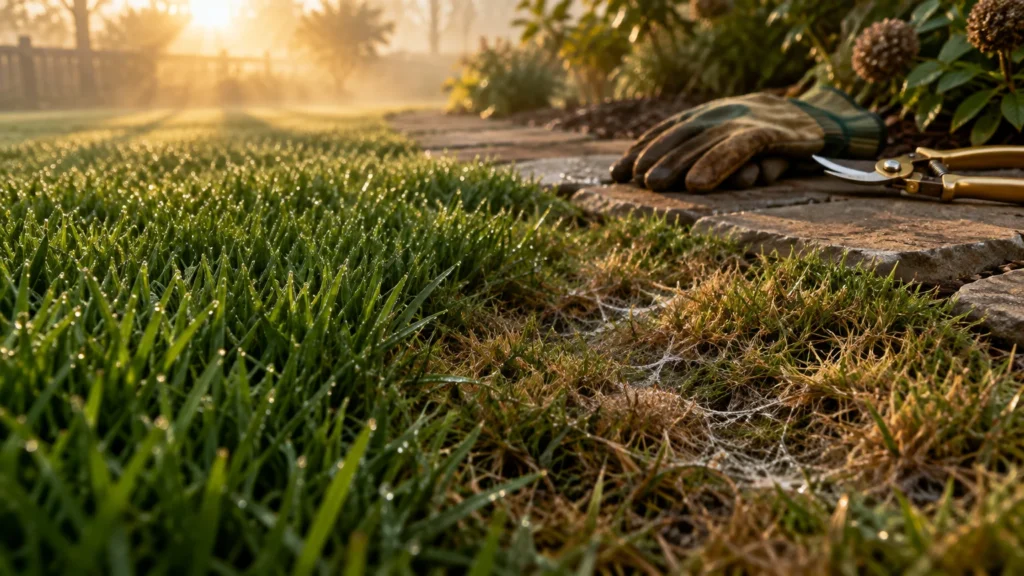
Transforming your outdoor space into a thriving sanctuary requires staying ahead of the shifting climate, evolving technology, and modern design movements reshaping landscapes today. As we look forward, 2027 gardening trends emphasize water conservation, smart automation, climate-resilient native plants, and eco-conscious turf alternatives. According to recent industry reports, American households now spend an average of $740 annually on lawn and garden spaces, driving total national investment to $79.0 billion. By adopting these forward-thinking backyard trends 2027 early, you can reduce weekend maintenance, lower municipal water bills, boost local biodiversity, and create an exquisite outdoor living room tailored to warming hardiness zones.
Tip #1: Embrace High-Tech Smart Gardening and Micro-Automation
Modern home gardeners increasingly rely on real-time data and automated care systems to nurture vibrant landscapes with minimal manual labor. Smart indoor and outdoor gardening technology represents one of the fastest-growing sectors in horticulture; market research projects the global smart indoor gardening system market to expand from under $2 billion to $3.11 billion by 2030 at a 6.1% CAGR. At the same time, the broader U.S. residential and commercial gardening supply industry continues its upward trajectory—growing from $22 billion in 2024 toward $27.4 billion by 2030. Integrating intelligent devices into your routine protects your plant investments while giving you back precious weekend hours.
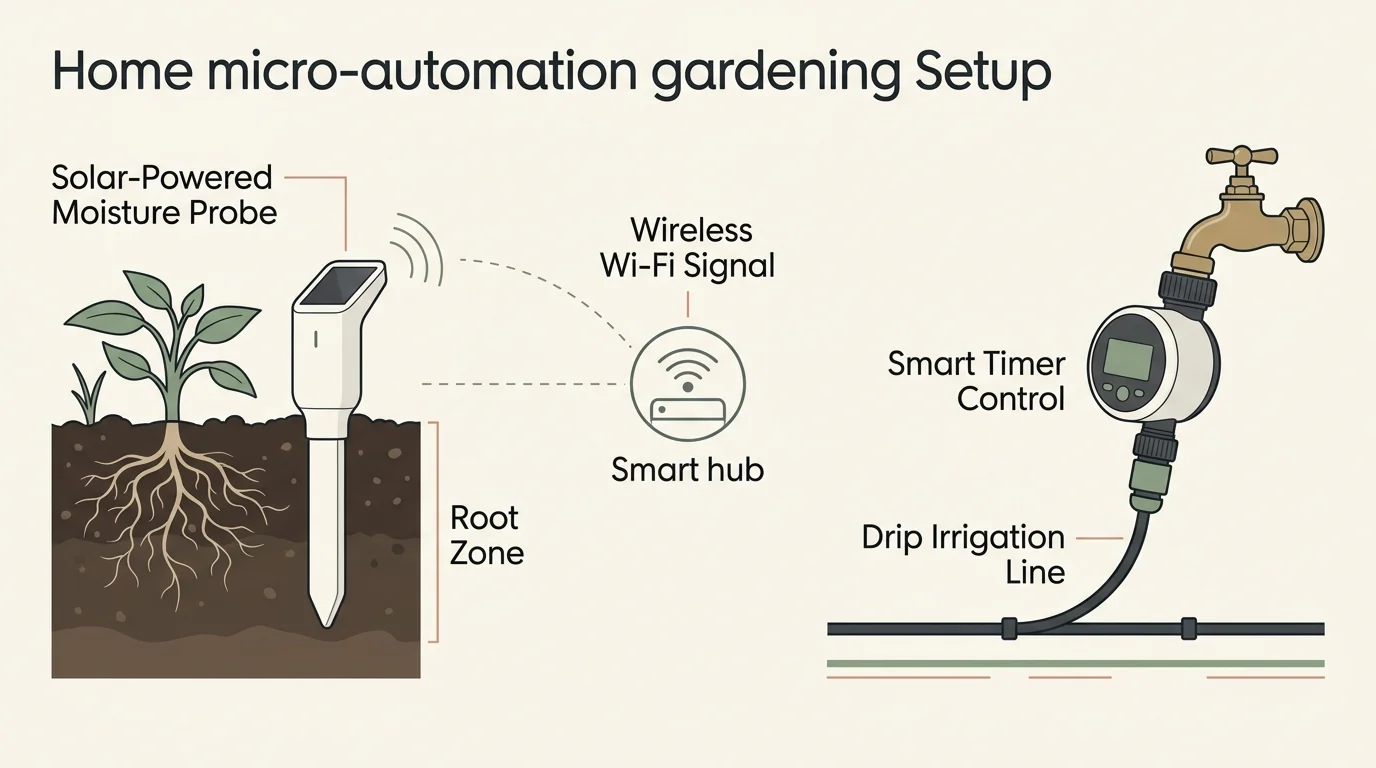
You can begin upgrading your setup by installing solar-powered moisture sensors directly into active root zones across your vegetable beds and ornamental borders. These wireless probes connect directly to your home Wi-Fi network and communicate with app-controlled hose timers or drip irrigation manifolds. When local weather forecasts predict heavy rainfall or atmospheric humidity rises, your automated system delays irrigation cycles automatically. This targeted delivery saves thousands of gallons of water annually, prevents nutrient leaching from overwatering, and keeps plant foliage dry to prevent fungal diseases like powdery mildew.
For gardeners managing tight urban footprints, balcony setups, or indoor kitchens, micro-automation simplifies daily maintenance. Compact hydroponic units feature full-spectrum LED grow lights that adjust intensity automatically based on natural ambient light levels. You can program automated nutrient pumps and water level alerts through your smartphone, ensuring crisp harvests of basil, butterhead lettuce, and microgreens year-round. Adopting these high-tech tools ensures your plants receive exact hydration and nutrition, making high-tech care a foundational component among popular garden trends.
Tip #2: Replace Traditional Lawns with Climate-Resilient Xeriscaping
State legislative actions and shifting municipal policies are accelerating the phase-out of water-intensive decorative turf across the country. In California, Assembly Bill 1572 establishes a progressive ban on using potable water to irrigate non-functional turf—taking effect on January 1, 2027 for state and local government properties before expanding to commercial sites and HOA common areas. Similarly, Nevada’s Assembly Bill 356 mandates the complete removal of non-functional grass irrigated by Colorado River water in Southern Nevada by January 1, 2027. Officials estimate this single initiative will conserve roughly 9.5 billion gallons of water every year, proving that low-water landscapes are no longer optional—they are essential.
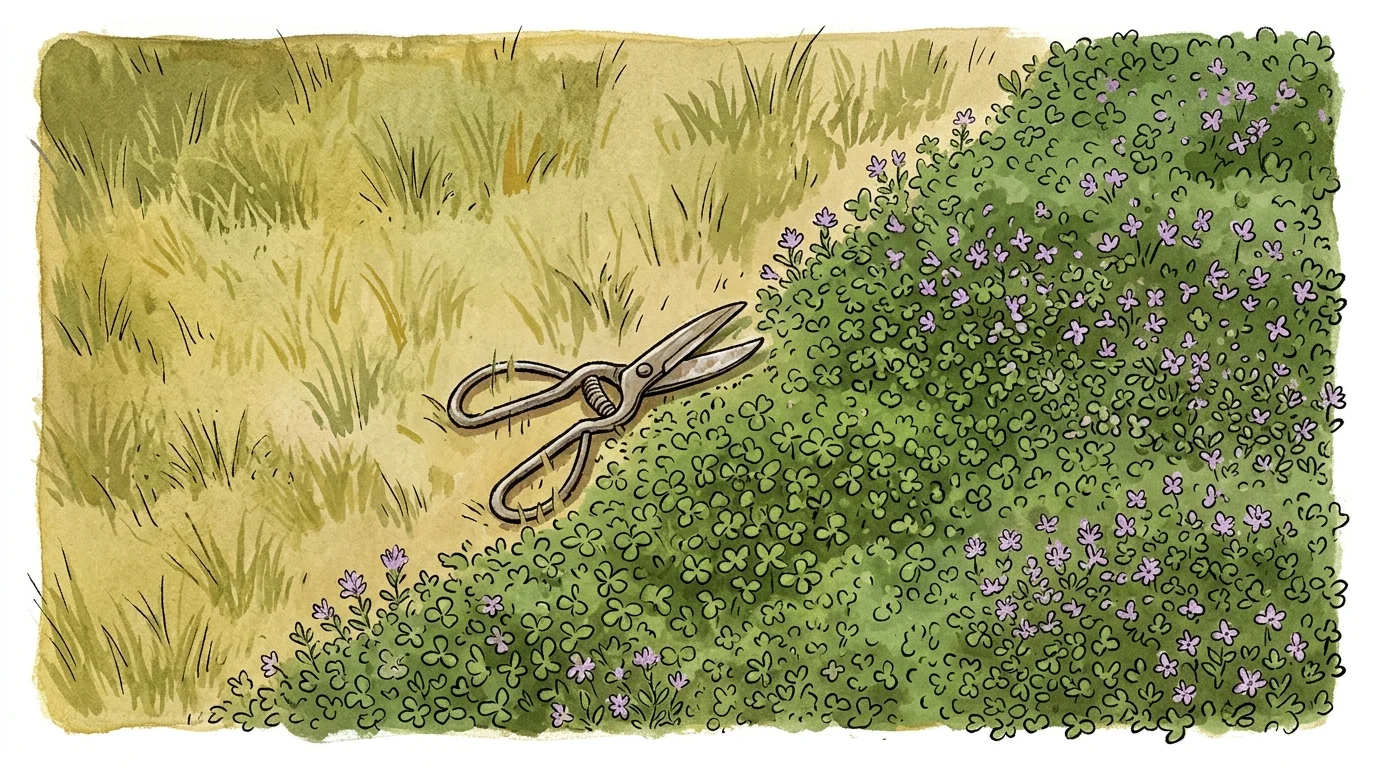
You can stay ahead of these regulatory changes and reduce your municipal water bill by replacing thirsty turf grass with vibrant, climate-resilient xeriscaping. Swap uniform grass lawns for micro-clover, kurapia, or creeping thyme groundcovers. Micro-clover forms a lush green carpet that withstands light foot traffic, fixes nitrogen naturally into the soil to reduce fertilizer needs, and requires mowing only two or three times a year. Creeping thyme delivers a fragrant, drought-tolerant lawn alternative that blooms with pink and purple blossoms every summer, attracting beneficial pollinators while choking out stubborn weeds.
To implement a seamless lawn transformation without chemical weed killers, utilize simple sheet-mulching techniques. Lay thick layers of plain corrugated cardboard directly over existing grass, overlap the edges by six inches, and soak the area thoroughly with a garden hose. Top the cardboard with six inches of rich organic compost mixed with shredded bark mulch. Within a single season, the underlying grass suffocates and breaks down into rich organic matter, creating an ideal planting bed for agaves, ornamental grasses, and Mediterranean herbs. Adopting these grass alternatives highlights how garden design trends 2027 seamlessly pair environmental stewardship with eye-catching curb appeal.
Tip #3: Adapt to Shifting Hardiness Zones with Mediterranean Flora
The updated USDA Plant Hardiness Zone Map reveals significant climate shifts across the United States. Updated 30-year climate averages show that approximately 50% of the contiguous United States shifted into a 5°F warmer half-zone, with contiguous winter minimum temperatures averaging roughly 2.5°F warmer than 2012 figures. Smart gardeners actively adapt to these warming trends by selecting resilient plant varieties that thrive in higher temperatures and extended dry periods.
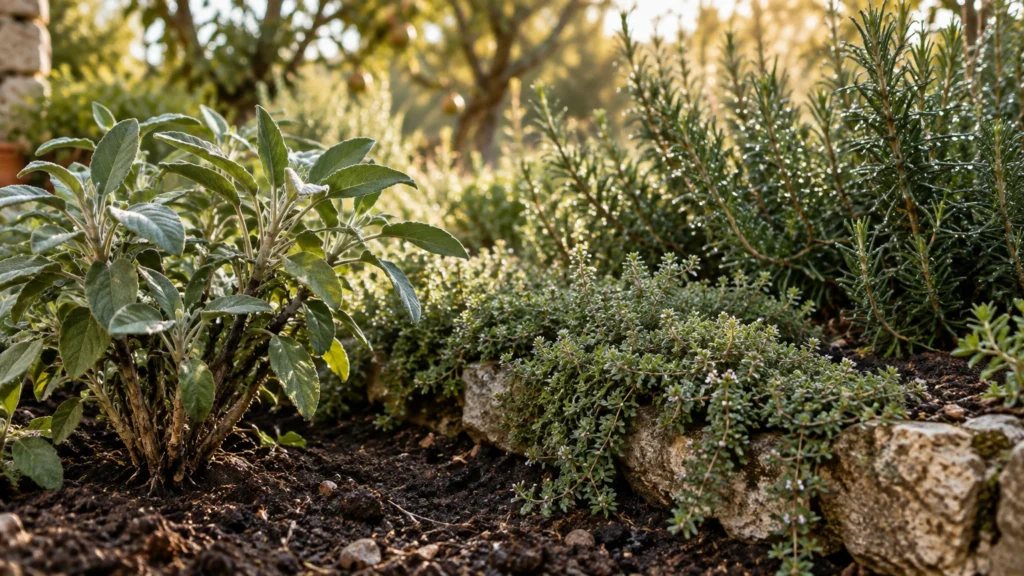
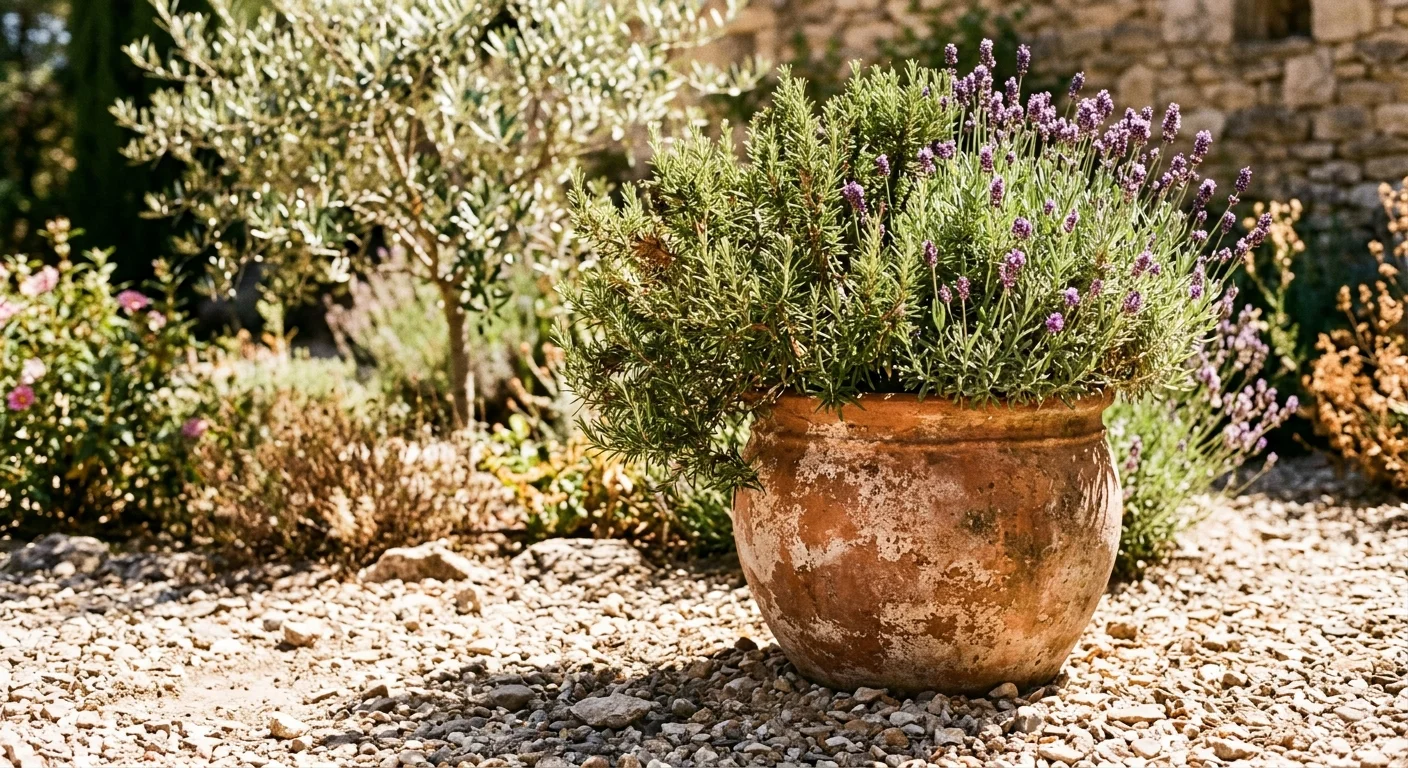
You can take advantage of milder winter temperatures by introducing heat-tolerant Mediterranean species into landscapes that previously could not support them. Consider planting dwarf mission figs, arbequina olive trees, French lavender, prostrate rosemary, and cold-hardy citrus varieties like kumquats or satsuma mandarins. These long-lived species develop deep root systems that easily withstand intense summer heatwaves while providing attractive, silver-green evergreen foliage throughout winter months.
Thriving with Mediterranean plants depends heavily on fast-draining soil structure. Mediterranean flora roots quickly rot in soggy, heavy clay soil during cool spring rains. Build raised planting mounds or gravel garden beds using a blend of lean topsoil, coarse builder’s sand, and crushed pea gravel. Mulch surrounding plant bases with river stones or gravel rather than bark mulch; stone mulches reflect heat into the plant canopy, keep root crowns completely dry, and replicate native coastal Mediterranean habitats.
Tip #4: Rewild Your Property with Native Pollinator Habitats
Ecological rewilding represents one of the most impactful design shifts modern homeowners can make. National survey data from the National Wildlife Federation and the National Gardening Association shows that 28% of American adults deliberately buy plants designed to support native pollinators like bees, butterflies, and songbirds. Furthermore, 17% specifically purchase native plants endemic to their immediate region, and 12% actively convert traditional turf grass lawns into lush wildflower habitats. Rewilding your yard transforms manicured outdoor spaces into vital bio-corridors.
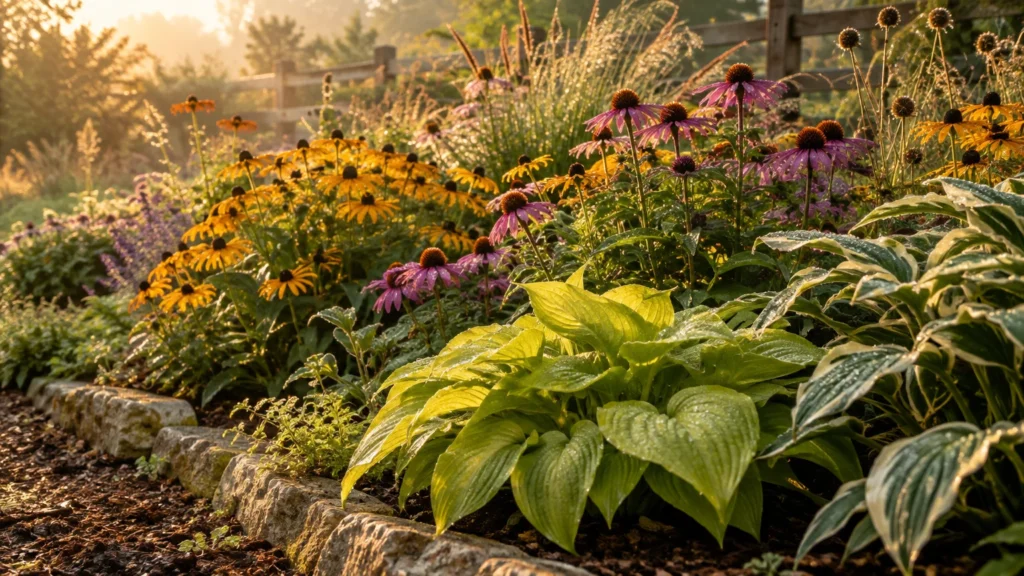
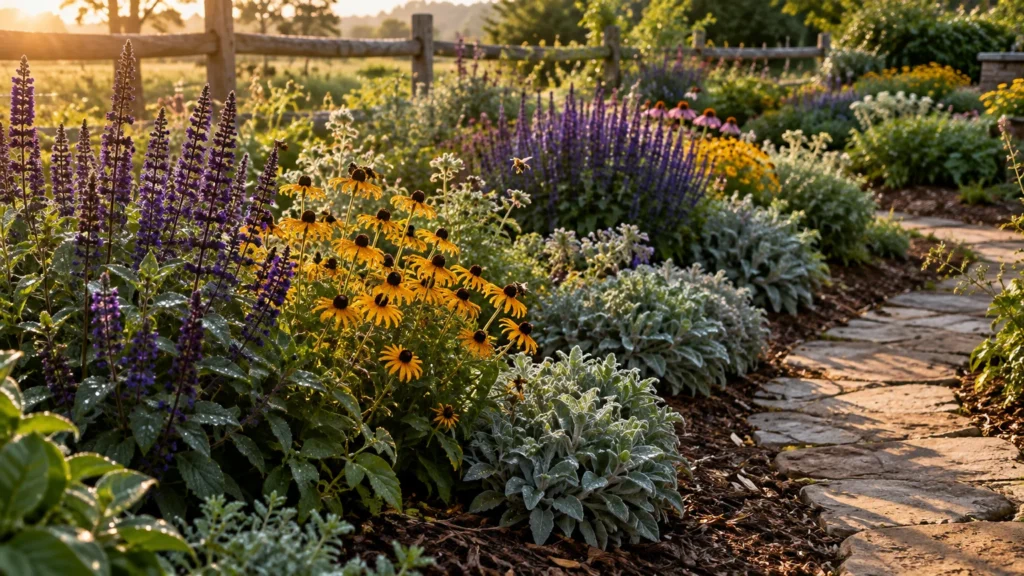
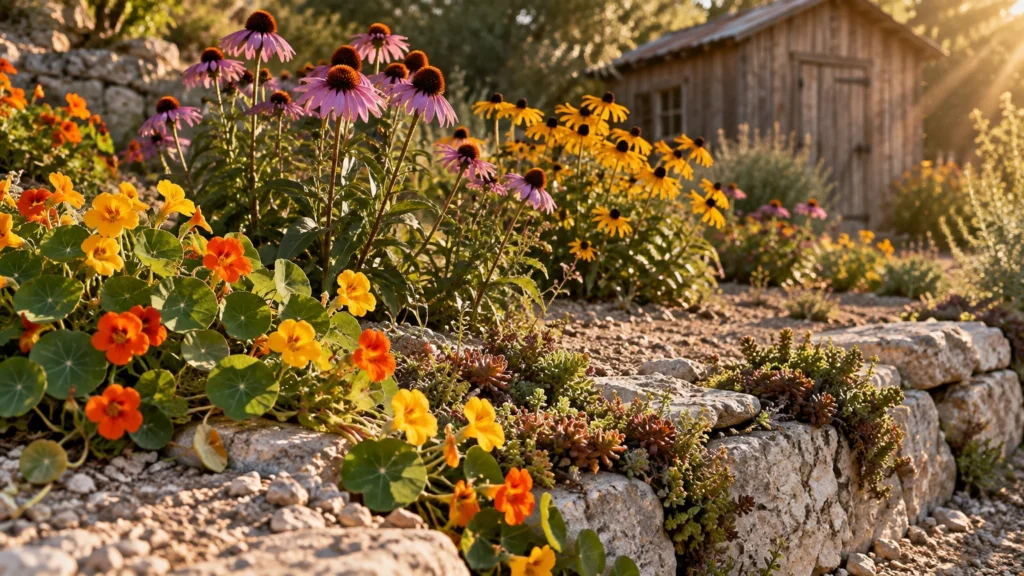
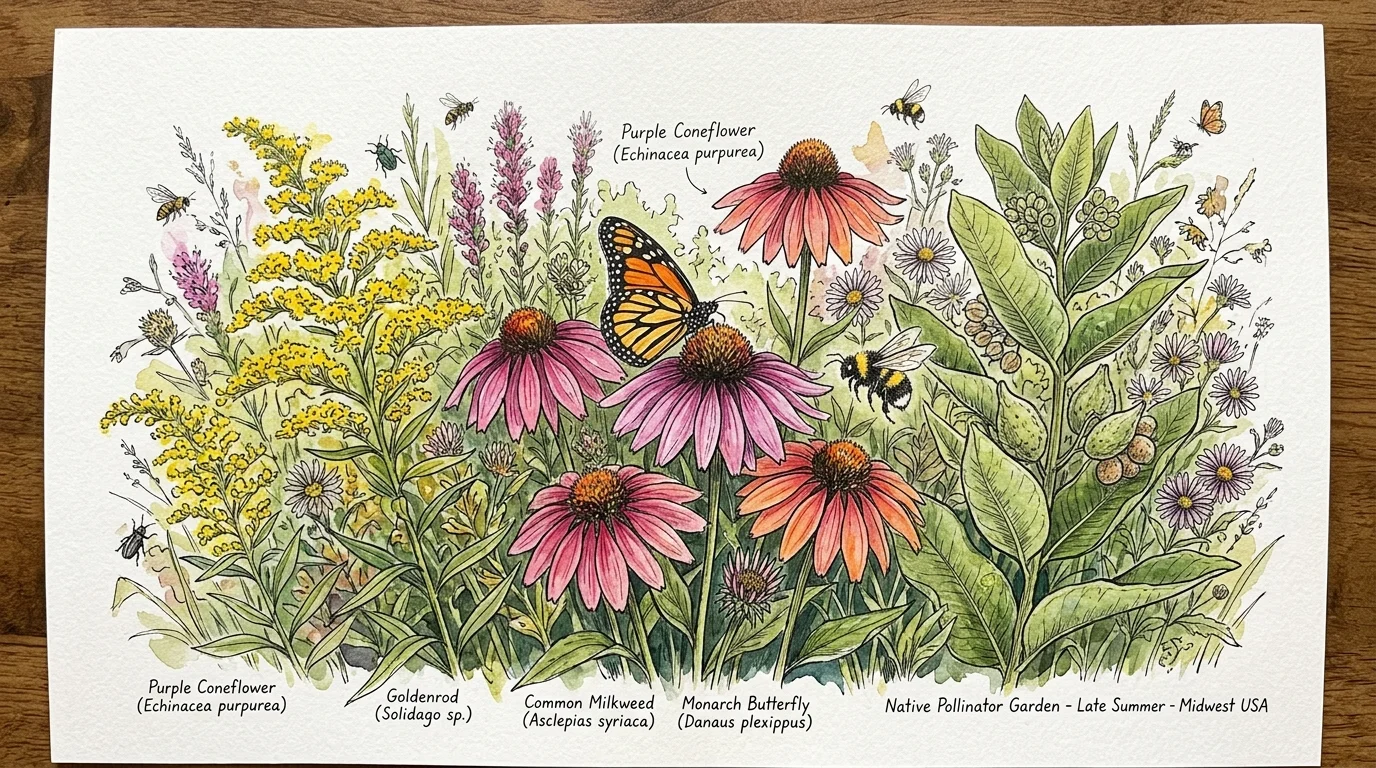
You can rewild your landscape by creating layered canopy structures that offer continuous blooms, seeds, and shelter from early spring through late autumn. Plant native perennials such as purple coneflower, orange butterfly weed, wild bergamot, goldenrod, and native asters. Intersperse these flowering perennials with structural native bunchgrasses like little bluestem, sideoats grama, and switchgrass. Native plants co-evolved alongside local beneficial insects and wildlife, requiring no synthetic fertilizers, chemical pesticides, or excessive supplemental irrigation once established.
To maximize ecological value, leave standing seed heads and hollow plant stems undisturbed throughout winter. Solitary native bees utilize hollow stems as nesting chambers, while goldfinches and sparrows rely on standing coneflower and sunflower seeds for vital winter food. Allow fallen autumn leaves to decompose naturally under tree drops; this leaf litter shelters overwintering butterfly larvae, fireflies, and beneficial soil microbes. Building a biodiverse, self-sustaining ecosystem remains a standout favorite among backyard trends 2027.
Tip #5: Integrate Edible Landscaping and Hyper-Local Food Forests
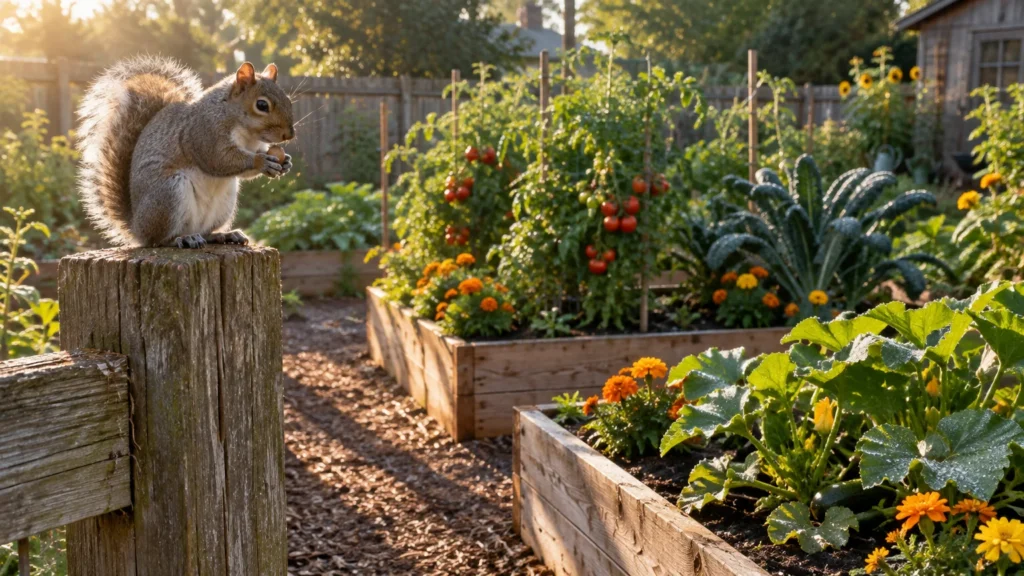
Homeowners are tearing down the boundaries between utility vegetable beds and decorative flower gardens. Foodscaping—the practice of blending food-producing plants directly into ornamental landscape beds—combines high visual appeal with nutritious harvests. Driven by a desire for self-reliance and organic ingredients, average household spending on lawn and garden care has surged to an all-time high of $740. Integrating edible plants allows you to maximize your budget by growing fresh food right outside your door.
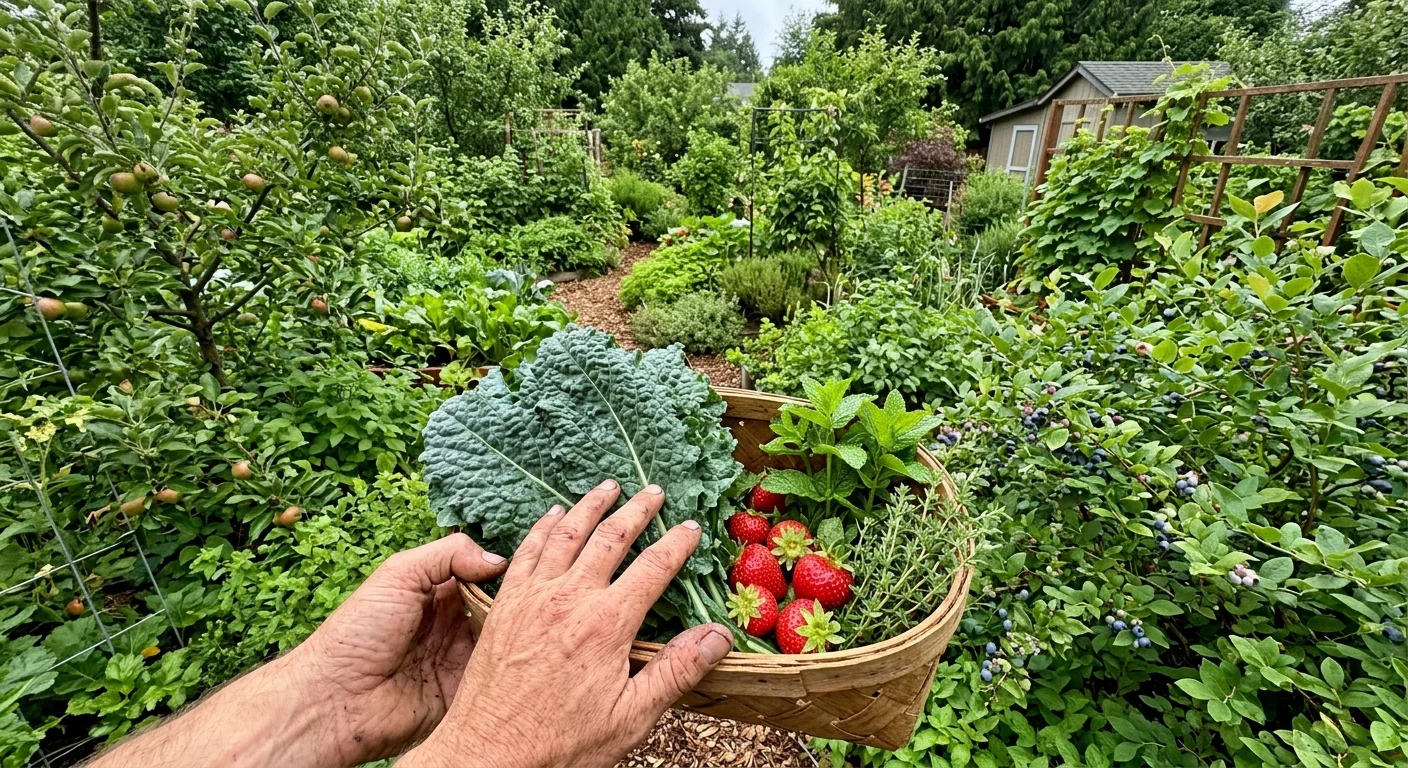
Design your edible landscape by mixing colorful, high-yielding crops straight into flower borders and foundation plantings. Pair dark purple opal basil with yellow marigolds, plant frilly rainbow Swiss chard as an edging plant along flagstone pathways, or train climbing pole beans over wrought-iron garden obelisks. Utilize dwarf fruit trees—such as columnar apples, patio peaches, and dwarf figs—as striking vertical accents along fences or property lines.
Establish long-term productivity by planting perennial vegetables and fruiting shrubs that return reliably year after year. Intercrop blueberry bushes into mixed borders; they produce delicate bell-shaped spring blossoms, delicious summer fruit, and fiery scarlet autumn leaves that rival burning bushes. Add asparagus crowns, globe artichokes, and sea kale into sunny borders. Perennial edibles save time on annual spring planting while building stable, hyper-local food production across every growing season.
Tip #6: Master Closed-Loop Micro-Composting and Soil Regeneration
Successful long-term gardening depends entirely on building healthy, living soil beneath your feet. Modern soil management focuses on nourishing soil biomes, protecting mycorrhizal fungal networks, and increasing organic matter content. Boosting your soil’s organic matter by just 1% increases its water-holding capacity by nearly 20,000 gallons per acre, significantly reducing drought stress on your plants during hot summer months.
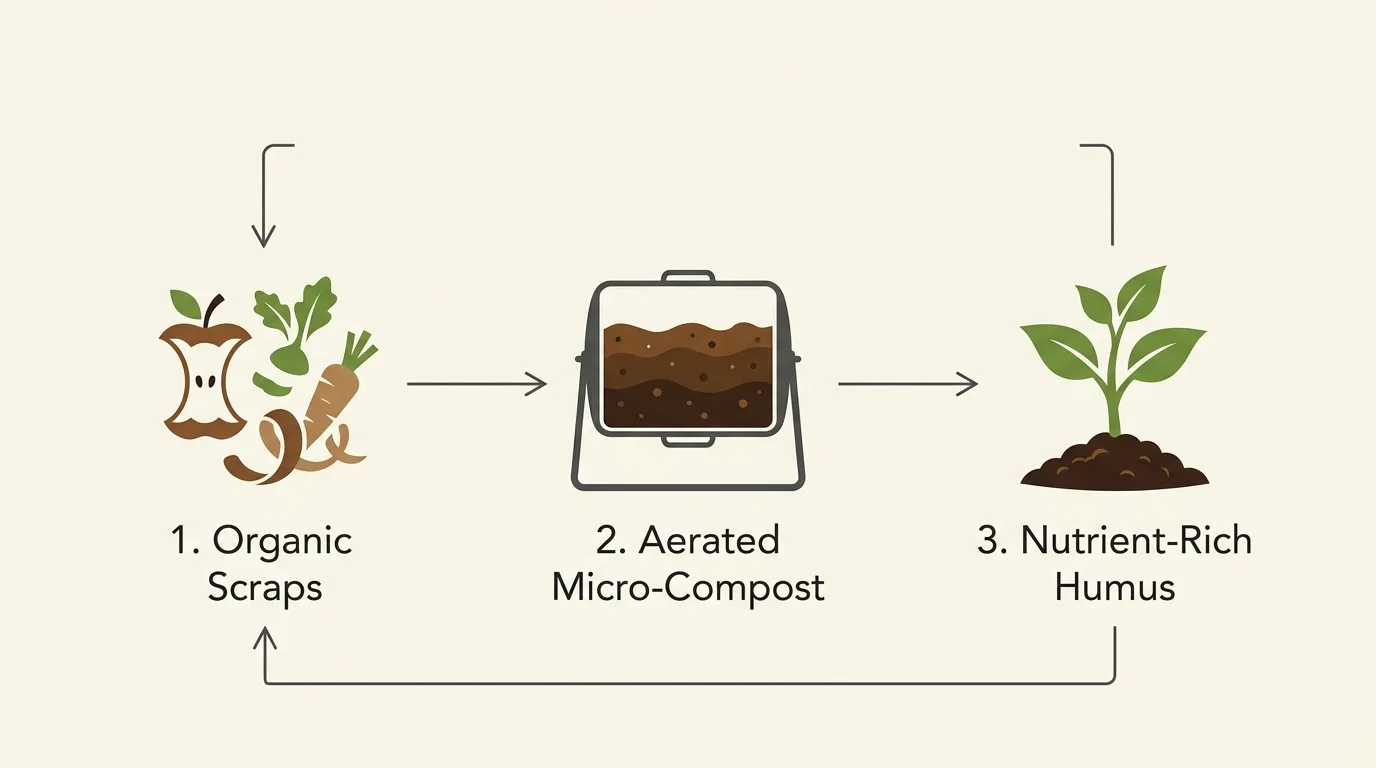
You can create a closed-loop soil system on your property by adopting bokashi fermentation, vermicomposting, and biochar soil amendments. Pre-charge raw biochar by soaking it in fresh compost tea, worm castings, or liquid seaweed before mixing it into garden beds. Once incorporated, biochar acts like a microscopic sponge—holding water, air, and plant nutrients in the upper root zone for decades without degrading.
Eliminate rototilling to preserve delicate soil architecture and subterranean worm pathways. Rototilling ruptures vital fungal networks, destroys natural soil structure, and brings buried weed seeds straight to the surface. Practice no-till gardening by top-dressing active beds twice a year with two inches of rich finished compost or leaf mold. Earthworms and soil microbes naturally pull organic matter deep into the earth, improving soil aeration and fertility without disturbing delicate plant roots.
Tip #7: Design Outdoor Living Rooms and Sensory Wellness Spaces
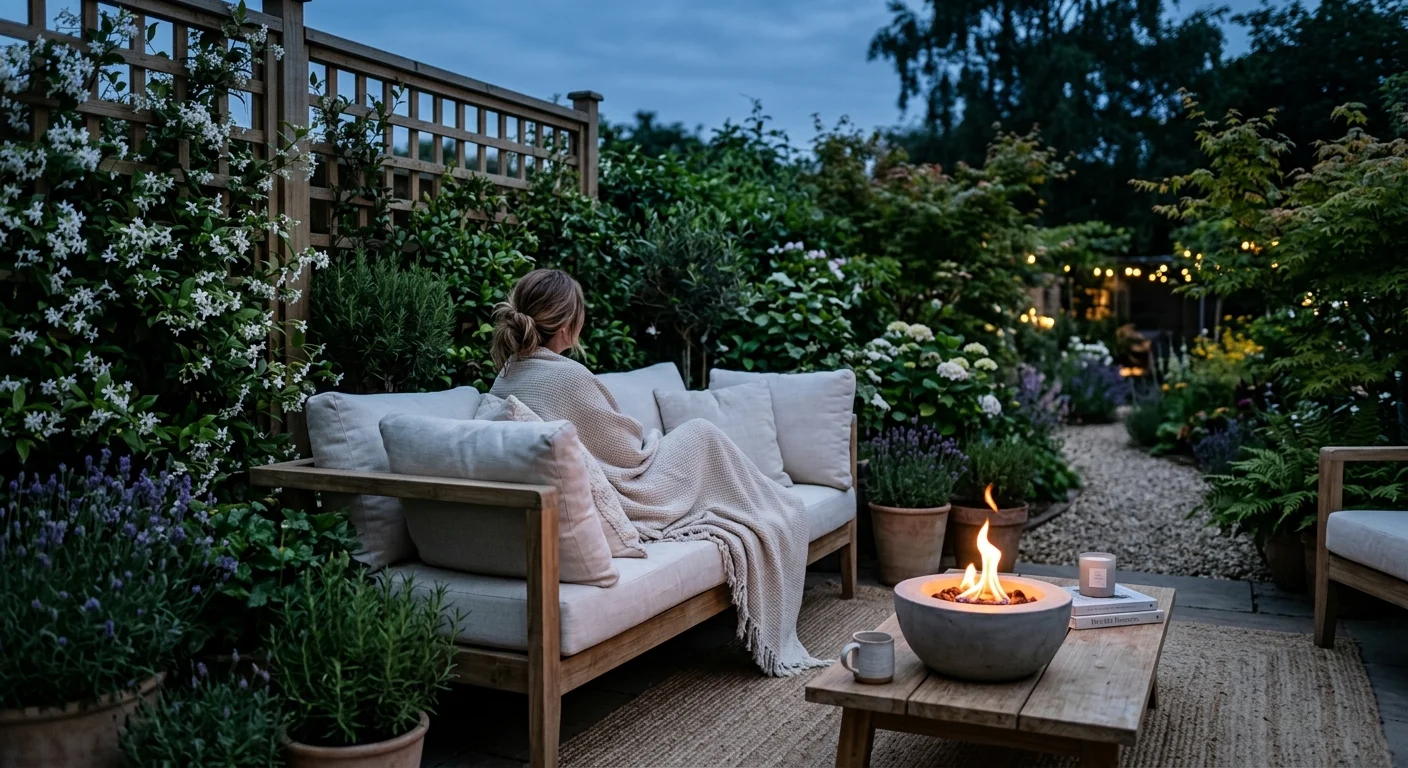
Homeowners increasingly view outdoor gardens as therapeutic extensions of their indoor floor plans. The surge in trending garden ideas prioritizes functional, restorative living spaces where you can relax, entertain guests, practice outdoor yoga, or work from home surrounded by nature. Designing an outdoor wellness room increases your usable living area while bringing everyday health benefits.
Construct natural acoustic barriers along your property boundaries to reduce neighborhood noise and block wind. Plant dense evergreen hedges like emerald green arborvitae, native viburnums, or thick clumping bamboo. Install a solar-powered cascading water fountain to mask traffic sounds with soothing white noise while creating an inviting drinking spot for local songbirds.
Incorporate tactile and aromatic foliage around outdoor seating zones to engage your senses. Edge patio edges and flagstone walkways with creeping woolly thyme, fuzzy lamb’s ear, and lemon-scented verbena that releases natural aromatic oils when brushed against. Complete your outdoor room with all-weather timber seating, ambient solar-powered string lights, and a stone fire pit, creating a cozy sanctuary you can comfortably enjoy across all four seasons.
Putting It All Together: Enjoy Your Beautiful Garden
Transforming your garden to match these forward-thinking 2027 trends does not require renovating your entire property overnight. Successful gardening works best when you approach changes step-by-step. Pick one or two actionable projects that excite you most this season—whether that means replacing a section of high-maintenance grass with micro-clover, installing a smart irrigation controller, or adding native pollinator plants to a sunny border.
As you incorporate these resilient, low-maintenance practices, you will watch your outdoor space flourish into a self-sustaining sanctuary. You will spend less time mowing and watering, reduce monthly utility costs, and support local ecosystems—all while enjoying a stunning landscape tailored to modern climate realities. Take pride in cultivating an innovative space that brings beauty, food, and peace to your daily life.
For region-specific advice, consult your local University Extension program (find yours via the USDA directory). For plant databases and inspiration, visit the Missouri Botanical Garden or the Royal Horticultural Society.
Disclaimer: This article provides general gardening advice. Always consider your specific climate, soil conditions, and local pests. Follow safety guidelines when using gardening tools and products.
Frequently Asked Questions
How will 2027 gardening trends affect urban and small-space gardeners?
Urban and small-space gardeners benefit directly from compact smart technology, vertical edible landscaping, and micro-clover balconies. High-tech indoor hydroponic systems allow city dwellers to grow fresh produce year-round without a yard, while dwarf fruit trees and foodscaping techniques maximize yields along small patio walls and apartment balconies.
What are the quickest lawn replacement alternatives to implement right now?
Micro-clover, kurapia, and creeping thyme offer the fastest, most effective grass replacements. Utilizing simple sheet-mulching techniques over existing turf grass allows you to clear lawn areas without harsh chemical sprays or heavy digging, creating a plant-ready xeriscape bed within a single afternoon.
How do I choose native plants for my updated hardiness zone?
Check the updated USDA Plant Hardiness Zone Map to confirm your region’s winter minimum temperature averages. Select native species endemic to your immediate geographic zone that tolerate warmer summer temperatures, and prioritize drought-tolerant native perennials like coneflowers, salvias, and native bunchgrasses.
Are smart irrigation controllers worth the initial investment?
Yes, smart irrigation controllers pay for themselves quickly by reducing outdoor water usage by 30% to 50%. By adjusting watering schedules automatically based on real-time weather forecasts and soil moisture readings, these devices protect root systems from rot, lower water bills, and save significant labor.