Choosing the right garden hydrangeas instantly elevates your yard with dramatic, dependable summer color. You can transform foundation plantings, shady borders, and patio containers into breathtaking floral displays with minimal effort.
Knowing the primary types of hydrangeas ensures you select varieties tailored to your regional climate and garden soil. This targeted knowledge eliminates frustrating bloom failures and protects your landscaping investment.
Mastering popular hydrangeas gives you complete control over flower silhouettes, foliage textures, and vivid seasonal color transformations. Explore these essential hydrangea varieties to create a thriving, resilient outdoor haven.
Tip #1: Bigleaf Hydrangeas (Hydrangea macrophylla)
Bigleaf hydrangeas represent the iconic cottage garden classic celebrated for lush foliage and enormous, globe-shaped flower heads. Their vibrant blossoms bring dramatic scale and nostalgia to semi-shaded landscape borders.
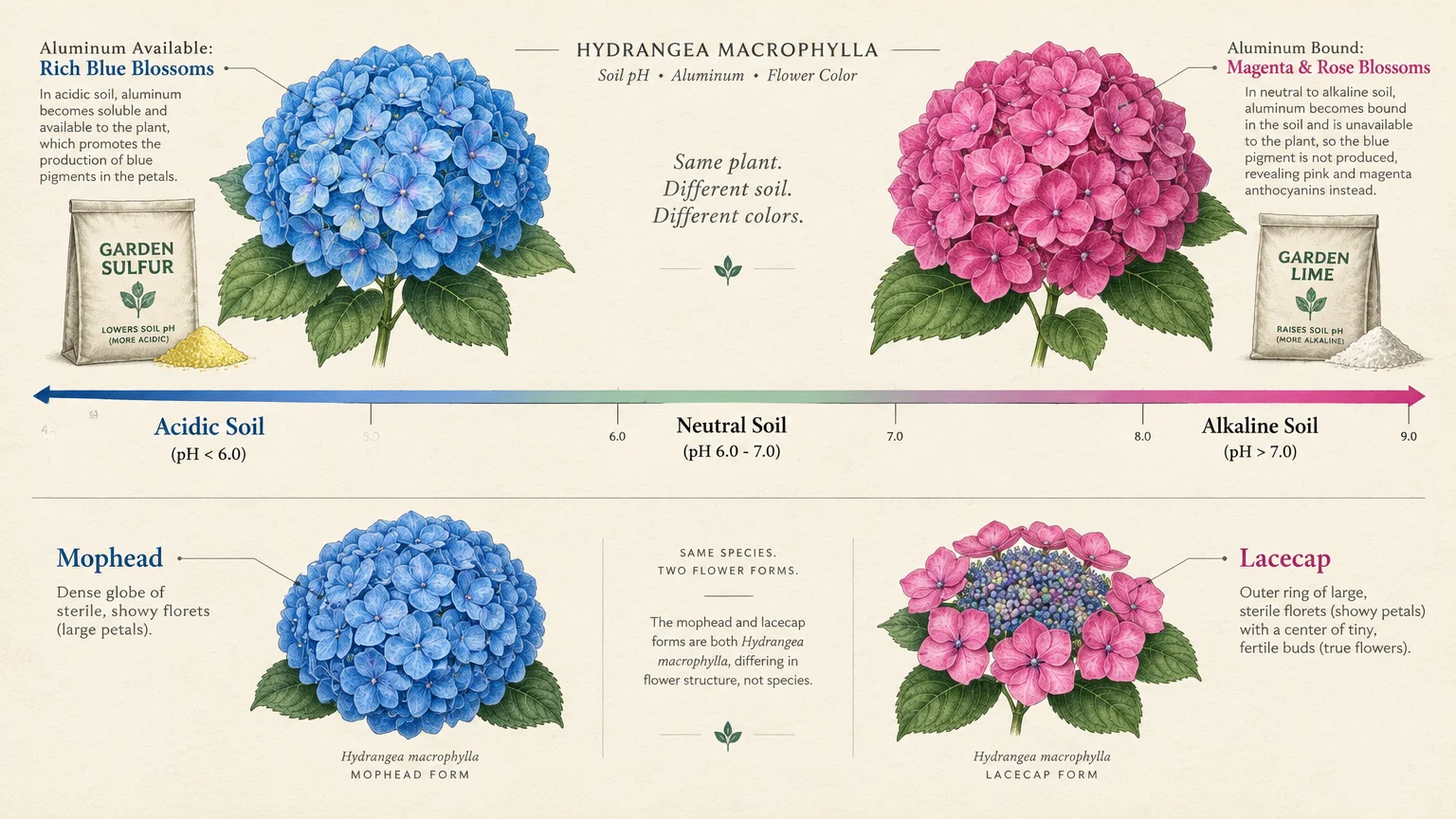
Cultivars fall into two distinct flower forms: mopheads and lacecaps. Mopheads display dense globes of showy florets, while lacecaps feature delicate rings of larger blossoms framing quiet centers of fertile buds.
Soil acidity directly controls bloom color on many popular hydrangeas within this species. Acidic soils with a pH under 6.0 liberate aluminum to create rich blue flowers.
Alkaline soils with a pH above 7.0 produce striking magenta or rose-pink blossoms instead. You can steer flower color deliberately by incorporating sulfur or garden lime around your shrubs each spring.
Traditional bigleaf varieties set their flower buds during late summer on stems known as old wood. Avoid pruning these older stems in autumn or early spring to prevent removing upcoming summer blossoms.
Modern reblooming cultivars like Endless Summer provide welcome insurance against unpredictable winter cold. These remarkable plants produce blossoms on both surviving stems and brand-new spring growth.
Plant bigleaf varieties where they receive dappled afternoon shade and shelter from harsh, drying winds. Intense midday sunlight scorches broad leaves and collapses heavy blooms during the heat of midsummer.
Hydrangea care requires diligent watering habits because their broad leaves transpire water rapidly in warm weather. Water deeply at the root zone rather than overhead to prevent foliar fungal infections.
Spread a three-inch layer of organic bark mulch around the root zone to conserve critical moisture. Mulch keeps root temperatures moderate and suppresses competing weeds throughout the long growing season.
Feed established bigleaf shrubs in early spring with a slow-release granular fertilizer formulated for woody ornamentals. Avoid high-nitrogen blends, which generate abundant green foliage but drastically diminish flower bud development.
Tip #2: Panicle Hydrangeas (Hydrangea paniculata)
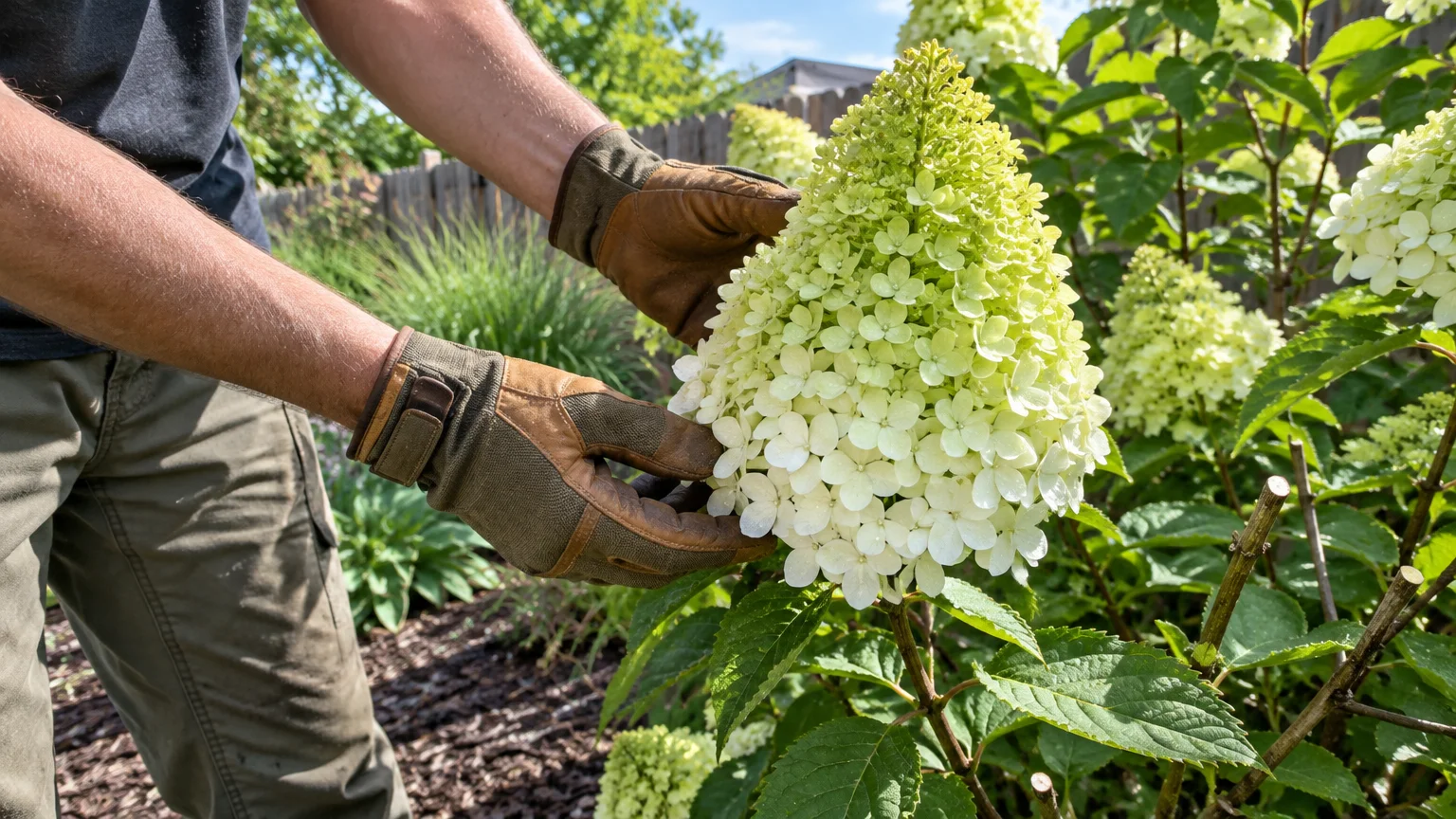
Panicle hydrangeas deliver unmatched durability, exceptional winter cold tolerance, and magnificent architectural form. Their dramatic, cone-shaped floral clusters emerge in midsummer and persist into crisp autumn weather.
These vigorous garden hydrangeas withstand full, direct sunlight far better than other popular species. They thrive across USDA Hardiness Zones 3 through 8 without wilting or burning under intense summer heat.
Standout varieties like Limelight and Bobo open with refreshing chartreuse-green and ivory florets. As autumn temperatures cool, the conical heads shift naturally into shades of dusty rose and antique burgundy.
Panicle selections produce flower buds exclusively on new growth formed during the current spring season. This distinct biological trait eliminates anxiety about cold winter temperatures damaging your prospective summer floral display.
Prune panicle hydrangeas back by one-third each year in late winter or early spring before fresh shoots break. This annual heading cut encourages stout branch development capable of supporting massive blossoms without drooping.
You can train large panicle varieties into elegant single-stem trees to serve as focal points in mixed borders. These sculptural flowering standards add valuable vertical height to flat garden beds.
Provide well-draining garden soil enriched with finished compost to give young shrubs the strongest possible start. While panicle types tolerate occasional drought once established, regular deep watering ensures maximum flower head size.
Dry the mature flower heads in early autumn by cutting stems just as the florets turn papery. Display them indoors in dry vases for enduring, maintenance-free decorative winter arrangements.
Select dwarf varieties like Little Lime or Fire Light Tidbit for compact spaces or patio containers. These space-saving cultivars deliver full-sized conical blooms on tidy, manageable branch structures.
Apply a single spring application of balanced, slow-release fertilizer to sustain vigorous new stem growth. Healthy, active branch development translates directly into expansive floral cones later in the summer season.
Tip #3: Smooth Hydrangeas (Hydrangea arborescens)
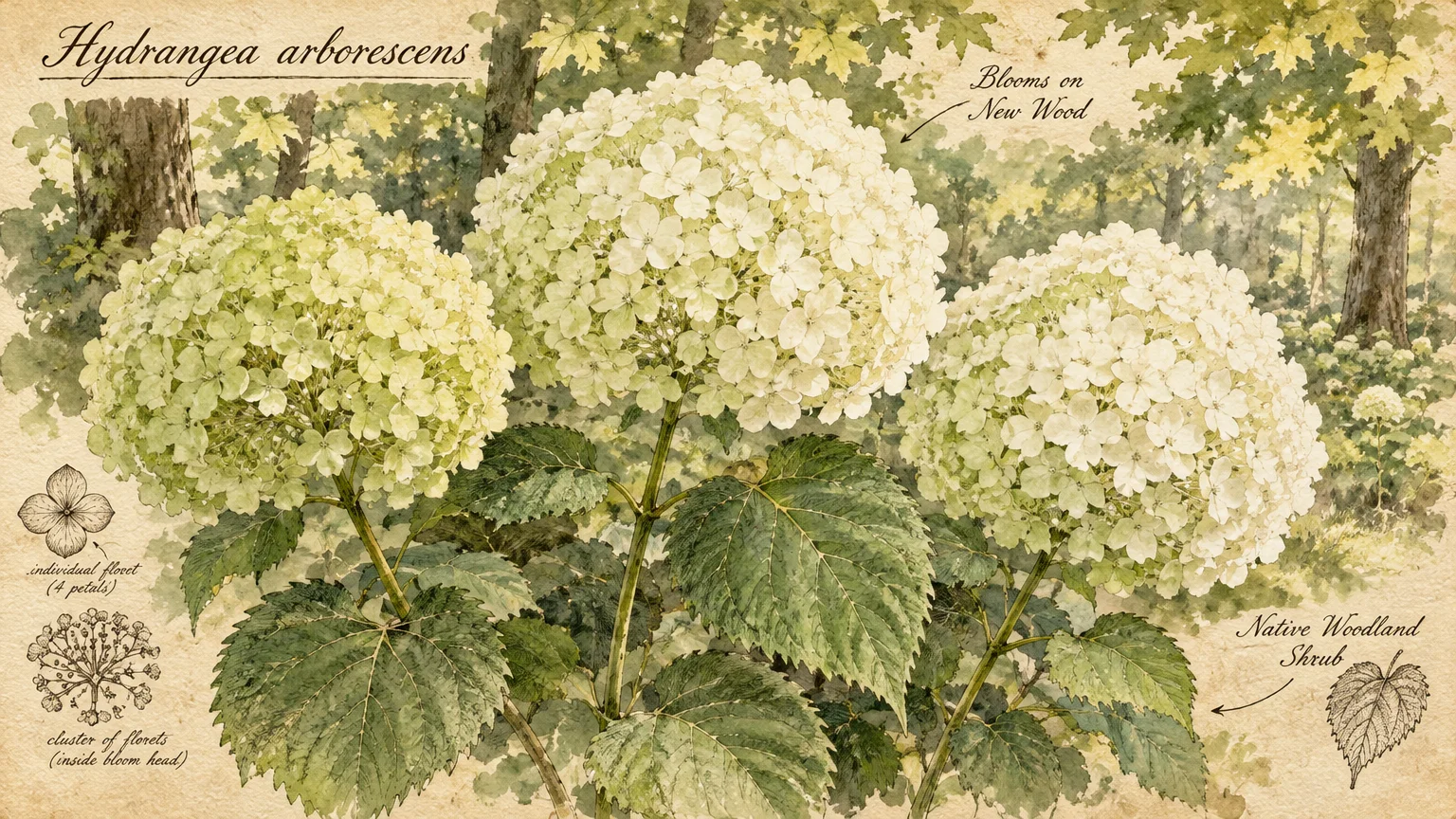
Native to eastern North American woodlands, smooth hydrangeas offer rugged resilience combined with breathtaking ornamental elegance. They thrive effortlessly through brutal subzero winters, surviving down to USDA Zone 3.
The beloved cultivar Annabelle features massive spherical flower heads that often measure up to twelve inches across. These show-stopping blooms emerge in delicate pale green before shifting into dazzling snowy white globes.
Modern breeding has yielded incredible varieties like Incrediball, which feature thickened, sturdy stems. These reinforced branches easily support the immense weight of rain-soaked blossoms without flopping into garden pathways.
Smooth hydrangeas bloom exclusively on new spring stems, making seasonal maintenance exceptionally straightforward for busy gardeners. You can cut the entire plant back each winter without sacrificing a single summer blossom.
Prune the stems back to twelve to eighteen inches above the ground in late winter. Staggering your cuts creates a dense framework of varying branch heights that naturally supports emerging blossoms.
These adaptable shrubs perform best in rich, organic soil that holds steady moisture without remaining waterlogged. In warmer southern climates, provide sheltered positions with morning sun and dappled afternoon shade.
Northern gardeners can plant smooth hydrangeas in full sun, provided the soil remains consistently moist throughout summer. Generous applications of wood chip mulch help preserve vital moisture around thirsty root systems.
Leave the papery dried flower heads standing in place throughout winter to catch falling snow. These pale, structural globes add serene architectural charm and winter texture to sleeping garden beds.
Compact cultivars such as Invincibelle Wee White bring enormous charm to small border plantings and decorative containers. They produce repeated flushes of delicate ivory blooms throughout the summer on miniature frameworks.
Inspect new spring foliage periodically for common pests like aphids or spider mites. A sharp blast of water from your garden hose dislodges nuisance pests quickly without damaging beneficial garden insects.
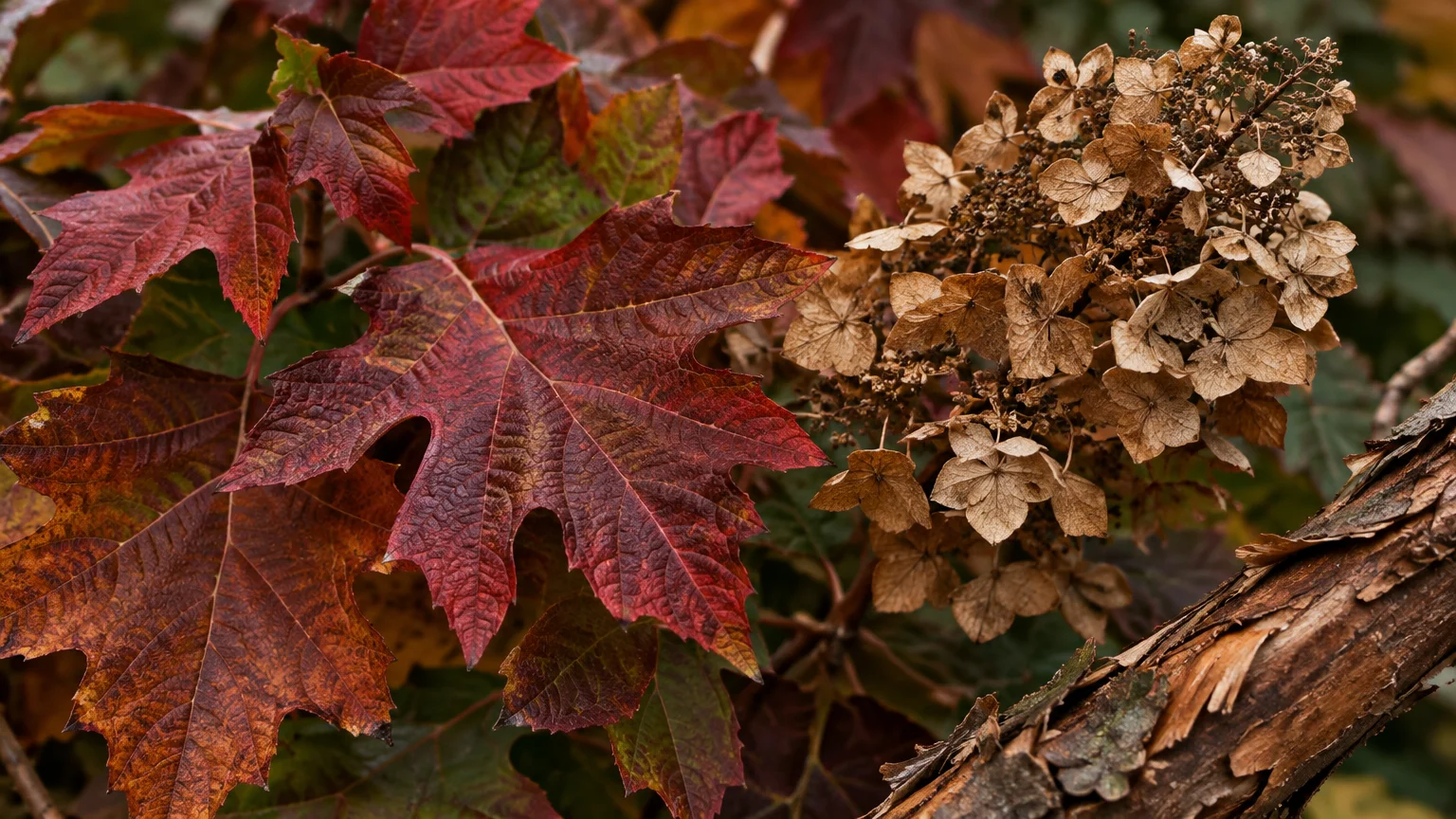
Tip #4: Oakleaf Hydrangeas (Hydrangea quercifolia)
Oakleaf hydrangeas are exceptional North American native shrubs renowned for four-season architectural presence in the landscape. Their deeply lobed, leathery green leaves closely resemble the majestic foliage of red oak trees.
In early summer, they produce majestic, cone-shaped panicles of creamy white blossoms that age to dusty pink. As autumn arrives, the foliage transforms into a dramatic tapestry of deep crimson, bronze, and purple.
Even in winter, oakleaf hydrangeas captivate the eye with rich, cinnamon-colored bark that exfoliates in thin layers. This peeling texture provides valuable winter interest when other garden shrubs stand completely bare.
Oakleaf hydrangeas set flower buds on old wood during the final weeks of summer. To protect next year’s blooms, prune lightly only immediately after the summer flowering period concludes.
This species exhibits superior drought tolerance compared to other types of hydrangeas once roots establish fully. Their deep, fibrous root systems scavenge soil moisture efficiently, weathering dry summer spells without faltering.
Excellent soil drainage is essential for oakleaf hydrangeas, as heavy clay or waterlogged soils invite root rot. Amend dense native soil with coarse organic compost or plant them on raised berms.
Cultivars like Ruby Slippers and Pee Wee offer compact growth forms suitable for smaller suburban yards. Larger selections like Alice mature into sweeping, dramatic specimens reaching eight to ten feet in height.
Position oakleaf hydrangeas in partial shade or areas receiving gentle morning sunlight and filtered afternoon light. Moderate sun exposure brings out the most brilliant red and burgundy tones during autumn leaf changes.
Incorporate shredded leaf mulch around the base of the shrub to replicate their native forest floor habitat. This organic layer nourishes beneficial soil microbes and preserves soil moisture through hot seasonal dry spells.
Pair oakleaf hydrangeas with woodland companions like ferns, hostas, and native columbine for a harmonious woodland border. Their bold, textured foliage creates magnificent textural contrast against fine-leaved woodland perennials.
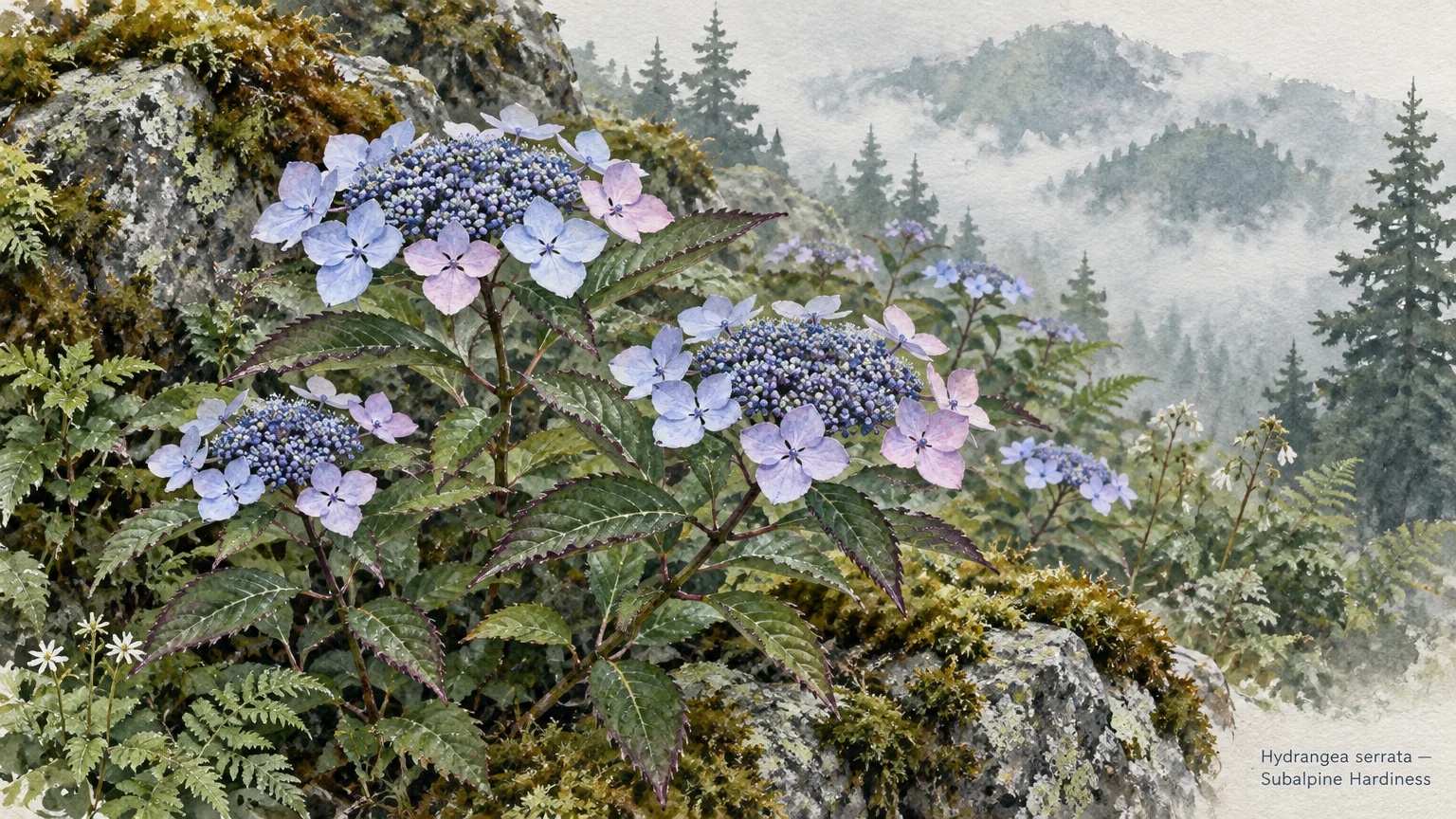
Tip #5: Mountain Hydrangeas (Hydrangea serrata)
Mountain hydrangeas originate from cool, high-elevation mountain slopes across Japan and Korea. They share the delicate beauty of bigleaf cultivars while offering significantly superior flower bud cold hardiness.
These compact shrubs produce exquisite lacecap blossoms featuring delicate rings of showy florets surrounding fertile floral discs. Their refined, understated appearance brings quiet elegance to shaded garden corners and serene meditation spaces.
Cultivars such as Tuff Stuff offer reblooming capabilities, producing flowers on both old wood and new shoots. This valuable survival adaptation guarantees colorful summer flowers even after severe late-spring freezes kill early growth.
Like bigleaf species, mountain hydrangea varieties respond to soil pH by shifting their blossom colors. Acidic soils produce ethereal violet and sapphire tones, whereas alkaline soils yield rich rose and berry shades.
Mountain hydrangeas maintain naturally tidy, compact growth habits, rarely exceeding three to four feet in height. This petite stature makes them perfect choices for low foundation plantings, rockeries, and small container displays.
Prune these tidy shrubs with a light hand in early spring, removing only damaged or dead stems. Their disciplined growth habit requires virtually no structural thinning or corrective shaping over the years.
Mountain hydrangeas prefer consistently moist, humus-rich soil that stays pleasantly cool throughout the warm summer months. Amend your planting bed generously with rich leaf compost to replicate their native subalpine environment.
Provide dappled shade or gentle morning light to shield delicate petals from harsh midday heat. Too much direct afternoon sun bleaches blossom pigments and dehydrates the fine foliage.
Apply an organic mulch layer each spring to protect delicate root systems from temperature spikes. Shredded bark or pine needles conserve soil moisture and break down slowly to enrich root zones.
Feed lightly in early spring with a balanced organic plant fertilizer to encourage sustained, balanced growth. Excessive fertilization produces weak, floppy growth and reduces the density of your lacecap blooms.
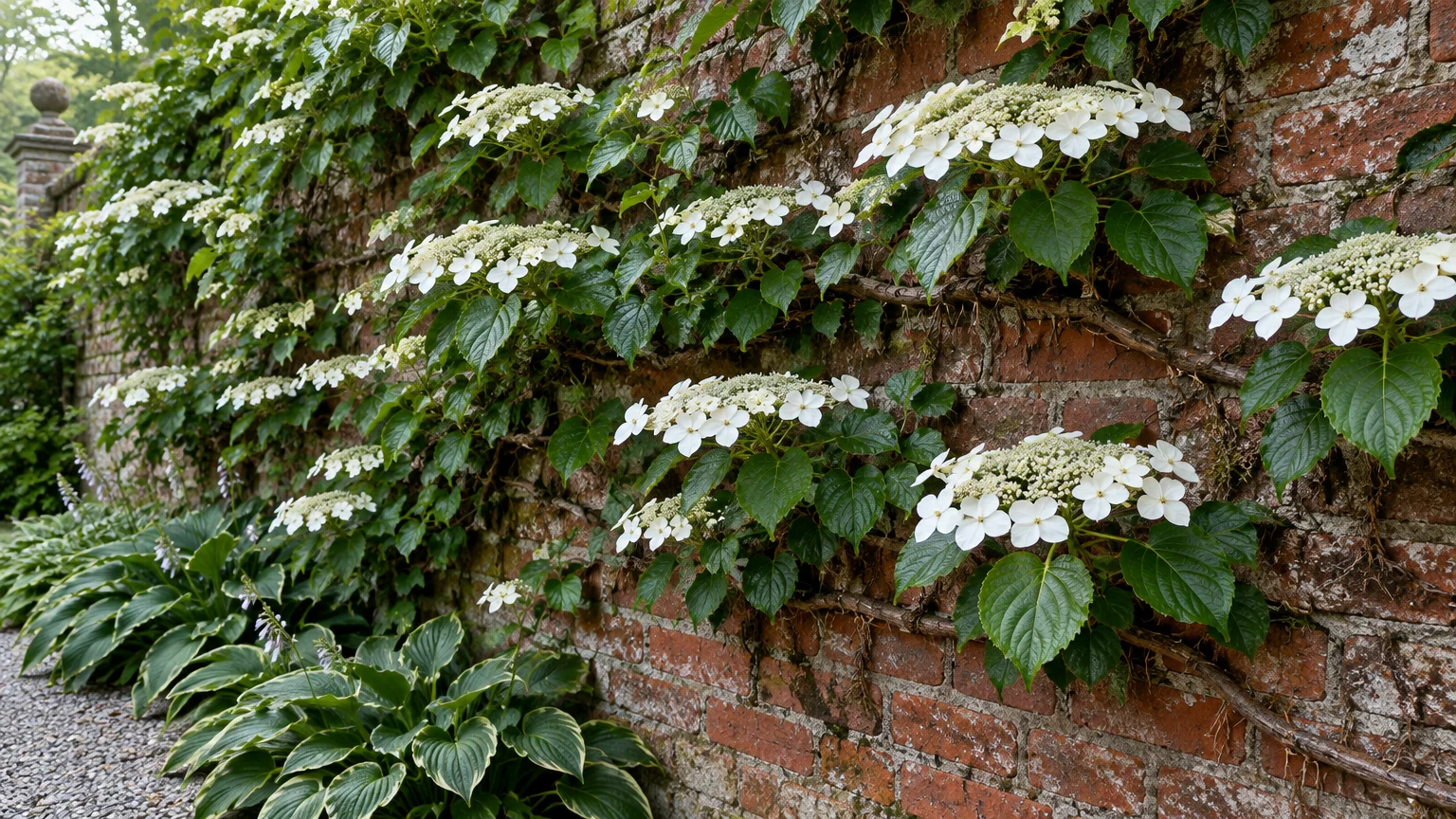
Tip #6: Climbing Hydrangeas (Hydrangea anomala subsp. petiolaris)
Climbing hydrangeas transform bare brick walls, sturdy wooden fences, and tall tree trunks into breathtaking vertical tapestries. They climb using small, aerial rootlets that anchor securely to rough surfaces without penetrating masonry.
In late spring and early summer, large, fragrant lacecap blossoms cover the lush green foliage. These creamy white flower clusters measure up to ten inches across and release a gentle, sweet perfume.
The heart-shaped, deep green foliage remains pristine throughout summer before turning rich golden-yellow in late autumn. In winter, exfoliating reddish-brown bark and peeling branches provide striking rustic texture against snowy walls.
Climbing hydrangeas require several seasons to establish strong root systems before initiating rapid upward vine growth. Exercise patience during this early developmental phase, as mature plants reward you with magnificent vigor.
Provide stout, heavy-duty support structures that can bear the considerable weight of a mature, woody vine. Avoid flimsy garden trellises or light wire fencing that will buckle under the heavy adult canopy.
Unlike most flowering vines, climbing hydrangeas bloom profusely in partial shade and full north-facing shade exposures. This exceptional shade tolerance makes them invaluable for brightening dark, difficult exterior garden walls.
Prune the vine immediately after summer flowering ends to control overall size and guide lateral growth. Shorten wayward horizontal shoots to maintain clean lines and promote dense, flower-bearing spur branches.
Plant climbing hydrangeas in rich, fertile, well-draining soil with plenty of organic matter mixed in. Water deeply during dry summer periods to keep root systems hydrated while the vine establishes itself.
You can also allow climbing hydrangeas to scramble freely across rocky slopes as an expansive groundcover. In this role, the sprawling stems suppress weed growth and stabilize eroding slopes with dense foliage.
Mulch the root zone annually with rich compost to feed the soil and preserve moisture. Healthy roots produce thick, vigorous shoots that climb steadily toward the sunlight each season.
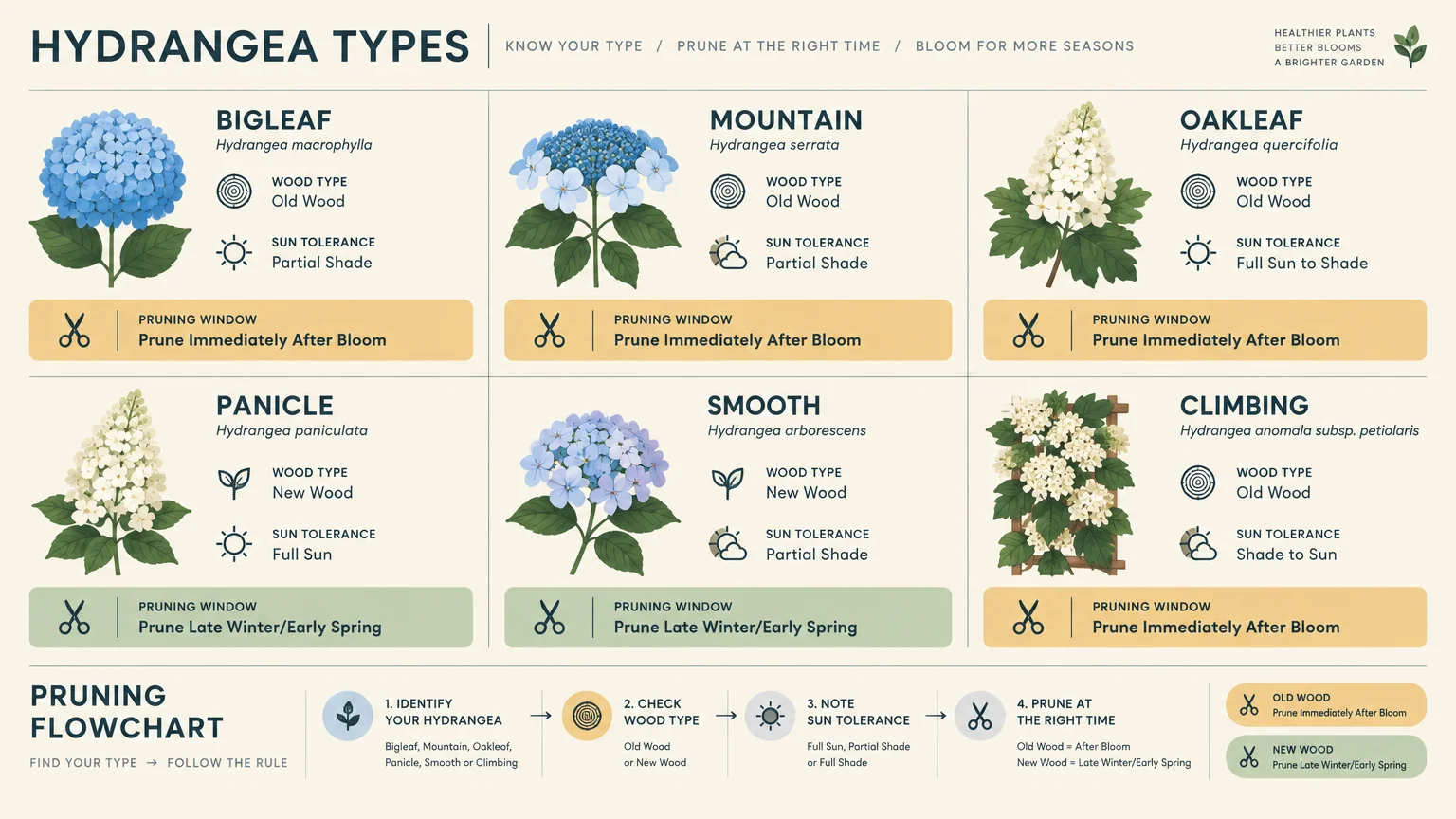
Putting It All Together: Enjoy Your Beautiful Garden
Incorporating different types of hydrangeas into your landscape ensures a continuous procession of stunning floral color and texture. Match each cultivar carefully to your property’s specific soil, moisture, and sunlight patterns.
Remembering whether your shrubs bloom on old or new wood removes the guesswork from seasonal pruning. Tailoring your pruning schedule to each variety protects emerging flower buds and guarantees vibrant summer blossoms.
Combine early-blooming climbing and mountain varieties with late-blooming panicles and fall-colored oakleaf selections. This strategic layering creates a dynamic landscape that captivates the senses across all four seasons.
Consistent watering, organic mulching, and thoughtful placement empower you to enjoy garden hydrangeas with total confidence. Step outside, choose your favorite varieties, and begin crafting your dream garden today.
For region-specific advice, consult your local University Extension program (find yours via the USDA directory). For plant databases and inspiration, visit the Missouri Botanical Garden or the Royal Horticultural Society.
Disclaimer: This article provides general gardening advice. Always consider your specific climate, soil conditions, and local pests. Follow safety guidelines when using gardening tools and products.
Frequently Asked Questions
Why did my hydrangeas fail to bloom this summer?
Harsh winter freezes or late-spring frosts frequently kill overwintering flower buds on old-wood bloomers. Pruning shrubs at the wrong time of year also removes developing buds before they have the chance to open.
Excessive applications of high-nitrogen lawn fertilizer also inhibit bloom formation by encouraging leafy vegetative growth instead. Switch to a balanced, slow-release organic formula to stimulate bud production.
Can I turn my white hydrangeas pink or blue?
Only bigleaf (Hydrangea macrophylla) and mountain (Hydrangea serrata) hydrangeas possess the genetics necessary to alter petal coloration. White cultivars, panicle hydrangeas, and smooth varieties maintain their natural shades regardless of soil pH adjustments.
To change colors on receptive species, lower soil pH below 6.0 for blue or raise it above 7.0 for pink. Apply soil sulfur or garden lime gradually in spring to achieve your desired shade.
How much direct sunlight do hydrangeas require each day?
Sunlight requirements vary significantly depending on the specific types of hydrangeas you cultivate. Panicle varieties flourish in full sun, while bigleaf, mountain, and climbing types prefer gentle morning sun with afternoon shade.
Observe your landscape beds throughout the day before planting to identify sunny and shaded microclimates. Positioning shrubs according to their light preferences prevents scorched leaves and supports abundant flowering.
When should I prune my garden hydrangeas?
Prune varieties that bloom on new wood, like panicle and smooth hydrangeas, in late winter or early spring. This timing stimulates vigorous new growth that carries abundant summer blossoms.
Prune old-wood varieties, including bigleaf and oakleaf hydrangeas, immediately after their flowers fade in midsummer. Pruning later in the year removes the embryonic buds necessary for next season’s floral display.