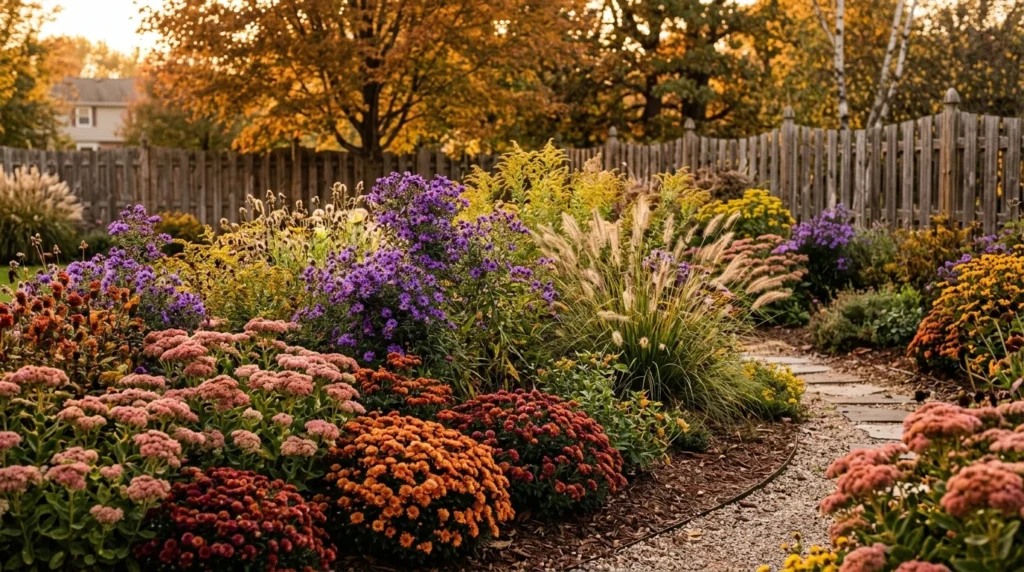
You can protect your lush lawn and prize-winning flower beds by identifying subterranean pests before they destroy delicate root systems. Learning how to distinguish between tunnel-making moles and plant-chewing voles saves your landscape and restores order to your yard.
Both pests create distinct visual clues across your turf, flower beds, and vegetable patches. Early detection allows you to intervene quickly with humane, effective techniques.
Watch for telltale soil mounds, chewed bark, and spongy turf across your property. Recognizing these subterranean disruptions gives you the exact blueprint to reclaim your thriving outdoor sanctuary.
Tip #1: Spotting Volcano-Shaped Soil Mounds
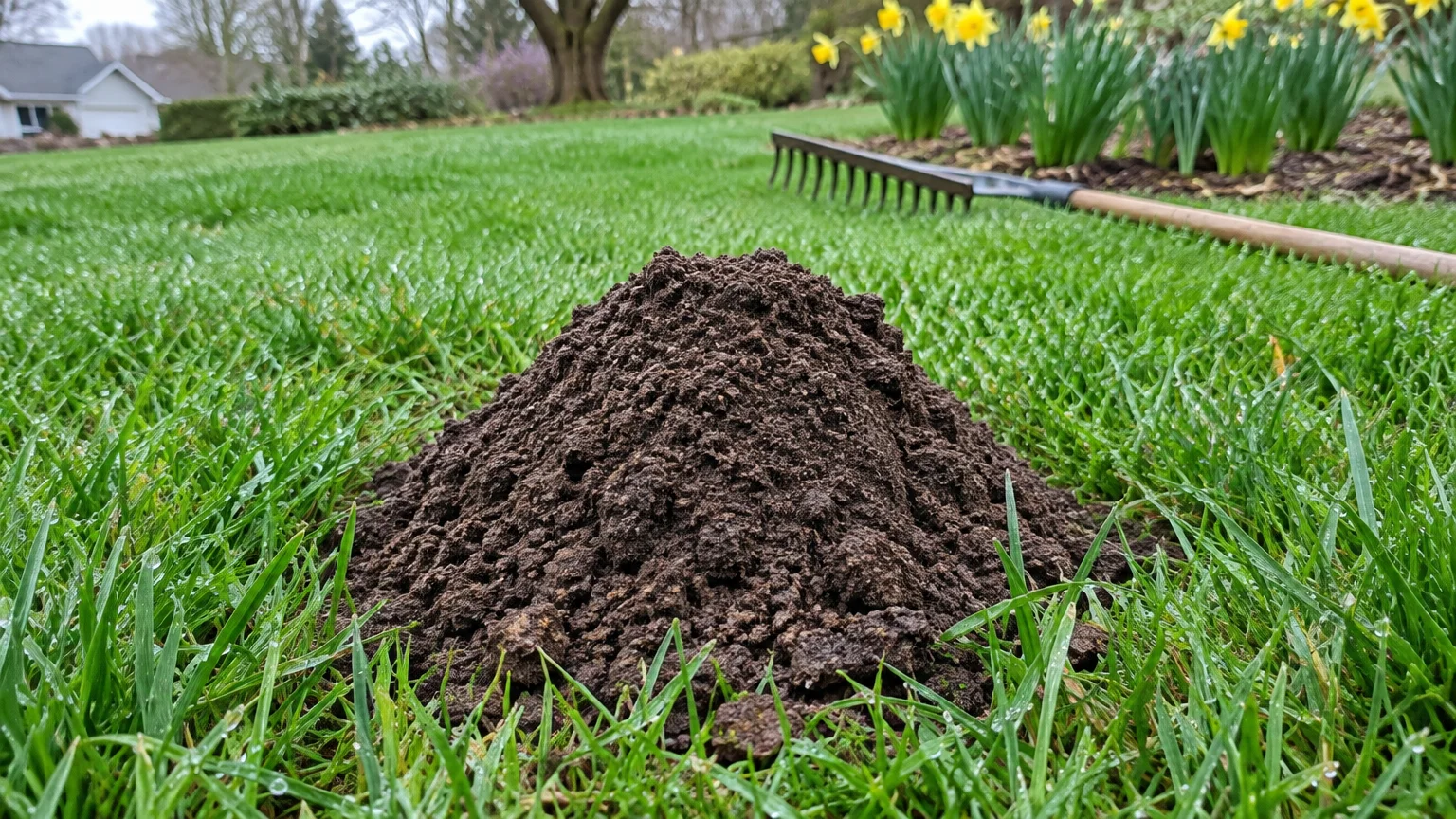
Moles create conical dirt mounds across manicured lawns and garden beds. These soil heaps look like miniature volcanoes with a closed center.
Moles push excess subsoil upward as they excavate deep traveling tunnels. These insectivores search constantly for protein-rich earthworms, grubs, and underground larvae.
You can easily distinguish molehills from flat, loose soil patches. A true molehill forms a neat, symmetrical cone measuring between six and twenty-four inches wide.
Inspect the mound closely to confirm there is no visible entrance hole. Moles always plug their surface openings with loose dirt to protect themselves from daylight and predators.
Level the mound with a flat rake and monitor the area for twenty-four hours. Freshly mounded soil in the exact same location confirms active subterranean mole tunneling.
Keep an eye on shady, moist turf areas where earthworms congregate naturally. Moles return to these productive feeding grounds repeatedly throughout the spring and autumn months.
Tip #2: Detecting Surface Runways and Grassy Ridges
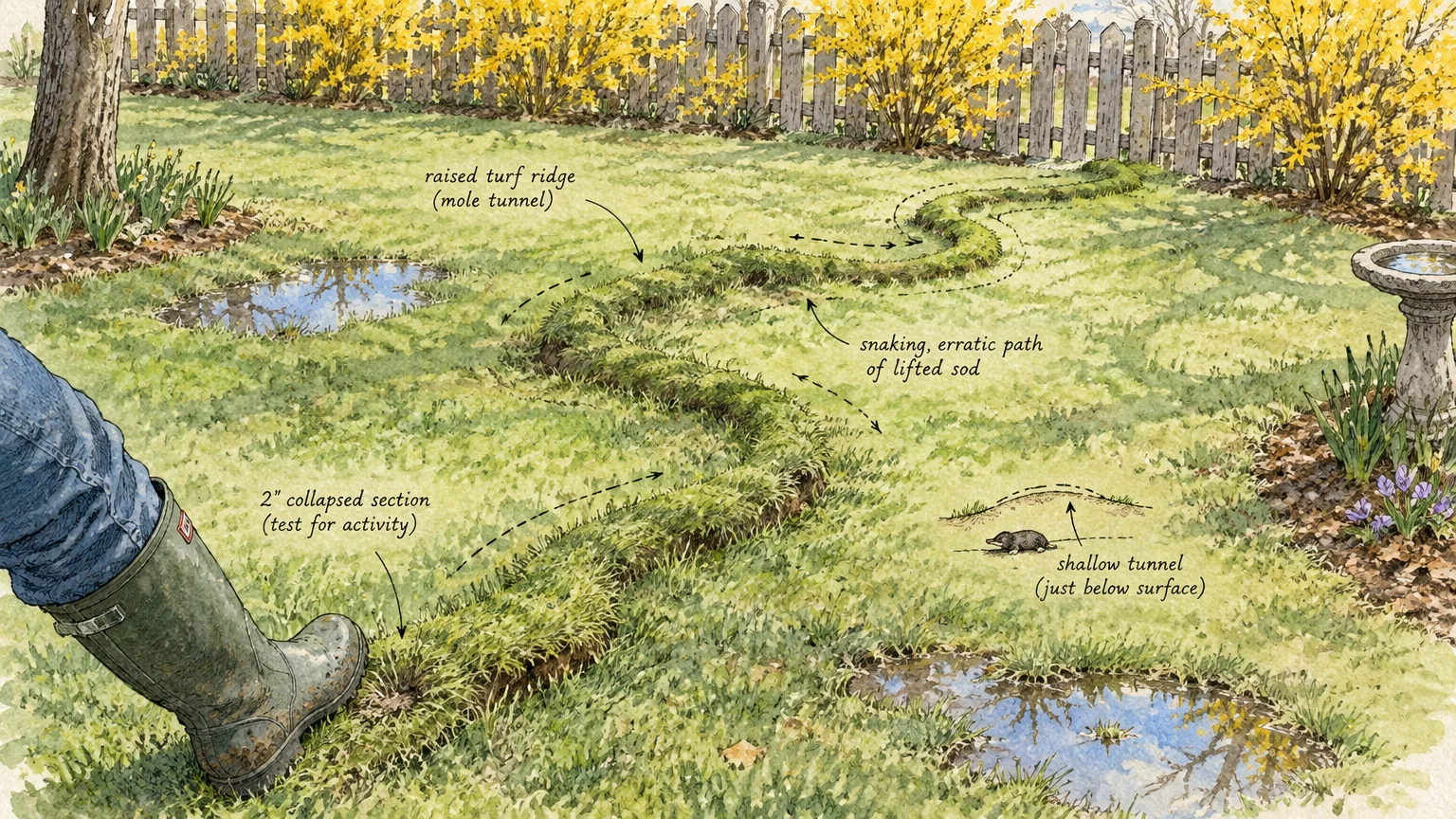
Moles often produce raised, winding ridges that crisscross green turf in unpredictable paths. These surface runways feel squishy and elevate the turf noticeably above the surrounding lawn.
These shallow tunnels develop when moles hunt just beneath the sod layer during damp weather. Earthworms migrate toward surface moisture, pulling hungry moles directly behind them.
You will notice these ridges most frequently in early spring and late autumn. Damp soil allows moles to push upward with their paddle-shaped front claws without digging deep tunnels.
Test ridge activity by pressing a small two-inch section down firmly with your heel. If the mole reopens and raises that collapsed section within a day, you have an active runway.
Rolling your lawn with a water-filled roller compresses these raised ridges back into place. Packing the tunnels flat prevents grass roots from drying out and dying along the runway path.
Mapping active surface ridges gives you an ideal placement guide for humane traps or ultrasonic deterrents. Focusing on main pathways guarantees much faster control over underground pest traffic.
Tip #3: Identifying Open Surface Trenches in Turf
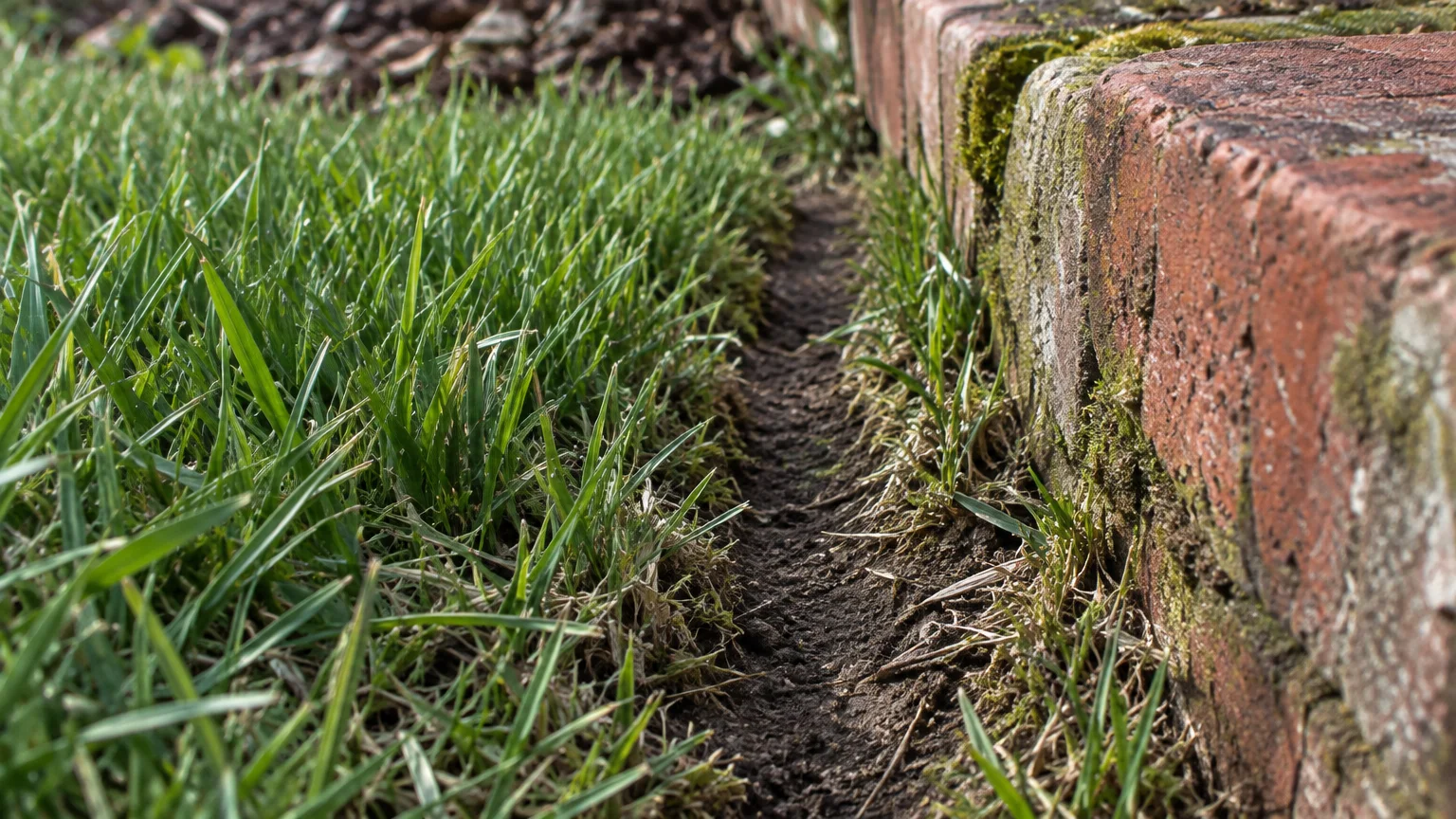
Unlike moles, voles construct open, unroofed runways directly on top of the soil surface. These pathways weave through dense grass and groundcovers like miniature highway systems.
Voles clip turfgrass blades down to the crown along these paths for both food and safe travel. They maintain these clean runways to sprint between burrow openings and feeding sites.
You can spot these pathways easily by parting thick grass near your garden borders. These trenches measure one to two inches wide and show bare, packed soil beneath the lawn canopy.
Detecting these visible tracks represents one of the clearest signs of voles in garden beds and lawns. They become especially obvious as melting winter snow reveals flattened grass networks.
Look closely along borders where lawn grass meets wooden garden edging or brick borders. Voles love traveling along these solid structures because they provide immediate shelter from predatory birds.
Mow your lawn regularly and trim overgrown edges to destroy their protective canopy. Exposing these runways to open skies invites natural avian predators like hawks and owls to hunt.
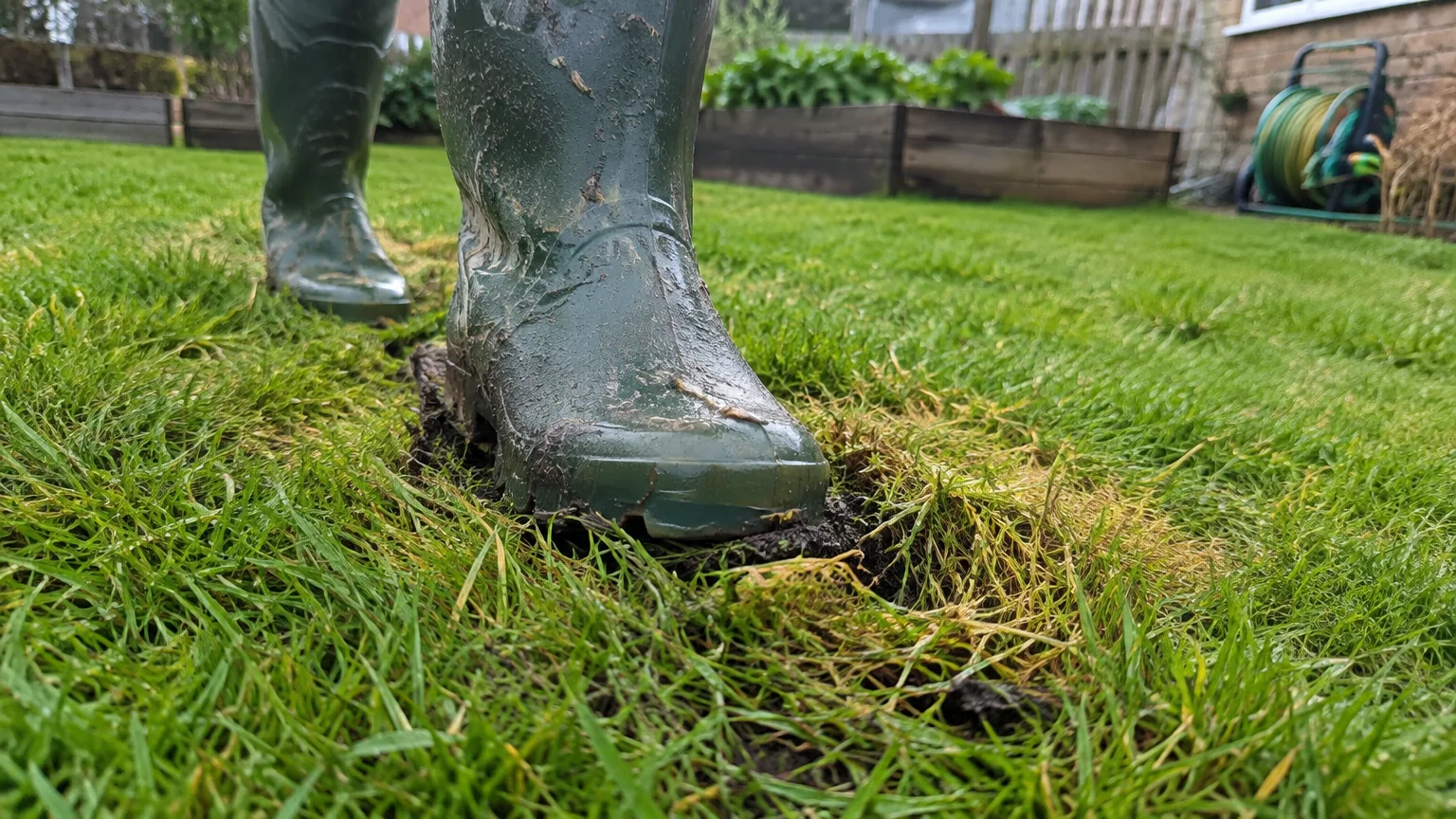
Tip #4: Feeling Spongy or Sunken Lawn Soil
Walking across an infested lawn often feels like stepping onto a soft, yielding mattress. The ground sinks slightly underfoot because subterranean pest activity creates hollow voids underneath the turf.
Both pests contribute to this spongy feeling through different subterranean behaviors. Moles hollow out the earth by excavating tunnels, while voles utilize existing channels to reach tender roots.
Water also pools rapidly in these sunken areas, drowning grass roots and producing yellowing patches. Left unmanaged, severe garden mole and vole problems destabilize your topsoil layer completely.
Walk your yard methodically in straight lines to locate hidden soft spots before operating heavy mowing equipment. Finding these weak zones prevents equipment wheels from becoming trapped in collapsed tunnels.
Mark these hollow spots with garden stakes so you can track whether the tunneling expands. Tracking movement allows you to position soil treatments right where pest traffic concentrates.
Tamp down hollow sections and aerate your lawn to restore balanced soil compaction. Applying organic compost over compacted depressions helps your grass re-establish strong, healthy roots.
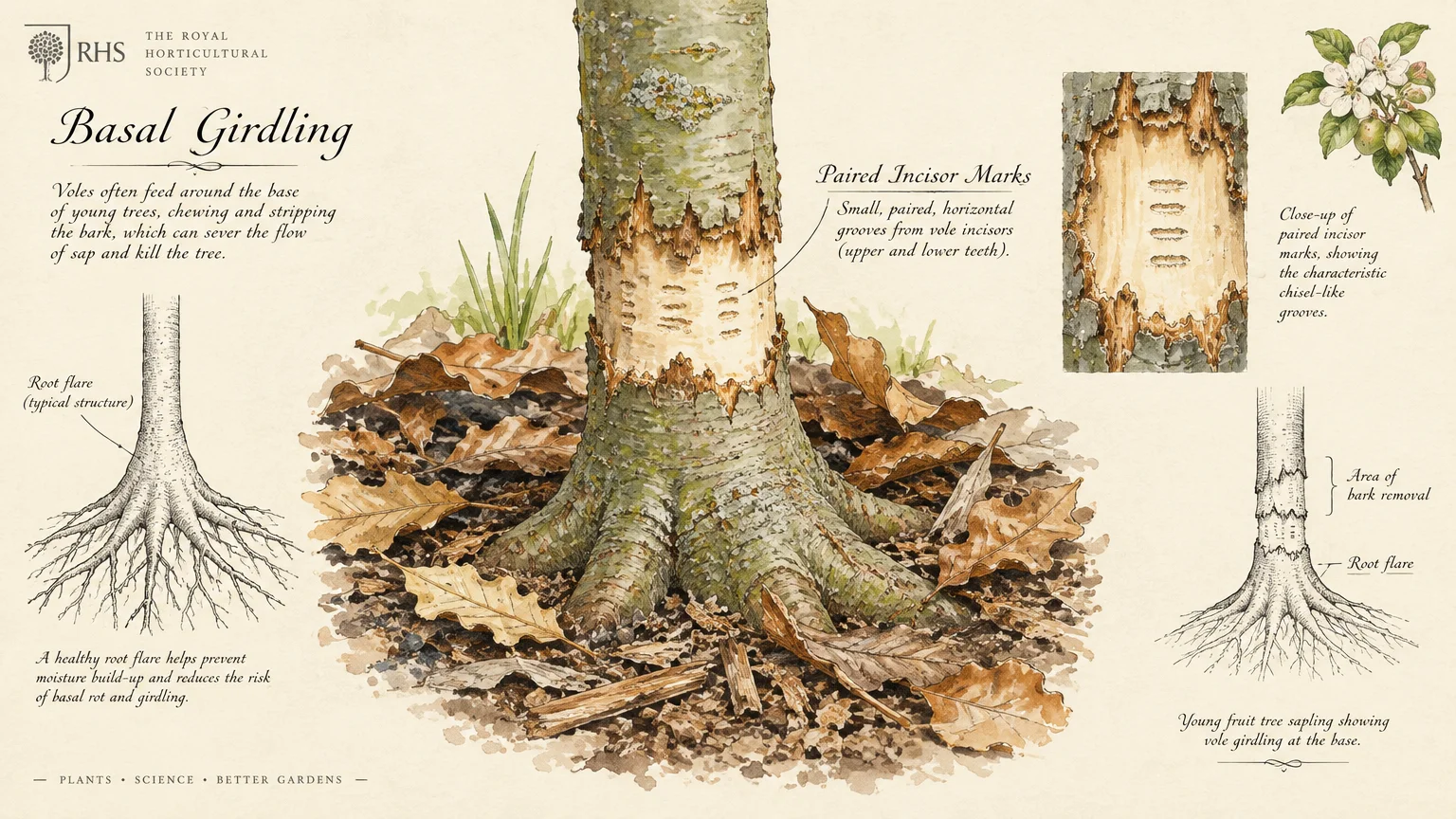
Tip #5: Examining Gnawed Bark and Girdled Stems
Inspect the lower trunks of fruit trees and ornamental woody shrubs for gnawing damage. Voles leave rough, irregular feeding marks that completely strip the protective outer bark.
Voles feed voraciously on cambium tissue, especially during cold winter months when green vegetation grows scarce. Their sharp chisel-like incisors cut tiny grooves into hardwood stems at ground level.
Moles never cause this type of damage because they consume earthworms and soil insects exclusively. Identifying gnawed bark offers definitive proof of vole activity rather than mole presence.
Look for patches of missing bark circling the entire circumference of the trunk. Girdling interrupts the tree’s vital vascular flow, which causes upper branches to die back quickly in spring.
Apply tree wrap around the lower trunk during late autumn before heavy snow blankets your yard. Snow cover provides insulated camouflage that encourages voles to strip bark without detection.
Install protective hardware cloth cylinders around vulnerable young tree trunks to prevent rodent access. Bury the wire mesh three inches deep to block subterranean chewing attempts.
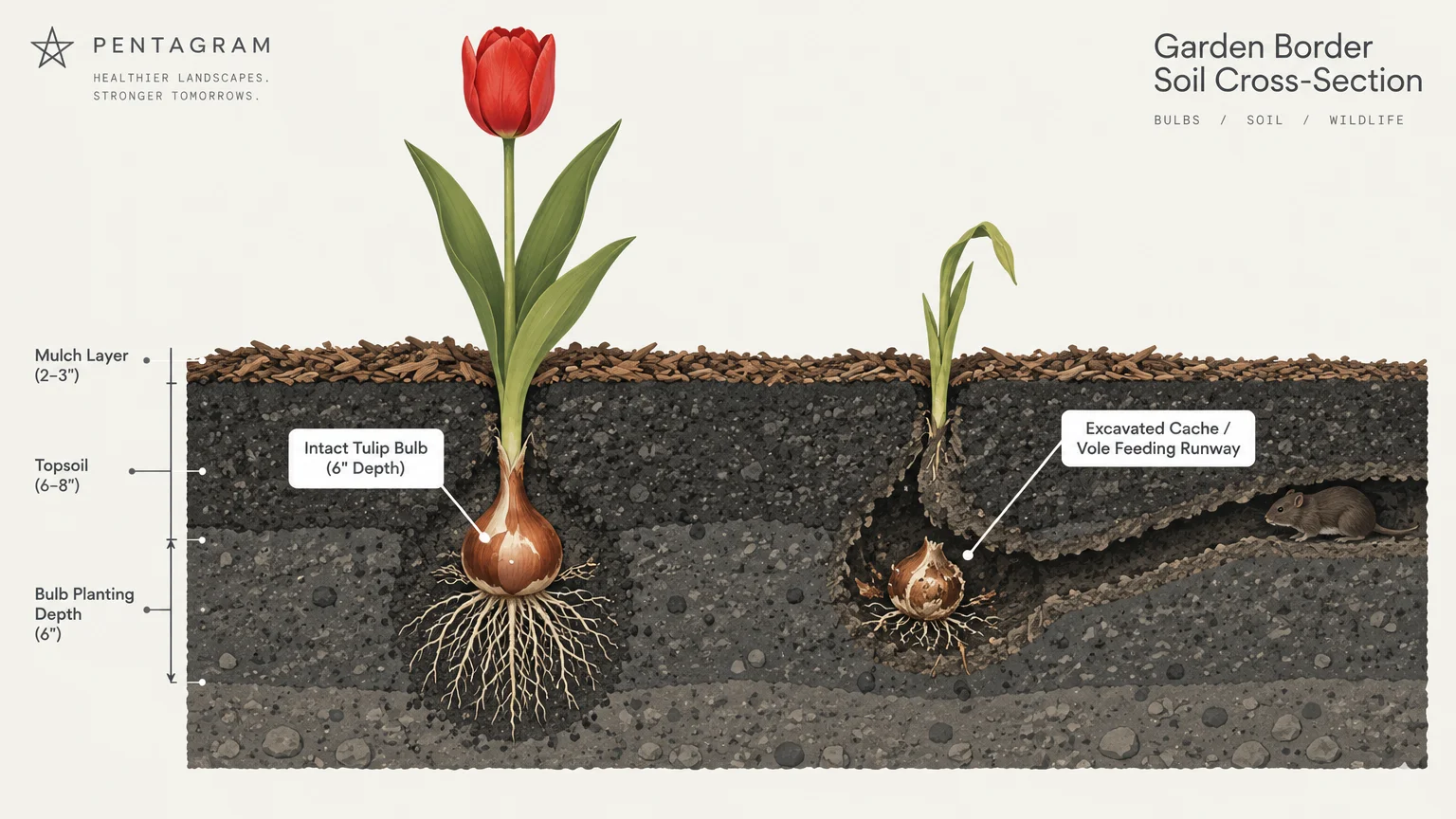
Tip #6: Noticing Missing Flower Bulbs in Spring
You might anticipate vibrant springtime displays of tulips and crocuses, only to discover empty soil patches. Vanished bulbs indicate active rodent foraging beneath your floral borders.
Voles adore nutrient-dense flower bulbs and harvest them underground during late fall and winter. They often exploit old mole tunnels to navigate directly into deeply planted bulb beds.
Evaluating mole vs vole damage becomes straightforward when analyzing these subterranean food losses. Moles dig the transit tunnels, but vegetarian voles commit the culinary theft.
Dig gently into the vacant planting hole with a hand trowel to investigate the soil. Chewed papery bulb tunics or small half-eaten pieces confirm hungry voles raided your garden display.
Soak vulnerable bulbs in a liquid castor oil repellent before placing them into planting holes. The bitter taste discourages hungry voles from tasting your autumn bulb installations.
Plant rodent-resistant bulbs like daffodils, alliums, and fritillaries, which contain unpalatable natural alkaloids. You can also encase delicate tulip bulbs inside protective wire mesh planting baskets.
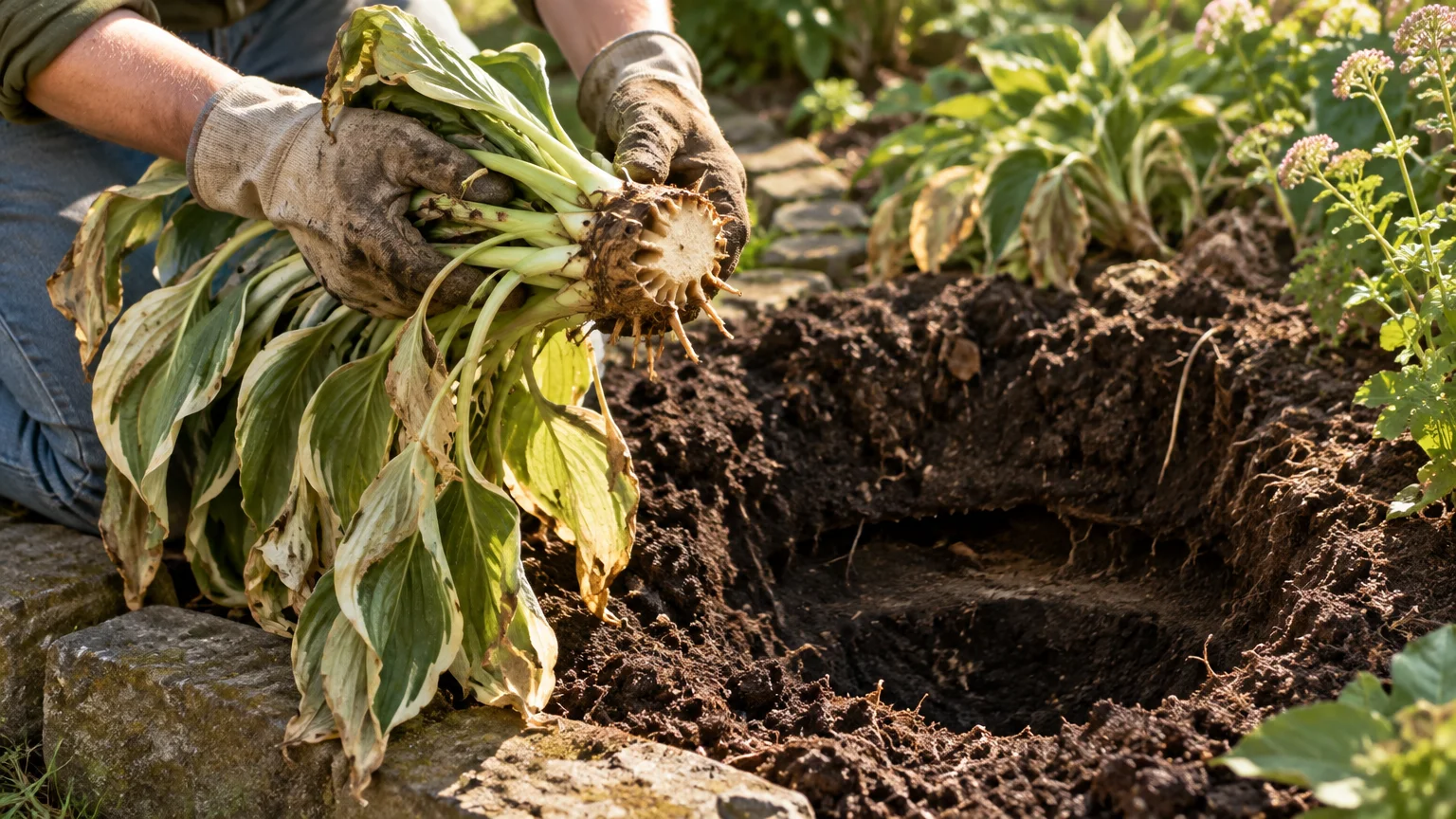
Tip #7: Inspecting Suddenly Wilting Plants Without Roots
Perennials that looked lush yesterday may suddenly collapse and wilt despite moist, fertile soil. This sudden distress occurs when subterranean pests sever the plant’s root support system.
Voles chew voraciously on fleshy roots, fibrous crowns, and subterranean tubers. They strip the root system bare, preventing the upper foliage from absorbing essential water and nutrients.
Grasp the base of the wilting perennial and lift it gently upward. If the plant pulls free without any resistance like an unanchored cork, voles devoured the roots.
Moles can also cause indirect wilting by tunneling directly beneath root systems and leaving air pockets. Those exposed roots dry out quickly even though the mole never ate the plant tissue.
Check your hostas, daylilies, and young rose bushes frequently during periods of rapid summer growth. These moisture-rich ornamentals represent premium food targets for expanding vole colonies.
Trim away damaged foliage and replant salvaged root crowns in containers filled with fresh potting soil. Keep them hydrated in partial shade until vigorous new roots develop.
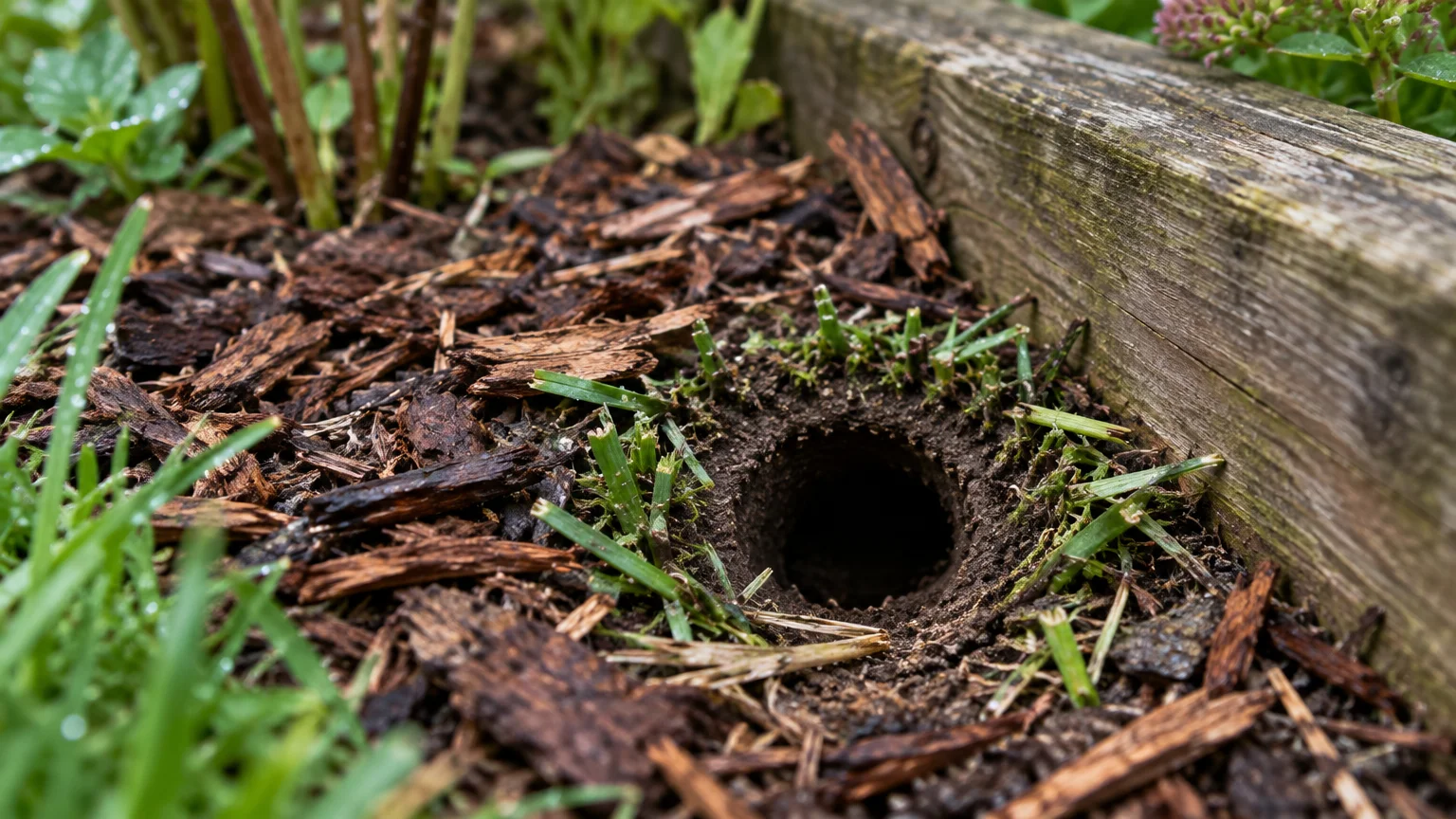
Tip #8: Locating Clean Burrow Holes Without Mounds
Look closely around flowerbeds, mulch rings, and rockeries for small, neat entry holes. These openings measure about one to two inches wide and feature smooth, trimmed edges.
Voles build these tidy burrow entrances to access their extensive underground colony nests. Unlike moles, voles do not push mounds of dirt to the surface around these holes.
You can learn how to identify garden pest burrows by examining the surrounding vegetation. Vole holes show clipped green stems right at the perimeter, keeping the entry clear for rapid escapes.
In contrast, chipmunks leave larger, two-inch burrows with scattered soil, while moles keep entrances sealed shut. Spotting multiple clean, golf-ball-sized holes confirms a vole presence.
Clear tall weeds and dense brush along your garden perimeter to eliminate vole hiding places. Clean soil borders make voles feel vulnerable, forcing them away from your flower beds.
Keep mulch layers under two inches thick around foundation plantings to eliminate concealment near burrow openings. Voles avoid nesting in open, exposed dirt where raptors can spot them easily.
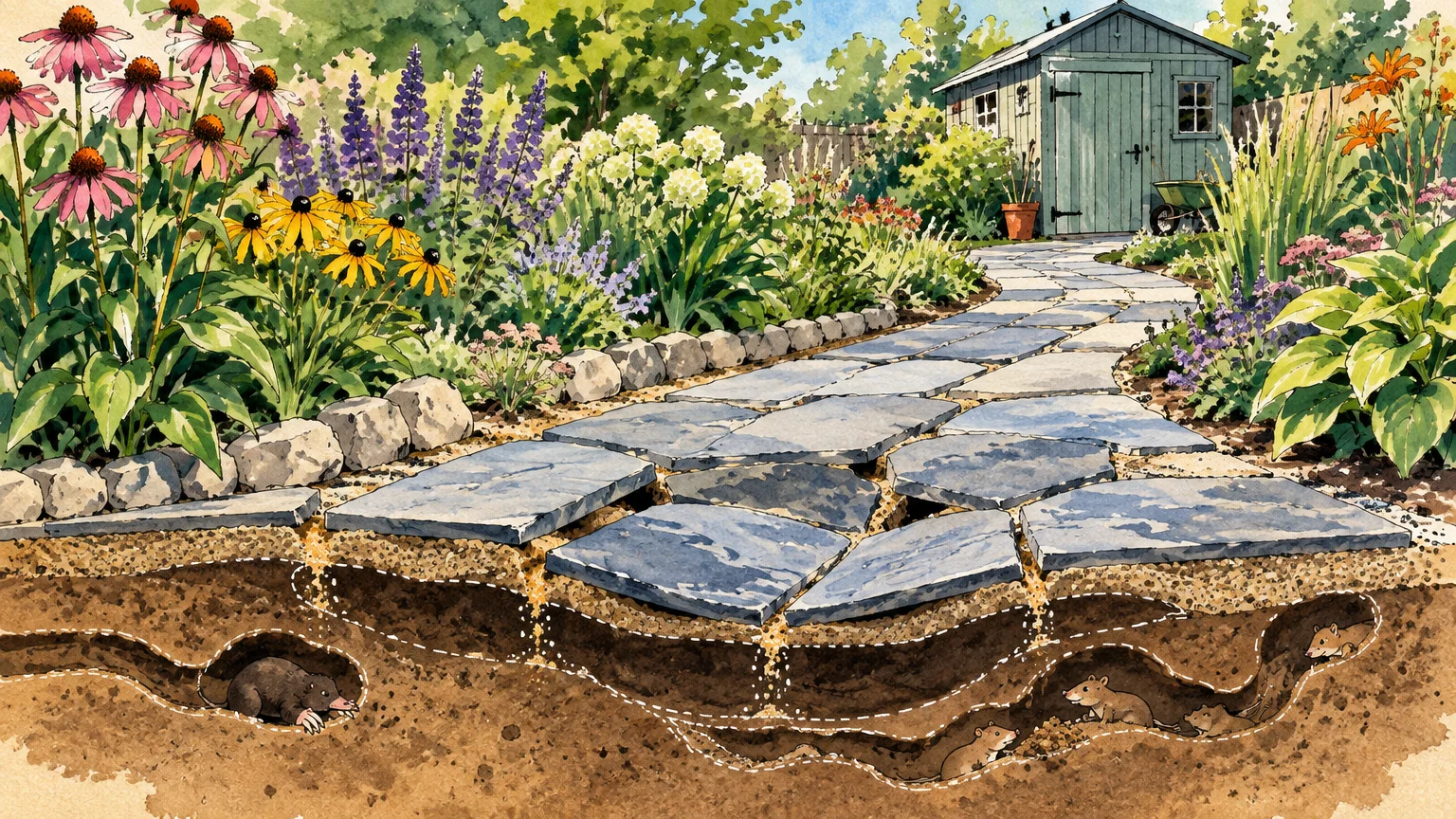
Tip #9: Observing Sagging Walkways and Shifting Pavers
Notice whether your stone garden paths, patio pavers, or landscape borders are suddenly sinking or tilting. Subterranean digging destabilizes the structural base beneath your hardscape features.
Moles often excavate primary transit tunnels along solid landscape boundaries like sidewalks and retaining walls. They prefer these linear obstacles because moist soil collects along hardscape edges.
Over time, rainwater filters into these sub-surface tunnels, washing away underlying sand and gravel. As the base material erodes into the voids, heavy pavers drop and shift unevenly.
Check along sunken edges with a long metal probe or wooden dowel to locate subterranean channels. Sinking effortlessly through the ground reveals hollow tunnels running parallel to your stone walkway.
Spread a layer of crushed granite or coarse gravel beneath your sand base when laying new walkways. Burrowing pests cannot dig through angular crushed stone, keeping your paved paths secure.
Lift the affected paving stones and backfill the collapsed tunnels with coarse crushed gravel. Tamping the gravel firmly prevents future tunneling and establishes a solid foundation for your path.
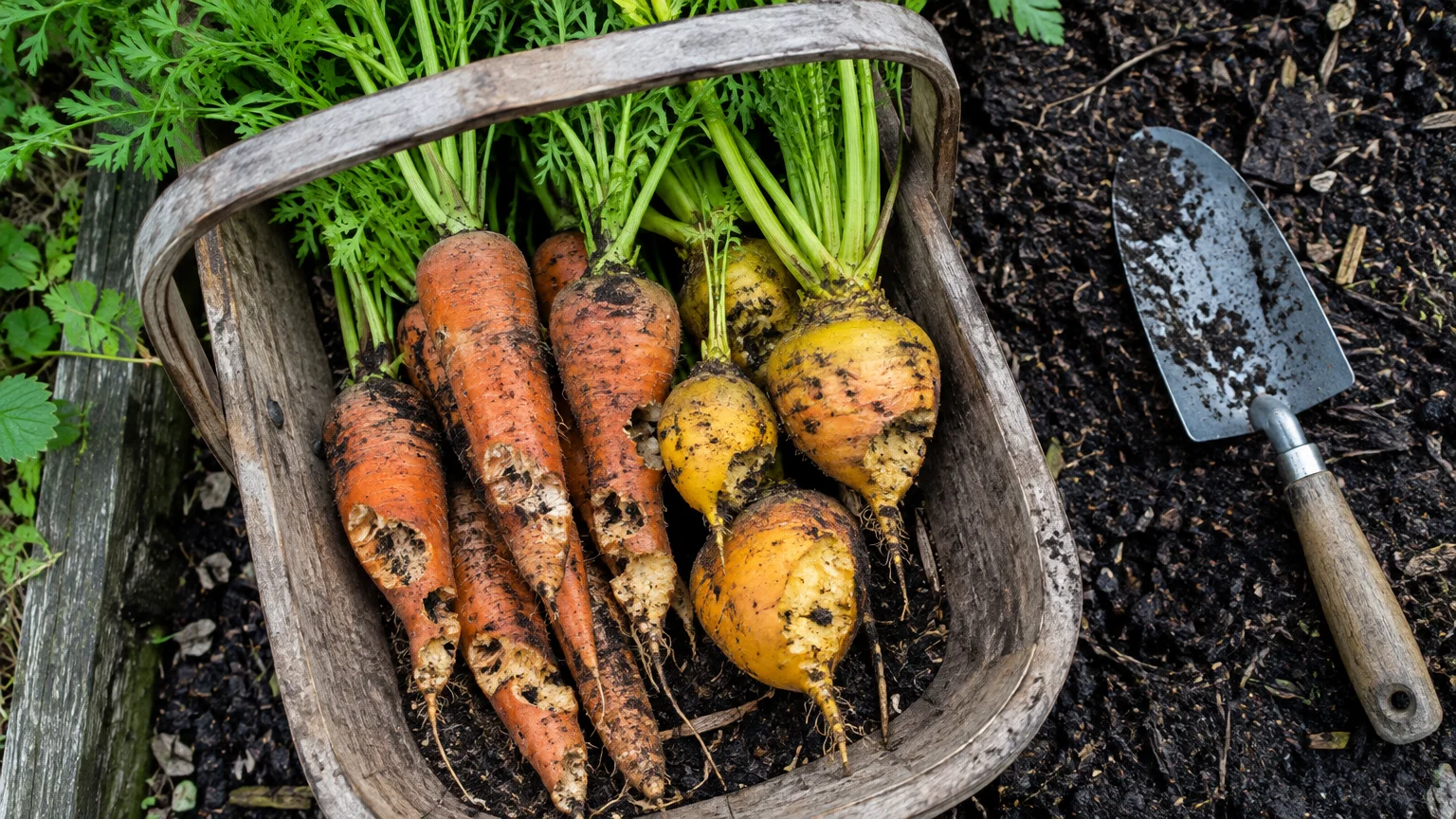
Tip #10: Checking Nibbled Root Vegetables and Tubers
Discovering half-eaten carrots, beets, and potatoes in your vegetable garden points directly to rodent damage. Underground crops provide an irresistible buffet for active vole colonies throughout the growing season.
Voles tunnel into raised beds and vegetable trenches, nibbling sweet root flesh from below. They leave characteristic side-by-side groove marks created by their paired front teeth.
Moles never consume root crops because their digestive systems require animal proteins like grubs. Any chewed produce in your harvest reflects classic rodent feeding rather than mole damage.
Spraying natural mole vole deterrents around vegetable patch borders discourages destructive feeding runs. Castor oil sprays and granular aromatic barriers repel pests without tainting edible plants.
Rotate your root crops each season and harvest mature tubers promptly to reduce tempting food supplies. Leaving overripe parsnips or sweet potatoes in winter ground invites winter vole colonies.
Line the bottoms of your raised garden boxes with galvanized hardware cloth before adding soil. This physical wire mesh stops digging pests from ever reaching your root vegetables.
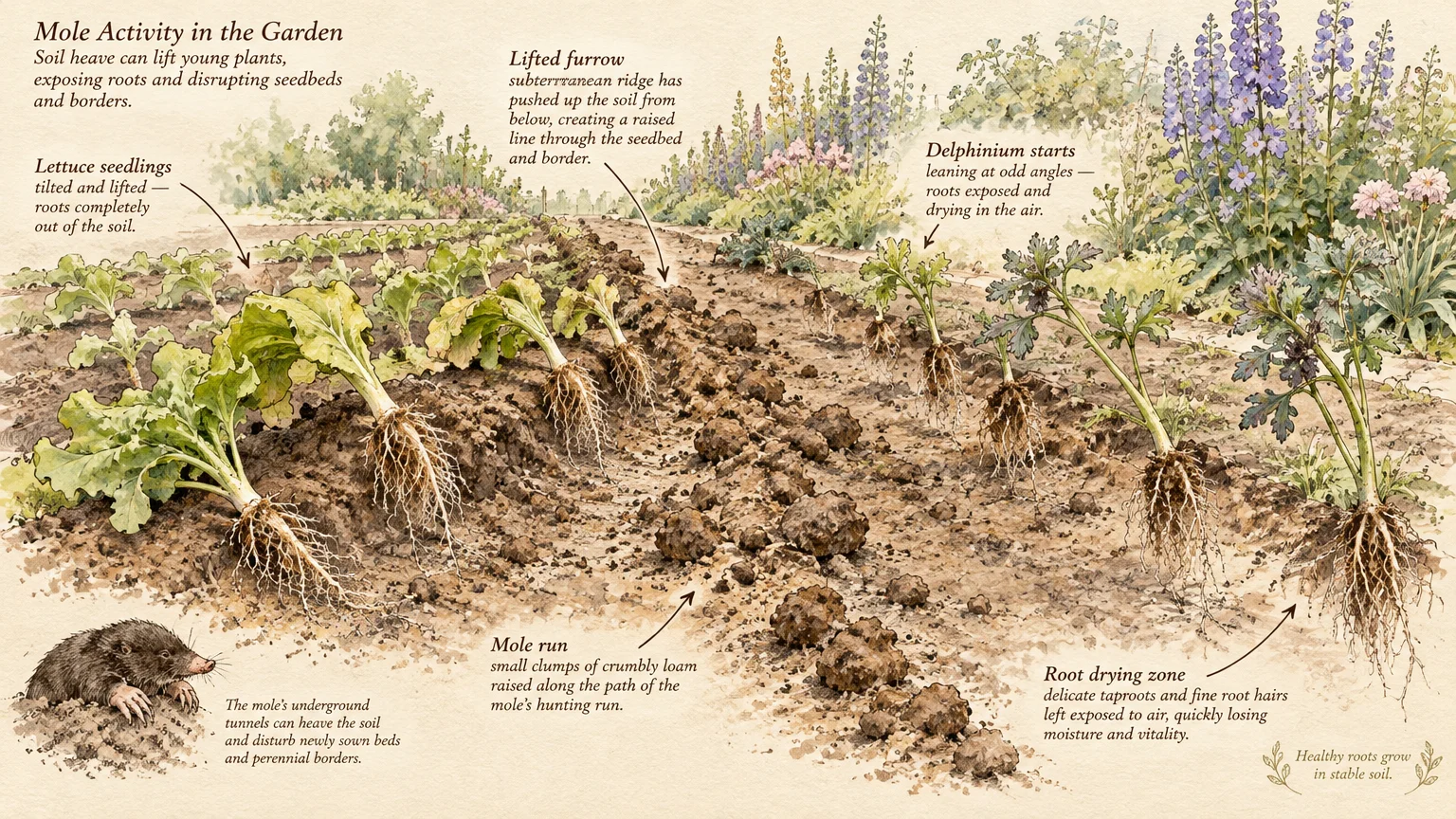
Tip #11: Finding Dislodged Perennials and Raised Seedbeds
You may find newly planted annuals, seedlings, or shallow-rooted groundcovers mysteriously lifted out of place. Soil heaving occurs frequently in freshly amended, loose garden loam.
Moles push vigorously through soft topsoil as they search for earthworms and tasty insect grubs. Their powerful paddling motions inadvertently heave delicate root balls straight out of the ground.
While the moles do not consume the seedlings, their displacement rapidly desiccates fragile roots. Air exposure kills delicate root hairs within hours during hot, sunny afternoons.
Inspect newly planted beds every morning to spot raised soil tracks and dislodged plants immediately. Press any dislodged plants back into firm soil and water them deeply to restore contact.
Install raised beds with solid wooden or metal sides to discourage moles from burrowing near root zones. Lifting your planting beds twelve inches off the ground simplifies underground pest management.
Laying temporary bird netting or wire mesh across fresh seedbeds deters burrowing near the surface. Once root systems anchor firmly, plants can withstand minor soil shifting beneath the surface.
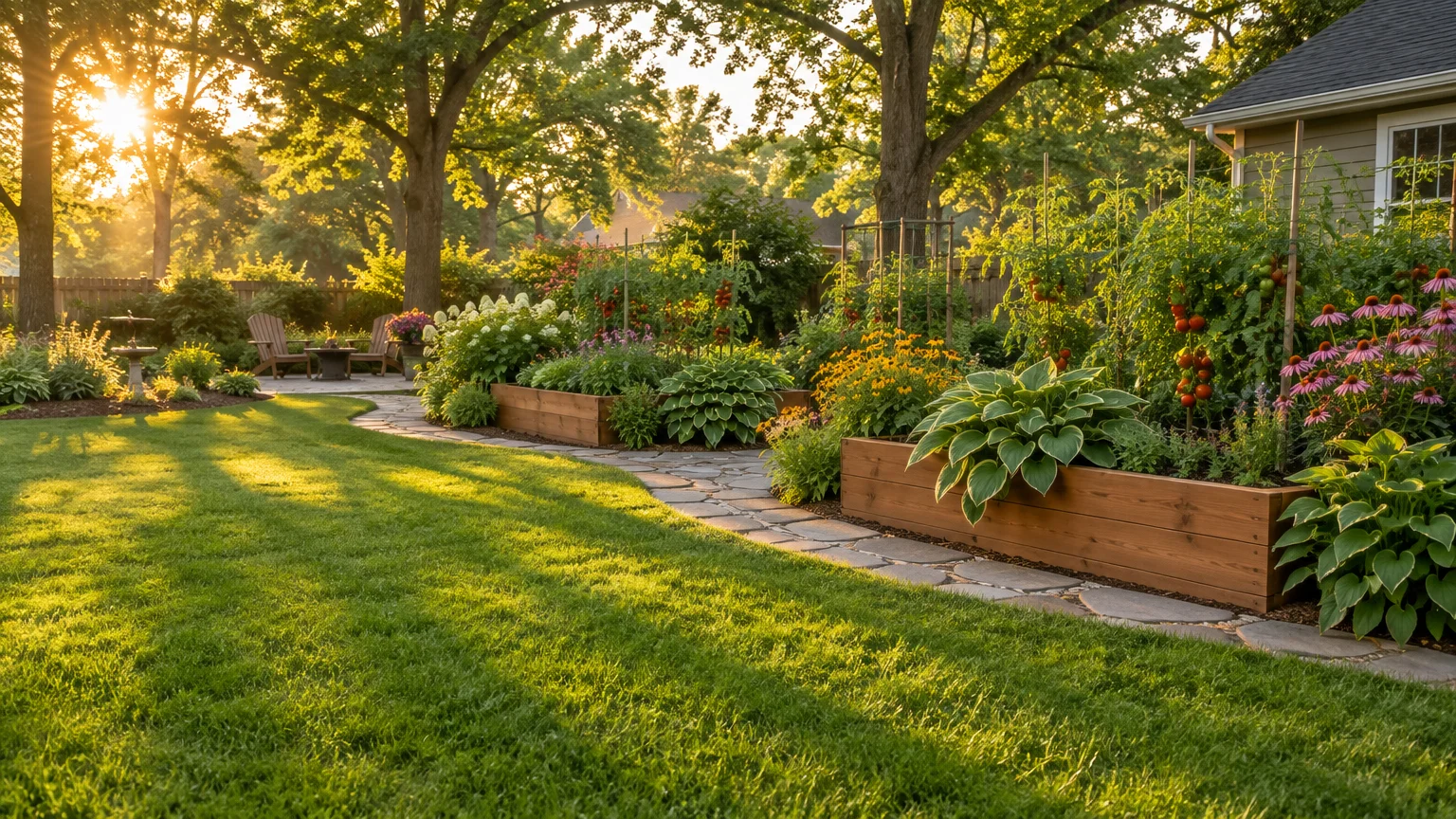
Putting It All Together: Enjoy Your Beautiful Garden
Understanding subterranean visitors requires recognizing their distinct dietary habits and tunneling styles. Identifying whether you have an insectivorous mole or an herbivorous vole dictates your control strategy.
You do not need to rely on harsh chemical poisons to protect your lush landscape. Applying natural repellents, installing physical wire barriers, and managing lawn grubs restore harmony naturally.
Regular garden maintenance also plays a massive role in deterring unwanted burrowing animals. Keep your turf trimmed, thin thick layers of mulch, and clear away dense brush piles.
Combining physical barriers with aromatic castor oil treatments creates an uninviting environment for underground pests. Your garden will quickly rebound with lush foliage, intact bulbs, and smooth green turf.
Take confidence in your ability to read the subtle visual cues beneath your plants. With proactive monitoring and prompt action, you can easily protect your cherished outdoor living space.
Healthy soil biology and careful plant protection allow your landscape to flourish through every season. Embrace these straightforward observation techniques to keep your yard beautiful and pest-free.
Frequently Asked Questions
Can moles and voles occupy the exact same tunnel system?
Yes, voles frequently invade tunnels originally excavated by moles. Moles create the deep structural highways, and voles use them to travel safely toward edible roots and bulbs.
This cooperative tunneling often confuses gardeners when diagnosing pest damage. The mole digs the tunnel, but the vole causes plant destruction along the route.
Do moles eat flower bulbs or vegetable roots?
Moles never consume vegetable crops, tree roots, or flowering bulbs. They are strictly insectivores that eat earthworms, beetles, grubs, and subterranean insect larvae.
If you discover half-eaten root vegetables or gnawed bulbs, herbivorous voles or field mice are the culprits. Moles merely cause collateral root disturbance while digging.
What are the most effective natural mole vole deterrents?
Castor oil emulsions serve as an exceptional, eco-friendly deterrent for both pest species. The oil upsets the digestive tracts of moles and makes soil worms unpalatable.
For voles, installing sharp pea gravel around bulbs and burying hardware cloth barriers provides long-lasting physical exclusion. Planting alliums and marigolds also naturally repels rodents.
How can I quickly distinguish mole vs vole damage?
Focus on whether the damage involves eaten plants or pushed-up soil mounds. Moles leave raised dirt volcanoes and ridges without chewing vegetation.
Voles leave open golf-ball-sized holes, surface runways through turf, and severely gnawed plant roots or bark. Observing these specific physical clues identifies the culprit immediately.
For region-specific advice, consult your local University Extension program (find yours via the USDA directory). For plant databases and inspiration, visit the Missouri Botanical Garden or the Royal Horticultural Society.
Disclaimer: This article provides general gardening advice. Always consider your specific climate, soil conditions, and local pests. Follow safety guidelines when using gardening tools and products.