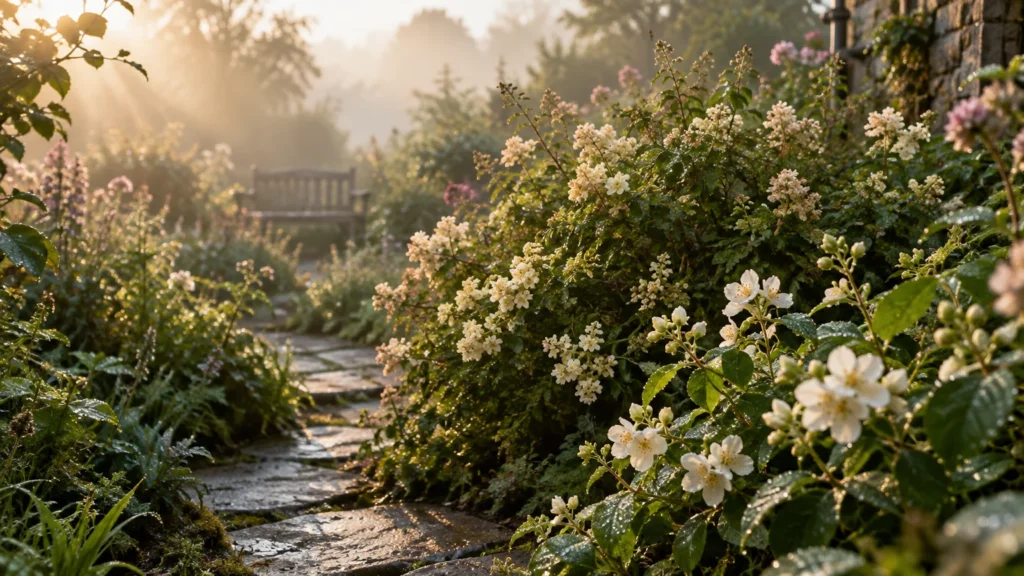
Spotting beautiful blooms in your yard feels rewarding until you realize those attractive flowers belong to highly invasive weeds determined to smother your cultivated plants. You need to identify and eliminate these deceptively pretty invaders before they spread seeds across your landscape and monopolize essential soil nutrients. Certain flowering weeds disguise themselves as wildflowers while quietly releasing allelopathic chemicals that stunt the growth of neighboring vegetation. Others develop deep taproots or extensive underground rhizomes that make them incredibly difficult to eradicate once established. By recognizing these intruders early, you protect your delicate perennials and maintain a thriving ecosystem. Grab your gardening gloves and a reliable trowel so you can reclaim your beds from these botanical impostors.
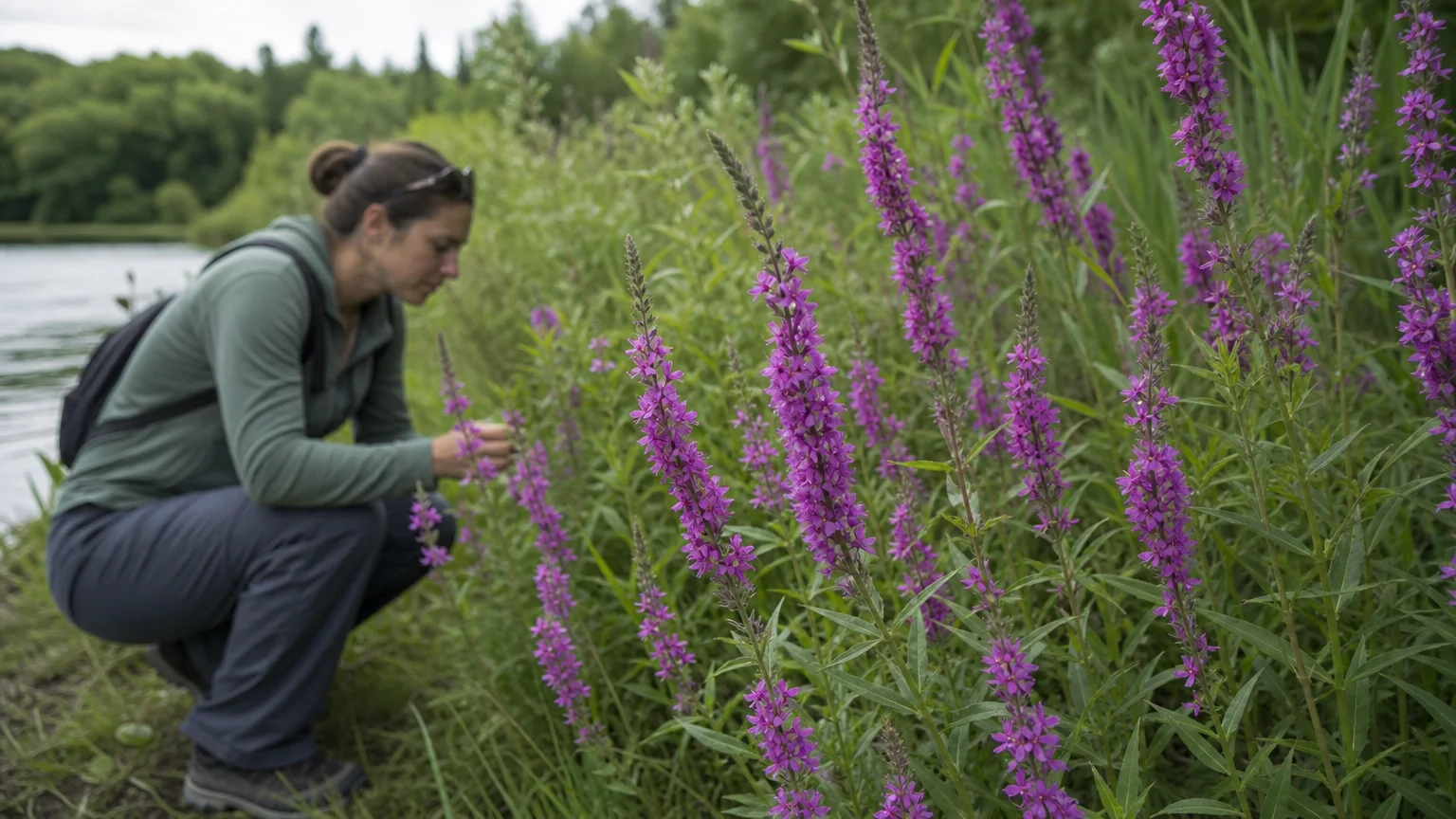
Tip #1: Purple Loosestrife (Lythrum salicaria)
Many gardeners mistakenly cultivate Purple Loosestrife because of its striking, vibrant magenta flower spikes that tower up to six feet tall. This European native masquerades as a lovely vertical accent for your garden borders; however, it ranks among the most aggressive invasive weeds in North America. A single mature plant produces an astonishing 2.7 million seeds annually, easily dispersing through wind, water, and passing wildlife. When these seeds land in your garden or nearby wetlands, they germinate rapidly and form dense, impenetrable stands that completely choke out native flora. The thick root masses alter the very structure of the soil, starving your carefully tended perennials of vital moisture and nutrients.
You must take swift action the moment you identify this plant in your yard. Hand-pulling works effectively for young seedlings, but you need a robust shovel to excavate the extensive, woody root systems of mature plants. Ensure you extract the entire crown; any remaining root segments will quickly sprout new shoots. Because Purple Loosestrife thrives in moist soil, tackle the removal process a day after a heavy rainstorm when the earth yields more willingly. Never place the pulled plants into your compost bin. The resilient seeds and hardy root fragments will survive the composting process and return to haunt your landscape next spring. Instead, seal the debris securely in heavy-duty black trash bags and dispose of them with your regular household waste.
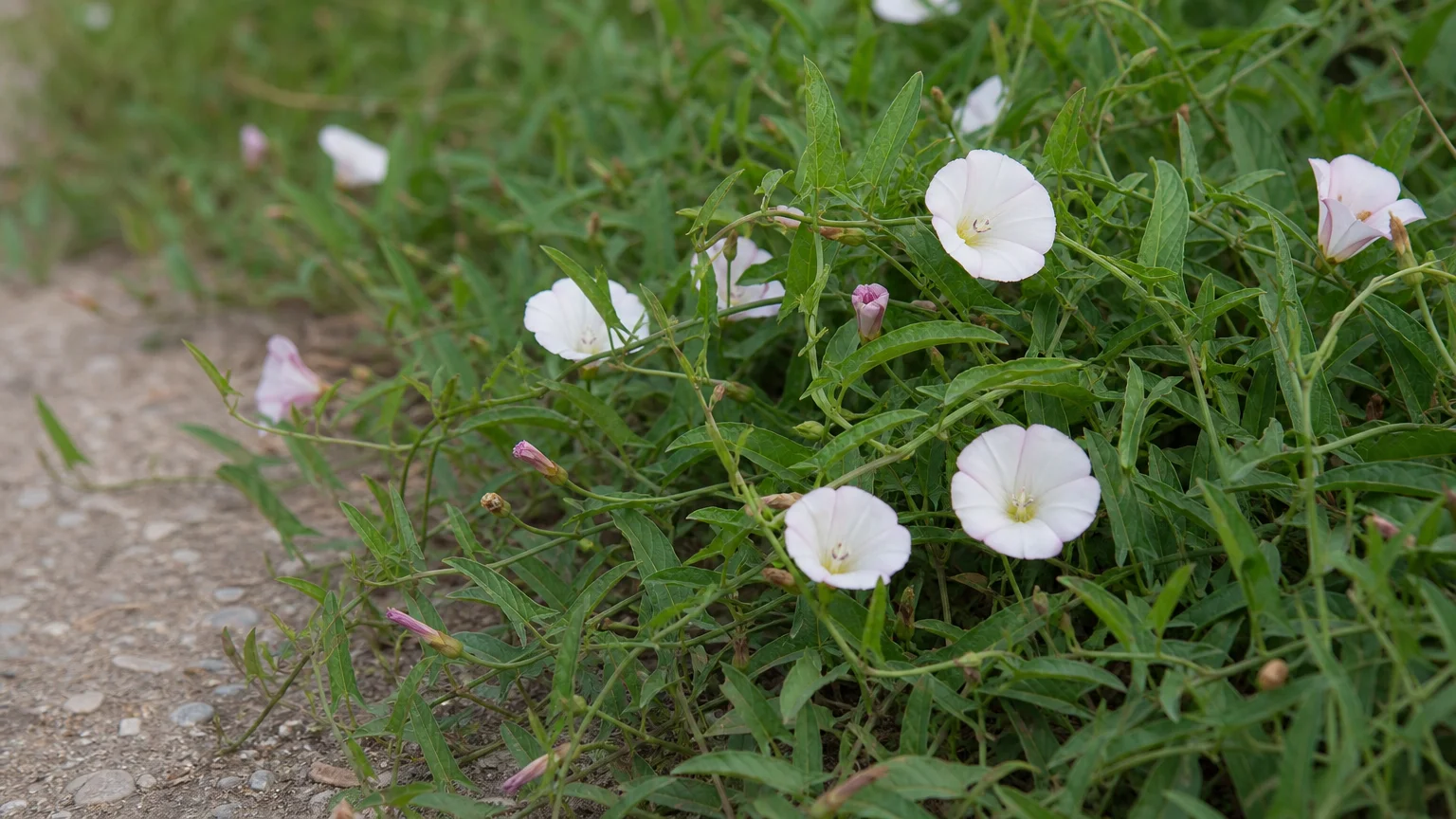
Tip #2: Field Bindweed (Convolvulus arvensis)
Field Bindweed often tricks unsuspecting homeowners by producing delicate, trumpet-shaped white or pale pink flowers that closely resemble ornamental morning glories. Do not let its fragile appearance fool you—this perennial vine operates as a relentless strangler. It rapidly unfurls long, twining stems that spiral tightly around the stalks of your prized vegetables, shrubs, and ornamental flowers. As it climbs, it forcefully pulls down weaker plants under its sheer weight while creating a dense canopy of arrow-shaped leaves that completely blocks sunlight from reaching the foliage below. Beneath the surface, Field Bindweed deploys a terrifyingly deep root system that can penetrate the earth to depths of up to twenty feet, making it exceptionally drought-tolerant and nearly impossible to starve.
Eradicating this invader requires a test of endurance and strategic planning. Do not reach for the rototiller; slicing the roots into smaller pieces only multiplies your problem, as every tiny fragment can regenerate into an entirely new plant. Instead, you need to starve the root system systematically. Continuously cut the vines back to the soil line every single time they emerge. By relentlessly depriving the plant of its solar panels—the leaves—you force the deep roots to exhaust their stored energy reserves over time. For immediate garden beds, use a sharp hoe to slice the weeds just below the soil surface. Combine this physical removal with a thick, three-inch layer of organic mulch to suppress new growth and reclaim your garden space.
Tip #3: Creeping Bellflower (Campanula raunculoides)
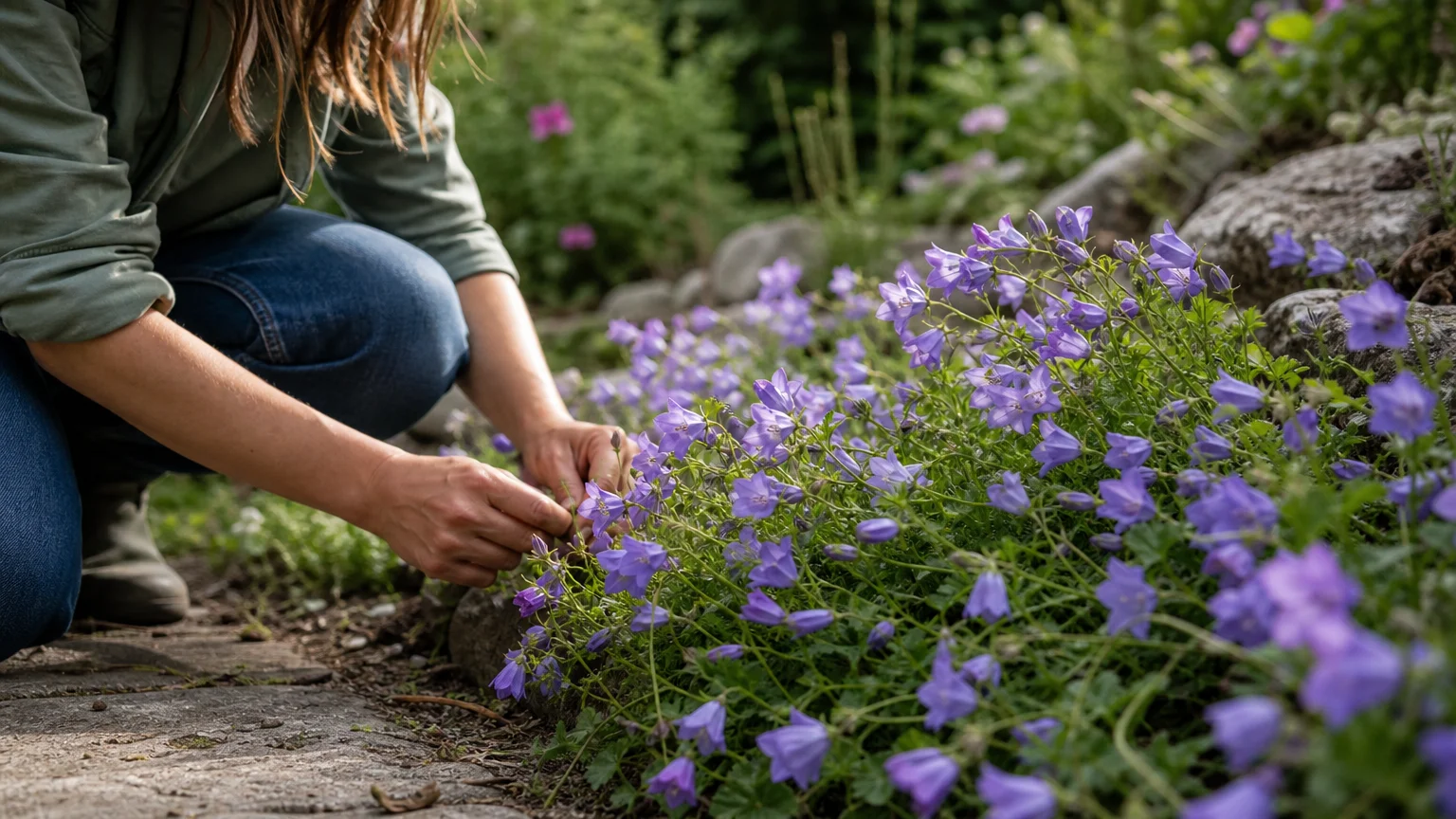
Creeping Bellflower frequently infiltrates residential landscapes under the guise of a charming, old-fashioned cottage garden perennial. It produces elegant, nodding purple flowers arranged neatly along tall, slender stalks that bloom generously from mid-summer into early autumn. Unfortunately, its beauty masks a highly destructive nature. Once established, it aggressively overtakes flower beds, lawns, and natural areas, outcompeting everything in its path. The true nightmare lies beneath the soil surface. Creeping Bellflower utilizes a dual-root system consisting of fine, thread-like roots near the top and thick, fleshy, parsnip-like tubers deeper down. These tubers store massive amounts of energy, allowing the plant to shrug off harsh winters, severe droughts, and standard weed-control methods.
Tackling Creeping Bellflower requires meticulous excavation rather than simple pulling. If you simply tug on the stems, they will easily snap off at ground level, leaving the underground tubers perfectly intact and ready to send up multiple new shoots within days. Equip yourself with a sturdy garden fork and carefully lift the soil around the plant. You must sift through the dirt with your hands to locate and extract every single white tuber. Even a fragment the size of a pea possesses the power to regenerate. In severely infested beds, your best strategy involves digging up your desirable perennials, washing their roots entirely free of soil to ensure no bellflower fragments hide among them, and temporarily moving them to pots while you thoroughly excavate and purify the garden bed.
Tip #4: Poison Hemlock (Conium maculatum)
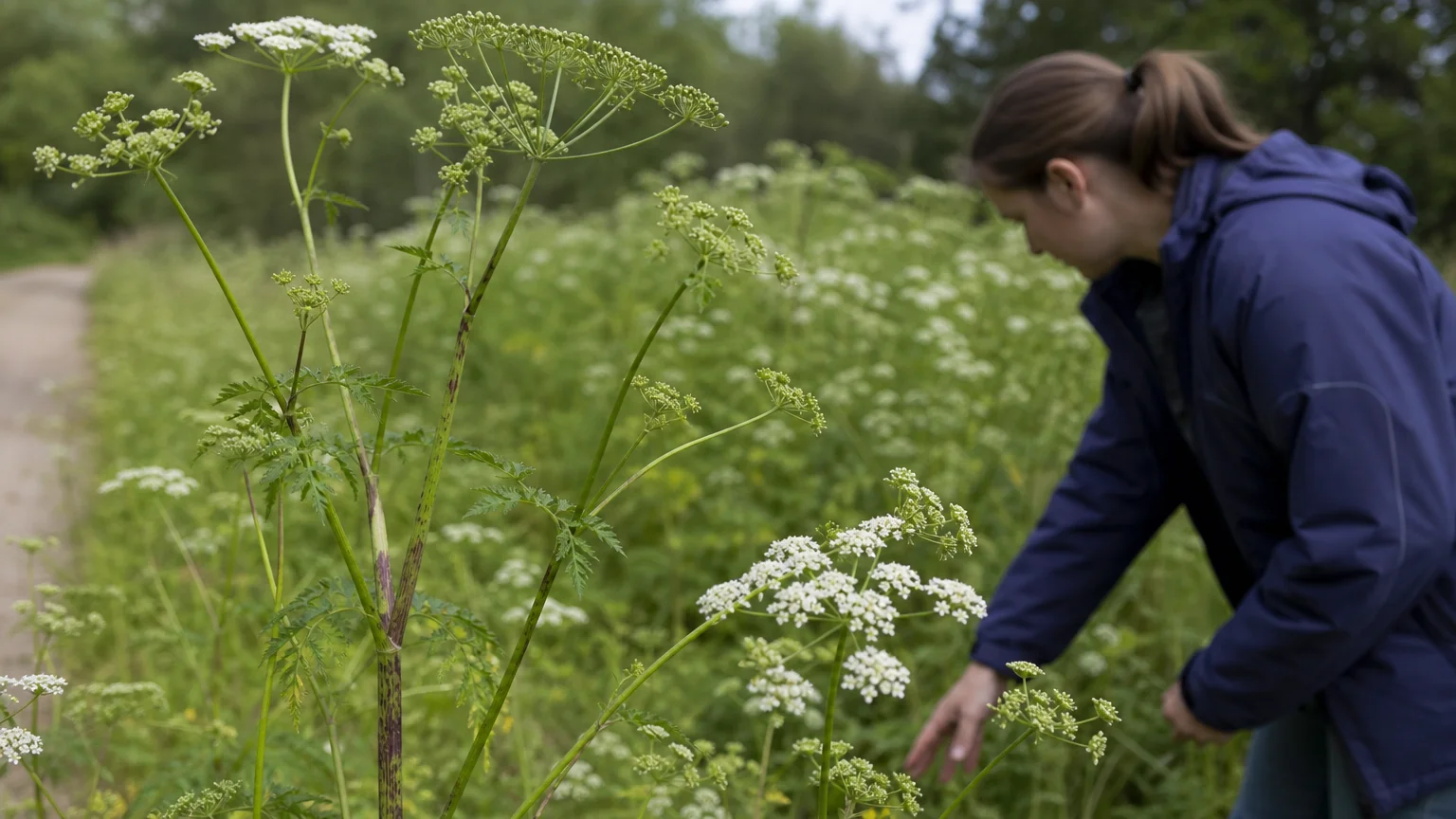
Poison Hemlock easily earns its reputation as one of the most dangerous yard plants you could ever encounter. As a towering biennial that can shoot up to ten feet tall during its second year, it features lacy, fern-like foliage and broad, umbrella-shaped clusters of tiny white flowers. Novice foragers often confuse it with harmless wild carrot or Queen Anne’s Lace. You can definitively identify Poison Hemlock by examining its main stem; unlike wild carrot, hemlock stems are completely hairless, hollow, and covered in distinctive purple blotches or splotches. Every single part of this plant—from the roots to the seeds—contains potent toxic alkaloids that actively attack the nervous system.
Handling Poison Hemlock demands extreme caution and the correct safety gear. Never touch this plant with your bare hands, as the toxic sap can absorb through cuts in your skin or cause severe contact dermatitis. Wear heavy-duty rubber gloves, long sleeves, long pants, and protective eyewear before you begin removal. Use a sharp spade to slice through the long, white taproot at least two inches below the soil surface before the plant has a chance to set seed. Immediate and safe disposal is critical. Carefully place all plant material into thick garbage bags, tie them tightly, and send them to the landfill. Never burn Poison Hemlock; the resulting smoke carries the deadly toxins into the air, causing severe respiratory damage to anyone who inhales it.
Tip #5: Garlic Mustard (Alliaria petiolata)
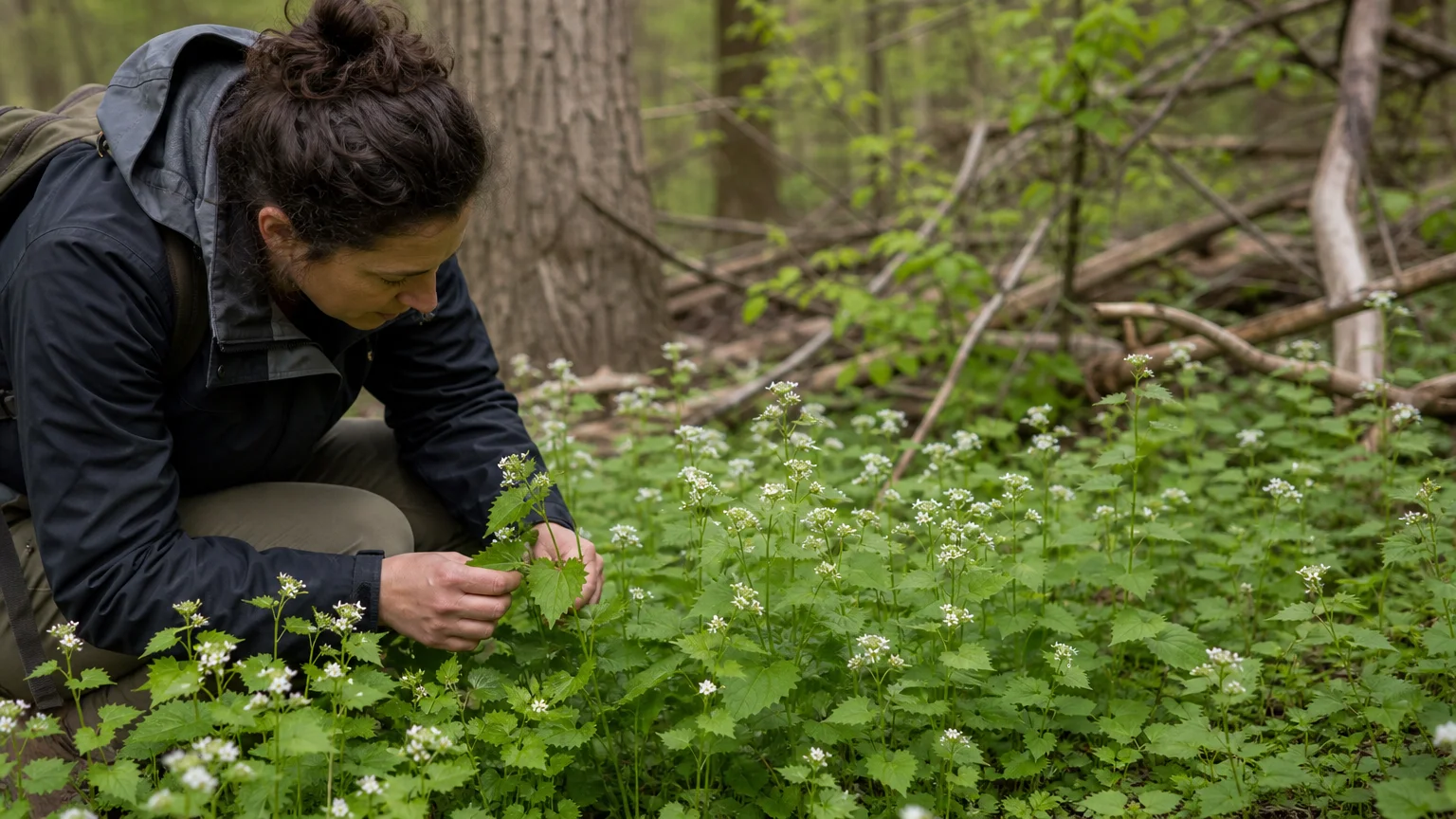
Garlic Mustard operates as a silent assassin in the garden, utilizing chemical warfare to dominate its territory. During its first year, it forms a low-lying rosette of heart-shaped, scalloped leaves that remain green throughout the winter. By its second spring, it bolts upward, producing small, cross-shaped white flowers and releasing a distinct, garlicky odor when you crush the foliage. The real danger of this invasive weed lies in its roots. Garlic Mustard secretes allelopathic chemicals directly into the soil. These toxic compounds actively kill off beneficial soil fungi—specifically the mycorrhizal networks that native plants and mature trees rely on to absorb water and vital nutrients.
You must remove Garlic Mustard early in the spring, ideally before the white flowers transition into long, slender seed pods. A single plant can drop thousands of tiny black seeds that remain viable in your soil for up to a decade. Fortunately, the root system remains relatively shallow and forms a distinct “S” shape just below the surface. Wait for a day when the soil feels damp and loose, grasp the plant firmly at the base of the stem, and gently pull to extract the entire root intact. Do not leave the pulled plants lying in the garden bed. The stems retain enough residual energy to continue developing and dispersing seeds even while completely uprooted. Bag them securely and remove them from your property entirely.
Tip #6: Japanese Knotweed (Reynoutria japonica)
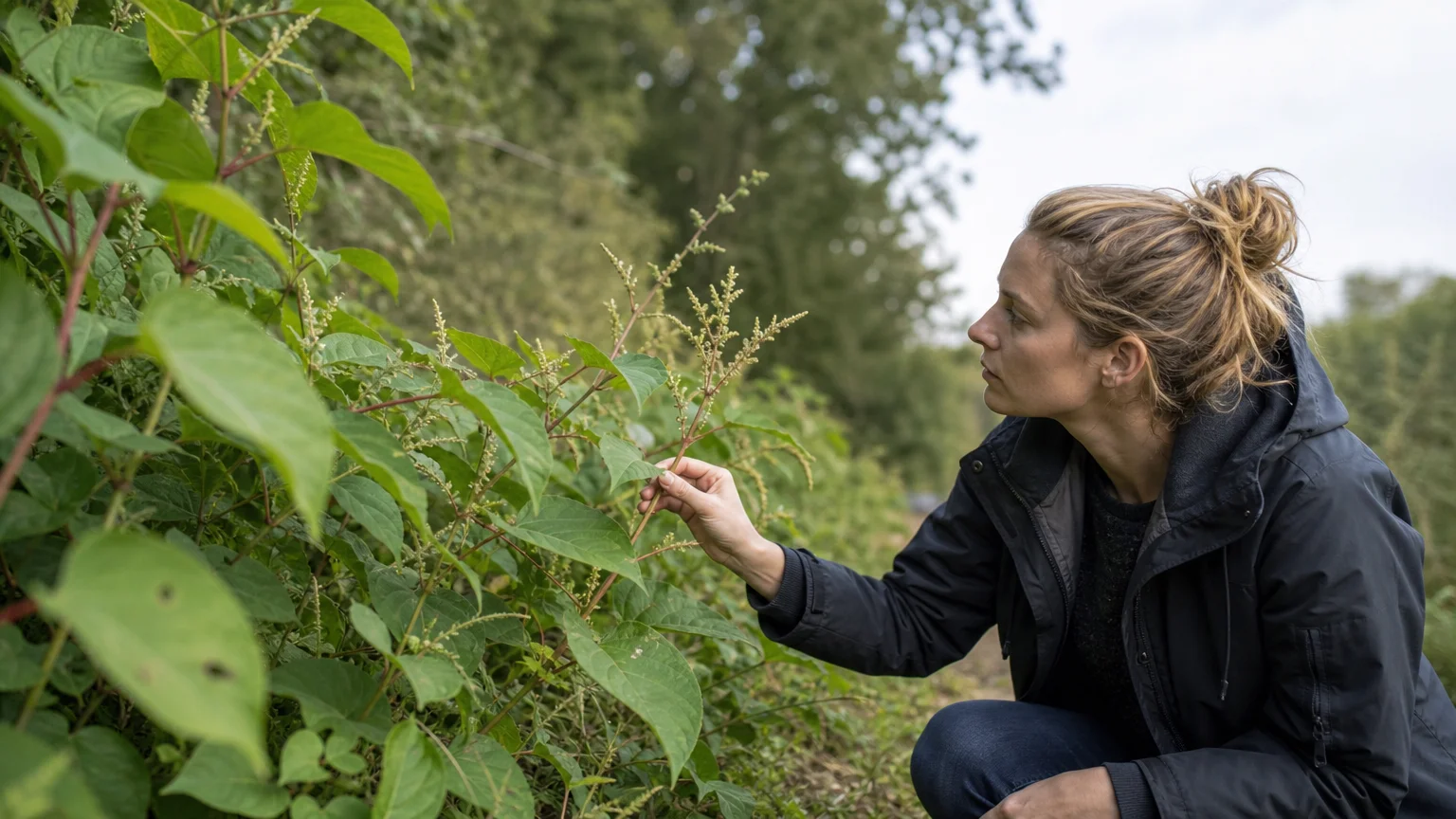
Many homeowners initially admire Japanese Knotweed for its lush, bamboo-like hollow stems, broad shield-shaped leaves, and delicate cascades of creamy white flowers that appear late in the summer. However, this plant represents a monumental threat to both local ecosystems and personal property. Japanese Knotweed features a notoriously destructive rhizome network that spreads rapidly underground, extending up to twenty feet laterally and plunging ten feet deep. The growing tips of these rhizomes generate intense pressure, capable of pushing upward through thick asphalt driveways, concrete patios, retaining walls, and even the structural foundations of your home.
Eradicating Japanese Knotweed is rarely a one-time job; it requires a persistent, multi-year commitment. Physical removal alone often fails because leaving behind a root fragment weighing just half a gram will result in aggressive regrowth. If you decide to tackle a small, young patch yourself, you must cut the canes down to the ground repeatedly throughout the growing season to exhaust the root reserves. For established patches, a more aggressive approach combining continuous cutting and targeted applications of systemic herbicides during the late summer—when the plant pulls nutrients down into its roots—proves most effective. Never discard knotweed clippings in the compost, the woods, or near waterways. The stems can easily root themselves and spawn entirely new colonies wherever they land.
Tip #7: Jimsonweed (Datura stramonium)
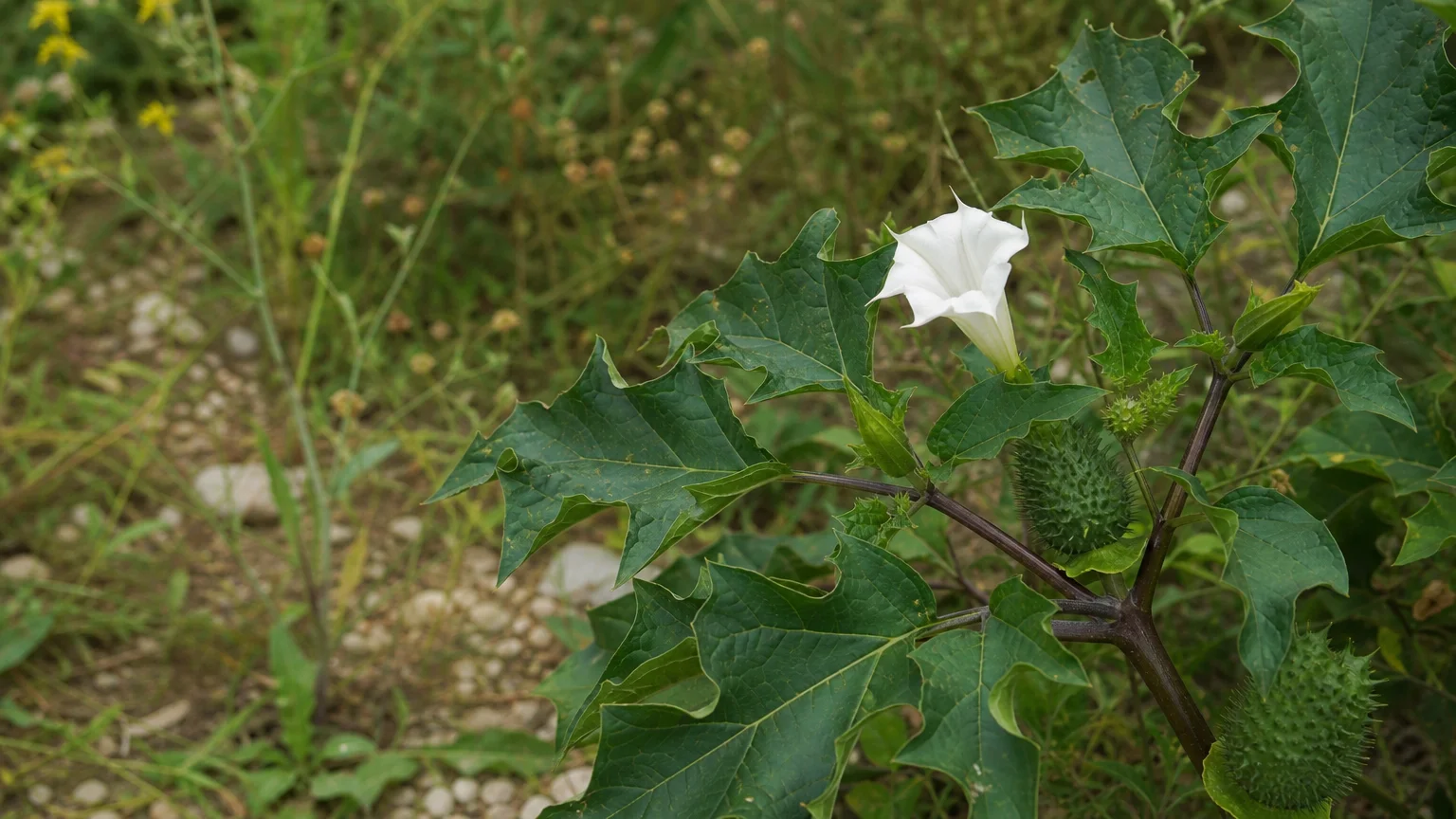
Jimsonweed often captures attention with its massive, striking, trumpet-shaped blooms that open in the evening, displaying beautiful shades of pure white or pale purple. Despite its ornamental appeal, it ranks remarkably high on the list of poisonous weeds that you must absolutely banish from your landscape. Every component of Jimsonweed carries powerful tropane alkaloids, making it highly toxic to humans, dogs, cats, and livestock. The danger exponentially increases as the blooming season ends and the plant develops golf-ball-sized, fiercely spiked seed pods. These pods eventually burst open, scattering hundreds of seeds that can lay dormant in your garden beds for years before germinating.
Because it sits squarely in the category of toxic garden plants, you must prioritize safety during the removal process. The jagged, foul-smelling leaves can irritate sensitive skin upon contact, so wearing thick gardening gloves and a long-sleeved shirt is non-negotiable. Jimsonweed grows an incredibly tough, branching taproot that firmly anchors it to the earth. Do not attempt to pull it by hand, as the main stem will likely break off, leaving the root alive to resprout. Drive a sharp spade deep into the soil right next to the main stalk, lever the plant upward, and extract the entire taproot. Carefully gather any fallen seeds or spiky pods from the surrounding mulch, bag everything securely, and dispose of the hazardous debris in the municipal trash.
Tip #8: Lesser Celandine (Ficaria verna)
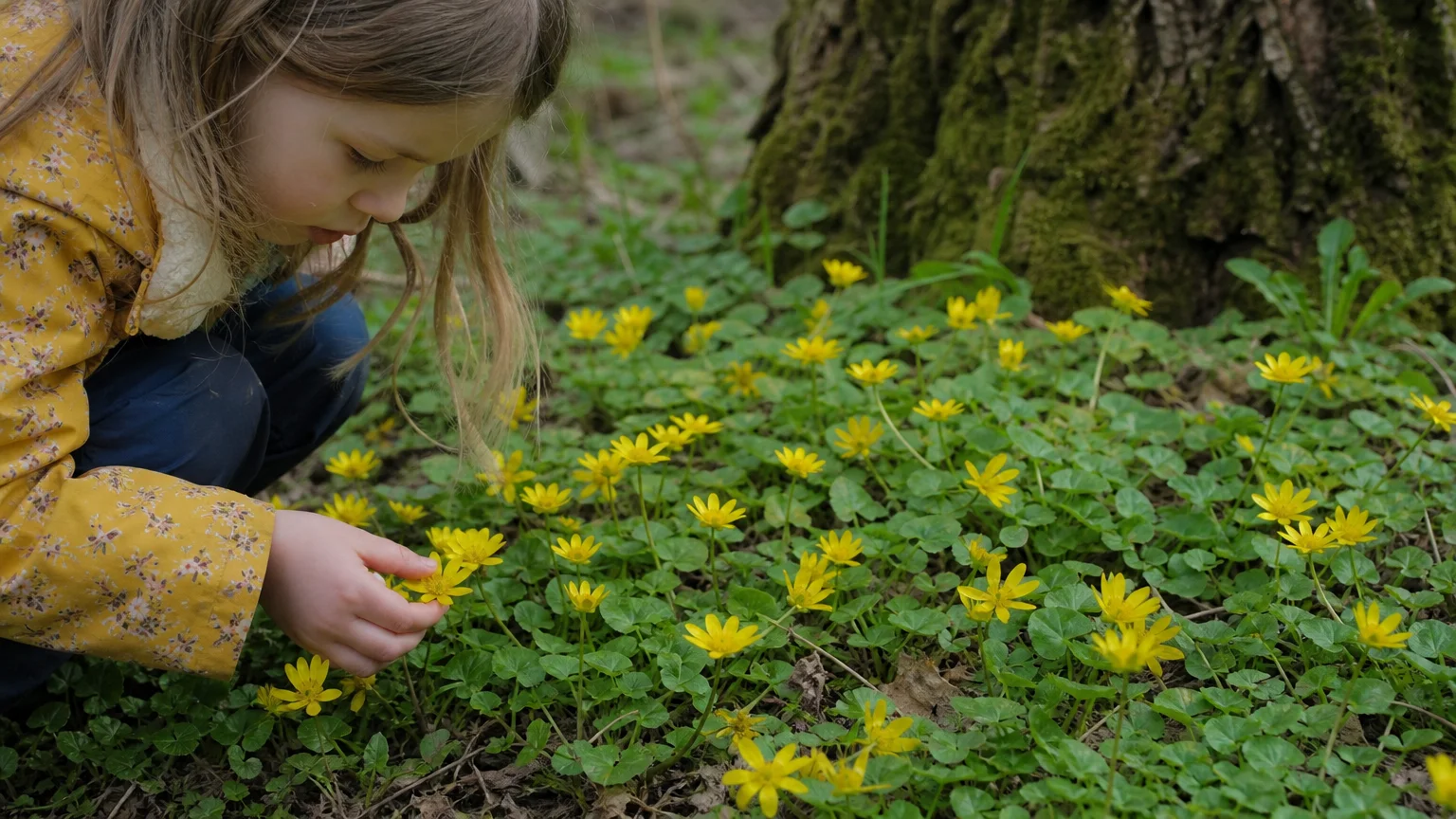
Lesser Celandine appears deceivingly cheerful in the early weeks of spring, producing brilliant, buttery-yellow flowers that float above a dense carpet of glossy, dark green, kidney-shaped leaves. Because it blooms when most of the garden is still asleep, many gardeners welcome the unexpected burst of color. Do not fall for this trap. Lesser Celandine acts as an incredibly aggressive spring ephemeral that forms tight, suffocating mats across the soil surface. This dense growth completely blocks sunlight from reaching delicate native spring wildflowers like trillium and bloodroot, driving them to local extinction. By early summer, the foliage dies back completely, leaving behind barren patches of soil that quickly succumb to erosion during heavy summer rains.
Removing Lesser Celandine demands extreme precision due to its unique reproduction strategy. Beneath the soil, the plant creates hundreds of tiny, finger-like tubers, often referred to as bulbils. If you attempt to pull the plant roughly, these bulbils detach easily, remaining hidden in the dirt to multiply your weed problem tenfold the following year. To successfully clear your yard, you must use a hand trowel to carefully dig a wide, deep circle around the perimeter of the plant. Lift the entire chunk of soil intact, ensuring you capture every single bulbil. Because these tubers frequently wash away and spread through water runoff, focus your eradication efforts heavily on any sloped areas or drainage ditches in your yard before tackling the flatter flower beds.
Putting It All Together: Enjoy Your Beautiful Garden
Maintaining a healthy, vibrant landscape requires continuous observation and a willingness to act decisively when uninvited botanical guests arrive. The eight flowering weeds detailed above prove that not every beautiful bloom deserves a place in your carefully curated garden beds. By learning to identify these aggressive intruders early, you save yourself countless hours of backbreaking labor and protect the delicate balance of your soil ecosystem.
Your garden serves as a peaceful sanctuary for you, your family, and the beneficial pollinators that visit your native plants. Removing toxic garden plants and invasive species ensures that this environment remains safe, productive, and structurally sound. Make it a habit to patrol your property weekly during the active growing season. Catching a single Poison Hemlock rosette or digging up a newly sprouted Japanese Knotweed cane takes only minutes, whereas battling a fully established colony can consume entire weekends. Stay vigilant, rely on proper root extraction techniques rather than quick top-cutting fixes, and always prioritize the health of your soil. Your reward will be a thriving, resilient garden that brings you endless joy year after year.
Frequently Asked Questions
Can I safely compost the flowering weeds I pull from my garden?
No, you should never place aggressive or poisonous weeds into your backyard compost bin. Standard home composting systems rarely achieve the sustained 140°F (60°C) internal temperatures required to effectively neutralize seeds, resilient root fragments, or allelopathic chemicals. Invasive weeds like Field Bindweed and Lesser Celandine will simply wait out the composting process and enthusiastically sprout wherever you spread the finished compost. Always bag these hazardous plants and dispose of them through your municipal trash service to prevent reinfestation.
How can I quickly tell the difference between a harmless wildflower and an invasive weed?
Distinguishing between the two often requires close observation of the plant’s growth habits and physical characteristics. Invasive species typically exhibit explosive growth rates, rapidly forming dense monocultures that actively push out neighboring plants. They often thrive in poor soil and appear completely undisturbed by local pests or diseases. If you notice a new flowering plant spreading uncontrollably across your yard, use a reliable plant identification app or consult your local extension office to confirm its identity before allowing it to mature and set seed.
What should I do if I accidentally touch a dangerous yard plant like Poison Hemlock?
If your bare skin comes into contact with highly toxic plants, immediately wash the affected area with generous amounts of cool water and grease-cutting dish soap to remove the plant’s sap and toxic oils. Do not use hot water; heat opens your pores and accelerates the absorption of the toxins into your bloodstream. Wash your gardening tools, gloves, and clothing separately in hot, soapy water. If you experience severe skin blistering, dizziness, muscle weakness, or difficulty breathing, seek immediate medical attention.
For region-specific advice, consult your local University Extension program (find yours via the USDA directory). For plant databases and inspiration, visit the Missouri Botanical Garden or the Royal Horticultural Society.
Disclaimer: This article provides general gardening advice. Always consider your specific climate, soil conditions, and local pests. Follow safety guidelines when using gardening tools and products.