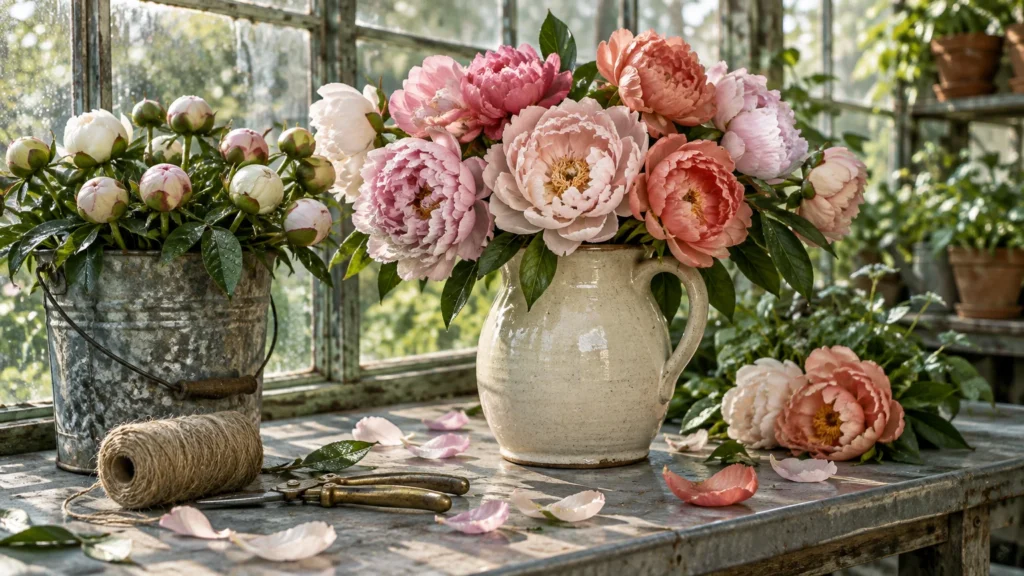
Planting flowers that open and close creates dynamic rhythm and constant daily transformation in your outdoor landscape. You can turn static garden beds into interactive displays simply by curating nyctinastic varieties that react to light and temperature.
These responsive plants optimize their pollination during daylight hours; they simultaneously shield delicate floral pollen from nocturnal moisture, cold air, and predatory insects. Watching your landscape shift between sunrise and twilight connects you directly to natural botanical rhythms.
Integrate these distinctive garden flowers along stone walkways, borders, and outdoor patios to maximize visual engagement throughout the day. Selecting resilient species matched to your soil and sunlight delivers effortless daily drama across every season.
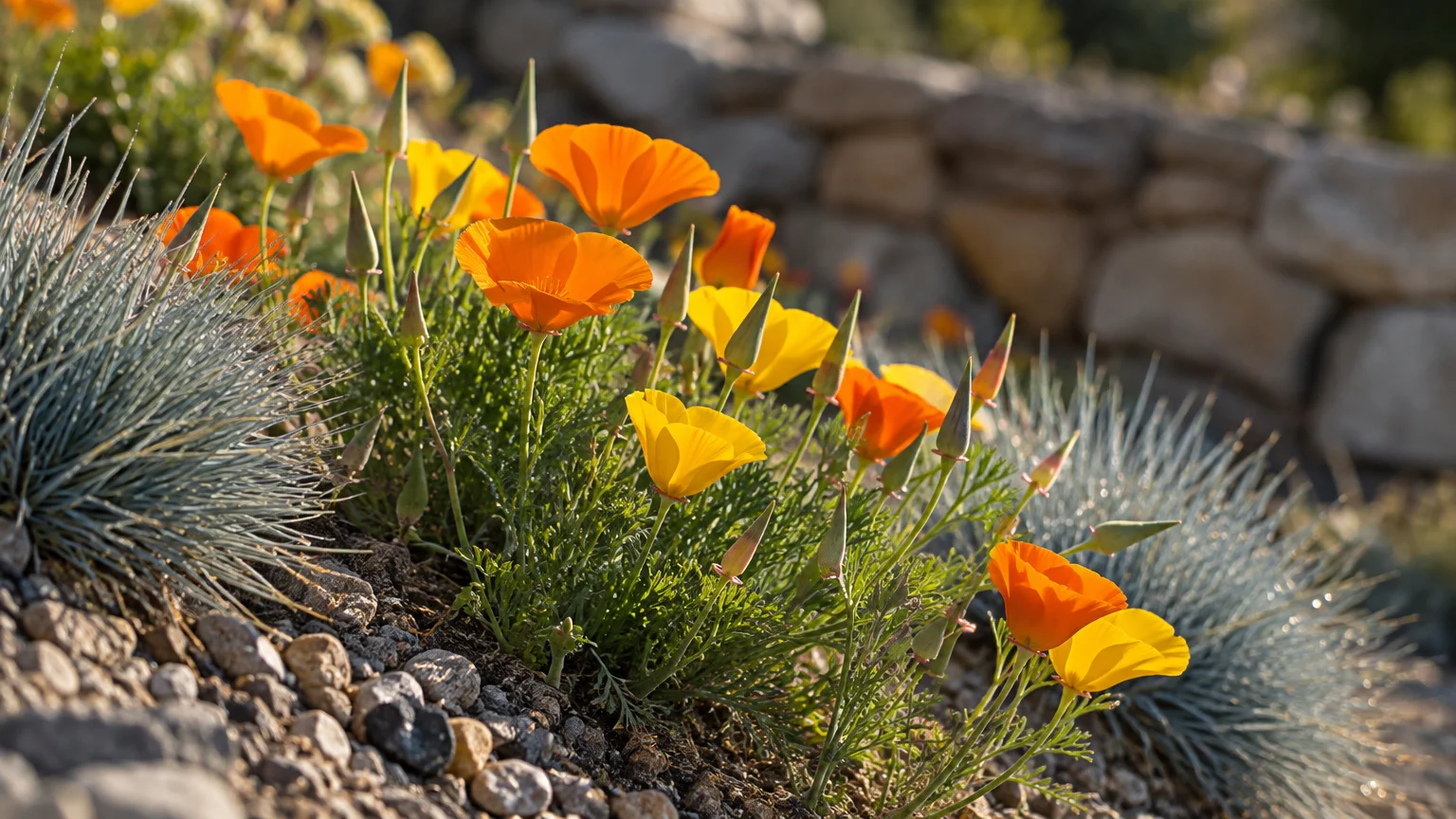
Outdoor Strategy #1: California Poppy (Eschscholzia californica)
California poppies unfold vivid golden cups when morning sunlight warms their petals. They seal tightly as dusk falls or whenever cold rain clouds roll across your yard.
This diurnal rhythm protects delicate floral pollen from ambient nighttime dew. It also prevents damp cold from deteriorating the bloom’s reproductive structures.
Sow seeds directly into poor, gravelly soil in full sun across USDA Hardiness Zones 6 through 10. These drought-tolerant garden flowers thrive on dry hillsides and along hot driveway edges.
Pair them with low-growing blue fescue or creeping thyme to establish striking color contrast. Avoid heavy fertilizers; excess nitrogen generates dense foliage at the expense of floral buds.
Outdoor Strategy #2: Treasure Flower (Gazania rigens)
Treasure flowers produce brilliant, daisy-like heads that flare wide open under direct midday sun. As afternoon shadows lengthen, their petals roll inwards into compact cones.
These South African natives demand full sun exposure to trigger petal expansion. Overcast skies keep them closed, protecting nectar supplies until favorable foraging conditions return.
Grow gazanias as perennials in USDA Zones 9 through 11, or treat them as reliable annuals in cooler zones. They withstand coastal salt spray, intense heat, and sandy soil without losing vigor.
Mass them as low ground cover along exposed south-facing retaining walls. Ensure sharp drainage around the crown to prevent root rot during persistent rainy spells.
Outdoor Strategy #3: Morning Glory (Ipomoea purpurea)
Morning glories unfurl delicate, trumpet-shaped blooms at dawn before twisting shut by midday. On overcast days, the flowers remain open significantly longer into the afternoon.
This rapid opening mechanism relies on specialized turgor pressure within the petal tissue cells. It ensures optimal pollination during peak morning hours when local bumblebees forage actively.
Train these vigorous annual vines up vertical trellises, fences, or porch posts in USDA Zones 2 through 11. They prefer average, well-draining garden soil and uninterrupted morning sunlight.
Water consistently during summer heatwaves to encourage continuous bud development. Provide sturdy netting early in the season so developing tendrils climb without tangling nearby perennials.
Outdoor Strategy #4: White Water Lily (Nymphaea alba)
White water lilies represent classic aquatic flowers that open and close with clockwork precision. Their pure white petals float atop ponds during sunny hours before submerging slightly at twilight.
This nyctinastic movement shields floral organs from nocturnal aquatic predators and chilly water temperatures. It also helps conserve scent compounds for active daytime pollinators.
Position water lilies in quiet garden ponds across USDA Zones 4 through 11 with full solar exposure. Submerge planting containers between 12 and 24 inches below the water surface.
Maintain balanced pond ecosystems by trimming declining leaves before they decay into bottom silt. Healthy water lilies provide valuable shade, restricting summer algae growth across open water.
Outdoor Strategy #5: Spring Crocus (Crocus vernus)
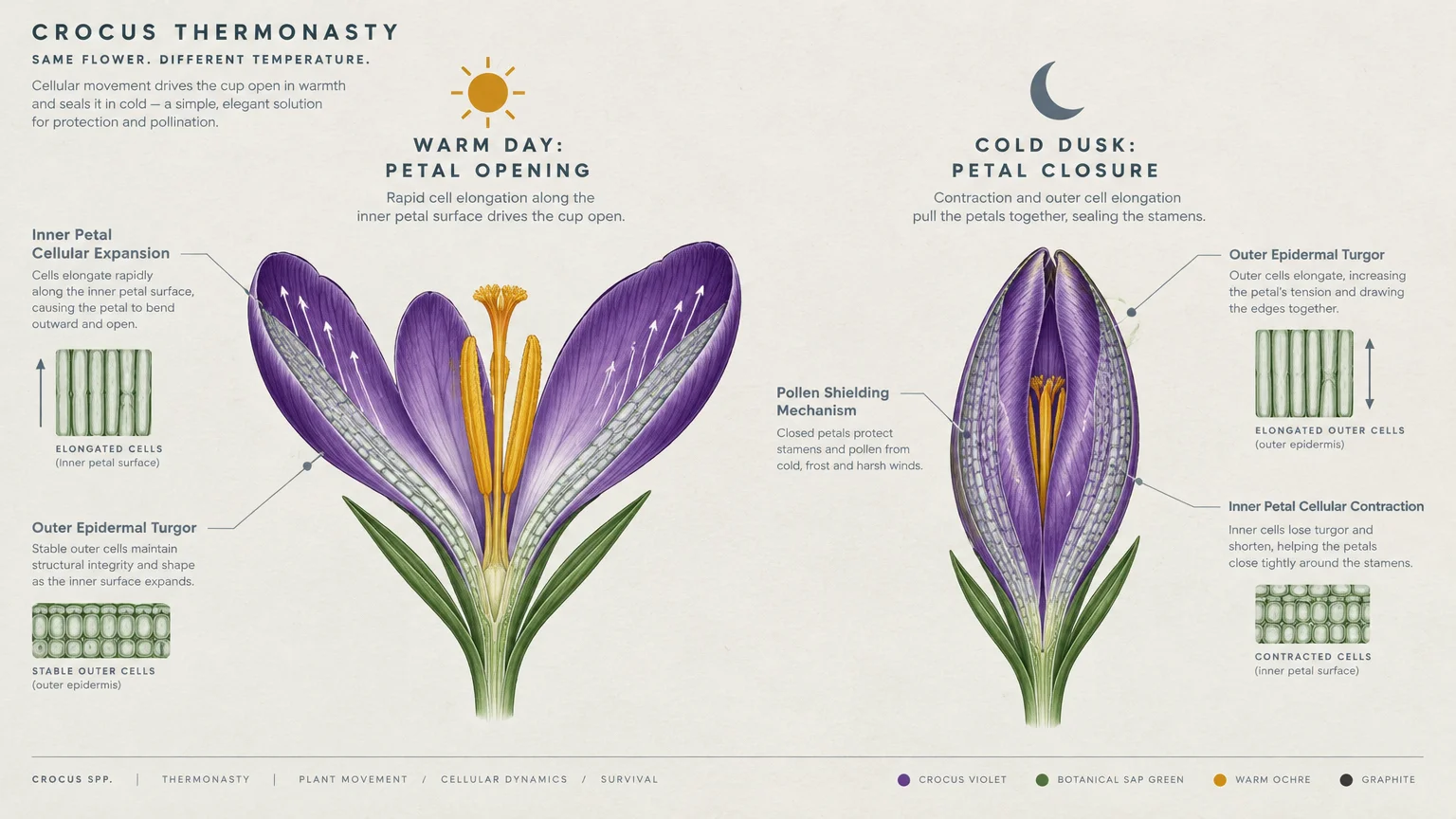
Spring crocuses signal the end of winter by opening cup-shaped petals on warm, sunny mornings. They close into slender spears whenever temperatures plummet or evening darkness arrives.
Temperature fluctuations dictate this behavior through differential petal growth rates known as thermonasty. Warm air causes the inner petal surfaces to expand faster than the outer surfaces.
Plant corms in autumn across USDA Zones 3 through 8, setting them three inches deep in rich, porous earth. They flourish beneath deciduous tree canopies before early spring leaves emerge.
Drift them through dormant turfgrass to create vibrant early-season lawn tapestry. Allow the grassy crocus foliage to ripen completely before running your lawnmower in late spring.
Outdoor Strategy #6: Garden Tulip (Tulipa)
Garden tulips exhibit dramatic daily motion, opening wide on sunny afternoons and folding shut at night. Their petals respond directly to warmth; a change of a few degrees triggers rapid movement.
Closing tight at night protects precious pollen grains from freezing spring frosts and soaking precipitation. This adaptation preserves reproductive success during volatile early-spring weather patterns.
Install tulip bulbs during late autumn in USDA Zones 3 through 8 where winters provide necessary chilling hours. Select beds with gritty, porous soil to avoid fungal bulb diseases.
Combine early, mid, and late-season cultivars to extend your dynamic spring floral sequence. Plant bulbs alongside emerging hostas or daylilies to conceal yellowing tulip foliage gracefully.
Outdoor Strategy #7: African Daisy (Osteospermum)
African daisies showcase striking petal rings around dark center discs, opening promptly under bright sun. These nyctinastic flowers close tightly during cloudy periods and throughout the night.
This protective strategy defends floral reproductive centers against sudden ambient chill and damp evening fog. It keeps pollen dry so bees can collect it efficiently the following morning.
Grow these resilient perennials in USDA Zones 9 through 11, or use them as bedding annuals in northern gardens. They require full sun, moderate moisture, and loose, slightly acidic soil.
Deadhead spent blossoms weekly to stimulate successive flushes of vibrant color through autumn. Prune leggy stems midsummer to maintain compact growth and encourage stocky branching.
Outdoor Strategy #8: Four O’Clock (Mirabilis jalapa)
Four o’clocks reverse standard floral schedules by unfurling fragrant blooms in late afternoon. They stay open through warm summer evenings before sealing permanently by mid-morning.
This twilight routine targets evening pollinators like hawkmoths and nocturnal beetles. As twilight settles, their blooms emit a rich, sweet perfume across outdoor entertaining spaces.
Cultivate these tender perennials in USDA Zones 7 through 11, or sow them as fast-growing summer annuals further north. They thrive in ordinary, moist garden soil under full sun to light afternoon shade.
Plant them near outdoor patios, seating areas, and bedroom windows to enjoy their twilight aroma. Dig up tuberous roots before the first autumn freeze in colder regions for winter storage.
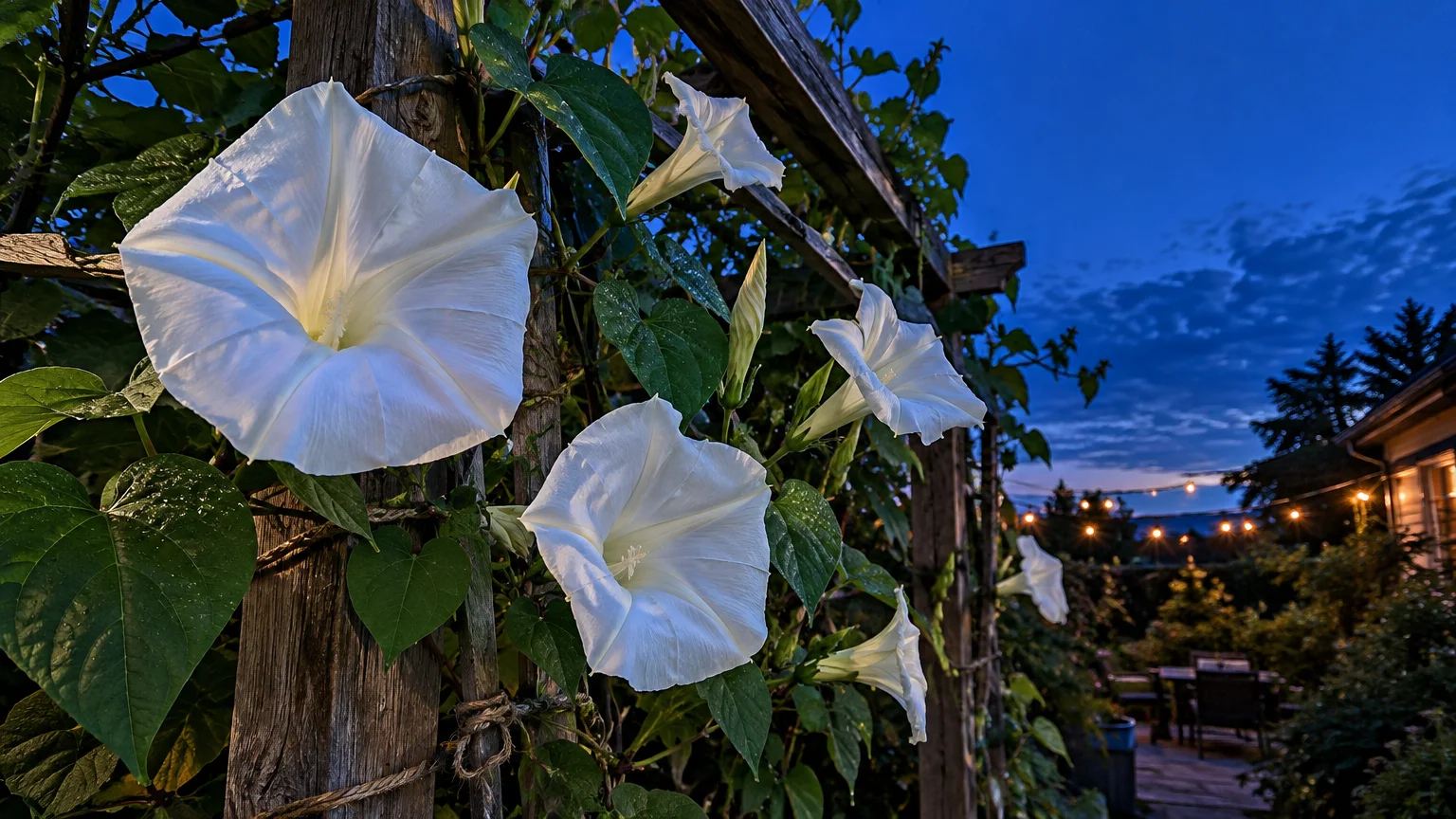
Outdoor Strategy #9: Moonflower (Ipomoea alba)
Moonflowers offer an extraordinary evening spectacle, unfurling large white disks within minutes at dusk. These nocturnal blossoms remain open overnight and wilt as intense morning sunlight strikes them.
The rapid opening motion releases a heady fragrance designed to guide night-flying sphinx moths. This unique bloom cycle creates a captivating centerpiece for evening sensory gardens.
Grow this vigorous climbing vine in USDA Zones 9 through 11 as a perennial, or plant it as a summer annual elsewhere. Provide a sturdy trellis in full sun with fertile, evenly moist soil.
Nick hard seed coats with a file and soak them overnight to accelerate spring germination. Pair moonflowers with morning glories along identical vertical supports for continuous day-to-night floral displays.
Outdoor Strategy #10: Moss Rose (Portulaca grandiflora)
Moss rose carpets arid garden ground with succulent leaves and vivid, ruffled blooms. Petals snap open on bright mornings and pull tightly together as the sun dips low.
This mechanism safeguards water stores within succulent floral tissues against desiccating heat and night moisture. The plant holds its blooms shut on heavily overcast days to conserve biological resources.
Grow moss rose as an annual across USDA Zones 2 through 11 in scorching, dry conditions. It tolerates sandy, gravelly, or nutrient-poor soil where standard landscape bedding plants wither.
Tuck these trailing plants into rockery crevices, hanging baskets, and sunny walkway margins. Avoid overwatering; soggy soil easily causes fatal crown and root rot in succulent roots.
Outdoor Strategy #11: Star of Bethlehem (Ornithogalum umbellatum)
Star of Bethlehem produces pristine, star-shaped white flowers with distinctive green stripes beneath each petal. The blooms open reliably on clear, sunny mornings and snap shut by late afternoon.
Sensitive cell layers at the petal base expand in bright light and contract when darkness approaches. This movement secures delicate stigmas against cool evening humidity and windblown soil particles.
Plant autumn bulbs across USDA Zones 4 through 9 in well-draining garden soil under full or partial sunlight. They establish readily along naturalized woodland edges and casual cottage borders.
Plant them inside sunken barriers or contained beds because their vigorous offsets can spread aggressively. Enjoy their pure white blossoms alongside mid-spring perennials like bluebells and wild columbines.
Outdoor Strategy #12: Hardy Ice Plant (Delosperma cooperi)
Hardy ice plants feature electric magenta flowers that glow under direct sun before closing at dusk. Shaded conditions or heavy storm clouds cause petals to pinch shut tight.
Their opening responds to solar intensity, preserving valuable nectar for midday solitary bees. This behavior helps these resilient succulents survive punishing mountain environments in their native ranges.
Establish them across USDA Zones 5 through 9 in full sun and sharply drained, sandy or rocky soil. They form an evergreen mat that easily withstands high summer heat and prolonged dry spells.
Install them on sloped banks to prevent soil erosion while creating maintenance-free ground cover. Never let them sit in winter puddles; standing moisture degrades the crowns during cold weather.
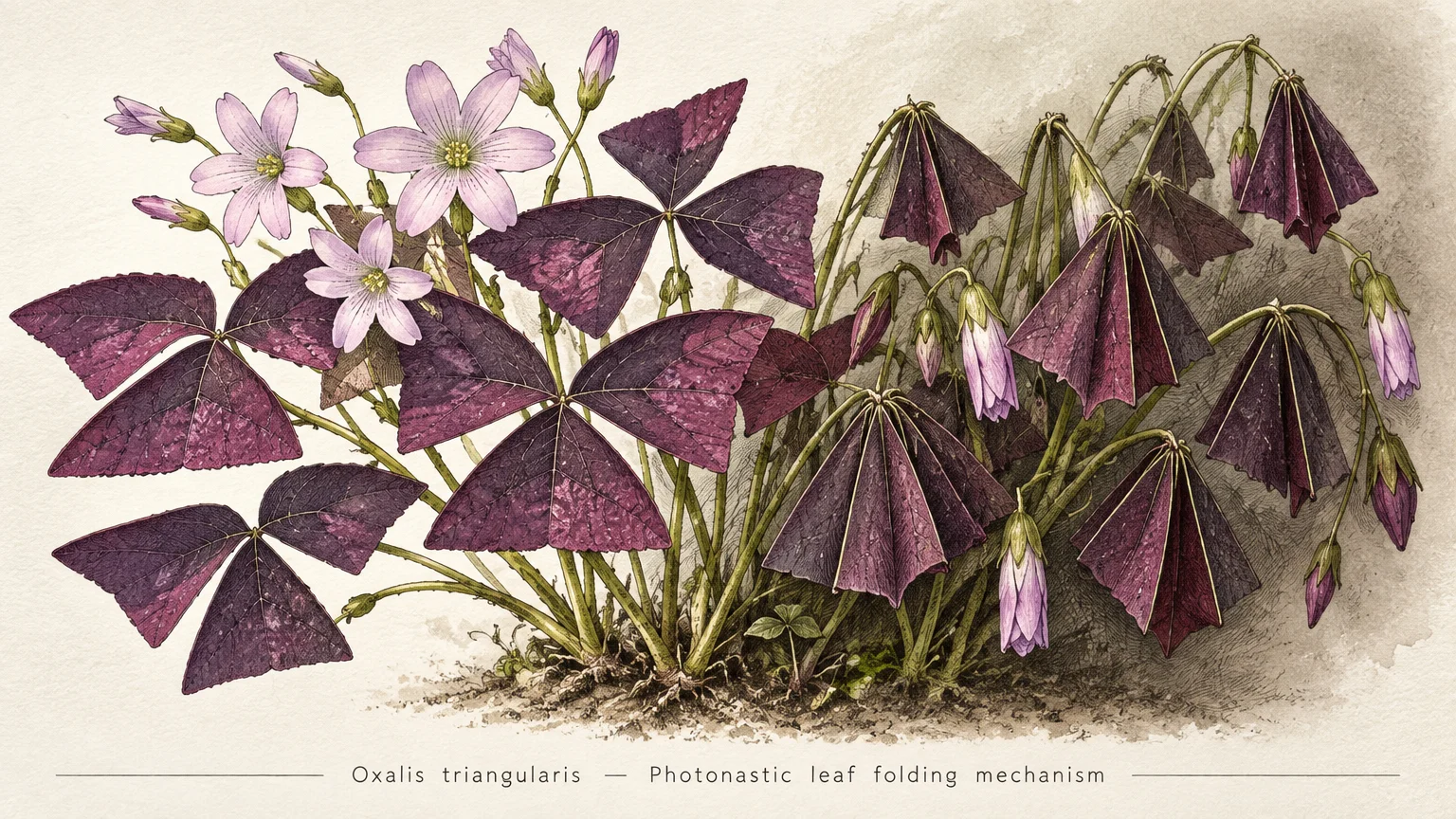
Outdoor Strategy #13: Purple Wood Sorrel (Oxalis triangularis)
Purple wood sorrel exhibits complete nyctinastic synchronization across both its flowers and distinct triangular foliage. Its pale lilac blooms and burgundy leaves fold down tightly each night like folded parasols.
Specialized cellular hinges called pulvini regulate this movement through rapid water movement. The plant conserves moisture and protects leaf surfaces by folding down during dark, resting hours.
Grow purple wood sorrel as a perennial in USDA Zones 8 through 11, or enjoy it in patio containers in colder climates. It flourishes in rich, humic soil with dappled shade or morning sun.
Bring container specimens indoors before hard frosts arrive to keep the foliage active all winter. Water moderately during growth spurts, allowing the top inch of soil to dry between sessions.
Outdoor Strategy #14: Evening Primrose (Oenothera biennis)
Evening primrose opens vibrant yellow petals at dusk, often unfurling completely within a few short minutes. The flowers remain open overnight before closing as the following morning grows warm.
This evening bloom time caters directly to night-flying hawkmoths seeking sweet nectar in twilight hours. Each bloom lasts a single night, replaced promptly by fresh buds along the stem.
Grow this hardy biennial across USDA Zones 4 through 9 in full sun to partial shade. It tolerates poor, dry, gravelly soils and naturally thrives in disturbed fields and prairie plantings.
Plant it along garden borders where twilight fragrance drifts into evening seating areas. Cut stems back after flowering if you wish to prevent self-sown seedlings from colonizing nearby flowerbeds.
Outdoor Strategy #15: Grecian Windflower (Anemone blanda)
Grecian windflowers produce charming, daisy-like blossoms that track the sun and fold closed at night. Overcast days and cold rainfall keep their delicate petals tightly clamped shut.
This protective reflex shelters interior anthers from chilling moisture during turbulent early spring weather. Once solar warmth returns, the petals quickly reopen to welcome visiting pollinators.
Plant tuberous roots in early autumn across USDA Zones 5 through 8 in humus-rich, well-draining soil. Position them in partial shade beneath deciduous shrubs or along dappled woodland borders.
Soak hard tubers in lukewarm water for several hours prior to autumn planting to stimulate faster root establishment. Interplant them with early spring bulbs to build lush carpets of low-growing blue and violet.
Seasonal Considerations for Your Garden
Planning for flowers that open and close requires thoughtful attention to changing daylight hours across the year. The angle of sunlight alters when and how long these blossoms display their colors.
In spring, clear winter debris early so ground-hugging bulbs like crocuses and windflowers receive unhindered solar warmth. Early morning sun exposure triggers faster bloom expansion during brisk seasonal mornings.
During summer months, track intense afternoon heat that can force midday bloomers to close ahead of schedule. Water deeply around plant root zones early in the day to maintain vital turgor pressure within petals.
In fall, reduce supplemental fertilization to allow perennial species to prepare naturally for seasonal dormancy. Install spring-blooming bulbs before the ground freezes, giving them time to establish sturdy root structures.
Winter care involves applying protective straw mulch around tender crowns once the soil temperature drops. Mulching prevents frost heaving, keeping dormant root systems insulated until spring sunshine prompts renewed growth.
Dealing with Outdoor Pests and Weather
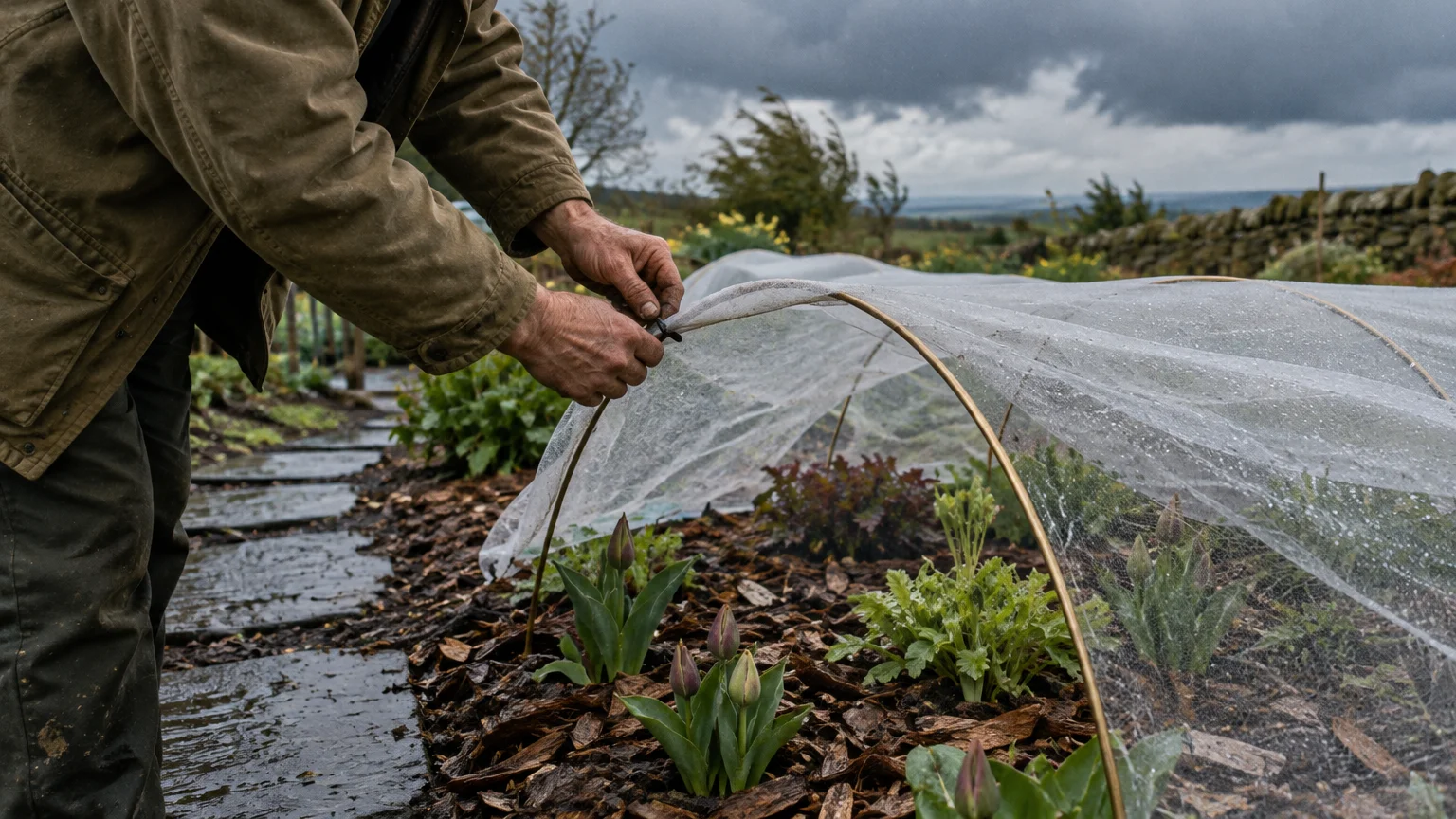
Daily floral movement makes plants uniquely vulnerable to specific outdoor garden challenges throughout the season. Damp petals folded shut at night create sheltered microclimates favored by foraging slugs and snails.
Scatter organic iron phosphate bait around bed perimeters to eliminate slug damage without harming wildlife. Keep mulch slightly away from plant crowns to discourage mold and pests from nesting near stems.
Turbulent windstorms and heavy downpours can batter open petals and snap delicate climbing stems. Stake taller varieties like morning glories firmly against prevailing gusts using flexible twine and sturdy vertical trellises.
Extreme drought can disrupt cell pressure, preventing flowers from opening or causing premature closure during daylight. Lay drip irrigation lines under mulch layers to supply consistent root hydration without soaking delicate blossoms.
Frequently Asked questions
Why do some garden flowers close during rainy days?
Flowers that close at night also seal during rainfall to protect their pollen from water damage. Wet pollen clumps easily, making it difficult for bees to transport and reducing successful plant fertilization.
Keeping petals shut during storms also guards interior reproductive tissues against mechanical damage from heavy raindrops.
What biological trigger causes nyctinastic flowers to move?
Nyctinastic flowers react primarily to ambient temperature shifts and fluctuating daylight levels. As light fades or temperatures cool, differential cell growth or fluid pressure changes force petals to fold inwards.
This internal circadian rhythm allows plants to anticipate sunrise and dusk, optimizing energy and structural defense.
Can unique flowers that open and close survive in container gardens?
Many responsive species thrive in decorative outdoor pots, window boxes, and hanging baskets on sunny decks. Compact varieties like moss rose, gazanias, and purple wood sorrel adapt beautifully to restricted container root zones.
Ensure your containers have ample drainage holes; potted soils can become waterlogged quickly during prolonged wet weather.
How can I design a dynamic garden using day and night bloomers?
Combine diurnal and nocturnal species in shared garden beds to ensure continuous visual interest around the clock. Position morning glories alongside evening primrose or moonflowers along sunny patio borders.
This staggered planting strategy provides active blossoms and shifting scents from early morning until late at night.
Check your USDA Plant Hardiness Zone at the USDA’s website. For lawn and garden care advice, consult your local University Extension program (listed here). Find native plant information from the National Wildlife Federation.
Disclaimer: This article provides general outdoor gardening advice. Success can vary greatly based on your specific climate, soil type, and local conditions. Always choose plants appropriate for your USDA Hardiness Zone.