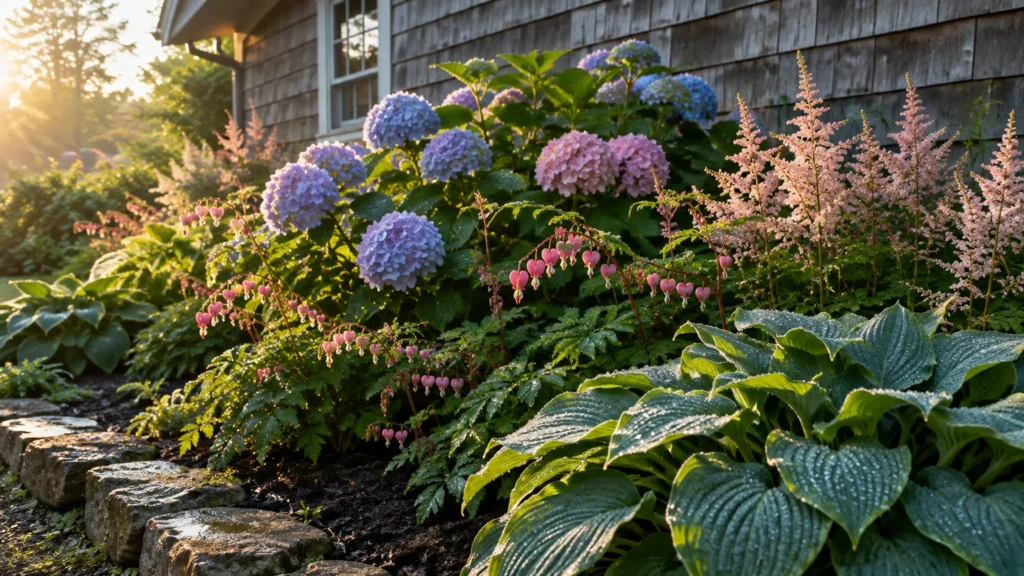
Cultivating a gorgeous, vibrant yard does not mean you have to spend your weekends snipping faded flowers. You can easily achieve stunning, continuous color from spring through fall by planting perennials that bloom all season without deadheading. These low-maintenance plants naturally drop their spent blooms or simply push fresh buds over the old foliage, saving you countless hours of tedious garden chores. Whether you are dealing with scorching summer heat, prolonged droughts, or tricky soil conditions, these self-cleaning champions deliver reliable beauty year after year. By choosing the right flowering perennials, you get all the aesthetic rewards of a lush landscape while keeping your pruning shears safely tucked away in the shed.
Tip #1: Cranesbill Geranium (Geranium ‘Rozanne’)
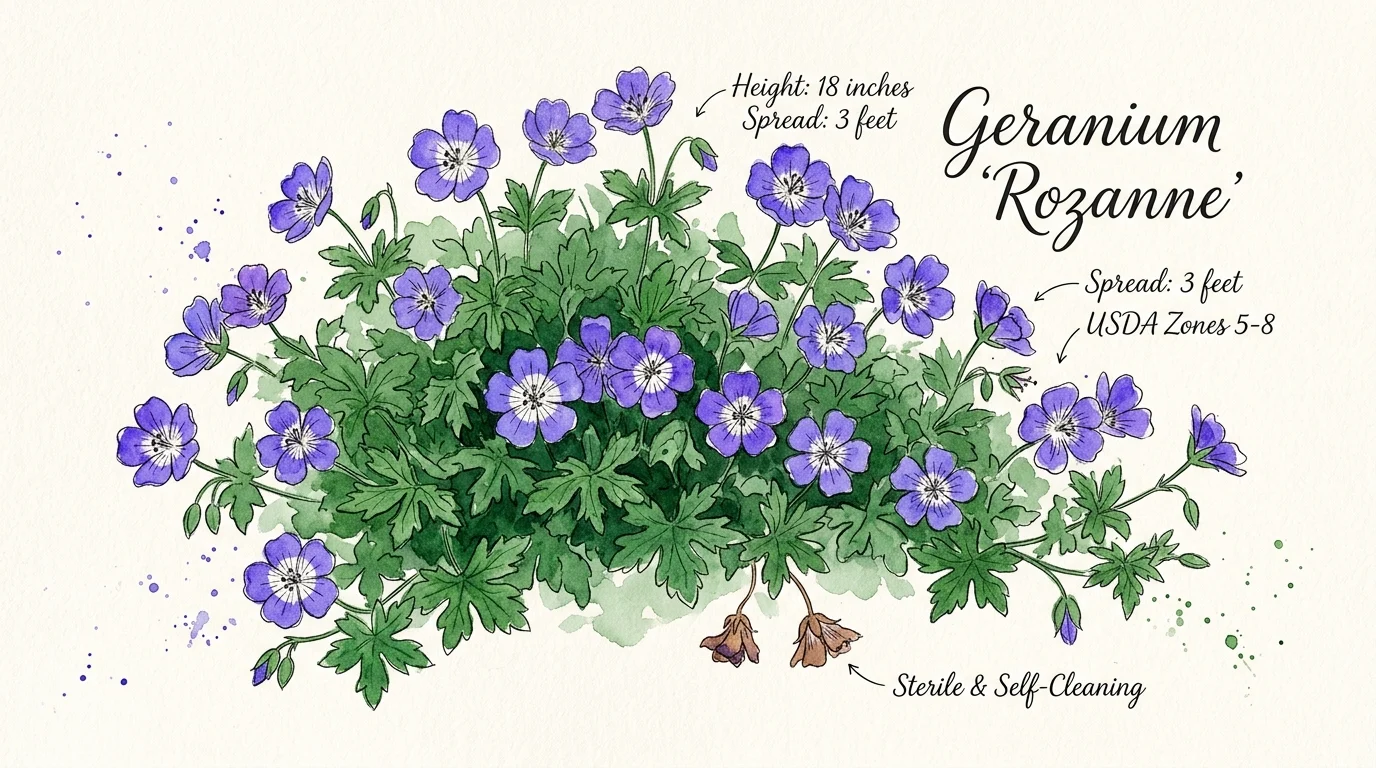
When you plant Geranium ‘Rozanne’, you are bringing home a true champion of the perennial world; this specific cultivar is so beloved it was named the Royal Horticultural Society’s Plant of the Centenary. Unlike many traditional garden flowers that require constant grooming, ‘Rozanne’ is completely sterile. Because it cannot produce viable seeds, the plant never receives the biological signal to stop blooming. Instead, it channels all its energy into producing an endless supply of large, violet-blue flowers with striking white centers, starting in early June and persisting right up until the first hard frost.
You will find this cranesbill geranium incredibly versatile in the landscape. Thriving in USDA Hardiness Zones 5 through 8, it grows to about 18 inches tall but acts like an enthusiastic ground cover, rapidly spreading up to three feet wide. The trailing habit makes it an exceptional choice for softening the hard edges of retaining walls, spilling out of large container arrangements, or weaving between taller, more rigid perennials like coneflowers and ornamental grasses.
For optimal performance, give this geranium a spot in full sun to partial shade. While it prefers moist, well-draining soil, it establishes a robust root system that effortlessly shrugs off brief dry spells once matured. You do not have to worry about deadheading a single bloom—the spent petals simply shrivel and drop away inconspicuously beneath the lush, deeply lobed foliage. You gain months of vibrant, uninterrupted color with zero pruning required.
Tip #2: Lesser Calamint (Calamintha nepeta)
If you want to add a soft, airy texture to your garden borders, Lesser Calamint is an absolute must-have. This highly underutilized perennial forms neat, bushy mounds covered in a cloud of tiny white to pale lilac blooms. From early summer all the way into late autumn, the plant remains completely smothered in flowers without requiring a single snip from your shears. As the old flowers fade, they naturally drop off, leaving the plant looking immaculately clean while fresh buds continuously emerge.
One of the greatest benefits of adding Calamintha to your yard is its incredible magnetism for pollinators. On any given sunny afternoon, you will find the delicate flowers buzzing with beneficial insects, particularly tiny native bees and butterflies. Despite attracting these welcome guests, the highly aromatic, mint-scented foliage acts as a natural deterrent to garden pests; deer and rabbits will actively bypass this plant in search of tastier meals.
Hardy in USDA Zones 5 through 9, Lesser Calamint requires very little intervention to thrive. It reaches a manageable height and width of 12 to 18 inches, making it a perfect edging plant for walkways or patios where passing foot traffic can stir up its refreshing scent. Plant it in full sun and ensure the soil offers excellent drainage. It loves the heat and handles drought beautifully, proving that you do not need to baby your plants to achieve a long-lasting floral display.

Tip #3: Wandflower (Gaura lindheimeri)
Wandflower brings a sense of dynamic movement to the garden that few other perennials can match. Often sold under cultivar names like ‘Whirling Butterflies’ or ‘Siskiyou Pink’, this North American native features delicate, four-petaled flowers that hover on long, wiry stems high above the main clump of foliage. When even a slight breeze rolls through your yard, the blooms dance and sway, creating the illusion of a flock of butterflies hovering over your garden beds.
This plant is a genuine self-cleaning marvel. As each delicate flower finishes its lifespan, the petals drop cleanly away to the ground, leaving no unsightly brown husks behind. Fresh flowers open continuously along the extending stems from late spring all the way until the first frost. You never have to step in to tidy it up; the plant manages its own aesthetic perfectly.
Growing best in USDA Zones 5 through 9, Gaura relies on a deep, fleshy taproot that makes it exceptionally drought-tolerant once established in your landscape. Because of this taproot, you should choose its planting location carefully—it does not like to be moved once it settles in. It reaches impressive heights of 3 to 4 feet, providing fantastic mid-border height without blocking the view of the plants behind it, thanks to its wonderfully transparent, airy structure. Give it full sun and well-draining soil, and it will reward you with tireless, graceful blooming.

Tip #4: Threadleaf Coreopsis (Coreopsis verticillata)
For a spectacular punch of bright, cheerful color, Threadleaf Coreopsis is a brilliant choice that asks for virtually nothing in return. Cultivars like the buttery-yellow ‘Moonbeam’ and the golden-yellow ‘Zagreb’ are famous for their remarkable blooming stamina. What makes this plant so unique is the way it handles its spent flowers. Instead of relying on you to trim away the old blooms, the plant rapidly pushes new foliage and fresh flower buds up past the fading ones. The new growth visually swallows the old, effectively hiding the spent flowers and keeping the plant looking vibrant and fresh all season long.
The texture of Threadleaf Coreopsis is another massive selling point. The foliage is incredibly fine and needle-like, providing a gorgeous contrast when planted next to broad-leafed perennials like Hostas, Coral Bells, or Purple Coneflowers. It creates dense, bushy mounds that slowly expand via underground rhizomes, naturally filling in bare patches in your garden beds and choking out aggressive weeds.
This resilient perennial thrives in USDA Zones 3 through 9, making it suitable for a wide variety of climates. It typically grows 18 to 24 inches tall and is highly adaptable to poor, rocky soils where more delicate flowers would struggle to survive. As long as you provide a spot with full sun and prevent the soil from becoming waterlogged, Threadleaf Coreopsis will pump out thousands of daisy-like blooms from early summer straight into autumn.

Tip #5: Russian Sage (Perovskia atriplicifolia)
Russian Sage offers an incredibly long season of interest through a brilliant biological trick. While the actual true flowers of this plant are quite tiny and fall off naturally on their own, they are surrounded by fuzzy, lavender-purple calyxes. These colorful calyxes remain firmly attached to the stems for months after the true flowers are gone, maintaining the striking illusion of a plant in full, glorious bloom from mid-summer through October.
The visual impact of Russian Sage is undeniable. The tall, chalky-white stems and finely dissected, silvery-gray foliage provide a striking, cool-toned backdrop that makes warmer garden colors pop. Try planting it behind the bright yellows of Coreopsis or the fiery oranges of daylilies for a classic, high-contrast landscape design. When you brush past the leaves, they release a strong, sage-like fragrance that deer and rabbits absolutely detest, keeping the plant safe from browsing wildlife.
Extremely rugged and hard to kill, Russian Sage thrives in USDA Zones 5 through 9. It is a tall, architectural plant, often reaching 3 to 4 feet in height and spreading equally as wide. The secret to success with this perennial is a hands-off approach; it actually performs best in lean, unamended soils and hot, dry conditions. If you pamper it with rich compost and heavy watering, the stems will become weak and flop over. Plant it in baking sun, ignore it, and watch it thrive.

Tip #6: Anise Hyssop (Agastache Hybrids)
If your goal is to attract hummingbirds, bees, and butterflies while avoiding tedious garden chores, Anise Hyssop needs a spot in your yard. Outstanding hybrid cultivars like ‘Blue Fortune’ and ‘Black Adder’ produce dense, bottlebrush-like spikes of tubular flowers in shades of purple, blue, and sometimes warm coral. Much like Russian Sage, Agastache holds onto its vibrantly colored flower bracts long after the individual blooms have faded, providing a relentless display of color from mid-summer until the first hard freeze.
Belonging to the mint family—which you can easily identify by its square stems—this perennial boasts highly aromatic foliage that smells distinctly of licorice or anise. This strong scent serves as an excellent natural defense mechanism against foraging deer. The upright, vertical growth habit makes it a brilliant structural element in the garden, adding height and dimension without taking up too much horizontal space.
Thriving in USDA Zones 5 through 9, Anise Hyssop generally grows between 2 to 3 feet tall. The most critical factor for ensuring its longevity as a perennial is excellent drainage, particularly during the winter months. If the crown of the plant sits in cold, soggy soil over the winter, it can easily rot. Mix some coarse sand or gravel into the planting hole if you have heavy clay, and place it in the sunniest spot available for a stunning, low-effort floral show.

Tip #7: Catmint (Nepeta faassenii)
Rounding out the list is Catmint, a rugged, sprawling beauty that delivers waves of soft purple-blue color. To achieve an all-season bloom without deadheading, it is essential to choose modern, sterile cultivars. Varieties like ‘Walker’s Low’ and ‘Cat’s Pajamas’ are bred specifically so they do not produce viable seed. Because they cannot complete their reproductive cycle, these plants continuously push out new flower spikes over their aromatic, gray-green foliage from late spring until the weather turns freezing.
Catmint is an outstanding problem-solver for tricky garden areas. It functions beautifully as a large-scale ground cover, tumbling elegantly over retaining walls, softening harsh concrete walkways, and filling awkward gaps between shrubs. It gives you the classic, romantic look of English Lavender but is vastly easier to grow, particularly in regions with cold, wet winters where lavender often struggles to survive.
Adaptable to USDA Zones 3 through 9, Catmint is fiercely hardy and highly drought-tolerant once its roots are established. Depending on the specific cultivar you choose, it can remain a compact 12 inches tall or mound up to a substantial 3 feet across. Give it full sun and well-draining soil. While you absolutely do not have to deadhead it for continuous blooms, if the plant ever looks slightly untidy in the blazing heat of late August, you can shear the whole mound back by a third; it will quickly rebound with fresh foliage and another intense flush of flowers.

Putting It All Together: Enjoy Your Beautiful Garden
Designing a low-maintenance landscape completely changes how you interact with your yard. By incorporating these seven self-cleaning perennials, you shift your weekend focus from tedious pruning and deadheading to simply relaxing and enjoying the vibrant ecosystem you have created. These reliable plants prove that you do not have to sacrifice abundant color and visual interest to achieve an easy-care garden.
For the best visual impact, try layering these plants based on their mature heights and textures. Place the creeping Cranesbill Geranium at the front of your borders, let the mid-sized Calamint and Coreopsis fill the center, and use the tall, architectural spikes of Russian Sage and Anise Hyssop as a stunning backdrop. Remember that while these plants are highly independent, they will still require consistent watering during their first season to establish strong, deep root systems. Once they are settled in, they will reward you with years of effortless, spectacular beauty.
For region-specific advice, consult your local University Extension program (find yours via the USDA directory). For plant databases and inspiration, visit the Missouri Botanical Garden or the Royal Horticultural Society.
Disclaimer: This article provides general gardening advice. Always consider your specific climate, soil conditions, and local pests. Follow safety guidelines when using gardening tools and products.
Frequently Asked Questions
Do self-cleaning perennials ever need pruning?
Yes; while they do not require deadheading during the active growing season to keep blooming, most herbaceous perennials benefit from an annual cutback. In late winter or early spring, before the new growth begins, you should prune the old, dead stems down to a few inches above the soil line. This clears away the previous year’s debris and allows the sun to reach the crown, encouraging vigorous new spring growth.
Will these perennials bloom heavily in their first year?
Many perennials spend their first season focusing their energy on establishing a robust, deep root system in their new environment. As a result, the flower production might be somewhat light during that first summer. Do not be discouraged; by their second and third years, once the roots are fully established, these plants will burst forth and provide the vigorous, season-long floral display they are known for.
Can I grow these low-maintenance perennials in containers?
Absolutely; plants like Cranesbill Geranium, Lesser Calamint, and Threadleaf Coreopsis adapt beautifully to container life. When growing perennials in pots, you must remember that they will require more frequent watering than those planted directly in the ground, as potting soil dries out quickly in the sun. Additionally, container plants are more exposed to winter chills, so you may need to move the pots into an unheated garage or shed to protect the roots during freezing weather.
How do I feed perennials that bloom continuously?
These resilient perennials thrive on tough love and generally require very little fertilization. Applying a thin layer of rich organic compost around the base of the plants in the early spring usually provides more than enough nutrients for the entire season. You should actually avoid using heavy synthetic fertilizers; excess nitrogen encourages the plants to produce floppy, weak foliage at the direct expense of those beautiful flowers you want to see.