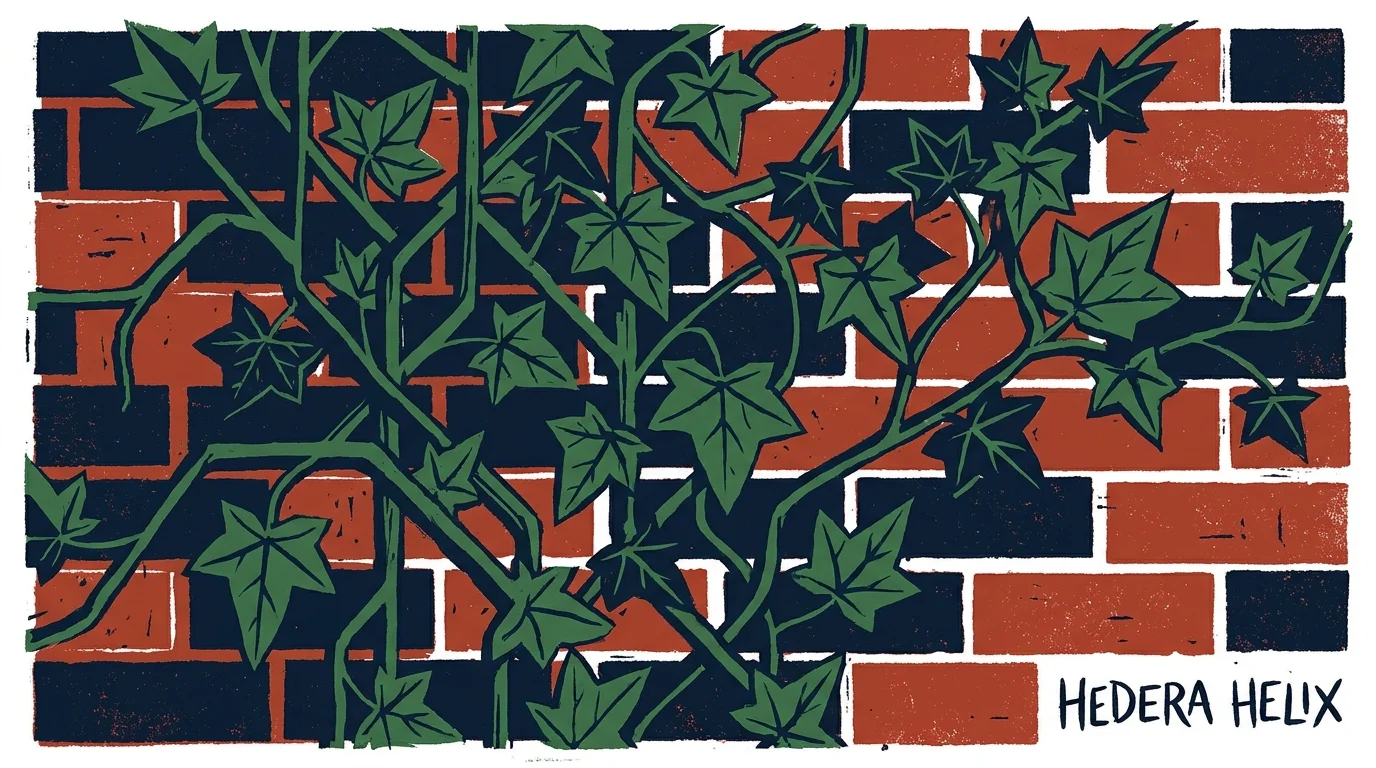
Tip #7: English Ivy (Hedera helix)
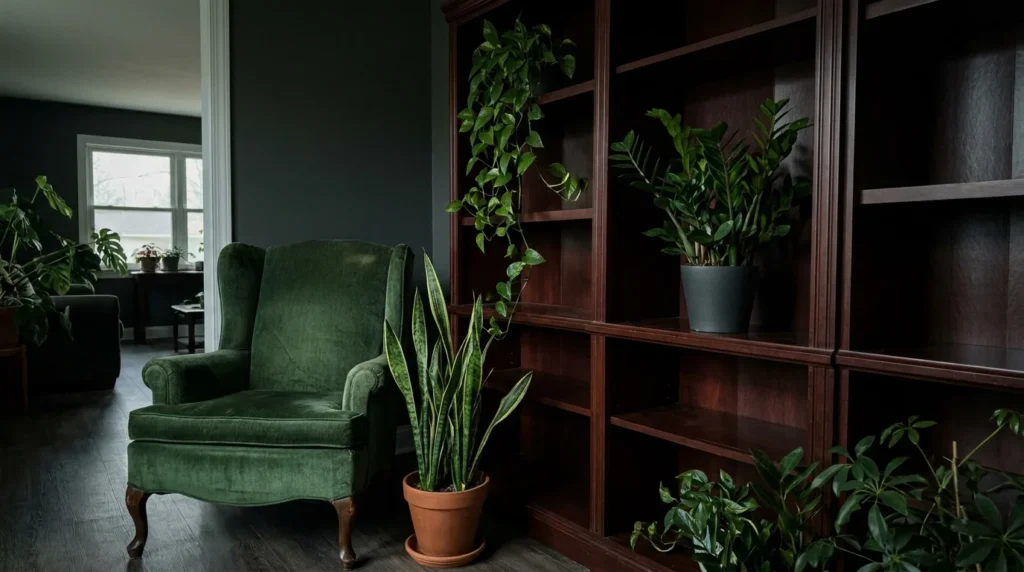
If you want to bring the romantic, sweeping aesthetic of a traditional European garden indoors, English Ivy serves as an exceptional choice for your low-light spaces. Unlike tropical houseplants that demand high heat and constant humidity, this vigorous evergreen climber actively prefers the cool, crisp temperatures often found in drafty hallways, enclosed porches, and north-facing bedrooms.
In its natural outdoor habitat, English Ivy happily creeps along heavily shaded forest floors and boldly scales the trunks of massive trees completely hidden from the sun.
When grown as a houseplant, English Ivy creates a stunning visual display when allowed to trail gracefully from an elevated shelf or carefully trained to climb upward along a wire topiary frame.
The deeply lobed, leathery leaves come in an array of captivating solid greens and creamy variegations. In darker rooms, the solid green varieties consistently outperform their variegated counterparts, as they possess higher concentrations of chlorophyll needed to process minimal ambient light.
Watering English Ivy requires a delicate balance; you must keep the potting mix consistently and evenly moist, but strictly avoid creating a soggy, mud-like environment. Check the container frequently and apply water just as the top inch of soil begins to feel dry to the touch.
Because indoor heating systems drastically reduce air moisture, heavily shaded ivy plants sometimes attract pesky spider mites. You can easily prevent these microscopic pests by routinely misting the elegant vines or placing the pot near a small, continuously running humidifier.