Tip #6: Spider Plant (Chlorophytum comosum)
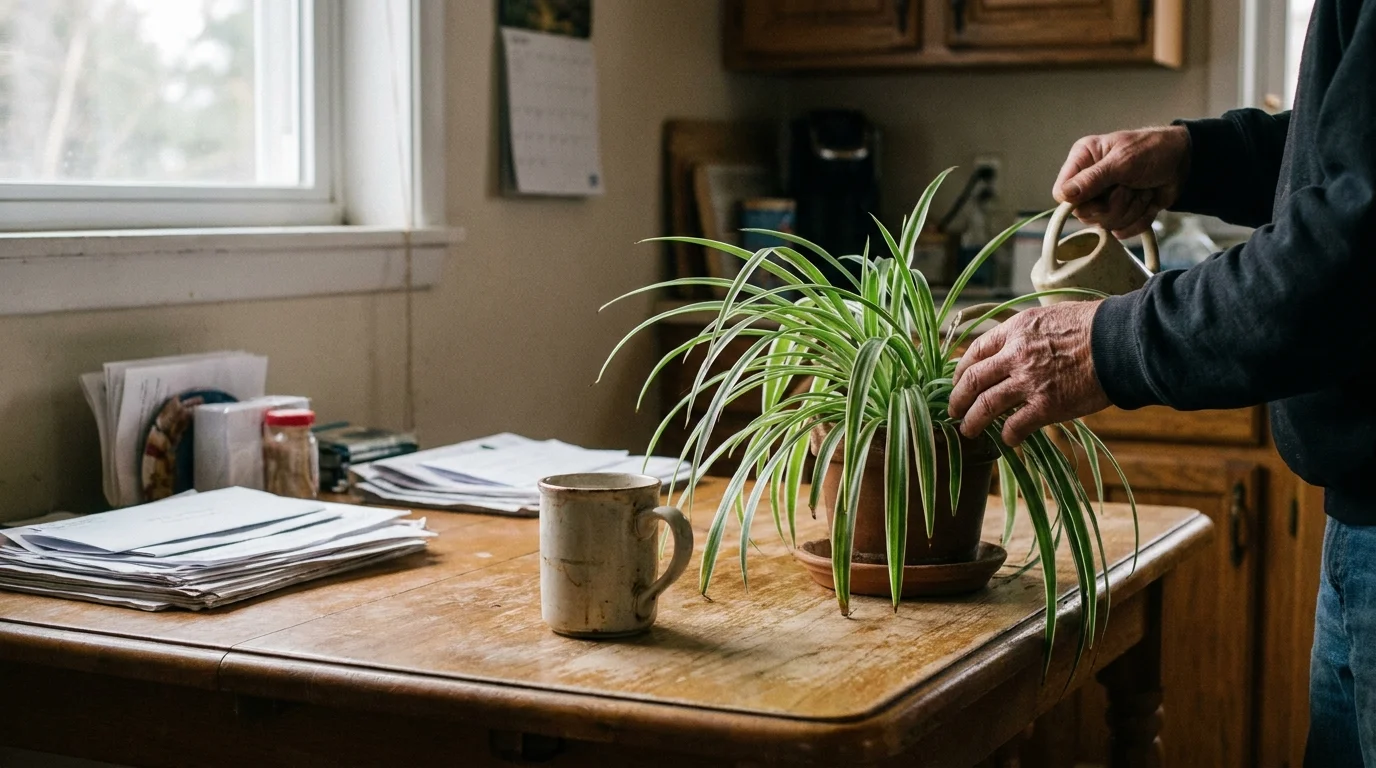
The Spider Plant brings a burst of kinetic energy and playful texture to any dim room, making it a beloved staple in homes and offices worldwide. Originally hailing from the coastal regions of southern Africa, this incredibly adaptable species features long, ribbon-like leaves that elegantly arch outward from a central crown.
As the plant matures, it famously sends out cascading runners that develop tiny, star-shaped flowers and miniature baby plants—affectionately known as spiderettes or pups.
While the Spider Plant grows fastest in brightly lit windows, it readily accepts the challenge of deeply shaded environments. Its secret weapon lies hidden beneath the dirt; the plant develops thick, fleshy, tuberous root systems designed to gorge on water and securely store it for extended dry spells.
In a low-light indoor setting, this built-in reservoir means your Spider Plant can comfortably endure forgotten watering schedules and general benign neglect without suffering permanent damage.
To keep your Spider Plant thriving in the shadows, let the top half of the soil completely dry out before you thoroughly water it. You should note that these plants remain particularly sensitive to the fluoride and chlorine frequently found in municipal tap water, which often causes their delicate leaf tips to turn crispy and brown.
By watering your heavily shaded Spider Plant with collected rainwater or standard distilled water, you will keep the cascading foliage looking pristine, vibrant, and incredibly lush.