Cultivating a moon garden transforms your outdoor space into a magical sanctuary the moment the sun sets. You can achieve this spectacular evening display by selecting specific night flowers that cleverly conserve their energy during harsh daylight hours. These unusual flowers twist shut, droop, or resemble wilted debris under the hot afternoon sun to protect their delicate petals from moisture loss. Once dusk falls, they dramatically unfurl into massive, highly fragrant blossoms designed to attract nocturnal pollinators like sphinx moths and bats. By incorporating these deceptive backyard plants into your landscape, you guarantee an evolving visual experience that rewards your evening strolls with breathtaking aromas and radiant blooms.
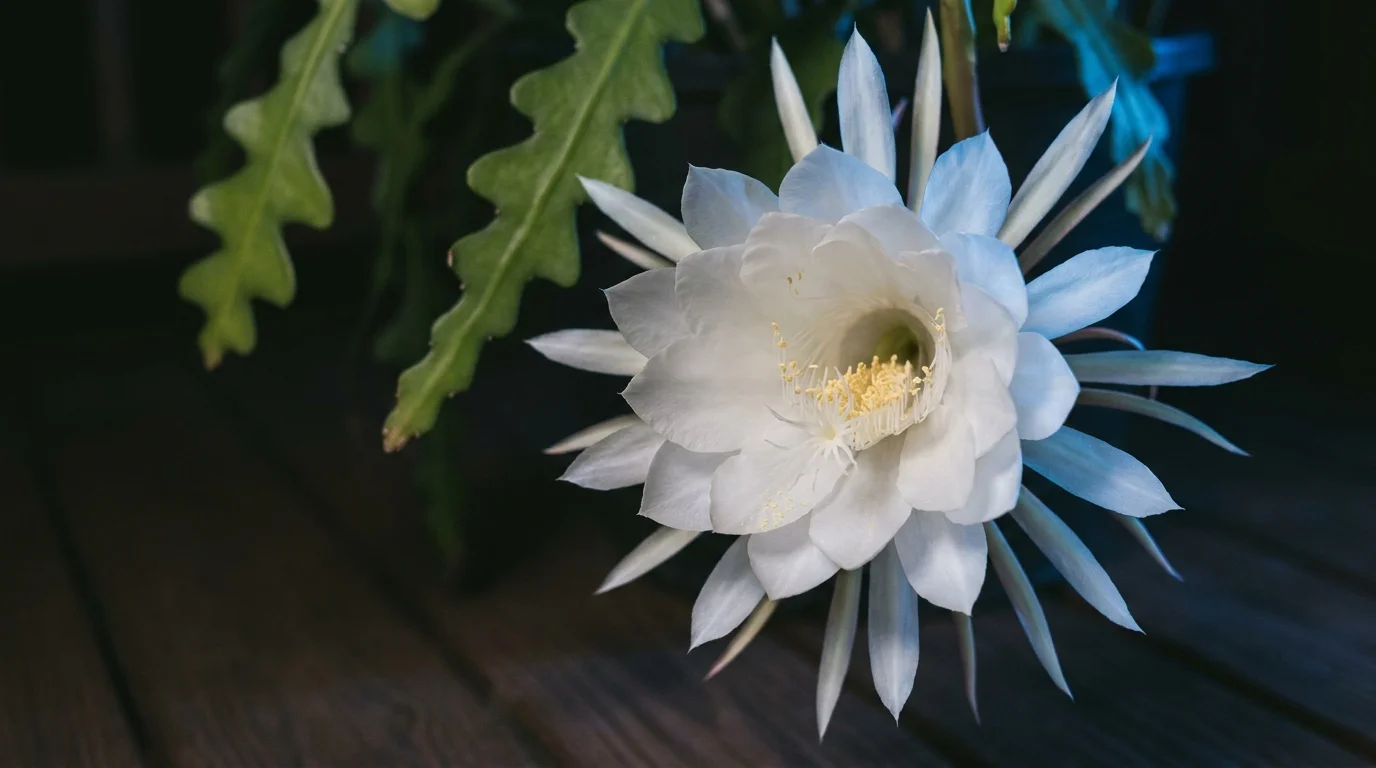
Tip #1: Night-Blooming Cereus (Epiphyllum oxypetalum)
During the daylight hours, the night-blooming cereus presents a remarkably uninspiring aesthetic. The plant features flat, jagged, awkward stems that lack traditional leaves and flop heavily over the sides of their containers. Under the afternoon sun, these stems often look pale, leathery, and entirely lifeless; many novice gardeners mistakenly assume the plant is severely dehydrated or actively dying. This deceptive daytime posture simply allows the plant to conserve vital moisture in its native tropical environment.
As evening approaches, this seemingly lifeless cactus orchestrates one of the most breathtaking transformations in the botanical world. Between eight o’clock and midnight, massive, pristine white blossoms unfurl from the ugly stems. These dinner-plate-sized flowers can measure up to eight inches across and emit an intoxicating, sweet fragrance designed to draw in night-flying pollinators. The glorious spectacle lasts for only a single night before the flower collapses at dawn.
To successfully cultivate this rare flower, you must treat it as an epiphyte rather than a traditional desert cactus. Plant your cereus in a loose, well-draining orchid bark or specialized cactus mix to ensure excellent root aeration. Place the container in bright, filtered morning light, but protect the fleshy stems from scorching afternoon rays, which cause the plant to turn a sickly yellow. Water the soil thoroughly only when the top two inches feel completely dry to the touch. You can easily propagate new plants by taking six-inch stem cuttings, allowing them to callus for a few days, and pressing them into moist soil.
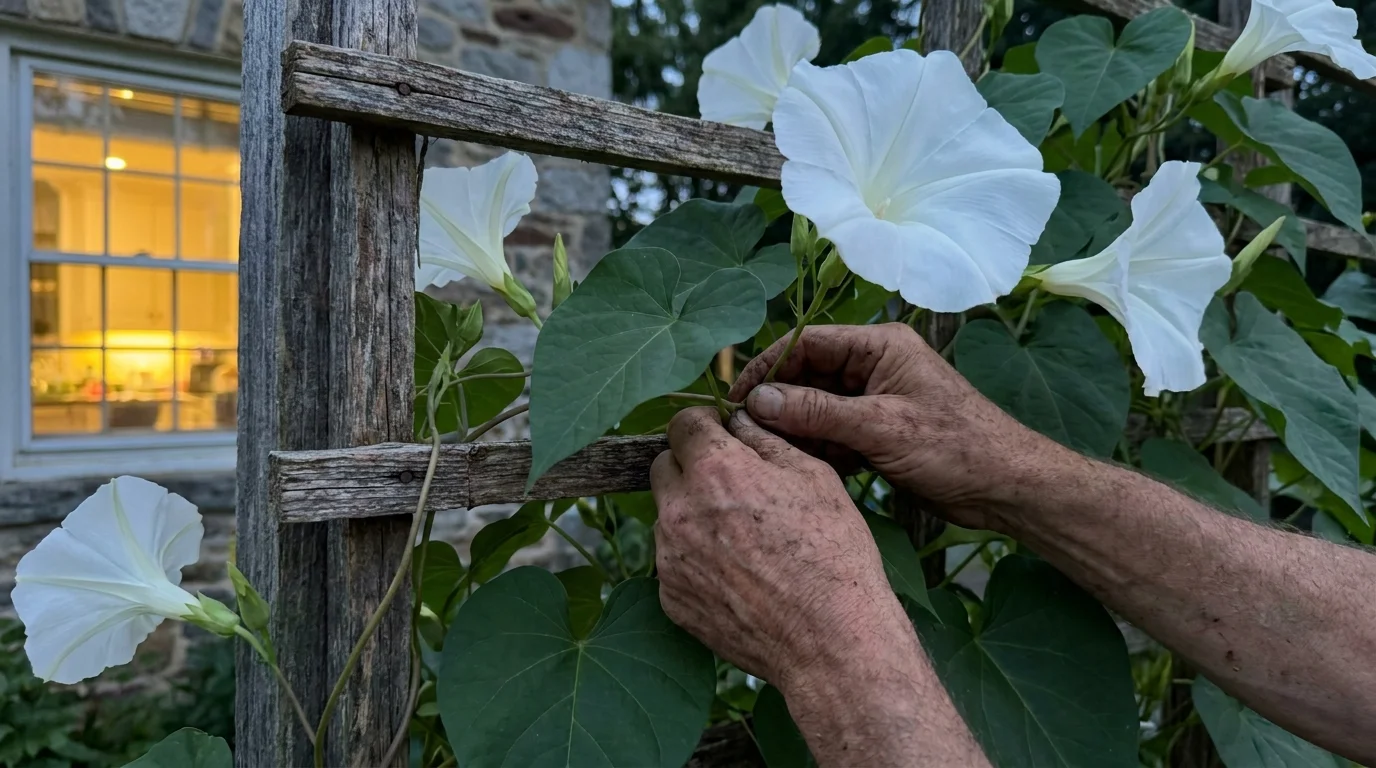
Tip #2: Moonflower (Ipomoea alba)
Under the glaring midday sun, the spent blooms of the moonflower twist themselves into tight, wrinkled cones that resemble discarded, dried-up tissue. The heart-shaped foliage frequently droops in response to intense summer heat, making the entire vine look exhausted and entirely devoid of life. This aggressive daytime wilting serves as a survival mechanism, protecting the plant’s delicate tissues from extreme evaporation.
As the ambient temperature drops and twilight settles over your garden, the vine seemingly resurrects itself. New, tightly wound buds rapidly untwist over the course of just a few minutes—a mesmerizing event you can actually watch unfold in real time. The resulting blossoms are massive, luminous white trumpets spanning six inches wide. These pristine flowers act like biological reflectors, catching and amplifying the ambient moonlight while releasing a soft, sweet perfume that drifts across your patio.
Because the moonflower grows as a highly vigorous climbing vine, you must provide a sturdy trellis, chain-link fence, or arbor; the plant effortlessly scales structures up to fifteen feet high in a single growing season. Since these unusual flowers belong to the morning glory family, their seeds possess hard, impenetrable outer coats. You will achieve significantly higher germination rates if you nick the seed coats with a metal file and soak them in warm water for twenty-four hours prior to sowing. Situate the vine in a garden bed that receives full, direct sunlight during the day, as this intense light fuels the spectacular nighttime floral display.
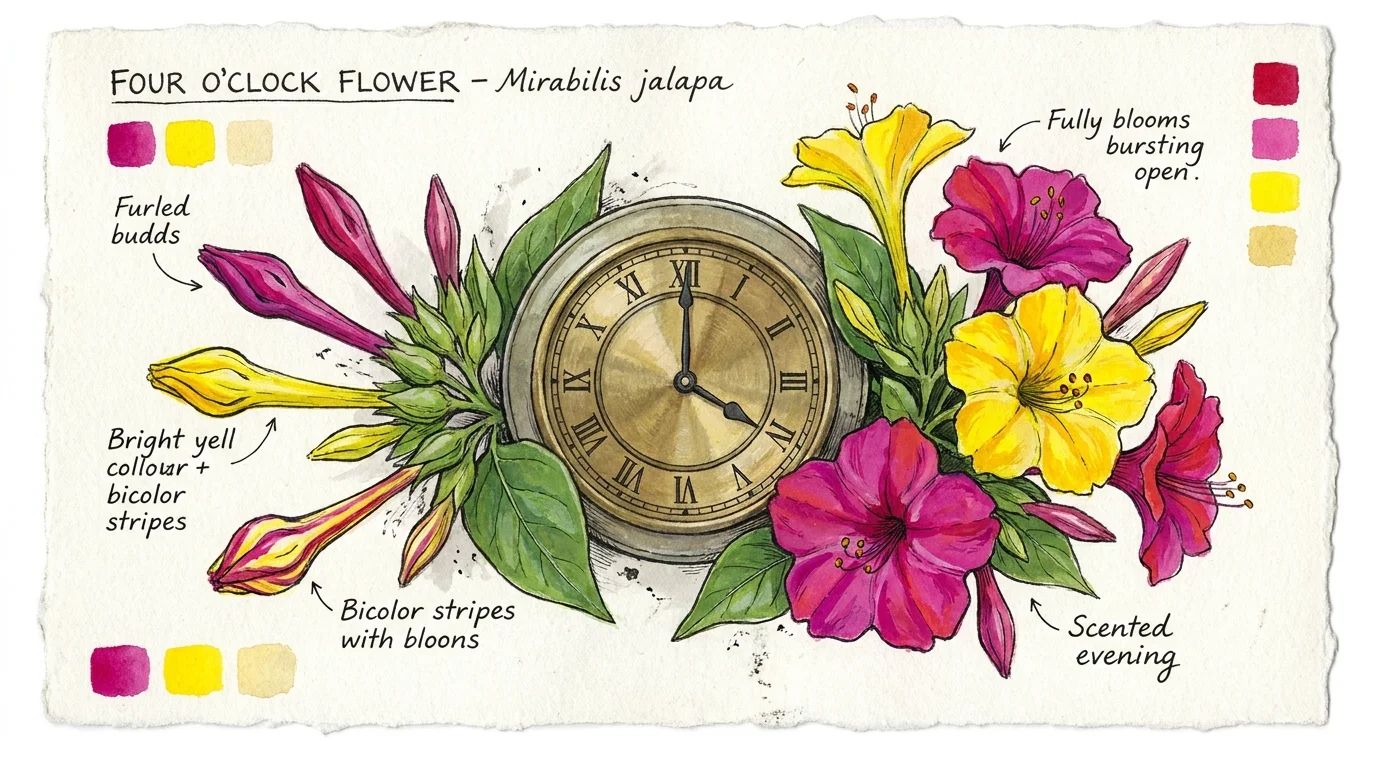
Tip #3: Four O’Clocks (Mirabilis jalapa)
When the afternoon heat reaches its peak, four o’clocks aggressively fold their petals inward to shield their reproductive organs from the sun. The colorful flowers seemingly vanish from sight, leaving behind limp, tired-looking green foliage that mimics the appearance of a plant suffering from severe drought. This dramatic daytime wilt keeps the plant cool and preserves its energy for the evening hours.
True to their common name, these resilient backyard plants snap back to vibrant life late in the afternoon or early evening. They erupt into a dazzling mosaic of magenta, bright yellow, crisp white, and bi-colored blooms. A single plant frequently produces multiple flower colors simultaneously, and the blooms occasionally feature wild, unpredictable splashes of contrasting stripes. As they open, the flowers release a delicate, citrus-like fragrance that grows stronger as the night deepens.
You will find four o’clocks incredibly forgiving and easy to grow. Cultivate these hardy plants in well-draining soil, where they thrive beautifully across hardiness zones seven through ten. As they mature, they develop massive, dark tuberous roots that resemble overgrown carrots; these thick tubers store ample water, allowing the plant to withstand prolonged dry spells effortlessly. In cooler, frost-prone climates, you can dig up these tubers in the late fall and store them in a cool, dark basement over the winter, much like you would treat dahlia bulbs. Plant them near your outdoor seating areas to fully appreciate their evening scent.
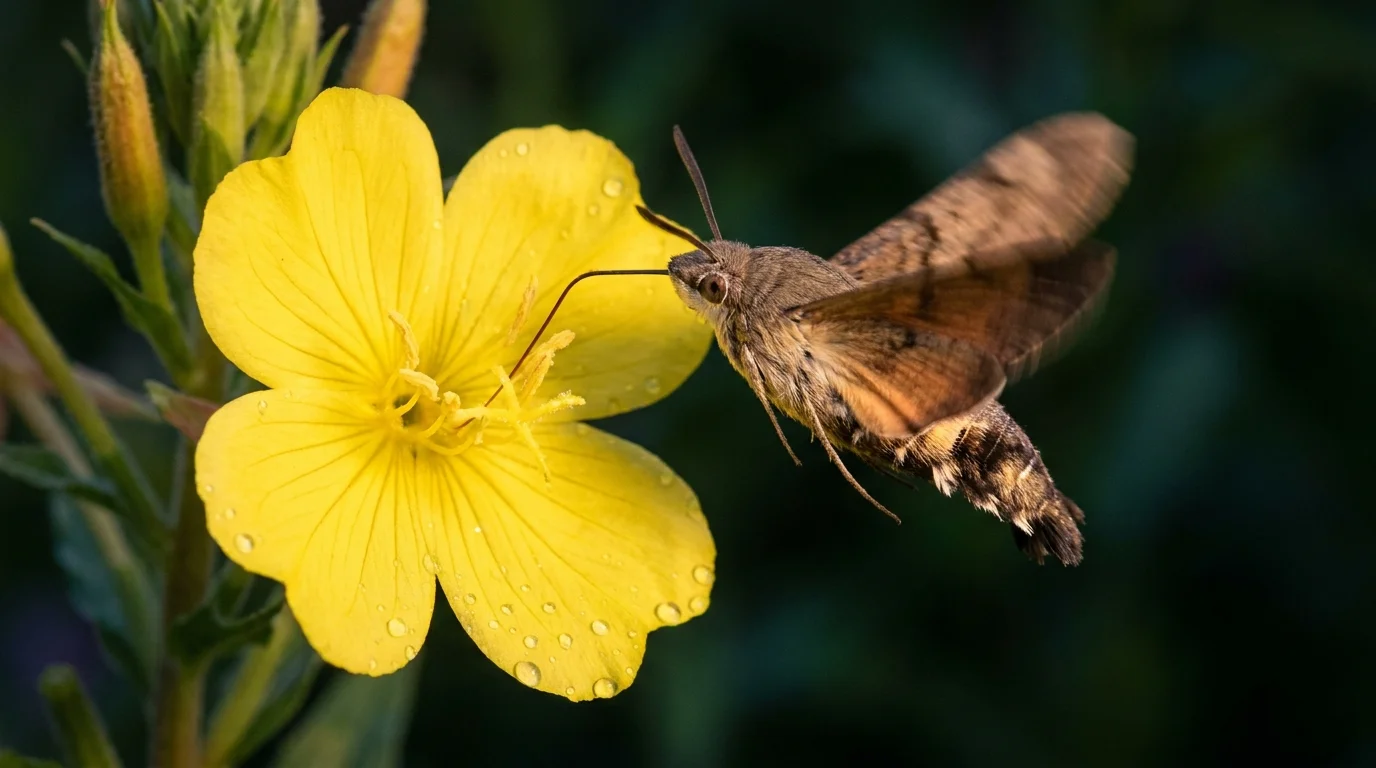
Tip #4: Evening Primrose (Oenothera biennis)
During the day, evening primrose blossoms completely surrender to the sun. The yellow petals crinkle, shrivel, and collapse inward, looking exactly like faded, discarded wads of yellow tissue paper hanging precariously off the fuzzy green stems. The plant looks messy, unkempt, and thoroughly dead to anyone strolling past your garden at noon.
At the precise moment of twilight, the plant orchestrates a rapid and dramatic recovery. Fresh, tightly packed buds pop open with a distinct, audible snap, revealing luminous yellow, bowl-shaped flowers. This sudden burst of life provides a vital, high-energy nectar source for night-flying sphinx moths, and the blooms remain open just long enough to feed early morning bumblebees before expiring again the following day.
This native biennial thrives on sheer neglect, making it a perfect addition to a low-maintenance landscape or wild meadow garden. You will discover it grows vigorously in poor, sandy, or rocky soils where fussy ornamental plants typically fail. To establish a patch, scatter the tiny seeds directly onto the soil surface in the late fall; they require exposure to sunlight and winter cold to trigger successful germination. Because evening primrose self-seeds prolifically and establishes a deep taproot, you should rigorously remove the spent flower stalks at the end of the summer season if you wish to control its aggressive spread across your manicured garden beds.
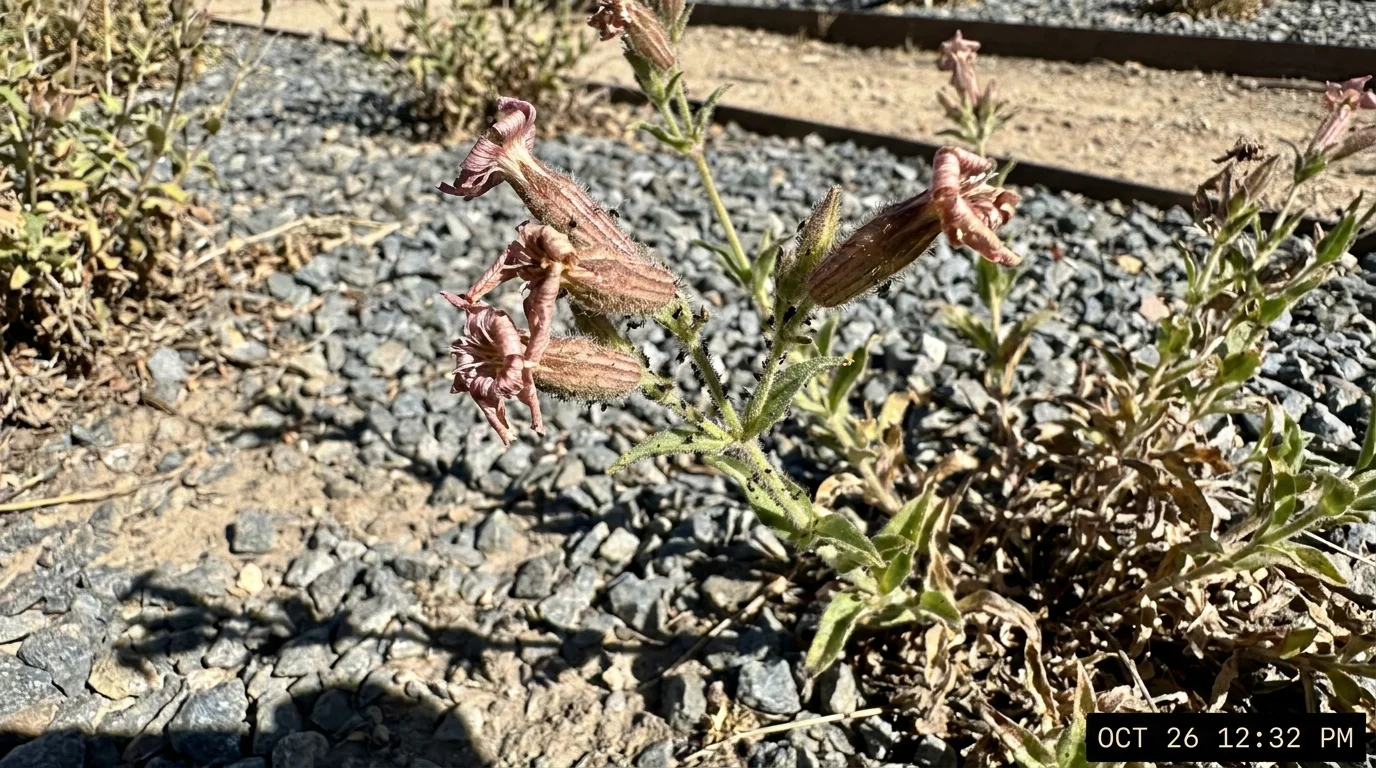
Tip #5: Nottingham Catchfly (Silene nutans)
This unassuming European wildflower puts on a highly convincing display of death during the daylight hours. The delicate white petals roll tightly backward upon themselves, and the slender stems droop heavily toward the soil. This creates a pathetic, wilted silhouette that deliberately deters daytime insects—such as bees and butterflies—from attempting to steal its nectar when its preferred pollinators are asleep.
Once the sun drops below the horizon, the stems stand at strict attention. The previously rolled petals unfurl into elegant, deeply lobed white stars that seem to hover in the dark. The plant immediately releases a potent, heavy perfume reminiscent of blooming hyacinths. For three consecutive nights, each individual flower repeats this exhausting cycle of wilting during the day and resurrecting at dusk to ensure maximum pollination by passing moths.
The Nottingham catchfly demands excellent soil drainage to prevent fungal root rot. You should mix coarse horticultural sand or pea gravel into your garden beds to closely mimic its natural, rocky alpine habitat. Because the plant thrives in slightly alkaline conditions, you may need to amend highly acidic soils with a light dusting of garden lime. Plant these rare flowers in tight clusters along a garden path to maximize the impact of their evening fragrance. Once established, they require very little supplemental watering, making them an excellent candidate for a drought-tolerant, water-wise moon garden.
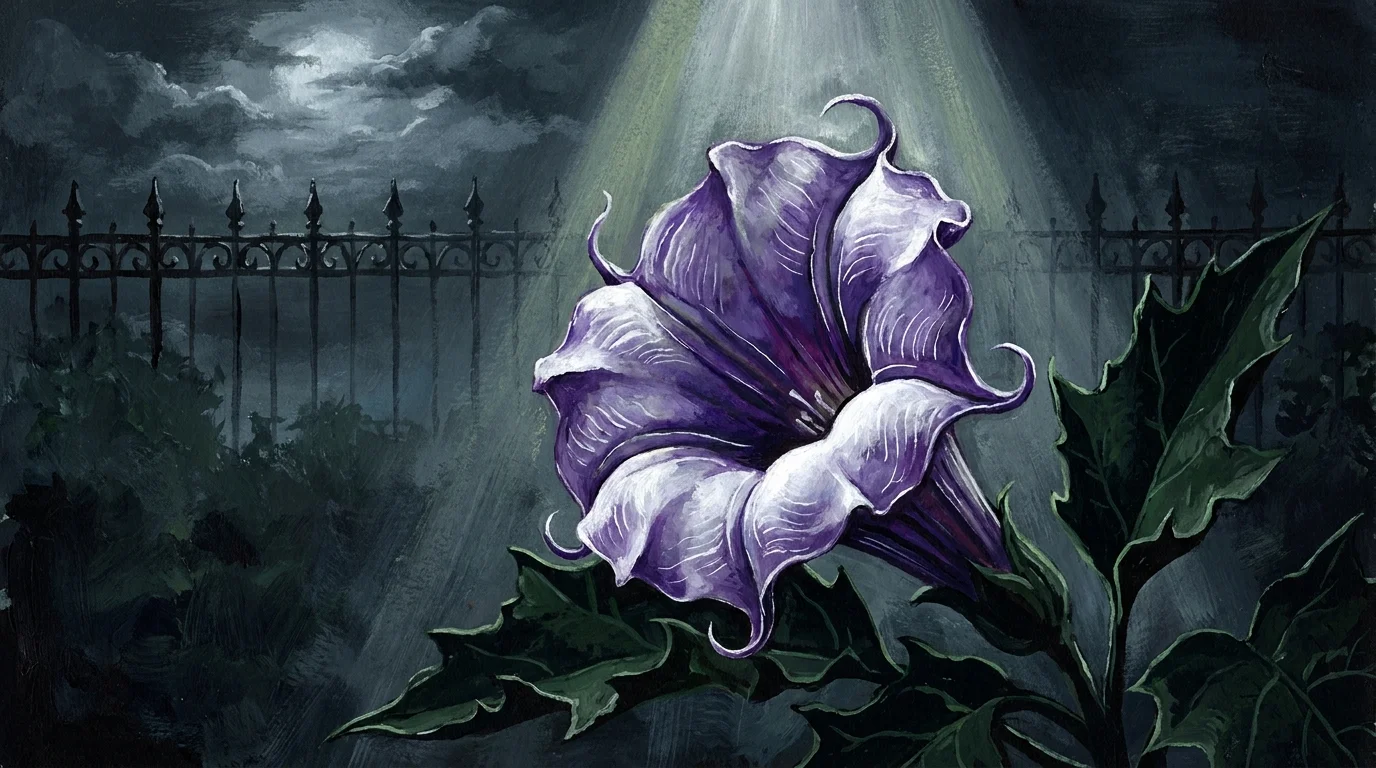
Tip #6: Devil’s Trumpet (Datura metel)
Devil’s trumpet flowers respond to intense sunlight by twisting completely shut to protect their pollen. They fold up tightly like an umbrella blown inside out, hanging limply from the thick, dark stems. This heavy drooping gives the entire shrub a tired, expired appearance, causing many gardeners to instinctively reach for their watering cans to revive the seemingly thirsty plant.
As evening approaches, the plant undergoes a stunning metamorphosis. The twisted cones slowly unfurl into massive, upward-facing trumpets that span up to eight inches across. These pristine white or striking double-purple blooms release an intoxicating, intensely sweet perfume that completely dominates the evening garden air. The sheer size and upright posture of the open flowers command immediate attention.
You must approach this spectacular plant with strict caution; every single part of the Datura plant contains potent alkaloids and is highly toxic if ingested by humans or pets. Always wear garden gloves when pruning the foliage or handling the spiky seed pods to avoid accidental skin irritation. Plant your devil’s trumpet in rich, loamy soil and apply a balanced, water-soluble fertilizer every two weeks during the active summer growing season to support the massive blooms. Provide copious amounts of water during hot summer days, as the large leaves transpire moisture rapidly, but ensure your container or garden bed drains freely to prevent waterlogging.
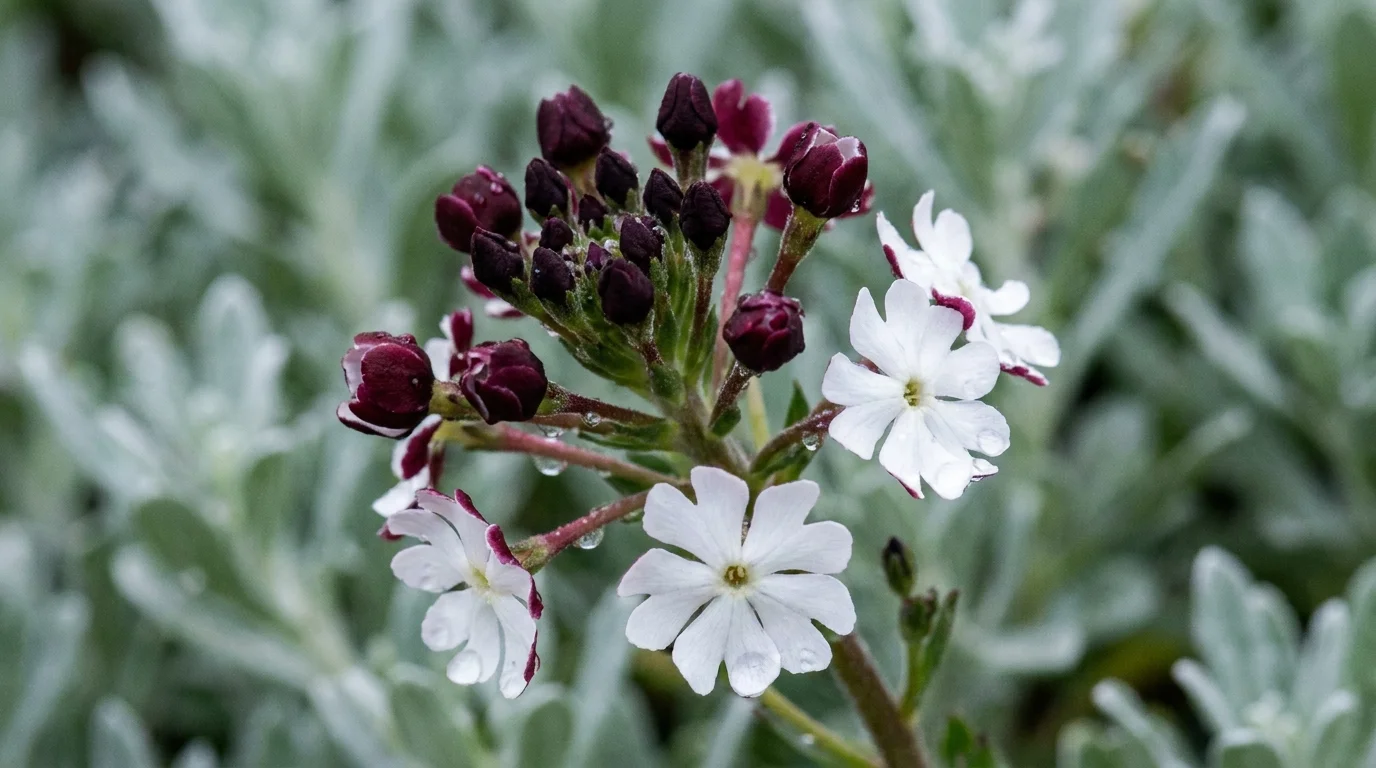
Tip #7: Midnight Candy (Zaluzianskya capensis)
Under the glaring daytime sun, this compact, low-growing plant keeps its blossoms firmly closed against the heat. The exposed undersides of the petals feature a dull, brownish-maroon color. From a distance, the closed blooms look exactly like tiny, dried-up, dead buds scattered haphazardly across the dark green foliage, making the plant look like it failed to bloom entirely.
The botanical deception ends the moment dusk arrives. The tight, brown buds spring open to reveal crisp, pure white, heart-shaped petals that shine brilliantly in the low light. The true magic of this plant, however, lies not in its appearance, but in its legendary scent. The open flowers emit an incredibly powerful, delicious fragrance heavily reminiscent of fresh vanilla cake, sweet honey, and warm toasted almonds.
Midnight candy grows best as a cool-weather annual, performing spectacularly in the mild temperatures of spring and early fall. You will achieve the greatest sensory impact by planting it in small containers positioned directly near your patio seating, open windows, or front doorways to fully capture the sweet aroma as it drifts on the night breeze. Keep the potting soil consistently moist but never soggy; dry soil causes the plant to panic and drop its buds prematurely. In regions characterized by brutal summer heat, you must provide partial afternoon shade to protect the plant and extend its blooming lifespan.
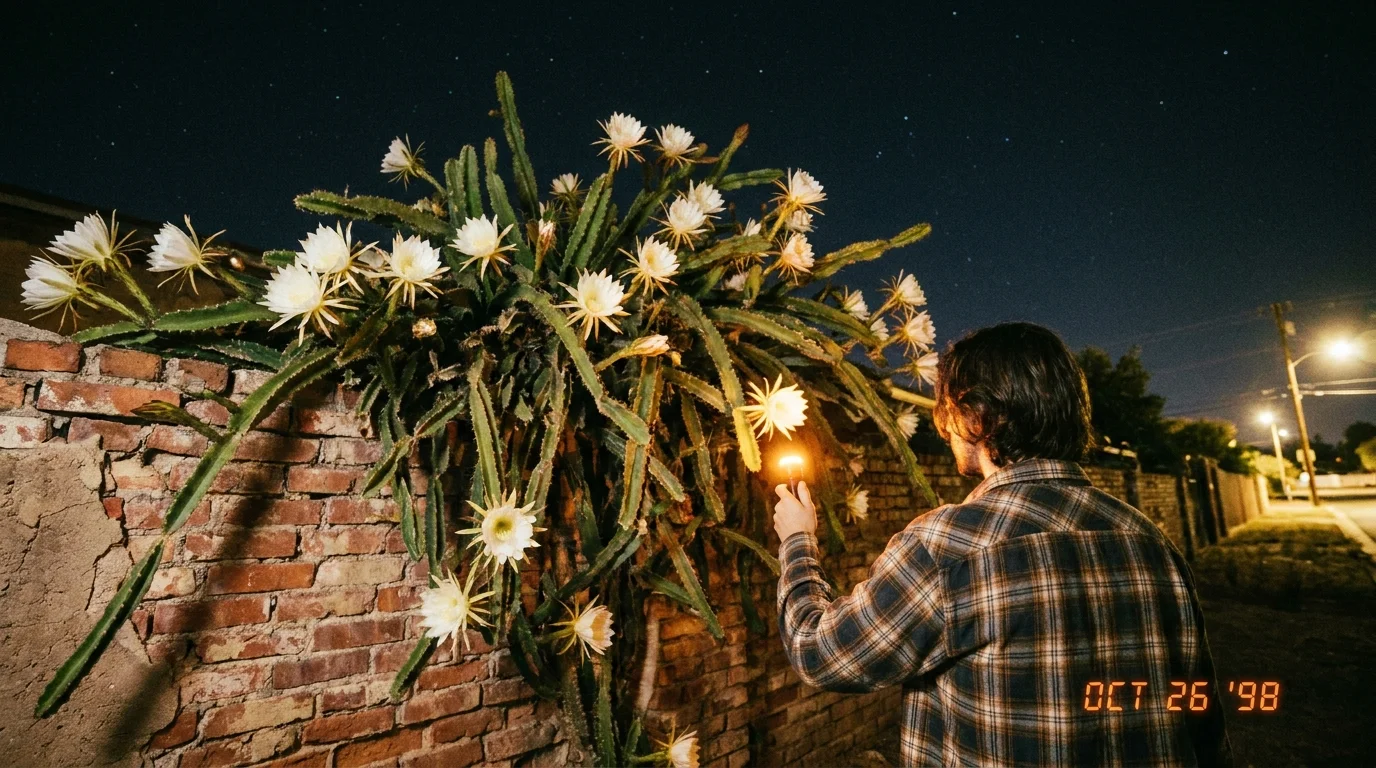
Tip #8: Queen of the Night (Selenicereus grandiflorus)
For roughly 364 days a year, this elusive plant looks entirely unappealing. It grows as a sprawling, messy tangle of spiky, snake-like stems that often appear brown, heavily scarred, and thoroughly lifeless. To the untrained eye, it looks like a neglected pile of dead cactus vines that desperately needs to be thrown onto the compost pile.
This incredibly rare flower rewards your extreme patience with one of the most spectacular, short-lived events in the botanical world. On a single midsummer night, the ugly stems erupt into magnificent, foot-wide blossoms. The flowers feature a striking halo of golden-brown outer petals surrounding a pure white, cup-shaped center. The bloom releases an intense vanilla and jasmine fragrance that drifts for hundreds of feet, disappearing entirely when the flower wilts at sunrise.
To successfully cultivate the Queen of the Night, you must provide a heavy-duty wooden trellis or a textured stone wall for its aggressive aerial roots to grip. It requires a fast-draining, coarse cactus substrate rich in pumice or perlite, rather than dense traditional garden soil. During the active spring and summer growing months, water the plant deeply whenever the top third of the soil dries out, and feed it monthly with a high-phosphorus liquid fertilizer to encourage bud formation. Because it is highly sensitive to cold, you must protect the plant from freezing temperatures by moving it into a sunroom or heated greenhouse well before the first winter frost hits.
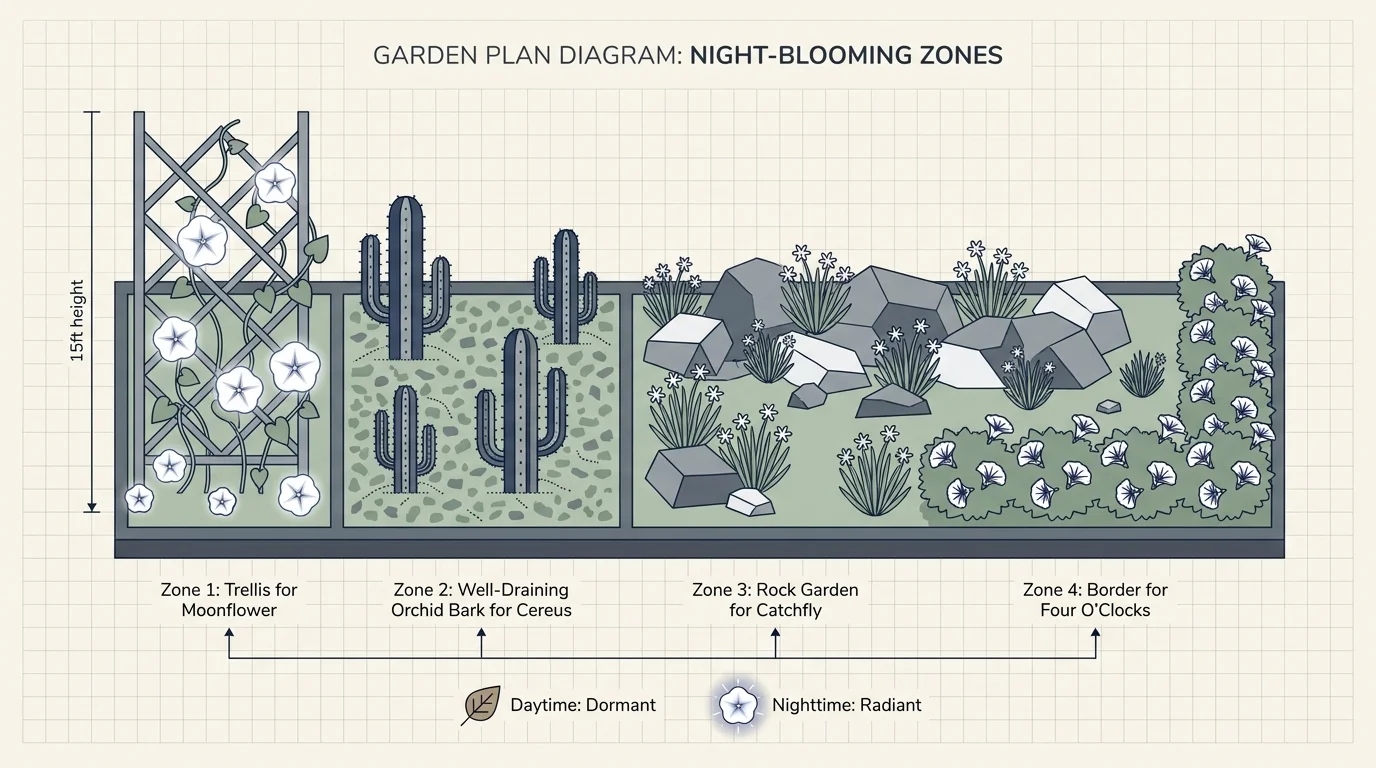
Putting It All Together: Enjoy Your Beautiful Garden
Designing a landscape that comes alive at night offers a deeply rewarding extension to your daily gardening routine. By strategically incorporating these unusual flowers, you transform a seemingly quiet, dormant backyard into an interactive, glowing sanctuary. The beauty of cultivating plants that look dead during the day lies in the sheer element of surprise and transformation. When you step outside after a long day, you witness a dramatic performance of unfurling petals and intoxicating fragrances that daytime gardeners completely miss.
Start your night-blooming journey small by introducing a container of fragrant midnight candy to your patio table, or by training a vigorous moonflower vine up a nearby fence. Pay close attention to their specific watering and light requirements, ensuring you position them where you can comfortably enjoy their evening displays. As you experiment with these deceptive beauties, you will quickly discover that a garden’s magic does not end when the sun goes down—it simply shifts into a new, breathtaking phase.
Frequently Asked Questions
Why do some flowers only open at night?
Night-blooming plants evolved this fascinating behavior to survive in harsh, hot climates and to attract specific nocturnal pollinators. By keeping their petals closed tightly during peak daylight hours, these plants effectively conserve vital moisture and protect their delicate reproductive organs from the scorching sun. At night, they open wide to accommodate the unique feeding habits of sphinx moths, bats, and night-flying beetles, offering them an exclusive supply of nectar.
Do night-blooming flowers need full sun during the day?
Yes, the majority of night-blooming plants require substantial daytime sunlight to generate the necessary energy for their spectacular evening displays. For example, vigorous growers like moonflowers and four o’clocks thrive best when planted in full, direct sun. However, tropical epiphytes such as the night-blooming cereus heavily prefer bright, indirect light, as direct afternoon sun will severely scorch their fleshy stems. You must always match the specific lighting requirements to the individual plant species.
How do you design a successful moon garden?
A successful moon garden relies heavily on high-contrast colors and powerful, lingering fragrances. You should focus your plant selection on flowers featuring pure white, pale yellow, or light silver petals, as these bright shades reflect ambient moonlight incredibly well against dark foliage. Incorporate plants with varying evening bloom times to ensure continuous visual interest throughout the night. Most importantly, position your night-blooming plants near patios, pathways, or bedroom windows so you can easily appreciate their heavy perfumes without stumbling through the dark lawn.
Are night flowers safe to grow around pets?
While many night-blooming plants are perfectly safe, some pose severe toxicity risks to animals. The devil’s trumpet (Datura) and angel’s trumpet (Brugmansia) contain highly potent alkaloids that are dangerously toxic to humans, dogs, and cats if ingested in any quantity. Always research the specific safety profile of any new plant you introduce to your landscape. If you own curious pets, consider cultivating toxic species in tall, inaccessible containers or fencing off specific garden beds to ensure your animals remain safe.
For region-specific advice, consult your local University Extension program (find yours via the USDA directory). For plant databases and inspiration, visit the Missouri Botanical Garden or the Royal Horticultural Society.
Disclaimer: This article provides general gardening advice. Always consider your specific climate, soil conditions, and local pests. Follow safety guidelines when using gardening tools and products.