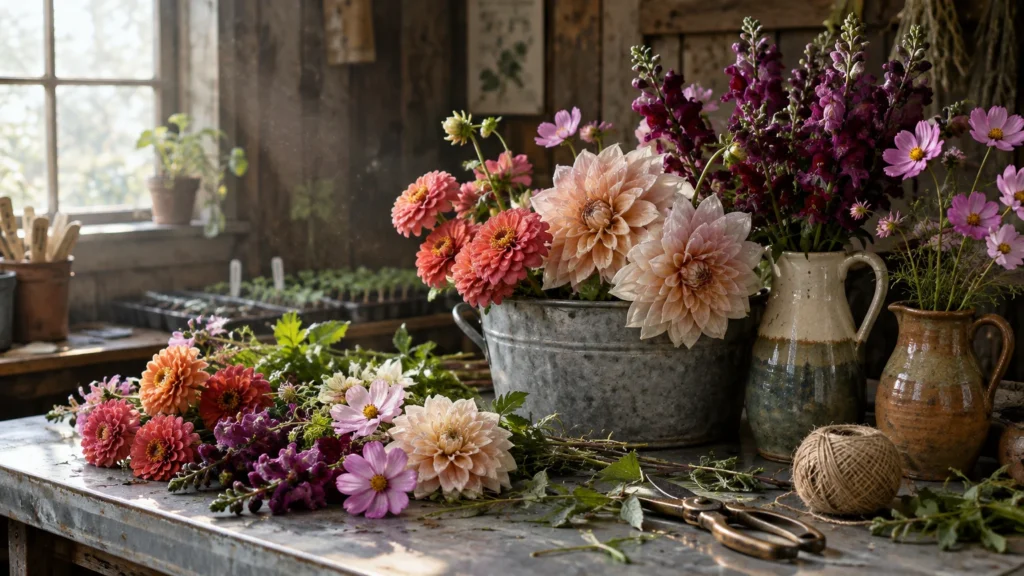
Cultivating a dynamic landscape requires selecting species that evolve as the months pass, shifting from vibrant spring blooms to deep autumn foliage. You can transform a static yard into an ever-changing visual experience by planting shrubs, vines, and perennials that transition through multiple color phases. These remarkable selections offer continuous backyard intrigue, ensuring your garden never looks exactly the same from one season to the next. By strategically layering these adaptable plants, you guarantee a continuous display of vivid tones long after traditional summer flowers fade. Discovering the right seasonal plants allows you to design a resilient, captivating garden that commands attention all year round without requiring you to replant every few months.
Tip #1: Oakleaf Hydrangea (Hydrangea quercifolia)
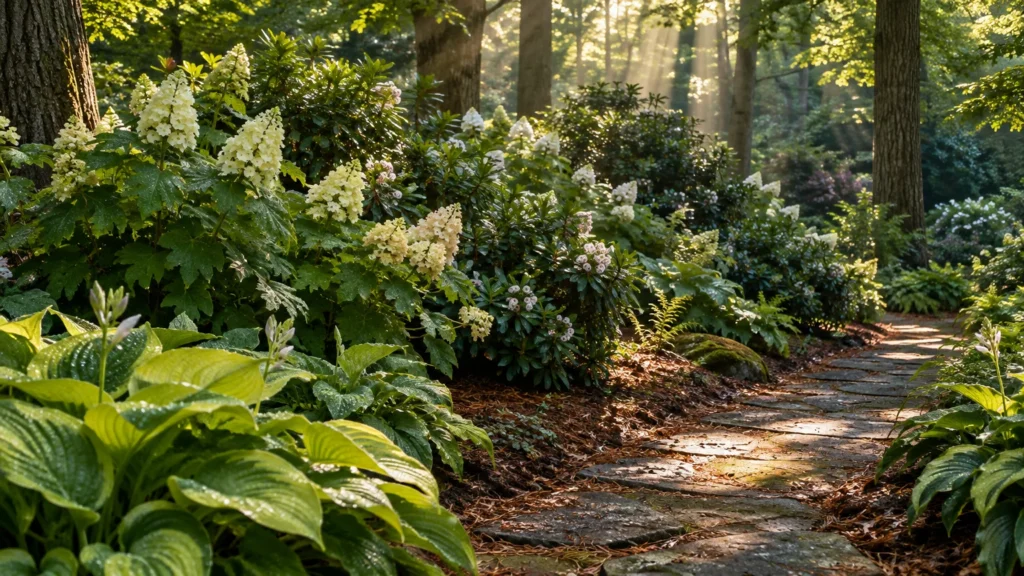
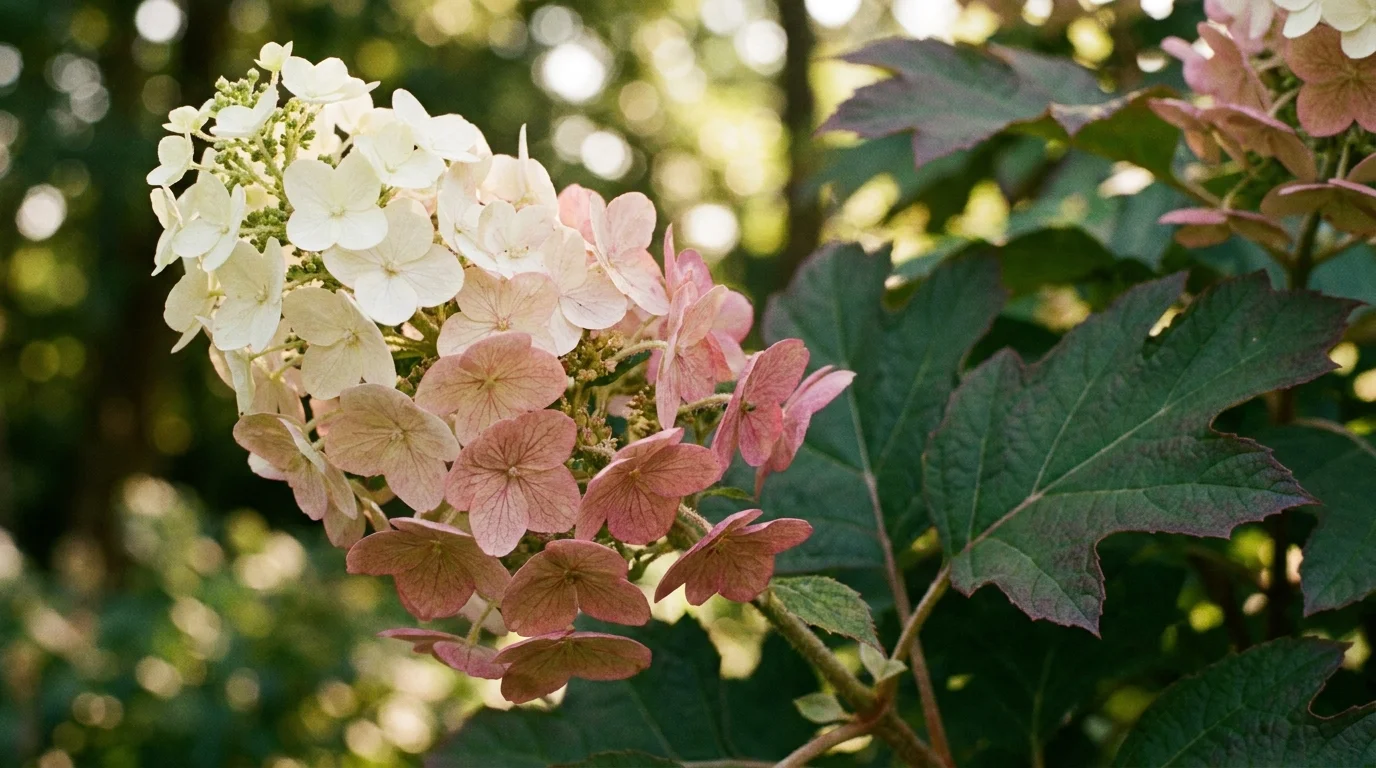
The Oakleaf Hydrangea stands out as a premier architectural shrub for gardeners seeking true four-season interest. Unlike traditional mophead varieties that remain relatively static until their leaves drop, this resilient native species puts on a spectacular, prolonged show. In early summer, the plant produces dramatic, cone-shaped flower panicles that emerge a pristine white. As the intense summer heat sets in, those crisp white blooms slowly blush to a romantic, dusty rose—providing a stunning contrast against the lush green background.
However, the most breathtaking transformation occurs within the foliage itself. The deeply lobed leaves—which closely resemble those of a classic oak tree—shift from their vibrant summer green to an intoxicating blend of deep mahogany, brilliant crimson, and rich purple as autumn temperatures drop. This foliage clings to the branches much longer than most deciduous shrubs, extending the visual appeal well into early winter. Once the leaves finally fall, the plant reveals beautifully exfoliating cinnamon-colored bark that catches the low winter sunlight.
To maximize this color progression, plant your Oakleaf Hydrangea in rich, well-draining soil. Providing morning sun and dappled afternoon shade encourages the strongest flower production and the most vibrant autumn hues. A thick layer of organic mulch will keep the root zone cool and retain the moisture necessary for those massive blooms to thrive.
Tip #2: Heavenly Bamboo (Nandina domestica)
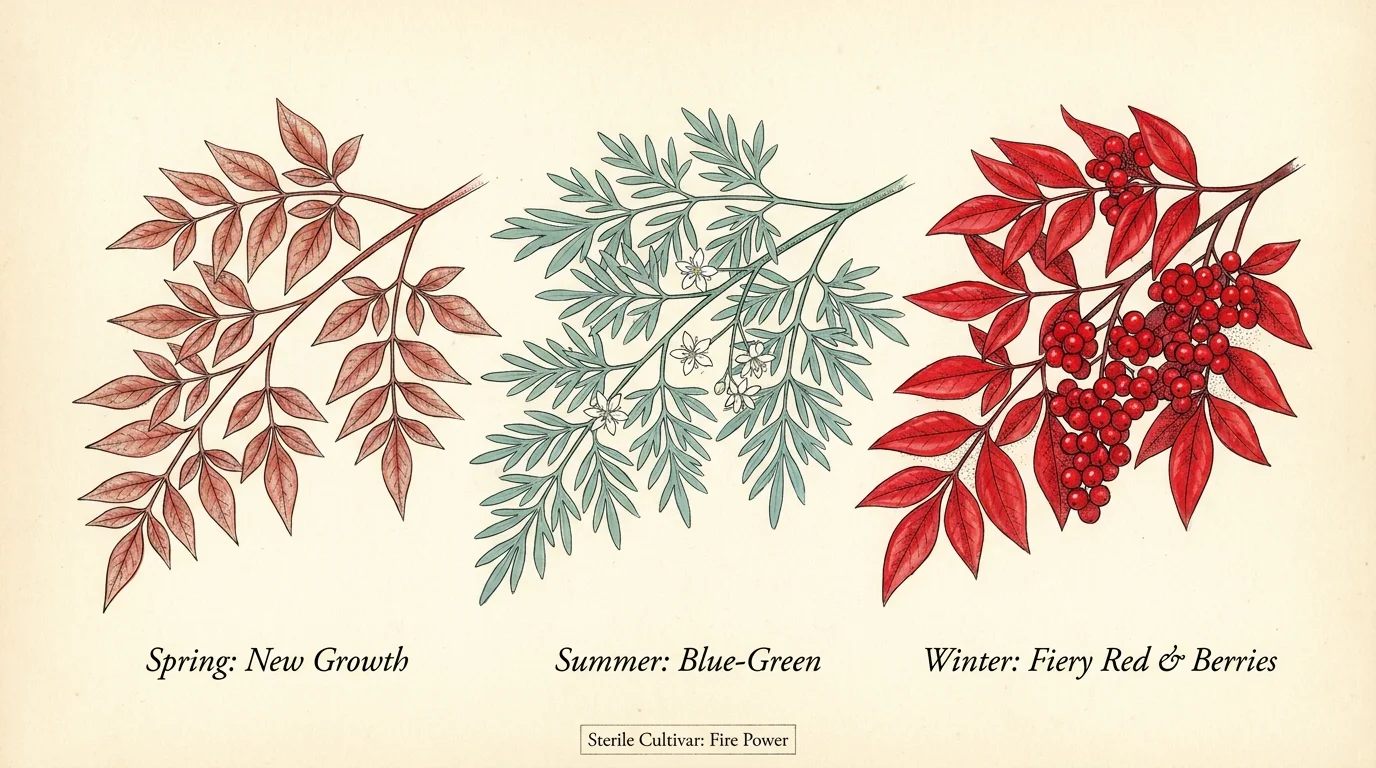
Heavenly Bamboo delivers a continuous kaleidoscope of color, making it a highly reliable structural anchor for your garden beds. Despite its common name, this plant is not a true bamboo but rather an incredibly tough evergreen shrub. It kicks off the growing season in early spring by pushing out delicate, lacy new foliage that emerges in striking shades of reddish-bronze. By mid-summer, the leaves transition to a soft, relaxing blue-green, providing a calm backdrop for clusters of star-shaped white flowers.
As the days grow shorter and the air turns crisp, Heavenly Bamboo completely reinvents its appearance. The cool weather triggers the foliage to flush into brilliant shades of fiery crimson and burgundy. Simultaneously, the summer flowers mature into dense clusters of bright red berries that persist throughout the coldest months, offering a vital food source for local birds and a spectacular visual contrast against winter snow.
You will achieve the most intense red coloration by planting Heavenly Bamboo in full sun, though it tolerates partial shade exceptionally well. Because it establishes a deep root system, this shrub becomes highly drought-tolerant after its first year. Keep in mind that the standard species can spread vigorously in warmer climates; you can easily prevent unwanted spreading by selecting sterile cultivars like ‘Fire Power’ or ‘Gulf Stream,’ which offer all the seasonal magic without the aggressive growth.
Tip #3: Virginia Creeper (Parthenocissus quinquefolia)
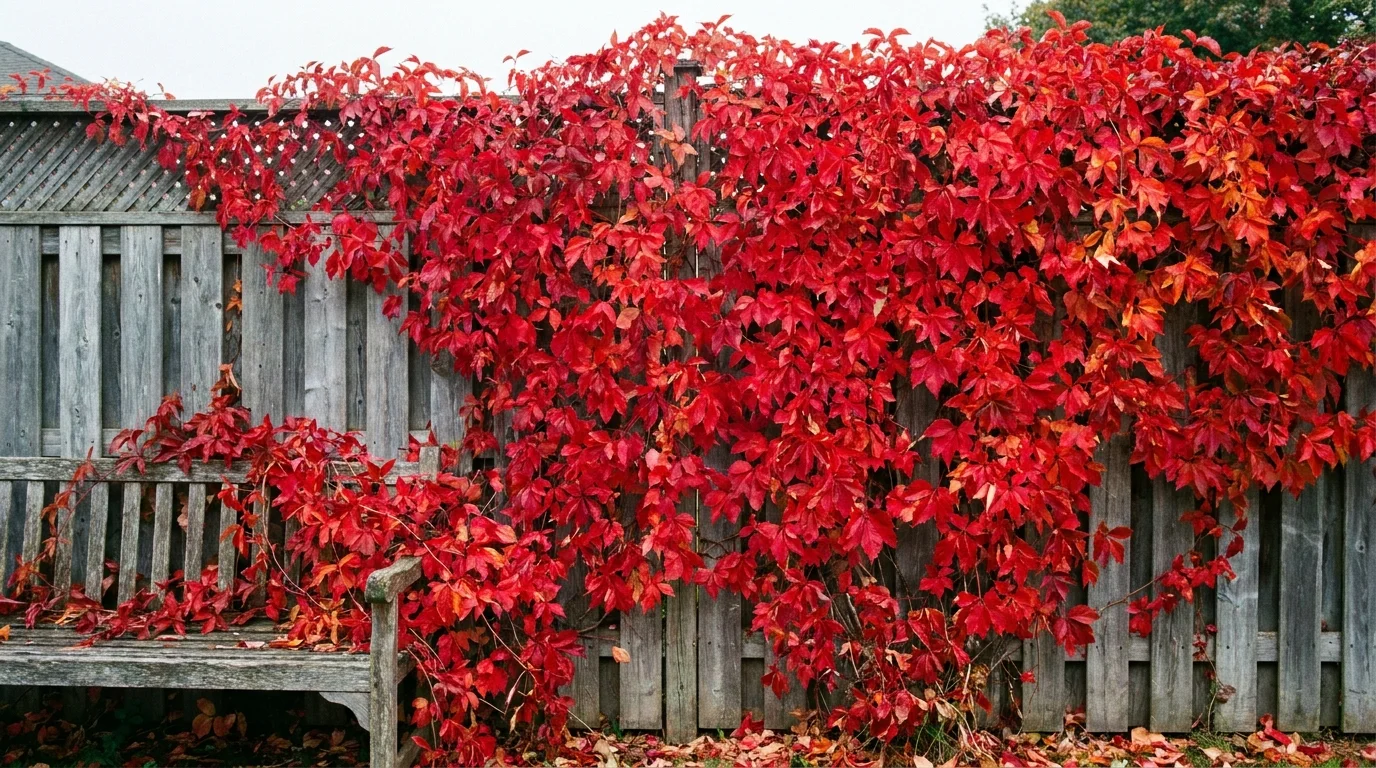
If you have a bare fence, a sturdy pergola, or a blank wall that needs a dramatic living facade, Virginia Creeper offers unparalleled seasonal transitions. This fast-growing, native vine utilizes specialized adhesive pads to scale vertical surfaces effortlessly, eliminating the need for complex wire trellises. In the spring, the new five-leafed clusters emerge in delicate bronze and purplish tones before maturing to a deep, matte green that provides dense, cooling shade throughout the height of summer.
The true magic of Virginia Creeper reveals itself the moment the first autumn frost threatens. The vine explodes into an absolutely blinding display of crimson, scarlet, and deep burgundy. Because the plant responds heavily to temperature drops and sunlight, a vine climbing up a sunny southern exposure will produce the most eye-popping reds imaginable. The dark blue berries that form in late summer become highly visible once the brilliant leaves eventually drop, feeding woodpeckers and bluebirds well into December.
While Virginia Creeper requires very little maintenance, you must give it sturdy support and occasional pruning to keep it out of your gutters and window frames. Plant it in moderately fertile, well-draining soil, and water deeply during extended dry spells to ensure the foliage remains pristine until its spectacular autumn finale.
Tip #4: Blueberry Bushes (Vaccinium spp.)
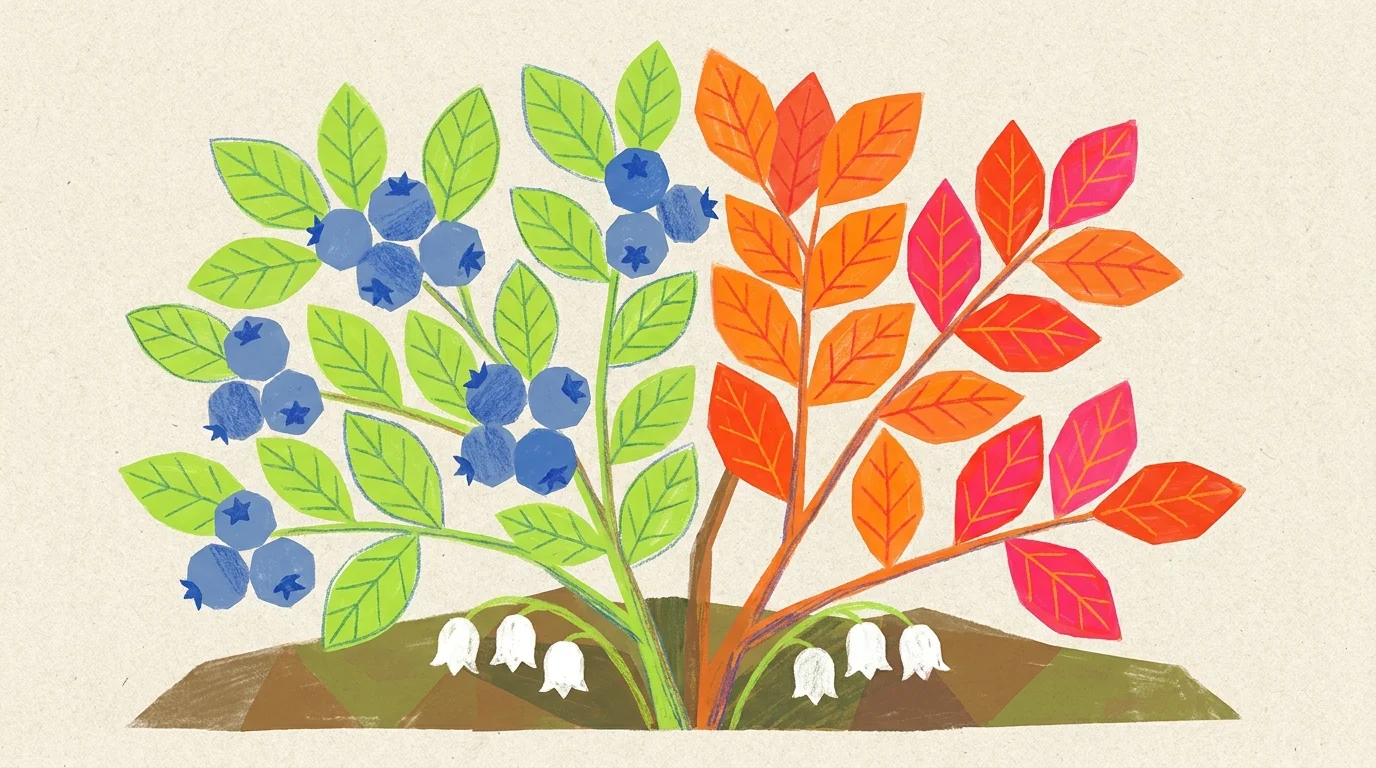
When you think of blueberry bushes, your mind likely jumps straight to the delicious summer harvest; however, these hardworking shrubs double as spectacular ornamental centerpieces. Integrating edible landscaping into your decorative beds allows you to maximize your yard’s utility without sacrificing an ounce of visual beauty. The seasonal journey begins in mid-spring when the bare branches suddenly drip with hundreds of tiny, bell-shaped flowers in soft shades of white and pale pink.
As summer arrives, the lush green foliage fills out to support the swelling fruit. Watching the berries transition from pale green to dusty purple and finally to a deep, powdery blue provides daily visual interest. Once you harvest the fruit and autumn approaches, the blueberry bush shifts into its most dramatic phase. The leaves transform into shocking shades of neon red, bright orange, and golden yellow, often rivaling the famous Burning Bush in pure intensity. Even in the dead of winter, the younger stems retain a striking reddish-brown hue that pops against the stark winter landscape.
Success with blueberry bushes relies almost entirely on soil chemistry. You must plant them in highly acidic soil—ideally with a pH between 4.5 and 5.5. Incorporating generous amounts of peat moss and mulching with pine needles will help maintain this acidity. Plant at least two different varieties close together to ensure cross-pollination, which results in larger berries and more robust plants.
Tip #5: Kousa Dogwood (Cornus kousa)
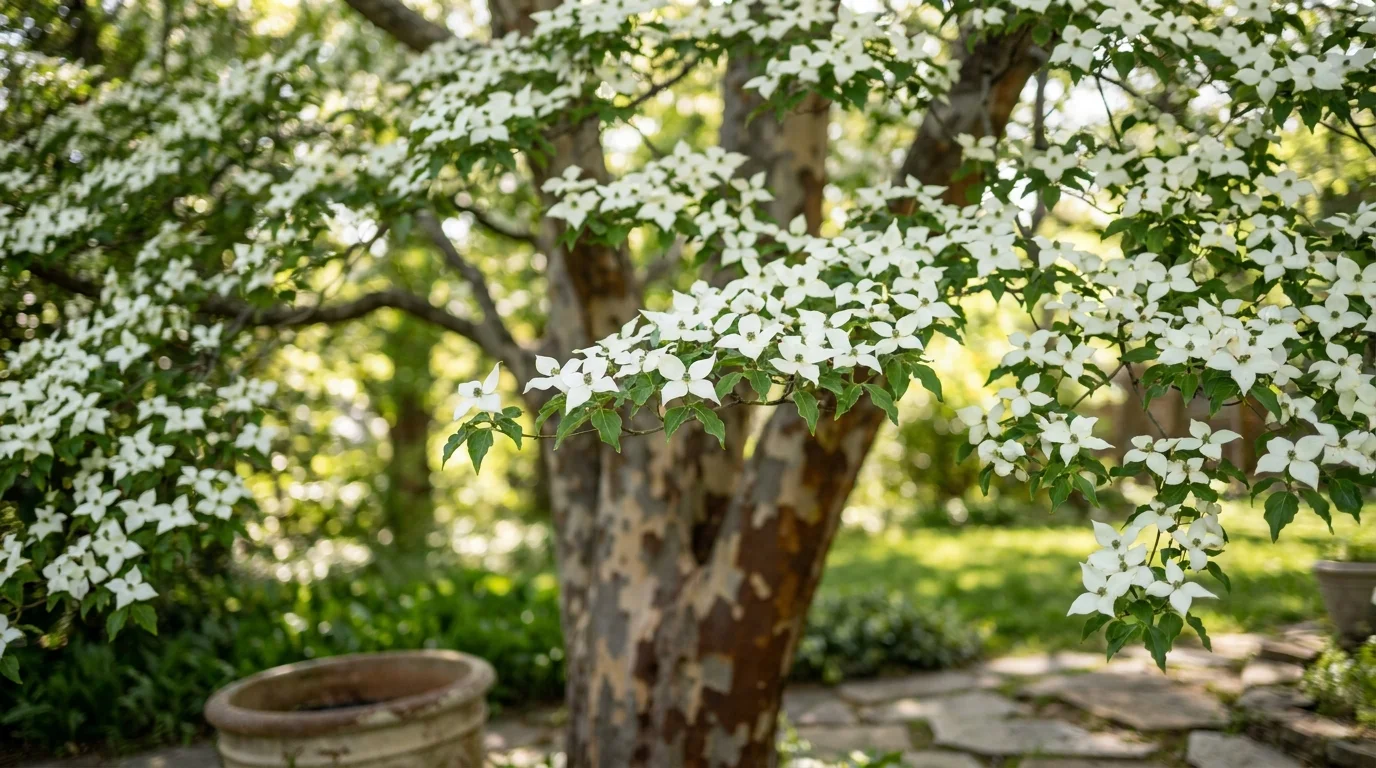
The Kousa Dogwood is a masterpiece of landscape design, offering a refined, elegant presence that changes personality entirely as the year progresses. Unlike the native flowering dogwood that blooms before its leaves appear, the Kousa Dogwood waits until late spring to put on its show. This timing means its stunning, star-like white or pink bracts open against a backdrop of fully developed, dark green leaves, creating a crisp, layered appearance that lasts for several weeks.
During the summer, the tree maintains a stately, horizontal branching habit that provides excellent dappled shade for understory plantings. By late August, fascinating, raspberry-like red fruits begin to dangle from the branches, adding a playful pop of color and attracting songbirds to your yard. When autumn arrives, the foliage transitions into a breathtaking tapestry of scarlet, rich purple, and glowing red, holding its color for an extended period.
As the tree matures, its winter silhouette becomes an attraction in itself. The exfoliating bark peels away to reveal mesmerizing patches of tan, gray, and brown, ensuring the tree remains visually engaging even when completely bare. Plant your Kousa Dogwood in well-drained, slightly acidic soil. Applying a wide ring of organic compost around the drip line will simulate its natural woodland environment, preserving moisture and keeping the roots cool during the hottest months.
Tip #6: Coral Bells (Heuchera)
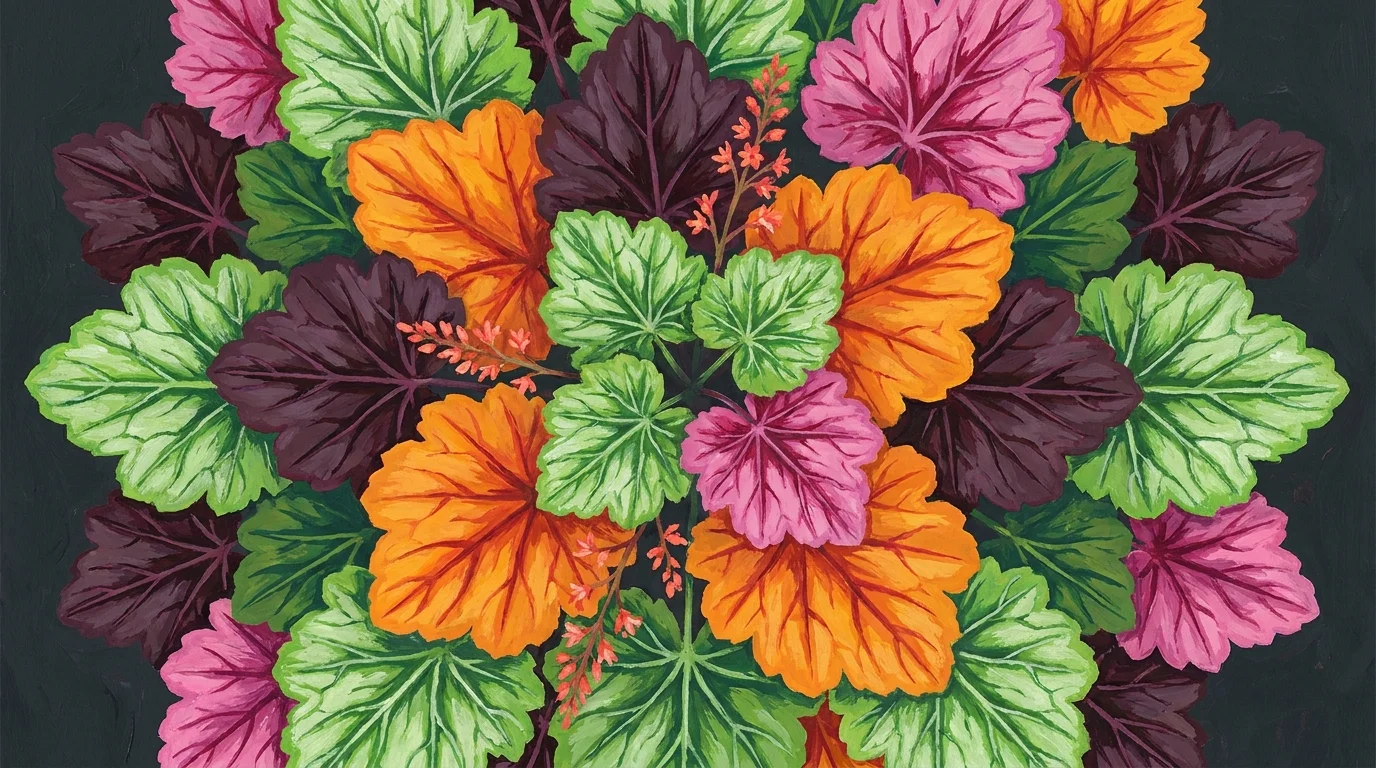
For gardeners looking to inject massive amounts of color into shaded or partially sunny borders, Coral Bells offer an incredible, low-growing solution. While they do produce delicate, bell-shaped flowers on tall wiry stems in early summer, you cultivate this perennial primarily for its astonishing, ever-changing foliage. Plant breeders have developed hundreds of cultivars, many of which shift their leaf colors based on the temperature and the season.
Varieties like ‘Caramel’ or ‘Peach Flambe’ often emerge in the cool spring air displaying bright, punchy shades of orange, apricot, and fiery red. As the summer heat intensifies, these colors gently mellow into softer ambers, muted golds, and chartreuse. When the cool temperatures return in late autumn, the foliage reacts by deepening into rich, saturated tones of plum, bronze, and deep mahogany. In milder climates, Coral Bells remain evergreen, maintaining these dark, moody hues right through the winter.
You can use these adaptable plants to line pathways, soften the edges of raised beds, or create stunning mixed container displays. They perform beautifully in well-drained soil enriched with organic matter. Keep the crown of the plant slightly above the soil line to prevent rot, and divide the clumps every three to four years to maintain their vigorous growth and brilliant coloration.
Tip #7: Smokebush (Cotinus coggygria)
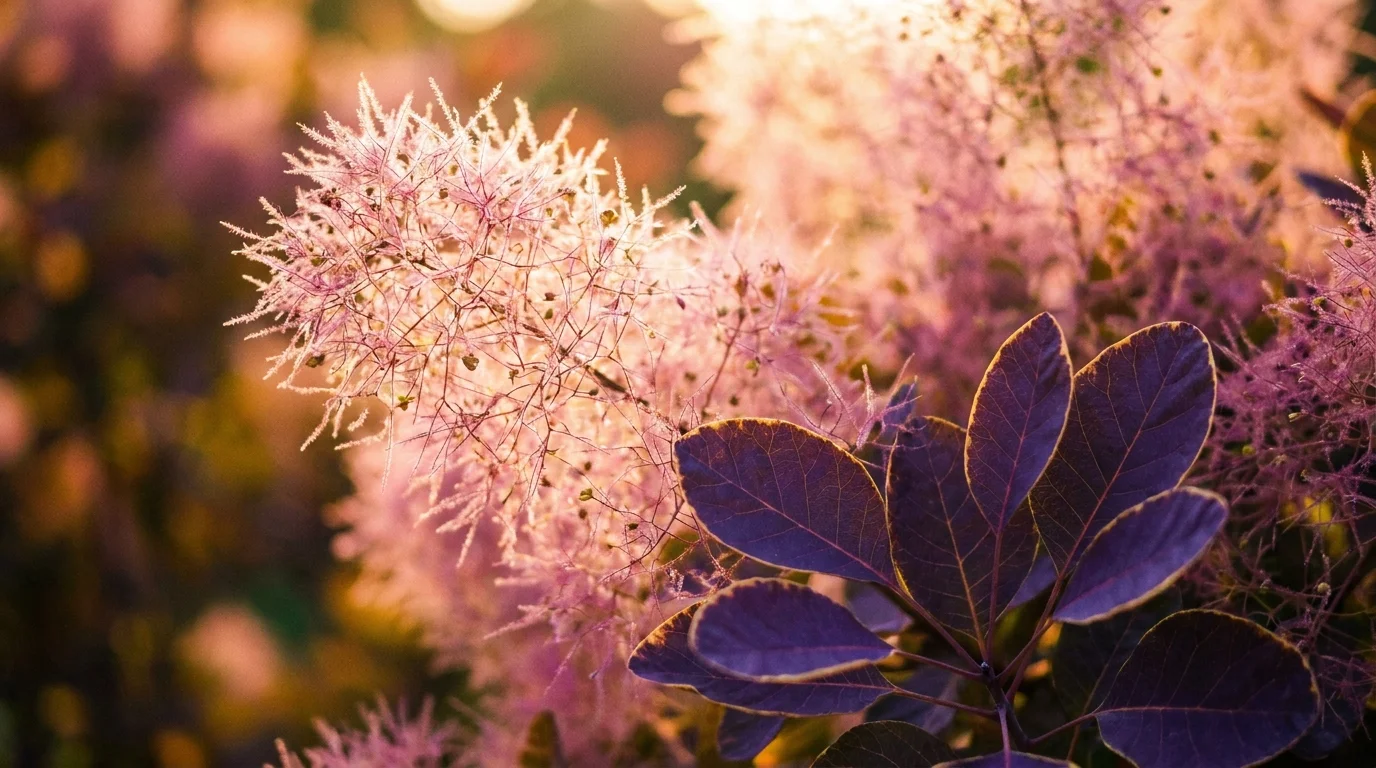
The Smokebush commands attention in any landscape setting, bringing high drama and an almost theatrical presence to your yard. Depending on how you prune it, you can grow this adaptable plant as a large, multi-stemmed shrub or train it into a beautiful small tree. The visual spectacle begins in spring when cultivars like ‘Royal Purple’ push out rich, velvety maroon foliage that catches the sunlight beautifully.
In early summer, the plant produces the feature that earned it its common name: massive, fluffy panicles of tiny flowers that resemble billowing clouds of pink or purplish smoke floating just above the foliage. This hazy, dreamlike effect lasts for several weeks and provides excellent contrast when planted behind coarse-textured green shrubs. As the summer progresses, the dark foliage may lighten slightly to a dusky purple-green.
The Smokebush saves its most aggressive color shift for the autumn months. The purple and green leaves suddenly ignite into an inferno of fiery orange, glowing red, and bright gold. To achieve the absolute deepest foliage color, you must plant your Smokebush in full, direct sun. It thrives in a wide range of soil types—including rocky, poor soils—provided the drainage is excellent. If you prioritize massive, colorful leaves over the “smoke” flowers, you can aggressively prune the shrub back to the ground every late winter in a process called coppicing.

Tip #8: Switchgrass (Panicum virgatum)
Ornamental grasses introduce essential texture, movement, and sound to a garden, and native Switchgrass takes this utility a step further by providing a spectacular timeline of color changes. Cultivars like ‘Shenandoah’ or ‘Rotstrahlbusch’ begin their growing season by shooting up crisp, upright blades of steely blue-green foliage. This cool coloration provides a soothing backdrop for the brightly colored perennials blooming nearby in the spring garden.
As the intense heat of mid-summer takes hold, you will notice the tips of the grass blades beginning to flush with a vibrant blood-red tint. This coloration gradually creeps downward along the stems as the weeks pass. By late August, the plant produces airy, pinkish-red flower panicles that sway gracefully in the slightest breeze. When autumn arrives, the entire clump of grass transforms into a striking, deep burgundy focal point.
The visual journey does not end when the growing season stops. As winter sets in, the burgundy fades to a beautiful, structural wheat-beige. Leaving the grass standing throughout the winter provides architectural interest against the snow while offering crucial shelter and seeds for overwintering birds. Switchgrass possesses an incredibly deep root system, making it virtually immune to drought once established. It demands full sun to develop its upright posture and its intense red coloration; planting it in too much shade will result in floppy, purely green stems.
Tip #9: Japanese Maple (Acer palmatum)
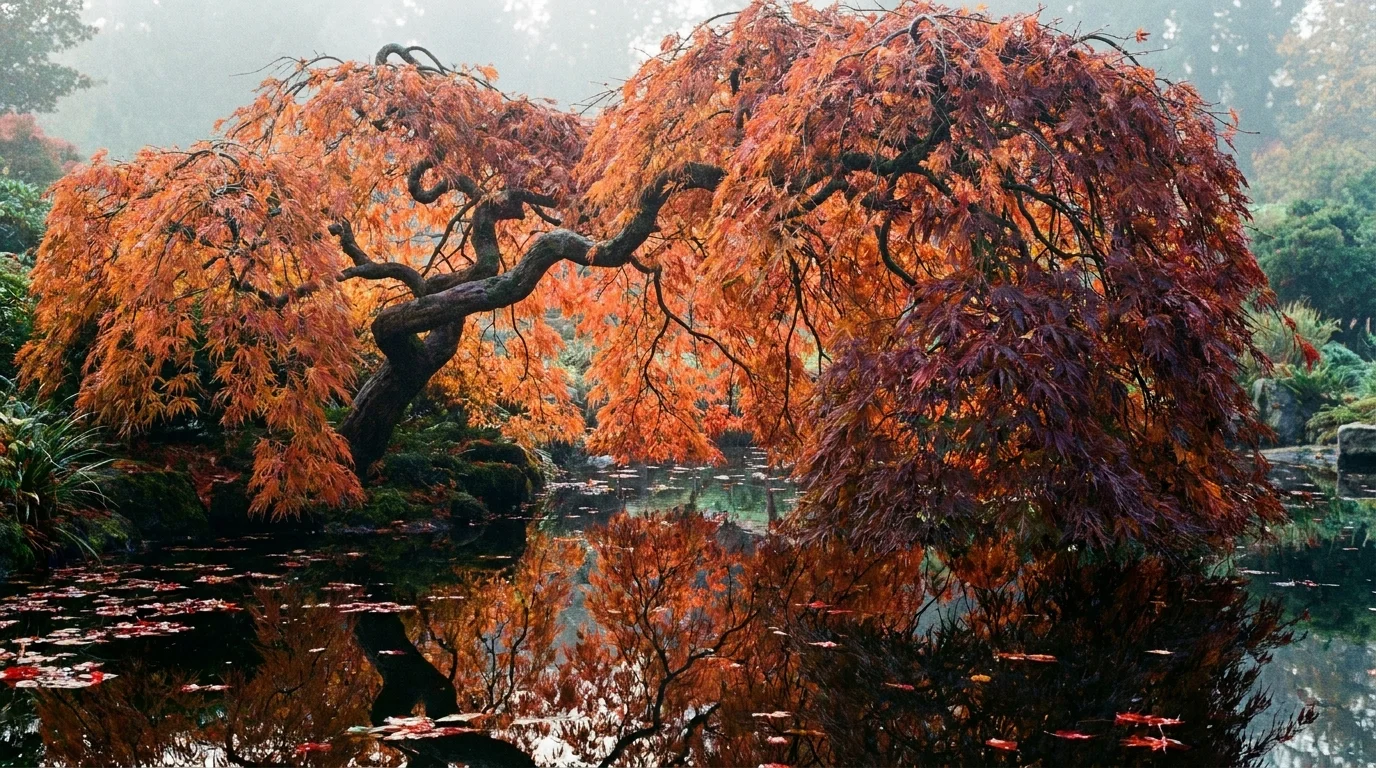
No list of dynamic, color-changing plants would be complete without the majestic Japanese Maple. These highly prized ornamental trees act as living sculptures in the landscape, providing an unmatched elegance. The sheer variety of cultivars means you can find a Japanese Maple that undergoes almost any color transition you desire. For example, the famous ‘Sango-kaku’ (Coral Bark Maple) emerges in spring with delicate, bright lime-green leaves tipped with red margins. It maintains a crisp green canopy all summer before turning a brilliant, glowing golden-yellow in the fall.
Once the leaves drop, the ‘Sango-kaku’ reveals its most famous feature: striking, bright coral-red bark on all its younger branches, which looks absolutely spectacular against a snowy backdrop. Other varieties, such as ‘Bloodgood’ or ‘Osakazuki,’ unfold their intricate spring leaves in shades of deep crimson, transition to a bronzy-green during the intense summer heat, and then explode into an eye-watering scarlet right before winter sets in.
Japanese Maples possess delicate foliage that can crisp at the edges if exposed to harsh, late-afternoon sun or drying winds. You will achieve the best results by planting them in a sheltered location that receives morning sunlight and dappled afternoon shade. They require slightly acidic, perfectly drained soil; planting them on a slight mound helps ensure their root crowns never sit in standing water. A thick layer of bark mulch will help regulate soil temperature and moisture, allowing your tree to execute its seasonal color changes flawlessly.
Putting It All Together: Enjoy Your Beautiful Garden
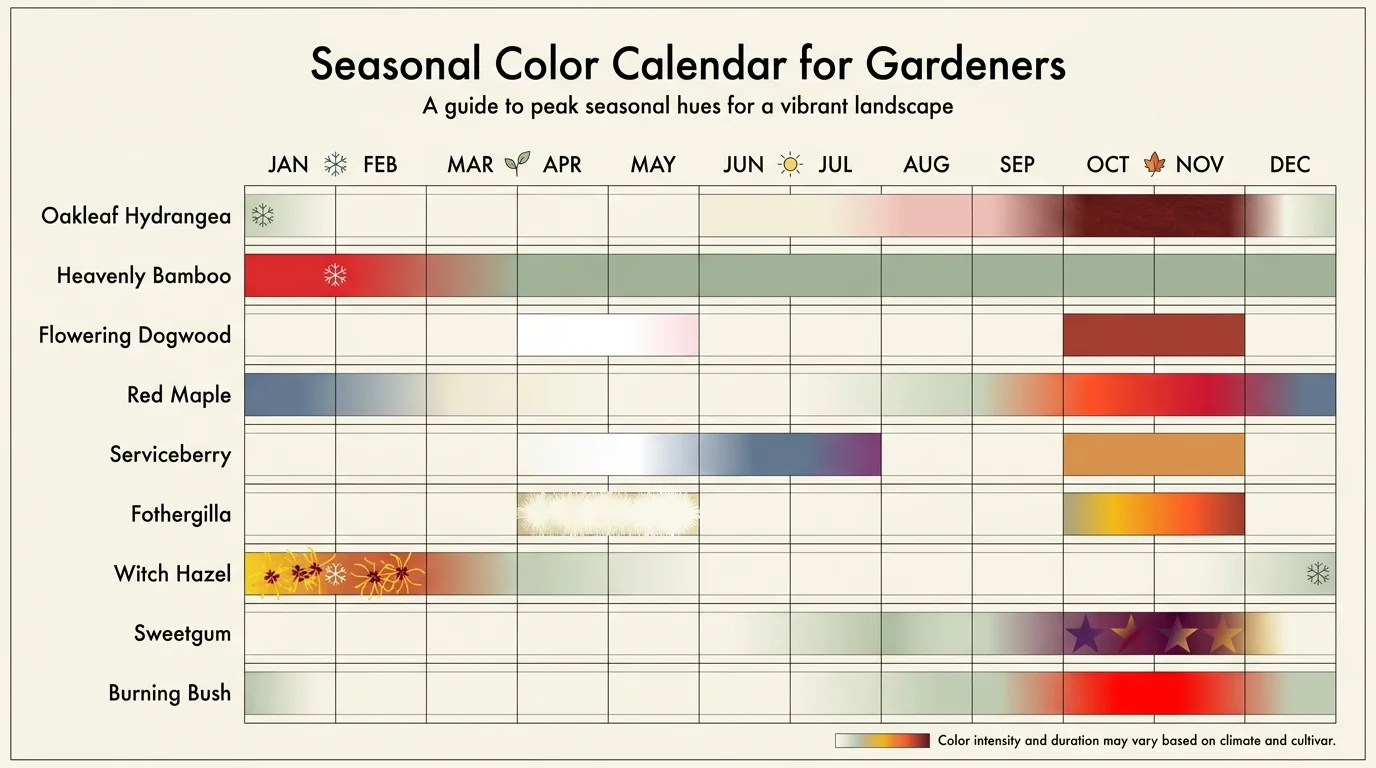
Designing a garden that transitions gracefully from one season to the next allows you to interact with your landscape in a completely new way. Instead of viewing the end of summer as the end of your yard’s beauty, you can eagerly anticipate the dramatic foliage shifts of the Oakleaf Hydrangea, the blazing autumn fire of the Virginia Creeper, and the winter bark of the Kousa Dogwood. By carefully mixing colorful shrubs, climbing vines, textured ornamental grasses, and structural trees, you create a deeply layered environment that rewards your attention 365 days a year.
Begin by evaluating your current yard to identify the “green gaps”—the areas that look spectacular in spring but fall flat by October. Introduce a few of the resilient, adaptable plants detailed above to bridge those gaps. With proper soil preparation, thoughtful placement, and a bit of patience, you will cultivate an ever-changing sanctuary that reflects the natural rhythm of the seasons and brings endless joy to your outdoor living space.
Frequently Asked Questions
Why do some plants lose their vibrant color in the middle of summer?
Many plants produce specific pigments—like red anthocyanins—to protect their delicate new spring growth from harsh sunlight. As the leaves mature and the days lengthen, the plant ramps up its production of green chlorophyll to maximize photosynthesis. This massive influx of chlorophyll temporarily masks the underlying red, purple, or bronze pigments, turning the leaves green until cooler autumn temperatures cause the chlorophyll to break down again.
Does soil pH affect how foliage changes color?
Yes, soil chemistry plays a massive role in plant coloration and overall health. For acid-loving plants like Blueberry Bushes and Japanese Maples, an alkaline soil prevents the roots from absorbing essential nutrients like iron. This deficiency leads to chlorosis (yellowing leaves) and significantly weakens the dramatic autumn color display. Testing your soil and adjusting the pH with sulfur or peat moss ensures your plants have the chemical building blocks needed to produce intense seasonal colors.
Will these plants still change color if grown in containers?
Absolutely. Plants like Coral Bells, Heavenly Bamboo, and even dwarf varieties of Japanese Maple thrive in large containers and will undergo their natural color shifts. However, potted plants experience faster temperature fluctuations in their root zones than plants grown in the ground. You must carefully monitor their moisture levels, as severe drought stress can cause the leaves to scorch and drop prematurely before they have a chance to display their full autumn brilliance.
Can pruning impact a plant’s seasonal color?
Proper pruning greatly enhances color displays, especially for winter-interest plants. Shrubs like the Smokebush and certain varieties of Dogwood produce their most vibrant bark and largest, most colorful leaves on new growth. By selectively pruning away older, woody stems in late winter, you stimulate the plant to push out a fresh flush of intensely colored branches for the upcoming season.
For region-specific advice, consult your local University Extension program (find yours via the USDA directory). For plant databases and inspiration, visit the Missouri Botanical Garden or the Royal Horticultural Society.
Disclaimer: This article provides general gardening advice. Always consider your specific climate, soil conditions, and local pests. Follow safety guidelines when using gardening tools and products.