Transform your bare walls into lush, living art with plant shelf ideas that instantly elevate your indoor space. Curating an indoor plant display requires more than simply setting pots on a board; it demands a thoughtful blend of aesthetics, light management, and spatial balance. By implementing strategic plant shelf styling techniques, you maximize vertical space while providing your greenery with the optimal conditions they need to thrive. Whether you want to showcase trailing pothos vines or construct a minimalist succulent gallery, these design principles will help you craft Pinterest plant decor that actually sustains healthy plant life. Let the transformation begin with these ten practical approaches to houseplant arrangement.
Tip #1: The Rule of Three and Varying Heights
Professional interior designers rely heavily on the rule of three, a psychological principle stating that objects grouped in odd numbers appear more natural and visually appealing to the human eye. When styling your plant shelf, arranging items in pairs often creates a rigid, formal look, whereas groups of three or five generate a dynamic, effortless flow. This principle forms the absolute foundation of Pinterest plant decor.
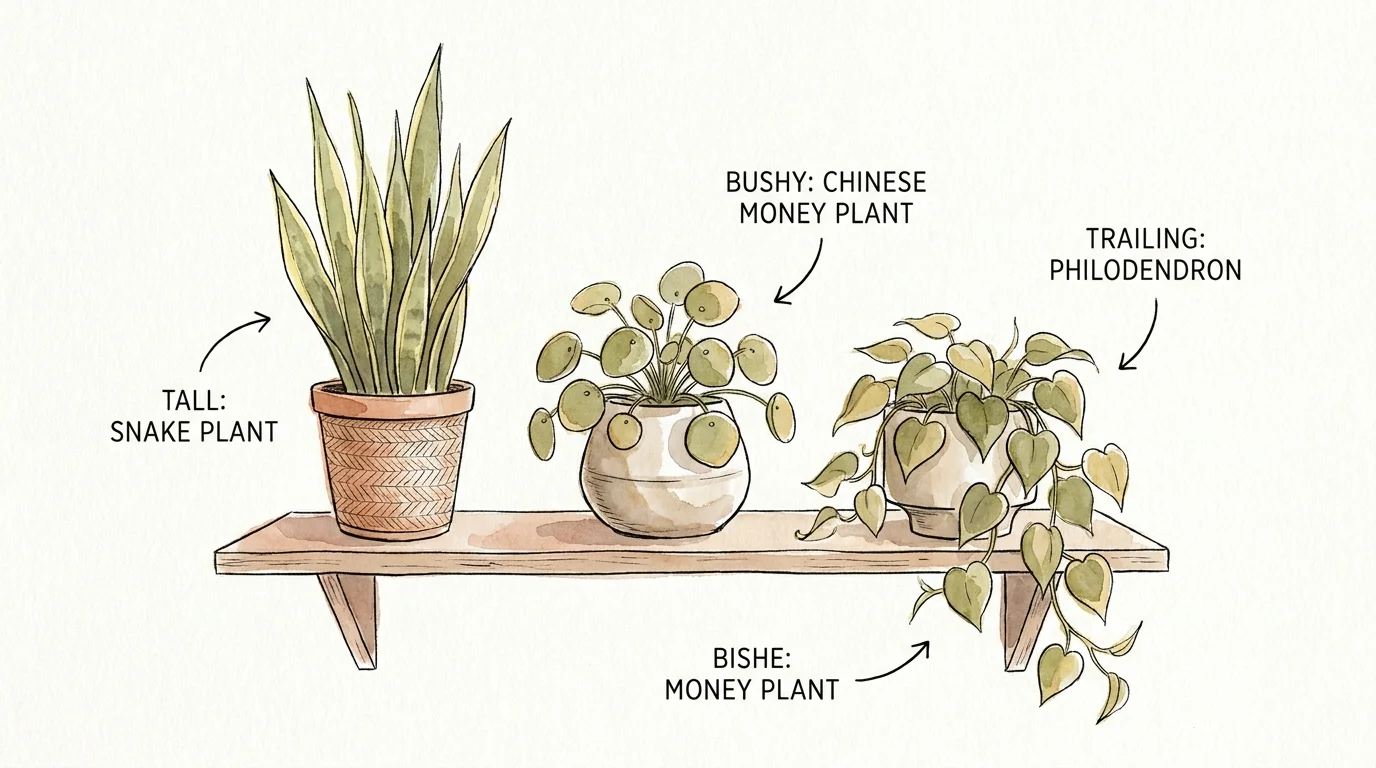
To implement this strategy effectively, combine three distinct plant silhouettes within a single grouping: one tall, one bushy, and one trailing. This specific combination forces the eye to travel up, down, and across the display, completely eliminating the stagnant feeling of a flat arrangement. The contrasting growth habits fill the vertical and horizontal space evenly.
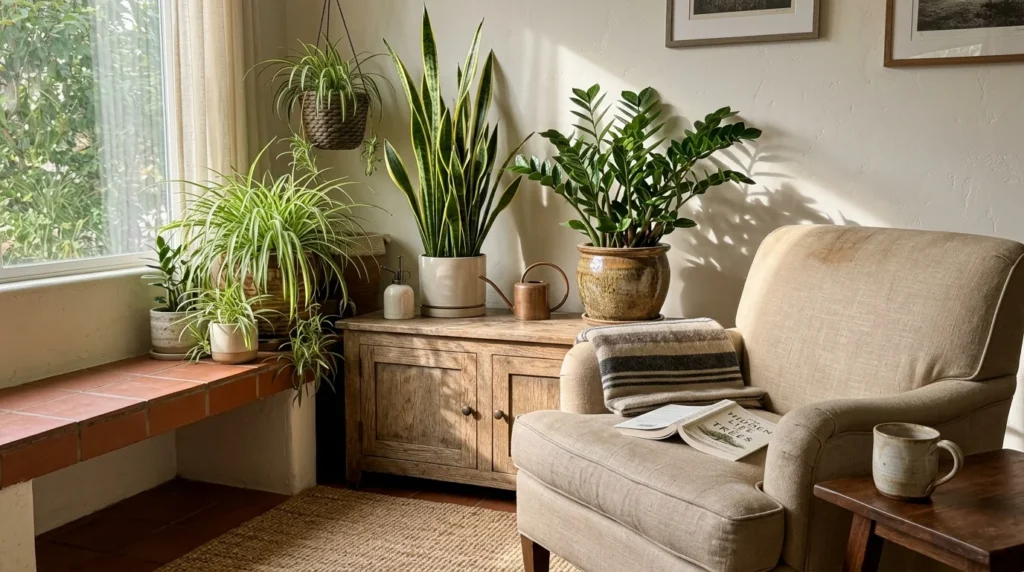
For a foolproof houseplant arrangement, try placing a structural, upright Snake Plant (Sansevieria) alongside a dense, mounding Chinese Money Plant (Pilea peperomioides), and finish the triad with a cascading Heartleaf Philodendron spilling over the shelf edge. Keep the pots relatively close together so they read as a unified collection rather than isolated objects stranded on a long board.
Tip #2: Mastering Light Zones for Vertical Displays
Light intensity diminishes exponentially the further you move away from a window, making light management a crucial aspect of any indoor plant display. A tall bookshelf features entirely different microclimates on its top and bottom tiers. Understanding these zones prevents the tragic fading of your carefully curated greenery.
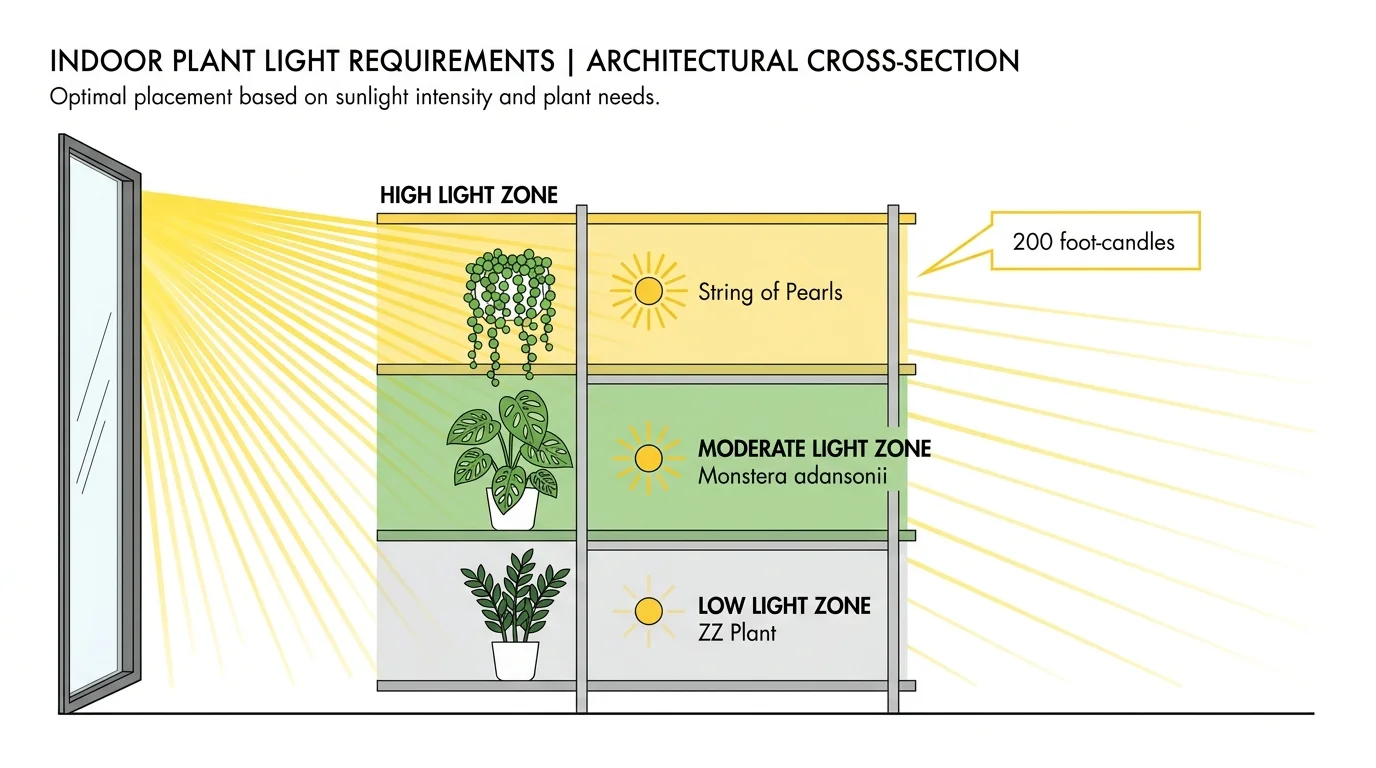
Evaluate the natural light hitting each specific level of your shelving unit before placing your plants. The top shelves generally receive the highest volume of ambient room light and experience warmer temperatures due to rising heat. Conversely, the bottom shelves often sit in shadow, blocked by furniture or the structural elements of the shelf itself. Match your plant selections directly to these localized conditions.
Reserve the top, brightest tiers for sun-loving species like String of Pearls, Jade Plants, or vibrant Tradescantia. Populate the middle zones with moderate-light lovers such as Monstera adansonii or colorful Calatheas. Finally, anchor the lowest, dimmest shelves with incredibly resilient, low-light tolerant varieties—think ZZ Plants (Zamioculcas zamiifolia) or Cast Iron Plants. Using a digital light meter can provide concrete data; aim for at least 200 foot-candles for moderate growth.
Tip #3: Incorporating Non-Plant Elements for Balance
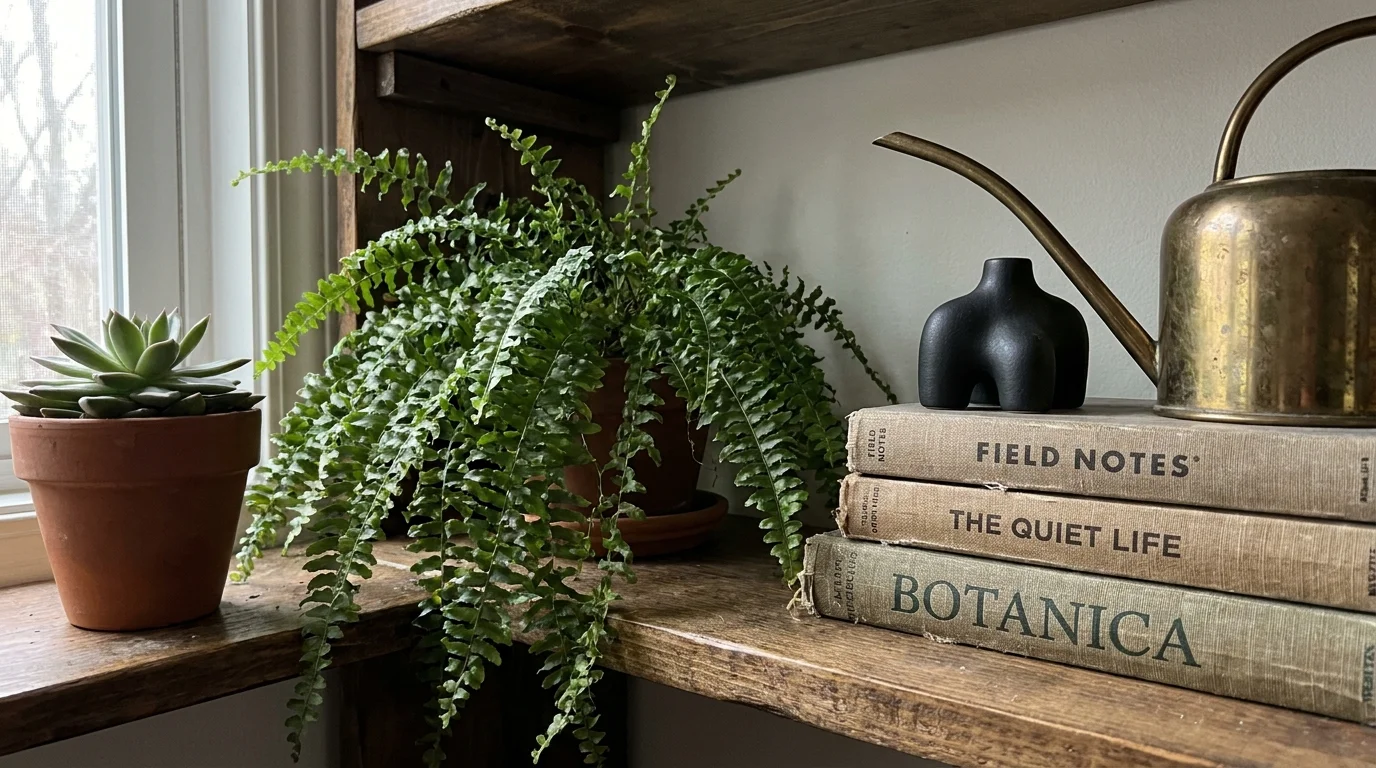
The most captivating plant shelf styling never relies exclusively on vegetation. Staring at an unbroken wall of foliage can overwhelm the senses and diminish the visual impact of individual plants. To achieve that highly sought-after designer aesthetic, you must intersperse non-plant objects to break up the greenery and inject your personal style into the display.
Adopt a 60/40 ratio for your arrangement: dedicate sixty percent of the shelf space to living plants and the remaining forty percent to decorative or functional items. This spacing allows each plant breathing room and prevents the shelf from looking like a crowded nursery table. The negative space created by these objects highlights the organic shapes of your foliage.
Integrate practical gardening tools that double as decor, such as a sleek brass watering can, a vintage glass plant mister, or a pair of forged pruning shears resting on a stack of books. Add textural contrast with raw crystal geodes, framed botanical prints leaning against the back wall, or hand-thrown ceramic bowls. These curated additions ground the organic chaos of the plants with structured, intentional design.
Tip #4: Trailing Plants as Living Curtains
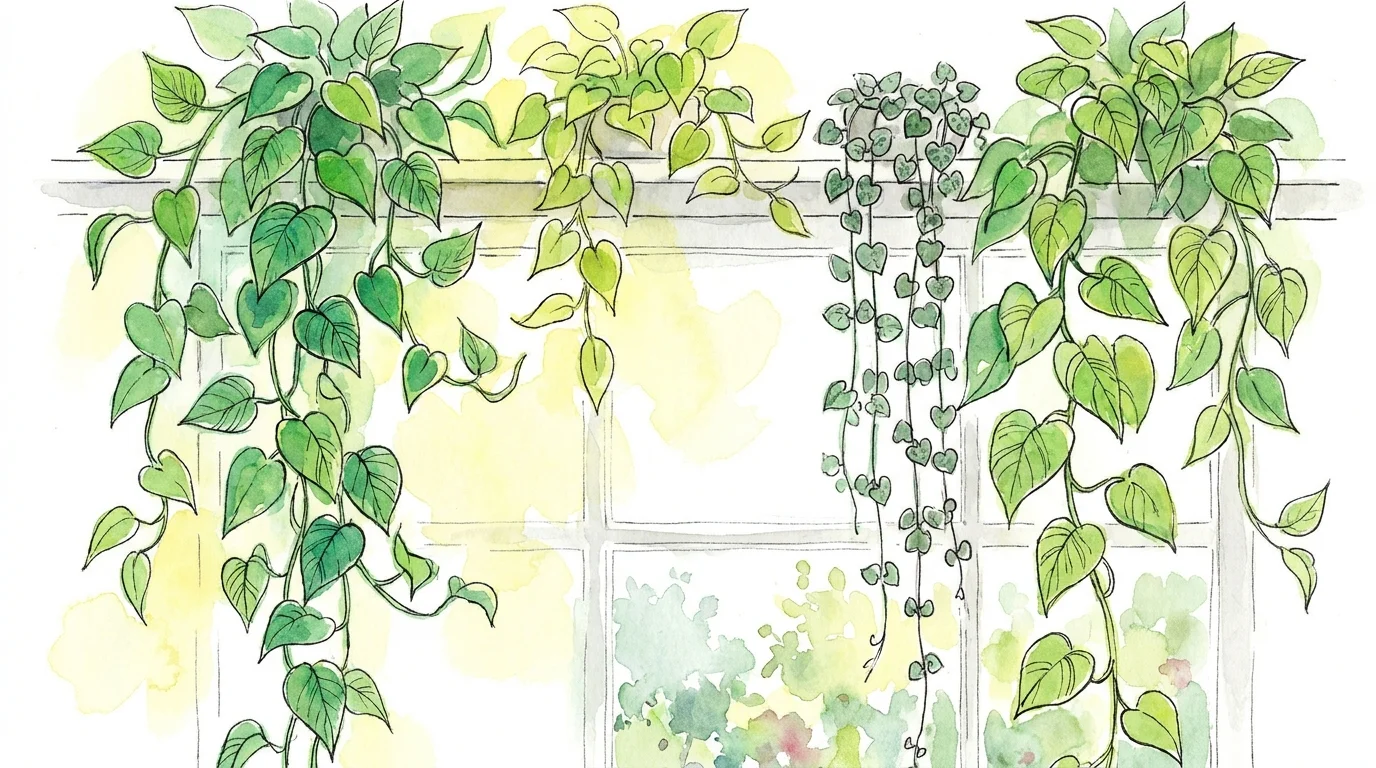
Hard wooden or metal shelving units often introduce rigid, severe lines into a room. Trailing plants serve as the perfect antidote, acting as living curtains that soften architectural edges and draw the eye smoothly from one shelf level to the next. This cascading effect remains a staple of Pinterest plant decor.
Select vigorous vining species that tolerate indoor conditions well. Golden Pothos (Epipremnum aureum), English Ivy, and String of Hearts provide excellent length and rapid growth. Instead of letting the vines hang completely straight down, actively style them. Drape the longest tendrils diagonally across the front of the shelf to bridge the gap between different plant groupings.
Use clear, removable adhesive hooks discreetly placed along the bottom edge of the shelf to guide the vines exactly where you want them. To maintain a lush appearance at the crown of the pot, regularly prune the tips of your trailing plants. This forces the plant to push out new growth at the soil level, preventing the common problem of bare, straggly stems at the top with a few leaves hanging near the floor.
Tip #5: Color-Coordinating Your Pots and Planters
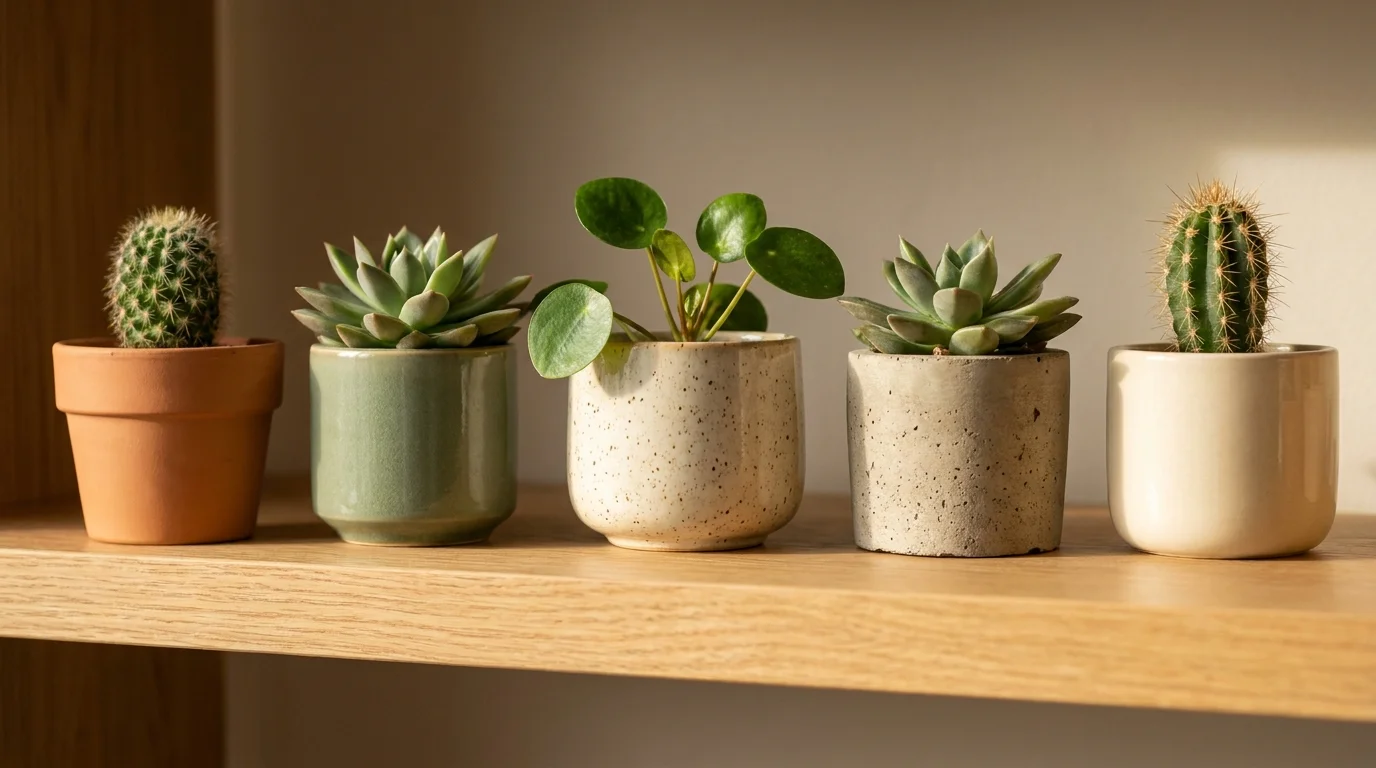
A haphazard collection of mismatched plastic nursery pots instantly cheapens an otherwise beautiful houseplant arrangement. Unifying your display through intentional pot selection instantly elevates the shelf from a simple storage area to a cohesive interior design feature.
Choose a specific color palette or material theme and stick to it strictly. If you prefer a warm, earthy aesthetic, commit entirely to natural terracotta pots of varying sizes. The porous nature of unglazed terracotta provides excellent airflow to the roots while unifying the display with its signature rust-orange hue. If your home features modern, minimalist decor, opt for a collection of matte white or black ceramic cylinders.
You do not need to buy identical pots; in fact, mixing subtle variations within your chosen palette adds depth. Pair smooth white ceramics with ribbed or dimpled white pots to introduce textural variety without breaking the color scheme. When the containers share a visual language, the vibrant greens, deep purples, and striking variegation of the plant foliage step forward as the true focal point.
Tip #6: Utilizing Floating Shelves for a Minimalist Aesthetic
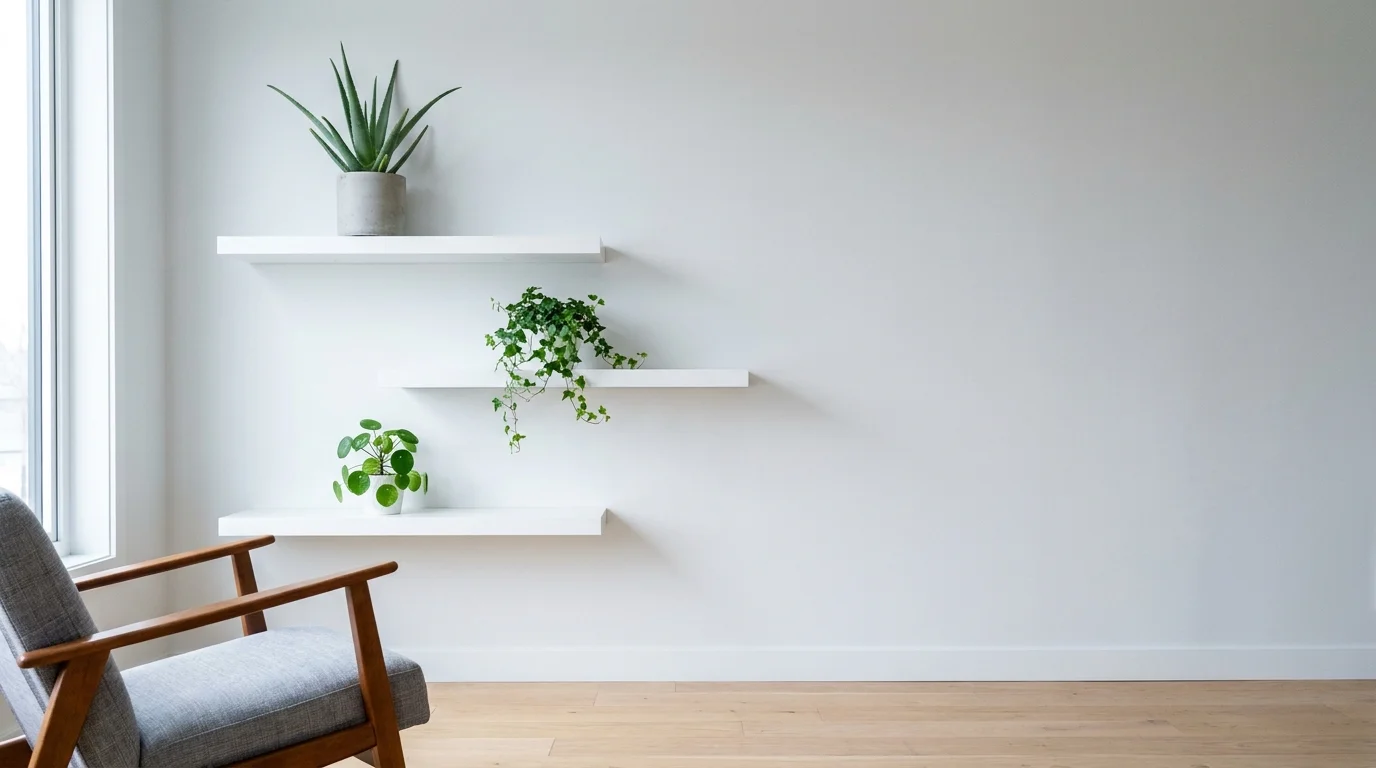
Floating shelves offer a sleek, hardware-free look that makes your indoor plant display appear as though it is levitating against the wall. This approach works exceptionally well in small apartments or narrow hallways where bulky bookcases would consume too much valuable floor space.
Safety and structural integrity demand your primary attention when installing floating shelves for plants. Wet potting soil holds immense density; an eight-inch ceramic planter freshly soaked with water can easily exceed ten pounds. Never rely on drywall anchors alone for a heavy plant shelf. You must locate the wooden wall studs using a magnetic stud finder and drive your mounting brackets directly into the structural framework.
Once securely mounted, style the floating shelves with a less-is-more philosophy. Overcrowding defeats the purpose of the minimalist design. Select three to five statement plants per shelf. Ensure the pots feature sealed bottoms or deeply integrated saucers to absolutely prevent water from dripping down your pristine walls during your weekly maintenance routine.
Tip #7: Creating Depth with Plant Stands and Books
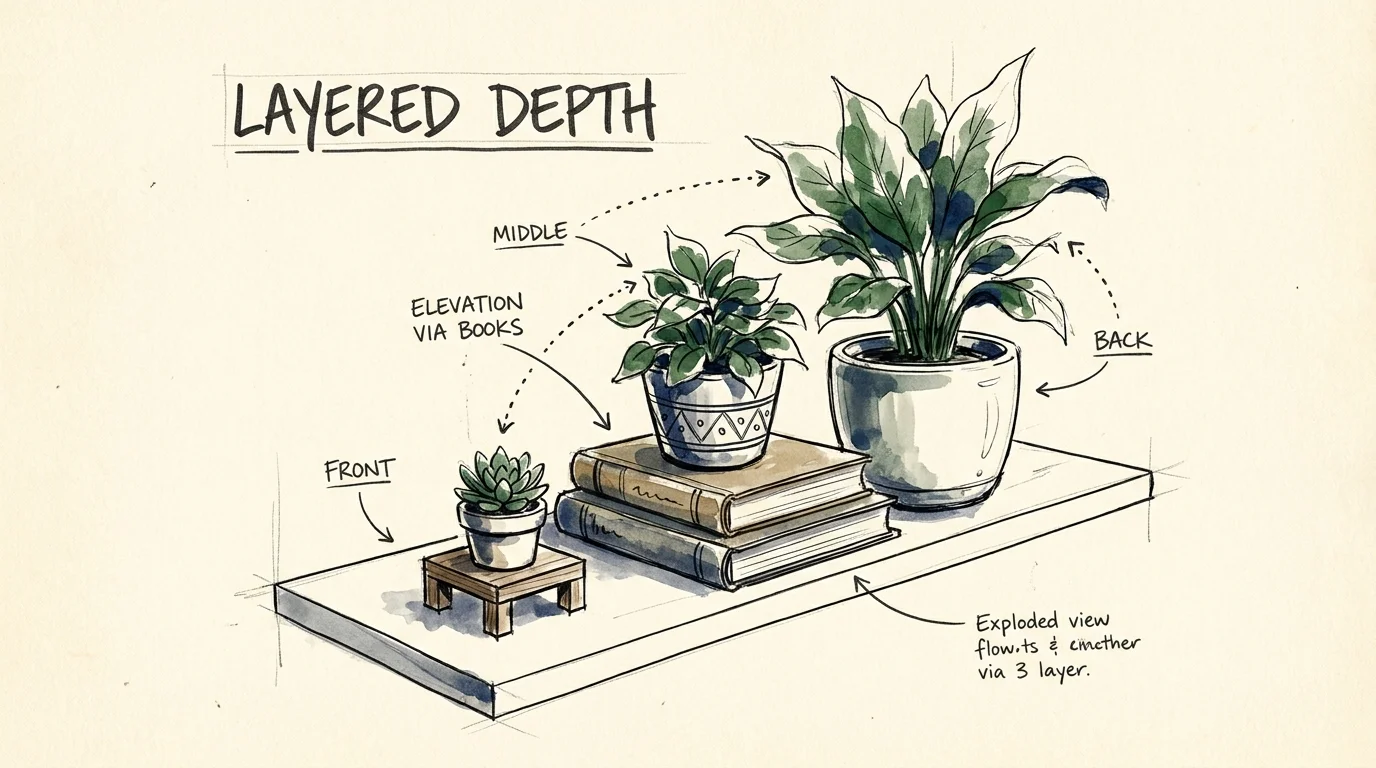
Lining your plants up in a single, straight row creates a flat, uninspiring visual similar to a supermarket shelf. To build a compelling houseplant arrangement, you must create depth by staging your plants in the foreground, middle ground, and background.
Manipulate the height of shorter plants by elevating them behind larger, more prominent pots. Use overturned terracotta saucers, clear acrylic risers, or small wooden stools to give smaller plants a necessary vertical boost. Stacking heavy, vintage art books also serves as an excellent makeshift pedestal that adds intellectual charm to the display.
Place your largest, most visually dominant plant slightly off-center to establish an anchor point. Tuck a medium-sized plant slightly behind and to the left of the anchor, and pull a tiny, textured succulent right up to the front edge of the shelf. This staggered, triangular formation mimics the organic layering found in nature, inviting the viewer to look deeper into the display rather than just skimming the surface.

Tip #8: Incorporating Grow Lights Seamlessly
Dark corners often sabotage the most ambitious plant shelf ideas, but modern technology offers an elegant solution. Incorporating grow lights directly into your shelving units ensures your plants receive adequate energy for photosynthesis without relying solely on unpredictable natural sunlight.
Many enthusiasts avoid artificial lighting because they picture harsh, purple greenhouse bulbs; however, contemporary full-spectrum LED lights emit a warm, natural white glow that actually enhances your room’s ambiance. Install ultra-slim LED light strips underneath the shelf directly above your plants. This conceals the hardware while bathing the foliage below in consistent, targeted light.
Secure the strips using heavy-duty double-sided tape, and route the power cables cleanly down the back legs of your shelving unit using adhesive cord clips. Hook the lights up to a smart plug so you can automate a reliable twelve-to-fourteen-hour daily photoperiod. For optimal vegetative growth, aim for a color temperature between 5000K and 6500K, keeping the bulbs approximately six to eight inches above the highest leaves.
Tip #9: Mixing Textures and Leaf Shapes
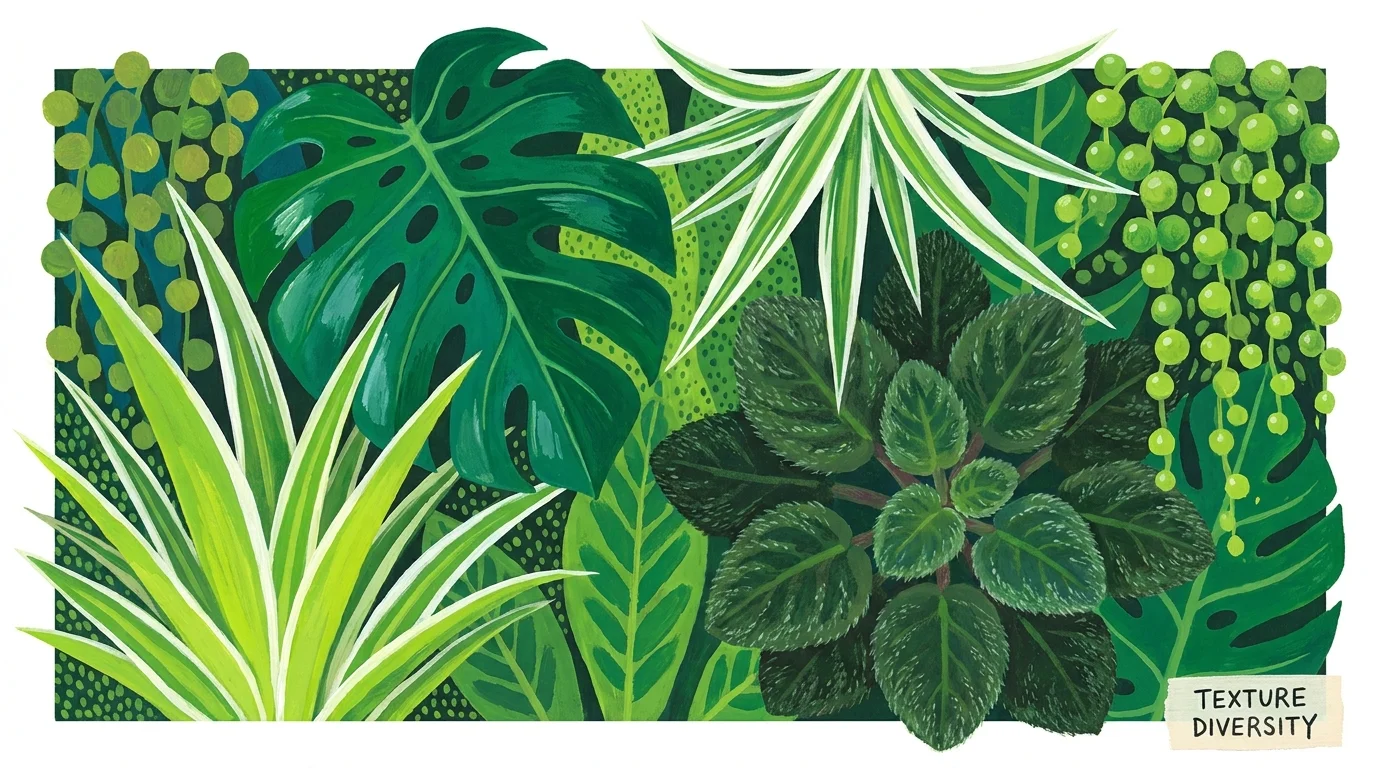
Relying on a single type of foliage results in a monotonous houseplant arrangement. The secret to arresting Pinterest plant decor lies in emphasizing the dramatic contrasts between different leaf shapes, textures, and venation patterns. When placed side by side, contrasting plants highlight each other’s unique characteristics.
Intentionally pair opposites. Position the thick, glossy, paddle-shaped leaves of a Rubber Tree (Ficus elastica) next to the delicate, feathery fronds of a Maidenhair Fern. Place the stiff, sword-like spears of an Aloe Vera beside the velvety, heart-shaped foliage of a Philodendron micans. The textural friction between the rigid succulent and the soft, trailing vine creates intense visual interest.
Pay close attention to variegation as well. Solid, deep green plants provide excellent resting places for the eye, making them perfect backdrops for highly patterned species like the dramatically striped Calathea ornata or the speckled Aglaonema. Balance is key; limit highly variegated “statement plants” to one or two per shelf to prevent the display from becoming visually chaotic.
Tip #10: Seasonal Rotations and Maintenance Access
A successful indoor plant display remains a living, breathing ecosystem that requires ongoing interaction. Plants naturally grow toward their primary light source through a process called phototropism. If left in a static position, your beautifully styled shelf will soon look lopsided as every plant stretches awkwardly toward the nearest window.
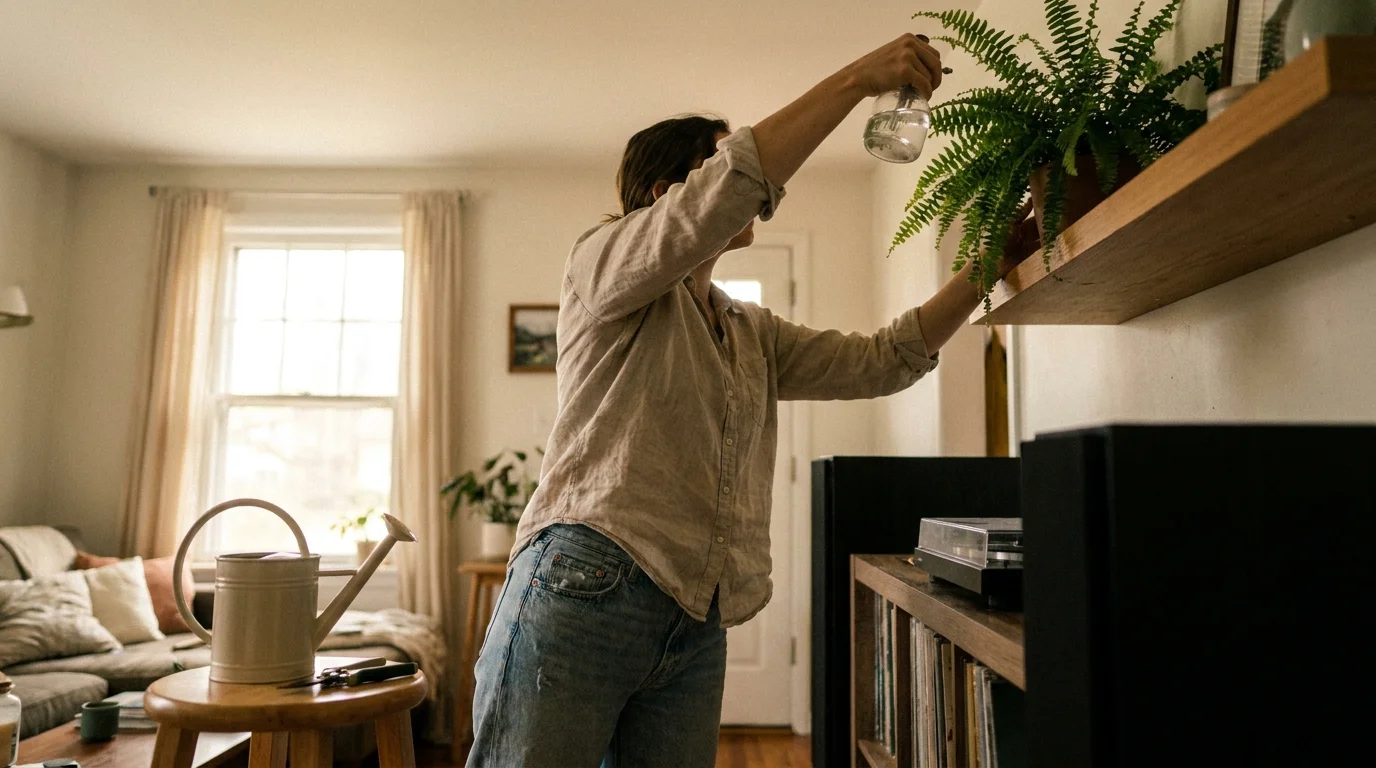
Implement a weekly rotation schedule. Give each pot a quarter turn every time you water to ensure even, balanced growth on all sides of the plant. Furthermore, acknowledge the changing of the seasons. The intense, direct sunlight hitting a shelf in July might scorch delicate leaves, while the weak winter sun hitting the exact same spot may prove insufficient. Be prepared to migrate sensitive plants to different tiers as the year progresses.
Finally, design for maintenance. If a plant is too difficult to reach, you will inevitably neglect it. Utilize the cachepot method: keep your plants in their lightweight plastic nursery pots, and simply drop those inside your heavy decorative ceramics. On watering day, effortlessly lift the light nursery pots out, carry them to the sink for a thorough drenching, and return them to the shelf once they finish draining.
Putting It All Together: Enjoy Your Beautiful Garden
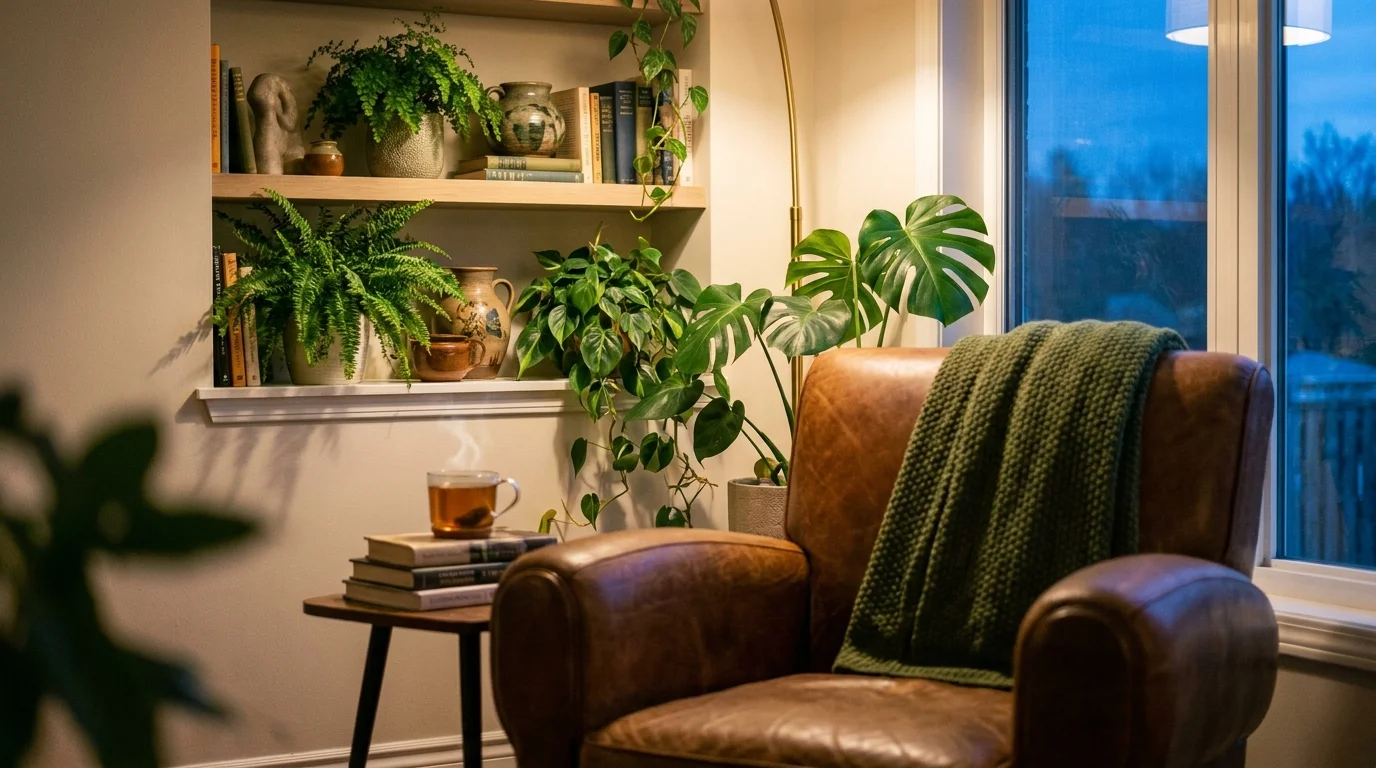
Building a captivating plant shelf transforms a static room into an engaging, vibrant sanctuary. By applying the rule of three, mastering your room’s unique light zones, and carefully curating your pot selection, you merge interior design with active horticulture. Remember that the most breathtaking displays rely heavily on contrast—mixing trailing vines with structural uprights, and glossy leaves with velvety textures.
Your shelf will continually evolve as your greenery pushes out new growth, vines lengthen, and light conditions shift with the seasons. Embrace this dynamic process. Regularly adjust your arrangement, prune back unruly stems, and swap out decorative elements to keep the visual experience fresh. Cultivating an indoor garden requires patience and observation, but the reward of a thriving, lush display provides daily satisfaction and immeasurable warmth to your home environment.
Frequently Asked Questions
How much weight can a typical floating plant shelf hold?
The weight capacity depends entirely on the mounting hardware and wall structure. A floating shelf anchored directly into wooden wall studs with heavy-duty steel brackets can typically hold between 30 and 50 pounds. Shelves mounted into drywall using standard plastic anchors should rarely hold more than 10 to 15 pounds. Always calculate the weight of your pots immediately after watering, as saturated soil is significantly heavier than dry soil.
What are the best low-light plants for a shaded bookshelf?
If your shelf sits far from a window, prioritize incredibly resilient species. The ZZ Plant (Zamioculcas zamiifolia), Snake Plant (Sansevieria), and Cast Iron Plant (Aspidistra elatior) tolerate profound shade exceptionally well. Golden Pothos and Heartleaf Philodendrons will also survive in low light, though their growth rate will slow down and they may lose some of their vibrant variegation.
How do I water plants on a high shelf without making a mess?
The safest and most efficient approach is the cachepot method. Keep your plant in a lightweight plastic nursery pot with drainage holes, and place that inside a sealed, waterproof decorative pot. When it is time to water, lift the plastic pot out, water it thoroughly in your kitchen sink, let it drain completely for ten minutes, and then place it back into the decorative container on the shelf.
How do I prevent water damage to my wooden shelves?
Moisture is the enemy of wooden furniture. Always use completely sealed ceramic or plastic cachepots. If you use standard pots with drainage holes, place a deep, sturdy plastic saucer underneath them. For an extra layer of protection, place round cork mats underneath your saucers or cachepots; the cork absorbs rogue condensation and prevents the bottom of the pot from scratching the shelf’s finish.
For region-specific advice, consult your local University Extension program (find yours via the USDA directory). For plant databases and inspiration, visit the Missouri Botanical Garden or the Royal Horticultural Society.
Disclaimer: This article provides general gardening advice. Always consider your specific climate, soil conditions, and local pests. Follow safety guidelines when using gardening tools and products.